Tag Archives: Kentucky

Early House Outlook – Part IV

By Jim Ellis

Jan. 24, 2021 — Concluding our electoral US House preview, today we look at the final dozen states in the country’s southern region.


• Alabama – 7 Seats (1D6R)

Alabama is on the cusp of losing one of its seven seats in reapportionment. Sources suggest the final numbers are very close and the state may sue over how the figures are tabulated should apportionment take away one of the Republican seats. The Democrats have only one CD in the state, which is a majority minority seat (Rep. Terri Sewell-D) that is a certainty to remain as part of the delegation.

Should Alabama lose a seat in reapportionment, the state’s southeastern region, most particularly the Montgomery anchored 2nd District, would probably the most affected since this is the least populated area of the seven CDs.


• Delaware – 1 Seat (1D)

The home of new President Joe Biden was once a relatively conservative state, but no longer. Delaware is growing but won’t come anywhere near gaining a second seat. Therefore, three-term Rep. Lisa Blunt Rochester (D-Wilmington) will have an easy electoral ride for the foreseeable future.


• Florida – 27 Seats (11D16R)

The Sunshine State is one of two entities perched to gain multiple new districts. Florida is projected to add two seats, which should give the GOP map drawers the opportunity of protecting the newly won South Florida District 26 (Rep. Carlos Gimenez) and 27 (Rep. Maria Elvira Salazar) while maximizing the Republican compilation of Florida seats. Winning the aforementioned Miami-anchored CDs might result in conceding one of the new seats to the Democrats, however, in order to off-load a significant portion of their left-of-center voters, which would make both seats more Republican.

Holding the governor’s office, both houses of the legislature, and now a majority on the state Supreme Court will allow the GOP to become the big winner in redistricting. The fact that 25 of the 27 districts are over the estimated per district population projection of approximately 740,000 residents provides statistical evidence for expanding the delegation.

Rep. Darren Soto’s (D-Kissimmee) 9th District is the most over-populated seat with more than 931,000 people. Only Reps. Neal Dunn’s (R-Panama City) and Charlie Crist’s (D-St. Petersburg) seats are slightly below the projected population target. Twelve of the current 27 districts now hold more than 800,000 constituents. Expect the new seats to be added in South Florida, most likely toward the Gulf Coast side of the peninsula, and in the Orlando area.


• Georgia – 14 Seats (6D8R)

Though Republicans will control the redistricting pen as a result of holding both the legislature and governor’s office, the party map drawers will be hard-pressed to construct a map that allows their members to dominate the delegation as they did 10 years ago. Gaining a seat in 2010 reapportionment, the GOP began the decade with a 10-4 advantage in the House delegation only to see two Atlanta suburban seats slip away as a result of demographic and political changes in the metropolitan area.

Georgia is expected to remain constant in this reapportionment with their 14 seats. The GOP will attempt to make at least one of the seats they lost, District 6 (Rep. Lucy McBath) or District 7 (Rep. Carolyn Bourdeaux) more Republican and thus give themselves a chance to re-claim a seat for the coming decade.

Expect a move to make one of these two seats, probably District 6, more Democratic in order to make District 7 more Republican especially since the latter CD is the most over-populated seat in the state with more than 844,000 residents and will have to shed close to 90,000 individuals to other districts.
Continue reading

The Final Polls

By Jim Ellis

Nov. 2, 2020 — Tomorrow is the official Election Day, but with early voting delivering nearly 87 million votes and 21 states allowing ballots to come in after Nov. 3, it is likely that many Senate and House races will languish in political overtime. With that background, we look at the polling range of the most recent surveys in battleground Senate races along with the number of people who have already cast their ballots in each state (early voting statistics from TargetSmart.com):


ALABAMA:
• Sen. Doug Jones (D) vs. Tommy Tuberville (R)
Polling Range
High: Cygnal (Oct. 26-28) – Tuberville +14
Low: Auburn U Montgomery (Oct. 23-28) – Tuberville +11
No Early Voting


ALASKA:
• Sen. Dan Sullivan (R) vs. Dr. Al Gross (I/D)
Polling Range
High: Gravis Marketing (Oct. 21-23) – Sullivan +3
Low: Change Research (Oct. 16-19) – Sullivan +3

Early Voting Stats:
Republican: 49.1% Total Early Voting 2020: 131,261
Democrat: 33.0% Total Early Voting 2016: 64,583
Unaffiliated: 17.9% Percent Increase: 103%

ARIZONA:
• Sen. Martha McSally (R) vs. Mark Kelly (D)
Polling Range
High: Siena College/NYT (Oct. 26-30) – Kelly +7
Low: Emerson College (Oct. 29-31) – Kelly +3

Early Voting Stats:
Republican: 47.0% Total Early Voting 2020: 2,376,706
Democrat: 46.4% Total Early Voting 2016: 1,658,410
Unaffiliated: 6.6% Percent Increase: 43%

COLORADO:
Sen. Cory Gardner (R) vs. Ex-Gov. John Hickenlooper (D)
Polling Range
High: RMG Research (Oct. 9-15) – Hickenlooper +9
Low: Morning Consult (Oct. 11-20) – Hickenlooper +8

Early Voting Stats:
Democrat: 47.0% Total Early Voting 2020: 2,376,706
Republican: 42.7% Total Early Voting 2016: 1,658,410
Unaffiliated: 9.6% Percent Increase: 39%

GEORGIA-A:
• Sen. David Perdue (R) vs. Jon Ossoff (D)
Polling Range
High: Public Policy Polling (Oct. 27-28) – Ossoff +3
Low: Landmark Communications (Oct. 28) – Even


GEORGIA-B: Jungle Primary
• (Sen. Kelly Loeffler (R) vs. Rev. Raphael Warnock (D) and Rep. Doug Collins (R)
High: Public Policy Polling (Oct. 27-28) – Warnock +19
                                                             – Loeffler + 8
                                                               (over Collins)
Low: Emerson College (Oct. 29-31) – Warnock +11
                                                        – Collins +3
                                                          (over Loeffler)

Early Voting Stats:
Republican: 49.8% Total Early Voting 2020: 3,812,140
Democrat: 42.9% Total Early Voting 2016: 2,385,990
Unaffiliated: 7.3% Percent Increase: 60%

Continue reading

Senate: Early Voting Numbers

By Jim Ellis

Oct. 28, 2020 — The Target Smart statistical website has tracked the national early voting process throughout the country and reports segmentation by state.

Nationally, through yesterday’s report, they logged over 55.58 million people already voting, an increase of 108 percent from the same period when compared to the last presidential election in 2016. If national voter turnout projections of more than 150 million people prove correct, then approximately 37 percent of 2020 voters have already cast their ballots.

Though the first couple of days in early voting greatly favored Democrats, the last few have yielded a Republican increase.

In the 15 most competitive Senate states (Georgia has two races) — 12 of which have an early voting process in both 2020 and 2016, while one is added for this year (Kentucky) — we see a greater turnout from Democrats in seven states: Arizona, Colorado, Iowa, Maine, Michigan, Minnesota, North Carolina. More Republicans are voting in six states: Alaska, Georgia, Kansas, Kentucky, Montana, Texas.

Interestingly, in gauging which political entities are gaining the most in early voting percentage today when compared with 2016, the Democrats, Republicans, and Unaffiliateds all break even with an advantage in four states apiece: Democrats (Alaska, Arizona, Kansas, Michigan); Republicans (Colorado, Montana, North Carolina, Texas); Unaffiliateds (Georgia, Iowa, Maine, Minnesota).

It is difficult to say how these numbers will affect the final results. The states possibly producing the most significant early turnout results could be Arizona and Texas. In Arizona, Democrats lead for the first time in early voting aggregate ballots returned, while despite supposition to the contrary, Texas Republicans not only lead in 2020 as they have in the past, but also have gained more in percentage returned when compared to 2016.

Other stats of note: Though behind in 2020 aggregate voting, Democrats have seen an increase in their standing from 2016 in Alaska and Kansas. Republicans, on the other hand, also while trailing on the aggregate count have improved their position more than Democrats when compared to 2016 in Colorado and North Carolina.

For more details, click on the chart below, or go here: Target Early / Target Smart


ALASKA

2020 Total Early Votes: 77,128
2016 Total Early Votes: 19,296

2020 – Democratic: 36.0%
2020 – Republican: 46.1%
2020 – Unaffiliated: 17.9%

2016 – Democratic: 26.3%
2016 – Republican: 57.4%
2016 – Unaffiliated: 16.3%

Current Advantage: Republican
Gaining Most from 2016: Democratic


Continue reading

The Latest Numbers

By Jim Ellis

Oct. 23, 2020 — Polls are being updated daily in the competitive Senate races. Below are the most recent two surveys from each major contest. Some states provide disparate results, others more consistent. The data source is FiveThirtyEight Polls.


ALABAMA

Moore Information (OCT. 11-15; 504 likely Alabama voters, live interview)
• Tommy Tuberville (R) – 55%
• Sen. Doug Jones (D) – 40%

FM3 Research (Oct. 11-14; 801 likely Alabama voters; live interview)
• Sen. Doug Jones (D) – 48%
• Tommy Tuberville (R) – 47%


ALASKA

Public Policy Polling (Oct. 19-20; 800 Alaska voters, interactive response system)
• Sen. Dan Sullivan (R) – 44%
• Al Gross (D/I) – 41%

Siena College/NYT (Oct. 9-14; 423 likely Alaska voters, live interview)
• Sen. Dan Sullivan (R) – 45%
• Al Gross (D/I) – 37%


ARIZONA

Ipsos/Reuters (Oct. 14-21; 658 likely Arizona voters, online)
• Mark Kelly (D) – 51%
• Sen. Martha McSally (R) – 43%

Rasmussen Reports/Pulse Opinion (Oct. 18-19; 800 likely Arizona voters, automated)
• Mark Kelly (D) – 48%
• Sen. Martha McSally (R) – 44%


GEORGIA-A

Emerson College (Oct. 17-19; 506 likely Georgia voters; interactive voice response)
• Sen. David Perdue (R) – 46%
• Jon Ossoff (D) – 45%

Garin Hart Yang Research (Oct. 11-14; 600 likely Georgia voters; live interview)
• Jon Ossoff (D) – 48%
• Sen. David Perdue (R) – 43%


GEORGIA-B – Special Election

Siena College/NYT (Oct. 13-19; 759 likely Georgia voters, live interview)
Jungle Primary; top two advance to Jan 5 runoff
• Raphael Warnock (D) – 32%
• Sen. Kelly Loeffler (R) – 23%
• Rep. Doug Collins (R) – 17%
• Matt Lieberman (D) – 7%
• Ed Tarver (D) – 2%

Emerson College (Oct. 17-19; 506 likely Georgia voters, interactive voice response)
• Raphael Warnock (D) – 27%
• Rep. Doug Collins (R) – 27%
• Sen. Kelly Loeffler (R) – 20%
• Matt Lieberman (D) – 12%
• Ed Tarver (D) – 2%


Continue reading

Michigan Reverses Direction
On Mail-In Ballot Oversight

By Jim Ellis

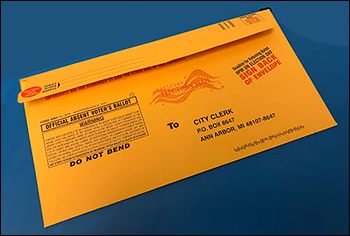
Oct. 20, 2020 — The Michigan Court of Appeals on Friday reversed a lower court ruling that allowed a post-election ballot reception period that would have lasted until Nov. 17, and granted the process known as “ballot harvesting,” where another individual or individuals can deliver unspecified numbers of ballots for voters.

The three-judge high court unanimously overturned a ruling from Court of Claims Judge Cynthia Stephens who made the original directive in deciding an election lawsuit that the Michigan Alliance for Retired Americans, a union-funded organization, brought forth.

When the Michigan attorney general and secretary of state jointly decided not to appeal Judge Stephens’ ruling, the Republican controlled state House and Senate filed the motion and were granted standing. It is unclear now whether the Michigan Alliance will appeal to the state Supreme Court.

According to the Detroit News’s reporting, the original ruling contained the directive that the ballots must be postmarked by Nov. 3. That clerical distinction, however, will be difficult to enforce once we advance into the post-election counting and challenge stage.

The US Postal Service, themselves, according to their employee practices handbook, indicate that many mail pieces do not require postmarks. In most of the 21 states that are now allowing the post-election reception period, the ballots will fall into one of these categories thus making the postmark question moot, and that will invariably lead to further lawsuits and litigation. Below is the official language for the postmark directives:

“Postmarks are not required for mailings bearing a permit, meter, or precanceled stamp for postage, nor to pieces with an indicia applied by various postage evidencing systems.”

The Appellate Court ruling means, at least until if and when the state Supreme Court addresses the issue, that there will be no post-election ballot reception period in Michigan. Ballot harvesting pertaining to individuals who are not immediate family members of the person wanting to vote absentee or is not an election office clerk, will again be prohibited. Therefore, all ballots are required to be in the possession of election authorities throughout Michigan’s counties before the polls close on Election Day, Nov. 3.

Continue reading

Where the Senate Stands

By Jim Ellis

Oct. 13, 2020 — Now, less than a month before the official Election Day, we see multiple polls coming regularly in almost every competitive Senate race. Democrats need a net conversion of three Republican seats if Joe Biden is elected president and four seats if he is not. With 16 races now on the competitive board, we look at where they each stand. At least two surveys are included for each race.

Looking at the current trends, we see a tightening Senate from the current 53R-47D majority. Under the current swing, Democrats could reach 51, but with several races remaining as toss-ups or in range where they still could go either way. It’s conceivable, at this point, that both parties could claim 49 seats with a fight for the remaining two that would decide the next majority.

All of the polling data is from late September and early October:


ALABAMA: Sen. Doug Jones (D) vs. Tommy Tuberville (R)
• Trend: Tuberville

POLLS:
• University of Auburn @ Montgomery (Sept. 30-Oct. 3; 1,072 registered Alabama voters)
  Tommy Tuberville (R) – 54%
  Sen. Doug Jones (D) – 42%

• Morning Consult (Sept. 11-20; 658 likely Alabama voters)
  Tommy Tuberville (R) – 52%
  Sen. Doug Jones (D) – 34%


ALASKA: Sen. Dan Sullivan (R) vs. Dr. Al Gross (I/D)
• Trend: Slightly Sullivan

POLLS:
• Alaska Survey Research (Sept. 25-Oct. 4; 676 likely Alaska voters)
  Sen. Dan Sullivan (R) – 48%
  Al Gross (I/D) – 44%

• Harstad Strategic Research (Sept. 20-23; 602 likely Alaska voters)
  Sen. Dan Sullivan (R) – 46%
  Al Gross (I/D) – 45%


ARIZONA: Appointed Sen. Martha McSally (R) vs. Mark Kelly (D)
• Trend: Kelly

POLLS:
• Latino Decisions (Sept. 28-Oct. 6; 600 likely Arizona voters)
  Mark Kelly (D) – 47%
  Sen. Martha McSally (R) – 42%

• Ipsos (Oct. 3-5; 550 likely Arizona voters)
  Mark Kelly (D) – 48%
  Sen. Martha McSally (R) – 44%

• Data Orbital (Oct. 3-5; 550 likely Arizona voters)
  Mark Kelly (D) – 49%
  Sen. Martha McSally (R) – 44%

• HighGround, Inc. (Sept. 28-Oct. 5; 400 likely Arizona voters)
  Mark Kelly (D) – 50%
  Sen. Martha McSally (R) – 44%


Continue reading

Where the Senate Stands

By Jim Ellis

Aug. 28, 2020 — A tough battle is underway for the US Senate majority, and both parties are fiercely attempting to assume control in the next Congress. Republicans hold a 53-47 majority, but a win in Alabama would send them to 54-46, and that makes the Democrats’ road to the majority all the more difficult.

Democrats need a net conversion of three Republican seats if Joe Biden is elected president, and four if President Trump wins re-election.

Today, we take a snapshot look at polling figures in the key campaign states. How the states listed below eventually fall will determine which party runs the Senate for the 117th Congress.

Below, we provide you the two most extreme results of recent publicly released surveys from the competitive campaigns. The Ellis Insight ratings depict where the race is today, which is not solely based upon polling.


ALABAMA – Lean R (possible conversion)

Morning Consult (July 24-Aug. 2; 80 likely Alabama voters)
• Tommy Tuberville (R) – 52%
• Sen. Doug Jones (D) – 35%

Auburn University at Montgomery (July 2-9; 55 registered Alabama voters)
• Tommy Tuberville (R) – 44%
• Sen. Doug Jones (D) – 36%


ARIZONA – Lean D (possible conversion)

Redfield & Wilton Strategies (Aug. 16-18; 856 likely Arizona voters)
• Mark Kelly (D) – 53%
• Sen. Martha McSally (R) – 34%

OnMessage (Aug. 2-4; 40 likely Arizona voters)
• Mark Kelly (D) – 48%
• Sen. Martha McSally (R) – 48%


COLORADO – Lean D (possible conversion)

Public Policy Polling (Aug. 18-19; 731 Colorado voters)
• Ex-Gov. John Hickenlooper (D) – 51%
• Sen. Cory Gardner (R) – 42%

Morning Consult (July 17-26; 61 likely Colorado voters)
• Ex-Gov. John Hickenlooper (D) – 48%
• Sen. Cory Gardner (R) – 42%


GEORGIA–A – Lean R/Toss

Garin Hart Yang Research Group (Aug. 10-13; 60 likely Georgia voters)
• Jon Ossoff (D) – 48%
• Sen. David Perdue (R) – 46%

Survey USA (Aug. 6-8; 62 likely Georgia voters)
• Sen. David Perdue (R) – 44%
• Jon Ossoff (D) – 41%


Continue reading

Colorado Republican Primary Shock:
Rep. Tipton Denied Renomination

By Jim Ellis

July 1, 2020 — While the pre-election coverage to yesterday’s Colorado primary focused on how former governor and presidential candidate John Hickenlooper would fare in the Democratic Senate primary – he would win 60-40 percent, which was certainly well below what original projections forecast – the real story came in the state’s Western Slope congressional district.

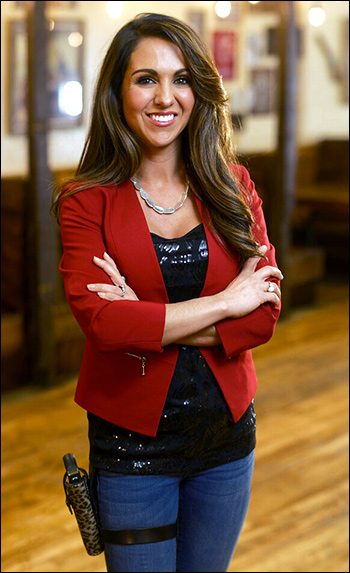
Lauren Boebert (R), a 2nd Amendment activist and local restaurant owner, soundly denied Rep. Scott Tipton (R-Cortez) re-nomination in the Republican congressional primary.

There, five-term veteran Rep. Scott Tipton (R-Cortez) was soundly denied re-nomination by 2nd Amendment activist and local restaurant owner Lauren Boebert in the Republican congressional primary. When the final votes are counted, Boebert will break 54 percent of the vote of what looks to be about 120,000 cast votes, more than double the amount of the last GOP primary held here in 2016.

Boebert will spend well under $200,000 for her effort; long known as a local conservative activist, she made her money count with a pointed message to Republican primary voters. Her strategy was to create a negative image of Rep. Tipton for “siding with Rep. Alexandria Ocasio-Cortez (D-NY) and her squad” in relation to bailing out the city of Boulder, which is not in his 3rd District, how he “teamed with Nancy Pelosi to give amnesty to millions of illegal immigrants,” and “forced taxpayers to pay $1 billion for their housing.”

The race was relatively close in every place except Mesa County, which houses the district’s second largest city, Grand Junction. The area allowed her to build approximately 8,500 of her 9,600 vote spread against the incumbent, and defeating him despite Tipton carrying 19 of the district’s 29 counties. Totals are not complete due to the state’s all-mail voting system, but there is no doubt that Boebert has won.

The Democratic nominee, by virtue of a 61 percent win in her primary, is 2018 nominee Daine Mitsch Bush, who was planning for a re-match with Rep. Tipton. Now, she will have to reverse course to compete against a firebrand conservative who wears a firearm strapped to her right leg and owns a restaurant on I-70 called “The Shooters Grill.” This new open seat will be competitive, and colorful, in the fall.
Continue reading

Updating Tuesday’s Results

By Jim Ellis

June 25, 2020 — With the Kentucky and New York primary totals still days away from becoming final, there are ways of looking to project an outcome of the close races.

KENTUCKY

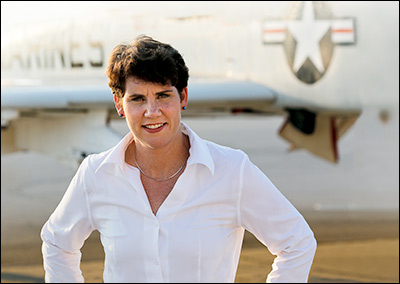
Kentucky Senate challenger Amy McGrath (D).

There was some news in Kentucky yesterday as Fayette County, the state’s second-largest local entity, reported its first numbers in the Senate Democratic primary. While only showing about 2,000 total votes counted, 72 percent of the early tallies went state Rep. Charles Booker’s (D-Louisville) way, a rather astonishing occurrence in opponent Amy McGrath’s home county.

You will remember that McGrath ran for the US House in the Fayette County-anchored 6th District in 2018. Therefore, it was expected that the Fayette Senate primary totals would heavily favor her, thus suggesting her 5,104 early statewide vote lead might be sustained. Though just a sliver of the actual votes to come from Fayette are now reported, the fact that Booker would receive such a large share indicates the supposition that McGrath would sweep the county is incorrect.

Even with a low total being reported from Fayette — and that appears to be the only county with newly reported data — the Secretary of State is telling county election administration personnel not to release numbers until June 30. Booker’s statewide deficit is now just 4,066 votes with well over 600,000 votes expected to be added to the various totals.

The vote overlay also boosts Booker’s potential chance of slipping past McGrath when understanding that his home area alone, Jefferson County, could easily wipe out such a small statewide deficit. Jefferson County, which houses Louisville and is Kentucky’s largest local entity, has a population that exceeds 760,000 individuals. Therefore, the expected vote total coming from the locality will be large in proportion to the outstanding number of uncounted ballots. Thus, the race may well be too close to call.

In any event, the big winner of the Democratic primary appears to be incumbent Republican Sen. Mitch McConnell. He is now assured of facing a Democratic general election opponent who will come out of their own party primary with a split base, not the way one would want to start a general election campaign against a powerful Senate majority Leader who tends to dominate his state’s politics.
Continue reading

Primary Results: Many Undecided

By Jim Ellis

June 24, 2020 — Partial returns were reported last night in Kentucky and New York, but it likely will be June 30 before we see even unofficial final totals as both states wait for returning absentee ballots.

In Kentucky, an estimated 625,000 ballots are in the postal system and can take until June 27 to arrive in their respective county counting centers. The secretary of state is allowing the Kentucky counties to not report until June 30 and will not release statewide totals until then. News services, however, were reporting counted numbers.

Trends appear better established in New York, where a greater percentage of the overall vote is most likely counted. New York generally records low primary participation numbers. Most of the races have clear winners, however. Completed totals are reported in North Carolina and Virginia.

The Kentucky Senate Democratic primary, as closing polling predicted, is tight in early counting. Retired Marine Corps pilot Amy McGrath leads state Rep. Charles Booker (D-Louisville), but with only a 5,104-vote margin (45-37 percent) among the just under 62,000 votes tabulated. No numbers are reported from the state’s two largest counties, Jefferson and Fayette, the homes of Booker and McGrath, respectively.

At this point, McGrath appears headed toward a close victory but, with so many votes outstanding, it will likely be a full week before we see an official winner declared. On the Republican side, Senate Majority Leader Mitch McConnell’s 87 percent total assures him of re-nomination.

All five of Kentucky congressional Republican incumbents have been re-nominated, as each total between 88-94 percent of the yesterday’s in-person vote. Kentucky is one of 12 states that does not allow early voting. In Rep. John Yarmuth’s (D-Louisville) 3rd District, no numbers have been reported in the Republican primary, but the congressman has been re-nominated because he was unopposed on the Democratic side.

In New York, state Sen. Chris Jacobs (R-Buffalo) has been projected as the special election winner in the vacant 27th District. Of the totals counted, he topped former Grand Island town supervisor Nate McMurray (D), 69-29 percent. In the concurrent Republican primary for the regular term, Jacobs is capturing 71 percent of the vote to easily win the party nomination for the full term.
Continue reading