Tag Archives: Kentucky

Gallego, Kaine Announce for Senate; Cameron Leads in Kentucky; Lightfoot’s Downward Trend Continues

By Jim Ellis — Tuesday, Jan. 24, 2023

Senate

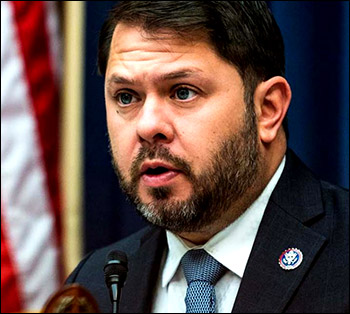
Arizona Rep. Ruben Gallego (D) Announces for Senate.

Arizona: Rep. Ruben Gallego (D) Announces for Senate — Taking quick advantage of Rep. Greg Stanton (D-Phoenix) not pursuing a US Senate run next year, fellow Rep. Ruben Gallego (D-Phoenix), a long-presumed 2024 Senate candidate, officially declared his candidacy yesterday. At this point, he must be considered the leading candidate for the Democratic nomination and his moving so quickly after Rep. Stanton’s announcement is intended to lock down the nomination way in advance of the candidate filing deadline.

The general election will be tough in that Independent Sen. Kyrsten Sinema is likely to be in the field and certainly whittles away some Democratic support. While her prospects of winning a Democratic primary against Rep. Gallego or anyone else appear poor, her victory path is more reasonable in a three-way general election. As has been the case in the past three elections, the Arizona Senate race will again become a key national campaign.

Five-term Rep. Gallego says he is not opposing incumbent Sen. Sinema because “she abandoned the Democratic Party — it’s that she abandoned Arizona.” Rep. Gallego, who was long expected to be a Democratic Senate candidate long before Sen. Sinema switched her partisan allegiance in December, at this point sees no major intra-party opposition. US Rep. Greg Stanton (D-Phoenix), who would have been a top contender, but on Friday said he would not enter the statewide contest.

The Arizona nomination system is long, and we are still more than a year away from the April 2024 candidate filing deadline, so much will happen in this Senate contest before the political dust settles. Should Sen. Sinema seek re-election, a legitimate three-way race among she, presumably Rep. Gallego on the Democratic line, and a Republican nominee would yield a race in which any of those three contenders, under the right circumstances, could win the general election.

Virginia: Sen. Tim Kaine (D) Announces for Re-Election — Though some speculation was beginning to percolate that Democratic senator and 2016 vice presidential nominee Tim Kaine would retire, on Friday he announced that he will seek a third term. At this point, he becomes a prohibitive favorite to win the 2024 general election in a state that is moving into the reliably Democratic category even after the Republican success in the 2021 odd-year elections.

The budding Republican candidate field is not impressive so far, but retired Navy Capt. Hung Cao, who scored 47 pecent against Rep. Jennifer Wexton (D-Leesburg) in a 10th District that the FiveThirtyEight data organization rates as D+8 and Dave’s Redistricting App calculates the partisan lean at 55.2D-42.99R, is apparently considering a Senate challenge. Cao would provide Republicans with a credible and interesting candidate, but with the state continuing to move toward the Democrats, which is accentuated in a presidential year, Sen. Kaine is in a strong political position as he begins his quest for a third term.

Governor

Kentucky: AG Cameron Opens with Lead — A Meeting Street Kentucky statewide poll (Jan. 9-11; 500 likely Kentucky Republican primary voters; live interview & text) gives Attorney General Daniel Cameron a strong opening advantage for the party nomination in the May primary election. In a field of a dozen candidates vying for the opportunity of challenging Democratic Gov. Andy Beshear in November, AG Cameron is staked to an early 39-8-8 percent lead over state Agriculture Commissioner Ryan Quarles and former UN Ambassador Kelly Craft.

Cameron is clearly the most well known and positively viewed of the GOP candidates. His favorable recognition and positive image among the Republican voter sample was 62 percent as compared to Quarles’ 28 percent and Craft’s 22 percent. In 2019, Cameron was elected attorney general with a 58-42 percent victory margin.

Cities

Chicago: Mayor Lightfoot’s Downward Re-Election Trends Continue — Two new polls continue to show Chicago Mayor Lori Lightfoot (D) in an underdog position for re-election in likely the nation’s most important 2023 mayoral election.

The surveys, from M3 Strategies (Dec. 11-13; 440 likely Chicago voters; SMS text to web) and a more recent study from Lester & Associates for the Sophie King campaign (Jan. 9-14; 600 likely Chicago voters; live interview), find Mayor Lightfoot trailing in the Feb. 28 non-partisan primary election. There is also a fair chance that she will fail to even qualify for the April 4 runoff, a secondary election that appears inevitable since no one is close to obtaining majority support.

Both polls find US Rep. Jesus “Chuy” Garcia (D-Chicago) claiming first place. The M3 poll showed Lightfoot dropping to third position behind former Chicago budget director Paul Vallas, while Lester & Associates sees the incumbent mayor holding the second slot. The M3 poll found Lightfoot saddled with a terrible 25:74 percent favorable to unfavorable ratio. This latter statistic might be most indicative in suggesting that she will fail to win re-election.

Budd Wins in NC; PA Senate Race
Still Too Close to Call

By Jim Ellis
May 18, 2022

Primary Results

Yesterday’s Voting — As predicted, North Carolina US Rep. Ted Budd (R-Advance) soundly defeated former North Carolina Gov. Pat McCrory to win the US Senate nomination, winning 99 of the state’s 100 counties. Former US Rep. Mark Walker and author Marjorie Eastman finished third and fourth. The general election is now set, as Rep. Budd advances to face former state Supreme Court Chief Justice Cheri Beasley, who became a consensus Democratic candidate. The Tar Heel contest will be one of the most important Senate races in the country.

US Rep. Madison Cawthorn (R-Hendersonville) lost his battle for re-nomination last night to state Sen. Chuck Edwards (R-Hendersonville). In the field of eight candidates, Edwards claimed the nomination with 33 percent of the vote, as compared to the scandal-plagued congressman’s 32 percent. In North Carolina, runoffs only occur if all of the candidates fall below a 30 percent threshold.

In what appears to be another congressional defeat, veteran Oregon Congressman Kurt Schrader (D-Canby) is running far behind his Democratic primary challenger, Jamie McLeod-Skinner, a former city manager, but half of the vote is still outstanding under Oregon’s all-mail voting system. Still, with a 61-39 percent margin, Rep. Schrader appears too far behind to make up all of the vote difference.

The Pennsylvania Senate Republican race is still too close to call, as television Dr. Mehmet Oz and former hedge fund CEO David McCormick are locked in a battle separated with less than two-tenths of a percentage point. It is difficult to tell how many votes remain uncounted because the state will allow ballots postmarked yesterday to be received in the coming days. It will be some time before we know the outcome, but Dr. Oz has a 2,672-vote lead of the more than 1.31 million votes cast. Pennsylvania election law guarantees an automatic recount if the margin is within .5 percent. McCormick claims the remaining mail votes will hand him the victory.

As expected, the Pennsylvania Democrats nominated Lt. Gov. John Fetterman who lays in a hospital recovering from a recent stroke that occurred from a blood clot in his heart. Fetterman, who underwent a pacemaker procedure, is expected to make a full recovery but will be sidelined for some time.

In the election, Fetterman easily defeated US Rep. Conor Lamb (D-Pittsburgh) and state Rep. Malcolm Kenyatta (D-Philadelphia) with a 59-26-10 percent landslide victory margin. He won all of the state’s 67 counties in a turnout of more than 1.17 million voters. Surprisingly, Democratic turnout dropped below that of Republicans for the first time in decades. This, despite the party’s 45.8 to 35.9 percent voter registration advantage.

In the PA governor’s race, state Sen. Doug Mastriano (D-Fayetteville) easily won the open Republican nomination and will face Attorney General Josh Shapiro (D) in the general election. The latter man was unopposed in the Democratic primary. Media reports suggest that Mastriano may be too conservative to win in Pennsylvania, but the large Republican primary turnout is a precursor that this race will be competitive.

In other key statewide races, Kentucky Sen. Rand Paul romped to an 86 percent Republican primary victory. He will face former Louisville state Rep. Charles Booker who was an easy winner on the Democratic side. Sen. Paul is a heavy favorite for re-election. In the open 3rd Congressional District, state Senate Minority Leader Morgan McGarvey, also as expected, won a landslide Democratic primary victory last night and will succeed retiring Rep. John Yarmuth (D-Louisville) in the Autumn.

Idaho Gov. Brad Little (R) defeated Trump backed Lt. Gov. Janice McGeachin, 53-32 percent, and becomes a prohibitive favorite in the general election. US Rep. Mike Simpson (R-Idaho Falls) again defeated his 2014 primary opponent, attorney Bryan Smith, this time by 13 percentage points and will claim a 13th term in November.

Governor

Wisconsin: New Republican Leader According to Dem Poll — Democratic pollster Public Policy Polling surveyed the Wisconsin Republican gubernatorial primary and produced results not found in other polls. The study (May 9-10; 675 likely Wisconsin Republican primary voters) projected construction company executive and 2004 US Senate nominee Tim Michels taking a small lead over former Lt. Gov. Rebecca Kleefisch. This is the first poll find anyone but Kleefisch claiming the top position. The ballot test gave Michels a 27-26 percent edge, with businessman Kevin Nicholson trailing well behind in third place with nine percent preference. The Milwaukee Works, Inc. organization released the ballot test portion of the PPP survey.

States

Texas: Conflicting AG Polls — Next Tuesday, Texas Republican voters will decide the runoff election between incumbent Attorney General Ken Paxton and Land Commissioner George P. Bush. The race has turned negative and earlier polls were giving Paxton, who is still under a stalled 2015 SEC indictment, a strong lead. The new University of Texas at Tyler survey (May 2-10; 570 likely Texas Republican runoff voters) projects Paxton’s lead to be only 41-35 percent.

During the same sampling period, as previously reported, the CWS Research group (May 4-10; 992 likely Texas Republican runoff voters) produced a much different 58-31 percent ballot test result in the attorney general’s favor. Since these polls were conducted during the same period, we will have to see more data to determine the correct trajectory. It appears clear, however, that Paxton is the race leader, but whether his margin is wide or tight is open to question.

Primaries Set for Five States Today

Pennsylvania primary GOP candidates Kathy Barnette, Dr. Mehmet Oz, and David McCormick are in a virtual dead heat with McCormick fading.

By Jim Ellis
May 17, 2022


Primaries

Today’s Voting — Primaries are being conducted in five states today, including the crucial Pennsylvania and North Carolina races. The most watched campaigns being decided tonight include the Pennsylvania Senate and governor’s races in both parties, the North Carolina Republican Senate race, freshman Rep. Madison Cawthorn’s (R-NC) nomination challenge, and the hotly contested new open 13th District seat in the Tar Heel State.

In Oregon, Rep. Kurt Schrader (D-Canby) faces a significant Democratic primary challenge, while Idaho Gov. Brad Little (R) is defending himself from a challenge from his lieutenant governor, Janice McGeachin, who has former President Trump’s support. The open Louisville seat in Kentucky will be virtually decided today as state Senate Minority Leader Morgan McGarvey (D) appears as a lock to capture the Democratic nomination. In this 3rd District seat, clinching the Democratic nomination is tantamount to winning the seat.

Senate

Pennsylvania: Final Polling Still Too Close to Call — Major occurrences are happening in both parties on primary eve. For the Republicans, The long-awaited Pennsylvania primary is on tap, and the Republican side is ending with a flurry of outside organizations running media attack ads. Supporters of former hedge fund CEO David McCormick and Dr. Mehmet Oz turned their attention in the final days of the race toward trying to blunt Army veteran and 2020 congressional candidate Kathy Barnette who has driven herself into the top tier and beginning to peak at the optimum time. Supporting Barnette is the Club for Growth organization, spending $2 million in a media blitz around the state to bolster her improving chances of winning the primary.

Susquehanna Polling & Research released their final poll before the votes are counted (May 12-15; 400 likely Pennsylvania Republican primary voters) and it projects a virtual dead heat at the top of the ticket. The Susquehanna numbers find Oz leading Barnette by just a single point, 28-27 percent, with a 24 percent undecided factor. Former hedge fund CEO David McCormick is way back, according to this study, with just 11 percent support.

Democratic front-runner John Fetterman was hospitalized with a stroke over the weekend, but appears well positioned to make a full recovery and capture the nomination today. Lt. Gov. Fetterman has a large polling lead over US Rep. Conor Lamb (D-Pittsburgh) and looks to be the clear favorite on the Dem side today.

House

MI-13: Another Close Primary Race — Target Insyght completed a poll of Detroit’s open new 13th District (May 3-5; 600 likely MI-13 Democratic primary voters; live interview) and finds another political contest that is tight among several candidates. Eleven candidates are in the Democratic field, but only three enter double digits.

Former Detroit City Councilwoman Sharon McPhail leads the group at 20 percent, John Conyers III, son of former 52-year congressional veteran John Conyers, is second with 15, and state Rep. Shri Thanedar (D-Detroit) is third with 12. The Michigan primary is Aug. 2. The seat is open after Rep. Brenda Lawrence (D-Southfield) announced her retirement and Rep. Rashida Tlaib (D-Detroit) decided to seek re-election in District 12.

Governor

Minnesota: Former State Senator Wins Party Endorsement — Minnesota Republicans met in their state nominating endorsement convention and chose, on the sixth ballot, former state Sen. Scott Jensen as their official party candidate. Others may oppose him in an Aug. 9 primary election. Should Jensen come through the primary, he will then challenge Gov. Tim Walz (D). A recent Survey USA poll (May 5-10; 629 registered Minnesota voters; 513 who identify themselves as likely general election voters; live interview) finds Gov. Walz leading Jensen only 44-39 percent, and carrying a favorability index of 44:41 percent positive to negative.

Pennsylvania: Mastriano Pulling Away — Susquehanna Polling & Research (see Senate post above) also tested today’s governor’s race. Here they find state Sen. Doug Mastriano (R-Fayetteville), despite two candidates dropping out in an attempt to deny him the nomination, expanding his polling lead. The results project Mastriano to a 29-18-15 percent lead over former US Attorney Bill McSwain and ex-US Rep. Lou Barletta. Tonight’s winner faces Attorney General Josh Shapiro who is unopposed in the Democratic primary.

Redistricting

New York: Draft Map Sent to Judge — The special master hired to draw a replacement New York map after the judiciary ruled the legislature’s plan was a partisan gerrymander, presented his effort to the presiding judge yesterday, meeting the previously assigned deadline. The judge is now accepting public comments and pledged to finalize the congressional and state Senate plans by Friday. The congressional map improves the political situation for Republicans, giving them at least one more seat than the Democratic draw, but putting possibly as many as 10 of the 26 seats into potential competition.

The map also pairs two sets of Democratic incumbents. In New York City, Reps. Jerry Nadler and Carolyn Maloney are placed in one district. Both said yesterday that they would run. The new district contains 61 percent of Maloney’s district and 39 percent of Nadler’s. It is safely Democratic in the general election.

Rep. Mondaire Jones (D-Westchester County) finds himself having to choose a Democratic pairing either against Rep. Sean Patrick Maloney (D-Cold Spring) or Rep. Jamaal Bowman (D-Yonkers), or possibly running in an open 18th District that is relatively far from his current CD. If this map is adopted, we will see a much different New York election cycle than what was originally intended.

Rep. John Yarmuth to Retire

By Jim Ellis

Rep. John Yarmuth (D-Louisville)

Oct. 14, 2021 — In a video to his supporters and beginning with the phrase “it’s been an incredible journey since my first campaign in 2006 until now …” Kentucky US Rep. John Yarmuth (D-Louisville), the chairman of the House Budget Committee, announced Tuesday that he will not seek a 9th term in Congress next year.

Yarmuth indicated that he never intended to spend 16 years in Washington, figuring he would retire after five terms, but at the age of 75, with his birthday just before the next election, the veteran congressman indicated it is time to return to Louisville and begin enjoying retirement. He committed to vigorously serving the remainder of the current term.

Kentucky’s 3rd Congressional District is fully contained within Jefferson County and hosts the state’s largest city of Louisville. Under the 2020 census numbers, the 3rd only needs to shed 5,879 residents, suggesting that the district will remain largely intact after redistricting. The Kentucky legislature is again expected to draw a 5R-1D congressional map designed to hold for the ensuing decade.

The 3rd is Kentucky’s lone Democratic congressional seat, and returned a 60-38 percent margin for President Biden last November. Hillary Clinton recorded a 55-40 percent spread against then-candidate Donald Trump in 2016, and President Obama posted a 56-43 percent mark against Mitt Romney back in 2012, the first election under the current district lines.

Yarmuth came to the House in 2006, scoring an upset win over then-Rep. Anne Northup (R) in a much different and more competitive 3rd District. He unseated her with a close 51-48 percent margin in what proved to be a strong Democratic election year. Northup returned for a re-match in 2008, but Yarmuth easily won that contest with a 59-41 percent victory margin in the first Obama election year.

In the course of his seven re-election campaigns, Rep. Yarmuth averaged 61.4 percent of the vote and was never a targeted Democratic incumbent. He assumed the chairmanship of the Budget Committee in 2019.

Continue reading

Census by District

By Jim Ellis

Aug. 17, 2021 — We can now see exactly where each congressional district in the country stands in terms of population. The Census Bureau delivered the state redistricting data last week, and the Daily Kos Elections site data team segmented the numbers into individual congressional districts.

Below is a chart of the 38 states that have more than two districts, isolating the CDs that are the most over and under populated. The “High” column depicts the district that is the most over-populated in the state, while the “Low” is the one requiring the most new residents. The “+/-” column shows how many districts in the particular state are over and under populated.

The most robust district is that of Texas freshman Rep. Troy Nehls (R-Richmond). His southwest Houston seat houses just under one million people, at an exact count of 972,309. The least populated seat is West Virginia’s 3rd District (Rep. Carol Miller-R): 326,267 people under quota. With all of the Mountain State seats seriously down, it is clear as to why West Virginia lost a seat in reapportionment.

There are only two states, Colorado and Oregon, where all of the current districts are over-populated. Both entities gain one seat in reapportionment. On the other end of the spectrum, Michigan and Pennsylvania saw all districts falling below their new population quota, and in Illinois, 17 of their current 18 do as well. All three states are losing a district.

It is not surprising that California lost a seat for the first time in history. A total of 35 of their current 53 seats require more population versus 18 that must shed residents. New York barely lost a seat, by just 89 people statewide, which is surprising when seeing 23 of their current 27 districts requiring additional population.

The states are now converting their new data into their redistricting software systems. After that, most will hold hearings for public input prior to district construction beginning.

STATE DIST INCUMBENT HIGH LOW +/-
Alabama 5 Mo Brooks (R) 43,348 4, 3
7 Terri Swell (D) -53,143
Arizona 5 Andy Biggs (R) 86,414 3, 6
2 Ann Kirkpatrick (D) -50,133
Arkansas 3 Steve Womack (R) 86,266 2, 2
4 Bruce Westerman (R) -66,283
California 45 Katie Porter (D) 53,645 18, 35
-1 40 Lucille Roybal-Allard (D) -70,139
Colorado 4 Ken Buck (R) 148,823 7, 0
+1 3 Lauren Boebert (R) 36,543
Connecticut 4 Jim Himes (D) 25,627 2, 3
2 Joe Courtney (D) -21,288
Florida 9 Darren Soto (D) 186,381 21, 6
+1 13 Charlie Crist (D) -41,756
Georgia 7 Carolyn Bourdeaux (D) 94,304 8, 6
2 Sanford Bishop (D) -92,108
Illinois 7 Danny Davis (D) 10,986 1, 17
-1 17 Cheri Bustos (D) -79,907
Indiana 5 Victoria Spartz (R) 50,921 5, 4
8 Larry Bucshon (R) -38,579
Iowa 3 Cindy Axne (D) 61,382 1, 3
4 Randy Feenstra (R) -31,730
Kansas 3 Sharice Davids (D) 57,816 1, 3
1 Tracey Mann (R) -33,697
Kentucky 6 Andy Barr (R) 33,300 4, 2
5 Hal Rogers (R) -57,592
Louisiana 6 Garret Graves (R) 40,173 3, 3
4 Mike Johnson (R) -47,947
Maryland 4 Anthony Brown (D) 26,772 6, 2
7 Kweisi Mfume (D) -68,401
Massachusetts 7 Ayanna Pressley (D) 18,714 4, 5
1 Richard Neal (D) -50,635
Michigan 11 Haley Stevens (D) -17,368 0, 14
-1 5 Dan Kildee (D) -104,476
Minnesota 3 Dean Phillips (D) 24,586 5, 3
7 Michelle Fischbach (D) -39,978
Mississippi 4 Steven Palazzo (R) 37,196 3, 1
2 Bennie Thompson (D) -65,829
Missouri 3 Blaine Luetkemeyer (R) 35,121 6, 2
1 Cori Bush (D) -54,618
Nebraska 2 Don Bacon (R) 47,170 2, 1
3 Adrian Smith (R) -53,152
Nevada 3 Susie Lee (D) 79,374 2, 2
1 Dina Titus (D) -73,332
New Jerseyy 8 Albio Sires (D) 47,314 5, 7
2 Jeff Van Drew (R) -41,606
New Mexico 2 Yvette Harrell (R) 8,181 2, 1
1 Melanie Stansbury (D) -11,264
New York 12 Carolyn Maloney (D) 34,717 4, 23
-1 23 Tom Reed (R) -83,462
North Carolina 2 Deborah Ross (D) 165,703 12, 1
+1 1 G.K. Butterfield (D) -6,238
Ohio 3 Joyce Beatty (D) 23,119 2, 14
-1 6 Bill Johnson (R) -99,512
Oklahoma 1 Kevin Hern (R) 36,806 3, 2
2 Markwayne Mullin (R) -69,793
Oregon 1 Suzanne Bonamici (D) 157,843 5, 0
+1 4 Peter DeFazio (D) 117,399
Pennsylvania 10 Scott Perry (R) -5,379 0, 18
-1 15 Glenn Thompson (R) -90,540
South Carolina 1 Nancy Mace (R) 87,689 3, 4
6 Jim Clyburn (D) -84,741
Tennessee 4 Scott DesJarlais (R) 62,976 5, 4
9 Steve Cohen (D) -77,122
Texas 22 Troy Nehls (R) 205,322 28, 8
+2 13 Ronny Jackson (R) -59,517
Utah 4 Burgess Owens (R) 65,265 1, 3
3 John Curtis (R) -31,190
Virginia 10 Jennifer Wexton (D) 100,750 6, 5
9 Morgan Griffith (R) -87,917
Washington 7 Pramila Jayapal (D) 28,862 6, 4
6 Derek Kilmer (D) -33,730
West Virginia 2 Alex Mooney (R) -275,777 0, 3
-1 3 Carol Miller (R) -326,627
Wisconsin 2 Mark Pocan (D) 52,678 2, 6
4 Gwen Moore (D) -41,320

Latest Senate News – Part I

By Jim Ellis

May 27, 2021 — Incumbents, candidates, and potential candidates are making political moves in some key upcoming 2022 Senate races, which makes now a good time to review the latest happenings. Today we look at the significant developing races alphabetically from Alabama through Nevada. Tomorrow, we cover the remainder.

• Alabama: Sen. Richard Shelby (R) is retiring, and the early Republican primary battle looks to be a match between Rep. Mo Brooks (R-Huntsville), armed with an endorsement from former President Donald Trump, and ex-US Ambassador Lynda Blanchard who is promising to personally spend $5 million on her campaign.

No Democrat has yet come forward to declare a candidacy. US Rep. Terri Sewell (D-Birmingham), the lone Democratic member of the congressional delegation, has already said she that will seek re-election next year and not run statewide.

• Arizona: Sen. Mark Kelly (D), who won the 2020 special election, must stand for a full six-year term in this election cycle. At this point, four Republicans are in the mix. Term-limited Attorney General Mark Brnovich appears poised to enter the race. Venture capitalist Blake Masters, with presumed major backing from billionaire donor Peter Thiel, is likely to run, as is retired Air Force Major General Michael McGuire. Solar energy company executive Jim Lamon has already announced his candidacy.

This will be a top-tier 2022 Senate campaign and is considered a must-win for both parties.

• Florida: The Sunshine State has been drawing a great deal of political media attention of late, all concerning House members looking to run statewide. It now appears set that Rep. Charlie Crist (D-St. Petersburg) is in the governor’s race, while Rep. Stephanie Murphy (D-Winter Park) seeks re-election, and Rep. Val Demings (D-Orlando) appears set to announce her challenge against two-term Sen. Marco Rubio (R).

The Florida Senate race will be competitive because campaigns in this state are always close and Rep. Demings will be a strong opponent. Incumbent Sen. Rubio, however, begins with a clear advantage.

• Georgia: Like Sen. Kelly in Arizona, freshman Georgia Sen. Raphael Warnock (D) won the special 2020 election to serve the balance of an unexpired term. He, too, must stand for a full six-year term next year.

At this point, now that former Rep. Doug Collins says he won’t run, most of the attention centers around former Georgia football legend Herschel Walker (R) and whether he will return from Texas to challenge Sen. Warnock. Walker promises a decision by summer.

If the former football star chooses to pass, Rep. Buddy Carter (R-Pooler/Savannah) says he will run. Banking executive Latham Saddler and construction company owner Kelvin King are the announced GOP candidates. The list of potential Republican candidates is long with state House Speaker David Ralston (R-Blue Ridge) being the latest to discuss the race with national GOP leaders.

Continue reading

Major Senate Moves

By Jim Ellis

April 14, 2021 — With the Senate tied 50D-50R, and every 2022 campaign potentially meaning a change in majority status, we already see serious political moves being made or at least considered. This week began as being particularly active.

In the Last Frontier State of Alaska, 2020 Independent/Democratic nominee Al Gross, who opposed Sen. Dan Sullivan (R), confirms that he is considering challenging Sen. Lisa Murkowski (R) next year. The state’s new top four jungle primary system would virtually guarantee that both Sen. Murkowski and Dr. Gross would advance into the general election should both decide to run. For her part, Sen. Murkowski has not yet formally declared her 2022 political intentions, but she is expected to seek re-election.

Dr. Gross lost to Sen. Sullivan, 54-41 percent, despite exceeding the incumbent’s fundraising totals by almost a 2:1 margin. The Independent/Democrat spent over $19.5 million as compared to Sen. Sullivan’s expenditure total of $10.1 million. A total exceeding $27.2 million was expended from outside organizations, over $18 million of which aided Dr. Gross’ campaign.

Already announced is Republican former State Administrative Director Kelly Tshibaka; a Cygnal research firm survey of 500 Alaska registered voters taken in late March actually found her leading both Sen. Murkowski and Dr. Gross. The ballot test broke 34-19-18 percent in favor of Tshibaka with Sen. Murkowski and Dr. Gross significantly trailing. Under the new primary system, however, all three of these contenders, and a fourth candidate, would advance into the general election.

Former Kentucky state Rep. Charles Booker, who lost the 2020 US Senate Democratic primary to party nominee Amy McGrath in a close 44-42 percent result, has filed an exploratory committee for purposes of assessing his chances against Sen. Rand Paul (R) in a 2022 campaign.

Booker was literally outspent 10:1 in the Democratic primary, as McGrath hauled in more than $20 million even before advancing into the general election. She never figured on having to spend so much to defeat her intra-party opponent, however. Booker was able to maximize his political base in Louisville and with the African American community statewide to pull within 15,149 votes of McGrath with more than 544,000 people casting ballots in the primary election.

Sen. Paul won his 2014 re-election campaign with a 57-43 percent margin over Lexington-Fayette Urban County Mayor Jim Gray (D), which is the second largest municipality in Kentucky. National Democrats were high on the Gray campaign at its outset, but the race never materialized in what became a landslide Republican election year.

Reports emanating from North Carolina suggest that former Gov. Pat McCrory (R) could declare his Senate candidacy as early as today. McCrory was elected governor in 2012 with a 55-43 percent margin but would lose his attempt at re-election by just 10,263 votes from more than 4.7 million ballots cast, or less than a quarter of a percent.

Largely entangled with the infamous North Carolina bathroom bill that became a national story, the governor could not steer himself clear of the controversy and fell to then-Attorney General Roy Cooper (D). McCrory had previously run for governor in 2008, losing to incumbent Bev Perdue (D) by just three percentage points. Prior to running statewide, McCrory served 14 years as Charlotte’s mayor.

Continue reading

More Redistricting Delays – Part I

By Jim Ellis

Feb. 17, 2021 — The Census Bureau announced just before the Presidents’ Day holiday break that there will be yet another long delay in transmitting the census data to the states. Without the new numbers, redistricting becomes unachievable.

The new target date is Sept. 30, postponed from their first postponement date of July 30. At this point, the postponed apportionment release date remains April 30, long after the statutory deadline of Jan. 1. Apportionment is the first critical step in the redistricting process since this informs the states how many congressional seats they will be awarded for the current decade.

The late September target (and there’s no guarantee even this date will be met) will make it difficult for many states to finish their redistricting on time, and could force the process into the courts if state legislatures are unable to convene or meet a legislative calendar in terms of allowing public input. Even now, at least several states will have to enact emergency legislation to change deadlines to avoid violating pre-existing legal redistricting deadlines.

The delays have already changed the political situation in New Jersey and Virginia. With both states having odd-numbered year state legislative elections, the two are always the first to receive their new census data. In both states, legislative elections will now proceed under the 2011 maps with previously enacted amendments. When the lines are eventually completed, it is possible that new elections, possibly for 2022, will be ordered in Virginia. New Jersey voters passed a referendum in November that allows redistricting to occur before the 2023 state legislative elections.

Another problem could be lawsuits filed against the eventual apportionment. Apparently, the principal problem for the delays is exactly which people to count and where they are placed. College students, for example, are typically counted at the university campus on which they reside. Now, however, so many are not attending in-person classes. Therefore, arguments are ongoing as to where this group should be counted, either at school or back at their primary residence.

Additionally, one of President Biden’s new executive orders reversed Trump Administration policies about whether or not to count non-citizens. This change of direction has also created further delays.

Based upon these controversies, and others, it is probable that at least one potential losing state – apparently Alabama is on the cusp of losing a seat but may not depending upon the counting criteria – could sue over the apportionment conclusion meaning even further delays as various potential lawsuits wind their way through the judicial process toward final determination. All of this could conceivably mean redistricting is postponed until the 2024 election cycle.

Continue reading

Early House Outlook – Part IV

By Jim Ellis

Jan. 24, 2021 — Concluding our electoral US House preview, today we look at the final dozen states in the country’s southern region.


• Alabama – 7 Seats (1D6R)

Alabama is on the cusp of losing one of its seven seats in reapportionment. Sources suggest the final numbers are very close and the state may sue over how the figures are tabulated should apportionment take away one of the Republican seats. The Democrats have only one CD in the state, which is a majority minority seat (Rep. Terri Sewell-D) that is a certainty to remain as part of the delegation.

Should Alabama lose a seat in reapportionment, the state’s southeastern region, most particularly the Montgomery anchored 2nd District, would probably the most affected since this is the least populated area of the seven CDs.


• Delaware – 1 Seat (1D)

The home of new President Joe Biden was once a relatively conservative state, but no longer. Delaware is growing but won’t come anywhere near gaining a second seat. Therefore, three-term Rep. Lisa Blunt Rochester (D-Wilmington) will have an easy electoral ride for the foreseeable future.


• Florida – 27 Seats (11D16R)

The Sunshine State is one of two entities perched to gain multiple new districts. Florida is projected to add two seats, which should give the GOP map drawers the opportunity of protecting the newly won South Florida District 26 (Rep. Carlos Gimenez) and 27 (Rep. Maria Elvira Salazar) while maximizing the Republican compilation of Florida seats. Winning the aforementioned Miami-anchored CDs might result in conceding one of the new seats to the Democrats, however, in order to off-load a significant portion of their left-of-center voters, which would make both seats more Republican.

Holding the governor’s office, both houses of the legislature, and now a majority on the state Supreme Court will allow the GOP to become the big winner in redistricting. The fact that 25 of the 27 districts are over the estimated per district population projection of approximately 740,000 residents provides statistical evidence for expanding the delegation.

Rep. Darren Soto’s (D-Kissimmee) 9th District is the most over-populated seat with more than 931,000 people. Only Reps. Neal Dunn’s (R-Panama City) and Charlie Crist’s (D-St. Petersburg) seats are slightly below the projected population target. Twelve of the current 27 districts now hold more than 800,000 constituents. Expect the new seats to be added in South Florida, most likely toward the Gulf Coast side of the peninsula, and in the Orlando area.


• Georgia – 14 Seats (6D8R)

Though Republicans will control the redistricting pen as a result of holding both the legislature and governor’s office, the party map drawers will be hard-pressed to construct a map that allows their members to dominate the delegation as they did 10 years ago. Gaining a seat in 2010 reapportionment, the GOP began the decade with a 10-4 advantage in the House delegation only to see two Atlanta suburban seats slip away as a result of demographic and political changes in the metropolitan area.

Georgia is expected to remain constant in this reapportionment with their 14 seats. The GOP will attempt to make at least one of the seats they lost, District 6 (Rep. Lucy McBath) or District 7 (Rep. Carolyn Bourdeaux) more Republican and thus give themselves a chance to re-claim a seat for the coming decade.

Expect a move to make one of these two seats, probably District 6, more Democratic in order to make District 7 more Republican especially since the latter CD is the most over-populated seat in the state with more than 844,000 residents and will have to shed close to 90,000 individuals to other districts.
Continue reading

The Final Polls

By Jim Ellis

Nov. 2, 2020 — Tomorrow is the official Election Day, but with early voting delivering nearly 87 million votes and 21 states allowing ballots to come in after Nov. 3, it is likely that many Senate and House races will languish in political overtime. With that background, we look at the polling range of the most recent surveys in battleground Senate races along with the number of people who have already cast their ballots in each state (early voting statistics from TargetSmart.com):


ALABAMA:
• Sen. Doug Jones (D) vs. Tommy Tuberville (R)
Polling Range
High: Cygnal (Oct. 26-28) – Tuberville +14
Low: Auburn U Montgomery (Oct. 23-28) – Tuberville +11
No Early Voting


ALASKA:
• Sen. Dan Sullivan (R) vs. Dr. Al Gross (I/D)
Polling Range
High: Gravis Marketing (Oct. 21-23) – Sullivan +3
Low: Change Research (Oct. 16-19) – Sullivan +3

Early Voting Stats:
Republican: 49.1% Total Early Voting 2020: 131,261
Democrat: 33.0% Total Early Voting 2016: 64,583
Unaffiliated: 17.9% Percent Increase: 103%

ARIZONA:
• Sen. Martha McSally (R) vs. Mark Kelly (D)
Polling Range
High: Siena College/NYT (Oct. 26-30) – Kelly +7
Low: Emerson College (Oct. 29-31) – Kelly +3

Early Voting Stats:
Republican: 47.0% Total Early Voting 2020: 2,376,706
Democrat: 46.4% Total Early Voting 2016: 1,658,410
Unaffiliated: 6.6% Percent Increase: 43%

COLORADO:
Sen. Cory Gardner (R) vs. Ex-Gov. John Hickenlooper (D)
Polling Range
High: RMG Research (Oct. 9-15) – Hickenlooper +9
Low: Morning Consult (Oct. 11-20) – Hickenlooper +8

Early Voting Stats:
Democrat: 47.0% Total Early Voting 2020: 2,376,706
Republican: 42.7% Total Early Voting 2016: 1,658,410
Unaffiliated: 9.6% Percent Increase: 39%

GEORGIA-A:
• Sen. David Perdue (R) vs. Jon Ossoff (D)
Polling Range
High: Public Policy Polling (Oct. 27-28) – Ossoff +3
Low: Landmark Communications (Oct. 28) – Even


GEORGIA-B: Jungle Primary
• (Sen. Kelly Loeffler (R) vs. Rev. Raphael Warnock (D) and Rep. Doug Collins (R)
High: Public Policy Polling (Oct. 27-28) – Warnock +19
                                                             – Loeffler + 8
                                                               (over Collins)
Low: Emerson College (Oct. 29-31) – Warnock +11
                                                        – Collins +3
                                                          (over Loeffler)

Early Voting Stats:
Republican: 49.8% Total Early Voting 2020: 3,812,140
Democrat: 42.9% Total Early Voting 2016: 2,385,990
Unaffiliated: 7.3% Percent Increase: 60%

Continue reading