Tag Archives: Josh Mandel

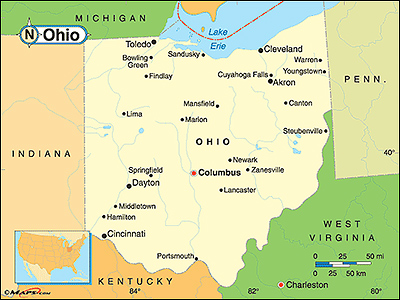
Assessing Ohio

By Jim Ellis

April 9, 2021 — Ever since Sen. Rob Portman (R) announced his retirement in late January, the open Ohio Senate race has attracted a great deal of national political attention.

With the first quarter now at an end and Federal Election Commission financial disclosure reports due on April 15, candidates who have found fundraising success in the previous 12 weeks are informally releasing their dollar totals. Such is the case for the major Ohio contenders.

At this point, the Democratic field already seems to be crystallizing. With a weak political bench in the state, the nomination favorite appears to be Rep. Tim Ryan (D-Warren/ Youngstown). Ryan is in even stronger position because a potential opponent, former Ohio Health Department Director Amy Acton (D) – who was actually faring slightly better against the Republican slate than he according to a March 18-19 Public Policy Polling survey – announced last week that she would not run.

For his part, Ryan originally said he would formally announce his Senate campaign in March, but later indicated that he would not be declaring so soon. Seeing that his first quarter political receipts exceeded $1.2 million suggests that he has been working hard on the fundraising circuit, giving us a further clue as to his actual intention.

The up-and-coming potential Republican candidate appears to be six-term Rep. Steve Stivers (R-Columbus). His aggressive fundraising resulted in $1.4 million obtained for the quarter and added to his previous $1 million cash-on-hand figure, gives him a base war chest of over $2.4 million to begin a statewide effort with millions more to come. The congressman says he will make a final decision about entering the Senate race later in the year.

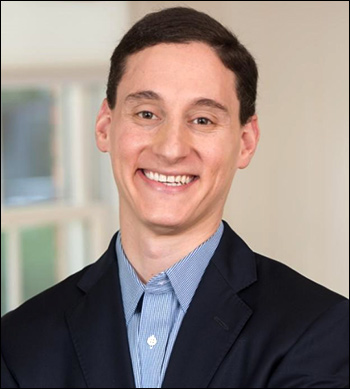
Former Ohio Republican Party chair Jane Timken, however, had an even better fundraising sprint, obtaining just over $2.1 million. Ex-state Treasurer Josh Mandel, who held over $1.6 million in his campaign account from previous campaigns, brought in $1.3 million during Q1 of 2021. Therefore, the GOP top tier contenders are all financially strong. Two other potential entries are author J.D. Vance and US Rep. Mike Turner (R-Dayton).

Stivers, stressing that he has not yet made the decision to run for the Senate, said in an interview with the Cleveland.com news site that, “it’s a huge statement that someone who’s not in the race can outraise announced candidates.”
Continue reading

Ohio Senate: Mandel Declares

By Jim Ellis

Former Ohio State Treasurer and 2012 US Senate candidate Josh Mandel (R), now 2022 senate candidate.

Feb. 12, 2021 — Former Ohio state treasurer and 2012 US Senate candidate Josh Mandel (R), armed with over $4.3 million in his federal campaign account, announced Wednesday that he will run for the state’s open Senate seat next year. Last week, Rep. Tim Ryan (D-Warren/ Youngstown) stated that he will officially declare his own federal statewide candidacy in March.

It is clear that Mandel will not be the only major Republican to battle for the GOP nomination. It is likely, however, that he will begin the primary campaign with more money than any of his future competitors. The only other person holding as large a federal war chest who didn’t run for office in 2020 is former US Rep. Pat Tiberi (R), but he has already made public his intention not to enter next year’s open Senate race.

Several members of the Republican congressional delegation are reportedly assessing the Senate contest as is sitting Secretary of State Frank LaRose. Often mentioned as potential candidates are Reps. Steve Stivers (R-Columbus), Bill Johnson (R-Marietta), Dave Joyce (R-Russell Township), and Warren Davidson (R-Troy). Reps. Jim Jordan (R-Urbana) and Troy Balderson (R-Zanesville) have publicly stated they will not run for the Senate.

Ex-congressman and 2018 US Senate nominee Jim Renacci (R) is another potential contender and confirms that he is considering the race. State Republican Party chair Jane Timken, who resigned her position at the end of last week, is also expected to become a candidate. State Sen. Matt Dolan (R-Chagrin Falls), whose district forms a virtual horseshoe around the city of Cleveland, is also contemplating launching a Senate campaign. Sen. Dolan, the chairman of the state Senate Finance Committee, is a part owner of the Cleveland Indians baseball club.

Mandel was first elected to the Ohio House of Representatives in 2006 when he was 29 years old. He then won the treasurer’s post in 2010 and held it for eight years. He lost the 2012 Senate race to Sen. Sherrod Brown (D) by a 51-45 percent count but raised more than $18 million for his campaign. Mandel was planning to run again in 2018, but his wife’s serious health situation caused him to exit the race after announcing. The couple has since divorced.

Continue reading

Jockeying for Ohio’s Senate Seat

By Jim Ellis

Jan. 28, 2021 — Monday’s surprise announcement that Sen. Rob Portman (R) will not seek re-election next year has ignited a flurry of activity and speculation from potential candidates and political observers alike. Some looking to challenge Gov. Mike DeWine (R) are now also beginning to survey and assess how an open US Senate candidate field might unfold.

Recent voter history suggests that the eventual Republican nominee will at least begin the general election campaign in the favorite’s role. The GOP, with a large number of statewide office holders, former elected officials, and a dozen sitting US House members, has an array of candidates from which to choose, and many will take the plunge.

For example, former US Rep. Jim Renacci, who held Sen. Sherrod Brown (D) to a 53-47 percent victory in the 2018 campaign and was reportedly looking to challenge Gov. DeWine in the 2022 Republican primary, may now set his sights on the open Senate seat.

Another ex-office holder, Pat Tiberi, who averaged 60.6 percent of the vote over nine elections from a Columbus area congressional district that former governor and presidential candidate John Kasich once held, still sits on more than $5 million in his federal campaign account even though he hasn’t been on the ballot since 2016.

It was widely believed that he was amassing a huge war chest to run against Sen. Brown in ’18, but family considerations led him to change his mind, resign from Congress and instead take the reins of the Ohio Business Roundtable.

Still another former elected official, ex-state Treasurer Josh Mandel (R), who lost the 2012 Senate election to Sen. Brown, was planning to run again in 2018 until leaving the race because of his wife’s health issue. Mandel raised almost $20 million for his Senate race eight years ago and has over $4 million in his campaign account even though he has not been a federal candidate in eight years.

Republicans hold all of the state’s constitutional offices. Lt. Gov. Jon Husted, Secretary of State Frank LaRose, Attorney General Dave Yost, state Treasurer Robert Sprague, and State Auditor Keith Faber are all credible potential US Senate candidates.

Continue reading

Rare Ohio Data

By Jim Ellis

March 28, 2018 — Survey USA came into Ohio to test the Buckeye statewide races — campaigns that have not yet received much attention from national political pollsters. The results provided both expected and surprising tallies.

state-of-ohio-mapIn the US Senate race, a campaign that has undergone a great deal of change after original candidate Josh Mandel, Ohio’s treasurer who held Sen. Sherrod Brown (D) to a 51-45 percent win in 2012, was forced to exit the re-match because of his wife’s recently discovered serious medical condition. Upon Mandel’s departure, Rep. Jim Renacci (R-Wadsworth), who had already announced and was actively campaigning for governor, decided to switch gears and entered the Senate race.

Investment banker Mike Gibbons, an ally of Gov. John Kasich (R), was opposing Mandel while the latter man was still in the Senate contest, and continues to battle Rep. Renacci. S-USA tested them all.

According to the polling data (March 16-20; 1,408 likely Ohio voters; 541 GOP likely primary voters; 509 Democratic likely primary voters) Sen. Brown maintains strong, and identical, leads against both Republican contenders. Against Rep. Renacci and Gibbons individually, Sen. Brown’s advantage is 52-38 percent.

Continue reading

Ohio Candidates File to Run

state-of-ohio-mapBy Jim Ellis

Feb. 12, 2018 — The candidate filing deadline in Ohio passed last week — the fifth state to set its political contenders for the coming midterm election.

All of the expected gubernatorial candidates filed, meaning we will see a crowded Democratic field of eight candidates, led by former attorney general and recently resigned federal Consumer Financial Protection Bureau director Richard Cordray. The remaining field features former congressman, Cleveland mayor, state legislator, and two-time presidential candidate Dennis Kucinich; retired state Supreme Court Justice Bill O’Neill; state senator and former minority leader, Joe Schiavoni (D-Mahoning Valley); and Cincinnati ex-state Rep. Connie Pillich.

The Republicans are set for a gubernatorial one-on-one match between attorney general and former US senator, Mike DeWine, and Lt. Gov. Mary Taylor. The general election is expected to feature a DeWine-Cordray battle, which will be a re-match of the 2010 attorney general’s campaign, a contest where DeWine unseated Cordray in a close campaign.

In the US Senate race, Sen. Sherrod Brown (D) sees five Republicans battling for the right to challenge him in November. Rep. Jim Renacci (R-Wadsworth) and investment banker Mike Gibbons are the two leading GOP candidates. Rep. Renacci is leaving his north-central congressional district to run for the Senate, switching to that race from the governor’s campaign after state Treasurer Josh Mandel decided not to run because of his wife’s newly diagnosed health condition. Since Mandel is ineligible to seek another term as treasurer, he will not be on the 2018 Ohio ballot.

Continue reading

The Ohio Ins and Outs

Ohio-congressional-districtsBy Jim Ellis

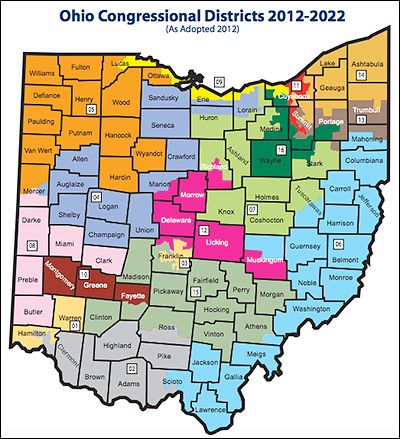
Jan. 15, 2018 — Since the turn of the century, the state of Ohio has become crucial in deciding national elections, and its status for 2018 is no exception. This week, several key moves were made that began to define the general election ballot even before candidate filing closes and the May 8 primary is conducted.

The Senate race was shaken last week when state treasurer Josh Mandel (R), the 2012 Senate nominee who had the inside track to again win the Republican primary in order to force a re-match with Sen. Sherrod Brown (D), unexpectedly announced he was dropping out of the race due to a newly diagnosed health condition for his wife. Though investment banker Michael Gibbons was still in the race, a Republican void existed in a campaign that has all the underpinnings of becoming highly competitive. Even with President Obama leading the Democratic ticket and carrying Ohio six years ago, Mandel managed to hold Sen. Brown to only a 51-45 percent re-election victory.

Rep. Jim Renacci (R-Wadsworth), who had been competing in the governor’s race, announced late last week that he would switch to the Senate campaign. The Republican gubernatorial primary underwent significant change in November, and both Renacci and Lt. Gov. Mary Taylor found themselves on the outside looking in. Because attorney general and former US senator, Mike DeWine, and Secretary of State Jon Husted, the candidates who were running 1-2 in early polling, decided to join forces and form a ticket, the odds of either Taylor or Renacci upsetting the race leader, DeWine, grew to long-shot proportions.

While Taylor remains in the governor’s race, Renacci has now bolted for the Senate campaign to hopefully compete against Sen. Brown. The incumbent is clearly taking his re-election campaign very seriously, as the coming financial disclosure report will show his cash-on-hand figure to be already approaching $10 million. With Renacci’s ability to self-fund a statewide campaign and Republicans looking fondly on President Trump’s eight-point victory in Ohio, the eventual GOP nominee – whether it’s Rep. Renacci, Gibbons, or another late-entry candidate – will command the resources necessary to match whatever Brown and his Democratic allies spend.

Continue reading

An Ohio Curve Ball

Ohio Senate Candidate Josh Mandel

Ohio State treasurer and presumed Senate candidate Josh Mandel

By Jim Ellis

Jan. 9, 2018 — Most people believed the 2018 Ohio Senate general election would be a re-match of the 2012 contest, but now big changes are afoot. On Friday, presumed Republican nominee Josh Mandel, the Ohio State treasurer, announced that he will not file for the Senate race when the deadline expires on Feb. 7. Unfortunately, Mandel says that his wife’s undisclosed health situation, apparently just recently diagnosed, has forced him to the political sideline. He did not indicate whether or not he would seek re-election to his current position.

Mandel was quoted as saying, “[I] recently learned that my wife has a health issue that will require my time, attention and presence,” and that it “has become clear to us that it’s no longer possible for me to be away from home and on the campaign trail for the time needed to run a US Senate race,” as reported on the Daily Kos Elections website.

This means there will not be a repeat performance between Mandel and Sen. Sherrod Brown (D). The two ran against each other six years ago, with the Democratic incumbent winning 51-45 percent. At the time, Mandel, a first-term state treasurer elected only two years before, raised an impressive $18.9 million for the race, losing by only six points while Sen. Brown had the advantage of President Obama topping the Democratic ticket and carrying the Buckeye State. In comparison, Sen. Brown expended just under $21.5 million to secure his first re-election.

Continue reading

New Year Senate Preview – Part II

By Jim Ellis

Jan. 5, 2018 — Continuing our New Year’s preview, today we look at the 2018 Senate races from the Democrats’ perspective.

THE DEMOCRATS

Sen. Claire McKaskill | (Facebook)

Sen. Claire McKaskill | (Facebook)

Because they are now defending 26 of the 34 in-cycle seats, with the addition of the Minnesota special election, the Dems must primarily develop a solid defense before venturing into attack mode. If they are to have any chance of gaining a 51-49 majority, they will realistically have to win all 26 of the incumbent and open seat races they are forced to risk. This includes three contests already considered toss-up campaigns: Missouri Sen. Claire McCaskill likely facing Attorney General Josh Hawley (R), Sen. Joe Donnelly in the Indiana race, and the budding Florida campaign likely between Sen. Bill Nelson and Gov. Rick Scott.

Regardless of whom Sen. Donnelly ultimately faces in the Hoosier State, he will draw a top-tier opponent. Reps. Todd Rokita (R-Brownsburg/Lafayette) and Luke Messer (R-Greensburg/Muncie) battle for the Republican senatorial nomination, and they also face a credible third challenger in former state Rep. Mike Braun (R-Jasper). Braun has the strong ability to finance his own campaign, thus allowing him to adequately compete with the two congressmen. Since he has the promise of becoming his own force, Braun could conceivably strike a chord with the Republican electorate if the two congressmen continue fighting amongst themselves and allow him to slip by both of them.

Republicans will also be competitive in several other Senate races, as they project to have a strong opponent against West Virginia Sen. Joe Manchin (Attorney General Patrick Morrisey and Rep. Evan Jenkins battle for the GOP nomination to be decided in May), while state Treasurer Josh Mandel looks to provide a stronger challenge to Ohio Sen. Sherrod Brown (D) than he did in 2012 when he fell 51-45 percent. The Pennsylvania GOP electorate looks to be coalescing behind Rep. Lou Barletta (R-Hazelton) but upsetting Sen. Bob Casey Jr. is still a highly formidable task, and this developing contest must be considered a long shot as the new year begins.

Continue reading

The Emerging Senate Cycle

By Jim Ellis

Tennessee state flag

Tennessee state flag

Oct. 25, 2017 — Though we still have more than two full months remaining in calendar year 2017, the 2018 US Senate field is beginning to take clear shape. With 34 statewide contests to be decided, including the Alabama special election that will conclude Dec. 12, no fewer than 10 campaigns are basically set. Action is occurring in an additional 13 states suggesting that some sort of primary or general election competition will soon come to the forefront. Eleven incumbents seeking re-election are rated as “safe” at the present time.

Former Tennessee US Rep. Stephen Fincher (R-Crockett County) announced Monday that he would join the open US Senate Republican primary battle, attempting to succeed retiring Sen. Bob Corker (R). This race already appears to be evolving into a possible two-way primary between ex-Rep. Fincher and current 7th District veteran incumbent Marsha Blackburn (R-Brentwood).

Andy Ogles, the former Tennessee director for Americans for Prosperity, remains in the race after launching what is now a moot primary challenge to Sen. Corker but it is unclear how strong he will be now that several conservative organizations are already beginning to coalesce behind Rep. Blackburn.

The only other bit of Volunteer State intrigue centers around Democratic former Gov. Phil Bredesen and whether he will enter the statewide contest. Originally, Bredesen took himself out of consideration, but now agrees to consider becoming a candidate. He says a decision will be forthcoming in a matter of weeks. Without Bredesen, the Democrats would likely concede the seat to the eventual Republican nominee since other strong potential candidates, specifically US Rep. Jim Cooper (D-Nashville) and Nashville Mayor Megan Barry, have already said they will not run.

Continue reading

Senate: What the Money Says

By Jim Ellis

July 20, 2017 — Though electronic filing is still not yet required for US Senate candidates, several incumbents and challengers have made their financial numbers available via the public media. Outlets such as the Daily Kos Elections page, The Hill, Politico, National Journal, and local news organizations have allowed us to grasp where some of the key races stand financially.

There has already been a great deal of discussion in recent days about the upcoming Arizona Senate contest, and the dollars raised again reveal a familiar pattern. For the second quarter in a row, Rep. Kyrsten Sinema (D-Phoenix), who says she is not an active Senate candidate but is clearly readying herself in case an opportunity arises, i.e., incumbent Sen. Jeff Flake (R) attracting a strong Republican primary opponent, again raised $600,000 in a quarter, thus putting $3.2 million in her account, about $200,000 more than incumbent Flake.

Finances often give us clues as to impending political moves. California Sen. Dianne Feinstein (D), the body’s oldest member at 84 years of age, raised just $600,000 in the second quarter and has $3.5 million in the bank. This is a low total for a senator from the nation’s largest state. This may be an indication that Feinstein may not seek re-election. In direct comparison, 83-year-old Sen. Orrin Hatch (R-UT), who has been less committal about re-election than Sen. Feinstein and from a state a small fraction of California’s size, raised over $1 million in the quarter and has over $4 million cash-on-hand.

Continue reading