Tag Archives: Emerson College

Texas by the Numbers

Map of US Congressional districts in Texas


By Jim Ellis

May 2, 2019 — The Lone Star State continues to move toward competitiveness, meaning the Texas political apparatus will see new approaches from both parties in the 2020 election campaigns.

A new Emerson College poll (April 25-28; 779 likely Texas voters, 342 likely Democratic primary voters, 344 likely Republican primary voters via Interactive Voice Response system) finds President Trump tied with two of the Democratic presidential candidates and only slightly ahead of the rest of the field. And, in Democratic Party trial heats, the results project an equally close potential finish for the state’s 228 first ballot delegates.

According to the Emerson numbers, President Trump would slightly trail former Vice President Joe Biden with each man finishing in the 50 percent realm. Trump is then slightly ahead of Texas former Rep. Beto O’Rourke (D-El Paso) but, here too, both men are in the 50 percent realm.

The president fares better against the others, but even they are within striking distance of him in what is arguably his most important state. With 38 Electoral Votes, Texas was the only big state that Republicans could count upon winning without having to campaign, but apparently those days are over.

The next closest Democrat is Vermont Sen. Bernie Sanders. He trails by two points, 51-49 percent. The president has healthier margins against Sen. Kamala Harris (D-CA) and South Bend (IN) Mayor Pete Buttigieg, ahead of both, 54-46 percent, and tops Massachusetts Sen. Elizabeth Warren, 53-47 percent. The fact that all scenarios present no undecideds tells us the pollsters prodded respondents for a definitive answer or are extrapolating some of the results.
Continue reading

A Momentum Poll For the Democrats

By Jim Ellis

April 23, 2019 — A new poll was released at week’s end last week, and it may be our best glimpse of the national Democratic presidential picture. As we know, the national count matters little in how the individual states will select delegates, but this polling category does provide a sound measurement of candidate momentum.
Change Research (April 12-15; 2,519 likely Democratic primary voters) just returned results from their latest field poll. Though the 538 statistical research organization only rates Change Research as a C+ pollster, the large respondent universe of just over 2,500 participants certainly gives us the largest national sample sector producing data. Contrast this, for example, with Emerson College’s national primary poll released last week that segmented only 356 respondents.

The Change results find Sen. Bernie Sanders (I-VT) pulling into a virtual tie with former Vice President Joe Biden. Looking at the numbers, Sen. Sanders polls 20 percent, just one point behind Biden’s 21 percent.

Jumping all the way to third place is South Bend (IN) Mayor Pete Buttigieg with a healthy 17 percent support factor. Dropping back into single-digits (nine percent) is former Rep. Beto O’Rourke (D-TX). Massachusetts Sen. Elizabeth Warren records her typical eight percent, within the tight range she finds in most surveys, which, in this case, is one point ahead of Sen. Kamala Harris (D-CA). The latter senator’s seven percent also represents a considerable support drop, as much as 50 percent when compared to early surveys.

Change also surveyed the field without Biden included. Under this scenario, Sen. Sanders pulls just over a quarter of the sampling universe at 26 percent with Mayor Buttigieg moving into a strong second place with 21 percent, and O’Rourke rebounding to secure 14 percent and third place. Sens. Harris and Warren tie for fourth place with 10 percent.

From a momentum perspective, the Change poll provides further evidence that Sen. Sanders is clearly on the upswing, Biden has stalled just before what is expected to be his official announcement week, Buttigieg is the candidate leaping forward from the back, Harris and O’Rourke appear to be losing support, and Warren remains stagnant at a low level.

Continue reading

Poll: Sanders Up in California

By Jim Ellis

April 12, 2019 — The Change Research polling organization released a new Democratic primary poll of the California electorate (April 6-9; 2,003 likely California Democratic primary voters) and projects Sen. Bernie Sanders (I-VT) to be nipping former Vice President Joe Biden and home state Sen. Kamala Harris. In a secondary ballot test that excludes Biden, Sanders prevails over Harris even under this scenario.

Earlier in the week, Emerson College released a Massachusetts Democratic primary poll (April 4-7; 371 likely Massachusetts Democratic primary voters) that found Sen. Sanders leading Biden and Massachusetts home state Sen. Elizabeth Warren (26-23-14 percent). Therefore, we are clearly seeing a Sanders rise in the early part of April.

In the Change California poll, Sanders has a slight 22-21-19 percent lead over Biden and Harris – obviously a statistically insignificant margin – but it does show that Sen. Harris is not dominating her own electorate. Taking fourth, fifth, and sixth in this poll are ex-US Rep. Beto O’Rourke (D-TX) with 10 percent, South Bend (IN) Mayor Pete Buttigieg at nine percent, and Sen. Warren pulling only eight percent of the vote.

If Biden chooses not to run, since he is still not an announced presidential candidate, Change finds that Sen. Sanders would edge Sen. Harris 28-27 percent, with O’Rourke (16 percent), Buttigieg (11 percent), and Warren (nine percent) following.

This tells us, at least in the early going, that California, with its large 416 first ballot delegate contingent, is clearly up for grabs even with its home state senator in the field of candidates.

Continue reading

Swalwell In; Sanders Up in Bay State

By Jim Ellis

California Rep. Eric Swalwell (D)

April 10, 2019 — California Rep. Eric Swalwell (D-Dublin/Hayward), who for many months has been indicating that he would run for president, finally announced his intentions Tuesday and becomes the 18th Democratic candidate.

Swalwell, who will likely be a minor candidate throughout the process, has said he will not run for both president and the US House simultaneously. Therefore, expect him to depart the presidential race well in advance of the California congressional candidate filing deadline on Dec. 6.

The Golden State will now hold its presidential and state primary on March 3, since the legislature and governor changed the schedule in order to provide them more influence in the presidential nomination process. But Swalwell will have to decide well in advance of the first national votes being cast as to whether he wants to relinquish a safe US House seat in order to continue in what will likely be a long shot presidential effort with little realistic hope of success.

Emerson College released a new Massachusetts poll (April 4-7; 371 likely Democratic Massachusetts primary voters) that projects Sen. Bernie Sanders overtaking former Vice President Joe Biden and finding home state Sen. Elizabeth Warren running a distant third.

According to the Emerson results, Sen. Sanders leads 26-23-14-11 percent over ex-VP Biden, Sen. Warren, and South Bend (IN) Mayor Pete Buttigieg. All others, including Texas former congressman, Beto O’Rourke, and Sen. Kamala Harris (D-CA), record only single-digit support.

Continue reading

Ohio: Contrasting Polls

By Jim Ellis

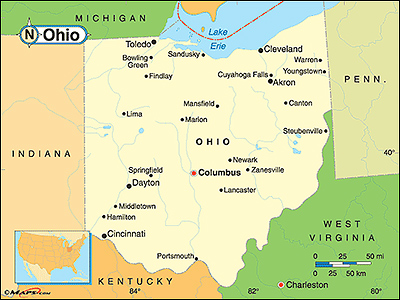
state-of-ohio-mapNov. 1, 2018 — The Buckeye State of Ohio is viewed as one of the country’s quintessential swing states. In 2016, however, the state exceeded polling and even Republican expectations in their presidential vote, as President Trump won a decisive 52-44 percent victory over Hillary Clinton.

Some suggested the Trump vote was an indication that the state could be moving more definitively to the political right, but new surveys suggest the Buckeye electorate is returning to its previous swing vote history.

Still, Ohio proves a reliable national political barometer. In both 2008 and 2012, the electorate here voted for President Obama after twice after backing President George W. Bush in his two elections. The state previously favored President Bill Clinton in his two successful national campaigns. In fact, the last time Ohioans failed to vote for the winning presidential candidate came in 1960 when the state awarded its electoral votes to Republican Richard Nixon in his national losing effort against John F. Kennedy.

Two new polls were released this week that paint different pictures of the Ohio electorate’s current state. Some of the results are curious to the point of questioning the polling reliability or not being able to adequately determine how the governor’s race will end and failing to understand the wide discrepancy in US Senate polling projections.

Continue reading

The Nevada Sway

By Jim Ellis

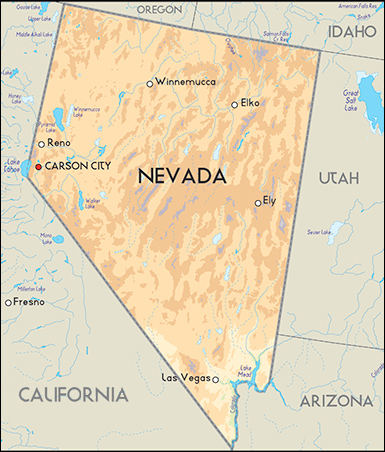
Nevada-mapOct. 17, 2018 — A new Emerson College poll (Oct. 10-12; 625 likely Nevada voters) projects Sen. Dean Heller (R) to a 48-41 percent lead over freshman Rep. Jacky Rosen (D-Henderson), which is the largest lead for either candidate since the June 12th primary.

For most of the election cycle, this race has been rated as a toss-up campaign, but most prognosticators believed it would eventually tilt toward the Democrats yielding a challenger victory.

Viewed as a state trending Democratic because of Hillary Clinton’s 48-45 percent victory in the most recent presidential campaign added to President Obama winning here in both of his elections: 52-46 percent over Mitt Romney, and in a 55-43 percent landslide over John McCain, the 2014 Republican sweep from the governor’s race through the state legislative campaigns has generally been disregarded as an anomaly.

Outgoing Gov. Brian Sandoval (R) has strong approval ratings and would clearly be a re-election favorite if the state did not have a term limit law. The governor is playing an interesting role in this year’s campaign. He is featured prominently in Sen. Heller’s advertising but refuses to endorse Attorney General Adam Laxalt (R) as his successor because the latter man refuses to support the Sandoval tax program, which is becoming the governor’s legacy as Nevada’s chief executive.

Continue reading

Breaking Polls

the-primariesBy Jim Ellis

Aug. 20, 2018 — Now with 41 states having officially moved into general election campaign mode and two more, Alaska and Wyoming, voting on Tuesday, new November surveys and a key primary election poll were all just released into the public domain.
Looking at the two Senate special elections, the just-completed Minnesota primary yielded, as expected, appointed Sen. Tina Smith (D) advancing into the general election against Republican state Sen. Karin Housley (R). The Emerson College polling institute went into the field just before the primary vote, and released their data as the voting concluded.

According to the Emerson results (Aug. 8-11; 500 likely Minnesota general election voters conducted electronically), Sen. Smith jumps out to a small 32-28 percent lead over Housley when the two are paired in the now-official general election match-up. While 40 percent are not yet professing a choice, largely because both candidates have low name identification, we can expect this race to become a top-tier Senate campaign as the time progresses towards Election Day.

Continue reading

AZ-8: Lesko Wins

By Jim Ellis

Arizona Republican candidate Debbie Lesko wins AZ-8

Arizona Republican candidate Debbie Lesko wins AZ-8

April 26, 2018 — Arizona Republican former state Senate President Debbie Lesko defeated physician Hiral Tipirneni (D) last night, 53-47 percent, to win the vacant 8th District seat that former Rep. Trent Franks (R-Peoria) resigned in January.

Lesko held the seat for Republicans with a high turnout of 173,708 voters, but her six-point win is being cast in the media as an under-performance. Dr. Tipirneni, however, ran a significant campaign and will spend a projected financial number in the $1 million range. Therefore, it’s not particularly surprising that a credible candidate spending significant resources would place in the mid-high 40s despite her opponent’s party being dominant in the region. Lesko will likely spend a bit less than Dr. Tipirneni but received stronger outside support, particularly from the national Republican Party apparatus.

Though Rep. Franks averaged 69.2 percent during his three terms with the district in its present configuration, he did so against candidates who spent virtually no money. In 2014, when he drew 75 percent of the vote, he didn’t have a Democratic opponent. When Franks first won in open configuration back in 2002, his initial win percentage was 59 percent against a candidate who spent only $40,000.

The most recent polls correctly forecast the outcome. Emerson College, the pollster conducting the only two publicly released polls during the period immediately preceding the election (April 19-23; 400 likely AZ-8 special election voters: Lesko 49 percent, Tipirneni 43 percent), correctly predicted a Lesko six-point victory. A week earlier the same pollster (Emerson College; April 12-15; 400 likely special election voters) actually found Dr. Tipirneni forging a small one-point lead.

Continue reading

New Virginia Polls: Race Not Over

There seems to be an air of defeatism surrounding many Virginia Republicans about the impending governor’s race, but three new polls still show that GOP nominee Ken Cuccinelli is within striking distance of Democrat Terry McAuliffe. All three polls, from Hampton University, Emerson College and the University of Mary Washington, give McAuliffe a lead ranging from five to seven points, with both candidates well under 50 percent – data that hardly concludes the front-runner is on the threshold of clinching the election.

Hampton University (Sept. 25-26 and 28-29; 800 likely Virginia voters) gives McAuliffe a 42-37 percent edge over Cuccinelli, with Libertarian candidate Robert Sarvis scoring eight percent. The Emerson College Polling Society (Boston, MA) conducted their survey Sept. 26-30 and interviewed 519 Virginia registered voters. They found McAuliffe to be leading Cuccinelli and Sarvis 43-38-11 percent, a five-point reduction in the Democrat’s lead from the ECPS August poll. Finally the University of Mary Washington (Fredericksburg, VA), conducted by Princeton Survey Research Associates International during the Sept. 25-29 period of 823 Virginia registered voters (from a total resident sample of 1,001), posts McAuliffe to a 42-35 percent advantage, with Sarvis picking up 10 percent support.

The Sarvis number could be a wild card. Oftentimes when major party candidates display high unfavorable ratings, and all polling has consistently revealed such in this particular race, an Independent can score abnormally high in surveys, often reaching double-digits, as Sarvis is doing here. Such early support for Independents in polls, however, rarely translates into votes on Election Day. Should this pattern hold in the Virginia race, then Cuccinelli could be the benefactor because his lower numbers among conservative oriented independents portend that he is losing more support to Sarvis than is McAuliffe, thus his ability to gain may be greater once these people come to the conclusion that voting for a candidate with no potential to win is a waste.

Polling Segmentation

The Hampton poll segmented the state into regions. McAuliffe runs strongest in the Washington, DC suburbs (50-29 percent),  Continue reading >