Tag Archives: Ellis Insight

Some Surprises Top the List
Of Third-Quarter Dollars Raised

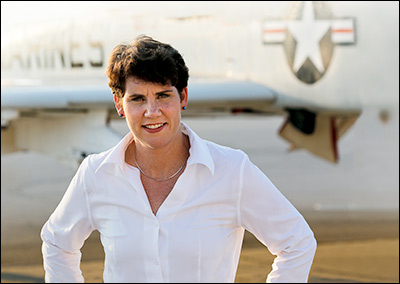
Kentucky challenger Amy McGrath (D) is the surprise top Senate fundraiser for Q3.

By Jim Ellis

Oct. 22, 2019 — The campaign financial disclosure reports are now published and, as usual, the Daily Kos Elections site has compiled a cumulative activity summary. The list of top fundraisers includes some familiar names, but also features a few newcomers.

The top Senate fundraiser is a surprise, as Kentucky challenger Amy McGrath (D) attracted more than $10.7 million in the quarter, over $7 million of which came in small-dollar unitemized contributions. She is opposing Senate Majority Leader Mitch McConnell (R), which explains why she has attracted such a large amount of national activist money.

As they have for the entire cycle, Arizona candidates Mark Kelly (D) and appointed Sen. Martha McSally (R) again posted impressive combined quarter fundraising figures.

Kelly, a retired astronaut and husband of former Rep. Gabrielle Giffords (D-Tucson), raised over $5 million more for the quarter taking his election cycle total to almost $14 million. Sen. McSally is close behind. She pulled in just over $3 million for the quarter and has accumulated approximately $8.3 million since the campaign began. These numbers are more in line with a big state Senate race, making them extraordinary for an Arizona political contest, a state that has only nine congressional districts.

The Senate candidates breaking the $3 million barrier for the quarter are Sens. Lindsey Graham (R-SC; $3.24 million in the 3rd Quarter, $12.9 million for the election cycle), Maine challenger Sara Gideon (D; $3.18 million; $4.2 million), John Cornyn (R-TX; $3.11 million, $13.5 million), and Michigan challenger John James (R; $3.1 million, $4.7 million).

Those banking over $2 million for the past 12 weeks are, Sens. Gary Peters (D-MI; $2.48 million for the 3rd Quarter, $9.2 million for the election cycle), Cory Gardner (R-CO; $2.42 million, $9.1 million), Mitch McConnell (R-KY; $2.24 million, $13.4 million), Jeanne Shaheen (R-NH; $2.23 million, $7.3 million), South Carolina challenger Jamie Harrison ($2.21 million, $4.0 million), Sen. Susan Collins (R-ME) and Colorado challenger John Hickenlooper (D) both with $2.12 million, and Alabama Sen. Doug Jones (D; $2.01 million, $5.7 million). Sen. Collins has raised $8.6 million for the election cycle and Hickenlooper, $2.1 million for a Senate campaign that began in September.
Continue reading

New NC State Poll

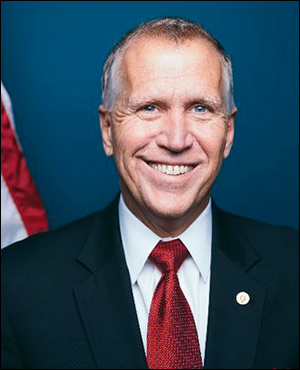
North Carolina Sen. Thom Tillis (R)

By Jim Ellis

Oct. 16, 2019 — A new Meredith College political survey (Sept. 29-Oct. 7; 998 registered North Carolina voters) shows electoral weakness for Sen. Thom Tillis (R) as he seeks a second term next year.

The poll places the first-term US senator in a statistical tie with both of his potential Democratic opponents, state Sen. Erika Smith (D-Gaston) and former state Sen. Cal Cunningham. The large number of uncommitted voters, however, suggests the race could go to either party and will likely break late, similar to many previous North Carolina election results.

According to the Meredith data, Sen. Tillis would tie both Smith and Cunningham with each of the three candidates receiving 33 percent support in all pairings. Obviously, these are not particularly favorable numbers for any incumbent and must be taken more seriously in this instance because of North Carolina’s history of either defeating its senators or seeing them not serve a second term for another reason.

In fact, the only two Tar Heel senators who have been re-elected since 1974 are Jesse Helms (R) and current three-term incumbent Richard Burr (R). During that span, the following senators were no longer in office after one term:

ONE-TERM NORTH CAROLINA SENATORS

  • Robert Morgan (D), 1980 – lost re-election
  • John East (R), 1986 – committed suicide in June before seeking a second term
  • Jim Broyhill (R), 1986 – appointed to fill Sen. East’s term; lost 1986 election)
  • Terry Sanford (D), 1992 – lost re-election
  • Lauch Faircloth (R), 1998 – lost re-election
  • John Edwards (D), 2004 – did not seek a second term to instead run for president
  • Elizabeth Dole (R), 2008 – lost re-election
  • Kay Hagan (D), 2014 – lost re-election

The Meredith College pollsters also tested Gov. Roy Cooper (D) as he fights for a second term likely against Lt. Gov. Dan Forest (R). Here, Meredith finds the incumbent holding a 46-33 percent margin over his eventual GOP challenger.

Continue reading

First-Term Louisiana Gov. Edwards Forced to Run-Off Against Rispone

Republican challenger Eddie Rispone (R) and Louisiana Gov. John Bel-Edwards (D)

By Jim Ellis

Oct. 15, 2019 — Saturday’s Louisiana statewide open primary election found first-term Gov. John Bel Edwards (D) failing to win re-election outright, meaning he and the second-place finisher, businessman Eddie Rispone (R), will advance to a Nov. 16 secondary vote.

The result suggests Edwards’ bid for re-election is in trouble since no governor in Louisiana history has won a secondary vote when forced into a run-off. The governor received 46.6 percent of the vote in the primary, an election where all candidates are placed on the same ballot irrespective of political party affiliation. If no contender receives majority support, as was the case on Saturday, the top two finishers advance to a second election.

Rispone (pronounced: ris-pony), a Baton Rouge-area developer who reportedly spent more than $11 million of his own money on the gubernatorial campaign, garnered 27.4 percent of the vote, more than 51,000 votes ahead of third place finisher and fellow Republican Ralph Abraham, a northern Louisiana US congressman. The remaining two-plus percentage points were spread among a minor Democrat, Republican, and Independent.

Combined, the Democratic vote, despite featuring the incumbent at the top of the ticket, reached only 47.4 percent, compared to the combined Republican percentage of 51.8. Upon being eliminated, Congressman Abraham, who did not have to risk his federal position to run for governor, immediately endorsed Rispone. The two appeared together at President Trump’s Louisiana rally on Friday night, at which point the president urged the attenders to vote for either GOP candidate.

Polling appeared to correctly predict the race. Going into the final campaign days, nine different pollsters through 11 separate polls surveyed the Louisiana electorate. Nine of the 11 predicted Edwards to finish below 50 percent. Eight of the surveys projected Rispone to finish second with Rep. Abraham close behind. The Trafalgar Group and Data for Progress firms predicted the final result almost exactly.

Continue reading

Biden Showing Up Strong in North Carolina – But Is It Enough?

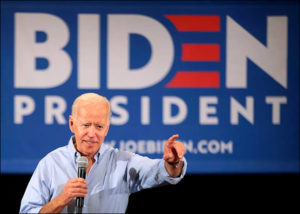
Former vice president and 2020 Democratic presidential candidate, Joe Biden

By Jim Ellis

Oct. 11, 2019 — Raleigh-based Public Policy Polling just released their latest North Carolina survey (Oct. 4-6; 963 likely North Carolina voters, 410 likely North Carolina Democratic primary voters) Wednesday, which projects a two-person race developing in the Tar Heel State as former Vice President Joe Biden leads Sen. Elizabeth Warren (D-MA), 39-22 percent. South Bend Mayor Pete Buttigieg receives nine percent support, while Sen. Bernie Sanders (I-VT) earns only a disappointing six percent. All other candidates fail to break the three percent level.

North Carolina is one of the Super Tuesday states, a state whose electorates will cast ballots on March 3, the largest voting day of the nominating season. On March 3, a total of 14 states and one territory will host primaries or caucuses, seven of which come from the south. It is here where former Biden would have to make his stand, since his southern numbers are the best of any candidate by a wide margin.

The question being posed is whether a sluggish Biden start in the first three voting states, Iowa, New Hampshire, and Nevada, where he could conceivably fail to place first in any, would derail his momentum to the point of lessening his southern advantage.

Making rudimentary delegate calculations from the 19 entities that would vote on or before Super Tuesday, we find that current polling would place the former vice president in the lead on the evening of March 3, but that his delegate edge would certainly not be dominating.

To re-cap, based upon the latest polling from Iowa, New Hampshire, and Nevada, the delegate estimate prior to South Carolina would find the former VP and Sen. Warren tied with 37 delegates apiece, while Sen. Sanders would have 27, meaning a virtual three-way tie despite Biden not winning any of the states outright. If he can stay in the hunt — with neither of his key opponents establishing themselves as a clear leader — the tide turns Biden’s way.

Continue reading

Behind the Polls: Is Warren Really Up?

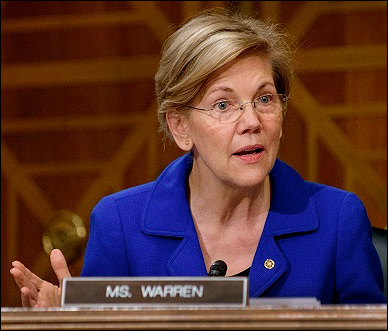
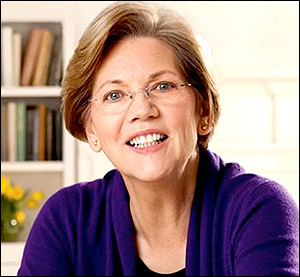
Democratic presidential candidate, Sen. Elizabeth Warren

By Jim Ellis

Oct. 10, 2019 — The publication, Market Watch, carried a story that the Drudge Report included on their daily national site yesterday indicating that Sen. Elizabeth Warren (D-MA) had topped former Vice President Joe Biden in four of five most recent national polls, but they didn’t cover the entire polling picture. (Market Watch story: A new front-runner for the 2020 Democrats? Warren edges Biden in average of polls)

The MW story cited Warren leading Biden in the Quinnipiac University survey (Oct. 4-7; 646 registered US voters), the Investors Business Daily/TIPP Poll (Sept. 26-Oct. 3; 341 registered US voters), The Economist/YouGov study (Sept. 28-Oct. 1; 602 likely US Democratic primary voters), and the Monmouth University (Sept. 23-29; 434 registered US voters) survey. Her aggregate edge fell between one and four percentage points, yet neither candidate broke 30 percent in any of the polls.

“With Biden facing questions over the Ukraine and China because of the Trump impeachment inquiry, and Sen. Sanders now experiencing health problems, Sen. Warren could soon be establishing herself as the clear front-runner and person to beat …”

The only other highlighted survey came from Politico/Morning Consult (Sept. 30-Oct. 6; 16,529 likely US Democratic primary voters) that actually found the former vice president continuing to lead by his typical 12-point margin, 33-21 percent, with Sen. Bernie Sanders (I-VT) recording 19 percent support.

The story’s premise is that these polls suggest that Sen. Warren has already caught Biden and that she may well be the new national Democratic leader. There are several reasons why this might not be the correct conclusion, however.

Continue reading

Hunter Reeling

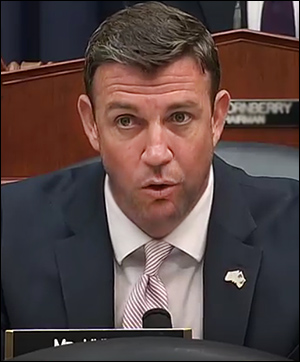
California Rep. Duncan Hunter (R-Alpine)

By Jim Ellis

Oct. 7, 2019 — In addition to his legal woes, indicted California Rep. Duncan Hunter (R-Alpine) now appears to have severe political problems according to a new just-released CA-50 district study.

A Survey USA poll conducted for the San Diego Union-Tribune (Sept. 27-Oct. 2; 592 likely CA-50 voters; 671 respondents were asked favorability questions about the top four candidates, but the electoral questions were asked only of those who described themselves as likely voters) tested the seven announced candidates for the March 3 California jungle primary.

The S-USA results find Democrat Ammar Campa-Najjar, the 2018 party nominee who held Rep. Hunter to a four-point win, holding 31 percent support. Former San Diego City councilman and mayoral and congressional candidate Carl DeMaio (R) follows with 20 percent, ex-Rep. Darrell Issa, who recently announced his candidacy records 16 percent, while Rep. Hunter posts only an 11 percent preference factor.

Rather surprisingly, state Sen. Brian Jones (R-Santee), also a recent candidate but a public official who represents almost 90 percent of the 50th District, records a very low four percent. The two independent candidates have three percent combined.

It is no surprise that Campa-Najjar is leading. In a crowded field with only one candidate from a particular party, it becomes a simple strategy to coalesce the party members behind the lone contender. While Campa-Najjar will almost certainly advance to the general election in this type of jungle format with so many candidates splitting his opposition party vote, we also must see that 52 percent of the poll respondents chose a Republican candidate. This obviously bodes poorly for the sole Democrat in the general election.

The setup here is similar to last year’s open 49th District, the adjacent seat from which Rep. Issa retired. In the June 2018 election, Republican Diane Harkey finished first by an eight-point margin in a field of 16 candidates but, in the general with only two contenders, it was Democrat Mike Levin who recorded a 56-44 percent victory.

Continue reading

The Politics of Scheduling

Wisconsin Rep. Sean Duffy (R-Wausau)

By Jim Ellis

Oct. 4, 2019 — Earlier, it was reported that Wisconsin Gov. Tony Evers (D) is going to re-schedule the special election to replace resigned Congressman Sean Duffy (R-Wausau), and now we have more information.

At first glance, we see an instance where a state election law conflicts with a federal statute, which national government officials apparently brought to the governor’s attention after he made public the original voting schedule. Wisconsin special election law creates a 28-day period between special primary and general, while the federal MOVE Act, designed to provide some uniform structure for overseas and military voters stationed abroad, mandates at least 45 days be placed between elections.

The governor is reportedly looking at two scenarios, and both will move the special cycle to a much later time frame. Instead of Jan. 27, the original special general date (the special primary was slated for Dec. 30), the new general will likely either be concurrent with the April 7 presidential and statewide primary, or May 5. Due to the federal law requirements and the current state election calendar, the governor cannot schedule both the special primary and general to coincide with the already-set state election timetable.

Now for the politics: Wisconsin has a regular statewide election in the early part of the even-numbered year where judges and many local officials are elected in addition to other selected officeholder positions. In this particular April 7 election, the same day as the presidential primary, Republican state Supreme Court Judge Dan Kelly is running for a full 10-year term. Key Democratic leaders counseled the governor to schedule the election early so a large Republican turnout from a strong Republican congressional district did not hurt the party’s effort to unseat the high court judge.

On the other hand, Democratic turnout is likely to be very large on April 7 because voters are coming to participate in the presidential primary. Using this reasoning, the Democrats’ chances of upsetting the GOP in the special congressional election would be much greater even though the seat has performed well for the Republicans throughout this decade.

Continue reading

Underestimating Sanders

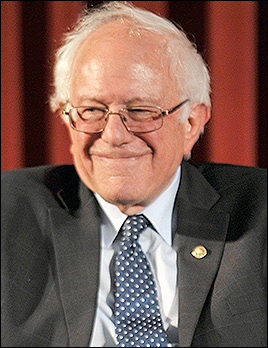
Sen. Bernie Sanders of Vermont

By Jim Ellis

Oct. 3, 2019 — One of the major political campaign stories of the week is Sen. Bernie Sanders (I-VT) releasing his third quarter financial receipts, which exceeded $25.2 million for the previous 12-week period. The only other candidate to publicize his most recent financial information at this point in time is Mayor Pete Buttigieg who reports raising $19 million for the quarter.

While these numbers are high and continue to demonstrate strong, broad-based support, we still do not know the amounts that former Vice President Joe Biden and Sen. Elizabeth Warren (D-MA) will soon announce and are required to report by the Oct. 15 deadline.

Buttigieg makes the argument that this is his second consecutive outstanding quarter, which puts him at more than $51 million raised for the campaign. It appears Buttigieg has handled his money well, meaning he has adequate funding to compete in all of the early states. This is particularly true for Iowa, which hosts the first nominating on Feb. 3, and is of the utmost importance to his political survival in this national campaign.

But the Sanders campaign is our point of focus. Though his effort has been relatively quiet in the early going, the Sanders operation has concentrated upon and successfully secured their ground operation. This will prove a strong move once the actual voting begins.

In the 2016 campaign Sanders consistently under-polled. He was not predicted to do particularly well in Iowa, for example. Remember, in that contest Sanders fought Hillary Clinton to a virtual tie, forcing her to win a series of coin flips in selected precincts thus enabling her to declare a very slight statewide victory. For all intents and purposes, the Sanders performance created a virtual tie with Clinton and began to transform the contest into a one-on-one battle.

After Iowa, Sanders rolled into his New England backyard and the New Hampshire primary. Here we must recall that he garnered 60 percent of the vote against Hillary Clinton, a landslide victory that dashed her inevitable nominee strategy.

When the candidates advanced to Nevada, the race cemented as a two-person contest. Though Sanders lost the Sliver State caucus, controversy arose when the Independent senator’s campaign claimed that the Democratic National Committee had changed the rules to disallow some of the Sanders’ outlying precinct delegates from casting their ballots.
Continue reading

The Politics of Impeachment

By Jim Ellis

Sept. 26, 2019 — With the House beginning the impeachment inquiry, it is a good time to overlay the political map regarding those Democratic members who may find themselves in a difficult position as a result of this procedure.

In all, President Trump carried 31 congressional districts that elected a Democratic representative in 2018. In 16 of the 31 CDs, 2012 Republican presidential nominee Mitt Romney also won. Additionally, the president carried 13 of the 31 districts by more than six percentage points.

To impeach, the Democratic leadership would need a minimum of 218 votes, and at the outset all but one will have to come from the majority side. Republican-turned-Independent Justin Amash (R-MI) left the GOP earlier in the year over the impeachment issue, so he is a likely “yes”, giving the leadership a little more cushion.

Turning back to the 2016 election, Trump carried Amash’s 3rd Congressional District with 51.6 – 42.2 percent victory margin, meaning this would likely be a tough vote for him, too, since he presumably will appear on the ballot as an Independent or minor party candidate.

In the end, however, should a vote proceed to the House floor, 15 of the 31 members listed below will more than likely have to vote for impeachment in order for the motion to carry.

With Trump being popular in their districts, 10 of the succeeding members with 2020 competition saw the President’s 2016 margin exceed six points. Three more with potential but as yet undeveloped competition, also saw Trump exceed a base six percentage point margin.

Therefore, one less than half of the following members will need to vote to impeach if the resolution is to move to the Senate.

ST-DIST INCUMBENT PARTY TRUMP % CLINTON % ROMNEY %
AZ-1 O’HALLERAN, TOM D 47.7 46.6 50.4
GA-6 McBATH, LUCY D 48.3 46.8 60.8
IA-1 FINKENAUER, ABBY D 48.7 45.2 42.5
IA-2 LOEBSACK, DAVID D 49.1 45.0 42.7
IA-3 AXNE, CINDY D 48.5 45.0 47.2
IL-14 UNDERWOOD, L. D 48.7 44.8 54.2
IL-17 BUSTOS, CHERI D 47.4 46.7 40.6
ME-2 GOLDEN, JARED D 51.4 41.1 44.4
MI-8 SLOTKIN, ELISSA D 50.6 43.9 51.1
MI-11 STEVENS, HALEY D 49.7 45.3 52.3
MN-7 PETERSON, COLLIN D 61.8 31.0 53.9
MN-2 CRAIG, ANGIE D 46.5 45.3 49.0
NH-1 PAPPAS, CHRIS D 48.2 46.6 48.6
NJ-2 VAN DREW, JEFF D 50.6 46.0 45.4
NJ-3 KIM, ANDY D 51.4 45.2 47.2
NJ-5 GOTTHEIMER, JOSH D 48.8 47.7 50.9
NJ-11 SHERRILL, MIKIE D 48.8 47.9 52.4
NM-2 TORRES SMALL, X. D 50.1 39.9 51.7
NV-3 LEE, SUSIE D 47.5 46.5 48.7
NY-11 ROSE, MAX D 53.6 43.8 47.3
NY-19 DELGADO, ANTONIO D 50.8 44.0 45.9
NY-22 BRINDISI, ANTHONY D 54.8 39.3 49.2
OK-5 HORN, KENDRA D 53.2 39.8 59.2
PA-8 CARTWRIGHT, MATT D 53.3 43.7 43.4
PA-17 LAMB, CONOR D 49.4 46.8 51.7
SC-1 CUNNINGHAM, JOE D 53.5 40.4 58.3
UT-4 McADAMS, BEN D 32.4 40.4 67.2
VA-2 LURIA, ELAINE D 48.8 45.4 50.5
VA-7 SPANBERGER, A. D 50.5 44.0 54.6

Red percentage figures: Denote districts Romney also carried

Warren Surges in California

By Jim Ellis

Sen. Elizabeth Warren (D-MA)

Sept. 25, 2019 — The Capitol Weekly firm in California has been tracking the Golden State electorate monthly since April, and their September data shows a significant change from August. Now, it is Sen. Elizabeth Warren (D-MA) eclipsing former Vice President Joe Biden for the lead and coming all the way from last place in the original track to post an unweighted 33.1 percent support factor in September.

Biden, on the other hand, began with an unweighted 20.4 percent preference from a universe of over 5,000 individuals from which selected respondents were polled in April. This was the best score among the candidates at the time, but the former vice president and veteran senator began to seesaw through the succeeding months after rising to a high of 29.6 percent in May. Gradually he began dropping to his September level of 18.0 percent, now well behind Sen. Warren and less than one point ahead of Sen. Bernie Sanders (I-VT).

The September weighted numbers from the 599 most likely Democratic primary voters find Sen. Warren leading with 29 percent, Sen. Sanders moving into second with 21 percent, Biden with 18 percent, and home-state Sen. Kamala Harris dropping to just 11 percent from her high of 20.6 percent in July.

The California vote is critically important to winning the nomination because the state possesses 416 first-ballot delegates at the Democratic National Convention. Texas has the second-largest delegation with 228 first-ballot delegates, thus providing a measure of California’s prominence within the Democratic nomination process. Under the weighted percentages, Sens. Warren, Sanders, and Biden would be the only candidates to qualify for delegate apportionment because they would exceed the minimum 15 percent threshold.

The underlying questions asked of September’s weighted respondents reveal an even more stark difference between Warren and Biden. It is here where we see a fundamental shifting of strength between the two, with her on the ascent and him falling back.

Continue reading