
Tag Archives: Democratic National Committee

Delegate Projections

Super Delegates at the Democratic National Convention: Just how big an impact could they have?

By Jim Ellis

Sept. 23, 2019 — Recent polling data has been released in 11 Democratic presidential primary states that allows us to make rudimentary delegate vote calculation projections as to where the top candidates stand in the nomination process.

The data-producing 11 states include all of the early voting entities: Iowa, New Hampshire, Nevada, and South Carolina, along with big states such as California, Texas, and Florida. Also included is Massachusetts, another Super Tuesday state that is of course Sen. Elizabeth Warren’s home, along with Arizona and the later voting states of Wisconsin and New Jersey.

The polling data allows us to look at the particular state and then assign the candidates specific delegate votes based upon their standing. Obviously, the projections are mere estimates because they are based upon polls and not actual votes, and we extrapolate the statewide totals for each congressional district, which is also not reality. Actual delegate votes are awarded on an at-large and district basis.

But, as basic as they are, these calculations still yield an idea as to where the candidates would land if the actual voting is truly within range of the available polling results.

To qualify for delegates either through state at-large or district delegates, a candidate must exceed a 15 percent popular vote threshold. In the 11 polls, only three candidates would qualify for delegate votes in any of the tested states: former Vice President Joe Biden, Sen. Warren, and Vermont Sen. Bernie Sanders.

Based upon their polling standing in each state and calculating the delegate formula thereupon reveals that each of the three obtains a substantial share. The 11 states’ aggregate delegate total of 1,360 represents 36.1 percent of the entire first ballot total. To be nominated, a candidate is required to earn 1,885 first ballot delegate votes.
Continue reading

Inslee Bows Out of Presidential Race

By Jim Ellis

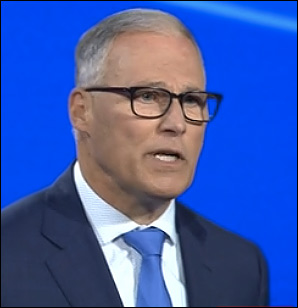
Washington Gov. Jay Inslee (D)

Aug. 23, 2019 — The Democratic National Committee leaders’ strategy to substantially increase the presidential debate qualification requirements in order to decrease the unwieldy and bloated candidate field is working.

The prerequisites to prove that a campaign has more than 130,000 donors and that each candidate reaches a minimum of two percent support from four of eight designated pollsters paid another dividend Wednesday as Washington Gov. Jay Inslee became the third Democratic candidate to officially exit the race.

Not making the debate stage signifies that a candidate has no chance to become a top-tier candidate. Without national exposure, also-ran candidates have little opportunity to increase name identification and familiarity in order to raise enough money to deliver a message, motivate people to work on their campaign, and attract serious media attention both nationally and in the important local markets within key states.

Inslee follows Rep. Eric Swalwell (D-CA) and former Colorado Gov. John Hickenlooper in making the decision to bow out of the race, and there are likely to be several more following suit once it becomes even more evident that the lower-tier candidates will no longer have the opportunity to climb onto the national debate stage.

Gov. Inslee, in an interview on MSNBC’s “The Rachel Maddow Show” Wednesday, stated ” … it’s become clear that I’m not going to be carrying the ball. I’m not going to be the president, so I’m withdrawing tonight from the race.” He is expected to announce that he will seek a third term as Washington’s governor.

The Inslee withdrawal is not a surprise to anyone, apparently even to the candidate himself. He remained non-committal about ruling out running for a third gubernatorial term, which froze most of the Washington Democratic potential aspirants in place. The rhetoric blocked them from overtly assembling a statewide campaign since most correctly interpreted the political tea leaves as meaning that Inslee would, in fact, be back to seek re-election.

With 10 candidates now qualified for the next debate since former HUD Secretary Julian Castro just joined the top-tier candidates of Joe Biden, Bernie Sanders, Elizabeth Warren, Kamala Harris, and Pete Buttigieg who are also joined by Sens. Cory Booker (D-NJ), Amy Klobuchar (D-MN), ex-Rep. Beto O’Rourke (D-TX), and businessman Andrew Yang, it remains to be seen just how many of those who won’t meet the qualifications will continue.

Continue reading

The September Debate:
Who’s In and Who’s Out

By Jim Ellis

Aug. 16, 2019 — It appears the Democratic National Committee’s move to increase the presidential debate qualifications in order to decrease the number of participants is working.

With the first two debates featuring 20 candidates over a two-night process, party leaders obviously wanted to cull the field in order to attract a large viewership and host a more serious single forum. Thus, the debate qualifications were doubled in order to ensure that only the most competitive candidates would be included in the succeeding candidate events.

Originally, in order to earn a debate podium, the contenders had to recruit 65,000 donors or score at least one percent support within a series of designated polls. For the third debate scheduled over two days — Sept. 12-13 from Houston — the minimum qualification standards were doubled. Now, the candidates must prove they have at least 130,000 donors, 400 of whom come from at least 20 states, and receive two percent support on four of eight designated polls during the period of June 28 and Aug. 28.

At this point, nine candidates have already officially qualified for the September forum and three more have clinched one of the two platforms. Most of the nine were expected to earn their debate positions, but there is at least one major surprise, and some believe two minor ones.

The next debate will feature no fewer than the
following candidates (alphabetically listed):
• Former Vice President Joe Biden
• Sen. Cory Booker (NJ)
• Mayor Pete Buttigieg
• Sen. Kamala Harris (CA)
• Sen. Amy Klobuchar (MN)
• Ex-Rep. Beto O’Rourke (TX)
• Sen. Bernie Sanders (VT)
• Sen. Elizabeth Warren (MA)
• Businessman Andrew Yang

Continue reading

Democrat Debate Friction


By Jim Ellis

June 10, 2019 — The Politico publication ran a story late last week detailing building friction between the Democratic National Committee and Montana Gov. Steve Bullock, a late-entering Democratic presidential candidate, over the committee leaders apparently axing the western governor from the first debate forum coming later this month.

The source of controversy is the party leadership contending that Gov. Bullock, who looked to have qualified for the debate under the outlined criteria, now has not. Instead, New York City Mayor Bill de Blasio is in position to capture the 20th and final debate podium for the upcoming June 26-27 candidate forums from Miami.

As we have previously reported, the qualifications the party leaders have placed upon the candidates require them to either build a fundraising organization of 65,000 donors, with a minimum of 200 coming from 20 states, or score one percent support in at least three surveys from eight designated pollsters.

Gov. Bullock appeared to have met the polling requirement. He exceeded the one percent threshold in the ABC/Washington Post survey in January. But, the DNC is now disallowing this particular poll, and the action probably eliminates him from the debate.

Their reasoning is that the ABC/Post poll asked an open-ended presidential ballot test question — that is, where the names of the candidates are not read, but the respondents must voluntarily state a name. This type of question is usually employed to test hard name identification and candidate strength.

Continue reading

Democrats Up the Debate Ante

By Jim Ellis

May 31, 2019 — The Democratic National Committee just announced the imposition of new requirements for presidential candidates to participate in the series of subsequent debates to begin in mid-September. The first two sessions are scheduled for June 26-27 and July 30-31 in Miami and Detroit, respectively.

The field is close to being set for the initial forums with 20 candidates qualifying according to the Intelligencer publication, the personnel from which have been tracking the debate process since the schedule was first announced.

To earn a podium in the first two debates, the candidates are required to either score one percent support in three of eight designated polls or reach 65,000 donors, of which at least 200 must come from 20 specific states.

The participants will include some of the more obscure candidates including author Marianne Williamson, New York City businessman Andrew Yang, and the two western governors, Jay Inslee of Washington, and Steve Bullock from Montana.

This means that Sen. Michael Bennet (D-CO), Rep. Seth Moulton (D-MA), former Sen. Mike Gravel (D-AK), and Miramar, Fla., Mayor Wayne Messam likely will not be part of the first forum, though time remains for them to still qualify.

Continue reading

The 2020 Democratic Nomination
Will Look Much Different From 2016

By Jim Ellis

May 24, 2019 — As the Democratic presidential field swells to 24 candidates — with the first Democratic presidential forum on tap for late June in Miami, and the first votes being cast in Iowa now just over eight full months away — it’s a good time to review how different this presidential nomination contest will be from the 2016 version.

To review, Hillary Clinton won 34 primaries and caucuses in 2016 as compared to 23 for Sen. Bernie Sanders (I-VT). There are 57 sanctioned delegate voting entities in the Democratic nomination universe. The 57 are comprised of the 50 states, the District of Columbia and the five territories, and a Democrats Abroad category that combines all US citizens living in foreign countries who will still have voting privileges in US elections.

Clinton won 55.2 percent of the 2016 national Democratic popular vote versus Sen. Sanders’ 43.1 percent when combining the totals from all the primaries and caucuses. Though the Sanders Campaign called foul over the Super Delegate voting inflating Clinton’s delegate total, and actually turning six states’ first-ballot roll call from Sanders to Clinton and sending one more state into a tie, Clinton still carried the pledged, or elected delegate, count 2,205 to 1,846, translating to a 54.4 percent margin. When adding the Super Delegate and uncommitted delegate votes, she captured 58.3 percent of the convention total.

Continue reading

We Now Have Candidate #22 In
The Race, And Sanders is Falling

By Jim Ellis

May 6, 2019 — A new Democratic presidential candidate entered the race late last week, one whom we didn’t expect to see this soon.

Colorado Sen. Michael Bennet

Despite undergoing prostate cancer surgery last month, Colorado Sen. Michael Bennet says he has already received a “clean bill of health” and is embarking upon his national political effort. Now at 22 candidates in the field of Democrats seeking their party’s nomination for the 2020 presidential election, eyes turn to Montana Gov. Steve Bullock who could be the last widely discussed potential candidate yet to make a decision about forming a campaign.

It’s difficult to see how Sen. Bennet breaks through to the top tier, however. He is not well known outside of Colorado and starts well behind most of the field, putting him in a difficult position from which to even qualify for the first two debate forums scheduled for late June and the end of July.

To earn a debate podium, all candidates must either tally at least one percent support in three Democratic National Committee designated polls, or attract financial support from 65,000 donors, from which they must have a minimum of 200 in at least 20 states. For the lesser known candidates, debate participation is a necessity in order to propel themselves into serious contention for the nomination.

Furthermore, Sen. Bennet doesn’t even have his home state electorate to himself. Former Colorado Gov. John Hickenlooper is also in the race, a man who Bennet once served as chief of staff. Just two days ago, Colorado moved its new primary – they used to apportion delegates through the caucus system – to March 3, the 2020 campaign’s Super Tuesday, which could serve to boost one of the two Centennial State candidates. Yet, with both men in the race, the state’s 67 first-ballot delegate contingent will prove less of a base for either one.

Continue reading

March 3, 2020: The New Super Tuesday

By Jim Ellis

May 3, 2019 — Colorado Gov. Jared Polis (D) announced this week, as expected, that his state’s new primary will move to March 3, 2020, which has clearly become the next presidential cycle’s Super Tuesday.

Previously, Colorado employed the caucus system to apportion delegates, but voters changed to a primary when passing a 2016 ballot initiative, so now the state’s 67 Democratic first-ballot delegates and 37 Republican convention votes will be apportioned through a primary election.

But the Centennial State voters and the Democratic National Committee rules appear to be at odds. According to news reports, the 2016 Colorado electoral primary ballot initiative not only transformed into a primary, but also adopted a winner-take-all apportionment format. While Republicans allow states to award all of their delegates to one candidate based upon a primary or caucus victory, the Democrats, under the McGovern reform rules adopted after the 1972 presidential election, do not.

While the state may want to make the winner-take-all option determinative, the procedure violates Democratic rules, so we could see yet another pre-convention issue develop before the Credentials Committee, the body that certifies all of the delegate votes prior to the convention officially beginning.

The 2020 Democratic nomination process is becoming seriously front-loaded, which could play to the party’s detriment. By rule, only four states, referred to as “The First Four,” may vote before March 1 in the presidential year: Iowa (caucus, 41 first-ballot delegates), New Hampshire (primary, 24), Nevada (caucus, 36), and South Carolina (primary, 54). But just three days after South Carolina concludes, the following Tuesday, March 3, could become the most significant date of the early campaign.

Now that Colorado has joined the 3/3 fold, the following states will vote (in parenthesis, are the number of first ballot votes each entity possesses under the Democratic delegate apportionment formula):

  • Alabama (52)
  • American Samoa (6) – presumed to be voting this day
  • Arkansas (31)
  • California (416)
  • Colorado (67)
  • Democrats Abroad (13)
  • Georgia (105)
  • Massachusetts (91)
  • Minnesota (75)
  • North Carolina (110)
  • Oklahoma (37)
  • Tennessee (64) – probable, but has not yet set the calendar
  • Texas (228)
  • Utah (29)
  • Vermont (16)
  • Virginia (99)

Continue reading

Now That Beto Is In,
What Are His Chances?

Beto O’Rourke | Facebook Photo

By Jim Ellis

March 18, 2019 — Former Texas Congressman Beto O’Rourke, as expected, officially joined the Democratic presidential race with a formal announcement while traveling to Iowa to begin campaigning.

O’Rourke’s entry now means that the Democratic field features 14 candidates, with more, including former Vice President Joe Biden, soon to join.

O’Rourke comes into the field generally viewed as a top-tier candidate, though he has been dropping into mid-single digits in the latest national polls. He appears to be battling Massachusetts Sen. Elizabeth Warren for fourth position behind Biden, Sen. Bernie Sanders (I/D-VT), and Sen. Kamala Harris (D-CA).

As we remember, O’Rourke was hyped as a major US Senate candidate with the opportunity of converting Republican Texas to the Democratic column with an upset win over first-term incumbent and 2016 presidential candidate Ted Cruz (R).

Though he fell three points short of victory, losing to Cruz 51-48%, he did prove his prowess as a national fundraiser. O’Rourke attracted over $80 million from across the country for his Senate race.

In the Texas campaign, then-Rep. O’Rourke moved left to appeal to the national Democratic donor constituency, which worked. And, his voting record over three terms in the House supported the issue positions he was advocating during his statewide campaign.

Continue reading

Sanders’ Problem as an Independent

By Jim Ellis

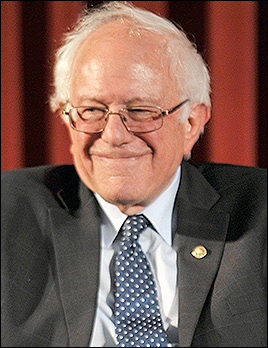
Sen. Bernie Sanders of Vermont — an Independent, not a Democrat

Feb. 22, 2019 — A day after announcing his entry into the 2020 presidential campaign, Vermont Sen. Bernie Sanders jumped off to a strong start, raising a reported $6 million in just his first 24 hours as a repeat candidate. But, a technical problem also looms in the distance.

Last year, the Democratic National Committee adopted a new party rule that states any future presidential nominee must be an official Democratic Party member or, if an office holder, must have served as a Democrat. Sen. Sanders meets neither requirement.

Vermont has no party registration, so he is not a party member in that regard, and has continually, including during the present time, represented Vermont as an Independent. In fact, when offered the Vermont Democratic senatorial nomination for his re-election campaign in 2018, Sanders turned down the overture.

The fact that Sanders is still not a Democrat is confirmed when looking at the list of unpledged delegate slots, those commonly referred to as “Super Delegates.” An unpledged delegate is one who can vote as he or she pleases and is not subject to any binding vote law their particular state may have enacted.

Those who qualify as Super Delegates are Democratic National Committee members (430), every elected Democratic US senator (45), the two District of Columbia “Shadow” senators, all elected Dems in the House of Representatives (235 at the present time), the four Democratic delegates to the US House (District of Columbia, Guam, the Northern Marianas Islands, and the US Virgin Islands), and all of the party’s elected governors (26, including the District of Columbia mayor, and the territorial governors from American Samoa and Puerto Rico).

Continue reading