Category Archives: House

Alsobrooks Continues to Lead in Maryland Senate Race; Missouri Shock Poll Released; Democrats Staked to Large Leads in NH; 2026 Rumors Already Abound in Ohio

By Jim Ellis — Thursday, Sept. 19, 2024

Senate

Angela Alsobrooks (D)

Maryland: Alsobrooks Continues to Lead — Emerson College and The Hill newspaper released the results of their latest Maryland US Senate survey (Sept. 12-13; 890 likely Maryland voters; multiple sampling techniques). According to the polling results, Prince George’s County Executive Angela Alsobrooks (D) again tops former Gov. Larry Hogan (R) by a spread beyond the polling margin of error. The ballot test finds Alsobrooks’ advantage at 49-42 percent.

Hogan, while still enjoying very strong personal favorability ratings, even among Democrats, must overcome what will be one of the largest landslide victories for Vice President Kamala Harris of any state. Thus, seeing potentially a 30-point Democratic win at the top of the Maryland ballot makes it extremely difficult for any Republican to overcome such a wave in their down ballot elections.

Missouri: Shock Poll Released — While the Missouri Senate race had been largely ignored for most of the year, we now see three polls released almost simultaneously. The other day, we covered a GQR survey for the Lucas Kunce (D) campaign (Sept. 6-12; 645 likely Missouri voters) which produced a surprisingly close 50-46 percent margin in Sen. Hawley’s favor. (See: Missouri Shock Poll)

Two more surveys followed, each with very different results. Change Research (Sept. 11-13; 1,237 registered Missouri voters; online) sees the Hawley lead at 46-41 percent. Emerson College, polling for The Hill Newspaper (Sept. 12-13; 850 likely Missouri voters; multiple sampling techniques) produced a much different result. This ballot test posts Sen. Hawley to a 12-point lead over Kunce, 52-40 percent.

Based on Missouri’s voting history within the past 12 years, Sen. Hawley still should be favored, but it is clear this race will be drawing increasing attention as Democrats attempt to expand the Senate map.

House

New Hampshire: Democrats Staked to Large Leads — After the late Sept. 10 primary election, St. Anselm’s College went into the field to test both New Hampshire US House seats, the Eastern 1st District featuring incumbent Rep. Chris Pappas (D-Manchester), and the open 2nd District, the seat from which Rep. Annie Kuster (D-Hopkinton) is retiring.

The St. Anselm’s polls (Sept. 11-12; 1,111 likely NH-1 voters; 1,130 likely nh-2 voters; online) find Rep. Pappas leading former executive councilor and ex-state Sen. Russell Prescott (R) by 12 percentage points, 50-38 percent. In the 2nd District, former Biden Administration official Maggie Goodlander, who was an easy Democratic primary winner, led Republican Lily Tang Williams by a similar 49-38 percent margin. At this point, Democrats appear primed to retain both of New Hampshire’s congressional seats.

Governor

Ohio: 2026 Rumors Already Abound — Ohio Gov. Mike DeWine (R) is ineligible to seek a third term in 2026, and already political observers are pointing to meetings and movements from potential candidates. Involving themselves in the Springfield, Ohio Haitian migrant controversy, both former presidential candidate Vivek Ramaswamy (R) and ex-representative and 2018 US Senate candidate Jim Renacci (R) are scheduling meetings to encourage positive dialog within the community. Both are considered potential Republican gubernatorial candidates.

Other potential candidates are Lt. Gov. John Husted (R) and Attorney General Dave Yost (R), along with Democratic state Supreme Court Justice Jennifer Brunner, Columbus Mayor Andy Ginther, and Cincinnati Mayor Aftab Pureval.


Iowa Poll Shows Trump’s Lead at Four Points; Two Incumbents Trail in California; Close Race in VA-2

By Jim Ellis — Tuesday, Sept. 17, 2024

President

Former President Donald Trump ahead in Iowa.

Iowa: Selzer & Company Poll Shows Trump’s Lead at Four Points — Media stories are covering the newly released Selzer & Company Iowa poll, which has proven to be the state’s most accurate pollster. According to the Selzer survey (Sept. 8-11; 656 likely Iowa voters; live interview), former President Donald Trump’s lead over Vice President Kamala Harris is 47-43 percent, which is being cast as a closing of the race in what has proven to be a strong Trump state.

Researching the Selzer Sept. 17-19 Iowa poll in 2020, according to the Real Clear Politics polling archives, the ballot test showed a tie between Trump and candidate Joe Biden. Biden would then move onto post an eight-point victory in the succeeding election.

House

CA-22: Rep. Valadao Trailing — California’s Fresno area 22nd District is the second-most Democratic seat that elects a Republican in the country. Therefore, Rep. David Valadao (R-Hanford) is always in a difficult re-election campaign. The Normington Petts research firm returned a late August survey (part of a six district series conducted for the House Majority PAC; 8/25-27; 400 CA-22 likely voters) that finds Rep. Valadao trailing former state assemblyman and 2022 opponent Rudy Salas (D) by two percentage points, 46-44 percent.

The analysis indicates that voters oppose Project 2025, feel it would be a “rubber stamp” for a new Trump Administration, and concentrates on the abortion issue. This suggests the series is in the push poll category. It is highly doubtful that in one of the lowest turnout districts in the country respondents would be familiar enough with Project 2025, a publication from the Heritage Foundation and not any candidate or the Republican Party, to harbor such a negative opinion. It is clear, however, that this race lies in the toss-up category as this poll shows.

CA-41: Strange Polling Results — There is little doubt that Republicans lost some momentum across the board in late August, but a newly released early September survey in California’s 41st District can’t be right. RMG Research conducted a series of online polls for US Term Limits over a long sampling period. The CA-41 poll (Sept. 5-12; 450 likely CA-41 voters; online) finds 16-term Rep. Ken Calvert (R-Corona) trailing former federal prosecutor and 2022 Democratic nominee Will Rollins by a 41-35 percent split.

Calvert, who has represented the Riverside area for 32 years and defeated Rollins 52-48 percent in 2022, has to have more support than 35 percent in a district that the FiveThirtyEight data organization rates as R+7. While this is again a competitive race, such a poll result, also with an unusually high undecided figure, should be considered as an outlier.

VA-2: Two Polls Show Close Race — A pair of congressional polls were released for the Tidewater area’s 2nd Congressional District. Both pollsters find close results, which is no surprise for a district that typically features tight campaigns. On the ballot is Virginia freshman Rep. Jen Kiggans (R-Virginia Beach) and businesswoman Missy Cotter Smasal (D). For the House Majority PAC — a Super PAC with ties to the Democratic leadership — Impact Research reports their results in a poll conducted in late August and part of a six district series (Aug. 20-25; 500 likely VA-2 voters; live interview) that gives Rep. Kiggans only a one point edge, 48-47 percent.

A more recent survey gives Kiggans some better news. Christopher Newport University tested the 2nd District electorate (Sept. 6-10; 792 likely VA-2 voters; live interview) and they find the congresswoman in stronger shape with a 45-40 percent edge.

Alaska’s Peltola & Begich Now Neck & Neck; Surprising GOP Lead in MD-6; Zinke Leads in Montana Re-Election Bid; Republican Trailing in OR-5

By Jim Ellis — Monday, Sept. 9, 2024

House

Nick Begich III

AK-AL: Rep. Peltola Slightly Ahead — Under the Alaska top-four primary system, the general election will now feature Rep. Mary Peltola (D-Bethel) and Republican Nick Begich III, along with Alaska Independence Party chairman John Wayne Howe and convicted felon Eric Hafner, who ascend to the general because both Lt. Gov. Nancy Dahlstrom (R) and Matt Salisbury (R), the original third and fourth-place finishers, withdrew.

A major party head-to-head poll that the Cygnal polling organization (Aug. 30-Sept. 1; 400 likely Alaska voters) conducted for the National Republican Congressional Committee found Rep. Peltola leading Republican Begich by just a single percentage point, 46-45 percent. This suggests the NRCC will be going “all in” for Begich in the most Republican congressional district that a Democrat represents.

MD-6: Surprising Poll Posts Republican to Lead — The open Maryland 6th District is a toss-up seat on paper but has consistently elected Democratic representatives since 2012. Earlier in the week, Gonzales Research and Strategies, a regular Maryland pollster, released a survey (Aug. 24-31; 317 likely MD-6 voters; live interview) and surprisingly found Republican former state Delegate Neil Parrott now leading Democratic nominee April McClain Delaney, the wife of former Congressman John Delaney (D). The ballot test cut 41-39 percent in Parrott’s favor.

Though this is the second post-primary poll that shows a close race, it is probable that Delaney will win the race because of the strong campaign resource disparity that exists. Parrott, twice defeated in this district, is not a proven fundraiser, while the Delaney family is independently wealthy. At the end of the cycle, expect this seat to remain in the Democratic column.

MT-1: Rep. Zinke Leads in Re-election Bid — Rep. Ryan Zinke (R-Whitefish) previously served in the House and was appointed Interior Secretary in the Trump Administration. He returned to Congress in 2022 with an unimpressive 50-46 percent victory over former US Olympic crew team member Monica Tranel (D), which was below a typical Republican performance. The FiveThirtyEight data organization rates the 1st as R+10.

The new Fabrizio Ward/David Binder Research poll for AARP (Aug. 25-29; 310 likely MT-1 voters; live interview & text) sees Rep. Zinke holding the lead over Tranel, who returns for a rematch, but again the contest appears closer than what is typically seen for a partisan race in this district. The ballot test cut 49-43 percent in Rep. Zinke’s favor, but numbers such as these will likely increase outside resources coming into the district to aid Tranel.

OR-5: Rep. Chavez-DeRemer Trailing — Another in the series of released US House race polls finds a freshman GOP incumbent slightly trailing her Democratic challenger. Oregon Rep. Lori Chavez-DeRemer (R-Happy Valley) defeated Democrat Jamie McLeod-Skinner in 2022 after the latter woman had denied then-Rep. Kurt Schrader renomination in the May Democratic primary.

This year, Rep. Chavez-DeRemer’s opponent is state Rep. Janelle Bynum (D-Clackamas), who easily defeated McLeod-Skinner in the Democratic primary. A Noble Predictive Insights survey (Aug. 26-28; 419 likely OR-5 general election voters; live interview & text) finds the congresswoman trailing Bynum by a single percentage point, 43-42 percent. While Ms. Chavez-DeRemer has a 39:30 percent favorability index, Vice President Kamala Harris holds an eight-point lead over former President Donald Trump in the 5th District. Therefore, the political dynamics here make the district a tough hold for the congresswoman.

Klobuchar’s Lead in MN Narrows; Big Margins for Justice, Morrisey in WVa; Alaska’s Final Primary Numbers;
FL-13 is Neck-and-Neck

By Jim Ellis — Friday, Sept. 6, 2024

Senate

Minnesota Sen. Amy Klobuchar (D) / Photo by Gage Skidmore

Minnesota: Surprising New Poll — Sen. Amy Klobuchar (D) has always been regarded as a lock for re-election, and while the newly released Redfield & Wilton survey (Aug. 25-28; 426 likely Minnesota voters) does not suggest any result other than the senator’s victory, the poll results reveal a closer than expected developing campaign. The R&W ballot test numbers find Sen. Klobuchar leading former NBA basketball player Royce White (R) by only a 51-44 percent margin.

This poll is likely an anomaly large due to the small sample size. In contrast, Survey USA was in the field during a similar period (Aug. 27-29; 635 likely Minnesota voters; online) and found a much different ballot test result with the senator leading White, 50-36 percent.

West Virginia: Gov. Justice Takes Command in Senate Race — In a race that has attracted little in the way of political attention because most observers believe the result is a foregone conclusion, Research America, polling for the West Virginia Metro News website (Aug. 21-27; 400 likely West Virginia voters; live interview), casts Gov. Jim Justice (R) in a very favorable light. In the Senate race after reaching the maximum number of years allowed in the governor’s office, Justice posts a major advantage over Wheeling Mayor Glenn Elliott (D). Looking at the ballot test data, Gov. Justice is staked to a huge 62-28 percent margin over Mayor Elliott.

Should Gov. Justice continue this trend and claim the seat on election night, a West Virginia conversion victory would give the Republicans their 50th Senate seat. Defeating just one more Democratic incumbent would secure an outright GOP majority in the next Congress.

Governor

West Virginia: AG Morrisey On Way to Clinching Governor’s Race — The same Research America survey that tested the West Virginia Senate race also asked an open gubernatorial question. In this race, the polling analysis suggests that Attorney General Pat Morrisey (R) holds a double-digit lead of 49-35 percent against Huntington Mayor Steve Williams (D). While closer than the Senate race, this poll gives the full indication that Morrisey will easily hold the governor’s position for the GOP.

House

AK-AL: Primary Numbers Final — The Alaska Aug. 20 primary numbers are now final, and Rep. Mary Peltola (D-Bethel) finished with 50.9 percent of the vote in the state’s unique top-four jungle primary system. Obtaining a majority primary vote makes her the favorite for the general election.

In second place was Republican Nick Begich III with 26.6 percent followed by GOP Lt. Gov. Nancy Dahlstrom who posted 19.9 percent support. The fourth-place finisher, Republican Matthew Salisbury, received only 652 votes for less than one percent. Dahlstrom is forfeiting her general election position, and it is unclear if Salisbury will continue. Therefore, it appears that Begich will get his long-awaited chance to face Rep. Peltola in a budding one-on-one campaign.

While Peltola received majority support, it was with a turnout of only 108,407 voters. In the general election, more than 350,000 ballots are projected to be cast, meaning the November at-large election yields a whole new political ballgame.

FL-13: A Different Perspective — Last week, St. Pete Polls released an online survey (Aug. 27; 843 registered FL-13 voters; automated phone calls and text) that found Democrat Whitney Fox leading freshman Rep. Anna Paulina Luna (R-St. Petersburg) by a 48-44 percent margin. This week, WPA Intelligence released their data (Aug. 28-29; 400 likely FL-13 voters; live interview and text), which shows the exact opposite ballot test result. According to WPAi, Rep. Luna has a mirror image 48-43 percent advantage.

The FiveThirtyEight data organization rates FL-13 as R+12, and The Down Ballot statistical organization (formerly Daily Kos Elections) ranks the Tampa Bay area seat as the 38th most vulnerable seat in the House Republican Conference. Therefore, it is likely that the WPAi numbers are the better gauge since their data is more consistent with the district’s voter history. Still, this will be a competitive election down the home stretch.

Ballot Decisions — Who’s In, Who’s Out; Nebraska News; Primary Results; Early Ballots Going Out

By Jim Ellis — Thursday, Sept. 5, 2024

President

Robert F. Kennedy Jr. (I) / Photo by Gage Skidmore

Ballot: Key States Make Decisions — More states are finalizing their 2024 general election ballot, and we see new decisions announced in key battlegrounds. The North Carolina Board of Elections ruled that Robert F. Kennedy Jr. (I) will remain on the ballot despite his withdrawal action. Kennedy says he will sue to overturn the board’s ruling.

In Georgia, Secretary of State Brad Raffensperger (R) declared that Kennedy can withdraw from the ballot, while Green Party nominee Jill Stein is disqualified. Making the Georgia ballot are Independent Cornel West and Communist Party nominee Claudia de la Cruz.

The new Virginia ruling includes Kennedy on the ballot but Dr. West is disqualified.

NE-2: Harris Leads in S-USA Poll — As part of Survey USA’s Nebraska statewide poll, the research organization tested the state’s 2nd District, the seat that can vote against the Republican statewide result and deliver an important electoral vote to the Democrats.

According to the S-USA results (Aug. 23-27; 507 NE-2 registered voters; multiple sampling techniques), Vice President Kamala Harris leads former President Donald Trump by a 47-42 percent margin. This district is important because, if it votes Trump’s way, the CD could cause a tie in the Electoral College, thus sending the race to the House of Representatives to decide the final outcome.

Senate

Nebraska: Sen. Fischer’s Small Lead — The Survey USA statewide poll (Aug. 23-27; 1,293 registered Nebraska voters; multiple sampling techniques) again delivers unwelcome news for Sen. Deb Fischer (R), who is seeking her third term in office. Here, the Democrats are not fielding a candidate, instead throwing their backing behind an Independent candidate to form a coalition, similar to the way the Utah Democrats backed Independent Evan McMullin in 2022.

Though polling was suggesting a close race in Utah, the end result found Sen. Mike Lee (R) generally uniting right-of-center voters and winning re-election with a 53-43 percent vote spread. In this Nebraska poll, Sen. Fischer posts only a one point edge, 39-38 percent, over local union President Dan Osborn who is running on the Independent ballot line. While the Osborn standing at 38 percent is likely what one would expect for a left-of-center candidate in Nebraska, Sen. Fischer’s 39 percent poll total suggests severe under-performance.

Primary Results

Massachusetts: Most Will Run Unopposed — Attorney and Marine Corps veteran John Deaton easily defeated two other Republican candidates on Tuesday and will now face Sen. Elizabeth Warren (D) in the general election. Obviously, Sen. Warren will be considered a prohibitive favorite in this most Democratic of states.

In the House, Rep. Richard Neal (D-Springfield) faces only Independent candidates in November. Rep. Stephen Lynch (D-South Boston) will again see opposition from 2022 GOP nominee Rob Burke in this year’s general election. Two years ago, Rep. Lynch was re-elected with 70 percent of the vote, and we can count on a similar result in November.

Rep. Bill Keating’s (D-Bourne) general election opponent is nurse Dan Sullivan (R), who was unopposed for his party’s nomination. As is the case for Rep. Lynch, Rep. Keating is considered a prohibitive favorite for re-election. The other six members of the Massachusetts US House delegation, all Democrats, are all unopposed in the general election.

States

Early Voting: Ballots Mailed This Week — The time for states to begin sending absentee ballots to voters is here. The first state to begin mailing ballots is North Carolina, and their deadline for posting is tomorrow, Friday, Sept. 6th. Three states will open early voting polling places on the 20th of this month: Minnesota, South Dakota, and Virginia. A fourth, Illinois, will follow suit six days later.

All but three states, Alabama, Mississippi, and New Hampshire, have some form of early voting. Clearly early voting changes campaign strategies, and certainly the political calendar. Instead of election day, we now have election month. Charting early voting has become a valuable way of monitoring voter intensity, which often is a victory momentum indicator.

The Case for Florida’s Under-Polling

By Jim Ellis — Tuesday, Sept. 3, 2024

Polling

Rep. Anna Paulina Luna (R-St. Petersburg) / Photo by Gage Skidmore

The latest Florida research surveys may not be correctly depicting the Sunshine State’s political situation; recent history indicates they may be underestimating Republican strength.

We’ve recently seen several polls that project Sen. Rick Scott (R) as being in a close race against former Rep. Debbie Mucarsel-Powell (D), and now a new St. Pete Polls survey finds that 13th District freshman Rep. Anna Paulina Luna (R-St. Petersburg) is trailing her new Democratic general election opponent.

Public Policy Polling (for the Clean and Prosperous America PAC; Aug. 21-22; 837 registered Florida voters; bilingual option available; live interview and text) publicized their late August findings that posted Sen. Scott to only a 48-45 percent lead over Mucarsel-Powell, this just one month after the Florida primary election.

Earlier in the month, Florida Atlantic University tested the state’s electorate (Aug. 10-11; 1,040 likely Florida voters; Interactive Voice Response system with bilingual option and online) and drew a similar conclusion. Their ballot test response yielded a Scott edge of 47-43 percent.

The St. Pete Polls’ 13th District survey (Aug. 27; 843 registered FL-13 voters; automated phone calls and text) found new Democratic nominee Whitney Fox leading Rep. Luna, 48-44 percent, in the first publicly released poll since May. In that month’s GQR survey for the Fox campaign, Rep. Luna led 51-46 percent.

Recent electoral and polling history tells us, however, that seeing Democrats performing well in Florida races during August is not unusual, but Republican strength then shows itself as the calendar officially moves into autumn. Additionally, the polling has typically inaccurately depicted Republican strength in the most recent campaigns.

For example, in the 2022 election, Gov. Ron DeSantis, where the Real Clear Politics website ranked his campaign status as just “Lean Republican,” was viewed to be in a much tighter contest than what the final results revealed. In that election, Gov. DeSantis won with a 19.4 percent victory margin, 59.4 – 40.0 percent, over former governor and ex-Congressman Charlie Crist (D).

The polling average, however, from the middle of October through the Nov. 8 election, according to the Real Clear Politics’ polling archives, only detected a 12.2 percent average advantage. Therefore, the cumulative polling understated the governor’s strength by approximately seven percentage points.

We saw a similar pattern in the 2022 US Senate race. There, Sen. Marco Rubio (R), at an approximate $30 million deficit opposite his general election opponent, then-Congresswoman Val Demings (D), saw a favorable polling mean average of 8.1 percentage points from the seven polls conducted from Oct. 1, 2022, through the November election. Sen. Rubio’s actual margin of victory was 16.4 points (57.7 – 41.3 percent), meaning the polling average proved 8.3 points below the Republican’s actual voting performance.

A similar pattern, though which much less data, was also present in Luna’s 2022 congressional race. The one published pre-election poll, also from St. Pete Polls and conducted over the Oct. 26-27 period, found Luna leading her ’22 opponent, Democrat Eric Lynn, by only one point, 46-45 percent, yet she carried the district by 8.1 percentage points in the actual vote. Again, we see another Republican whose strength was not correctly projected, in this case, by an undercount of just over seven percentage points.

One reason the Florida polls may be missing the GOP voting strength factor is how fast the state’s population and electorate is changing. At the end of the 2018 election cycle, the year Scott was elected to the Senate by just 10,033 votes from almost 8.2 million ballots cast, the Democrats held a 37.1 to 35.2 percent voter registration edge over Republicans, which translated into a raw number spread of 257,175 individuals.

Today, as an indicator of the drastic change that has occurred from that point in time to the present (Aug. 14th Florida voter registration report), the Republicans now hold an advantage of almost 1 million registrants (exact figure: 996,795).

It remains to be seen if the 2024 ballot test polling follows the same pattern that we saw in 2022, but odds are strong that the current data is again underestimating the Republican candidates’ actual strength.

West Fails to Qualify for Florida Ballot; Close Florida Senate Poll; Luna Trailing in FL-13 Survey;
NJ-9 Nominee Clinched

By Jim Ellis — Friday, August 30, 2024

President

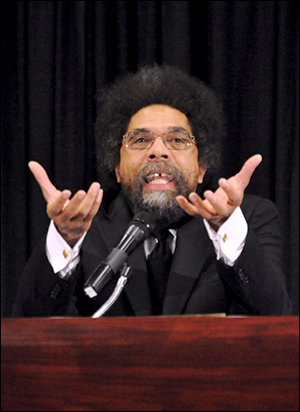
Presidential candidate Dr. Cornel West

Cornel West: Fails to Qualify for Florida Ballot — As ballots become finalized around the country, election officials in the state of Florida announced earlier this week that Independent presidential candidate Dr. Cornel West has failed to meet the state’s requirements for ballot access. Therefore, his name will not appear before the Florida electorate. Dr. West has qualified for the ballot in Alaska, Colorado, Michigan, Nebraska, North Carolina, Oregon, South Carolina, Utah, Vermont, Washington, and Wisconsin.

He could draw a percentage point or so of support from Vice President Kamala Harris in the key battleground states of Michigan, North Carolina, and Wisconsin, which could prove definitive. Dr. West might also be part of a matrix that could force the Alaska race into the Ranked Choice Voting round by helping deny former President Donald Trump majority support.

Senate

Florida: Another Close Poll — We’ve recently seen several polls that project Sen. Rick Scott (R) as being in a close race against former Rep. Debbie Mucarsel-Powell (D), Public Policy Polling (for the Clean and Prosperous America PAC; Aug. 21-22; 837 registered Florida voters; bilingual option available; live interview and text) publicized their late August findings that posted Sen. Scott to only a 48-45 percent lead over Mucarsel-Powell, this just one month after the Florida primary election. Earlier in the month, Florida Atlantic University tested the state’s electorate (Aug. 10-11; 1,040 likely Florida voters; Interactive Voice Response system with bilingual option and online) and drew a similar conclusion. Their ballot test response yielded a Scott edge of 47-43 percent.

Recent electoral and polling history tells us, however, that seeing Democrats performing well in Florida races during August is not unusual, while Republican strength then shows itself as the calendar officially moves into autumn. Additionally, the polling has typically inaccurately depicted Republican strength in the most recent campaigns. Therefore, it is likely Sen. Scott stands in better position than these surveys suggest.

House

FL-13: Rep. Luna Trailing in Post-Primary Poll — As is the case with Sen. Scott as explained above, we see potentially the same polling situation developing in the Tampa Bay area.

A new St. Pete Polls survey finds 13th District freshman Rep. Anna Paulina Luna (R-St. Petersburg) trailing her new Democratic general election opponent. The St. Pete Polls’ 13th District survey (Aug. 27; 843 registered FL-13 voters; automated phone calls and text) found new Democratic nominee Whitney Fox leading Rep. Luna, 48-44 percent, in the first publicly released poll since May. In that month’s GQR survey for the Fox campaign, Rep. Luna led 51-46 percent.

A similar pattern, though which much less data, was also present in Luna’s 2022 congressional race. The one published pre-election poll, also from St. Pete Polls and conducted over the Oct. 26-27 period, found Luna leading her ’22 opponent, Democrat Eric Lynn, by only one point, 46-45 percent, yet she carried the district by 8.1 percentage points in the actual vote. Again, we see another Florida Republican whose strength was not correctly projected, in this case, by an under-count of just over seven percentage points.

NJ-9: Nominee Clinched — It appears the nomination process to choose a successor to the late New Jersey Rep. Bill Pascrell (D-Paterson) has ended even before the official Democratic Party meeting to select a candidate has even begun.

After state Sen. Nellie Pou (D-Paterson) received a big bounce by obtaining endorsements from the local county party chairmen and other key local leaders, all of the other major candidates removed themselves from further consideration. Therefore, it appears that Sen. Pou will be the new nominee and will become a prohibitive favorite to defeat 2022 Republican nominee Billy Prempeh to keep New Jersey’s 9th District in Democratic hands.

House Open Seats: The Change Factor

By Jim Ellis — Thursday, August 29, 2024

House

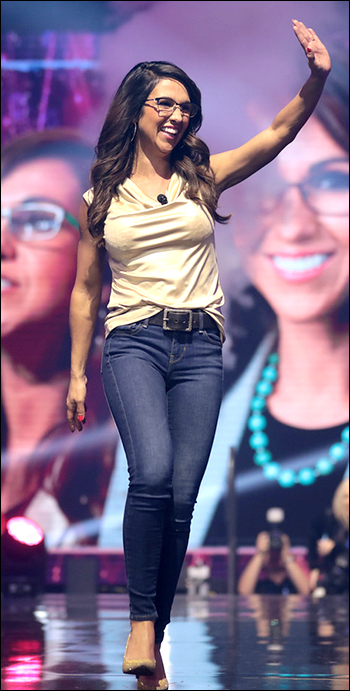
Colorado Rep. Lauren Boebert (R-Silt) / Photo by Gage Skidmore

Once again, we see a large number of open seats in the US House of Representatives, something that has been common throughout the previous decade and the beginning of this one, yet in 2024 very few open seats are poised to flip to the opposite party.

In a political body where incumbent retention is extraordinarily high – in 2022 we saw 98.1 percent of House incumbents who sought re-election win – and will almost assuredly be again so in 2024, most often seats that convert to the opposite party do so in open status.

That’s not the case in 2024. Currently, we find 55 open seats, 29 coming from the Democratic column, 25 from the Republicans, with one district, AL-2, which was created as a new seat in a secondary redistricting redraw. Yet from this number, and not counting the eight seats that were open during the cycle and filled in special elections, one could argue that only 10 will either flip or see a serious competition level.

At the end of the cycle, it would not be surprising to see only those affected by a second round of redistricting flip, meaning the three seats in North Carolina changing from Democrat to Republican, and one each moving from Republican to Democrat in Alabama and Louisiana.

Therefore, of the current 55 open House seats, it appears very likely that 50 will remain with the incumbent party or flip because of redistricting. Therefore, in only five instances do we see an open seat where the controlling party might change via election.

Perhaps the most hotly contested open seat lies in southern California where Rep. Katie Porter’s (D-Irvine) Orange County-anchored 47th District should be rated as a toss-up. Former state Assemblyman Scott Baugh (R), who finished first in the jungle primary, and state Sen. Dave Min (D-Irvine), who finished second, are the general election finalists.

If the jungle primary partisan breakdown is any indication as to how this race might end, and it may well be, then this is one that could take weeks to decide under the elongated ballot counting and signature verification process that California employs.

In the qualification election, Baugh finished first with 32.1 percent while Sen. Min captured 25.9 percent. The aggregate Republican percentage total from three candidates was 49.6 percent. The total Democratic percentage dispersed through four candidates was 47.1 percent, with the remaining 3.3 percent divided among a trio of No Party Preference candidates. CA-47 leans Democratic. The FiveThirtyEight data organization rates the seat as D+6, and the Daily Kos Elections statisticians, now with The Down Ballot data site, ranks the 47th as the 32nd most vulnerable seat in the House Democratic Conference.

The district that Rep. Lauren Boebert (R-CO) vacated, which covers Colorado’s western slope mountain region, should be a Republican CD. The FiveThirtyEight data team sees a GOP advantage of R+15, and The Down Ballot organization ranks the district as the 51st most vulnerable seat in the Republican Conference. Still, Democrat Adam Frisch has raised more money than all House candidates in the nation with the exception of the former House Speaker and Democratic Leader.

Though he already spent three-quarters of his money, most of which was raised when he was running against Rep. Boebert, Frisch still had almost $4 million more at his disposal in late June than new Republican nominee Jeffrey Hurd. Resources and residual name ID and losing the closest election of 2022 gives Frisch a fighting chance in what should be a safe Republican seat.

On paper, central/east Michigan’s 7th and 8th Districts appear as pure toss-ups. In actuality, with President Joe Biden taking the reconfigured 7th with a 49.4 – 48.9 percent tight victory and a slightly larger 50.3 – 48.2 percent finish in the adjacent 8th CD, as well as continuing to re-elect Democratic House members, 2024 US Senate candidate Elissa Slotkin and retiring Rep. Dan Kildee, the party has a more discernible edge than the dead even statistical calculations suggest.

This gives former state Rep. Curtis Hertel (D) and state Sen. Kristen McDonald Rivet (D-Bay City) the probable advantage they will need to beat their respective Republican opponents, ex-state senator and 2022 congressional nominee Tom Barrett and three-time congressional nominee Paul Junge, respectively.

Virginia’s 7th CD, open because Democratic incumbent Rep. Abigail Spanberger is preparing a 2025 run for governor, is another seat that looks more vulnerable on paper than it does in terms of actual vote counting. The FiveThirtyEight data organization ranks the 7th, that stretches from the outer Richmond suburbs to the Washington, DC exburbs, as D+2, and it ranks as the 17th most vulnerable seat in the Democratic Conference.

President Biden, however, recorded a more comfortable 52.6 – 45.8 percent majority and Rep. Spanberger scored a 51-49 percent re-election victory even though the congresswoman faced a constituency where three-quarters of the district’s residents were not in her previous district.

In the open seat election, retired Army officer Eugene Vindman (D) has a huge resource advantage over Iraq War veteran Derrick Anderson (R). Vindman had a 7:1 fundraising advantage over Anderson according to the most recent campaign disclosure filings.

At the end of the campaign cycle, it would not be surprising to see no open seat flip to the opposite party without the aid of a new redistricting map. If so, we will see yet another unique facet of the wild 2024 election cycle.

Is RFK Jr. In or Out? Hogan Moves Into a Tie in Maryland; Sheehy Rebounds in Montana; The Race to Replace the Late Rep. Bill Pascrell

By Jim Ellis — Wednesday, August 28, 2024

President

Robert F. Kennedy Jr. / Photo by Gage Skidmore

Robert F. Kennedy Jr: Can’t Withdraw in Key States — Though presidential candidate Robert F. Kennedy Jr. (I) wants to withdraw from the ballot in all key battleground states, certain election officials say they won’t or can’t (under state election law) remove his name. It appears that Kennedy’s name will remain on the ballot in Michigan, Nevada, North Carolina, and Wisconsin. It appears he won’t be on in Arizona, Georgia, or Pennsylvania.

Trump campaign pollster Tony Fabrizio released a memo suggesting the preponderance of Kennedy voters would move to former President Donald Trump if their first choice, Kennedy, were not on the ballot. In Michigan, according to Fabrizio, the Kennedy vote breaks 43-41 percent in Trump’s favor. The Nevada Kennedy vote split is a whopping 66-16 percent for Trump; North Carolina, 58-22 percent; and Wisconsin, 55-25 percent. Therefore, the Trump campaign and Kennedy will have to communicate to Kennedy voters in these affected states that RFK Jr. is no longer in the race irrespective of his ballot presence.

Senate

Maryland: Hogan Moves Into Tie: — The latest AARP Maryland poll (conducted jointly by Fabrizio Ward & Associates (R) and Impact Research (D); Aug. 14-20; 600 likely Maryland general election voters; oversample of 482 likely voters over age 50; oversample of 176 black likely voters; 60 percent live interview; 40 percent text) projects that former Gov. Larry Hogan (R) and Prince Georges County Executive Angela Alsobrooks (D) are deadlocked with each attracting 46 percent support.

These results are much different than the last publicly released ballot test survey, that from Public Policy Polling, conducted over the June 19-20 period. According to those results, Alsobrooks held a 48-40 percent lead. Before, Emerson College and Concord Public Opinion Partners conducted pre-May 14 Maryland primary polls. The two found Alsobrooks leading by two and five points, respectively. The AARP data puts the Maryland Senate race into an entirely different competitive prism. Should this tight electoral pattern continue, the Maryland Senate race will move into the top tier of competitive statewide contests.

Montana: Sheehy Rebounds — A new Public Opinion Strategies survey (Aug. 18-20; 500 likely Montana voters; live interview) finds retired Navy SEAL Tim Sheehy (R) climbing back into the lead over veteran Montana Sen. Jon Tester (D). According to the POS results, Sheehy leads the three-term incumbent, 51-44 percent.

Earlier in the month, RMG Research, polling for the Napolitan Institute (Aug. 6-14; 540 registered Montana voters) saw Tester leading 49-44 percent. Even the latter poll, however, flips to Sheehy if people believe that the Montana race will flip the Senate to Republican control. Under this argument, the ballot test reverses in Sheehy’s favor by a 55-37 percent mark.

Aside from converting the West Virginia Democratic Senate seat, which appears to be a lock for the GOP, Montana is clearly the next best contest for Republicans to topple a Democratic senator and claim a bare minimum Senate majority.

House

NJ-9: Endorsements & a Drop Out — State Sen. Nellie Pou (D-Paterson) received a big bounce in her effort to replace the late Rep. Bill Pascrell (D-Paterson) on the New Jersey general election ballot. New Jersey politics, of which the local county party chairmen have powerful positions, is still machine driven. For the coming special Democratic Party meeting to replace Pascrell, all three of the 9th District’s county chairmen, those from Passaic, Bergen, and Hudson counties, have endorsed the local state senator.

In another pre-meeting event, Paterson Mayor André Sayegh, thought to be the late congressman’s choice to succeed him, announced that he is removing himself from consideration. The remaining candidates are: General Assembly Speaker Pro Tempore Benjie Wimberly (D-Paterson), Assemblywoman Shavonda Sumter (D-Paterson), and state Sen. Pou.

RFK Jr.’s Ballot Status;
Dahlstrom Withdraws in Alaska;
NJ-9 Replacement Nominee Selection;
New Hampshire Pre-Primary Poll

By Jim Ellis — Tuesday, August 27, 2024

President

Robert F. Kennedy Jr. (I) / Photo by Gage Skidmore

RFK Jr: Current Ballot Status — Robert F. Kennedy Jr. (I) on Friday announced that he will suspend his campaign in battleground states but remain in places where the race is not as competitive. Which, however, are those states? It’s clear he will not compete in Georgia, Michigan, North Carolina, and Pennsylvania, domains that all agree are battlegrounds, but what about some others that may be on the competitiveness cusp? Kennedy has qualified for the ballot in Alaska, Maine, Nebraska, and New Mexico, all of which under certain circumstances could become close.

Alaska and Maine employ the Ranked Choice Voting system, which could change the outcome of the initial ballot count if no one secures majority support. Nebraska’s 2nd Congressional District is a battleground area and, depending upon the outcome of other key battleground domains, could cause a tie in the Electoral College. New Mexico has shown some close polling before President Joe Biden exited the race, but could it tighten again in the remaining weeks? Therefore, while Kennedy is out of the key battlegrounds and has endorsed former President Donald Trump, where he will or will not remain on the ballot is still open to some question.

House

AK-AL: Dahlstrom Withdraws — Republicans scored a major break in the Alaska at-large congressional race. Lt. Gov. Nancy Dahlstrom (R), who finished third in the Aug. 20 jungle primary, and thus advances into the general election under the Alaska top four voting system, announced on Friday that she is ending her congressional campaign. This will allow second-place finisher Nick Begich III (R) to challenge Rep. Mary Peltola (D-Bethel) in a one-on-one general election battle.

The Dahlstrom move increases the Republican chances of victory, though Rep. Peltola still should be considered at least a slight early general election favorite. Though all of the primary ballots are still not recorded, it does appear that she exceeded the 50 pecent mark. This would be significant heading into the general election, though under a larger turnout and a united Republican Party, Begich’s chances significantly increase.

There will be a fourth-place finisher advancing, too, however the individual’s vote count – fourth position is still undecided – is less than 1,000, so chances are strong that said individual will either drop out or only be a minimal factor in November.

NJ-9: Replacement Nominee to be Selected — Individuals contemplating whether to run now to replace New Jersey’s late Rep. Bill Pascrell (D-Paterson) don’t have much time to decide. Under state law, the ballots become locked on Aug. 29, so the 9th District Democratic party has only three days this week to choose a replacement nominee.

Indicating they want to be considered for the nomination are state Assembly members Shavonda Sumter (D-Paterson) and Speaker Pro Tempore Benjie Wimberly (D-Paterson). Paterson Mayor Andre Sayegh is also a potential candidate. The committee members’ choice will immediately become a heavy favorite to succeed Pascrell. The Republican nominee is sales consultant Billy Prempeh, who held Rep. Pascrell to a 55-45 percent victory margin in 2022.

States

New Hampshire: Pre-Primary Statewide Poll — The University of New Hampshire conducted their regular Granite State poll, this in anticipation of the state’s late Sept. 10 primary election.

As other data has shown, ex-Sen. Kelly Ayotte maintains a strong Republican primary advantage over former state Senate president and 2022 Senate candidate Chuck Morse. In this poll, which is her best showing, Ayotte leads Morse by a whopping 65-21 percent. On the Democratic side, we see a closer race, but one with a consistent leader, former Manchester Mayor Joyce Craig. In this survey, Craig notches a 39-30 percent edge over Executive Councilor Cinde Warmington.

In the US House races, Rep. Chris Pappas (D-Manchester) has only minor opposition in the Democratic primary. In the crowded Republican primary, former executive councilor and ex-state Sen. Russell Prescott holds a 19-10 percent advantage over Manchester City Alderman Joseph Kelly Lavasseur with no other candidate reaching double digits.

In open District 2, from which Rep. Annie Kuster (D-Hopkinton) is retiring, former Biden Administration official Maggie Goodlander leads the Democratic primary over former executive council member and 2016 Democratic gubernatorial nominee Colin Van Ostern. The split is 34-28 percent, which is closer than other polls have indicated. This could suggest that Van Ostern has developed momentum heading into the primary election. On the Republican side, business consultant Vikram Mansharamani has a small 21-17 percent edge over businesswoman Lily Tang Williams and 10 others.