Tag Archives: Texas

Pennsylvania GOP Senate Primary Still Undecided, Moving to Recount; House News Includes NY, PA, TX

By Jim Ellis — May 27, 2022

Senate

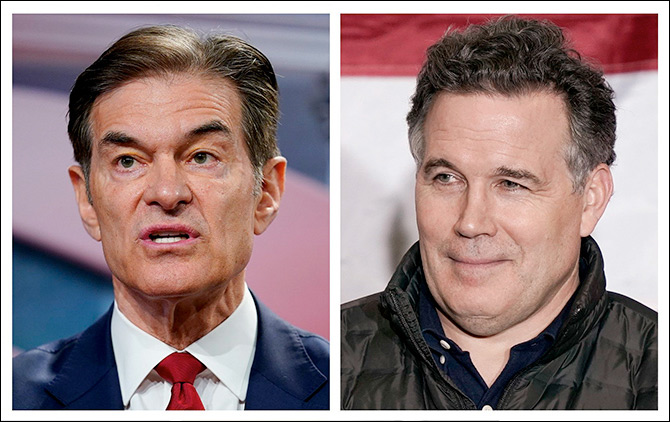
Dr. Mehmet Oz (left) leads former hedge fund CEO David McCormick by 902 votes.

Pennsylvania: Recount Ordered — It’s now been more than a week since the primary election here and still no declared winner in the Republican Senate primary. Pennsylvania election authorities have already ordered election officials in the state’s 67 counties to begin the inevitable recount. Officials know the final unofficial count, which could be released as early as today or tomorrow, will be within the half percent that triggers an automatic recount.

At this writing, the numbers show Dr. Mehmet Oz leading former hedge fund CEO David McCormick by 902 votes from more than 1.3 million ballots cast. The deadline for military, overseas, and provisional ballot reception was Tuesday. It is being reported that this is the closest primary in Pennsylvania’s modern political era.

House

NY-16: New Challenger for Rep. Bowman — Westchester County Legislator Catherine Parker (D) announced her intention to challenge Rep. Jamaal Bowman (D-Yonkers) in the upcoming Aug. 23 Democratic primary. Another Westchester Legislator, Vedat Gashi (D), is already in the race. Parker says the new district lines move Gashi’s political base outside the district’s confines, hence her becoming a candidate. Irrespective of this activity, Rep. Bowman is favored for re-nomination and re-election in the new 16th CD.

NY-17: Two Republicans Oppose Rep. Maloney — After state Sen. Alessandra Biaggi (D-Bronx) announced her Democratic primary challenge to Democratic Congressional Campaign Committee chair Sean Patrick Maloney (D-Cold Spring), two Republicans have jumped into the new 17th District campaign, state Assemblyman Matt Lawler (R-Pearl River) and Rockland County Legislator Charles Falciglia.

The new 17th is rated D+7 through the FiveThirtyEight data organization’s calculations. While the seat clearly leans Democratic, Rep. Maloney has attracted a great deal of attention since he announced against freshman Rep. Mondaire Jones (D-Westchester County) instead of running just north in what is now the open 18th CD. For his part, Jones is now running in the southwestern Manhattan/Brooklyn new 10th District.

PA-17: New Poll Already Shows Toss-Up — The Democratic Congressional Campaign Committee is already out with a new poll of the open PA-17 CD taken before the May 17 primary (May 9-10; 494 likely PA-17 voters; live interview & text). They project a 44-41 percent lead for their new nominee, election law attorney Chris Deluzio (D) over former local official Jeremy Shaffer, the new GOP nominee. When the DCCC first started releasing polling several years ago, the data was heavily slanted in their candidates’ favor, thus forfeiting credibility. In the last several years, however, their results have been closer to the mark, but still slightly slanted. Therefore, a DCCC poll finding Deluzio only ahead three points is a clear indication this race already begins in the toss-up realm.

Texas: TX-24, TX-15 — Two electoral contests from Tuesday remain uncalled and are very tight. In the 28th District, Rep. Henry Cuellar (D-Laredo) holds only a 177 vote run-off lead over opponent Jessica Cisneros (D). The Secretary of State’s released results show all precincts reporting, meaning ancillary votes arriving in the mail and provisionals are likely the only ballots remaining. A recount will probably be requested, but based upon the trends of where the remaining ballots lie, it appears that Rep. Cuellar’s slim advantage will likely grow.

Staying in South Texas, the Democratic 15th District runoff between businesswoman Michelle Vallejo and attorney Ruben Ramirez leans toward the former by just 23 votes. The voter pool at this point, however, is just over 12,000 individuals, an extremely low participation total. The final ballots can clearly tip this race to either candidate. The eventual winner will face Republican 2020 nominee Monica de la Cruz. The general election campaign will likely begin as a toss-up. If the Democratic decision is drawn out over a long period, de la Cruz would be staked to a key advantage in the early general election period. The FiveThirtyEight rating for TX-15 is EVEN.

And The Landslides Bring It Down

By Jim Ellis — May 25, 2022

Primary Results

Georgia Gov. Brian Kemp

Georgia: Gov. Brian Kemp turned back former Sen. David Perdue with an unpredicted landslide 74 percent win in what was clearly the most anticipated race of the evening. While polling showed that the governor would be re-nominated, a huge 74-22 percent vote spread was unforeseen. Considering where Gov. Kemp started after the 2020 election and former President Donald Trump piling on him up until the day of this vote, Kemp’s win was extraordinary within a primary turnout of just under 1.2 million GOP voters, the size of which has not been previously seen.

Also scoring big was Herschel Walker in the US Senate Republican primary. He won with more than 68 percent of the vote and now advances to face Sen. Raphael Warnock (D) in the general election. Sen. Warnock had only minor opposition in the Democratic primary and captured 96 percent of the 713,000-plus Democratic votes that have been recorded.

In the 7th Congressional District Democratic incumbent pairing contest, Rep. Lucy McBath (D-Marietta) scored a huge 63-31 percent victory over freshman Rep. Carolyn Bourdeaux (D-Suwanee). The two incumbents became paired when the Republican map drawers decided to make the new 6th District safely Republican, thus forcing McBath into the adjoining 7th CD.

Alabama: Rep. Mo Brooks (R-Huntsville), who former President Trump pulled back from endorsing because, at the time, it was viewed his campaign was going nowhere, rebounded to capture second position (29.2 percent) in the open US Senate Republican primary and advance to the June 21 runoff election. The first-place finisher is former Business Council of Alabama President & CEO Katie Britt (44.7 percent). Both defeated retired “Black Hawk Down” pilot Mike Durant (23.3 percent), whose self-funded campaign fell short of the mark in what was an expensive three-way race.

In the contested Republican gubernatorial primary, Alabama Gov. Kay Ivey (R) won re-nomination with 54 percent of the vote against eight Republican opponents. Here, too, GOP turnout was much higher than the Democrats’ — over 645,000 voters compared to 168,000. In both Georgia and Alabama, the Trump endorsements clearly lacked the punch we have seen in the other early primaries.

Arkansas: Sen. John Boozman turned back three Republican challengers to win his re-nomination outright with 58 percent of the vote. All four GOP US House members were also re-nominated, though 2nd District Rep. French Hill (R-Little Rock) posted a surprisingly low 58.5 percent.

The open governor’s race produced no surprise. Former Trump press secretary and daughter of ex-Gov. Mike Huckabee, Sarah Huckabee Sanders, won a landslide Republican nomination with 83.2 percent of the vote. She will easily replace term-limited Gov. Asa Hutchinson (R) in the autumn election.

MN-1 Special Primary: The Minnesota special congressional primary to begin the replacement process for the late Rep. Jim Hagedorn (R-Blue Earth/Rochester) is also undecided. The Republican side now features a two-way battle between former state Rep. Brad Finstad (38.0 percent) and state Rep. Jeremy Munson (36.8 percent) with 88 percent reporting. The Finstad lead is 427 votes, which may or may not stand up as the final counting process proceeds.

On the Democratic side, former Hormel company CEO Jeff Ettinger won the party nomination with 64.3 percent of the vote over seven opponents. The eventual nominees will square off in a special general election on Aug. 9, a date concurrent with Minnesota’s regular primary election. Republican turnout so far surpasses the Democratic participation rate by almost a 2:1 margin, 35,330 to 18,392.

Texas: The Texas results featured a crushing defeat for the Bush family, as two-term incumbent Attorney General Ken Paxton swamped Land Commissioner George P. Bush, son of former Florida Gov. Jeb Bush, with a 67.2 – 32.8 percent margin. Paxton will now face attorney Rochelle Garza who won the Democratic runoff with 62.9 percent of the vote.

There are two unresolved congressional races at this writing. In one of the South Texas seats, veteran Rep. Henry Cuellar (D-Laredo) leads attorney Jessica Cisneros by just 177 votes with 94 percent of the expected vote recorded. Most of the outstanding vote appears to come in Cuellar-favorable counties, so it is more likely that he survives a very close primary and runoff set of elections.

In the contested open 15th District, in what could well become the most hotly contested general election in the Lone Star State, the Democratic runoff is still a long way from being decided. Candidates Michelle Vallejo and Ruben Ramirez are only 23 votes apart with just 50 percent of the counting reported. This contest could require quite a bit of time to decide. The eventual winner will face the 2020 Republican nominee, Monica de la Cruz, who easily won re-nomination outright back on March 1.

Moving to the open Dallas-anchored 30th District, State Rep. Jasmine Crockett (D-Dallas) recorded a 60.6 percent runoff win to capture the party nomination in the safely Democratic seat. She will succeed retiring US Rep. Eddie Bernice Johnson (D-Dallas) in November. Johnson has represented the area in Congress for the past 30 years.

House

NY-19: Rep. Delgado to Take Oath for Lieutenant Governor; Will Resign Today — US Rep. Antonio Delgado (D-Rhinebeck) will officially be sworn in as the state’s new lieutenant governor later today. Resigning the congressional seat just before taking the oath of office allows Gov. Kathy Hochul (D) to schedule the special election to replace Delgado concurrently with the Aug. 23 congressional primary. The political parties will choose their respective nominees, meaning there will be only one election to fill the balance of the congressman’s current term. The new member then could seek a full term in the new 19th CD, which will be different in configuration to the current pre-redistricting seat.

Governor

Michigan: Top GOP Candidate Facing Disqualification — Media reports surfacing from Michigan are indicating that several Republican candidates, including polling front-runner James Craig, the former Detroit Police Chief, may fall short of presenting 15,000 valid registered voter petition signatures to qualify him for a ballot position. According to the Michigan Bureau of Elections, 9,879 of Craig’s signatures were invalid for various reasons, leaving him well short of the 15,000 minimum number.

Another gubernatorial candidate, businessman Perry Johnson (R), is in similar position. The Michigan governor’s race is one of he premier statewide campaigns in the country this year, so with Craig potentially being ousted as a candidate, that’s a major developing story.

Budd Wins in NC; PA Senate Race
Still Too Close to Call

By Jim Ellis
May 18, 2022

Primary Results

Yesterday’s Voting — As predicted, North Carolina US Rep. Ted Budd (R-Advance) soundly defeated former North Carolina Gov. Pat McCrory to win the US Senate nomination, winning 99 of the state’s 100 counties. Former US Rep. Mark Walker and author Marjorie Eastman finished third and fourth. The general election is now set, as Rep. Budd advances to face former state Supreme Court Chief Justice Cheri Beasley, who became a consensus Democratic candidate. The Tar Heel contest will be one of the most important Senate races in the country.

US Rep. Madison Cawthorn (R-Hendersonville) lost his battle for re-nomination last night to state Sen. Chuck Edwards (R-Hendersonville). In the field of eight candidates, Edwards claimed the nomination with 33 percent of the vote, as compared to the scandal-plagued congressman’s 32 percent. In North Carolina, runoffs only occur if all of the candidates fall below a 30 percent threshold.

In what appears to be another congressional defeat, veteran Oregon Congressman Kurt Schrader (D-Canby) is running far behind his Democratic primary challenger, Jamie McLeod-Skinner, a former city manager, but half of the vote is still outstanding under Oregon’s all-mail voting system. Still, with a 61-39 percent margin, Rep. Schrader appears too far behind to make up all of the vote difference.

The Pennsylvania Senate Republican race is still too close to call, as television Dr. Mehmet Oz and former hedge fund CEO David McCormick are locked in a battle separated with less than two-tenths of a percentage point. It is difficult to tell how many votes remain uncounted because the state will allow ballots postmarked yesterday to be received in the coming days. It will be some time before we know the outcome, but Dr. Oz has a 2,672-vote lead of the more than 1.31 million votes cast. Pennsylvania election law guarantees an automatic recount if the margin is within .5 percent. McCormick claims the remaining mail votes will hand him the victory.

As expected, the Pennsylvania Democrats nominated Lt. Gov. John Fetterman who lays in a hospital recovering from a recent stroke that occurred from a blood clot in his heart. Fetterman, who underwent a pacemaker procedure, is expected to make a full recovery but will be sidelined for some time.

In the election, Fetterman easily defeated US Rep. Conor Lamb (D-Pittsburgh) and state Rep. Malcolm Kenyatta (D-Philadelphia) with a 59-26-10 percent landslide victory margin. He won all of the state’s 67 counties in a turnout of more than 1.17 million voters. Surprisingly, Democratic turnout dropped below that of Republicans for the first time in decades. This, despite the party’s 45.8 to 35.9 percent voter registration advantage.

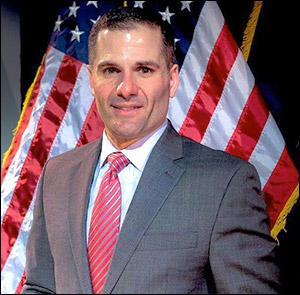
In the PA governor’s race, state Sen. Doug Mastriano (D-Fayetteville) easily won the open Republican nomination and will face Attorney General Josh Shapiro (D) in the general election. The latter man was unopposed in the Democratic primary. Media reports suggest that Mastriano may be too conservative to win in Pennsylvania, but the large Republican primary turnout is a precursor that this race will be competitive.

In other key statewide races, Kentucky Sen. Rand Paul romped to an 86 percent Republican primary victory. He will face former Louisville state Rep. Charles Booker who was an easy winner on the Democratic side. Sen. Paul is a heavy favorite for re-election. In the open 3rd Congressional District, state Senate Minority Leader Morgan McGarvey, also as expected, won a landslide Democratic primary victory last night and will succeed retiring Rep. John Yarmuth (D-Louisville) in the Autumn.

Idaho Gov. Brad Little (R) defeated Trump backed Lt. Gov. Janice McGeachin, 53-32 percent, and becomes a prohibitive favorite in the general election. US Rep. Mike Simpson (R-Idaho Falls) again defeated his 2014 primary opponent, attorney Bryan Smith, this time by 13 percentage points and will claim a 13th term in November.

Governor

Wisconsin: New Republican Leader According to Dem Poll — Democratic pollster Public Policy Polling surveyed the Wisconsin Republican gubernatorial primary and produced results not found in other polls. The study (May 9-10; 675 likely Wisconsin Republican primary voters) projected construction company executive and 2004 US Senate nominee Tim Michels taking a small lead over former Lt. Gov. Rebecca Kleefisch. This is the first poll find anyone but Kleefisch claiming the top position. The ballot test gave Michels a 27-26 percent edge, with businessman Kevin Nicholson trailing well behind in third place with nine percent preference. The Milwaukee Works, Inc. organization released the ballot test portion of the PPP survey.

States

Texas: Conflicting AG Polls — Next Tuesday, Texas Republican voters will decide the runoff election between incumbent Attorney General Ken Paxton and Land Commissioner George P. Bush. The race has turned negative and earlier polls were giving Paxton, who is still under a stalled 2015 SEC indictment, a strong lead. The new University of Texas at Tyler survey (May 2-10; 570 likely Texas Republican runoff voters) projects Paxton’s lead to be only 41-35 percent.

During the same sampling period, as previously reported, the CWS Research group (May 4-10; 992 likely Texas Republican runoff voters) produced a much different 58-31 percent ballot test result in the attorney general’s favor. Since these polls were conducted during the same period, we will have to see more data to determine the correct trajectory. It appears clear, however, that Paxton is the race leader, but whether his margin is wide or tight is open to question.

Rep. Budd’s Nomination Secure in NC?
A Close Gov. Race Brewing in NM

By Jim Ellis
May 16, 2022

Senate

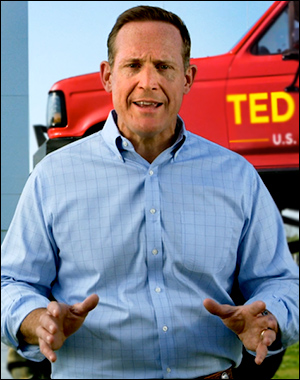
North Carolina Rep. Ted Budd (R-Advance)

North Carolina: Dueling General Election Polls — With US Rep. Ted Budd (R-Advance) now substantially ahead in 12 consecutive Republican primary polls from the end of March to present, it appears clear he is going to be nominated on Tuesday. Therefore, attention is already being paid to the formulating general election. Two polls featuring Rep. Budd and consensus Democratic nominee Cheri Beasley, the former state Supreme Court Chief Justice, have just been released.

The first, from the Beasley campaign that the Global Strategy Group conducted (April 28-May 4; 800 likely North Carolina general election voters) finds the poll sponsor and Rep. Budd tied at 45 percent. Emerson College also released their survey (May 7-9; 1,000 registered North Carolina voters) that gives Budd a 48-41 percent advantage. We can expect this to be one of the top Senate races in the country come November and will feature a plethora of public polls.

House

NC-1: Dems Have Clear Poll Leader; Republicans Attacking Their Own — The GQR survey research firm ran a poll of the open 1st District Democratic primary (May 6-8; 407 likely NC-1 Democratic primary voters) and find state Sen. Don Davis (D-Snow Hill) leading former state senator and 2020 US Senate candidate Erica Smith, 44-31 percent, as the candidates make their final pitch before Tuesday’s primary election.

The Republican-oriented Congressional Leadership Fund, loosely associated with House Minority Leader Kevin McCarthy (R-CA), is actively running ads against GOP candidate Sandy Smith, the 2020 CD-1 nominee who held incumbent Rep. G.K. Butterfield (D-Wilson) to a 54-46 percent re-election victory.

The CLF does not indicate support for another candidate, but former Rocky Mount Mayor Sandy Roberson appears to be Smith’s strongest competitor. The move is curious in that the ads lay out personal negatives against Smith that could be used against her in the general election should she win the GOP nomination. The new 1st, which the state Supreme Court drafted, is rated D+5, thus suggesting a competitive general election.

Governor

New Mexico: Close Race Brewing — Survey USA polling for KOB-TV in Albuquerque (April 29-May 7; 1,389 likely New Mexico general election voters; interactive voice response system and online) tested the upcoming governor’s race and finds 2020 US Senate Republican nominee and former television weatherman Mark Ronchetti pulling to within the margin of polling error against Gov. Michelle Lujan Grisham (D).

The ballot test breaks 47-43 percent in favor of the incumbent. More troubling for Gov. Lujan Grisham, however, is her results against the entire Republican field. Paired individually with each of five candidates, Gov. Lujan Grisham, though leading in every case, fails to reach 50 percent against any of her GOP opponents. The cumulative results portend a highly competitive November race.

Pennsylvania: Senate President Drops Out — Just days before Tuesday’s Pennsylvania primary, state Senate President Jake Corman has dropped his Republican gubernatorial bid and endorsed fellow contender Lou Barletta, the former congressman and 2020 US Senate nominee. With Corman never able to increase his support from low single digits, his withdrawal is designed to help Barletta overcome the polling lead that state Sen. Doug Mastriano (D-Fayetteville) has established.

Pennsylvania Republican leaders are reportedly nervous that Sen. Mastriano, who was a legislative leader in attempting to determine if there was widespread fraud in the state during the 2020 election, would be unable to defeat Attorney General Josh Shapiro, who is the consensus Democratic gubernatorial nominee. It is likely that the Corman-Barletta move will prove too little, too late, however.

States

Texas Attorney General: Paxton Leading Big — A CWS Research poll (May 4-10; 992 likely Texas Republican primary runoff voters; interactive voice response system and text) reports that Attorney General Ken Paxton is substantially ahead of Land Commissioner George P. Bush, the son of former Florida governor and 2016 presidential candidate Jeb Bush. The CWS results find AG Paxton holding a whopping 58-31 percent lead as the candidates move toward the state’s May 24 runoff election date. In the primary, Paxton garnered 42.7 percent of the vote, which is obviously short of the majority vote a candidate needs to win the nomination outright. In a field of four candidates, Bush finished second with 22.8 percent.

Rep. Vela to Resign; Another Special?

Texas Congressional Redistricting Map (click here or on map to see larger, interactive version)

By Jim Ellis

March 28, 2022 — If the upcoming Alaska special election isn’t complex enough, with the top-four jungle primary feature complete with Ranked Choice Voting that will be used to replace the late at-large Rep. Don Young (R-Ft. Yukon), the developing situation in Texas may be even more confusing.

A year ago March, five-term South Texas Rep. Filemon Vela (D-Brownsville) announced that he would not seek re-election in 2022, becoming one of the first sitting incumbents to enter into lame duck status. Late last week Vela made public his intention to resign in the “next few weeks” in order to accept a position with the Akin Gump law firm.

Texas election law states that a vacancy in office must be filled at the next regular election, or earlier if the governor rules that an emergency exists. In a similar situation before the regular 2018 election, Gov. Greg Abbott (R) called an emergency special election to immediately replace resigned GOP Rep. Blake Farenthold. Current Rep. Michael Cloud (R-Victoria) won his initial election as a result.

In the current political climate, with the country facing record inflation, sky-high energy prices, a border crisis, oil and gas production limitations as a matter of policy, and a hostile invasion in eastern Europe not seen since the days of Adolph Hitler in the pre-World War II period, the governor could easily claim that enough issues need addressing by a full Texas delegation. Therefore, he could justify calling an immediate special election.

If so, the situation becomes interesting. The winner of Rep. Vela’s 34th District open Democratic primary on March 1 was sitting 15th District Congressman Vicente Gonzalez (D-McAllen). He is seeking re-election in the 34th with Rep. Vela’s endorsement instead of in his original district that is trending more Republican. Therefore, if a special election is held prior to the regular election, Rep. Gonzalez would have to resign his 15th CD seat upon winning the subsequent election, thus creating another short-term vacancy.

Continue reading

More About The Texas Runoffs

By Jim Ellis

March 7, 2022 — More is becoming clear about Tuesday night’s Texas primary election. Topping the list, Republicans had the better night in terms of voter participation. Their turnout, which exceeded 1.9 million voters in the governor’s race, represents at least a 24.2 percent increase over the last midterm election year of 2018. The Democrats, on the other hand, saw only a 3.5 percent commensurate increase.

Two major runoff elections advance to a May 24 vote. In the attorney general’s race, embattled incumbent Ken Paxton, who has been under federal indictment since 2015 with no action taken, and faces bribery accusations from ex-staff members along with a now public extra-marital affair, still managed to place first in the primary. He recorded 42.7 percent of the Republican vote and now faces Land Commissioner George P. Bush in the secondary election. Commissioner Bush is the son of former Florida governor and ex-presidential candidate Jeb Bush.

Bush received 22.8 percent, which was enough to clinch second place and advance. In third position with 17.5 percent, just ahead of US Rep. Louie Gohmert’s (R-Tyler) 17.1 percent, was former state Supreme Court Justice Eva Guzman. With approximately 58 percent of the Republican primary electorate choosing someone other than incumbent Paxton, the runoff outlook bodes poorly for him on paper, but the AG still has a solid base within the GOP’s most conservative faction. The latter will be an important element in the lower turnout runoff election.

In the primary contest, Bush was the only opponent that Paxton did not attack with negative ads. This suggests his preference is to run against Bush in what was always viewed as a contest that would evolve into a runoff, so this attorney general’s battle should be an interesting three-month campaign.

In the federal races, two incumbents were forced to runoff elections, Reps. Henry Cuellar (D-Laredo) and Van Taylor (R-Plano), but the latter situation is already settled.

The Cuellar race got much closer as late votes were being tabulated. According to the Secretary of State’s website, Cuellar, who came from way behind after trailing early, took the lead but did not reach the majority threshold. Some outstanding and overseas ballots remain to be tabulated, but it doesn’t appear as if this runoff will be avoided.

The official count now stands a 48.4 percent for Rep. Cuellar and 46.9 percent for opponent Jessica Cisneros. A third candidate, Tannya Benavides, secured only 4.7 percent of the vote, but this was enough to deny either front runner majority support.

The race not only broke along ideological lines, but also geographic. Rep. Cuellar is a member of the more politically moderate Blue Dog Coalition, while Cisneros earned support from the Democratic Socialists. Geographically, Cisneros ran up the vote score in the northern part of the district, the area in and around San Antonio, while the counties south of the city and all the way to the Mexican border including Cuellar’s home county of Webb, strongly supported him.

Continue reading

Rep. Taylor Withdraws From Race

Former Texas Collin County Judge (Executive) Keith Self is now the new 3rd District Republican nominee after north Texas area Congressman Van Taylor (R-Plano) decided to withdraw from the runoff election resulting from Tuesday’s primary.

By Jim Ellis

March 4, 2022 — It was on a somewhat surprising note that north Texas area Congressman Van Taylor (R-Plano) was forced into a runoff from Tuesday’s primary election, but Wednesday’s related events proved astonishing.

Rep. Taylor has announced that he is withdrawing from the runoff, making public an extra-marital affair in which he engaged. Apparently, affair rumors began to surface late in the primary contest. Clearly knowing the story would become public, he admitted the indiscretion and immediately departed the race.

Under Texas election procedure, a candidate qualifying for a runoff election can decline to participate. The concession means the opponent automatically wins the party nomination. Thus, former Collin County Judge (Executive) Keith Self is the new 3rd District Republican nominee with an accompanying ticket to Washington, DC after the Nov. 8 election.

Taylor only secured 48.7 percent of the vote in Tuesday’s primary, meaning that a majority of Republican primary voters chose another candidate. This is never a good sign for any incumbent and the chief reason that most incumbents fail when forced to the secondary election. Adding the personal baggage obviously told Rep. Taylor that his re-election chances were irreparably diminished.

Self is a retired career West Point Academy Army officer who placed second in the primary with 27.1 percent, outlasting third-place finisher Suzanne Harp, a hard-charging businesswoman who proved to be surprisingly strong. The new congressional nominee presided over Collin County, an entity with now more than 1 million people, for three terms and chose to retire in 2018. In the congressional primary, he campaigned to Rep. Taylor’s right.

Continue reading

Texas Primary Results; Reps. Cuellar and Taylor to Runoffs

By Jim Ellis

March 2, 2022 — Both Gov. Greg Abbott (R) and former US Rep. Beto O’Rourke (D) won their respective gubernatorial primary outright last night, the nation’s first nomination contest in the 2022 election cycle.

Gov. Abbott easily captured the nomination to run for a third term, defeating former Texas Republican Party chairman Allen West and ex-state Sen. Don Huffines with 67 percent of the vote. O’Rourke topped a group of Democratic candidates to easily secure his nomination, attracting a whopping 91 percent. Several thousand votes remain to be counted. Gov. Abbott will be favored in the general election.

Lt. Gov. Dan Patrick (R), state Agriculture Commissioner Sid Miller (R), and State Comptroller Glenn Hegar (R) were all easily re-nominated and are prohibitive favorites in the general election.

Attorney General Ken Paxton, as expected, was forced into a Republican runoff election and will face Land Commissioner George P. Bush, son of former Florida Gov. Jeb Bush in what will be a highly competitive contest. AG Paxton recorded 42.7 percent support compared with Bush’s 22.8 percent. Former state Supreme Court Justice Eva Guzman and US Rep. Louie Gohmert (R-Tyler) followed with 17.4 and 17.1 percent, respectively.

Bush’s open Land Commissioner position will also go to a secondary election with state Sen. Dawn Buckingham (R-Lakeway) garnering 41.9 percent. Her runoff opponent will be pastor Tim Westley who appears to have clinched second place with 14.8 percent of the vote. The Texas runoff election is scheduled for May 24.

A pair of incumbents are forced into runoff elections while all other incumbents won their elections outright. The open seat contests also unfolded as expected.

Reps. Henry Cuellar (D-Laredo) will again face opponent Jessica Cisneros in a secondary May 24 election. After trailing all night, Cuellar finished first with 48.5 percent as compared to Cisneros’ 46.8 percent, a difference of 807 votes. Third place finisher Tannya Benavides’ small 4.7 percent share is enough to force the runoff as neither top finisher reached 50 percent.

In north Texas, Rep. Van Taylor (R-Plano) will also be forced to a runoff. He came within 1.3 percentage points of winning outright. Former Collin County Judge (Executive) Keith Self advances but recorded only 26.5 percent of the vote. He outlasted financial executive Suzanne Harp by just over 3,600 votes.

Continue reading

Redistricting After-Effects

Click the map above or this link to go to an interactive version: Dave’s Redistricting App

By Jim Ellis

Feb. 24, 2022 — As more states complete their redistricting process and additional data becomes available, we are beginning to catch a glimpse of each party’s path to either keeping or re-claiming the House majority in the coming midterm election.

The FiveThirtyEight statistical organization along with the Dave’s Redistricting App operation are the two data groups that are charting each district as the states complete their decennial task of drawing new congressional district boundaries.

At this point, we have usable projection data from the two organizations in 350 of the nation’s 435 congressional districts, meaning newly completed maps in all but eight states. (FiveThirtyEight has not yet analyzed the new North Carolina map because the court has not yet given final approval, but Dave’s App has calculated based upon the version now before the judicial panel.) As an aside, several of the outstanding states are large, including Florida (28 congressional districts), Ohio (15 CDs: map was complete but rejected before the state Supreme Court), and Pennsylvania (17 CDs).

At this point we can see, after analyzing each of the 350 completed districts, that redistricting in and of itself will return only a narrow advantage to one party or the other. Considering the still incomplete outstanding states, it is unclear which political entity may earn a slight advantage once the entire process is finalized. Currently, newly created maps are complete (or pending court approval) in 42 states, including five of the six at-large domains whose single-state districts are included in the aforementioned aggregate number.

The FiveThirtyEight projections and Dave’s Redistricting App agree on party advantage in 344 of the completed districts even though they used different mathematical formulas and election complexion to arrive at their conclusions. Therefore, the assigned D or R-plus ratings from FiveThirtyEight consistently align with Dave’s numerical projections for Democratic and Republican strength in each of the 344 CDs.

Of the six districts where the two organizations disagree over party advantage, in each of the half-dozen CDs, the FiveThirtyEight data has projected a stronger Republican number. Three of the six lie in the state of Michigan.

The conflicting districts are:

STATE-DIST MEMBER FiveThirtyEight DAVE R DAVE D
CO-8 NEW SEAT            R+3 46.91% 48.24%
MI-7 SLOTKIN, ELISSA            R+4 47.75% 49.18%
MI-8 KILDEE, DAN            R+1 46.05% 50.84%
MI-10 CREATED SEAT            R+6 47.82% 49.44%
TX-15 CREATED SEAT            EVEN 46.73% 51.02%
VA-2 LURIA, ELAINE            R+6 48.35% 49.58%

(Note: a “New Seat” is one drawn in a state that was awarded an extra seat, or two in the case of Texas, through national reapportionment. A “created seat” is a new open district that came as a result of the redistricting process.)

Totaling the 344 districts where FiveThirtyEight and the Dave’s App are in agreement as to party advantage, the Democrats would gain 12 Republican, new, or created districts; while the GOP would gain 10 Democratic, new, or created seats.

Continue reading

House Incumbent Primaries, Part II: Democrats

By Jim Ellis

Feb. 21, 2022 — Part II of our incumbents’ primary challenges report concentrates on the Democratic members who find themselves in serious nomination contests. (Note: Part I — the Republicans — was published Friday. Please scroll down to read.) Nine such situations are covered in this update, with one of them, the Texas race of veteran Rep. Henry Cuellar (D-Laredo) to be decided on March 1.


GA-7: Dem Pairing

Primary: May 24
Runoff: July 26

Rep. Carolyn Bourdeaux (D-Suwanee)
Rep. Lucy McBath (D-Marietta)
• Bourdeaux Cash-on-Hand (Dec. 31, 2021): $2,005,771
• McBath Cash-on-Hand (Dec. 31, 2021): $2,452,731
FiveThirtyEight Statistical Rating: D+16
Dave’s Redistricting App Historical Voting: 58.4% D

Republicans held the redistricting pen in Georgia and after losing two Atlanta metropolitan districts in consecutive elections, it was clear the GOP map drawers were going to take one back. That translated into loading Democrats from the previously Republican 6th District into the transitioning 7th CD.

Along with bringing more Democrats into the 7th, the 6th District incumbent, Rep. McBath, decided to join them. Instead of fighting for re-election in a new Republican 6th District (R+24), she moved south to challenge freshman Democrat Carolyn Bourdeaux in the party primary. As you can see from the cash-on-hand totals above, both incumbents are well-heeled financially, so a major campaign is underway.

Also in the Democratic field is state Rep. Donna McLeod (D-Lawrenceville), who points out that she is the only one of the three that actually lives in the 7th CD. Her campaign has been slow to begin, so it is doubtful that she will be much of a factor, and probably will not draw enough support to force the two congressional incumbents into a runoff. Therefore, it is likely that this pairing will be settled in the May 24 primary.

Among carryover constituents Rep. Bourdeaux has a big advantage in seeing a majority of her current 7th District constituency (57 percent) remaining in the new 7th. McBath, however, sees only 12.1 percent carryover from her 6th District. The larger Democratic influx came from Rep. Hank Johnson’s 4th CD, as 26 percent of his constituency was transferred to the new 7th.

On the other hand, the new 7th is overwhelmingly minority: 29.8 percent black, 21.3 percent Hispanic, and 15.8 percent Asian. Thus, the demographics could help Rep. McBath, who is African American. Her strength within the party’s leftward faction is also a benefit in a primary contest. With each incumbent showing similar strength levels, this will be an interesting race to watch on May 24.


GA-13: Rep. David Scott

Primary: May 24
Runoff: July 26
• Scott Cash-on-Hand (Dec. 31, 2021): $1,107,286
FiveThirtyEight Statistical Rating: D+52
Dave’s Redistricting App Historical Voting: 77.9% D

After only scoring 52.9 percent in the 2020 Democratic primary against three opponents, Rep. David Scott’s (D-Atlanta) 2022 race may be even more serious. Opposing him in this election are two candidates with an election track record, former state senator and 2017 Atlanta mayoral candidate Vincent Fort, and South Fulton City Councilman Mark Baker. The latter man bills himself as the “strongest progressive” in the race, but ex-Sen. Fort was well entrenched with the Bernie Sanders campaign.

Therefore, both opponents are attacking Rep. Scott from the left, which should help him split the opposition vote. Whether such a split will be enough to again allow him to capture majority support in the May 24 primary may be another question. Rep. Scott has long been attacked over not being further to the left on the ideological spectrum, which could again be a problem for him in a district that is overwhelmingly Democratic. Neither Baker nor Fort filed an FEC report at the end of the 2021, meaning they are behind on fundraising.

Rep. Scott must still be rated as the favorite to prevail, but this is another contest that will merit attention on May 24.


IL-6: Dem Pairing

Primary: June 28

Rep. Sean Casten (D-Downers Grove)
Rep. Marie Newman (D-La Grange)
• Casten Cash-on-Hand (Dec. 31, 2021): $1,580,171
• Newman Cash-on-Hand (Dec. 31, 2021): $573,120
FiveThirtyEight Statistical Rating: D+6
Dave’s Redistricting App Historical Voting: 51.4% D

The Illinois race is the second of the three Democratic congressional pairings, and it features sophomore Rep. Casten and freshman Rep. Newman. This particular pairing came about because of complaints that a second Hispanic seat should be drawn in Chicago.

Fearing a loss in court, the Democratic legislative leadership acquiesced and drew a new open 3rd District that is 44 percent Hispanic. As a result, Rep. Newman’s home was placed in Rep. Chuy Garcia’s (D-Chicago) 4th District, but she pivoted to run in the 6th against Rep. Casten. Her move made sense because 43 percent of her constituency was drawn into the new 6th District versus just 24 percent coming from Rep. Casten’s current 6th District.

While Casten has a financial advantage and the support of most of the Chicago Democratic establishment, Rep. Newman is a darling of the far left and will likely attract the more ideological voter that tends to dominate primary voting in both parties.

The aspect of this race that attracts little attention is that the pairing winner is not necessarily home free in the general election. With the Illinois gerrymander drawing 14 Democratic seats of 17 total districts, some of the Dem seats are weak. The 6th, with a D+6 rating from the FiveThirtyEight data entity, is one of those. Therefore, a divisive primary could make the eventual Republican nominee even more viable in the general election.

This draw was not favorable to either Democratic incumbent, and we will see a spirited fight between now and the June 28 primary.
Continue reading