Tag Archives: Texas

Texas 2022 Candidate Filing Closes

By Jim Ellis

Dec. 17, 2021 — Texas became the first state to see candidate filing close for the 2022 elections, so the campaign season has officially been launched.

In the Lone Star State, candidates file with their respective state party organizations, or county parties if their race is fully contained within one entity, and not the Secretary of State. Therefore, the filings might not yet be fully recorded and approved. The statewide primary is scheduled for March 1. If no candidate for whatever office does not receive majority support in the first election, a runoff between the top two finishers will occur on May 24.

What we know so far is that Gov. Greg Abbott (R) will face a significant Republican primary challenge from former Florida congressman and ex-Texas Republican Party chairman Allen West and former Dallas state Sen. Don Huffines. The latter man, who was defeated for re-election in 2018, has the ability to self-fund a statewide primary campaign. Former congressman and 2020 presidential candidate Beto O’Rourke will be the Democratic nominee as he faces only minor opposition in the party primary.

Regardless of the level of competition, Gov. Abbott, though his approval ratings are at a low ebb in his seven-year career as the state’s chief executive, is a heavy favorite in both the Republican primary and the 2022 general election.

The main constitutional office of interest is the attorney general’s race. Here, embattled incumbent Ken Paxton (R), who has for years been under a federal SEC indictment that has yet to move forward, and who has been publicly accused of having an ongoing extra-marital affair, faces three strong candidates for re-nomination: State Land Commissioner George P. Bush, US Rep. Louie Gohmert (R-Tyler), and state Supreme Court Justice Eva Guzman.

Though Paxton has personal and legal problems, his favorability ratings among Republican primary voters is still surprisingly high. Forcing the two-term attorney general into a runoff election, however, is a clear possibility.

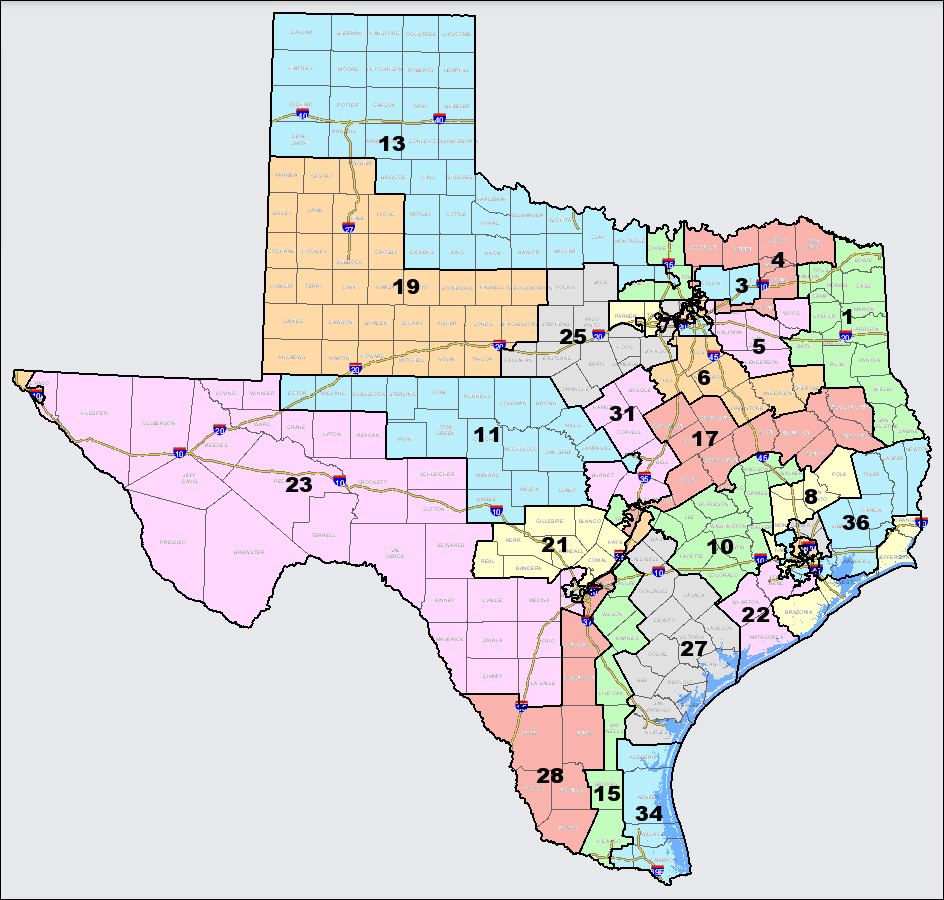
With the state having no Senate race in 2022, the federal focus turns to the new 38-member US House delegation. Texas gained two seats in national reapportionment, thus increasing their delegation size from 36 to 38 seats. The state will wield 40 electoral votes in the next presidential election, second only to California’s reduced 54.

Continue reading

Welch In; Johnson Out; McBath Switches Districts in Georgia


NOTE: Ellis Insight will be taking a break starting tomorrow through the weekend. We’ll return on Monday, Nov. 29. Happy Thanksgiving to all!


By Jim Ellis

Nov. 24, 2021 — Vermont Congressman Peter Welch announces his Senate candidacy, two-term Georgia Rep. Lucy McBath announces a switch from her GA-6 district to GA-7 as a result of redistricting, and 85-year-old veteran Rep. Eddie Bernice Johnson announces her retirement. Details below:

Vermont Senate

As expected, Vermont at-large Congressman Peter Welch (D-Norwich) announced his US Senate candidacy this week and becomes the prohibitive favorite to succeed retiring Sen. Patrick Leahy (D). With Welch representing the same statewide constituency as a senator, the move to the chamber of the states should be seamless.

It does not appear that Welch will have major opposition. At this point, Sanders for President campaign activist Niki Thran, a physician, is the only announced Democratic candidate. The more serious potential contenders are likely to opt for the now open at-large House seat.

Rep. Welch was first elected to the US House in 2006, and has cruised to re-election ever since. He was originally elected to the state Senate in 1980, and served 10 years. He became the Senate Democratic Leader for one two-year term.

In 1988, Welch ran for the US House, but lost the Democratic primary. He returned in the governor’s race two years later, this time winning the Democratic nomination but losing the general election. He would return to the state Senate in 2001 when then-Gov. Howard Dean (D) appointed him to fill a vacancy. He was then elected as a member of the Vermont legislative body in 2002, and became the Senate’s President Pro Tempore, a position he held until winning his first US House race.

GA-6

In a surprising response to the Georgia state House voting in favor of the new congressional redistricting map, two-term Rep. Lucy McBath (D-Marietta) announced, even before Gov. Brian Kemp (R) approves the final legislation, that she will depart her current 6th District since its new constituency trends strongly Republican.

Instead, she will challenge freshman Rep. Carolyn Bourdeaux (D-Suwanee) in adjacent District 7 in next year’s Democratic primary. McBath will run to the left of her new opponent, who she will attempt to paint as being too conservative before the primary electorate.

Continue reading

Election Day Upsets and Surprises

By Jim Ellis

Nov. 4, 2021 — Now that Tuesday’s election numbers are becoming more available and final, we can explore the contests that proved to be upsets and ones providing us with some surprises. In most instances, the Republicans performed better in these races than expected.

The first obvious upset, though a mild one as we approached election day because most people understood that Republican Glenn Youngkin had a legitimate chance to score a victory over former Gov. Terry McAuliffe, is the Virginia statewide race. The biggest surprise was New Jersey Republican Jack Ciattarelli within one percentage point of defeating Democratic Gov. Phil Murphy.

With that background, let’s begin with our upsets:

• Georgia: Former Atlanta Mayor Kasim Reed (D), attempting to regain his former position in the open seat 2021 race, has apparently failed to qualify for the runoff. Atlanta City Council President Felicia Moore (D) placed first, with City Councilman Andre Dickens (D) running 612 votes ahead of Reed for second position with all of the precincts reporting.

Mail votes and ancillary ballots could still push Reed into a runoff with Moore, but it appears that Dickens has the inside track to nose the former mayor out of this race.

• Maine:• New Jersey: State Senate President Steve Sweeney (D) has apparently lost his southern New Jersey seat to truck driver Edward Durr (R) who spent only about $5,000 on his campaign. Durr leads 52-48 percent, which should be enough for him to eventually claim victory.

• New York: Big Republican local election wins occurred in Suffolk and Nassau County on Long Island. GOP candidates won the Suffolk and Nassau County District Attorney’s offices, and defeated the Nassau County Executive. They also reclaimed the majority on the Suffolk County legislature for the first time since 2005.

• Texas: Continuing a GOP rebound among Hispanic voters in Texas, Republican John Lujan converted a 71 percent Hispanic district in southeast Bexar County (San Antonio). Lujan was a 51-49 percent winner in Texas House District 118.

• Virginia: Glenn Youngkin (R) defeated Terry McAuliffe (D), 51-48 percent. Winsome Sears (R) topped state Del. Hala Ayala (D), 51-49 percent. State Del. Jason Miyares (R) ousted Attorney General Mark Herring (D), 51-49 percent. Republicans have clinched or lead in 52 House of Delegates races, enough for them to re-claim the majority. Not only did Youngkin score an upset win, but he had obvious coattails.

There were several interesting surprises on election night, too:

• Florida: Miami area Democrats went to the polls to choose a special election nominee to replace the late Rep. Alcee Hastings (D-Delray Beach) and the result yielded a photo finish. Recounts will be ordered and a long post-election process is expected before someone advances to the January 11th special general election.

At first take with supposedly all votes counted, businesswoman Sheila Cherfilus-McCormick looks to have secured the party nomination by just 31 votes. A later count then put Broward County Commissioner Dale Holness on top by an even smaller 12-vote margin. Expect this one to be in the courts long before a Democratic nominee is finally settled upon.

Continue reading

Bass for Mayor; Redistricting Update

By Jim Ellis

California Rep. Karen Bass (D-Los Angeles)

Sept. 29, 2021 — Reports were surfacing last week that California Rep. Karen Bass (D-Los Angeles), who had been on candidate Joe Biden’s short list for the vice presidential nomination, was deciding whether to eschew re-election next year for a chance to run for LA mayor. Now, she has made the decision. On Monday, Rep. Bass formally entered the citywide race.

The mayor’s election likely will be semi-open. Mayor Eric Garcetti (D) has been nominated as US ambassador to India, and upon obtaining his Senate confirmation, the City Council will be empowered to appoint an interim mayor. That individual will have the opportunity of then seeking a full four-year term during the regular election cycle. Certainly, Rep. Bass could be a potential appointee. Should Mayor Garcetti not receive a timely confirmation as ambassador, he would be ineligible to seek a third term, so in any event, the mayor’s contest will be highly competitive.

From a federal perspective, Bass running for mayor means her 37th Congressional District will be open. Of the 18 congressional districts that are wholly or partially contained within Los Angeles County, 17 of them need a population influx. With California losing a seat, it appears that the Los Angeles area will absorb the reduction.

Since Rep. Bass is the first Golden State House member to announce that he or she won’t seek re-election, her 37th District that needs 38,173 people to meet the state’s CD population quota of 760,350 people for the new 52 district map – a west Los Angeles County seat centered around the Culver City community – now becomes a prime target for elimination.

In the mayor’s race, Bass will at least face Los Angeles City Council President Pro Tempore Joe Buscaino, LA City councilman and former state Senate president and ex-US Senate candidate Kevin de Leon, and LA City Attorney Mike Feuer. It is likely others will enter the race once the political situation surrounding Mayor Garcetti is defined, and the congressional and legislative redistricting picture becomes clearer.

Redistricting Update

Several states are making progress in drawing new congressional maps. Colorado will send a final plan to the state Supreme Court as early as today. Indiana and Maine are close to finalizing maps that will strengthen both states’ political divisions, 7R-2D in the Hoosier State, and 2D-0R in the latter.

Oregon is also moving toward completion of a map that may prove a reach for the Democratic majority. Gaining a sixth seat in national reapportionment, the Democrats are trying to craft a 5D-1R map. Though Republicans have a significant base in the state, the Democrats maintain a tight grip on the statewide races thanks to dominant Portland, which serves as the lynchpin to their Beaver State political success.

Therefore, though the Dems have a clear edge in five of the new CDs, the early partisan analysis figures suggest that the Republicans would have at least an outside chance of prevailing in one of the districts, most likely that of Rep. Kurt Schrader (D-Canby/Salem), and possibly in the new 6th District open seat. More will be known when in depth political data is available and candidates begin to come forward.

The Texas Republican Senate’s congressional map was unveiled yesterday. As predicted, the GOP map drawers used the state’s two new seats as somewhat of a buffer, at least in the Austin area, to strengthen districts that were showing weakness. Should this map be enacted, Reps. Chip Roy (R-Austin), Michael McCaul (R-Austin), John Carter (R-Round Rock), and Roger Williams (R-Austin) all receive much stronger Republican seats. In exchange, one of the new seats goes to Travis County and will await a new Democratic inhabitant.

The other new seat appears destined for Harris County. There, sophomore Rep. Lizzie Pannill Fletcher (D-Houston) moves from a political marginal district to a rock solid Harris-Ft. Bend County Democratic District. This allows the second new seat to fall to a Republican and be fully contained within Harris County. In the northern part of the region, Rep. Dan Crenshaw (R-Houston) receives a substantially better district, and assumes part of Republican Montgomery County.

In the Dallas-Ft. Worth Metroplex, the region doesn’t get a new district, but a reconfiguration allows all incumbents, both Republicans and Democrats, to improve upon their present internal political standing.

This Texas map is a long way from enactment. The state House Democrats are unified to vote against any Republican map, and while the GOP has the strength to pass what they want in the Senate, the state House is a different story. It is likely we will see the current 30-day special session end in deadlock, with another 30-day session to follow. The Democratic strategy is to force the redistricting process to court, while the Republicans will attempt to pass a series of maps into law. Expect this story to be with us for many weeks to come.

Gerrymandering Wars Ignited

By Jim Ellis
Aug. 27, 2021 — In the past few days, Democratic leaders and news sources in two states, New York and Illinois, are suggesting that the party redistricting strategists will attempt to maximize Democratic US House gains. Republicans will then counter in similar states that they control.

New York Gov. Kathy Hochul (D), on her first official day in office after replacing resigned Gov. Andrew Cuomo (D), bluntly answered a reporter’s question to the affirmative when asked if she would use her newfound power to maximize Democratic congressional gains through the redistricting process.

Earlier this week, news sources were reporting that Illinois Democratic map drawers, though no preliminary congressional map has yet been released, are attempting to draw a new 14D-3R map that would likely collapse Reps. Adam Kinzinger (R-Channahon) and Rodney Davis (R-Taylorville) into a strong Democratic seat for the former and pairing for the latter with another downstate Republican.

Doing this would put added national pressure on Republicans in states such as Texas, Florida, North Carolina, Ohio, and Georgia – places where the GOP has full control of the redistricting process. Here, the states are either adding seats or in position to carve a sitting Democrat into unfriendly political territory.

With New York losing one seat, the prime district for elimination would appear obvious since Rep. Tom Reed (R-Corning) has already announced his retirement and his 23rd District is the lowest in population among all New York seats. Adjacent Rep. Claudia Tenney’s (R-New Hartford) 22nd CD is second lowest, so combining those two Upstate Republican districts into one appears to be a foregone conclusion. It remains to be seen if the Democratic leaders try to do more. The current delegation breaks 19D-8R but will reduce to 26 seats in the next Congress.

Of Illinois’ current 18 congressional districts, only one, that of Rep. Danny Davis (D-Chicago), is over-populated and only by 10,986 people. While the Kinzinger seat is 61,125 individuals short of the state quota of 753,677 for the new 17-district map, his is not even close to being the most under-populated. He, however, sits between two Democratic seats that the party needs to protect, those of retiring Rep. Cheri Bustos (D-Moline), whose 17th CD is 79,907 residents under quota, and Rep. Lauren Underwood’s (D-Naperville) 14th, where she had a close call in 2020 but is only 482 people short of quota.

While the 14th does not need many more people, it does need significantly more Democrats and they can be found by dividing Kinzinger’s 16th CD into pieces.

Redistricting is always full of surprises, so this analysis is merely educated speculation. If, however, the Democrats come away with gaining a net three or four seats from New York and Illinois combined, then how do the Republicans retaliate?

Continue reading

Census by District

By Jim Ellis

Aug. 17, 2021 — We can now see exactly where each congressional district in the country stands in terms of population. The Census Bureau delivered the state redistricting data last week, and the Daily Kos Elections site data team segmented the numbers into individual congressional districts.

Below is a chart of the 38 states that have more than two districts, isolating the CDs that are the most over and under populated. The “High” column depicts the district that is the most over-populated in the state, while the “Low” is the one requiring the most new residents. The “+/-” column shows how many districts in the particular state are over and under populated.

The most robust district is that of Texas freshman Rep. Troy Nehls (R-Richmond). His southwest Houston seat houses just under one million people, at an exact count of 972,309. The least populated seat is West Virginia’s 3rd District (Rep. Carol Miller-R): 326,267 people under quota. With all of the Mountain State seats seriously down, it is clear as to why West Virginia lost a seat in reapportionment.

There are only two states, Colorado and Oregon, where all of the current districts are over-populated. Both entities gain one seat in reapportionment. On the other end of the spectrum, Michigan and Pennsylvania saw all districts falling below their new population quota, and in Illinois, 17 of their current 18 do as well. All three states are losing a district.

It is not surprising that California lost a seat for the first time in history. A total of 35 of their current 53 seats require more population versus 18 that must shed residents. New York barely lost a seat, by just 89 people statewide, which is surprising when seeing 23 of their current 27 districts requiring additional population.

The states are now converting their new data into their redistricting software systems. After that, most will hold hearings for public input prior to district construction beginning.

STATE DIST INCUMBENT HIGH LOW +/-
Alabama 5 Mo Brooks (R) 43,348 4, 3
7 Terri Swell (D) -53,143
Arizona 5 Andy Biggs (R) 86,414 3, 6
2 Ann Kirkpatrick (D) -50,133
Arkansas 3 Steve Womack (R) 86,266 2, 2
4 Bruce Westerman (R) -66,283
California 45 Katie Porter (D) 53,645 18, 35
-1 40 Lucille Roybal-Allard (D) -70,139
Colorado 4 Ken Buck (R) 148,823 7, 0
+1 3 Lauren Boebert (R) 36,543
Connecticut 4 Jim Himes (D) 25,627 2, 3
2 Joe Courtney (D) -21,288
Florida 9 Darren Soto (D) 186,381 21, 6
+1 13 Charlie Crist (D) -41,756
Georgia 7 Carolyn Bourdeaux (D) 94,304 8, 6
2 Sanford Bishop (D) -92,108
Illinois 7 Danny Davis (D) 10,986 1, 17
-1 17 Cheri Bustos (D) -79,907
Indiana 5 Victoria Spartz (R) 50,921 5, 4
8 Larry Bucshon (R) -38,579
Iowa 3 Cindy Axne (D) 61,382 1, 3
4 Randy Feenstra (R) -31,730
Kansas 3 Sharice Davids (D) 57,816 1, 3
1 Tracey Mann (R) -33,697
Kentucky 6 Andy Barr (R) 33,300 4, 2
5 Hal Rogers (R) -57,592
Louisiana 6 Garret Graves (R) 40,173 3, 3
4 Mike Johnson (R) -47,947
Maryland 4 Anthony Brown (D) 26,772 6, 2
7 Kweisi Mfume (D) -68,401
Massachusetts 7 Ayanna Pressley (D) 18,714 4, 5
1 Richard Neal (D) -50,635
Michigan 11 Haley Stevens (D) -17,368 0, 14
-1 5 Dan Kildee (D) -104,476
Minnesota 3 Dean Phillips (D) 24,586 5, 3
7 Michelle Fischbach (D) -39,978
Mississippi 4 Steven Palazzo (R) 37,196 3, 1
2 Bennie Thompson (D) -65,829
Missouri 3 Blaine Luetkemeyer (R) 35,121 6, 2
1 Cori Bush (D) -54,618
Nebraska 2 Don Bacon (R) 47,170 2, 1
3 Adrian Smith (R) -53,152
Nevada 3 Susie Lee (D) 79,374 2, 2
1 Dina Titus (D) -73,332
New Jerseyy 8 Albio Sires (D) 47,314 5, 7
2 Jeff Van Drew (R) -41,606
New Mexico 2 Yvette Harrell (R) 8,181 2, 1
1 Melanie Stansbury (D) -11,264
New York 12 Carolyn Maloney (D) 34,717 4, 23
-1 23 Tom Reed (R) -83,462
North Carolina 2 Deborah Ross (D) 165,703 12, 1
+1 1 G.K. Butterfield (D) -6,238
Ohio 3 Joyce Beatty (D) 23,119 2, 14
-1 6 Bill Johnson (R) -99,512
Oklahoma 1 Kevin Hern (R) 36,806 3, 2
2 Markwayne Mullin (R) -69,793
Oregon 1 Suzanne Bonamici (D) 157,843 5, 0
+1 4 Peter DeFazio (D) 117,399
Pennsylvania 10 Scott Perry (R) -5,379 0, 18
-1 15 Glenn Thompson (R) -90,540
South Carolina 1 Nancy Mace (R) 87,689 3, 4
6 Jim Clyburn (D) -84,741
Tennessee 4 Scott DesJarlais (R) 62,976 5, 4
9 Steve Cohen (D) -77,122
Texas 22 Troy Nehls (R) 205,322 28, 8
+2 13 Ronny Jackson (R) -59,517
Utah 4 Burgess Owens (R) 65,265 1, 3
3 John Curtis (R) -31,190
Virginia 10 Jennifer Wexton (D) 100,750 6, 5
9 Morgan Griffith (R) -87,917
Washington 7 Pramila Jayapal (D) 28,862 6, 4
6 Derek Kilmer (D) -33,730
West Virginia 2 Alex Mooney (R) -275,777 0, 3
-1 3 Carol Miller (R) -326,627
Wisconsin 2 Mark Pocan (D) 52,678 2, 6
4 Gwen Moore (D) -41,320

Ohio Specials Prelude

By Jim Ellis

OH-11

July 28, 2021 — Voters in north Texas went to the polls yesterday to decide the double-Republican runoff in their state’s vacant 6th District, but there is unfolding action in the two Ohio special elections right now. The Buckeye State’s vacant CD’s will culminate with partisan primary elections next week, on Aug. 3.

First, the Mellman Group, polling for the Democratic Majority for Israel PAC (July 13-17; 400 OH-11 likely Democratic primary voters, live interview), sees the multi-candidate contest in the Cleveland-Akron seat that has evolved into a race between two candidates getting even closer.

Mellman’s ballot test finds former state senator and ex-Bernie Sanders for president national co-chair Nina Turner leading Cuyahoga County ouncilmember and local Democratic Party chair Shontel Brown by a tightening 41-36 percent spread with the momentum again flowing toward the latter woman. The remaining 11 candidates all split an aggregate five percent, with the remainder categorized as undecided/don’t know/refused to answer.

We can expect a very active final week as the candidates continue attempting to convince their voters to cast early ballots or visit the polls a week from tomorrow. The eventual Democratic nominee will become the prohibitive favorite heading into the Nov. 2 special general election. The winner will replace former Rep. Marcia Fudge (D-Cleveland) who resigned the seat upon her confirmation as Housing & Urban Development Secretary in President Biden’s cabinet.

Mellman’s most recent effort delivered the closest result from a Democratic polling firm. Compared to their June poll, Brown is the beneficiary of a net 19-point swing. In the June poll, Mellman found a 50-26 percent spread in favor of Turner. In early July, Normington Petts, polling for the Brown campaign, also detected movement toward their client. They forecast a 43-36 percent result, certainly in the same realm as the Mellman poll conducted more than a week later. The original Mellman poll came in April and found Turner more than doubling Brown’s support, at 42-19 percent.

The primary campaign is dividing along the past Democratic primary presidential lines. The Bernie Sanders’ group, including the candidate himself, has endorsed Turner, along with the Justice Democrats PAC associated with Rep. Alexandria Ocasio-Cortez (D-NY) and their individual congressional supporters.

Continue reading

TX-6 Special Election Today

By Jim Ellis

Susan Wright, favored in today’s TX-6 special election

July 27, 2021 — The late Texas US Rep. Ron Wright’s (R-Arlington) replacement will be chosen today as the double-Republican special congressional runoff election draws to a conclusion. The late congressman’s widow, Susan Wright (R), is favored over state Rep. Jake Ellzey (R-Waxahachie), but low turnout elections often produce surprising results.

From a partisan context, the race is anti-climactic since we already know a Republican will claim the seat and expand the House Republican conference total to the 212 mark. Democrats hold 220 seats.

Two more vacant House seats will largely be decided next Tuesday when voters in two Ohio districts will go to the polls in partisan primary contests. In each case, winning the party nomination is virtually tantamount to claiming the seat, so it is highly likely that the two parties will split the elections. The Ohio nominees, however, will have to wait until Nov. 2 for their final vote. The special election season will conclude on Jan. 11, 2022, when South Florida voters will choose a successor to the late Rep. Alcee Hastings (D-Delray Beach) in the state’s 20th District.

As is generally the case in special elections, voter turnout is the critical factor. The Texas Secretary of State has released the 6th District early voting participation numbers, and we see 20,534 ballots having been cast through July 23. In the May 1 jungle primary election, 45,259 people voted early, or 57.7 percent of the total voting universe for that election (78,471).

So far in this runoff, only 4.2 percent of the registered voter universe of 493,077 individuals have cast their ballot. Considering that 65.4 percent of Ellzey’s vote came via early voting in the special primary as compared to 47.2 percent for Wright, the low early totals should prove a benefit to the latter candidate.

Continue reading

New Special Election Data

By Jim Ellis

Susan Wright

July 26, 2021 — The Texas 6th District special election to replace the late Rep. Ron Wright (R-Arlington) is scheduled for Tuesday, and the Susan Wright campaign has just released the results of their most recent American Viewpoint poll.

According to AV (July 19-21; 400 TX-6 likely runoff voters, live interview), Wright, the late congressman’s widow who placed first in the original May 1 special jungle primary, leads state Rep. Jake Ellzey (R-Waxahachie) by a 44-34 percent count with 12 percent saying they are undecided. The sample’s remaining ten percent apparently didn’t answer the ballot test question since they appear unsegmented.

The Wright pollsters argue in their survey synopsis that the ballot test numbers are actually stronger than presented for underlying reasons. Among the voters who rate themselves as most enthusiastic about voting in the special election (a scale of 1 to 10 with 10 having the highest level of enthusiasm), Wright expands her lead to 54-33 percent.

The pollsters reason the most enthusiastic voters, in this case ones who rated themselves at or between 8 to 10 on this scale, are the most likely group to vote. On the negative side, however, this segment is small. Only 8 percent of the entire sampling universe rated themselves in the highest positive category.

Drilling further into the polling sample’s core, American Viewpoint finds that among the respondents who said they are “certain to vote,” Wright leads Ellzey, 51-33 percent.

Where the state representative scores higher in this double-Republican runoff contest is among the Democrats who choose to participate. Here, Ellzey leads 44-31 percent. The pollsters conclude that Democrats who are motivated to vote largely want to make a statement in supporting the candidate that former President Donald Trump did not endorse…in the 6th District race, Ellzey.

Among what the pollsters describe as the “Trump Movement Republicans,” presumably those who have a positive impression of the former president and generally are inclined to back his endorsement choice, favors Wright by a 61-28 percent spread.

Rep. Ellzey first ran for office in 2018, when he opposed Wright in the 6th District open seat regular congressional election. Underestimated in the primary election, Ellzey finished second and forced Wright, then the Tarrant County Assessor, into a runoff. With Wright favored, Ellzey reduced the former man’s margin of victory to 52-48%, again exceeding expectations.

Continue reading

House Vulnerables – Part II

By Jim Ellis

July 13, 2021 — On Monday, we began a two-part series on what are arguably the most vulnerable dozen US House seats based upon the individual district’s political performance over the past two elections.

Below is the priority order update covering the second half of the top 12 most vulnerable CDs. As you will continue to see below, all of the seats except one are Republican held.

To refresh, the first six covered were:

• IA-2 (Rep. Mariannette Miller-Meeks, R-Ottumwa)
• IA-1 (Rep. Ashley Hinson, R-Marion/Cedar Rapids)
• IA-3 (Rep. Cindy Axne, D-Des Moines)
• FL-27 (Rep. Maria Elvira Salazar, R-Miami)
• CA-48 (Rep. Michelle Steel, R-Orange County)
• NY-22 (Rep. Cynthia Tenney, R-New Hartford)

Here’s our look at the next six:

UT-4: Rep. Burgess Owens (R-Salt Lake City) – Ave R vote: 48.8%
• Former NFL football star and businessman Burgess Owens defeated freshman Rep. Ben McAdams (D) by one percentage point in 2020, and we can expect another competitive race here again within this mostly suburban Salt Lake City congressional district located in the metropolitan area’s southern sector.

Republicans, who are in full control of the Utah redistricting process, will attempt to improve the district for Owens, which is possible since the 4th CD is the fastest growing district in the fastest growing state over the past decade. The best estimates suggest that the 4th District must shed approximately 50,000 people to other CDs. This should allow map drawers to subtract a substantial number of Democratic voters from the district, thus yielding Burgess a slightly more favorable political domain.

At this point, McAdams, who was the Salt Lake County mayor prior to his election to Congress, has not indicated whether he will return for a re-match.

MN-1: Rep. Jim Hagedorn (R-Rochester) – Ave R vote: 49.3%
• Two-term Rep. Hagedorn just announced that his cancer has returned, meaning an immediate treatment regimen. How this will affect his re-election campaign is yet to be determined. Hagedorn has won two close elections, as has his Democratic colleague in the adjacent district, Rep. Angie Craig (D-Eagan).

Minnesota is the only state in the nation that sees a split control legislature, meaning each party controls one house. Since the state did not lose a congressional district in apportionment as originally projected, it would not be surprising to see a legislative deal made where Democrats and Republicans are flipped between the two adjoining districts. The changes would result in Hagedorn gaining Republicans and Craig adding Democrats. Redistricting will perhaps be the most critical factor in determining the outcome of both districts come 2022 and beyond.

Continue reading