Tag Archives: Tennessee

The Senate Picture – Part III (Of III)

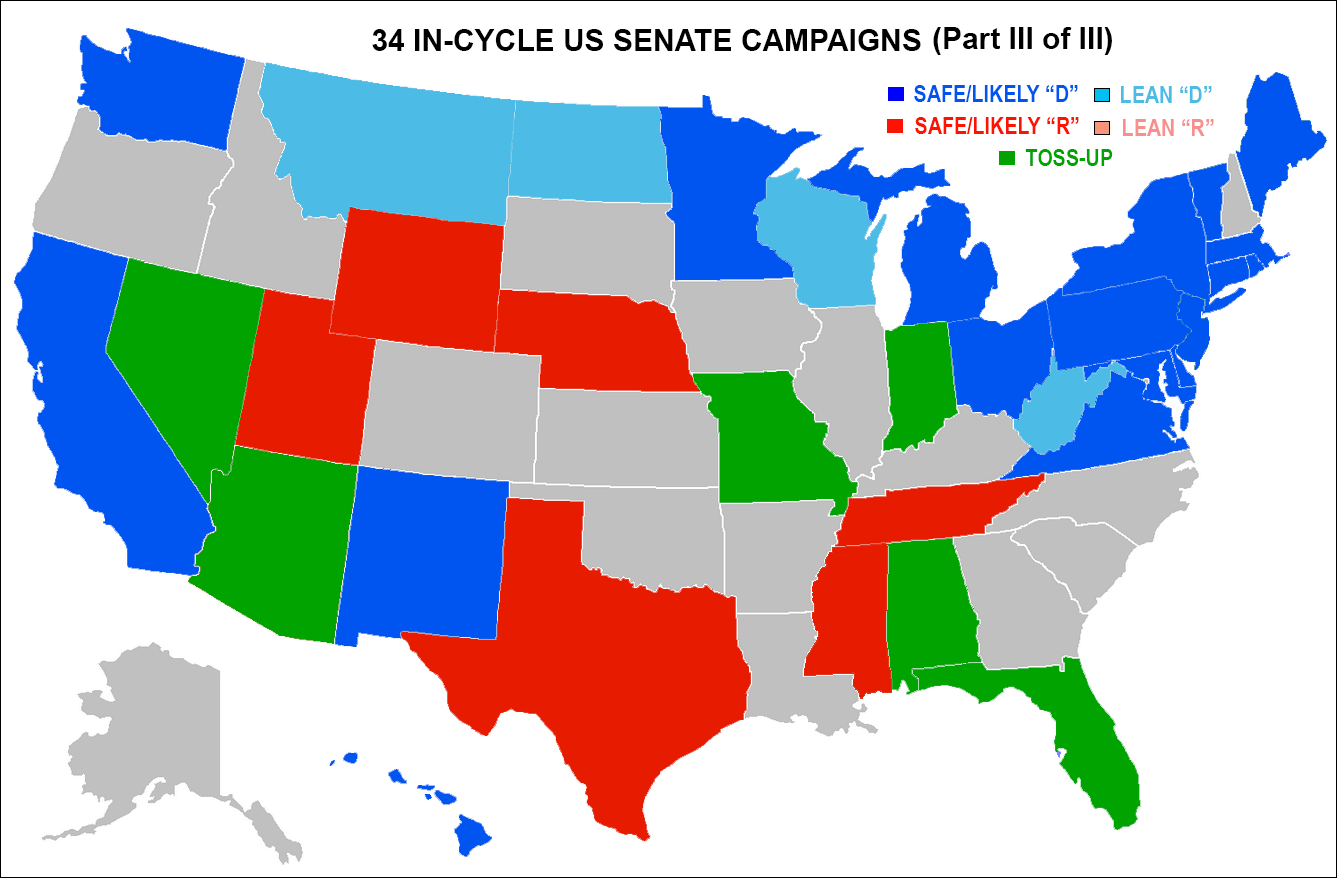
34-in-cycle-us-senate-seats-3-of-3

By Jim Ellis

Nov. 27, 2017 — Wrapping up our holiday recap of the 2018 Senate races — we finish our coverage with Ohio through Wyoming.

• Ohio: State Treasurer Josh Mandel (R), who held Sen. Sherrod Brown (D) to a 51-45 percent win in 2012 during the same election when President Obama led the ticket in Ohio, returns for a re-match next year. Mandel must first get past wealthy investment banker Michael Gibbons in the Republican primary, but appears well positioned to do so. A Brown-Mandel race could again develop into a major campaign, as the Republican’s ability to run a strong statewide race has improved during the last six years. In 2014, Mandel was re-elected state Treasurer with 59 percent of the vote.
Rating: Lean D

• Pennsylvania: Sen. Bob Casey Jr. (D) runs for a third term after seeing President Trump and fellow Sen. Pat Toomey (R) win close Keystone State contests last year. It is conceivable that Sen. Casey will be in a tighter re-election campaign cycle than five years ago when he scored a 54-45 percent victory. Since Rep. Lou Barletta (R-Hazelton) entered the race, the GOP Senate candidate field has decreased with two contenders, state Rep. Rick Saccone (R-Elizabeth/Jefferson Hills) and businessman Jeff Bartos, departing to run for other offices. The general election could be competitive, but Rep. Barletta may have a difficult time re-constructing President Trump’s winning coalition. The congressman may find a very rough going in the Philadelphia suburbs as did President Trump, which means developing a winning statewide base becomes highly challenging. Like the president posted, Rep. Barletta will need a record rural turnout in order to win.
Rating: Likely/Lean D

• Rhode Island: Sen. Sheldon Whitehouse (D) appears poised for an easy re-election run next year, particularly with Republican attention focused upon a much more competitive governor’s race.
Rating: Safe D

• Tennessee: Sen. Bob Corker (R) is retiring after two terms, but Republicans are still in strong position to hold the seat. Democrats are attempting to recruit former Gov. Phil Bredesen, but he is not likely to become a candidate even though saying a decision about running will be made shortly. Republicans will likely feature a GOP primary between Rep. Marsha Blackburn (R-Brentwood) and former two-term Rep. Stephen Fincher (R-Crockett County) that will be very competitive in early August, but sure to produce a strong general election contender.
Rating: Likely R, and Safe R if Bredesen does not run.

• Texas: Though eventual Democratic nominee Rep. Beto O’Rourke (D-El Paso) will be able to raise a large amount of national money, he will be no match for Sen. Ted Cruz (R), who is seeking his second term. O’Rourke is a capable candidate who can wage a respectable campaign, but Texas voting history and Cruz’s strength within the Republican base will still yield him a victory at least in high single-digits.
Rating: Likely R

• Utah: Two major questions dominate this campaign: will Sen. Orrin Hatch (R) seek an eighth term, and if not, does former presidential nominee Mitt Romney come forward to replace him. Sen. Hatch continues to say he plans on running, but always leaves the retirement door open particularly if Romney says he will run. Either way, the seat remains in the Republican column, as Utah Democrats are too weak to field a strong statewide candidate. It is probable that the GOP dynamic will not crystallize until well after the first of next year.
Rating: Safe R

• Vermont: Sen. Bernie Sanders will again appear on the Vermont ballot as an Independent even though he was a major contender for the Democratic presidential nomination. Regardless of his party designation, he is safe for re-election in his small state, which likely features the most liberal constituency in the country.
Rating: Safe I

• Virginia: Particularly after the Democrats’ strong showing in the 2017 Virginia gubernatorial election, Sen. Tim Kaine (D) is a heavy favorite for re-election as he seeks a second term on the heels of losing as the Democrats’ Vice Presidential nominee. At this point, controversial Republican Corey Stewart, the Prince William County Board chairman who ran strongly in the GOP gubernatorial primary, is Sen. Kaine’s leading opponent but Republicans desire a more viable candidate. Speculation is increasing that Rep. Barbara Comstock (R-McLean) might run especially with the Democrats turning in such a strong performance in her Northern Virginia district earlier this month. So far, there is no indication that Rep. Comstock will reverse course to enter the statewide contest, however.
Rating: Likely/Safe D

• Washington: Sen. Maria Cantwell (D) has yet to even draw an opponent as she prepares a run for a fourth term.
Rating: Safe D

• West Virginia: A major Republican primary is brewing between Attorney General Patrick Morrisey and Rep. Evan Jenkins (R-Huntington), with the winner facing Sen. Joe Manchin (D) next fall. Though West Virginia has moved decidedly to the right since the turn of the century and President Trump posted 69 percent here last November, Sen. Manchin remains at least a slight favorite for re-election. A minor Democratic primary challenge from the left should help the senator continue better craft his centrist image.
Rating: Lean D

• Wisconsin: Though Republicans have seen their fortunes greatly increase here during the past seven years, the field challenging Sen. Tammy Baldwin (D) has been slow to develop. Businessman Kevin Nicholson (R) is active and receiving heavy support from outside financial sources, but the Republican conservative base is looking elsewhere. State Sen. Leah Vukmir (R-Brookfield) is in the race and figures to be a significant candidate. With the Wisconsin primary not occurring until August, Sen. Baldwin has the luxury of having a long time to prepare for what should be an active general election campaign cycle.
Rating: Lean D

• Wyoming: The big question surrounds whether Sen. John Barrasso draws a GOP primary challenge from Blackwater Security firm founder and international businessman Erik Prince, brother of US Education Secretary Betsy DeVos, or mega-conservative donor Foster Friess. Chances are neither will run, meaning Sen. Barrasso has little trouble in securing a second full term.
Rating: Safe R

Turbulent Senate Politics

By Jim Ellis

Sen. Al Franken (D-MN) and Leeann Tweeden

Sen. Al Franken (D-MN) and Leeann Tweeden

Nov. 20, 2017 — Currently, the near-term and long-range Senate outlook seems to fluctuate by the hour. Last week we repeatedly detailed the Republicans’ problem with Alabama Senate nominee Roy Moore and the effect the Dec. 12 special election will have upon the 2018 Senate cycle. But, yesterday became a day for the Democrats’ to receive similar bad news, albeit along with some good news.

While the Republicans languish in Alabama, Democrats were becoming increasingly concerned about Sen. Bob Menendez’s (D-NJ) corruption trial when a verdict appeared imminent, and what might happen should he be convicted. Last week, seeing the trial judge declare a mistrial, may mean that the senator’s legal hurdles have been cleared since it seems unlikely that the government would again pursue the case when prosecutors obviously had too little evidence to completely convince a jury that any crime had been committed.

But the positive Menendez result for the Dems was negated by the unfolding sexual harassment debacle involving Sen. Al Franken. Interestingly, though seemingly unrelated to the Alabama situation, both of these Democratic developments could influence the campaign’s course and help determine whether Judge Moore will be allowed to serve in the Senate if he rebounds to win the special election.

Continue reading

The Alabama Debacle

By Jim Ellis

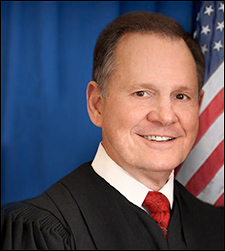
Judge Roy Moore, the Republican nominee in a special Senate election in Alabama.

Judge Roy Moore, the Republican nominee in a special Senate election in Alabama.

Nov. 14, 2017 — Senate Republicans have a major advantage in the current election cycle, but may be on the precipice of giving it away.

Looking at the 2018 Senate map, Republicans have only to defend eight of the 33 in-cycle seats. Considering that six of the eight are the safe Republican states of Mississippi, Nebraska, Tennessee, Texas, Utah, and Wyoming and the Democrats need a net gain of three conversion seats to claim the majority, it appears unattainable even if the latter party converts legitimate targets in politically marginal Nevada and now open Arizona.

But the mathematics change if Democrats score an unlikely upset in the Alabama special election on Dec. 12, and the latest unfolding events there suggest that such an outcome is far more likely to happen.

As we know, Republican Senate nominee Roy Moore, the twice removed former state Supreme Court Chief Justice, has been accused of sexual impropriety with at least one teenage girl when he was 32 years old in 1979. Washington, DC Republicans, who appear to be taking the Washington Post story and the woman’s allegations at face value, are urging Moore to remove himself from the race. Alabama Republicans are still standing firm for Moore, refusing to accept the story without proof. For his part, Judge Moore denies the incident happened.

Three polls have already surfaced telling us that Moore has suffered a major hit. Earlier surveys found him leading in low double-digits, but Opinion Savvy, Gravis Marketing, and JMC Analytics & Polling immediately went into the field to test the Alabama electorate’s reaction.

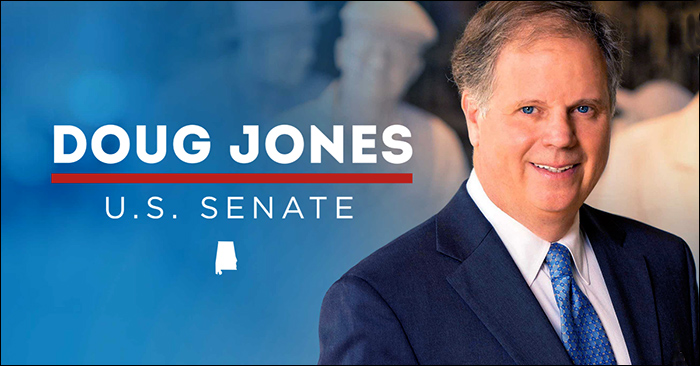
Opinion Savvy (Nov. 10; 515 likely Alabama special election voters) conducted their survey just hours after the Moore story broke. Their results find that Moore’s lead has evaporated into a 46-46 percent tie with Democratic nominee Doug Jones, a former US Attorney.

Gravis Marketing launched their poll just as quickly (Nov. 10; 478 likely Alabama voters) and finds a similar ballot test tally: 48-46 percent in Moore’s favor.

JMC Analytics (Nov. 9-11; 575 registered Alabama voters) sees Jones pulling into a 46-42 percent lead (48-44 percent when leaners to both candidates are added), but an over-sampling of female voters could account for the Democratic advantage. Fifty-six percent of the survey respondents were female and they break for Jones, 46-40 percent. Men favor the Democrat 46-45 percent.

Considering these polls were taken immediately as the story was breaking and the questionnaires included an explanation of what was being said about him, the results for Moore are not devastating. For the most part, Republican voters are taking Moore’s side while Democrats believe the accuser. The fact that the division is roughly even suggests that Moore has a chance to rebound if he can effectively tell his story.

While Republican leaders may be calling upon Judge Moore to remove himself from the ticket, realistically and legally, he cannot. Under Alabama election law, the ballot cannot be changed within 76 days of the election. That period began Sept. 28. Now comes talk that Gov. Kay Ivey (R) could be approached to postpone the election, or call a special session of the legislature to pass a new emergency election statute. The governor says she is not inclined to even think about such an option.

Additionally, some absentee packets containing Moore’s name have already mailed, thus making it logistically difficult, if not illegal, to inject a new ballot into the campaign. Therefore, the outlook is virtually certain that the election will proceed as scheduled on Dec. 12.

Another idea suggests that the Senate refuse to seat Moore if he wins the election. Should all Democrats vote against Moore, only three Republicans would need to break ranks to keep the seat in abeyance. Presumably, the state could then call a new election, but there would be nothing preventing Moore from running again. Should that be the case, Gov. Ivey then could appoint another interim senator or even keep Sen. Luther Strange (R) in the position. Also, a new election would allow him to run again, too.

For their part, Democrats are remaining publicly quiet. They are likely doing so for two reasons. First, they are adopting the old axiom, “if one’s political opponents are in process of destroying themselves don’t stop them.” Second, they may soon be faced with another vote to eject a senator. Should New Jersey Democratic Sen. Bob Menendez be found guilty in his corruption trial, there will likely be a move to expel him. Democrats would find themselves in a bind if they make a public spectacle of denying entry to Moore, and then quickly pivot to do the opposite in order to save Menendez.

The Roy Moore saga is far from over but at the outset, the situation appears perilous for Republicans. Since losing this seat would endanger their majority standing in 2018, the stakes for how the majority leadership chooses to handle the Alabama situation becomes even more challenging.

The Emerging Senate Cycle

By Jim Ellis

Tennessee state flag

Tennessee state flag

Oct. 25, 2017 — Though we still have more than two full months remaining in calendar year 2017, the 2018 US Senate field is beginning to take clear shape. With 34 statewide contests to be decided, including the Alabama special election that will conclude Dec. 12, no fewer than 10 campaigns are basically set. Action is occurring in an additional 13 states suggesting that some sort of primary or general election competition will soon come to the forefront. Eleven incumbents seeking re-election are rated as “safe” at the present time.

Former Tennessee US Rep. Stephen Fincher (R-Crockett County) announced Monday that he would join the open US Senate Republican primary battle, attempting to succeed retiring Sen. Bob Corker (R). This race already appears to be evolving into a possible two-way primary between ex-Rep. Fincher and current 7th District veteran incumbent Marsha Blackburn (R-Brentwood).

Andy Ogles, the former Tennessee director for Americans for Prosperity, remains in the race after launching what is now a moot primary challenge to Sen. Corker but it is unclear how strong he will be now that several conservative organizations are already beginning to coalesce behind Rep. Blackburn.

The only other bit of Volunteer State intrigue centers around Democratic former Gov. Phil Bredesen and whether he will enter the statewide contest. Originally, Bredesen took himself out of consideration, but now agrees to consider becoming a candidate. He says a decision will be forthcoming in a matter of weeks. Without Bredesen, the Democrats would likely concede the seat to the eventual Republican nominee since other strong potential candidates, specifically US Rep. Jim Cooper (D-Nashville) and Nashville Mayor Megan Barry, have already said they will not run.

Continue reading

Yes, She Will

By Jim Ellis

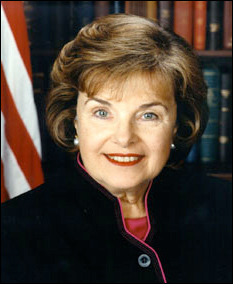
California Sen. Dianne Feinstein (D)

California Sen. Dianne Feinstein (D)

Oct. 11, 2017 — California Sen. Dianne Feinstein (D) announced this week that she will seek a fifth full term next year despite, at 84 years of age, being the Senate’s oldest member. Curiously, her recent comments about President Trump and gun control have created some problems for the senator within the far left of her California Democratic Party. Thus, Feinstein’s decision to run again has engendered possible opposition from at least one prominent Democratic elected official.

Sen. Feinstein was first elected in 1992, when she defeated appointed Sen. John Seymour (R) after Gov. Pete Wilson (R) selected him to fill the Senate vacancy. Then-Sen. Wilson was elected governor in 1990, thus creating the vacancy. Two years later, Sen. Feinstein nipped then-Rep. Michael Huffington (R-Santa Barbara) 47-45 percent in the 1994 general election, the last close California Senate race. She would go onto win easy re-elections in 2000, 2006, and 2012.

A few weeks ago, Sen. Feinstein made the public comment that Donald Trump actually “can be a good president,” which drew the ire of many of his ardent Golden State opponents including state Senate President Kevin de Leon (D-Los Angeles), who seemingly has become the chief anti-Trump spokesman in California. After the Las Vegas shooting, Sen. Feinstein made the further statement that “no gun laws could have prevented the Las Vegas massacre.” Predictably, this comment was also met with derision from the far left, including Sen. de Leon.

Continue reading

With Murphy Out in PA, Corker Out in TN, Who Will Fill the Vacancies?

By Jim Ellis

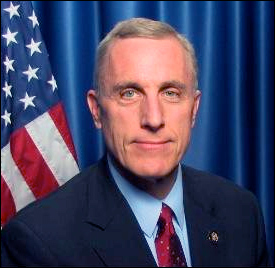
Rep. Tim Murphy  (R-Pittsburgh)

Rep. Tim Murphy (R-Pittsburgh)

Oct. 9, 2017 — A new special US House election will soon be on tap, this time in southwestern Pennsylvania in PA-18. Beleaguered Rep. Tim Murphy (R-Pittsburgh) succumbed to the negative publicity leaking out about his extra-marital affairs, abortion hypocrisy, and internal relations with staff members to announce late last week that he will resign his congressional office effective Oct. 21. This, just a day after he made public his intention not to seek re-election but serve the balance of the current term.

Once the seat is vacant, Gov. Tom Wolf (D) will call a special election to choose a replacement. Since the Nov. 7 municipal elections occur less than three full weeks after Rep. Murphy departs, that means holding a new special congressional contest concurrently with the regular off-year vote would be impossible. Therefore, it is probable a mid-December or post-January 1st election will be scheduled.

There will be no primary period. Under Pennsylvania law, the parties will meet in district conclaves and local delegates will select the respective nominees.

Continue reading

Bannon: How Much a Factor?

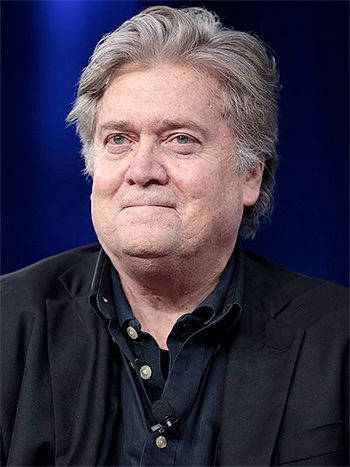
Steve Bannon (Photo by Gage Skidmore)

Steve Bannon (Photo by Gage Skidmore)

By Jim Ellis

Oct. 5, 2017 — Several articles have appeared in the past few days contemplating former presidential advisor Steve Bannon’s perceived political strength, most specifically regarding his actions involving recruiting Republican primary challengers against Senate Majority Leader Mitch McConnell’s (R-KY) loyalists.

While Bannon appears in good stead vis-à-vis financial backers — with the billionaire Mercer family serving as his monetary base — those running the McConnell-aligned outside political operation downplay just how strong the insurgents might be opposite 2018 Senate GOP incumbents standing for re-election.

Valid points resonate with both sides. Buoyed by Alabama former state Supreme Court Chief Justice Roy Moore’s victory over appointed Sen. Luther Strange in last week’s special Republican run-off election, the Bannon forces, who heaped attack ads on the interim incumbent, were naturally taking a great deal of credit for the victory. And, without doubt, anyone thinking of challenging a sitting senator is greatly encouraged after seeing the Alabama outcome.

Continue reading

More on the Moore Win in Alabama;
Tennessee’s Corker to Retire

By Jim Ellis

Sept. 28, 2017 — Former state Supreme Court Chief Justice Roy Moore, twice removed from the court for disobeying federal court orders that violated his conservative principles, scored a robust victory Tuesday night over appointed Sen. Luther Strange in the special Republican Alabama Senate run-off election. Judge Moore now advances to the Dec. 12 special general election against the Democratic nominee, former US Attorney Doug Jones.

Sen. Strange went down to a 55-45 percent crushing defeat, just as pre-election polls predicted.

The Moore victory was expansive in that he took 63 of the state’s 67 counties, losing only in the Birmingham area (Jefferson and Shelby Counties), Huntsville (Madison County), and Sumter County in the western part of the state that hugs the Mississippi border. Moore racked up big wins in Montgomery, Mobile, and Dothan, and scored well over 60 percent in all rural areas.

Turnout was up from the first election. In August, 423,282 people voted in the Republican primary. Tuesday night, more than 480,000 individuals cast ballots in the Moore-Strange race, an increase of 13.5 percent for the run-off. The upsurge is unusual, as run-off participation normally falls below the numbers recorded in the primary.

Continue reading

Senate Candidate Review – Part II

By Jim Ellis

Sept. 26, 2017
— Yesterday, we reviewed the first half of the 33 in-cycle Senate races in terms of serious candidate personnel. Today, the remaining 17 states are covered.

As a reminder, no current Senate incumbent has announced his or her retirement.

(Regular type means the individual is an announced contender; italics denote possible candidate.)

NEVADA — TOSS UP
Sen. Dean Heller (R)
Danny Tarkanian (R) – Businessman, frequent candidate
Rep. Jacky Rosen (D) – US Representative, 3rd District
Rep. Dina Titus (D) – US Representative, 1st District

NEW JERSEY — LIKELY D
Sen. Bob Menendez (D)
• Sen. Menendez federal trial has frozen potential Democratic and Republican Senate hopefuls. After the Menendez legal situation is decided, much could happen in this state.

NEW MEXICO — LIKELY D
Sen. Martin Heinrich (D)
Mick Rich (R) – State Labor Commission member
Richard Berry (R) – Albuquerque mayor
John Sanchez (R) – Lt. Governor

Continue reading

A Not So Open Seat

By Jim Ellis

Aug. 22, 2017 — Currently, we see a low number of open US House seats during this 2018 election cycle, and the number is about to get even smaller. Colorado Rep. Ed Perlmutter (D-Golden) is expected to announce that he has changed political course once again and now will seek re-election.

In April, the six-term congressman announced his candidacy for governor, only to withdraw two months later. At the time when ending his statewide bid, Perlmutter confirmed that he would not be seeking re-election to a seventh term in the House. Believing the 7th District, a likely Democratic seat, would be open in 2018, three state legislators and a former US Ambassador jumped into the party primary.

At the very least, each of the three legislators has previously indicated that they would end their congressional campaigns and defer to the returning incumbent should he decide to return. Therefore, it is likely Perlmutter’s re-entry into the congressional race will not spur a competitive primary campaign.

Assuming this predicted new course of action proves true, the number of open regular cycle House seats will temporarily drop to 20. At this point in time, the total open seat universe is half of what it was in the last two election cycles, and less than one-third the high water number of 64 we saw in 2012.

Continue reading