
By Jim Ellis
 July 19, 2019 — Two new surveys of the California Democratic electorate show the presidential race tightening in the state that possesses the largest delegation to the Democratic National Convention: 416 first-ballot delegates. To highlight the state’s size within the convention universe and its importance to the nomination process, the next largest state, Texas, has 228 first-ballot delegates.
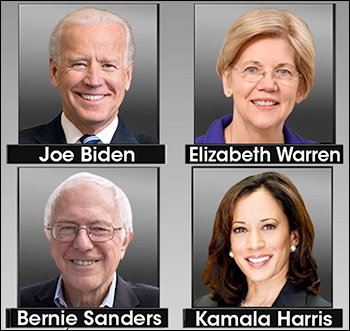
The latest Quinnipiac University poll (July 10-15; 1,125 registered California voters, 519 likely Democratic primary voters) finds home-state Sen. Kamala Harris (D-CA) leading the pack of candidates with 23 percent of the vote. In second place is former Vice President Joe Biden who has 21 percent with Sen. Bernie Sanders (I-VT) posting 18 percent support. Following is Sen. Elizabeth Warren (D-MA) who recorded 16 percent. South Bend Mayor Pete Buttigieg falls all the way to three percent just ahead of New York City businessman Andrew Yang who registered two percent preference.
The Capitol Weekly survey (July 1-15; 816 likely California Democratic primary voters), with a larger polling sample, arrives at similar results. According to the CW data, Sen. Warren has the lead with 25 percent, just ahead of Sen. Harris and Biden who both command 20 percent, while Sen. Sanders posts a close 16 percent. In this poll, Mayor Buttigieg does much better, eight percent, but is nowhere close to qualifying for delegates at the 15 percent minimum threshold.
While these polls are different in candidate order, they both suggest that the top four candidates are currently running close and each would qualify for a substantial share of the large first-ballot delegate contingent.
Available polling data can be used to provide a rough extrapolation model of the early delegate count, examining the latest surveys in the first five voting states to provide at least some measure about how close this race might become if the support patterns we see today continue into the early voting period.
The delegate apportionment process comes in two distinct categories: the at-large delegates who are tied to the statewide vote, and those coming from each congressional district, which range from four to seven delegate votes apiece in California, for example. The latter delegates are apportioned by the individual congressional district popular vote, with those candidates who receive at least 15 percent of the vote in the particular CD qualifying for the district delegate apportionment.

 June 25, 2019 — There have been several important state polls recently released that provide us data about where the Democratic presidential candidates stand in relation to popular preference. But that is only half the story.
 June 17, 2019 — A new large-sample Golden State poll released from the University of California at Berkeley and the Los Angeles Times (June 4-10; 2,131 likely California Democratic primary voters from a pool of 4,435 registered voters) yields some surprising results. The three most unexpected findings first show a tight race among the four top contenders, Sen. Elizabeth Warren (D-MA) surging into second place, and home-state Sen. Kamala Harris only finishing fourth but not substantially behind.
 April 11, 2019 — One of the most interesting facets of the Democratic presidential nomination process sounds mundane, but it may be more telling than any single campaign factor.