
Tag Archives: Sen. Debbie Stabenow

Michigan GOP Senate Action; Challengers Emerge in House Races; Ex-Congressman Mulls NC Gov. Race

By Jim Ellis — Wednesday, Feb. 8, 2023

Senate
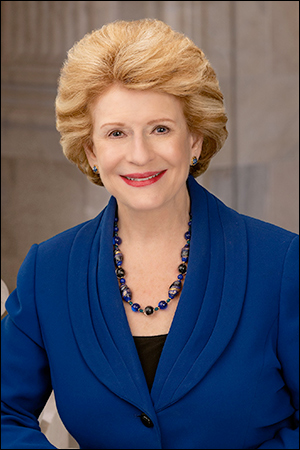
Michigan Sen. Debbie Stabenow (D)

Michigan: GOP Senate Action Beginning — When Wolverine State Democratic Sen. Debbie Stabenow announced on Jan. 5 that she would not seek re-election in 2024, a spate of speculative activity occurred particularly among Democrats as to who may run to succeed the veteran incumbent. Despite the seemingly heightened interest level, no major candidate has yet to announce. Rep. Elissa Slotkin (D-Lansing) was thought to be on the verge of declaring her Senate candidacy and is still expected to at some point, but she has yet to come forward.

The Republicans were quiet immediately after the Stabenow announcement, which caught many by surprise, but now increased chatter is evident. Last week, former US Rep. Mike Rogers said he is considering running, and this week speculation is surrounding potential Senate bids from Congressman Bill Huizenga (R-Holland) and former US Rep. Peter Meijer. The latter man was denied renomination in the 2022 election cycle. The Michigan race promises to be highly competitive, but Democrats will be favored to win a close open seat contest.

House

CA-13: Ex-Candidate Declares Against Rep. Duarte — Fresno area financial advisor and ex-Democratic congressional candidate Phil Arballo (D) says he will return in 2024 to hopefully challenge freshman Rep. John Duarte (R-Modesto) in the general election. The congressman recorded the 2022 election’s second-closest victory margin nationally, a 565-vote win over then-state Assemblyman Adam Gray (D).

Arballo first came on the political scene in 2020 when he challenged then-Rep. Devin Nunes (R). He raised over $5 million for that campaign but secured only 46 percent of the general election vote. He entered the 2022 race in new District 13 but failed to become a November election finalist, placing third in the jungle primary with a 17.4 percent preference total after raising $1.6 million.

The 13th District race will be a major national Democratic conversion target, so we can expect a large jungle primary field to form. At this point, there is little indication that Gray will return for a re-match.

NY-19: Field Forming to Challenge Rep. Molinaro — We’ve already seen brisk political activity in several upstate New York districts. Over the weekend, Dan Butterman (D), an insurance executive who has three times failed to win a state assembly seat, says he will join the growing field to challenge freshman Rep. Marc Molinaro (R-Red Hook). Also in the race are Democratic activist Joe Cerullo and Independent marketing executive Hal Stewart. Stronger Democratic candidates are expected to emerge.

Molinaro won the 19th District general election with a 51-49 percent victory over attorney Josh Riley (D), after the new congressman lost the special election conducted earlier in the year to replace former US Rep. Antonio Delgado (D) who resigned from the House to become lieutenant governor.

In two other Upstate districts, former Congressman Mondaire Jones (D) is contemplating a comeback effort against freshman Rep. Mike Lawler (R-Pearl River) in the Westchester County-anchored 17th CD, and a pair of Democrats have announced their candidacies against freshman Rep. Brandon Williams (R-Syracuse) in the 22nd District.

Governor

North Carolina: Former Congressman Considering Gov Race — Former Tar Heel State three-term Congressman Mark Walker (R-Greensboro), who was redistricted out of his 6th District seat and then subsequently lost a GOP US Senate primary, indicated he is now interested in running for governor next year.

Walker fared poorly in the 2022 US Senate contest, however, placing a distant third to now-Sen. Ted Budd in the Republican primary. In that race he secured only 9.2 percent of the GOP vote. In the governor’s race, Walker would face Lt. Gov. Mark Robinson (R) and likely several others. Incumbent Gov. Roy Cooper (D) is ineligible to seek a third term.

It is probable that a new congressional redistricting map will be drawn to replace the current interim court map before the 2024 election. As has been the Republican map drawers’ past practice, a new plan would reconfigure one of the seats in the Greensboro area to favor a Republican candidate. Therefore, again running for the House could be another option for Walker.

Fox News: Six More Democrat Senators Could Retire

By Jim Ellis — Monday, Jan. 16, 2023

Senate

Michigan Sen. Debbie Stabenow (D) to retire

Retirements: Six Possible — Late last week, Fox News Online ran a story suggesting that six more Democratic senators may opt for retirement in 2024 following the lead of Michigan Sen. Debbie Stabenow (D), who announced last week that she will not seek a fifth term.

In addition to Sen. Stabenow’s retirement, California Rep. Katie Porter (D-Irvine) declared her Senate candidacy even though incumbent Dianne Feinstein (D-CA) has yet to disclose her own re-election plans.

With this backdrop, the six senators listed below are (in order of most likely to retire to least):

  1. Dianne Feinstein (CA): It is presumed that Sen. Feinstein, who will turn 91 years of age before the next election, will retire. Some are expressing their belief that Rep. Porter is disrespecting Sen. Feinstein’s long career – elected in 1992, she has served longer than any sitting Democratic member – and is potentially forcing the senator’s hand to make an announcement. With some in the leadership urging her to resign early due to health constraints, it appears evident that she will not seek re-election.
  2. Joe Manchin (WV): With faltering job approval numbers and from a state that is now becoming ruby red politically, speculation has been out there for some time that Sen. Manchin may not seek re-election or could instead attempt to regain his former position as governor. 
    Already, Rep. Alex Mooney (R-Charles Town) has announced that he will challenge Sen. Manchin next year. Gov. Jim Justice (R), who will be term-limited in 2024 and has strong approval numbers, has not closed the door regarding running for the Senate. Polling suggests that both Gov. Justice and Rep. Mooney would begin a race against Sen. Manchin with a definitive advantage.
  3. Bob Casey, Jr. (PA): Last week Sen. Casey announced that he has been diagnosed with prostate cancer and will have surgery in the coming months. He said his prognosis for a full recovery is excellent and plans on seeking re-election. If there is a downturn in his health, however, there is certainly a chance that his campaign plans could be forced to change. For now, Sen. Casey looks to be a sure bet to run for a third term, but unfortunately his precarious health situation could be an impediment to his quest.
  4. Jon Tester (MT): Sen. Tester is beginning to appear on more potential retirement lists, as he did in the Fox News story. Montana, like West Virginia, is another state that is turning solidly Republican making Sen. Tester’s re-election less than a sure thing. 
    The last time he was on the ballot (2018) he defeated current US Congressman Matt Rosendale (R-Glendive) by only a 50-47 percent margin in a state that has only grown more conservative since that time. In the 2020 election, Republican candidates won all eight of Montana’s statewide elections with victory margins between nine and 19 percentage points. During the same period, Sen. Tester’s voting record has moved decidedly to the left where he can no longer be considered a centrist incumbent. 
    Additionally, Montana’s other senator, Republican Steve Daines, is now chairman of the National Republican Senatorial Committee (NRSC), thus guaranteeing that Montana will be a top national GOP target with heavy funding to support the party’s eventual nominee. Therefore, with obvious lucrative opportunities available to Sen. Tester in the private sector, he might decide his future is more appealing on the outside of elective politics than fighting what will likely be a more difficult re-election campaign than he has before experienced.
  5. Tim Kaine (VA): Sen. Kaine, the Democrats’ 2016 vice presidential nominee and former Virginia governor, stands for a third term in 2024. The Fox analysis placed Sen. Kaine on the potential retirement list with the reasoning that Virginia could be moving more to the right, thus suggesting the senator might face a more difficult re-election campaign. 
    Such an analysis is incorrect. Despite Republican Glenn Youngkin’s victory in the 2021 Governor’s race – a two-point win where the last three weeks of the campaign turned decidedly his way under circumstances that are unlikely to be repeated — the state has clearly established itself as a reliable Democratic bastion. Expect Sen. Kaine to run again and face relatively weak opposition. He will likely romp to a decisive re-election victory.
  6. Tammy Baldwin (WI): Sen. Baldwin was placed on the potential retirement list for a reason similar to Sen. Kaine being included. The Fox News analysis cited Sen. Ron Johnson’s (R) tight victory — 50.4 percent with a 26,728-vote margin of 2.65 million ballots cast — as an indication that the state is becoming more favorable to Republicans. 
    This is the first time there has been a hint that Sen. Baldwin is a retirement possibility, and a close 2020 Senate race at the same time a Democratic governor was being re-elected should not be indicative of any future voting trend in a state that either party can win. There is little current reason to think that 60-year-old Sen. Baldwin would retire. Therefore, fully expect her to be on the ballot next year competitively vying for a third term.

Two Announce in Michigan; Gov. Vacancy in Nebraska; House Announces Committee Chairs; Turmoil in Louisiana

By Jim Ellis — Tuesday, Jan. 10, 2023

Senate

Michigan: First Two Announce — The first two candidates came forward to announce their intention to run for what will now be an open Michigan US Senate seat in 2024. Former state Rep. Leslie Love (D) and attorney Jacquise Purifoy (D) both declared their candidacy yesterday. These are the first in what is expected to be a long list of contenders for both parties. Last week, Sen. Debbie Stabenow (D) announced that she will not seek a fifth term in 2024.

One person who will not likely be in the field is Secretary of State Jocelyn Benson (D), who indicated yesterday that she will continue to serve in her current position.

Former Nebraska Gov. Pete Ricketts, likely replacement for Sen. Ben Sasse.

Nebraska: Officially Vacant — Sen. Ben Sasse (R) has officially resigned his seat in order to assume his new duties as president of the University of Florida. This means new Gov. Jim Pillen (R) will now be able to name a replacement. Odds are strong that he will choose former Gov. Pete Ricketts (R). The announcement could come as early as today.

Once a replacement is chosen, the individual will then come before the voters in a special 2024 election, run concurrently with the general cycle, to fill the balance of the unexpired term. The seat next comes in-cycle for a full six-year term in 2026.

House

AZ-1: Rep. Schweikert Already Draws First Opponent — Veteran Rep. David Schweikert (R-Fountain Hills) had another close call in the 2022 election, winning a seventh term with just 50.4 percent of the vote in a newly configured district that the FiveThirtyEight data organization rates as R+7. His opponent was first-time candidate Devin Hodge (D), a communication consultant who may well run again.

Yesterday, however, orthodontist Andrew Horne (D) became Rep. Schweikert’s first 2024 challenger with his announcement of candidacy. We can again expect this race to be competitive in two years. A crowded Democratic field is expected to form.

Committee Chairs: Steering Committee Elects Three Newcomers — With the Speaker’s election now complete, the Republican Steering Committee met yesterday to finalize the remaining committee chairman posts. In a bit of a surprise, the committee, with Speaker Kevin McCarthy holding four votes and Majority Leader Steve Scalise (R-LA) having two, elected Rep. Jason Smith (R-MO) as chairman of the House Ways and Means Committee defeating favored Rep. Vern Buchanan (R-FL) and Rep. Adrian Smith (R-NE) in a contest that went to a second ballot.

In other contests, Rep. Mark Green (R-TN), a former military doctor, defeated Rep. Dan Crenshaw (R-TX) for the Homeland Security Committee post. Rep. Virginia Foxx (R-NC), as expected, was elected chair of the Education and the Workforce panel, and Texas Rep. Jodey Arrington (R-Lubbock) will be the new Budget Committee chairman. He defeated Reps. Buddy Carter (R-GA) and Lloyd Smucker (R-PA).

Governor

Louisiana: Lt. Gov. Shakes Up Field — In a surprising move, Louisiana Lt. Gov. Billy Nungesser (R) changed his mind about running for governor and instead yesterday announced his intention to seek re-election later this year. Before, Nungesser said he would run for governor if Sen. John Kennedy (R) didn’t. After Sen. Kennedy declined to enter the race, it was assumed that Nungesser would immediately jump and become one of the leading contenders. Several others were declaring for the lieutenant governor role with the understanding that the seat would be open.

With Nungesser’s decision to stay put, it appears that attorney general and former Congressman Jeff Landry (R), someone Nungesser described as “not a good person” when previous discussion arose about his intentions regarding the governor’s election, becomes the front runner to replace term-limited incumbent Gov. John Bel Edwards (D).

As a result of the Nungesser decision, state Treasurer John Schroder (R) then entered the governor’s race. The leading Democrat to date is Transportation Department Secretary Shawn Wilson. Candidate filing does not end until Aug. 10 for the Oct. 14 jungle primary, so the fluid contender field can still greatly change. If no candidate receives majority support in this first election, the top two finishers will runoff on Nov. 18.

Another Close Michigan Race

By Jim Ellis

Detroit Police Chief James Craig

May 18, 2021 — As it is becoming clear that retiring Detroit Police Chief James Craig (R) is preparing to challenge Michigan Gov. Gretchen Whitmer (D) next year, Target Insyght, polling for the Michigan Information & Research Service (MIRS), tested the potential general election pairing in a recent study. The results portend another tight Wolverine State campaign.

The TI poll (May 9-11; 800 registered Michigan voters, live interview) finds Gov. Whitmer leading Chief Craig by a six-point, 48-42 percent, spread. More importantly, the survey identified key areas of weakness for the governor, ones that could potentially allow a GOP contender to construct a reasonable path to victory. Chief Craig has not yet announced his candidacy but is expected to do so once he officially retires from the police force on June 1.

Where Chief Craig may have a significant advantage in such a race is his potential ability to draw more votes from the African American community particularly in heavily Democratic Detroit.

While President Biden averaged 79.1 percent of the vote in Congressional Districts 13 and 14 that encompass the city, the Target Insyght poll finds Gov. Whitmer pulling only 64 percent among black voters, while the outgoing police chief attracts 36 percent. In Detroit, 78.3 percent of the population is African American according to the latest publicly available Census Bureau estimates (July 2019).

Gov. Whitmer’s bigger weakness, however, lies in the area of jobs and rebuilding the state’s economy. According to this issue segmentation, voters would favor Chief Craig over Gov. Whitmer by a whopping 63-30 percent margin.

John James, the African American Republican who has run highly competitive campaigns in the last two consecutive Michigan Senate races, was also tested but he doesn’t perform as well as Chief Craig in a general election pairing. While the governor tops Chief Craig by six points, as mentioned above, James trails by 10 percentage points, 49-39 percent.

In the Republican primary, however, it is James who would have a clear advantage. If he and Chief Craig oppose each other for the 2022 GOP gubernatorial nomination, the former man would begin the race with a 36-21 percent advantage in the primary according to this particular survey.

Continue reading

Biden’s Strong Rebound, and a
Michigan Senate Surprise

By Jim Ellis

March 21, 2019 — Earlier this week, Emerson College Polling released a survey of Wisconsin Democrats that found Sen. Bernie Sanders (I-VT) leading former Vice President Joe Biden, 39-24 percent, but an even newer Emerson offering detects that the tables have already turned.

According to the latest Emerson Michigan poll (March 7-10; 743 registered Michigan voters; 317 likely Michigan Democratic presidential primary voters), it is Biden who is claiming 40 percent support within the Democratic sample, while Sen. Sanders pulls 23 percent. As is the case with the Wisconsin poll, California Sen. Kamala Harris is third, well back with 12 percent, and Sen. Elizabeth Warren (D-MA) follows with 11 percent. All others fall into low single digits. New entry Beto O’Rourke was not included on the survey questionnaire.

The results are not surprising. Biden has long been a favorite of the private sector unions, which are a strong force in Michigan politics. Additionally, President Obama, with Biden on the ticket, ran strongly here. In 2012, he defeated Mitt Romney, 54-45 percent. The former Republican nominee’s father, George Romney, is a past governor of Michigan. Four years earlier, Obama’s margin over John McCain was an even greater 57-41 percent.

Michigan is an important state on the Democratic nomination circuit, eighth largest of the 57 voting entities. Currently scheduled for a March 10 primary, the Wolverine State is awarded 125 elected delegates, ballooning to an aggregate 147 when Super Delegates are added to the total. The Super Delegates, or party leaders, may not vote on the first ballot, but are eligible if more than one roll call becomes necessary.

Continue reading

The Aug 7 Primaries – Part II

the-primariesBy Jim Ellis

Aug. 7, 2018 — We finish our look at today’s primary elections, covering Michigan and Washington, and the OH-12 special congressional election contest.


MICHIGAN

The US Senate and open governor campaigns lead the Michigan ticket today. Sen. Debbie Stabenow (D) will learn whether she faces venture capitalist Sandy Pensler or retired Army Ranger and manufacturing company owner John James, the latter a President Trump-endorsed candidate, in the fall campaign. The senator begins the general election in the clear favorite’s position.

With Gov. Rick Snyder (R) ineligible to seek a third term, competitive Republican and Democratic primaries will be both settled tonight. For the GOP, Attorney General and former US Congressman Bill Schuette has enjoyed double-digit leads in all polling for several months over Lt. Gov. Brian Calley. On the Democratic side, former state House Minority Leader Gretchen Whitmer has been the clear leader almost since the campaign began, and she is expected to defeat former Detroit Health Commissioner Abdul El-Sayed and businessman Shri Thanedar. The general election promises to be highly competitive in this pivotal redistricting state.

Three open seats are the top attractions in the congressional contests.

In veteran Rep. Sander Levin’s (D-Royal Oak) open seat, it appears the retiring congressman’s son, energy consultant Andy Levin, is the clear favorite in the Democratic primary. The 9th is a decidedly Democratic district meaning Levin’s chances of succeeding his father in the general election are strong.

Rep. David Trott (R-Birmingham) is retiring from Congress after two terms and leaves a toss-up political contest in his wake. Crowded primaries are present for both parties, including a Republican race featuring five candidates, while the Democrats have an additional five people running. Trump state co-chair Lena Epstein has developed a late lead in two Republican primary polls, while former Treasury Department official Haley Stevens and state Rep. Tim Greimel (D-Troy) appear atop of the Democratic contest.

Continue reading

Supreme Politics

By Jim Ellis

July 11, 2018 — President Donald Trump’s choice of US Circuit Judge of the DC Court of Appeals Brett Kavanaugh to replace retiring Supreme Court Justice Anthony Kennedy will likely fundamentally change the 2018 Senate election cycle.

Judge Brett Kavanaugh at the White House, where President Trump nominated him to replace retiring Supreme Court Justice Anthony Kennedy. | C-SPAN

Judge Brett Kavanaugh speaks at the White House, where President Trump announced Monday that Kavanaugh would be his nominee to replace retiring Supreme Court Justice Anthony Kennedy. | C-SPAN

With Senate Majority Leader Mitch McConnell (R-KY) already publicly indicating that he is planning to keep the Senate working through August, the Supreme Court confirmation process now guarantees such will happen. With majority Republicans having leverage over the confirmation hearings and vote schedule, we can expect a great deal of politics will be accompanying the legal rhetoric that awaits us during the remaining summer months.

The Senate political map helps Judge Kavanaugh in his confirmation battle. Both sides will mount crushing pressure on those members perceived as swing votes, and the eventual targets will be backed into such a position where it will be impossible to avoid political damage once their eventual vote is cast. The three Democrats who supported Supreme Court Justice Neil Gorsuch when he was confirmed on April 7, 2017 are:

  • Sen. Joe Donnelly (D-IN)
  • Sen. Heidi Heitkamp (D-ND)
  • Sen. Joe Manchin (D-WV)

The three will naturally be the top targets for this confirmation battle, and there is a strong chance that each will also vote for Judge Kavanaugh. Already trapped in tough re-election battles, these senators will be hard-pressed by both sides pushing them to vote for or against Kavanaugh; but considering their respective states voted for President Trump in margins of 19 (IN), 36 (ND), and 43 (WV) percentage points suggests the density of pressure to support the nominee will overwhelm the opposition.

After last night’s announcement, Sen. Manchin issued a statement saying he is particularly interested about Judge Kavanaugh’s position on healthcare issues, especially those affecting people with pre-existing conditions as they relate to healthcare insurance coverage. Sen. Manchin says over 800,000 people in his state of West Virginia fall into this category.

Continue reading