Tag Archives: Rep. David Schweikert

Today’s Primaries; Final Results Close to Complete in Ariz.; Herrera Beutler Hanging By a Thread in Washington

By Jim Ellis — August 9, 2022

Primaries

Voting Today: Four States Holding Primaries; One Special Election — The final phase of primary season continues today with nomination elections occurring in Connecticut, Minnesota, Vermont and Wisconsin. The most competitive statewide races include choosing Senate candidates in Connecticut and governor’s contests in Minnesota and Wisconsin.

A total of 22 House races are on the cumulative political card tonight, including three open seats, one each in Minnesota, Vermont, and Wisconsin, and a special election to replace the late Rep. Jim Hagedorn (R) in southern Minnesota. With a victory tonight, either former state Rep. Brad Finstad (R) or ex-Hormel corporation CEO Jeffrey Ettinger (D) will take the seat immediately upon election certification and serve the balance of Hagedorn’s final term.

Primary Results

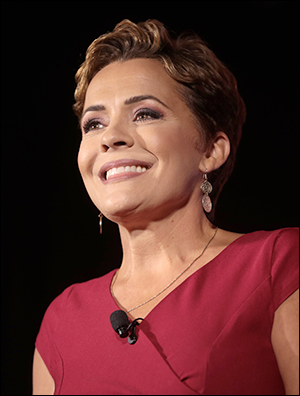
Former news anchor Kari Lake (R)

Arizona: Final Results Close to Complete — In states that feature large numbers of mail ballots and allow such votes to count even when arriving after election day, the better part of two weeks is needed to finalize the election totals. From Arizona’s Aug. 2 primary, the winners of all races are now statistically projected as the last remaining votes are being tabulated. The latest published figures show 98 percent of the Republican ballots and 92 percent of the Democratic votes recorded. Republican turnout looks to top 815,000, while Democrats are likely to exceed 625,000.

In the general election, Sen. Mark Kelly (D) will face venture capitalist Blake Masters (R), while Secretary of State Katie Hobbs (D) and former news anchor Kari Lake (R) square off in the open governor’s race.

The key House races feature Rep. David Schweikert (R-Fountain Hills) against businessman Jevin Hodge (D); retired Navy SEAL Eli Crane (R) challenging Rep. Tom O’Halleran (D-Sedona); Rep. Greg Stanton (D-Phoenix) in a competitive contest against business owner Kelly Cooper, who upset favored Tanya Wheeless in the 4th District Republican primary; and former state Sen. Kirsten Engel (D) and ex-Hispanic Chamber of Commerce executive Juan Ciscomani (R) doing battle in the Tucson-anchored open new 6th District.

Washington: Rep. Herrera Beutler Hanging By a Thread — Washington’s laborious vote counting procedure continues from the Aug. 2 all-mail jungle primary, and the biggest development is that Rep. Jaime Herrera Beutler (R-Battle Ground) has not yet secured a general election ballot slot, and may in fact lose to challenger Joe Kent (R).

With just under 96 percent of the 3rd District votes counted, Democrat Marie Perez, with 31.2 percent of the vote, has clinched the first ballot position. Rep. Herrera Beutler barely holds the second qualifying position with 22.6 percent (41,603 votes) nipping Kent’s 22.5 percent (41,346 votes), a margin of just 257 votes with as many as 7,000 votes remaining to be counted. Since 45.1 percent of the voters chose either Herrera Beutler or Kent, it is reasonable to believe approximately 3,000 of those votes will determine the second-place qualifier. Of the remaining votes for either Herrera Beutler or Kemp, the latter man would need 54 to overcome the congresswoman’s edge.

In the 4th District, Rep. Dan Newhouse (R-Sunnyside) who, like Rep. Herrera Beutler, voted to impeach former President Trump, has clinched a general election ballot position with 25.4 percent, but with as many as 25,000 votes to count. In second place, also clinching a general election slot, is Democratic businessman Doug White. Eliminated in third place is Trump-endorsed former town police chief and 2020 gubernatorial finalist Loren Culp (R).

Turning to the 8th District, 2020 Attorney General qualifier Matt Larkin (R) has clinched second position over King County Councilman Reagan Dunn and 2020 general election qualifier Jesse Jensen. Larkin now advances to the 2022 general election to challenge Rep. Kim Schrier (D-Sammamish). This is evolving into a top competitive national congressional campaign. Schrier only secured 47.9 percent in the jungle primary, and the cumulative partisan totals suggest that a very tight general election is coming. The cumulative Democratic vote so far totals 97,341 with 91.3 percent of the expected vote tabulated compared to the cumulative Republican total of 96,572.

House

MN-1: Finstad Leading in Final Special Election Poll — The closing poll in the special election to replace the late Rep. Jim Hagedorn (R) was released late last week. The Survey USA poll (July 26-30; 544 likely MN-1 special election voters; live interview) finds Republican former state Rep. Brad Finstad leading ex-Hormel corporation CEO Jeff Ettinger (D) by a 46-38 percent margin. Finstad also faces a regular election primary contest with former state Rep. Jeremy Munson whom the former defeated in the May 24 special primary election by just 427 votes.

MN-5: Rep. Omar Facing Serious Primary Challenge — Former Minneapolis City Councilman Don Samuels is waging a strong Democratic primary challenge against controversial Rep. Ilhan Omar (D-Minneapolis) in an election that will be decided today. The Minneapolis Star-Tribune announced its editorial board endorsement of Samuels and so did the city’s mayor, Jacob Frey (D). In the last week, a Super PAC entitled “Make A Difference” sponsored a $350,000 television buy to support Samuels. This will be a race to watch tonight.

NY-12: Rep. Nadler Leads in New Poll — Emerson College tested the upcoming Democratic-paired incumbent primary between Reps. Carolyn Maloney (D-Manhattan) and Jerrold Nadler (D-Manhattan). The survey (Aug. 1-2; 1,000 likely NY-12 Democratic primary voters; live interview, text & interactive voice response system) finds Rep. Nadler, largely with the overwhelming support of men, leading Rep. Maloney 40-31 percent, with the third candidate, businessman and former congressional candidate Suraj Patel attracting 11 percent support. The New York congressional primary is scheduled for Aug. 23.

Big Primary Results

By Jim Ellis — Aug. 3, 2022

Primary Results

Venture capitalist Blake Masters

Arizona — Venture capitalist Blake Masters, armed with an endorsement from former President Trump who remains a strong force in Republican primaries, defeated businessman Jim Lamon and Attorney General Mark Brnovich with a 39-29-18 percent vote margin with about 80 percent of the expected vote tabulated. Masters now advances to the general election to face a tough political opponent in Sen. Mark Kelly (D).

In the open governor’s race, Trump-endorsed former news anchor Kari Lake has a very slight lead of approximately 9,000 votes over Arizona University Regent Karrin Taylor Robson, who both former Vice President Mike Pence and term-limited Gov. Doug Ducey supported. The outstanding 21 percent of the vote, however, including that from the most populous Maricopa County where about 62 percent of the state’s residents live, makes it unclear as to who will prevail when all of the ballots are counted. The eventual winner will face Secretary of State Katie Hobbs, who scored a landslide 73 percent victory in the Democratic primary.

In House races, Rep. David Schweikert (R-Fountain Hills) looks to have won re-nomination in the new Scottsdale-anchored 1st District, but in unimpressive form. With 82 percent of the expected vote counted at this writing, Rep. Schweikert only has 43 percent of the Republican vote.

In the very different 2nd District that now will favor a Republican candidate as opposed to Democratic incumbent Tom O’Halleran (D-Sedona), retired Navy SEAL Eli Crane, another Trump-endorsed candidate, has defeated state Rep. Walt Blackman (R-Snowflake) to win the GOP nomination. At this writing, 80 percent of the expected vote has been counted and Crane has a nine-percentage point lead, which should be more than enough to clinch the win. A O’Halleran-Crane general election now becomes one of the top GOP conversion target races in the nation.

The new competitive 4th District where Rep. Greg Stanton (D-Phoenix) sees his partisan index drop to just D+1 according to the FiveThirtyEight data organization, saw a surprise winner in the Republican primary. Though former Phoenix Suns executive Tanya Wheeless was attracting the most media attention, the district’s GOP electorate has instead chosen local businessman Kelly Cooper as the party nominee. With approximately 80 percent of the vote counted, Cooper has a five-percentage point lead. He looks to be a strong general election candidate, and this will be a real race in the fall.

In the Tucson-anchored open 6th District, from which Rep. Ann Kirkpatrick (D-Tucson) is retiring, former gubernatorial aide and Hispanic Chamber of Commerce executive Juan Ciscomani, as expected, easily captured the Republican nomination. He will now face former state Sen. Kirsten Engel who was a strong winner on the Democratic side. The general election will yield a tight political district, but the area and national political prognosticators promote Ciscomani as the favorite to win the general election and convert this southeastern Arizona seat for the GOP.

Michigan — The big story in the Michigan primary and perhaps the overall national primary result among the five states voting was the defeat of freshman Rep. Peter Meijer (R-Grand Rapids) in the GOP nomination campaign. He fell 52-48 percent to former Housing & Urban Development Department official John Gibbs who had former President Trump’s endorsement. The new 3rd District leans Democratic, Gibbs faces a tough challenge against 2020 party nominee Hillary Scholten (D) in the coming general election.

The other Michigan congressional defeat came in the Democratic pairing from the state’s suburban Detroit 11th District. There, Rep. Haley Stevens (D-Rochester Hills) scored a 60-40 percent win over fellow Democratic Rep. Andy Levin (D-Bloomfield Township), as late polling predicted would occur.

Missouri — Another of the key Aug. 2 primary races ended as projected. Late in what had been a tightly fought campaign, Attorney General Eric Schmitt looked to have broken away from the candidate pack and scored a 46-22-19-5 percent open Republican primary victory over US Rep. Vicky Hartzler (R-Harrisonville), ex-Gov. Eric Greitens, and US Rep. Billy Long (R-Springfield), respectively.

Schmitt now becomes a strong favorite in the general election to succeed retiring Sen. Roy Blunt (R). In November, he will face philanthropist Trudy Busch Valentine, a member of the Anheuser Busch beer family. She defeated Iraq War veteran Lucas Kunce, 43-38 percent, to capture the Democratic nomination, overcoming a heavy negative attack campaign.

The two US House members, Reps. Hartzler and Long, left open a pair of solidly Republican congressional districts that featured crowded Republican primaries. Former news anchorman and conservative commentator Mark Alford and state Sen. Eric Burlison (R-Battlefield/Springfield) were strong winners in the 4th and 7th District congressional nomination contests. Both men have effectively punched their tickets to Washington, as each should easily win the general election.

Washington — Sen. Patty Murray (D-WA), despite earlier polling suggesting a competitive re-election race, easily placed first in the state’s jungle primary. Though only about half of the vote is tabulated under Washington’s all-mail election system that allows ballots to be received and counted after the election, it is clear that Sen. Murray placed first in the multi-candidate field with 54 percent of the vote.

In second place, as expected, and also advancing into the general election is veterans’ activist and former nurse Tiffany Smiley (R) who garnered 32 percent of the votes tabulated at this writing. It appears that Sen. Murray is now a heavy favorite for re-election to a sixth term.

The more watched races occurred in congressional districts 3 and 4. It appears that both Reps. Jaime Herrera Beutler (R-Battle Ground) and Dan Newhouse (R-Sunnyside) will advance into the general election, but with low vote percentages. Each voted to impeach former President Trump.

From the Vancouver area anchored 3rd CD, Democratic businesswoman Marie Perez, taking advantage of the badly split Republican vote, looks to have secured first position from the jungle primary and will advance into the general election. Rep. Herrera Beutler, with just 24.5 percent of the tabulated vote, which is from 57 percent of the expected total, looks to have enough of a cushion over retired Army officer and Trump-endorsed contender Joe Kent (R) despite her low percentage. The total Republican vote, however, spread among four GOP candidates is approximately 63 percent, which portends well for Rep. Herrera Beutler in the general election.

In Washington’s middle-state 4th CD, incumbent Newhouse is holding first place, but with only 27 percent of the jungle primary vote. It appears that he and Democratic businessman Doug White will advance into the general election in what is the Evergreen State’s most Republican district. Trump-endorsed candidate Loren Culp (R), the former town police chief who was a finalist in the 2020 gubernatorial election, placed third and will be eliminated. The cumulative Republican vote here is 74 percent, so Rep. Newhouse, facing a Democratic opponent in the general election, should be safe for re-election.

Analyzing Arizona

Click on map to go to Arizona Independent Redistricting Commission’s interactive map.

By Jim Ellis

Jan. 10, 2022 — Now that the new redistricting maps have been finalized in as many as 27 states, analysts can produce more detailed data about how the new seats will perform politically.

Such is the case in Arizona, as the Phoenix-based Data Orbital firm has published a new report about the Grand Canyon State’s congressional and state legislative maps. The DO research paints a more detailed picture of what we might expect in the 2022 elections.

At first glance, it appeared that the Arizona map might be one of the nation’s most competitive. The new Data Orbital information certainly supports such a conclusion, and tells us that two incumbents actually have more difficult situations than suggested at first glance, one a possibly easier road to re-election, and a third district that will likely produce razor-thin margins for either party in at least the decade’s early elections.

It was clear that Reps. David Schweikert (R-Fountain Hills) and Tom O’Halleran (D-Sedona) were placed in more competitive situations than their current CDs yield, but the more detailed historical data finds that their respective roads to re-election are even rockier.

The Data Orbital firm measured each district through five statewide elections from 2020 and 2018, overlaid the partisan registration figures, added the new registration trends, and took into account district electorate performance in high and lower turnout situations.

Using all of this data, we see that Rep. O’Halleran clearly has the worst draw and his chances for re-election this year appear dim. His new 2nd District (previously numbered 1) went Republican in all five of the tested elections; Republicans have the edge in current and new voter registration, and the Republican candidates performed better in both high and low turnout elections.

In all, the Republican nominees averaged vote margins of more than 10 percent over their Democratic counterparts. There is no statistical measure where Democrats outperformed Republicans in the new 2nd District, which places Rep. O’Halleran in the most difficult position of all the incumbents seeking re-election.

Rep. Schweikert, who won his last re-election in the current 6th District with only 52 percent, sees a much tougher road ahead of him in 2022 within the confines of the new 1st District.

In the five tested races — 2020 presidential, 2020 Senate, 2020 congressional, 2018 gubernatorial, and 2018 attorney general — Republicans only won two. The winning percentage for the Republican victories, however, is much higher than the three Democratic victories – the Dems only scored a cumulative winning average of 1.2 percent — so Schweikert certainly has a chance of winning another term. The GOP does score an overall performance margin advantage of 4.1 percent and leads the Democrats in party registration, among new registrants, and in both low and high turnout elections.

At first glance, it appeared that Rep. Greg Stanton (D-Phoenix) would have a more difficult re-election situation than what the deeper dive numbers suggest. Democrats won four of the five tested elections, the overall vote average favors the Democratic candidates by 5.6 percentage points, and while registration breaks almost evenly among the Democrats, Republicans, and Independents, the vote performance figures suggest that the Independent sector clearly leans Democratic. While Independents overwhelming lead the new registration category, the Democrats also outperform the Republicans by 2.4 percentage points.

Continue reading

Arizona’s Competitive Map

By Jim Ellis

Jan. 4, 2022 — The Grand Canyon State of Arizona was one of the places to complete the redistricting process toward the end of 2021 when the Arizona Independent Redistricting Commission members approved a new congressional plan. The new district boundaries will create one of the most competitive US House maps in the country.

The current 5D-4R map could easily swing from 6D-3R all the way to 3D-6R depending upon the political winds in any given election year. Among the current incumbents, Reps. Tom O’Halleran (D-Sedona), David Schweikert (R-Fountain Hills), and Greg Stanton (D-Phoenix) all see more competitive new seats.

The commission members also changed the district numbers, making voter history comparisons a bit more confusing. They did provide political data that summarizes certain past elections for each new seat, however. The data chart covers 10 statewide race results from 2016 through 2020.

Rep. O’Halleran’s 1st District, which stretches throughout most of eastern Arizona, is now labeled #2 and becomes much more Republican despite adding Native American population. In fact, the historical average is majority Republican, at 53.6 percent. The FiveThirtyEight statistical projection rates the new 2nd as the fourth most Republican district in the state at R+15.

Under the previous map, FiveThirtyEight rated the O’Halleran seat at R+8. Rep. O’Halleran, though acknowledging he will have a more difficult re-election battle, has already announced that he will run in the new 2nd.

Prior to the map release, two-term GOP state Rep. Walt Blackman, a Bronze Star Medal recipient for combat in Iraq and the first African American Republican to be elected to the state House, announced for the congressional seat, and now appears to be in even stronger political position opposite Rep. O’Halleran.

Rep. Schweikert’s 6th District electorate that includes the Scottsdale area, returned him for a sixth term with only a 52-48 percent margin in a CD that FiveThirtyEight rated R+13. The new 1st District has a 51.3 percent Republican average vote. The FiveThirtyEight rating for the new confines is R+7, meaning that Schweikert can again expect a competitive general election challenge.

Continue reading

Arizona’s Importance

By Jim Ellis

Does Arizona hold the key in the Trump-Biden election?

Oct. 9, 2020 — Now moving quickly toward Election Week, it is becoming apparent that the ultimate bellwether state for the 2020 presidential election is the Grand Canyon State of Arizona. Formerly a rock solid Republican political domain, the state has been trending toward the political center in recent elections, most particularly 2018.

Coming into the closing weeks of this year’s presidential campaign, it appears that Arizona may be this election’s “tell.” While it’s possible mathematically for President Trump to win in the Electoral College without Arizona, realistically doing so may be a bridge too far.

The principal reason is Arizona has 11 electoral votes, and the idea that Trump could replace it with taking Wisconsin or Minnesota, for example, fails because those states each have 10 votes. Therefore, losing Arizona would lead to him either falling into a tie, or losing the national electoral vote count, 270-268.

The latter electoral vote margin occurs if he also drops the 2nd Congressional District of Nebraska, a state that is one of a pair to split their electoral votes. The most recent public NE-2 poll, from Siena College/New York Times (Aug. 25-27; 420 NE-2 likely voters, live interview), finds the president trailing former vice president Joe Biden in the Omaha metro district, 41-48 percent.

The Trump math also fails without Arizona even if he carries Pennsylvania as his lone Great Lakes State. Losing Arizona, Michigan, and Wisconsin from his 2016 state coalition map, along with NE-2, would also yield a 270-268 Biden victory.

Earlier this week, the Data Orbital polling firm headquartered in Phoenix and is the most prolific survey research firm in testing the Arizona electorate from statewide through local offices, released their latest presidential and US Senate numbers. Their poll (Oct. 3-5; 550 likely Arizona voters, live interview) is the first Arizona survey taken wholly after both the first presidential debate and President Trump being hospitalized for COVID-19.

Continue reading

Challengers With a Lead – Part I

By Jim Ellis

Sept. 29, 2020 — We’ve already seen eight 2020 US House challengers unseat their incumbent opponents so far — obviously all in the primaries. Is it possible that that’s a precursor to a larger number of incumbents losing their seats in the general election?

In typical election years, well over 90 percent of incumbents who seek re-election win. Therefore, eight members denied re-nomination in their own party primary elections is an unusually high number. What’s more, turning to the general election, 22 House incumbents have trailed in at least one poll since July began.

Below is the list of the first 11 incumbents, alphabetically by state, who are facing what appear to be the most competitive challengers in the country. The list includes 14 Republican incumbents and eight Democrats for a total of 22. Tomorrow, we will cover the remaining 11. All challengers have led the incumbent in at least one political poll of their race.


Rep. Don Young (R-AK-AL):

• Public Policy Polling (July 7-8)
Challenger: Alyse Galvin (I/D) margin: +2 points
2016 Presidential: Trump, 51-37%
—   Galvin ran in 2018 and saw similar polling numbers even as late as Oct. 29. Rep. Don Young (R-Ft. Yukon) would still go onto win the race 53-46 percent. Galvin is one of the many close finishers returning for a re-match this year.


Rep. David Schweikert (R-AZ-6):

• Greenberg Quinlan Rosner Research (Aug. 6-12)
Challenger: Hiral Tipirneni (D) margin: +3 points
2016 Presidential: Trump, 52-42%
—   Rep. David Schweikert (R-Fountain Hills/Scottsdale) has pleaded to 11 ethics violations relating to using his government resources for political purposes in addition to campaign finance irregularities. With the district becoming more Democratic in addition to his personal situation, Rep. Schweikert faces his toughest re-election campaign against physician Hiral Tipirneni who twice ran close races in the adjoining 8th CD.


Rep. Mike Garcia (R-CA-25):

• Normington Petts (Sept. 21-23)
Challenger: Assemblywoman Christy Smith’s margin: +3 points
2016 Presidential: Clinton, 50-44%
—   One of the most recent polls found for this House study shows Rep. Mike Garcia (R-Santa Clarita) — who won his seat in a May 12 special election by surprisingly taking a seat back from the Democrats — trailing state Assemblywoman Christy Smith (D-Newhall), the woman he defeated four months ago. With California going heavily Democratic in the presidential election, it’s certainly not out of the realm of possibility that this race again becomes a toss-up despite Rep. Garcia’s 10-point win with a high special election turnout.


Rep. Donna Shalala (D-FL-27):

• 1892 Polling (Sept. 2-6)
Challenger: Maria Elvira Salazar margin: +3 points
2016 Presidential: Clinton, 58-39%
—   This is a re-match of the 2018 open seat campaign that saw former Health & Human Services Secretary and President of the University of Miami, Donna Shalala, top former Spanish language television news reporter Maria Elvira Salazar. Shalala’s victory margin was 52-46 percent. The only public poll released so far came in early September and produced a surprising result with Salazar pulling slightly ahead.


Continue reading

Two Polls; One Interesting, One Bad

By Jim Ellis

Nov. 1, 2017
— Two political polls were released into the public domain yesterday. The first survey is of interest because it already examines a budding open seat Arizona Senate Republican primary, and becomes the first gauge of how former state Sen. Kelli Ward, who had been challenging Sen. Jeff Flake (R), performs in a new situation.

Another in a series of Virginia gubernatorial polls was also published Monday as we begin the last week of the election contest. Here, we question the results’ accuracy.

Arizona Senate

Former Arizona state senator and GOP Senate challenger Kelli Ward

Former Arizona state senator and GOP Senate challenger Kelli Ward

Speculation has been hot and heavy during the past few days, the first time interval since Sen. Flake announced he would not seek a second term largely because of dismal re-election prospects. Culminating the early conjecture are Phoenix-based Data Orbital’s (DO) new conclusions (Oct. 26-28; 500 likely Arizona GOP primary voters) finding former state Sen. Ward leading a pack of potential Senate candidates, but with a margin that suggests the impending Republican primary is anybody’s game.

Looking at the DO results, Ward places first with 26 percent, followed by Rep. Martha McSally (R-Tucson) at 19 percent, and former Rep. Matt Salmon (R-Mesa) coming next at 10 percent, while ex-Rep. John Shadegg (R-Scottsdale), Rep. David Schweikert (R-Fountain Hills/Scottsdale), and Arizona University Regent Jay Heiler score 6, 5, and 1 percent, respectively.

Continue reading

Fast Action in Arizona

By Jim Ellis

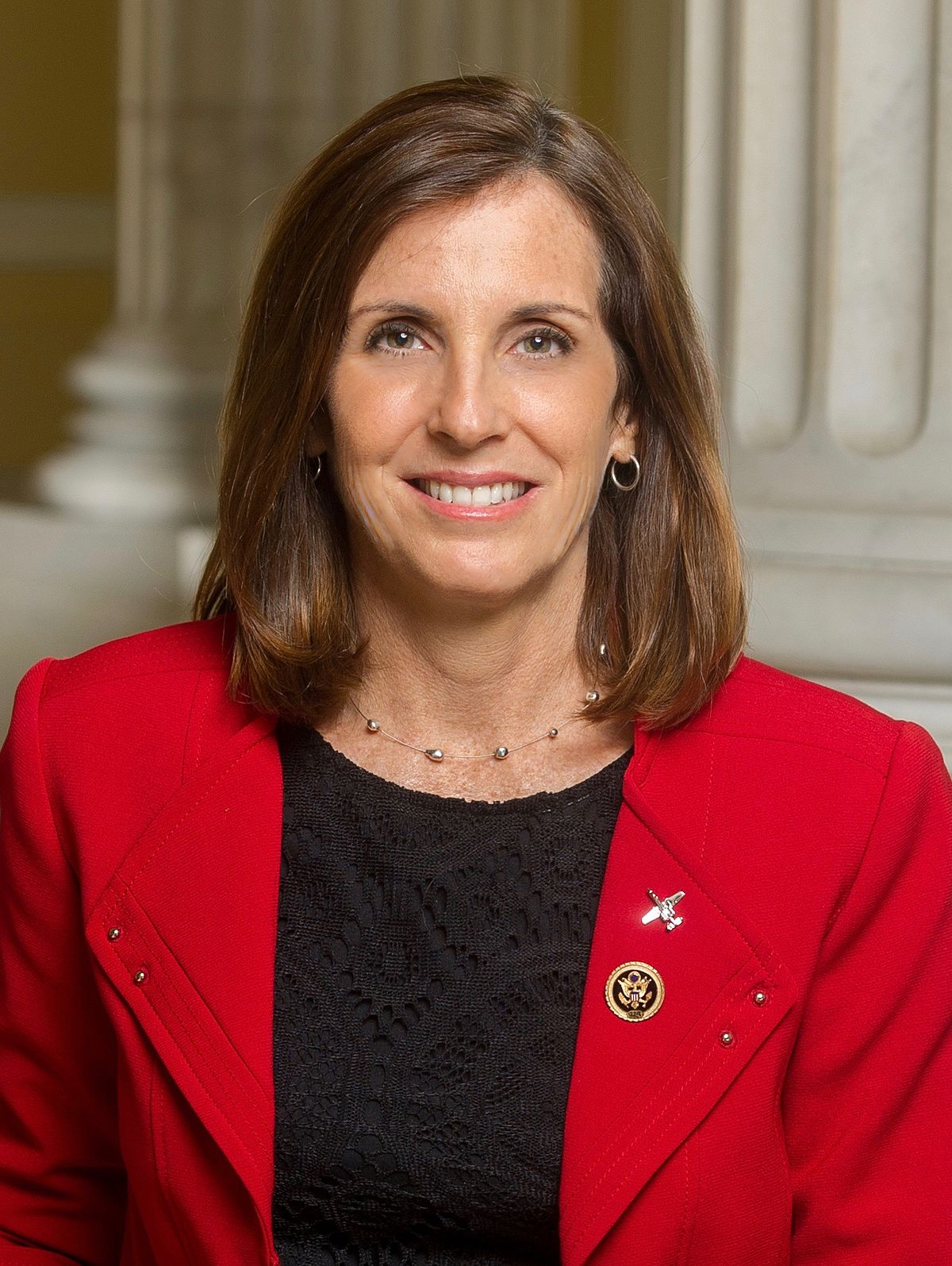
Rep. Martha McSally (R-Tucson)

Rep. Martha McSally (R-Tucson)

Oct. 30, 2017 — Sen. Jeff Flake’s (R) announcement Wednesday that he will not run for re-election has ignited a flurry of political activity in Arizona about who now might enter the newly open 2018 Senate race. Decisions are already being made, with many quickly saying they won’t run for the seat.

A great deal of attention surrounds 2nd District US Rep. Martha McSally (R-Tucson) for obvious reasons, because she is likely the best Republican candidate on paper, but the congresswoman has yet to make a public statement about running for the Senate. Published reports, however, quote sources close to her as saying she is being “inundated” with supporters urging that she run.

Winning her first congressional election in 2014, a 161-vote victory over then-Rep. Ron Barber (D-Tucson) that proved to be the closest congressional result in the country that year, and then racking up 57 percent support over former state Rep. Matt Heinz (D) last year even though Hillary Clinton was scoring a five-percentage point win in her southeastern Arizona congressional district makes Rep. McSally a proven political commodity. As a freshman House member, she raised an eye-popping $7.7 million for her first re-election effort. This year, ranking high on Democratic target lists and drawing eight announced opponents including former US Rep. Ann Kirkpatrick (D-Flagstaff) who moved to Tucson right after losing to Sen. John McCain (R) in the 2016 election, Rep. McSally already has accumulated over $1.45 million for her next campaign.

Continue reading

The New Arizona Senate Race

By Jim Ellis

Oct. 26, 2017 — Arizona Sen. Jeff Flake (R) surprised most in the political world during a speech a couple days ago from the Senate floor, and thereby to the nation, that he will not seek re-election for a second term.

Former Arizona state senator and GOP Senate challenger Kelli Ward

Former Arizona state senator and GOP Senate challenger Kelli Ward

With the text of his retirement address devoted mostly to his long-enduring battle with President Trump, Sen. Flake admits to having “regrets” about leaving elected politics and over the nation’s current state of affairs. But, the more salient reason hastening his departure is likely the polling data that shows his standing among Republicans is worse than the Arizona electorate as a whole, and that he would likely lose to both GOP challenger Kelli Ward, a former state senator who held Sen. John McCain to a 51-40 percent victory in the 2016 Republican primary, and US Rep. Kyrsten Sinema (D-Phoenix) in the general election.

Contrary to media and Democratic Party analyses, the Republicans’ chances of holding this Senate seat actually improve with Sen. Flake’s departure. It was clear that his presidential sparring with Trump had left him worse for wear, and the GOP will likely be able to nominate a less encumbered, and thereby stronger, general election candidate.

Continue reading

McCain Warning Signs

May 5, 2015 — Arizona Sen. John McCain (R), who is seeking re-election to a sixth term next year, is showing political weakness according to a new Public Policy Polling survey (May 1-3; 600 registered Arizona voters; 300 self-identified Arizona Republican voters).

According to the results, McCain’s job approval is in upside-down territory not only from the Grand Canyon State electorate at-large but from an isolated Republican cell sample, as well. PPP projects that the senator records only a 36:51 percent approval ratio before the general electorate. More troubling, he scores 41:50 percent favorable to unfavorable among Republicans.

Sen. McCain has long been a controversial figure with Republican Party base voters, and there is an active effort attempting to deny him re-nomination. So far, candidate recruitment has failed because only state Sen. Kelli Ward (R), who is not viewed as a substantial challenger, is willingly stepping forward to register a campaign committee.
Continue reading >