Tag Archives: Massachusetts

Senate Trends

Rep. Todd Akin

More is becoming known about the nation’s US Senate races, and trends are forming. With seven full weeks to go until Election Day, much can still change but at this point, both parties could be headed to the 50-seat mark. Ironically for Republicans, it could well be Todd Akin’s fate in Missouri, the candidate national GOP leaders attempted to replace because of his unintelligent comments, that will decide which party controls the body in the new Congress.

As we know, of the 33 in-cycle seats, Democrats are defending 23. Today, they appear safe in 10 of those: California (Feinstein), Delaware (Carper), Maryland (Cardin), Minnesota (Klobuchar), New Jersey (Menendez), New York (Gillibrand), Pennsylvania (Casey), Rhode Island (Whitehouse), Washington (Cantwell), and West Virginia (Manchin).

Two more are headed toward the Independent column, and those winners will either caucus or vote with the Democrats. Sen. Bernie Sanders (Vermont) runs as an Independent but joins the Democratic conference. Angus King, the Independent former governor, is strong favorite for Maine Sen. Olympia Snowe’s (R) seat as the campaign turns into the home stretch. He is projected to caucus with the Democrats, but has yet to commit to do so. If the fate of the majority comes down to King, it is unclear what might happen.

Trending toward the Democrats appears to be the races in Hawaii (open seat – Rep. Mazie Hirono), Michigan (Stabenow), New Mexico (open seat – Rep. Martin Heinrich), and Ohio (Sherrod Brown).

Hawaii polls have been erratic, but the preponderance of polling data gives Rep. Mazie Hirono a clear lead. Same is true in Michigan for two-term Sen. Debbie Stabenow and first-term incumbent Sherrod Brown. Though polling shows Rep. Martin Heinrich well ahead of former Rep. Heather Wilson (R-NM-1), this is another race that could turn. Wilson’s strength with Independents in the state could make a difference if Democratic turnout is even slightly low.

Republicans are safe in fives seats: Mississippi (Wicker), Tennessee (Corker), Texas (Cruz), Utah (Hatch), and Wyoming (Barrasso).

Trending toward the GOP are the races in Indiana (open seat – Richard Mourdock), Massachusetts (Scott Brown), Nebraska (open seat – state Sen. Deb Fischer), Nevada (Heller), North Dakota (open seat – Rep. Rick Berg), and Wisconsin (open seat – former governor Tommy Thompson).

The Indiana race is tight – some polls show it about even – but Richard Mourdock has not made any mistakes in his battle with Rep. Joe Donnelly (D-IN-2). Hoosier State voting trends at the top of the ticket – Mitt Romney appears headed for victory over the President here and Rep. Mike Pence is a solid favorite in the governor’s race – should help pull Mourdock across the finish line.

Recent polling in Massachusetts and Nevada is giving senators Scott Brown and Dean Heller small, but consistent and discernible leads over Elizabeth Warren (D) and Rep. Shelley Berkley (D-NV-1), respectively.

While the North Dakota seat has been tight for most of the campaign, more recent polling indicates that Rep. Rick Berg is opening up a lead well beyond the margin of error.

All post-primary polls in Wisconsin give former governor Tommy Thompson a lead over Madison Rep. Tammy Baldwin (D-WI-2). All of these races could turn away from the Republicans before Election Day, but today, the GOP candidates look to be in the winning position.

Questions abound in the following campaigns:

• Arizona (open seat): Though Rep. Jeff Flake (R-AZ-6) is favored here, some polls are detecting a close race and Democratic nominee Richard Carmona is making this campaign a battle.

• Connecticut (open seat): A combination of factors have come together to make this race, at least in the short term, more competitive than expected. GOP nominee Linda McMahon being awarded the Independent Party ballot line, new polling showing the two candidates running close, and a personal financial situation involving Rep. Chris Murphy (D-CT-5) are all minor individual items that taken in the aggregate could become significant.

• Florida: Polling has been extremely inconsistent in the Sunshine State, but more surveys favor Sen. Ben Nelson than Rep. Connie Mack IV (R-FL-14). The campaign is trending Nelson’s way now, but the presidential final wave will have a lot to say about its final outcome.

• Missouri: Right after the August primary, Rep. Todd Akin made rape-related abortion comments that stirred a national hornet’s nest. Incumbent Sen. Claire McCaskill (D) jumped well into the lead, but the margin has since dissipated and the race is back in toss-up range. McCaskill is the most vulnerable of all Democratic incumbents standing for re-election, and Akin is the Republicans’ weakest national challenger. This one is far from over.

Montana: The political battle between first-term Sen. Jon Tester (D) and Rep. Denny Rehberg (R-MT-AL) has been close for months. In the past eight weeks, the polling was detecting a slight Rehberg advantage. A new survey released last week, however, showed Tester regaining the lead. The presidential election will weigh heavily on this race, and Mitt Romney seems to be enjoying a healthy advantage in Big Sky Country. This race will likely go down to the wire.

• Virginia: Possibly the closest race in the country, the campaign between former senator George Allen (R) and ex-governor Tim Kaine (D) has been dead even for the better part of a year. As in Florida and Montana, the presidential race looms large in the Virginia Senate race. The result is too close to call.

To recap, if this analysis is correct, the Democrats are safe or ahead in 16 races, including the two Independent candidates, and Republicans are safe in 11. Under this model, the GOP would attain the majority 51 number if they win any three of the six questionable races isolated above.

Massachusetts Primary Results

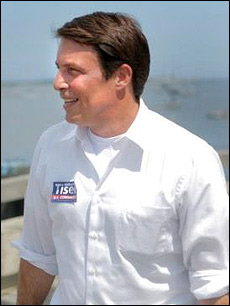
Richard Tisei – Republican hopeful?

The Massachusetts primary bore no surprises last night, as all incumbents breezed to renomination victories.

In the western state 1st District, a redistricting combination of current CDs 1 and 2 (remember, the state lost a seat in reapportionment), incumbent Rep. Richard Neal (D-MA-2) easily overcame his Democratic primary challenge from former state senator Andrea Nuciforo Jr. Neal won 65-25%. The congressman has unofficially already won re-election as he is unopposed in the general election.

Worcester Rep. Jim McGovern crushed his Democratic primary opponent, garnering more than 91 percent of the vote. He, too, is unopposed in the general election.

In the newly configured District 3 (Lowell-Lawrence-north/central Mass.), incumbent Rep. Niki Tsongas will face GOP primary winner Jon Golnik, a businessman. The general election campaign will not be competitive.

In the southern part of the state, as expected, Joseph P. Kennedy III, the grandson of Robert F. Kennedy, broke 90 percent in the Democratic primary and moves to the general election. He is a prohibitive favorite against 2010 Republican nominee Sean Bielat in the battle to replace the retiring Congressman Barney Frank (D).

Checking the Malden-Melrose-Framingham seat, 18-term incumbent Ed Markey (D) will face military veteran Tom Tierney who won the three-way Republican primary with 43 percent of the vote. Tierney will have little chance against Markey in the fall.

The 6th District, in the northeastern corner of the Bay State, breaks the trend of non-competitive general election campaigns as Rep. John Tierney (D) and former state senator Richard Tisei (R) will square-off in what has the potential of becoming a close contest. Tierney, originally elected in 1996, won a 55-41 percent re-election victory two years ago after his wife was convicted of tax fraud for her activities in her brother’s off-shore internet gambling business. Tisei, who has already raised more than $1.4 million for the campaign and had $630,000 still remaining in his campaign bank account at the Aug. 17 pre-primary financial disclosure deadline, is a top-tier challenger. The 6th is one of the few Massachusetts congressional districts that could elect a Republican.

In the 7th District, Rep. Mike Capuano (D-MA-8) had no Democratic opposition last night and faces only a minor party candidate in November. Another easy win is in store for the congressman who, for a time, considered a Senate challenge to Republican incumbent Scott Brown but backed away and chose to remain in the House.

In the Boston-Quincy 8th District, Rep. Stephen Lynch (D-MA-9) will face GOP businessman Joe Selvaggi in what will be an easy run for a seventh term. The congressman was unopposed for renomination last night.

Finally, the new 9th District, which covers the southeastern part of the state starting in Brockton and then travels due east to encompass the Cape Cod peninsula, freshman Rep. Bill Keating, who only represents 59 percent of this new constituency, scored a 60 percent victory in last night’s Democratic primary against Bristol County District Attorney Sam Sutter. Keating now faces local town Selectman Adam Chaprales who won a close Republican primary. The general election will not be competitive.

Considering the November vote, Massachusetts will host two hot races, the US Senate contest between incumbent Scott Brown (R) and challenger Elizabeth Warren (D) and the 6th Congressional District battle between Rep. Tierney (D) and former state legislator Tisei (R). The 20-percent competitive factor (two of 10 federal races) is actually a high number for Massachusetts, which historically is the quintessential one-party state.

Massachusetts Primary Today

As President Obama makes his Democratic nomination acceptance speech tonight, Massachusetts voters will go to the polls to choose federal and state political party nominees in the nation’s second primary election held on a Thursday. Tennessee is the other state that chose such a voting day.

The primary election features Sen. Scott Brown (R) and consumer advocate and Harvard Law School professor Elizabeth Warren (D) poised to easily win their respective party nominations. In the House races, two incumbents have significant challenges from credible opponents, but no upsets are predicted.

In the western 1st District, which is basically a combination of the current 1st and 2nd Districts because Massachusetts lost a seat in reapportionment, veteran Rep. Richard Neal (D-MA-2) faces former state senator Andrea Nuciforo Jr., who is now a local official in Berkshire County. Since Neal’s Springfield base also comes to this new 1st CD, the incumbent will be difficult to dislodge, especially from a challenger with inferior resources.

In the 9th District, which now includes the hook-shaped Cape Cod peninsula, freshman Rep. Bill Keating (D-MA-10) attempts to win renomination from a very different district than the one to which he was originally elected. Almost 40 percent of the seat is new territory for Keating, and he goes into the primary seeing his home base of Quincy placed in another district. The congressman faces Bristol County District Attorney Sam Sutter today, but the challenger lacks the resources to defeat the one-term incumbent.

In the open 4th District (Democrat Rep. Barney Frank retiring) Joseph P. Kennedy III, grandson of Robert F. Kennedy, will cruise to the Democratic nomination today and easily win the seat in November. His victory will mark a return to Congress for the Kennedy family after a two-year absence from having anyone in federal office.

The Senate: Post-Labor Day

Now that we have moved past the Labor Day weekend, the traditional general election cycle has officially begun. That being the case, what is the current status of our nation’s Senate races especially now that all 33 campaigns have official, or soon-to-be official, nominees?

According to our latest PRIsm Information Network count, the majority Democrats, who must defend 23 of the 33 in-cycle seats, are ahead in 18 races. Republicans, who need to gain four net seats in order to establish a new majority, lead in nine states. Six feature races that are too close to call. If the ratings prove correct, Democrats would control 48 seats and Republicans 46 with the six “toss-ups” coming from a trio apiece of Republican and Democratic states.

Starting with the toss-ups, even though the Missouri race between Sen. Claire McCaskill (D) and Rep. Todd Akin (R-MO-2) has been the topic of recent political conversation; the polling swing seems to be reverting back to the Republican, so the race must again be placed in the outcome unclear column. McCaskill is the weakest Democratic incumbent standing for re-election and Akin stumbled badly, as did the national Republican leaders who immediately pounced on him, but the polls are again showing an even race despite major controversy over his rape-related abortion comment.

The Virginia (open: Tim Kaine-D, vs. George Allen-R), Montana (Sen. Jon Tester-D vs. Rep. Denny Rehberg-R) and Massachusetts (Sen. Scott Brown-R vs. Elizabeth Warren-D) contests are all dead even and have been for some time. Recently, the Bay State race has turned in more favorable numbers for Sen. Brown, but the Democratic voting history here clearly will give Warren a strong push.

The Indiana and North Dakota races are proving interesting. Both should be solidly Republican this year, but polling consistently shows neither performing as such.

The defeat of Sen. Richard Lugar in the Indiana Republican primary has certainly opened the door for Democrat Joe Donnelly (D-IN-2), but how far? With Lugar losing a landslide renomination effort to state Treasurer Richard Mourdock, it has become apparent that the congressman would have likely fared better had Lugar eked out a close victory. More traditional voting patterns should take hold here as we move closer to Election Day, especially with President Obama not targeting the state. This should help Mourdock.

When Sen. Kent Conrad (D) announced his retirement early this year, it was assumed that at-large Rep. Rick Berg (R) would succeed him with little fanfare. Quite the opposite is occurring as popular Democratic nominee Heidi Heitkamp, the state’s former attorney general and gubernatorial candidate, continues to perform well in polling. After being rated as decidedly lean Republican, this race now must be considered a toss-up.

Six more states are in the lean Democratic column, two of which show signs of heading toward toss-up status. Both the Florida and Ohio contests feature Democratic incumbents that polling shows are in competitive races in states that will probably play a defining role in the presidential contest. Senators Bill Nelson (FL) and Sherrod Brown (OH) may see their own political futures determined by an end-of-campaign wave either for President Obama or challenger Mitt Romney. The flow of the campaign currently suggests that both of these Senate races will be subjected to final trends.

The Connecticut open (Rep. Chris Murphy-D vs. Linda McMahon-R), Hawaii (Rep. Mazie Hirono-D vs. former Gov. Linda Lingle-R), Michigan (Sen. Debbie Stabenow-D vs. former Rep. Pete Hoekstra-R), and New Mexico (Rep. Martin Heinrich-D vs. former Rep. Heather Wilson-R) campaigns are also trending close but decidedly toward the Democrats. They are each competitive enough where significant movement could occur late in the cycle.

Three seats are in the Lean Republican column, one of which, the Wisconsin open (former Gov. Tommy Thompson-R vs. Rep. Tammy Baldwin-D), just recently moved from the toss-up category. The other two lean R states are Arizona, where Rep. Jeff Flake’s (R-AZ-6) overwhelming victory in the GOP primary makes him a clear favorite over former US Surgeon General Richard Carmona (D), and Nevada where appointed Sen. Dean Heller (R) continues to hold a defined edge, though one that is becoming slimmer according to the latest surveys, over Rep. Shelley Berkley (D-NV-1).

Four Democratic seats are in the Likely D column, including those in New Jersey (Sen. Bob Menendez), Pennsylvania (Sen. Bob Casey Jr.), and Washington (Sen. Maria Cantwell). Maine’s Independent former Gov. Angus King should win retiring Sen. Olympia Snowe’s (R) seat, and it is likely that he will caucus with the Democrats. Polling suggests some competition exists in this quartet of states, but the voting history supporting the current numbers gives an even more decided advantage to each Democratic incumbent. Sen. Cantwell, in her race against state Sen. Michael Baumgartner (R), is moving closer to the safe Democratic category.

Just one race is in the Likely Republican category, the open Nebraska (Sen. Ben Nelson retiring) campaign between former Sen. Bob Kerrey (D) and state Sen. Deb Fischer (R). All polling gives Fischer overwhelming leads, suggesting that the most likely outcome here is a Republican conversion.

Thirteen states are rated as safe: eight for the Democrats (CA, Feinstein; DE, Carper; MD, Cardin; MN, Klobuchar; NY, Gillibrand; RI, Whitehouse; VT, Sanders (I); and WV, Manchin), and five for the Republicans (MS, Wicker; TN, Corker; TX-open, Cruz; UT, Hatch; and WY, Barrasso).

Missouri Aside, Senate Polls Break Toward GOP

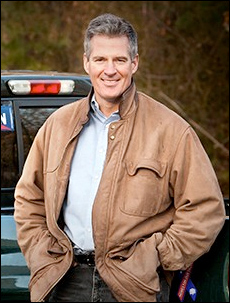
Sen. Scott Brown (R-MA)

A spate of new US Senate polls is giving Republican Party leaders some solace in the face of the Todd Akin debacle in Missouri.

Public Policy Polling (Aug. 16-19; 1,115 likely Massachusetts voters) projects Sen. Scott Brown (R) to a 49-44 percent lead over consumer advocate and Harvard law professor Elizabeth Warren (D). This is the senator’s largest lead in months. Most recent polls showed him either trailing by a point or two, or tied.

Rasmussen Reports (Aug. 20; 500 likely Montana voters) gives Republican Rep. Denny Rehberg (R-MT-AL) a 47-43 percent edge over Sen. Jon Tester (D).

Michigan-based Foster McCollum White & Associates (Aug. 16; 1,733 likely Michigan voters), for the first time, posts challenger Pete Hoekstra (R) to a 48-46 percent advantage against two-term Sen. Debbie Stabenow (D).

PPP also released data for the Wisconsin Senate race, as did Marquette University Law School. According to the former (Aug. 16-19; 1,308 likely Wisconsin voters), Republican ex-governor Tommy Thompson has the upper hand over Rep. Tammy Baldwin (D-WI-2) by a five-point, 49-44 percent, spread. The latter survey (Aug. 16-19; 706 registered Wisconsin voters) shows Thompson with an even larger lead, 50-41 percent.

And, as we reported yesterday, Foster McCollum White & Associates (Aug. 17; 1,503 likely Florida voters) gives Rep. Connie Mack IV (R-FL-14) his largest lead of the campaign, 51-43 percent, over two-term Sen. Bill Nelson (D).

If the patterns in each of these campaigns were to hold, the Republicans would surely capture the Senate majority and see their conference grow to 52 members and possibly beyond. Much will change, however, between now and Nov. 6.

The Senate Scorecard

With most of the primary season now behind us and all of the Senate match-ups in place, sans Arizona and Wyoming, it’s time to examine the national outlook.

After seeing several competitive primaries decided in the past several weeks, we now sit on the cusp of the final short sprint to Election Day with Senate control still considered to be in “toss-up” mode. As we know, 33 Senate races are standing for election in November with 11 of those seats being open due to retirement and defeat, thus giving more conversion opportunities for each side. Of the 33 Senate races, a little under half of them are considered safe for the respective incumbent and, according to our count, six of the races are rated as toss-ups (Ind., Mass., Mo., Mont., Va., and Wis.).

If the Democrats were to win all of the “lean Dem” and toss-up races, and Independent former governor Angus King clinches the Maine race and decides to caucus with them, the Senate Democrats would actually add a net of three seats to their conference, bringing the total majority number to 56. Early in the election cycle it looked extremely unlikely that the Democrats would pick up any seats, however, as this year has unfolded, more Republican-held seats have come into play and some of the Democratic seats initially thought to be potentially vulnerable like Connecticut, Washington, and Pennsylvania are all trending more solidly leftward. Democrats also are in much better shape in North Dakota, as former attorney general Heidi Heitkamp continues to perform well against at-large Rep. Rick Berg (R), who began the race as a big favorite.

Conversely, if Republicans sweep the toss-ups and “lean R” races they would have a net gain of eight seats, bringing their total to 55 seats, even if King wins and caucuses with the Democrats. Thus, 56D to 55R appear to be the extreme swing parameters for the two parties.

While most political pundits still can’t say with any certainty who is going to control the Senate come January, it is becoming obvious that the ratio will be close. Neither party has so far broken out with the kind of drive to create a sweep, and several other campaigns have unfolded differently than originally predicted. It seems when one party makes a gain or falls behind, the other experiences a similar action, thus keeping the balance between the two in check.

For example, the political climate has become better for Republican candidates in Nebraska and Florida, while Democrats are approaching lock-down positions in Connecticut and Washington.

In the Cornhusker State we see that former senator Bob Kerrey’s return to politics after a 12-year absence while living in New York City has not been well received. GOP nominee Deb Fischer consistently holds polling leads that exceed the 18-20 point range. The best poll, from a Nebraska Democratic perspective, is the June Garin Hart Yang survey that put Kerrey within 12 points of his Republican opponent.

Turning to the Sunshine State, two-term incumbent Sen. Bill Nelson, who has a substantial campaign resource advantage over his new official Republican opponent, Rep. Connie Mack IV (R-FL-14), fresh from his solid primary victory earlier in the week, has failed to establish a firm lead. Polling consistently shows this race moving much closer to toss-up status, and while Sen. Nelson maintains a slight advantage, his edge is minimal and this campaign is quickly becoming as hot as a typical Florida summer.

In Connecticut earlier this week, GOP primary voters, by an overwhelming 73-27 percent margin, again fielded their losing 2010 candidate, former wrestling company executive Linda McMahon, this time to compete against newly nominated Rep. Chris Murphy (D-CT-5). The two are vying for retiring Sen. Joe Lieberman’s open seat. In recent polling, Murphy has opened up a strong lead when paired against McMahon. Former Rep. Chris Shays (R-CT-4) consistently polled better in general election match-ups with Murphy, but he fared poorly in his nomination battle. With President Obama sure to run well in Connecticut and thus setting the tone for the entire Nutmeg State Democratic ticket, Rep. Murphy has established himself as the clear front-runner. Seeing him fall would now be considered a major upset.

Sen. Maria Cantwell, who serves the Evergreen State of Washington, has historically not been the most popular of incumbents. Her re-election prospects have improved considerably, however, since drawing a second-tier opponent in the person of state Sen. Michael Baumgartner. The senator placed almost 26 percentage points ahead of Baumgartner in the jungle primary earlier this month. While Washington originally had the potential of becoming a competitive race, Sen. Cantwell has considerably strengthened her position and this contest is virtually out of reach for the GOP.

As Election Day draws nearer, we continue to see a Senate that is still very much in play for both parties. Right now, it appears the Democrats are safe, likely, or lean winners in 18 states, while Republicans have that same status in nine. This means the Democrats are hovering around the 48 mark and the GOP is closer to 46. Of the six toss-ups, Democrats currently hold four states and Republicans two. Remember, Democrats must defend 23 of the in-cycle seats versus just 10 for their counterparts.

Mass. Senate Race Still Up for Grabs

Brown | Warren

The widely watched Massachusetts U.S. Senate race continues to be one of the country’s top campaigns and, as polling released this past week reveals, the contest remains too close to call. It has grown ever tighter over the past four months.

Democratic hopeful Elizabeth Warren is challenging incumbent and first-term Sen. Scott Brown. The Commonwealth, normally considered bedrock blue in a political context, chose Brown in early 2010 during a hard-fought special election campaign after veteran Sen. Ted Kennedy (D) passed away. Brown became a national name after becoming the first elected Republican senator in Massachusetts since 1972.

According to a poll released this past Tuesday from the MassINC research group for WBUR, the Boston National Public Radio station, Warren was shown to be leading with 40 percent support, while Brown registered 38 percent. The study, taken during the July 19-22 period, had a sample size of 503 registered voters. While the survey projects Warren to a two-point advantage, the margin of error factor is 4.4 percent; therefore, it is reasonable to conclude that the race remains a dead heat. In June, Public Policy Polling also released a survey putting the two in a virtual tie, with Sen. Brown running well among Independents.

Voters in Massachusetts appear to be warming to both Warren and Brown. This week’s poll reveals that Warren’s favorability rating stands at 47 percent, which is a 13-point jump from the last MassINC poll conducted in April. Brown’s positive index increased, too, reaching 50 percent, which is up from 46 percent as measured three months ago.

One category to watch here is the undecided vote. Historically in Massachusetts, the undecideds tend to move back toward their party’s incumbent as the election draws near. Should the undecided Democrats return to support Barack Obama over Mitt Romney in November, Warren could also benefit. If this current undecided model projection is correct, it will be Warren who has the greater room to grow, mostly because there are so many more Massachusetts Democrats than Republicans.

Sen. Brown is formerly a member of the Massachusetts State House of Representatives (1998-2004), and then the state Senate (2004-2010). He is also a practicing attorney and considered to be a moderate Republican, voting with his party approximately 80 percent of the time. Warren, a Harvard Law School professor, is considered to be an American bankruptcy law expert who provided oversight to the 2008 bailout program and oversaw the establishment of the Consumer Protection Financial Bureau.

Both candidates bring unique qualities to the race and, as polling has consistently indicated over a period of months, this battle appears to be too close to call. It is certainly a race to watch over the next 102 days.

House Realignment Scorecard

The conventional wisdom during the past 18 months was that Democrats were going to make modest gains in the post-redistricting House, but such prognostications are changing. Considering the re-maps from a national perspective without regard to campaign competition factors, the Republicans are the ones who now appear to have the slight advantage.

The outlook is changing because none of the major Republican seat-risk situations appear to be producing multiple losses. Neither the New York, Florida, California, Virginia, nor Texas map is, on the surface, going to add large numbers of new Democratic House members solely because of plan configuration.

Since we now know where the new seats are going and where the lost districts are coming from, more complete analyses can be rendered. While the straight numbers suggest that Democrats must score a net gain of 25 districts to re-capture the House majority by a single seat, the adjusted post-redistricting number actually increases that figure to 29.

The basis for such a conclusion is in accounting for the 12 seats that have shifted states along with several obvious conversion districts. Other factors are equally as viable in projecting an overall House partisan balance figure, but how competitive various seats are in states like California and New York can be debated in another column. For now, looking at the placement and displacement of the new seats, along with what appear to be some obvious open-seat campaigns going decidedly toward either a Democratic or Republican nominee, lead us to a +4 Republican gain figure.

Let’s first look at the multiple-seat gain or loss states, which tend to be a wash in terms of partisan divide. In Texas, the biggest gainer, the new seats of TX-25, 33, 34, and 36 are headed for a 2R-2D split. In Florida, their two new districts, FL-9 and FL-22, look to be leaning Democratic (certainly so for FL-22), but the campaign evolving in the new 9th puts the outcome in question. Republicans have recruited a strong candidate in local county commissioner John Quinones, while the Democrats are again tapping controversial one-term ex-Rep. Alan Grayson who was defeated for re-election in 2010.

On the multiple-seat reduction side, both Ohio and New York also appear to be neutralizing themselves between the parties. Both sides look to lose one net seat in each state.

But it is among the single-seat gaining and losing states where the GOP has scored well. The Republicans look to be coming out on top in gainers like Georgia (GA-9), South Carolina (SC-7), and Utah (UT-2). Democrats will have a slight edge in Arizona’s new district (AZ-9), and are likely winners in Nevada (NV-4), and Washington (WA-10).

In the states losing congressional representation, while New York and Ohio don’t give either party a clear advantage, Democrats are forced to absorb the loss in Massachusetts (MA-10), New Jersey (NJ-13), Michigan (MI-15), Pennsylvania (PA-4), and Missouri (MO-3). Republicans take the hit in Illinois (IL-19) and Louisiana (LA-7).

The GOP looks to be headed for conversion victories in Arkansas (AR-4, Rep. Mike Ross retiring), Oklahoma (OK-2, Rep. Dan Boren retiring), and likely in Indiana (IN-2, Rep. Joe Donnelly running for Senate). They will also gain three to four seats in North Carolina, but those are neutralized by what appear to be similar gains for Democrats in Illinois. All totaled, before the campaigns hit their stretch drive, it is the GOP that now enjoys a slight post-redistricting advantage and makes a 2012 House majority change even more remote.

It’s Neck and Neck in Massachusetts and Virginia

A Hartstad Research poll conducted for the Democratic Senatorial Campaign Committee (May 8-10; 502 likely Massachusetts voters) was just released into the public domain and it again shows a dead heat emerging between Sen. Scott Brown (R) and Harvard Law School professor and Obama Administration consumer advocate Elizabeth Warren (D). The Hartstad results project the two to be tied at 46 percent. In fact, the data reveals that the race is even closer than the final tabulation says. Both candidates have 44 percent support with an additional 2 percent leaning their way.

The results here are almost identical to those in the Virginia Senate race where former senator George Allen (R) and ex-governor Tim Kaine (D) continue to fluctuate only a point or two through multiple polls.

Both of these races are ridiculously close. For example, since March 6, 2011, 18 Massachusetts Senate polls have been publicly released. Brown was forecast to be leading in nine of them, Warren seven, and two – like the Hartstad survey discussed above – returned a tie score.

In Virginia, 24 polls have appeared in the public domain starting from right after the 2010 election to the present. Kaine leads in 12 of those polls and Allen seven, with five ties. Since the end of April, three Virginia polls have been released. One shows Allen ahead 46-45 percent; another has Kaine up 46-45 percent; and a third has the two candidates tied at 46 percent. It doesn’t get any closer!

These two races, probably to be decided by just a handful of votes, could determine which party controls the Senate next January. The recount legal teams are already reserving hotel rooms in Boston and Richmond.

Romney Takes Washington; The Precursor to Tuesday?

Mitt Romney scored big in the Washington caucuses over the weekend and even though there were no delegates attached to his beauty contest win, the victory was significant. It could prove to be a springboard into tomorrow’s 10-state Super Tuesday contests.

Perhaps the biggest surprise of the evening was not that Romney placed first, but that Rick Santorum actually dropped behind Ron Paul to finish third. In mid-February, and before the Michigan and Arizona primaries, Public Policy Polling (Feb. 16-19; 400 likely Washington state GOP caucus attenders) pegged Santorum to a 38-27-15-12 percent lead over Romney, Paul, and Newt Gingrich, respectively.

A day after the Michigan and Arizona results, two states that Romney swept, PPP went back into the Evergreen State and detected a momentum shift. According to that study (Feb. 29-31; 447 likely Washington state GOP caucus attenders), Romney had captured the advantage and led 37-32-16-13 percent over Santorum, Paul, and Gingrich, in that order.

The somewhat surprising conclusion in the March 3 Washington vote that produced record high participation featured Romney scoring a 38-25-24-10 percent win over Paul, Santorum, and Gingrich. Therefore, not only did Santorum drop further down but Rep. Paul finished a full ten points above his polling range.

More than 49,000 people attended the Washington caucuses on Saturday, almost four times higher than the 13,475 individuals who voted in 2008. Across the board in the 13 states that have already hosted nominating events, turnout levels have been mixed.

In seven states (Iowa, New Hampshire, South Carolina, Colorado, Maine, Michigan, and Washington), turnout was higher this year than in 2008; substantially so in South Carolina and Washington.

In five states (Florida, Nevada, Minnesota, Missouri, and Arizona) turnout was lower; substantially so in Florida and Minnesota. Since the current vote did not carry delegate apportionment, the Missouri primary had little meaning in this election year as opposed to 2008 when it proved to be a deciding factor, thus explaining 2012’s strong Missouri participation downturn. The Arizona ’08 turnout was artificially high because favorite son John McCain was on the ballot. Wyoming did not report vote totals in 2008, only delegate apportionment, so it is impossible to tell if the 2,108 people who attended caucus meetings this year is a larger or smaller group than previous.

Tomorrow, 10 more states will vote representing a cumulative delegate number of 437. So far, not counting Washington or Missouri, since both of those states held beauty contest votes and will assign delegates later in the year at their respective state conventions, 331 delegates have been apportioned. Therefore, the 10 states voting tomorrow will exceed the aggregate number of delegates fought over so far in the 11 earliest voting states.

Romney appears to be a lock in his home state of Massachusetts (41 delegates) and neighboring Vermont (17). He is the prohibitive favorite in Virginia because only he and Rep. Paul qualified for the ballot. Since one of the two candidates will claim a majority of the vote, Virginia transforms into a winner-take-all state meaning the victor, almost assuredly Mr. Romney, will add 49 more delegates to his total.

Polling continues to show Santorum with a slight lead in all-important Ohio (66 delegates), with more substantial margins in Tennessee (58) and Oklahoma (43). Newt Gingrich leads in his home state of Georgia, now featuring the fourth largest Republican contingent of delegates (76) in the country.

The Alaska (27 delegates), Idaho (32), and North Dakota (28) caucuses are difficult to project and could become wild cards. Tomorrow will bring us an exciting and possibly politically transforming night.