Tag Archives: IA-2

US House Open Seat Status

By Jim Ellis

Sept. 17, 2019 — With US House retirements coming in bunches, it can be confusing to remember how many open seats currently exist for the 2020 cycle and where they stand in terms of political projections. Now that the two North Carolina special elections have been decided, it is a good time to review the future open seat contests.

As things currently stand, 20 seats are known to be open, including the WI-7 seat that Rep. Sean Duffy (R-Wausau) will resign from next week. Of the 20, only four seats are Democratic, meaning the remaining 16 belong to the Republicans.

Most of the districts are safe – likely 14 of the 20 – and are projected to remain with the succeeding incumbent party nominee. The remaining six either lean to one party or the other (4) or are already cast in the toss-up category (2).

At this point, 13 of the 14 least competitive seats are in the safe category with one in the Likely segment:

Safe D:

  • CA-53: Rep. Susan Davis (D-San Diego) – retiring
  • NM-3: Rep. Ben Ray Lujan (D-Nambe) – running for Senate
  • NY-15: Rep. Jose Serrano (D-Bronx) – retiring

Safe R:

  • AL-1: Rep. Bradley Byrne (R-Mobile) – running for Senate
  • AL-2: Rep. Martha Roby (R-Montgomery) – retiring
  • IL-15: Rep. John Shimkus (R-Collinsville) – retiring
  • KS-1: Rep. Roger Marshall (R-Great Bend) – running for Senate
  • MI-10: Rep. Paul Mitchell (R-Dryden/Macomb County) – retiring
  • TX-11: Rep. Mike Conaway (R-Midland) – retiring
  • TX-17: Rep. Bill Flores (R-Bryan/Waco) – retiring
  • UT-1: Rep. Rob Bishop (R-Brigham City) – retiring
  • WI-5: Rep. Jim Sensenbrenner (R-Menominee Falls) – retiring
  • WI-7: Rep. Sean Duffy (R-Wausau) – resigning for family reasons

Likely R:

  • IN-5: Rep. Susan Brooks (R-Carmel) – retiring

The most competitive seats are as follows:

Lean D:

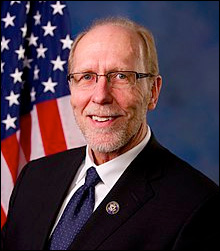
  • IA-2: Rep. David Loebsack (D-Iowa City) – retiring

Lean R:

  • MT-AL: Rep. Greg Gianforte (R-Bozeman) – running for Governor
  • TX-22: Rep. Pete Olson (R-Sugar Land) – retiring
  • TX-24: Rep. Kenny Marchant (R-Coppell) – retiring

Toss-Up:

  • GA-7: Rep. Rob Woodall (R-Lawrenceville) – retiring
  • TX-23: Rep. Will Hurd (R-San Antonio) – retiring

Analysis

  • GA-7: This district produced the closest raw vote margin in the country last year, as Rep. Rob Woodall was re-elected with just a 417-vote spread over former state Senate budget director Carolyn Bourdeaux (D), who returns to run again in 2020.
    Bourdeaux, however, will not have the nomination field to herself. Six other Democrats have filed, including state Sen. Zahra Karinshak (D-Duluth), state Rep. Brenda Lopez (D-Norcross), and former Fulton County commission chairman John Eaves. Nine Republicans are in the race including state Sen. Renee Unterman (R-Buford) and former Atlanta Falcons football player Joe Profit.
    This race will have to gel after the primary in order to obtain a better read on how the political contest will ultimately end. It appears both parties are headed to run-off elections to settle upon a nominee. The Georgia primary is May 19, with a run-off, if necessary, scheduled for July 21.
  • TX-23: No matter who the major party candidates turn out to be, the 2020 TX-23 race will end in a razor-thin margin. The highest percentage attained by a winning candidate throughout the current decade is 50.3 percent in 2012, and no one has won with a majority since. With each major party nominee virtually assured of a percentage in the high 40s, this will be a competitive race regardless of who eventually advances into the general election.
    Grace Ortiz Jones, the 2018 Democratic nominee who came within 926 votes of unseating Rep. Will Hurd, returns to run again. She has a strong chance of becoming a consensus candidate. Republicans will likely have a contested primary and possibly a run-off. This race, in a district that stretches from San Antonio to El Paso, will go down to the wire before it is ultimately decided.
  • MT-AL: Republicans should have an advantage here in a presidential year, as Montana figures to be one of President Trump’s strongest states in 2020. Two Republicans elected statewide, Secretary of State Corey Stapleton and state auditor and 2018 US Senate nominee, Matt Rosendale, are competing for the open seat in a field of five candidates to date.
    Democrats look to have strong candidates, as well. Former state Rep. Kathleen Williams, who held Rep. Greg Gianforte to a 51-46 percent win last November, returns for another try. Her Democratic opponents are state Rep. Tom Winter (D-Missoula) and rancher Matt Rains.
  • TX-22: Rep. Pete Olson (R-Sugar Land) is retiring after four terms from a district that is becoming much more competitive. The minority complexion is now high, with the non-Hispanic white percentage dropping to 45.9 percent among citizens of voting age. Six Republicans have announced with possibly wealthy donor and conservative activist Kathaleen Wall, who ran in the 2nd District open seat in 2018, could be the person to beat.
    Democrats are likely to back 2018 nominee Sri Preston Kulkarni, who held Rep. Olson to a 51-46 percent win. Expect this race to be a major battleground House campaign, and though the district is clearly changing, the GOP still maintains at least a slight advantage.
  • TX-24: Veteran Rep. Kenny Marchant (R-Coppell), who had a close call last November with a 51-47 percent win against an opponent who didn’t even spend $100,000, decided to retire after serving what will be eight terms. Republicans appear to be coalescing behind former Irving mayor, Beth Van Duyne, who will be a credible and energetic candidate.
    Democrats already have a crowded field that already features six candidates. The early favorite for the party nomination is retired Air Force colonel and 2018 state agriculture commission nominee Kim Olson, who lost her statewide campaign, 51-46 percent, which is one of the stronger Democratic showings in the recent past. The 24th will host another Texas competitive contest in 2020, but the seat still leans the Republicans’ way.
  • IA-2: The only competitive Democratic open seat that could come into play is Iowa’s southeastern district. With seven-term Rep. David Loebsack (D-Iowa City) retiring, Democrats are coalescing around former state senator and lieutenant governor nominee Rita Hart.
    Republicans appear to have their own consensus candidate, former Illinois Rep. Bobby Schilling, who served one term after winning the 2010 election in the Rock Island/Moline district across the Mississippi River from the Iowa border. Several years later, Schilling moved to Iowa and now is looking to revive his short-lived political career.
    Democrats have a clear advantage here, but in this open seat where the candidates already appear set and President Trump outpolled Hillary Clinton, a meaningful campaign could develop.

The Open Seat Review

By Jim Ellis

Aug. 9, 2019 — With so many seats coming open during the past 10 days, it’s time to review exactly which districts will be incumbent-less for the coming election and how many are truly competitive.

With Rep. John Ratcliffe (R-Heath/Rockwall) withdrawing from his nomination as Director of National Intelligence, it returned Texas’ 4th District to the incumbents’ list, but that move was quickly negated when fellow Texas Rep. Kenny Marchant (R-Coppell/DFW Area) announced his retirement.

Taking those moves into consideration and including the two North Carolina special congressional elections that will be filled on Sept. 10, a total of 16 seats are open headed into the next election. Of the 16, Republicans hold, or last held in the case of the disputed NC-9 result from 2018, all but three of the open seats. Looking at the coming 16 campaigns, all can expect contested primaries in at least one party and seven look to be highly competitive during the general election.

Though the retirement action has been swift of late, the aggregate number of coming vacancies is still very low, especially when remembering that the number of cycle open seats throughout this decade has fallen between 47 and 64, inclusive.

The list below depicts the open House districts and their current status:


AL-1: Rep. Bradley Byrne (R-Mobile)
• Trump ’16: 63-34 | • Romney ’12: 62-37

This southern Alabama seat will be settled in the GOP nomination contest. A run-off after the March 3 primary is likely and will likely feature a two-person combination from the group comprised of former state Sen. Bill Hightower, state Rep. Chris Pringle (R-Mobile), Mobile County Commissioner Jerry Carl, and businessman Wes Lambert. The eventual GOP nominee wins the seat in the November 2020 election.
Safe Republican


AL-2: Rep. Martha Roby (R-Montgomery)
• Trump ’16: 65-33 | • Romney ’12: 63-36

Rep. Roby was one of the surprise retirement announcements, but her leaving the seat open for the next election doesn’t cause the Republicans any harm. Expect a crowded Republican primary and a two-person run-off to ensue. The eventual Republican nominee wins the seat. So far, state Rep. Will Dismukes (R-Prattville) and former state Rep. Barry Moore are the most prominent candidates.
Safe Republican


Continue reading

Another One Bites the Dust:
Rep. Martha Roby to Retire

By Jim Ellis

Alabama Rep. Martha Roby (R-Montgomery)

July 30, 2019 — In the past week, three Republican House members made public their intention not to seek re-election including one this weekend. The action brings the grand total of open seats to 13, still a low number but one that is beginning to grow exponentially.

Now joining Reps. Paul Mitchell (R-MI) and Pete Olson (R-TX) in the recent retirement category is Alabama Rep. Martha Roby (R-Montgomery). The congresswoman released an electronic message indicating that she will not seek a sixth term and thanked her family and the people of her state’s 2nd District for the opportunity of serving in the US House for what will be a full decade.

Unlike in 2018, Roby looked to have a clear path to re-election. In the last campaign cycle, she drew a significant primary challenge because of negative comments she made about President Trump during the 2016 electoral contest. But the president endorsed her in the ’18 GOP nomination campaign and she scored a solid 68-32 percent win opposite former Democratic Congressman Bobby Bright in the Republican run-off.

Against four primary opponents, however, Rep. Roby only managed 39 percent of the vote, thus forcing the run-off. She rebounded nicely in the secondary election, and then went onto post a 61 percent victory in the general election. So far, no one from either party has come forward to challenge her, thus, Roby announces her retirement devoid of political pressure.

Alabama’s US Congressional Districts

Alabama’s 2nd District occupies the southeastern corner of the state, from the capital city of Montgomery to the Florida border on the south and Georgia to the east. It contains 14 whole counties and almost two-thirds of Montgomery County.

The seat is solidly Republican. President Trump posted a whopping 65-33 percent win here against Hillary Clinton, even topping Mitt Romney’s 63-36 percent margin over President Obama in 2012. In her five congressional general elections, Roby averaged 58.4 percent of the vote, but that figure is a bit misleading. She unseated then-Rep. Bright in 2010 with 51.1 percent and then survived a surprisingly close call in 2016 when she defeated a relatively unknown Democrat with only a 48.8 – 40.5 percent point spread. In her other three generals, she recorded victory percentages of 64, 67, and 61.

While the open seat figure is creeping upward, the majority of what will be incumbent-less campaigns are still non-competitive for next year’s election season. The overwhelming number of the 13 opens are Republican-held (10R-3D), and it appears at this early point in the election cycle that five of the districts will feature seriously contested general election contests, including four currently in GOP hands.

Continue reading

Michigan Rep. Paul Mitchell to Retire:
“Rhetoric Overwhelms Policy …”

Michigan Rep. Paul Mitchell (R-Dryden)

By Jim Ellis

July 26, 2019 — Michigan Rep. Paul Mitchell (R-Dryden) who represents the eastern part of the state known as “the thumb of Michigan”, announced Tuesday that he will not seek a third term in the US House.

His reason for departing after what will be only four years in office and spending over $7 million of this own money to win election to Congress over three campaigns is to spend more time with his family because of his special needs son. Rep. Mitchell also expresses displeasure and frustration with Washington because, he says, “rhetoric overwhelms policy, and politics consumes much of the oxygen in this city.”

Rep. Mitchell was originally elected in 2016, replacing Rep. Candice Miller (R) when she retired after 14 years in the House. He won a five-way Republican primary that year with 38 percent support, or more than 8,000 votes beyond he and his closest competitor, state Sen. Phil Pavlov (R-Port Huron). Mitchell won the ’16 general election with a 63-32 percent margin and was re-elected last year, 60-35 percent.

In his first venture into elective politics, Mitchell ran in the vacant 4th District when former Ways & Means Committee chairman Dave Camp (R-Midland) retired in 2014 after his time leading the panel had reached its term limit. In the three-way Republican primary, Mitchell lost 52-36 percent to current Rep. John Moolenaar (R-Midland). After the defeat, he moved across the state to Lapeer County, an area where Mitchell had business interests.

Continue reading

2020 Open House Seats Review

By Jim Ellis

June 12, 2019 — Since the last national redistricting completed in 2011 for the 2012 election cycle, we have seen 222 US House seats come open, for a mean average of 55.5 per cycle during the eight-year period. Prior to this decade, the average House open seat factor was typically closer to 35.

In 2012, reflective of the new reapportionment from the 2010 census, the House featured 62 open seats. This was followed by 47 more in 2014, another 49 in 2016, and finally 64 opens in the 2018 election cycle.

So far in this current 2020 election cycle, the exodus syndrome appears to be winding down as we see only nine districts now opening, assuming that Montana at-large Rep. Greg Gianforte follows through with his stated plans to announce his gubernatorial campaign later this week. One open district, PA-12, was already filled at the end of May as Republican Rick Keller replaced resigned Rep. Tom Marino (R-Williamsport).

Below is a listing of the nine seats and the preliminary replacement outlook:


Special Elections – Sept. 10, 2019

NC-3: Rep. Walter Jones (R) – passed away Feb. 10, 2019
The Republicans are in a run-off election that will be decided on July 9. Participants are state Rep. Greg Murphy (R-Greenville) and physician Joan Perry of Kinston. The winner faces Democratic nominee Allen Thomas, the former mayor of Greenville. The eventual GOP nominee will begin the special general election as a heavy favorite for a seat that has been in Republican hands since 1995.


NC-9: Vacancy, non-declaration of 2018 election winner due to alleged voter fraud
Both parties nominated outright in this special election. Democrats feature 2018 nominee Dan McCready, who ran unopposed in the special primary. Republicans nominated outright state Sen. Dan Bishop (R-Charlotte), who captured 48 percent of the vote in a crowded Republican primary. A minimum total of 30 percent was needed to win outright nomination and avoid a run-off. Two polls have been released, both showing the race in toss-up mode with each candidate leading in one of the surveys.


Regular-Cycle Open Seats

AL-1: Rep. Bradley Byrne (R-Mobile) running for Senate
With the Republican presidential nominee topping 60 percent of the vote here in the past three national elections, including President Trump attracting 63.5 percent, the Republicans will be in strong position to hold this seat. With candidate filing coming on Nov. 8 for the March 3 primary, the field of four announced candidates could swell to as many as 10 before the filing cycle concludes. No Democrat has yet come forward to declare.


Continue reading

Weekly Political Synopsis,
Period Ending May 17, 2019

By Jim Ellis

PRESIDENT
• Gov. Steve Bullock: As has been expected for some time, Montana Gov. Steve Bullock (D) officially announced his presidential effort this week, becoming the 23rd Democratic candidate. Bullock made the argument that he will be an effective national candidate because he’s won two elections in a conservative state and has been able to earn legislative achievements, like Medicaid expansion, in negotiating with Republican leaders.

• Mayor Bill de Blasio: Following Gov. Bullock, New York City Mayor Bill de Blasio released an announcement video at the end of the week making him the 24th Democratic presidential candidate for the 2020 election cycle. His declaration centered around being the candidate for “working families,” and cited the $15 minimum wage, a free pre-K school program, a comprehensive healthcare program that especially covers mental health, and paid sick leave.

• Florida: Former Vice President Joe Biden continues to see strong polling numbers, with the latest data coming from Florida. The Tel Opinion Research organization is reporting its latest results (released May 8; 800 likely Florida Democratic primary voters) that show Biden pulling away from his Democratic opponents on an open-ended ballot test poll. An open-ended ballot test is one where the respondent is not given the candidates’ names. That approach tests for committed strength.
According to Tel Opinion, Biden leads Sen. Bernie Sanders (I-VT), 39-16 percent, with Sens. Elizabeth Warren (D-MA) and Kamala Harris (D-CA) each pulling only five percent support. South Bend (IN) Mayor Pete Buttigieg follows at three percent preference. All of the candidates scored well on the favorability index scale. Biden is viewed positively with an 81:13 percent ratio, where Sen. Sanders’ score is 68:23 percent.

SENATE
• Arizona: Phoenix-based pollster OH Predictive Insights released their latest data from their May 1-2 poll (600 likely Arizona voters) where they queried the respondent universe about the impending Senate race between appointed Sen. Martha McSally (R) and retired astronaut Mark Kelly (D). Though we are more than a year before Arizona’s 2020 late August primary, the chances are strong that the aforementioned will be their respective party standard bearers.
According to the OH poll results, the early race again earns toss-up status. The sample breaks 45-44 percent in Sen. McSally’s favor, which is virtually identical with the firm’s late February poll giving the incumbent a 46-44 percent edge.

Continue reading

Will Schilling Become a 2-State Rep?

By Jim Ellis

Republican Bobby Schilling

May 14, 2019 — In a dozen instances throughout American history a person has been elected to the House of Representatives from one state, departed Congress for whatever reason, moved to another domain, and then won an additional congressional election, or elections, from the adopted place.

Republican Bobby Schilling served one term in the House from western Illinois’ 17th District, losing his re-election bid in 2012. Relocating across the Mississippi River to Iowa in 2017, former Representative Schilling is reportedly looking to make a political comeback. It is expected that he will soon announce his candidacy for the Hawkeye State’s open 2nd Congressional District.

If the ex-Illinois representative were to win the Iowa seat, he would become the 13th person in American history to represent two different states in the House of Representatives. It last occurred when former Texas congressman, Ed Foreman (R), won a New Mexico US House seat in the 1968 election. Prior to that, the two-state switch had only happened one other time since the turn of the 20th Century.

Interestingly, the same number of individuals, 12, have represented two states by serving first in the House, moving, and then winning a Senate seat from the secondary place. The most famous of these is Sam Houston, who served in the House from Tennessee and as governor before helping found Texas as a country and state, and then subsequently serving as its president and US senator, respectively.

Schilling, a local restaurant owner, first won his Quad Cities anchored seat in the Republican landslide year of 2010, defeating then-two-term Rep. Phil Hare (D-Rock Island). But, in a redistricting year from a process the Democrats controlled, and with President Obama running for re-election at the top of his home state ballot in 2012, Schilling was unable to politically survive in the more Democratic district.

Continue reading

Another House Retirement Ahead

By Jim Ellis

Iowa Rep. David Loebsack (D-Iowa City) to retire

April 16, 2019 — Seven-term Iowa Rep. David Loebsack (D-Iowa City) announced Friday that he will not seek re-election in 2020. Loebsack, a former college professor, first came to Congress in the 2006 election when he unseated GOP Rep. Jim Leach in a major upset victory.

Since his first re-election, Loebsack has generally faced Republican competition, but the GOP has never been able to elevate a challenge against him to top-tier status. Still, in his seven elections, Rep. Loebsack recorded only a 53.7 percent average victory margin. Last November, he defeated Republican Chris Peters, who also ran in 2016, 54-42 percent.

Iowa’s 2nd District occupies the southeastern quadrant of the four congressional districts in the state under a mapping plan that divided the territory geographically by quarters. The two largest 2nd District population centers are the cities of Davenport (102,000 population) and Iowa City (74,000).

Politically, the 2nd looks to be the strongest Democratic district of the state’s four seats, but the electorate did support President Trump with a 49-45 percent margin. Previously, however, President Obama ran strong here in both of his national campaigns, carrying the district 56-43 percent in 2012 and 57-42 percent during his initial 2008 campaign.

With President Trump needing to win Iowa next year, it is clear that his campaign will attempt to maximize right-of-center turnout in IA-2, meaning a potential Republican open seat congressional candidate should get an indirect boost. Now, with no Democratic incumbent running to defend the seat, this district figures to become a key GOP conversion opportunity.

Continue reading

New Frontline Program Incumbents

By Jim Ellis

March 9, 2017 — In February, the National Republican Congressional Committee announced the first round of its Patriot Program, the system where GOP House members help raise funds to support those in the most politically marginal districts. Now, the Democrats have countered.

The Democratic Congressional Campaign Committee’s leadership has included 19 incumbents in their Frontline Program’s first wave, an usually large number.

Of the 19, 10 should be considered truly vulnerable top-tier targets. They are:

• Tom O’Halleran – AZ-1 – 50.7% win percentage – Trump district
• Stephanie Murphy – FL-7 – 51.5%
• Charlie Crist – FL-13 – 51.9%
• Brad Schneider – IL-10 – 52.6%
• David Loebsack – IA-2 – 53.7% – Trump district
• Rick Nolan – MN-8 – 50.2% – Trump district
• Josh Gottheimer – NJ-5 – 51.1% – Trump district
• Carol Shea-Porter – NH-1 – 44.3% – Trump district
• Jacky Rosen – NV-3 – 47.2% – Trump district
• Sean Patrick Maloney – NY-18 – 50.8% – Trump district

Continue reading

House Upset Updates

Money is flying in House races right now, and the respective party and outside organization spending is indicative about how the races are unfolding. Republicans are on the offensive in some obscure districts; Democrats, with the exception of their operations against Reps. Lee Terry (R-NE-2), Steve Southerland (R-FL-2), and Michael Grimm (R-NY-11), are generally retreating to protect endangered incumbents.

The Democratic Congressional Campaign Committee (DCCC) just reported adding money to some existing media buys. They are increasing their presence for Reps. Brad Schneider (D-IL-10), Bill Enyart (D-IL-12), Rick Nolan (D-MN-8), Dan Maffei (D-NY-24), and Nick Rahall (D-WV-3). This clearly suggests Republican challengers in each of those districts are legitimate upset contenders.

The following is a list of the latest action in what can be described as emerging races. All of the predictions in these campaigns originally favored the incumbent or the incumbent party in an open seat situation.

• AR-4: Rep. Tom Cotton’s (R) open seat is now yielding a competitive contest between Republican state Rep. Bruce Westerman and Democrat former Federal Emergency Management Agency director James Lee Witt. Westerman had the early lead, but a new Hendrix College Talk Business poll (Oct. 15-16; 410 likely AR-4 voters) shows the Republican advantage dwindling to 44-42 percent.
Continue reading >