
Tag Archives: Georgia

Primaries Today

By Jim Ellis

June 9, 2020 — While some national Democratic delegate counts show former vice president Joe Biden already reaching the 1,991 bound first-ballot votes he needs to clinch the party’s presidential nomination, others have him only knocking on the door.

The difference surrounds interpretation of state delegate selection rules and whether to count projected delegates in places like Iowa where state convention delegates have more authority to veer away from the original popular vote count.

Regardless of the count observed, delegate votes earned in today’s Georgia and West Virginia presidential primaries will certainly give him enough to mathematically clinch the Democratic presidential nomination.


• GEORGIA: The Georgia vote, with its 105 bound first-ballot delegates should alone be enough to put Biden over the top. The more suspenseful statewide race is the US Senate Democratic primary featuring the two principle candidates vying for the right to challenge Sen. David Perdue (R) in the general election.

Former congressional candidate Jon Ossoff and ex-Columbus mayor Teresa Tomlinson are the top two contenders, while 2018 lieutenant governor nominee Sarah Riggs Amico appears to be running a distant third. If neither Ossoff nor Tomlinson reach the 50 percent mark, and polling suggests the former is close to the majority mark, the two will runoff in a secondary election on Aug. 11.

A pair of major national congressional races are on the docket for today. In the swing 6th District, freshman Rep. Lucy McBath (D-Marietta) will face former Rep. Karen Handel (R) in a re-match of their 2018 campaign that ended in a 50-49 percent result. This year promises another tight general election battle.

In the adjacent open 7th District, both parties bring crowded fields in a campaign that was decided by just 419 votes two years ago. With Republicans having seven candidates and Democrats’ six, seeing both parties advance to runoff elections becomes a probable result tonight. This, too, will be a toss-up general election campaign.
Continue reading

Questionable New Georgia Data

By Jim Ellis

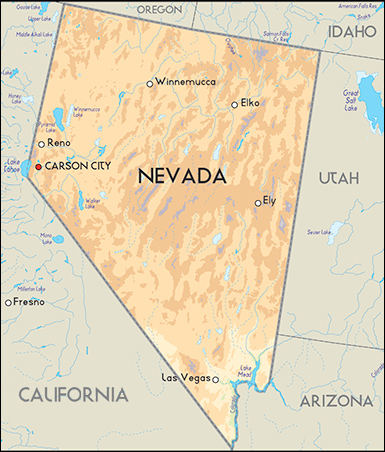
Georgia Sen. Kelly Loeffler (R)

May 18, 2020 — The Public Opinion Strategies polling company, which conducts research for appointed Sen. Kelly Loeffler (R), though that was not mentioned in their latest Georgia survey release, unveiled their new statewide study that finds the appointed incumbent moving up while other Republicans aren’t faring as well.

The statewide POS poll finds President Trump trailing former vice president Joe Biden by a single percentage point (47-46 percent), while Sen. David Perdue (R) is only edging Democrat Jon Ossoff by a 43-41 percent spread with an unknown Libertarian candidate attracting a rather high-seven percent support factor. The questionnaire then became focused upon the COVID-19 crisis and how the situation is being handled from Washington and Atlanta.

Previously Loeffler had dropped to fourth position in other Georgia polls, and she trailed Rep. Doug Collins (R-Gainesville) by a 2:1 margin while Collins led all the jungle primary candidates. The POS study (May 4-7; 500 likely Georgia voters) positions Loeffler in second, just one point behind Collins. Almost as mysteriously, while all other recent polling finds the northeast Georgia congressman capturing between 29 and 36 percent of the overall respondent preference, the Loeffler campaign poll sees him dropping 10 points and shows her leading him by a single digit (19-18 percent).

While the racial demographics of the POS 500-person sample of likely Georgia voters are a reasonable characterization of the state – though Hispanics are represented in only half of their actual percentage and Asians are under-counted, too – the partisan breakdown is flawed. (The lower Hispanic and Asian could be one reason Loeffler passed two Democrats to barely claw into second position.)

According to the poll’s small-sample data, 42 percent of the respondents are self-identified Republicans while 41 percent are Democrats. Another 16 percent say they are Independent. Additionally, while the female population base in the state is 51.4 percent statewide, women comprise more than 53 percent of respondents in this poll. Again, a relatively small number, but one that would benefit Sen. Loeffler most likely above any of the other candidates.

Let’s think about the partisan division. Georgia is one of 19 states where voters don’t register by political party, therefore it is impossible to tell exactly how many people identify as Republican, Democrat, or Independent. The electorate has certainly voted, however, in much better Republican numbers than this survey indicates.

Continue reading

Nevada: A Target?

By Jim Ellis

May 8, 2020 — The Silver State of Nevada, with six Electoral College votes, has been regarded as a swing state in most 21st Century presidential elections, but in projecting the 2020 vote, it is routinely considered as a place destined to land in the Democratic column. But, could Nevada ultimately be in play for President Trump?
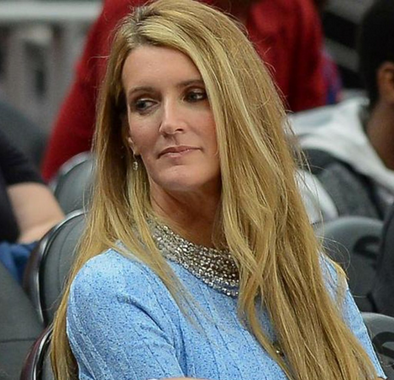
With a general election electoral vote map looking ever closer as we move toward November, introducing a new target could drastically change the eventual outcome or at least the campaign focus and strategy.

A new ALG Research poll (April 27-30; 76 likely Nevada general election voters) reports findings that are consistent with virtually all of the 2016 Nevada general election surveys. Last week, the firm found former vice president Joe Biden leading President Trump with a 49-45 percent spread. Such a margin and preference percentages fall into the same realm as all 31 polls conducted in Nevada from May through the November 2016 election.

When ‘16 ended, Hillary Clinton carried the state, but her margin was only 2.4 percentage points, meaning a 27,000-vote spread of more than 1.12 million ballots cast. And, consistent with the large number of polls that concluded a close race within the 40s would be the actual result, Clinton defeated Trump, 47.9 – 45.4 percent, validating the plethora of research conducted over the final five-plus months of that election cycle.

Four years ago, 13 different pollsters conducted the almost three dozen surveys, and in no instance did either Trump or Clinton ever reach the 50 percent plateau. On the other end of the spectrum, in just three instances did one of the candidates dip below 40 percent. Therefore, in 28 of the 31 studies logged within the 2016 Real Clear Politics polling archives, both candidates fell within the 40s, meaning this result occurred over 90 percent of the time. In terms of range, the span stretched from Clinton plus-7 to Trump plus-6, but the average between the two was only 2.7 percent, which is almost exactly the actual final total. This obviously suggests a competitive political battlefield.

Continue reading

Sen. Loeffler’s Strange Response

https://youtu.be/1SDGjd9JqMoLoeffler ad


By Jim Ellis

May 6, 2020 — As we have seen since the COVID-19 quarantines began, appointed Georgia Sen. Kelly Loeffler (R) has been reeling politically. Her backslide began after news stories showed that she and her husband, New York Stock Exchange chairman Jeffrey Sprecher, made stock transactions of at least $18 million to better position themselves after receiving early Senate briefings about the potential coronavirus effects. She has now launched a $4 million response media buy.

Her ads, however, yield a rather unusual approach. While not mentioning the core attack against her, which is that she took personal financial action in response to receiving alarming policy briefings, the ad script indirectly underscores her extraordinary wealth. This may prove an ill-advised self-defense approach and it is difficult to see how the ad message begins to reverse a negative tide. (See ad at top.)

The Loeffler campaign media buy is divided among three similar television and digital ads, but they all emphasize that Sen. Loeffler is being attacked by liberals, that she has donated $1 million of her own money to COVID-19 hospital operations and is forfeiting her Senate salary for the benefit of coronavirus victims. In two of the ads, the narrator explains that the senator sent her private jet to bring back stranded individuals in foreign countries after quarantine bans were implemented.

Recent polling has projected Sen. Loeffler as being buried within the middle of a field of five significant candidates. In the latest poll, from the Cygnal research group taken during the April 25-27 period, Rep. Doug Collins (R-Gainesville) holds a 29-12 percent lead over Atlanta businessman Matt Lieberman (D), the son of former Connecticut senator and 2000 vice presidential nominee Joe Lieberman. In third place with 10.6 percent preference is Rev. Raphael Warnock, who pastors Ebenezer Baptist Church in Atlanta, where Dr. Martin Luther King Jr. and his father once presided. Sen. Loeffler then follows, virtually tying Rev. Warnock at 10.5 percent. Former US Attorney Ed Tarver trails the group with 4 percent.

Continue reading

Georgia’s Dual Senate Races

By Jim Ellis

May 5, 2020 — Georgia is the only state this year that features two US Senate races, and a new poll suggests that both are interesting.

The Peach State’s politics have garnered more national attention since 2018 as election results suggest that Georgia is moving closer to the ideological center. Still conservative, the 2018 governor’s election that saw Republican Brian Kemp slipping past former state House Minority Leader Stacey Abrams (who has since become a national figure and one of the contenders to be Joe Biden’s vice-presidential running mate) by just over one percentage point. Additionally, the Democrats gained a congressional seat in the Atlanta metro area and came within 419 votes of converting a second.

Georgia Gov. Brian Kemp appointed businesswoman Kelly Loeffler (R) to the U.S. Senate to succeed retiring Sen. Johnny Isakson, who is leaving office at the end of the year due to health issues.

A substantial increase in the state’s minority population, almost all of which is occurring in the Atlanta metropolitan region, during the past decade (Asian, plus-31 percent; African American, plus-17 percent; Hispanic, plus-14 percent) is the chief reason for the uptick in Democratic candidate support.

With this background, the Cygnal research organization released the results of their most recent Georgia statewide poll (April 25-27; 591 Georgia voters, all but six of whom say they are definitely or probably voting) and their data finds two competitive US Senate races unfolding.

The results reveal one incumbent in serious trouble and the other headed for a potentially competitive re-election battle. In fact, appointed Sen. Kelly Loeffler (R) trails not only US Rep. Doug Collins (R-Gainesville), who leads the jungle primary field by over 17 points, but actually places fourth in the field behind two Democratic candidates yet close enough to them to become entangled in a statistical tie. Sen. David Perdue (R) maintains just a six-point lead over the only Democrat tested against him, former congressional candidate Jon Ossoff.

Continue reading

This Time in 2016

By Jim Ellis

Does Arizona hold the key in a Trump-Biden candidacy?

April 23, 2020 — It is interesting to revert back to April of 2016 to see just how Donald Trump was faring against Hillary Clinton and compare those results with today’s survey research. Thanks to the Real Clear Politics website and their polling archives, the day-by-day polling data from four years ago is still available so we can track the Trump-Clinton campaign historical progress with the new Trump-Joe Biden impending national contest.

The key point to remember about national presidential polling is that the aggregate ballot test means very little yet is the subject of most political research studies. Knowing what voters think about the campaign in places like Arizona, Florida, Georgia, Michigan, North Carolina, Pennsylvania, Texas, and Wisconsin is much more important when attempting to project a final outcome, but we see far fewer numbers coming from these places than we do nationally.

In 2016, we will remember that almost all analysts and political prognosticators were predicting a Clinton win, and virtually all national polling was revealing an advantage for the former secretary of state, US senator, and First Lady, yet Trump emerged the winner. After the election, most surface analysis reported that the polling was in error, but such was not generally the case. The preponderance of polling, which predicted a narrow Clinton popular vote victory was actually correct; as we will remember, Clinton finished ahead of Trump in a close plurality.

With this background in mind, let’s look at what the various polling firms are projecting this month for the Trump-Biden race and compare it to the available data from 2016.

In April 2016, through the 15th of the month, three national polls had been released from individual or collaborating media entities: CBS News (April 8-12), NBC News/Wall Street Journal (April 10-14), and Fox News (April 11-13). This year, we see a more active April polling month that yields nine studies from eight different pollsters.

In 2016, the three testing entities all predicted Hillary Clinton to be holding the advantage over Donald Trump, by margins of 10 (CBS), 11 (NBC/WSJ), and 7 (Fox) percentage points. A little over six months later, Clinton would carry the national popular vote by 2.1 percentage points but lose the presidency because the key states broke toward Trump, which added up to an Electoral College win.

Continue reading

House Opens – Toss-Up/Leans

By Jim Ellis

April 15, 2020 — The open-seat count has increased to 43, with 31 coming from the minority Republican column. The number of competitive opens, however, at this point in the cycle is likely just nine, as 34 of the incumbent-less seats fall into either the Safe/Likely Democratic (12) column or Safe/Likely Republican (22) category. Today, we look at the competitive open seats.

Toss-Up

• CA-25: The vacant Palmdale/Simi Valley seat heads to a special election on May 12 in north Los Angeles County. State Assemblywoman Christy Smith (D-Newhall) and Republican retired Navy fighter pilot Mike Garcia (R) advanced from the special primary into the stand-alone mail-in special general. Regardless of the outcome on May 12, these two candidates will advance into the November general election to determine who will represent the politically marginal district in the next Congress.
   The special election has moved from “Lean Democratic” into the “Toss-up” category as a result of recent polling that projects Garcia owning a small lead and because of the partisan turnout numbers in the regular primary. The latter statistic actually found more Republicans voting than Democrats.

• GA-7: In 2018, this Atlanta suburban seat featured the closest raw vote margin in the nation, as incumbent Rep. Rob Woodall (R-Lawrenceville) defeated state legislative staff member Carolyn Bourdeaux by just 419 votes. This year, with Rep. Woodall retiring, Bourdeaux returns but must top five other Democratic candidates including a state senator, state representative, and former Fulton County commission chairman. Therefore, the May 19 Democratic primary, now moved to June 9, will be competitive and the possibility of advancing to an Aug. 11 runoff election certainly exists.
   Republicans may be more likely to move into a runoff than the Democrats, however. Seven candidates are in the field, only one of who is an elected official. More on this race as it develops, but we will probably see tight elections in both primaries and almost assuredly in the general election.

Lean Democratic

• IA-2: In a 2020 open-seat election in this southeastern Iowa congressional district, the Republican challenge is at least as difficult as opposing seven-term incumbent David Loebsack (D-Iowa City), who is now retiring. Democrats have already coalesced around ex-state senator Rita Hart (D-Wheatland), a soybean farmer and former educator from Clinton County.
   In 2018, Hart was the Democratic nominee for lieutenant governor on the ticket that businessman Fred Hubbell lost in a close race to Gov. Kim Reynolds (R). It is an unusual situation when an incumbent party must defend an open seat and winds up with an unopposed candidate in the primary, but that is what has occurred here.
Continue reading