Tag Archives: former president Donald Trump

Nebraska Moves to Change Electoral Vote Apportionment; Curious GOP Targeting in Alaska House Race; A Tie in CA-16?; Braun’s Lead in Indiana

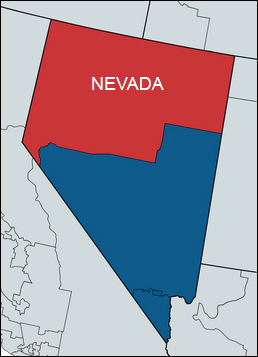
Click on above map to go to interactive version. | 270towin.com

By Jim Ellis — Friday, April 5, 2024

President

Nebraska: Move to Change Electoral Vote Apportionment — With the support of Gov. Jim Pillen (R), a bill in the Nebraska unicameral legislature would change Nebraska’s electoral vote apportionment system, which allows each of the state’s three congressional districts to carry their own electoral vote and change the system to the more common winner-take-all option.

Nebraska and Maine are the two states where presidential candidates win two electoral votes for clinching the statewide vote and one each for every carried congressional district.

The move would help former President Donald Trump in this year’s presidential race, because he is a lock to carry the statewide vote but is the underdog in the Omaha-anchored 2nd Congressional District.

Though Republicans have a large majority in the ostensibly non-partisan state Senate, there is no guarantee the votes will be present to change the system. Doing so, however, would likely deliver an important electoral vote to the Trump candidacy.

House

AK-AL: CLF’s Curious Targeting — The Congressional Leadership Fund, the Republicans’ top House Super PAC, unveiled their first 20 targets for the upcoming general election. Nineteen of the supported candidates are not particularly surprising, but their choice in Alaska’s at-large CD does raise eyebrows. The CLF is supporting Lt. Gov. Nancy Dahlstrom (R) in the top-four contest, even though published research finds that Republican attorney and former candidate Nick Begich fares better against incumbent Mary Peltola (D-Bethel).

In a recently released poll (Data for Progress; Feb. 29-March 2; 1,120 AK-AL likely voters), Lt. Gov. Dahlstrom trailed Begich by 25 points and was 34 points down to Rep. Peltola on the initial multi-candidate ballot test. Once the hypothetical Ranked Choice Voting rounds were simulated, Begich finished at parity with Pelota with each garnering an equal 50 percent share. Therefore, it is curious that the CLF is bypassing Begich to support a weaker candidate.

CA-16: An Apparent Tie — It appears that all votes have finally been counted in California’s open 16th Congressional District and the long anticipated result for the second general election qualifying position has apparently ended in a flat tie. Both San Mateo County Supervisor and former state Sen. Joe Simitian (D) and Assemblyman Evan Low (D-Campbell) each have an unofficial 30,249-vote tally.

If this result becomes final both men will advance into the general election against former San Jose Mayor Sam Liccardo (D) who long ago secured the first qualifying position. This would lead to a three-way general election among a trio of Democrats, a rarity in a top two jungle primary system. The eventual winner of this race succeeds retiring Rep. Anna Eshoo (D-Atherton).

Governor

Indiana: Sen. Braun Continues with Significant Lead — Crossroads Public Affairs, polling for the Indy Politics campaign blog, released a new survey for the upcoming open Hoosier State Republican gubernatorial primary scheduled for May 7. The survey (March 24-25; 500 likely Indiana Republican primary voters) sees US Sen. Mike Braun leading the primary field with a 33-11-11-10 percent margin over Lt. Gov. Suzanne Crouch, businessman Eric Doden, and former Indiana Commerce Secretary Brad Chambers.

While still holding a strong lead, Sen. Braun’s advantage has decreased since the last published poll from Emerson College, which found him posting a 34-7-7-5 percent lead. Therefore, while the opponents have shown some collective gain in the past three weeks, the fact that the challengers are all so closely bunched will allow Sen. Braun to capture the gubernatorial nomination even if he only attains plurality support.


The Relevancy of RFK Jr.

By Jim Ellis — Thursday, April 4, 2024

Presidency

Presidential candidate Robert F. Kennedy Jr. (I) Photo by Gage Skidmore

Stories are popping up in the political media about President Joe Biden seeing a resurgence of strength in recent national polls, but a bigger story is evolving.

The precursor to the election’s final outcome may prove to be Robert F. Kennedy Jr. and the minor party candidates garnering enough votes to the point where their support tips the electorate towards one candidate or the other.

Additionally, while President Biden and former President Donald Trump consistently find their approval ratings upside down in double-digit point margins that are routinely closer to 20 rather than 10, Kennedy is always viewed as the more popular figure. Though his favorability index is only in slightly positive territory for the most part, generally from three to five percentage points, his standing is far superior to that of the two presidents.

Even when his unfavorable perception slightly exceeds those who view him favorably, Kennedy never drops below the three to five-point negative range. The FiveThirtyEight data organization charts most polling firms daily and finds Kennedy’s average favorability index in positive territory consecutively from May 18, 2023, all the way to today.

As we all know, the national ballot test is irrelevant in forecasting the presidential outcome because it’s the electoral votes calculated in the states that determine the eventual winner. National polling, however, generally provides a good indicator of candidate strength.

Several polls have recently been released and the four most contemporary all find Kennedy now consistently in double-digit support territory. In two polls, HarrisX for Forbes Magazine, and Quinnipiac University, the addition of Kennedy and the minor candidates to the polling questionnaire changes the outcome after the respondents are presented the initial query of a choice between Biden and Trump.

HarrisX (March 26; 1,010 registered US voters; online) returns a 50-50 percent tie between Biden and Trump when the undecided respondents are pushed to make a choice. Yet, when Kennedy and the minor party candidates are added, the lead swings to Trump by a small two percentage-point margin.

Quinnipiac University (March 21-25; 1,407 registered US voters; live interview) sees Biden topping Trump 48-45 percent, but when Kennedy and the minor party candidates are added, Trump secures a one-point edge.

The most recent YouGov/Economist poll (March 24-26; 1,415 registered US voters; online) sees Trump also holding a one-point lead with Kennedy only in low single digits. The Trafalgar Group (March 29-31; 1,029 likely US general election voters; multiple sampling techniques) also finds a consistent result with the previous pollsters: Trump 43, Biden 40, Kennedy 11, Others three percent.

Therefore, we have several conclusions that appear to be correct. First, President Biden is improving his position against the field. Second, Trump appears in a long-term stagnant position, and third, Kennedy is gaining enough support to be a factor in tipping the race from one candidate to the other.

At this particular point in time, the data responses suggest that the Kennedy presence damages President Biden to a slightly greater degree than former President Trump. But, as the campaign progresses, this factor could certainly change.

We can expect to see national and swing-state polling varying from now until the election in a seesaw fashion between President Biden and former President Trump. The unanswered question revolves around Kennedy and just how well he will perform when actual votes are cast, and just who in the end will benefit more from his presence on the key swing state ballots.

Last Night’s Primary Results

By Jim Ellis — Wednesday, April 3, 2024

Primaries

We saw four more states vote yesterday and even though the presidential nominations are clinched in both parties, valuable information can still be extracted from last night’s reported results.

So far, presidential voting has occurred in 36 states, and 32 where both parties have comparable systems. In four states, Delaware, Florida, Idaho, and Mississippi, no votes were recorded in one of the party primaries because a major candidate ran without opposition.

Last night, voters in Connecticut, New York, Rhode Island, and Wisconsin had the opportunity of casting their presidential nomination ballots. To no one’s surprise, President Joe Biden and former President Donald Trump easily swept their respective elections and added to their delegate totals. Each man recorded enough bound delegate votes on March 12 to become the respective Democratic and Republican Party’s presumptive presidential nominees so the later primaries are simply providing “icing on the cake.”

The bigger story throughout the 32 comparable states may be the turnout pattern and what that might mean for the general election. If the turnout trends we have seen in the states where ballots have been cast are a precursor to what happens in November, then Trump is well positioned to unseat President Biden.

Though the Democrats had a good night yesterday as more of their party members voted in Connecticut, New York, and Rhode Island, overall, the Republican turnout has been far superior, and in some very surprising states.

At this point, counting the unofficial numbers from last night, we have seen just over 30 million people vote in the 32 comparable states. Of those, 57.1 percent have voted in Republican primaries. One may argue that the more competitive race was on the Republican side, and that could account for the imbalance between the two parties. While there is validity to this line of reasoning, Democratic turnout is running below the party’s historical participation average even in some of their strongest states, thus highlighting the unusual trend.

Out of these 32 states, more Republicans have voted than Democrats in 24 of the domains while the opposite trend occurred in only eight. Of the Democrats’ eight majority turnout states, only one, Utah, is a surprise. The Democratic primary preference share of only 53 percent in both Massachusetts and Washington, however, does raise eyebrows. The same for Republicans recording that same percentage split in Louisiana.

Republicans posted unexpected turnout advantages in Colorado, Hawaii, Maine, Minnesota, New Hampshire, Vermont, and Virginia. While none of these states are likely to be in serious play for Trump during the general election the turnout trends here are noteworthy, nonetheless.

What may be more troubling for the Biden campaign team is how the swing states performed in the primary participation race.

Here, again, Trump outperformed the president’s Democratic Party in Arizona (58.9 percent of the total turnout chose to vote in the Republican primary), Georgia (67.0 percent), Michigan (59.2 percent), Nevada (55.9 percent), North Carolina (60.7 percent), Ohio (68.2 percent), and last night in Wisconsin (51.7 percent). The substantial margins of individuals choosing to vote in the Republican primary is a clue that former President Trump has a chance to build a new coalition of voters in these most critical of states.

The Nevada Republican total is at least slightly skewed. The combined numbers from the non-binding primary and their delegate apportioning caucuses are tainted because voters could participate in both the primary and a respective caucus, which were held on different days. There is no available data suggesting what percentage of voters participated in both, but it appears from the totals associated with each event that a substantial number cast their vote in each election.

Trump Stirs Controversy in Florida; Fong Saga Continues in California; Republicans Choose CO-4 Candidate; New Jersey Primary Challenge

By Jim Ellis — Monday, April 1, 2024

House

Florida Rep. Laurel Lee (R-Tampa)

FL-15: Rep. Lee’s New Opponent — Former President Trump may have ignited a hornets’ nest when he called for a MAGA candidate to come forward to oppose GOP freshman Rep. Laurel Lee (R-Tampa). While that has yet to happen, the controversy within the Republican base may have encouraged a new Democrat to come forward in what is a competitive district. Hillsborough County Commissioner Pat Kemp (D) announced on Friday that he will enter the Democratic primary and immediately becomes the favorite for the party nomination.

Trump targeted Rep. Lee because she was the only member of the Florida Republican delegation to endorse Gov. Ron DeSantis against the former president in this year’s national campaign. Florida’s 15th District carries an R+7 rating from the FiveThirtyEight data organization. However, Trump won the district by only a 51-48 percent margin in the 2020 presidential election.

CA-20: Appellate Court to Hear Fong Ballot Status — The Vince Fong ballot saga is not yet over. You may remember because former Speaker Kevin McCarthy (R) resigned from the House at the California candidate filing deadline, the Secretary of State disqualified Fong from running for Congress because he was already certified as a candidate for state Assembly to remain in his seat there. California election law prohibits candidates from running for more than one office simultaneously and the withdrawal deadline had already expired.

Fong sued over the decision and the court awarded him the congressional ballot line. Secretary of State Shirley Weber (D) appealed the ruling, however, and arguments will be heard this week. Therefore, though Assemblyman Fong has qualified for both the special and regular general elections for the congressional seat, an adverse appellate court ruling could send this succession election into political chaos.

CO-4: Republicans Choose Caretaker Candidate — Late last week, the local Republican committee formed to choose a special election nominee for Colorado’s 4th Congressional District special election to replace resigned Rep. Ken Buck (R) chose a candidate who agreed not to run for the regular term. The move is a break for US Rep. Lauren Boebert (R-Silt), switching over from District 3, and the 10 other candidates in the regular Republican primary.

The committee chose former Parker Mayor Greg Lopez as their special election candidate. He will be favored to win the upcoming special election which is held concurrently with the regular primary on June 25.

Lopez, a former state director for the Small Business Administration, will be favored against the Democratic nominee who will be chosen later today. The FiveThirtyEight data organization rates CO-4 as R+26. Former President Donald Trump won the seat 58-39 percent in the 2020 presidential election.

States

New Jersey: Court Rejects Party County Line Balloting — New Jersey is one of the few remaining states where the county political parties have substantial power. What makes them strong is endorsing candidates in the primary and providing them extremely favorable ballot placements to the point where opponents are listed on separate ballot pages.

Rep. Andy Kim (D-Moorestown), running for the Senate, filed suit against the practice and the federal judge granted a preliminary injunction to halt the practice. While Kim is now becoming the prohibitive favorite to win the Democratic Senate nomination since First Lady Tammy Murphy exited the race and Sen. Bob Menendez announced that he is not seeking the party nomination, his legal move will likely create a more even playing field for down-ballot races. This will probably become a major factor in changing how New Jersey primaries are run.

Figures Records Major Lead in Alabama Runoff; New Challenger in AZ-2; Rep. Kuster to Retire; Clear Leader Emerges in North Dakota

By Jim Ellis — Thursday, March 28, 2024

House

Former Obama Justice Department official Shomari Figures.

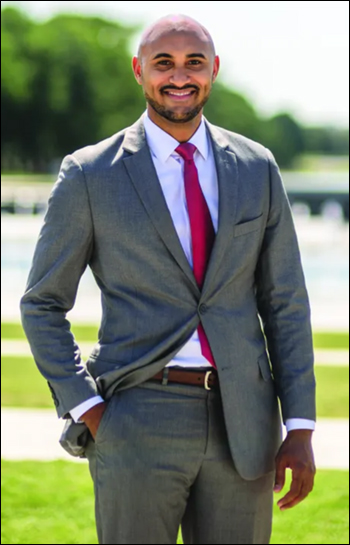
AL-2: Figures Records Major Lead in New Runoff Poll — Impact Research conducted a research study for the upcoming April 2 Democratic runoff election in Alabama’s new 2nd Congressional District anchored in the Montgomery and Mobile areas. The survey (March 14-18; 500 likely AL-2 Democratic runoff voters; interactive voice response system and text) sees former Obama Justice Department official Shomari Figures, who finished first in the March 5 primary with 43.5 percent of the vote, leading state House Minority Leader Anthony Daniels (D-Montgomery) by a whopping 59-24 percent margin.

The eventual Democratic nominee will be a heavy favorite in the general election. President Joe Biden carried this newly configured district with a 56-43 percent vote spread in 2020. The state’s congressional map was redrawn to comply with the US Supreme Court ruling in the Alabama racial gerrymandering case.

AZ-2: McCarthy Opponent Draws Primary Challenge — Freshman Arizona Rep. Eli Crane (R-Oro Valley), who is one of the eight Republicans who voted to oust then-Speaker Kevin McCarthy, has drawn a primary opponent. Yavapai County Supervisor Jack Smith (R) announced yesterday that he would follow through with a challenge to Crane after he filed a campaign committee weeks ago with the Federal Election Commission.

The 2nd Congressional District of Arizona covers the state’s northeastern sector and then stretches into Maricopa County, in and around the Phoenix metro area. The seat is safely Republican, so the true battle will be in the GOP primary scheduled for July 30.

NH-2: Rep. Kuster to Retire — Six-term New Hampshire US Rep. Annie Kuster (D-Hopkinton) announced yesterday that she will not seek re-election next year. Her departure paves the way for a competitive primary and general election season. Kuster averaged 53.3 percent of the vote in her six victorious elections, dropping below 50 percent in 2016 (49.8 percent) while scoring her strongest vote of 55.8 percent in 2022. She was first elected in 2012, defeating then-Rep. Charlie Bass (R) in that year’s general election.

NH-2 becomes the 49th open seat heading into the next election. Kuster becomes the 25th House Democrat not to seek another term. The FiveThirtyEight data organization rates the western New Hampshire seat as D+2, and the Daily Kos Elections site ranks NH-2 as the 21st-most vulnerable district in the Democratic Conference. President Biden, however, recorded a 54-45 percent victory over former President Donald Trump in 2020, thus exceeding the typical Democratic performance in this swing seat.

ND-AL: Clear Leader Emerges — As candidate filing in North Dakota closed, the race for the open at-large congressional district is becoming clearer. Former state Sen. Tom Campbell (R), viewed as a strong contender, decided not to file for the seat just after outgoing Gov. Doug Burgum (R) announced his Republican primary endorsement of state Public Utilities Commissioner Julie Fedorchak.

It appears that Fedorchak is becoming the favorite for the nomination. With the FiveThirtyEight data organization rating North Dakota as R+37 and former President Trump carrying the seat with a 65-32 percent margin, winning the Republican primary is typically tantamount to claiming the seat in the November election.

Three-term Congressman Kelly Armstrong (R-Bismarck) is running for governor. In addition to Fedorchak, former state Rep. Rick Becker and farmer and retired Air Force veteran Alex Balazs comprise the open-seat GOP primary field. For the Democrats, educator and 2022 Public Utilities Commission nominee Trygve Hammer is unopposed for the party nomination.

Nevada Poll Showing Tight Races; Menendez May Not Be Done; Wisconsin Looks Close;
New Hampshire Governor’s Race

By Jim Ellis — Friday, March 22, 2024

Senate

Nevada: New Margin of Error Poll — Prolific pollster Emerson College also tested the Nevada electorate and finds the Senate race already becoming a dead heat. The survey results (March 12-15; 1,000 likely Nevada voters; multiple sampling techniques) see Sen. Jacky Rosen (D) leading Afghan War veteran Sam Brown (R) by a slight 41-39 percent split, well within the polling margin of error. In the presidential race, former President Donald Trump slips past President Joe Biden 44-41 percent, a pattern that has been evident for weeks in the Silver State.

Possibly the most encouraging news for Republicans, which helps explain the GOP presidential performance in the poll, is the fact that Hispanics, traditionally heavy Democratic voters, would break for Biden in only a 44-39 percent clip. Hispanics account for just over 30 percent of the Nevada population according to US Census figures. Therefore, this group could become a deciding factor in how the state eventually votes.

New Jersey: Menendez May Not Be Done — While indicted Sen. Bob Menendez (D) has already announced he will not seek re-election as a Democrat this year, the door is apparently open for him to file as an Independent. He would have until June 4 to file 1,000 valid New Jersey voter petition signatures in order to obtain a ballot position.

Though his chances of winning the 2024 general election as an Independent are virtually nil, maintaining candidate status would allow him to use his still substantial campaign funds to pay his legal expenses. At the end of 2023, Sen. Menendez reports having just under $6.1 million cash-on-hand in his campaign account.

Wisconsin: Surprising Poll Result — Perhaps the most surprising recent poll comes from the Badger State of Wisconsin where Emerson College already sees the Senate race in much closer terms than most would have surmised. With Republicans only recently witnessing businessman Eric Hovde come to the forefront to declare his candidacy, Sen. Tammy Baldwin (D) had, for most of the election cycle, been forecast as close to being a sure winner.

The new Emerson poll (March 14-18; 1,000 likely Wisconsin voters; multiple sampling techniques) projects Sen. Baldwin as holding only a 45-42 percent margin, this while Trump posts a consistent three point lead over Biden whether on a direct head-to-head question or when most of the projected independent and minor party candidates are added to the questionnaire.

At this point, the Wisconsin Senate race has been regarded as a second-tier challenge opportunity for the GOP. If poll results like this become consistent over the course of time, the race could move into the top tier and attract greater resources. The Wisconsin electorate has been known for routinely producing close election outcomes.

Governor

New Hampshire: Democrat Releases Poll — Democratic Executive Councilor Cinde Warmington released the results of her GBAO Strategies research study (released March 20; Feb. 22-26; 600 likely New Hampshire Democratic primary voters; live interview & text) that finds her trailing former Manchester Mayor Joyce Craig 37-25 percent in the statewide Democratic primary. When typical push questions are asked, Warmington moves ahead, thus suggesting that this race has the potential of becoming close.

The New Hampshire state primary is not until Sept. 10, so much time remains for the contest to gel. Gov. Chris Sununu (R) is not seeking a fifth term, so the New Hampshire governor’s contest will be highly competitive in the general election.

Tightening Senate Race in Arizona; Hogan Building Lead in Maryland; Tight Margins in California Vote Tallies; Bost Wins Tight Primary

By Jim Ellis — Thursday, March 21, 2024

Senate

Arizona Rep. Ruben Gallego (D) holds a narrow lead in Arizona polling.

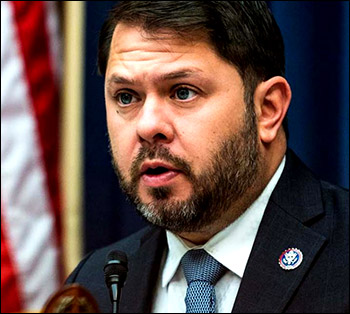
Arizona: Emerson College Shows a Tightening Race — Emerson College released a new two-way poll of the Arizona Senate race, their first since Sen. Kyrsten Sinema (I) announced she would not seek re-election. The survey (March 12-15; 1,000 registered Arizona voters; multiple sampling techniques) projects the new Arizona Senate race dropping to within the polling margin of error between Rep. Ruben Gallego (D-Phoenix) and 2022 GOP gubernatorial nominee Kari Lake. The ballot test finds Gallego holding a 44-40 percent lead, which is approaching the toss-up realm.

Within the same polling sample, former President Donald Trump leads President Joe Biden, 48-44 percent, which is bad news obviously for Biden, but also for Lake. With the data showing Trump leading the Republican ticket in the Grand Canyon State, her standing trails him by a full eight percentage points.

While Emerson tested only Biden and Trump and did not include the independent or third party candidates, they did push the undecided respondents to make a choice. When doing so, Trump would lead the aggregate count 52-48 percent, suggesting the undecideds, which are good prospects to support one of the minor candidates, would break evenly between the two men.

Rep. Gallego has an edge among the youngest and the oldest respondents in the sample. He is also rather surprisingly favored, 43-38 percent, among those who said the economy is their top issue. Lake is favored by a whopping 77-12 percent margin among those who are most concerned about the southern border.

Maryland: Ex-Gov. Hogan Building Lead — The University of Maryland, partnering with the Washington Post, released a new survey of the Maryland Senate race (March 5-12; 1,004 registered Maryland voters; live interview & text) that shows former Republican Gov. Larry Hogan building a strong lead in this most Democratic of states. According to the ballot test, Hogan leads US Rep. David Trone (D-Potomac) 47-39 percent, while his lead would expand to 50-36 percent if Prince George’s County Executive Angela Alsobrooks (D) were his general election opponent.

Hogan also enjoys an extremely positive 64:23 percent favorability index, while Rep. Trone scores 33:21 percent favorable to unfavorable, and Alsobrooks records a 26:15 percent ratio. Despite Trone so far outspending Alsobrooks by a 12:1 ratio ($24 million to $2 million), he leads the Democratic primary ballot test only 34-27 percent according to this survey.

Considering the lopsided spending amount, the ballot test suggests that Rep. Trone is at least slightly underperforming as a statewide candidate.

House

California: Two-Vote Margin; Another Race in Doubt — While the California vote totals are still not complete from the March 5 Super Tuesday primary, the battle for second qualifying position in the open 16th Congressional District continues to get tighter and tighter. The latest vote iteration, with an estimated 400-plus votes remaining to count, is literally down to a two-vote margin.

State Assemblyman Evan Low (D-Campbell) now leads San Mateo County Supervisor and former state Sen. Joe Simitian (D), 30,211 to 30,209. It is obvious we will see a recount when all the votes are finally tabulated. The Secretary of State has 22 more days to certify the election, and it is likely the tabulation process for this race will consume every bit of the allowable time. Former San Jose Mayor Sam Liccardo (D) has already clinched the first general election position. Incumbent Rep. Anna Eshoo (D-Atherton) is retiring.

Another race is also uncalled. Forty-fifth District Rep. Michelle Steel (R-Orange County) has easily clinched the first qualifying position with just under 55 percent of the aggregate jungle primary vote. Attorney Derek Tran (D) has run in second place during the entire counting period, but he now leads Garden Grove Councilwoman Kim Nguyen-Penaloza (D) by only a 327-vote margin and the end result is now in doubt. An estimated 2,500 ballots remain to be counted.

IL-12: Rep. Bost Wins Close Primary Battle — It took well into a second day of counting, but Rep. Mike Bost (R-Murphysboro) successfully won renomination in his southern Illinois congressional district. His opponent, 2022 Republican gubernatorial nominee Darren Bailey, issued a statement conceding defeat but saying his campaign “made a statement.” The current unofficial tally shows Rep. Bost capturing 51.4 percent of the vote as compared to Bailey’s 48.6 percent, translating to a vote spread of 2,590 from a turnout of over 94,000 individuals. A smattering of ballots will soon be added to the final tally.

The district featured wide swings, as both candidates typically won their respective counties by landslide proportions. Both men won 17 of the district’s 34 counties.

Tuesday’s Roundup of Primaries: Moreno Wins Big; Deja Vu in California; Bost in Close Finish; Replacement Vote in Ohio

By Jim Ellis — Wednesday, March 20, 2024

Senate

Ohio businessman Bernie Moreno (R)

Ohio: Moreno Wins Big — Chalk up a big mistake for the polling community. The polls prior to yesterday’s primary predicted very tight Republican Senate contest, but it proved to be quite the opposite as businessman Bernie Moreno won in a landslide. Moreno will now move into the long general election cycle against three-term Sen. Sherrod Brown (D).

With almost the entire state reporting at this writing, Moreno would have been nominated even if Ohio were a runoff state. He captured majority support, at 50.6 percent. State Sen. Matt Dolan (R-Chagrin Falls), who several polls had projected to be leading the race, finished a distant second with 32.8 percent. Secretary of State Frank LaRose, the field’s only statewide official who was perceived to be falling off the pace as the election drew near, lagged in third position recording just 16.6 percent support.

The result is another big win for former President Donald Trump who, along with Sen. J.D. Vance (R-OH), had endorsed Moreno. The victory margin was so complete that Moreno carried all of the state’s 88 counties. Turnout was heavily Republican. Though he was in a three-way race in the Republican primary and Sen. Brown was unopposed for the Democratic nomination, Moreno still received more votes last night than the Democratic incumbent.

House

CA-20: Special Election Deja Vu — Last night’s CA-20 special election, held as the first step in replacing House Speaker Kevin McCarthy (R), unfolded as a virtual carbon copy of the original March 5 regular primary. As in that election, it appears that Assemblyman Vince Fong (R-Bakersfield), who is well over 40 percent support in early returns, will advance into the special general election scheduled for May 21. Just like in the coming November regular general election, he will face fellow Republican and Tulare County Sheriff Mike Bourdeaux in the special general.

The special general winner will immediately take the seat and serve the balance of the current term. Regardless of the outcome in May, Fong and Bourdeaux will face each other again on Nov. 5.

Illinois: Rep. Bost in Close Finish — While almost all of the congressional primary challengers lost in landslide proportions to the veteran incumbents, southern Illinois Congressman Mike Bost (R-Murphysboro) looks to have only eked out a close renomination win over 2022 Republican gubernatorial nominee and ex-state Sen. Darren Bailey (R), but the turnout projection totals suggest that as many as 30,000 votes could still be outstanding. At this writing, with 75 percent of the estimated number of total votes having been counted, Rep. Bost has only a 51.8 – 48.2 percent advantage, a margin of 3,362 votes.

The county votes were polarized. Two small counties are not reporting any votes as yet, while Bost has won 17 counties to Bailey’s 15. In virtually every county, the vote produced lopsided leads for either man. It is probable that Rep. Bost’s advantage will hold, but the final result could become much closer.

Rep. Danny Davis (D-Chicago), who faced four challengers, managed to break the majority threshold with a 53 percent total. Because the opposition vote was evenly spread among his challengers, his closest competitor had just under 22 percent. Reps. Jesus “Chuy” Garcia (D-Chicago) and Bill Foster (D-Naperville) also faced credible opposition, but both won easily.

In the Quad Cities region, retired Circuit Judge Joe McGraw (R) will now challenge freshman Rep. Eric Sorensen (D-Moline) in what should be a competitive general election.

Ohio: Key House Races Also on Ballot — The top House primary attraction was the special primary for the vacant 6th Congressional District where state Sen. Michael Rulli (R-Salem) and state Rep. Reggie Stoltzfus (R-Delaware) battled to replace resigned Rep. Bill Johnson (R). Since this is a partisan special election, the winner advances to a June 11 general election. The result was close most of the evening, but Sen. Rulli pulled away in the final count to score a 49-41 percent win.

Highly competitive crowded battles are underway in the open 2nd District from which Rep. Brad Wenstrup (R-Hillsboro) is retiring. Three self-funding businessmen led the crowded field, and concrete company owner David Taylor defeated entrepreneurs Tim O’Hara and Larry Kidd by a 25-22-19 percent split. Taylor’s victory last night virtually assures him of winning the seat in November in what is Ohio’s safest Republican seat.

The other major primary occurred in the Toledo anchored 9th District where Republican state Rep. Derek Merrin (R-Monclova) and former state Rep. Craig Reidel battled for the nomination after 2022 nominee J.R. Majewski dropped out of the race. The race went Merrin’s way with a 52-34 percent victory margin. The state representative now faces 21-term incumbent Marcy Kaptur (D-Toledo) in the general election in what should be a highly competitive election in a district the FiveThirtyEight data organization rates as R+6.

In the Akron-based 13th CD, former state Sen. Kevin Coughlin (R) easily defeated local City Councilman Chris Banweg. Coughlin will now challenge freshman Rep. Emilia Sykes (D-Akron) in another competitive Ohio general election campaign.

Could Boebert Succeed Buck? Candidates Settle in MT-2;
No Runoff in NC-6; Baseball Owner Leads in Ohio Senate Race

By Jim Ellis — Friday, March 15, 2024

House

Colorado Rep. Lauren Boebert (R-Silt) / Photo by Gage Skidmore

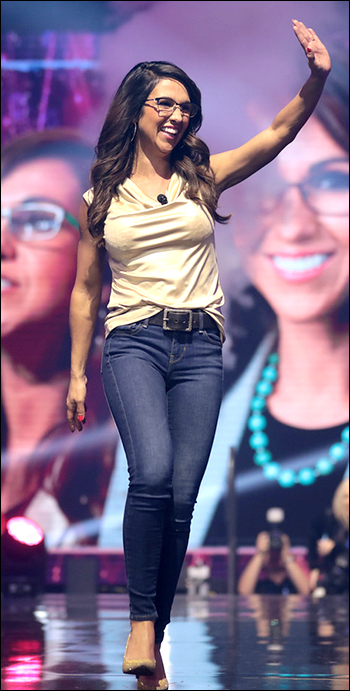
CO-4: Clarifying the Situation — Several reports are circulating around the internet suggesting that Colorado US Rep. Lauren Boebert (R-Silt) is ineligible to run in the special election to replace now resigning Rep. Ken Buck (R-Windsor). Such a statement is incorrect. Boebert weeks ago announced that she would seek Buck’s open 4th District, thus bypassing running in a tough re-election campaign in her own 3rd CD. Therefore, the legal eligibility is no different for a special election. Should she run in and win the special, she would then have to resign her 3rd District seat, thus likely requiring another special election to fill that vacancy.

Practically speaking, however, it is unlikely that Boebert will run in the special election, because a 4th District party leadership committee is unlikely to choose her. Under Colorado law, the political parties select the nominees to fill vacancies, meaning there is just one election for voters to pick the replacement. Gov. Jared Polis (D) has already said he will schedule the special election concurrently with the June 25 state primary.

Also, since the special and the regular primary is on the same day, there will be no incumbency advantage for the regular term. Should a different person win the special and regular primary, the two would not face each other. If the special election winner failed to win the regular primary, that individual would only serve the balance of the term and not appear on the general election ballot. Certainly, the Buck resignation has changed the District 4 political dynamics, but it does not particularly affect Rep. Boebert more adversely than any of the other candidates.

MT-2: Candidates File — Considering Rep. Matt Rosendale’s (R-Glendive) indecision about whether he would run for the House, Senate, or for no office, the large Republican field of potential candidates interested in running for Montana’s 2nd Congressional District were in a state of flux. Now that we know the seat will be open for the 2024 election and candidate filing has closed, we see nine contenders for the post. Three current or former statewide officeholders are in the GOP field: State Auditor Troy Downing, Superintendent of Public Instruction Elsie Arntzen, and former at-large Congressman Denny Rehberg.

Also, in the Republican race are state Senate President Pro Tempore Ken Bogner (R-Miles City), ex-state senators Ric Holden and Ed Walker, former state Rep. Joel Krautter, pharmacist Kyle Austin, and retired DEA agent Stacy Zinn. The FiveThirtyEight data organization rates the MT-2 seat R+30, and former President Donald Trump posted a 62-35 percent victory here in 2020. Therefore, the June 4 Republican plurality primary winner becomes the prohibitive favorite for the general election.

NC-6: Walker Won’t Force Runoff; McDowell Unofficially Wins Seat — Former Congressman Mark Walker, who finished second to lobbyist and former congressional aide Addison McDowell in the March 5 Republican primary announced Wednesday that he will not pursue his entitled runoff election. In North Carolina, a candidate must receive 30 percent of the vote to win a nomination outright. In this election, McDowell posted 26 percent of the vote, and Walker 24 percent.

Instead of continuing his congressional campaign, Walker announced that he has accepted former President Trump’s offer to become the national campaign’s Director of Outreach for Faith and Minority Communities.

The move means that McDowell, who Trump endorsed in the Republican primary, wins the congressional seat. Post-2023 redistricting, Rep. Kathy Manning (D-Greensboro) decided not to seek re-election because she saw no path for victory. The Democrats then didn’t even file a candidate. It is still possible, however, for an Independent or minor party candidate to file. Their deadline is May 5. Even if one or more should run, McDowell’s general election victory is virtually assured. Therefore, North Carolina’s 6th District becomes the Republicans’ first unofficial conversion victory for the 2024 regular election cycle.

Senate

Ohio: Dolan Takes Lead in New Poll — Emerson College polled the tight Ohio Senate primary (March 7-10; 443 likely Ohio Republican primary voters; multiple sampling techniques) and finds a change on the leader board. For the first time in any survey, state Sen. Matt Dolan (R-Chagrin Falls), a minority owner of the Cleveland Guardians professional baseball club, has taken the Republican primary lead. According to the Emerson findings, Sen. Dolan posts a 26-23-16 percent edge over businessman Bernie Moreno and Secretary of State Frank LaRose, respectively.

Also, this week Gov. Mike DeWine (R) endorsed Sen. Dolan, which may counter to a degree former President Trump’s endorsement of Moreno. In the 2022 Senate race, Sen. Dolan came on strong at the end and fell just one point short of finishing second. In this race, which will be decided in the Ohio plurality primary on Tuesday, he again appears to be finishing the campaign with momentum. Tuesday’s winner will then face Sen. Sherrod Brown (D) in one of the most important 2024 national Senate races.

No Labels Party – Spoiler Alert? Sen. Menendez Says He’s Out; Rosendale Out, Again; Santos to Run Again

By Jim Ellis — Thursday, March 14, 2024

President

Georgia Lt. Gov. Geoff Duncan

No Labels Party: Votes to Field Candidate — On Friday, the No Labels Party members voted to move forward with fielding a presidential ticket in this year’s election, but apparently the organization is not close to identifying who might be those contenders. Some within the organization suggested nominating former Georgia Lt. Gov. Geoff Duncan (R), who is critical of former President Donald Trump.

If No Labels were to go in this direction, it would signal that they are trying to be a spoiler — despite publicly saying that is not what their intention is — i.e., using a figure such as Duncan to draw votes away from Trump in the critical state of Georgia, which would give President Joe Biden a strong chance of again winning the state, thus assuring his re-election. Though the group wants to move forward with nominating a presidential candidate, the members are apparently a long way from selecting a ticket and gaining agreement from those who they might eventually choose.

Senate

New Jersey: Sen. Menendez Won’t Seek Re-Election — Facing multiple federal charges and consistent polling data showing him only with single-digit support within his own party, Sen. Bob Menendez (D) announced on Friday that he will not seek re-election later this year. This leaves the Senate Democratic field ostensibly to US Rep. Andy Kim (D-Moorestown) and Tammy Murphy, the state’s First Lady.

Sen. Menendez now becomes the ninth incumbent not to seek re-election in 2024, a figure that represents more than one-quarter of the 34 in-cycle senators. Of the nine, six are Democrats, two are Republican, and one, Sen. Kyrsten Sinema (I-AZ), who is now an Independent. Despite the large number of openings, it appears only two, Arizona and Michigan, will be competitive in the general election while three, Maryland, New Jersey, and Utah will see highly volatile Democratic (MD, NJ) and Republican (UT) primary elections.

House

MT-2: Rosendale Out, Again — Rep. Matt Rosendale (R-Glendive), in a statement saying he has received recent death threats amidst rumors of an extra-marital affair, has now decided he will not file for re-election. Yesterday was the Montana candidate filing deadline. MT-2 again joins the open seat ranks, as it did when Rosendale announced his short-lived US Senate campaign in February, which lasted only a week. He will retire from the House after serving two full terms, one as the at-large representative, and the other from District 2 since Montana earned a new seat in 2021 reapportionment.

State Superintendent of Public Instruction Elsie Arntzen announced before Rep. Rosendale decided to step aside that she would continue running for the House. State Auditor Troy Downing confirmed his congressional candidacy shortly after the congressman’s retirement announcement.

It is expected that most, if not all, of the seven other announced contenders, including former Congressman Denny Rehberg and state Senate President Pro Tempore Ken Bogner (R-Miles City), will continue with their congressional campaigns. The Montana primary election will be held June 4. The new Republican nominee will be a lock to win the general election in an eastern Montana district that the FiveThirtyEight data organization rates as R+30.

NY-1: Santos to Run Again — Expelled US Rep. George Santos (R), announced that he will indeed be on the ballot to return to Congress. He will not challenge Rep. Tom Suozzi (D-Glen Cove), who replaced him in New York’s 3rd Congressional District, but rather will oppose 1st District freshman Rep. Nick LaLota (R-Suffolk County). Santos calls LaLota an “empty suit RINO” (Republican In Name Only). LaLota was especially critical of Santos during his short tenure in office.

The new redistricting map makes the 1st District more Republican, but it is highly unlikely the new configuration will allow Santos to deny Rep. LaLota renomination. The New York primary is scheduled for June 25.