Category Archives: Special ELection

Louisiana Special Election Poll Suggests at Least One District Runoff

Louisiana congressional districts


By Jim Ellis

March 15, 2021 — Two of the upcoming special elections to fill vacancies in the US House will occur next weekend, and a new Louisiana poll suggests one of them will likely advance two candidates into a secondary April 24 runoff election.

The Edgewater Research/My People Vote survey tested 651 likely voters in Louisiana’s vacant 2nd Congressional District over the March 2-7 period in preparation for the March 20 jungle primary election. A likely voter for purposes of this study were people who have voted at least seven times in the last 10 statewide elections.

The pollsters, however, only named three of the 15 candidates on the ballot in testing the electorate. The query asked if the respondent is supporting “Troy Carter, Karen Carter Peterson, Gary Chambers, or someone else.”

The names refer to state Sens. Troy Carter (D-New Orleans) and Karen Carter Peterson (D-New Orleans), and Baton Rouge community activist Gary Chambers. No Republican was named in the survey even though author Claston Bernard and Greg Lirette have raised more money than Chambers, for example. The latter man, however, is well known as an activist who attracts a great deal of attention in the Baton Rouge media market.

The ballot test found the electorate breaking 35-24-11 percent in favor of Sen. Carter, with Peterson and Chambers following, respectively. The response for “someone else” was 16 percent. Sen. Carter, however, leads Sen. Peterson only 39-35 percent among Democratic voters, the dominant party in this district that captures most of the city of New Orleans and meanders northwest to include heavily African American Baton Rouge precincts.

The 2nd District basically divides into just two races: black and white. Of the citizen voting age population, blacks account for 61.5 percent and whites 31.7 percent. All other race categories comprise the remaining 6.8 percent of the demographic composition.

Within the black vote, Sen. Carter leads Sen. Peterson, 40-26 percent with Chambers getting 11 percent and someone else 8 percent. Within the white vote, the contest is much closer. In this case, the someone else category places first at 28 percent with Sen. Carter then topping Sen. Peterson in a much tighter 23-20 percent spread. Chambers had 10 percent support in the white category.

Continue reading

TX-6: Rep. Wright’s Widow to Run

By Jim Ellis

The late Rep. Ron Wright (R-TX) is sworn-into Congress Jan. 3, 2021 by House Minority Leader Kevin McCarthy (left) as Wright’s wife, Susan Wright, holds the Bible. Rep. Wright, 67, had been hospitalized with COVID-19; Susan Wright also had been hospitalized after contracting COVID-19. (Photo/Facebook)

Feb. 24, 2021 — The Texas Tribune newspaper broke the story this week that Susan Wright, widow of deceased Congressman Ron Wright (R-TX), will announce her candidacy as soon as this week for the yet unscheduled special election to succeed her late husband.

Ms. Wright will be the second recent widow running this year. Rep-Elect Luke Letlow’s death has led to a March 20 Louisiana special election in that state’s northeastern 5th District. Julia Letlow (R), the late-congressman-elect’s wife, is a candidate in that race and the favorite to prevail.

In US history, 39 widows have succeeded their late husbands in the House, and another eight in the Senate. One such widow, Doris Matsui (D-CA), is currently serving her ninth congressional term.

A large Republican potential field of candidates was thought to be building for the Texas special election, but with Susan Wright’s intention on becoming a candidate, that may block some of the local officials from the race. Freshman state Rep. Jake Ellzey (R-Waxahachie), who opposed Mr. Wright in the 2018 election and forced him into a runoff, and Katrina Pierson, the former Trump campaign spokeswoman, remain likely candidates, however.

At least two Democrats, 2018 congressional nominee Jana Lynne Sanchez and school district official Shawn Lassiter, have announced their candidacies and both are likely to remain in the race. The 2020 party nominee, Stephen Daniel, has also not ruled out running.

Now that the congressman has been laid to rest, Gov. Greg Abbott (R) will schedule the special election. The most likely date will be May 1st, in order to conform with the Uniform Election Day, which hosts local elections from around the state. All 6th District candidates will be on the same ballot and if any one candidate receives majority support, that individual will be elected outright. Otherwise, the top two finishers will advance to a runoff election that will be part of Abbott’s scheduling pronouncement. Assuming a May 1 special election, the secondary runoff would occur in late June or early July.

Continue reading

Three Events Mark The Most Significant Day in 2022 Election Cycle

By Jim Ellis

Feb. 10, 2021 — Three major events affecting the election process occurred Monday, making it possibly the most significant day to this point in the 2022 election cycle.


NY-22

Rep. Anthony Brindisi (D-Utica) conceded a tight election Monday after former US Rep. Claudia Tenney (R) was certified as the NY-22 winner by 109 votes.

From New York, and rather surprisingly, former Rep. Anthony Brindisi (D-Utica) conceded the last remaining uncalled 2020 election late Monday afternoon. The move was unexpected because he had filed several appeals to State Supreme Court of Oswego County Justice Scott DelConte’s rulings concerning more than 500 ballots that were either added to the aggregate count or voided.

On Friday last week, Justice DelConte’s ordered the counties that comprise the 22nd District to send their final vote counts to the state Board of Elections for final certification. The districtwide total gave former Rep. Claudia Tenney (R) a 109-vote victory margin.

Brindisi was not shy in bashing the local election officials as part of his concession, however. The election administration in seven of the district’s eight counties were often criticized as part of the almost three-month long court proceeding with Justice DelConte even going so far as saying that the officials on several occasions either ignored or outright violated New York election law in their handling, counting, and reporting of the votes.

Oneida County, the district’s largest, came under the heaviest criticism when it was discovered that 2,418 people had fully complied with the registration process, but their documents were never converted into official voter registration status. As a result, these individuals were barred from participating in the 2020 election.

Brindisi stated that, “sadly, we may never know how many legal voters were turned away at the polls or ballots not counted due to the ineptitude of the boards of election, especially in Oneida County.” He said he was conceding because the New York Upstate region needs to “move on” after such a long post-election contestation period.

It is presumed that that state Board of Elections’ commissioners will shortly certify the election and that Tenney will then be sworn into the House for the current term. Continue reading

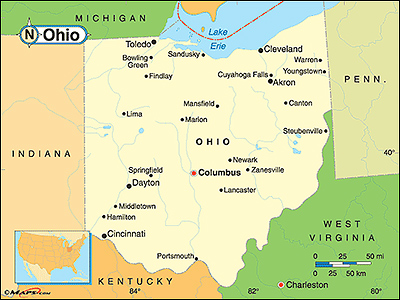
Jockeying for Ohio’s Senate Seat

By Jim Ellis

Jan. 28, 2021 — Monday’s surprise announcement that Sen. Rob Portman (R) will not seek re-election next year has ignited a flurry of activity and speculation from potential candidates and political observers alike. Some looking to challenge Gov. Mike DeWine (R) are now also beginning to survey and assess how an open US Senate candidate field might unfold.

Recent voter history suggests that the eventual Republican nominee will at least begin the general election campaign in the favorite’s role. The GOP, with a large number of statewide office holders, former elected officials, and a dozen sitting US House members, has an array of candidates from which to choose, and many will take the plunge.

For example, former US Rep. Jim Renacci, who held Sen. Sherrod Brown (D) to a 53-47 percent victory in the 2018 campaign and was reportedly looking to challenge Gov. DeWine in the 2022 Republican primary, may now set his sights on the open Senate seat.

Another ex-office holder, Pat Tiberi, who averaged 60.6 percent of the vote over nine elections from a Columbus area congressional district that former governor and presidential candidate John Kasich once held, still sits on more than $5 million in his federal campaign account even though he hasn’t been on the ballot since 2016.

It was widely believed that he was amassing a huge war chest to run against Sen. Brown in ’18, but family considerations led him to change his mind, resign from Congress and instead take the reins of the Ohio Business Roundtable.

Still another former elected official, ex-state Treasurer Josh Mandel (R), who lost the 2012 Senate election to Sen. Brown, was planning to run again in 2018 until leaving the race because of his wife’s health issue. Mandel raised almost $20 million for his Senate race eight years ago and has over $4 million in his campaign account even though he has not been a federal candidate in eight years.

Republicans hold all of the state’s constitutional offices. Lt. Gov. Jon Husted, Secretary of State Frank LaRose, Attorney General Dave Yost, state Treasurer Robert Sprague, and State Auditor Keith Faber are all credible potential US Senate candidates.

Continue reading

Candidate Filing Closes

By Jim Ellis

Jan. 26, 2021 — Filing for the March 20 special congressional elections to fill the two Louisiana vacant seats, Districts 2 and 5, closed on Friday, meaning that the participating candidates are now identified.

Louisiana Republican Rep.-Elect Luke Letlow’s widow, Julia Letlow, is running for her late husband’s seat.

In the 2nd District, the New Orleans-anchored seat that stretches northward to include part of Baton Rouge, we see 15 individuals filing. The locals, however, highlight three significant Democratic contenders, one of whom will almost certainly be elected outright in the March 20 special primary or an April 24 runoff election should no one secure majority support in the initial vote. It is further likely that should such a runoff occur, it will involve two Democrats.

Moving northward, the vacant 5th District is open because the 2020 winner, Republican Luke Letlow, tragically passed away within three weeks of winning the December 5th runoff election. Here, 13 candidates filed to run in the special election, which was assigned the same election calendar as District 2, and Julia Letlow (R), the late congressman-elect’s widow, headlines those vying to represent the district.

Former Rep. Cedric Richmond (D-New Orleans) resigned from the House on Jan. 15 in order to accept his White House position. Richmond was originally elected in 2010, and had little trouble holding the seat through six elections. He averaged 67.0 percent of the vote and was never forced into a secondary runoff election in Louisiana’s jungle primary system.

The district is solidly Democratic. The 2020 presidential election segmentation by congressional district for Louisiana is not yet available, but the Democratic nominee averaged 75.20 percent of the vote when combining the 2016 and 2012 results. The CD is 61.50 percent black according to the available Citizen Voting Age population data. Therefore, the chances of one of the African American candidates again winning the seat is extremely high.

The three top contenders are state Sen. Troy Carter (D-New Orleans), who Richmond has publicly endorsed as his successor, state Sen. Karen Carter Peterson (D-New Orleans), and prominent Baton Rouge political activist and blogger Gary Chambers, who has the political wherewithal to attract support.

Continue reading

The Late Luke Letlow’s Widow to Run

By Jim Ellis

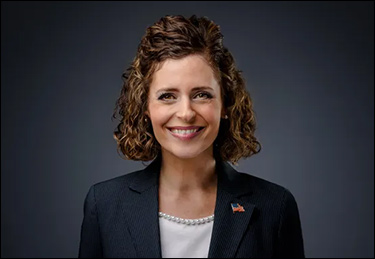
Late last week, Julia Letlow (above), widow of late Louisiana Republican Rep.-Elect Luke Letlow, announced that she will run for her late husband’s seat, issuing a statement saying she wants to “ … continue the mission Luke started.” Luke Letlow, 41, passed away Dec. 29, 2020 from a heart attack while battling COVID-19.

Jan. 18, 2021 — On Dec. 5, former congressional chief of staff Luke Letlow (R) won a big election victory, scoring a 62-38 percent Louisiana runoff victory to secure the 5th Congressional District seat and replace his retiring boss, retiring Rep. Ralph Abraham (R-Alto). Just 24 days later and before even being sworn into the House, Letlow, 41, tragically passed away from cardiac arrest after contracting COVID-19.

Late last week, his widow, Julia Letlow, issued a statement saying she wants to “ … continue the mission Luke started — to stand up for our Christian values, to fight for our rural agricultural communities and to deliver real results to move our state forward.” The comments were part of her announcement declaring her own candidacy for the 5th District special election to replace her late husband.

Gov. John Bel Edwards (D) has scheduled both the vacant 2nd District (Rep. Cedric Richmond-D has accepted a position in the Biden Administration and officially resigned from the House last Friday) and the 5th CD special elections for March 20, with a runoff on April 24 should no one receive majority support in the first vote. The candidate filing deadline for both seats is a week from today, Jan. 22.

So far, the LA-5 candidate field has been slow to form largely in anticipation of Julia Letlow becoming a contender. At this point, Democrat Candy Christophe, who missed qualifying for the regular election runoff by just 428 votes, is an announced special election candidate. The only other currently declared contender is frequent GOP candidate Allen Guillory. State Rep. Lance Harris (R-Alexandria), who qualified for the regular runoff election and lost to Luke Letlow, has not yet indicated whether he will enter the special election campaign.

Continue reading

Outstanding Races: A Look-In

(Jon Ossoff – “Selma”)

By Jim Ellis

Dec. 22, 2020 — The Georgia Senate runoff campaigns continue to see brisk pre-election voting participation and huge amounts of money being spent, while one of the candidates appears to be fundamentally changing his message strategy. In the two contested House races, the NY-22 result remains undecided, while questions are being raised around the IA-2 situation with regard to seating the state certified winner on Jan. 3.

The Georgia races, heading into Christmas week, feature political surveys finding both campaigns, those of Sen. David Perdue (R) against Jon Ossoff (D) and Sen. Kelly Loeffler (R) paired with Rev. Raphael Warnock (D) in their special election battle, falling within the polling margin of error.

The Target Smart statistical organization reveals that Democrats are slightly leading Republicans in pre-election ballots returned (47.0 – 46.7 percent, respectively within the universe of returned ballots), a difference between the two parties of just 4,025 ballots. Over 1.329 million votes have been received through the end of last week, which is only 241,088 under the number of early and mail votes recorded in the 2020 regular election.

During the regular election, the Democrats led the early and mail voting participation with 748,741 ballots (47.7 percent of the total return) compared to the GOP’s total of 719,515 (45.8 percent). The unaffiliated sector returned 102,635 ballots in the regular election. So far in the runoff cycle, 82,756 unaffiliated individuals have either voted early or mailed their ballots.

During the week, Democratic candidate Jon Ossoff changed his media strategy. Prior to this period, the Ossoff campaign had been concentrating on COVID as their key issue driver, but now appear to be concerned about African American voter turnout. With the pre-election numbers being slightly down for Democrats as described above, the change in Ossoff strategy suggests that the campaign strategists do not feel the black vote numbers are where they need to be to clinch a victory on Jan. 5.

Continue reading

NM-1: New Vacancy

By Jim Ellis

Dec. 21, 2020 — Late last week, President-Elect Joe Biden announced that he is nominating New Mexico US Rep. Deb Haaland (D-Albuquerque) to be Interior Secretary. Upon confirmation, Rep. Haaland will resign her seat in the House, which will become the body’s third vacancy.

Biden has already chosen Reps. Cedric Richmond (D-LA) and Marcia Fudge (D-OH) to run the White House Office of Public Engagement and become Secretary of the Department of Housing and Urban Development, respectively.

Special elections will be held in all three districts and scheduled once the member officially resigns to accept his or her new position. Democrats will be prohibitive favorites in Louisiana and Ohio, but it’s possible the New Mexico seat could become competitive.

Haaland was first elected to what was an open district in 2018 when then-Rep. Michelle Lujan Grisham (D) risked the 1st District House seat to wage an ultimately successful campaign for Governor. Grisham was first elected to the House in 2012 in an open seat campaign. She succeeded then-Rep. Martin Heinrich (D), who won a Senate seat in the same election.

Prior to Heinrich’s initial House win in 2008, the 1st District congressional seat, anchored in Albuquerque, had been in Republican hands for 40 consecutive years in the person of Reps. Manuel Lujan, Steve Schiff, and Heather Wilson, consecutively. Though the district has significantly changed politically, it has largely kept its same basic geographic context during the entire aforementioned stretch. Prior to the 1968 election, New Mexico’s representatives were chosen in at-large elections.

Once Haaland, one of the first Native American females to be elected to the House, resigns, Gov. Grisham will schedule a special election. Under New Mexico procedure, the political parties will caucus to choose their nominees, so there will be no primary election. Therefore, it is probable to see a contested convention process for both parties, particularly for the Democrats since their eventual nominee will begin the special election campaign in the favorite’s position.

Continue reading

Rep. Collins Makes His Move in
Georgia’s Special Senate Race

By Jim Ellis

Georgia Rep. Doug Collins (R-Gainesville)

Oct. 21, 2020 — Georgia Rep. Doug Collins (R-Gainesville) began the 2020 special Senate election campaign as the early leader, enjoying an advantage over appointed Sen. Kelly Loeffler (R), Atlanta businessman Matt Lieberman, the son of former Connecticut US senator and 2000 Democratic vice presidential nominee Joe Lieberman, and Baptist pastor Raphael Warnock (D), who now ministers the Ebenezer Baptist Church in Atlanta where Dr. Martin Luther King, Jr. and his father once pastored.

The race, however, has changed significantly since those early days.

Georgia Sen. Kelly Loeffler (R)

By taking advantage of her huge personal wealth and being cleared of wrongdoing over controversial stock transactions that she and her husband, Jeffrey Sprecher, the chairman of the New York Stock Exchange, made just after she received early COVID senatorial briefings, Loeffler eventually moved past Rep. Collins in the political standings.

Once Democrats began to coalesce around Rev. Warnock, the race again changed. The pastor began securing first place in multiple statewide polls after receiving many key national endorsements. This left Rep. Collins and Sen. Loeffler, the two Republicans, fighting each other for second place.

Baptist pastor Raphael Warnock (D)

The congressman, knowing he couldn’t compete with Sen. Loeffler’s wealth, or even the Democrats institutional money once the party establishment began to support Rev. Warnock in earnest, held a large portion of his resources for a strong late finish after raising $6 million for the race through Sept. 30.

Rep. Collins’ campaign strategy may be paying dividends. A new Emerson College survey (Oct. 17-19; 506 likely Georgia voters, interactive voice response system and online responses) finds another change in this rather uneven special election campaign. According to their data, Rep. Collins has now tied Rev. Warnock for first place in the jungle primary with 27 percent apiece. Sen. Loeffler trails with 20 percent and Lieberman, who had dropped well into single digits in many other polls, also rebounded to 12 percent support.

This poll conflicts somewhat with a recent Survey USA study (Oct. 8-12; 677 likely Georgia voters, online) that found Rev. Warnock at 30 percent, Sen. Loeffler posting 26 percent, Rep. Collins attracting 20 percent support, and Lieberman back in single digits with eight percent preference. Previous polls returned similar numbers to that of S-USA, but with larger percentages for Rev. Warnock.

Continue reading

Is A Budding Red Rebound Emerging?

By Jim Ellis

May 19, 2020 — Two years ago, several national political prognosticators were predicting a strong Democratic election, i.e., “a blue wave,” by using special election results, mostly from state legislative campaigns, as one of their fundamental support arguments. As we know, the forecast proved correct.

To what degree the special election totals were a precursor is difficult to say, but it is reasonable to believe that real-time results are a better voting trend indicator than publicly released polls, many of which are methodologically flawed. Therefore, it is worth analyzing similar voting patterns as we approach the 2020 election.

North Carolina Rep. Dan Bishop (R-Charlotte)

The victory of Republican Mike Garcia in California last week marked the first congressional special election of this election cycle to flip from one party to the other. Republicans have won five of the six special US House contests, including those of Garcia and Wisconsin state Sen. Tom Tiffany (R-Minocqua), who easily claimed his state’s vacant 7th District, last Tuesday.

The other significant special election occurred late last year. Though Rep. Dan Bishop’s (R-Charlotte) victory in North Carolina came in a seat that historically produced Republican victories, he was certainly considered an underdog at the outset of the special election campaign. He rebounded, however, to score a two-point victory, nonetheless, which in many ways makes it as noteworthy as the Garcia win.

The NC-9 election was necessitated because voter fraud in the 2018 general election prevented the Republican candidate from being certified the winner. After almost a year of keeping the seat vacant, the state’s Board of Elections called a new election that Gov. Roy Cooper (D) scheduled for Sept. 10, 2019.

In the campaign, Bishop was outspent $7.5 million to $2.7 million and that was on top of the $6.1 million Democrat Dan McCready expended in the 2018 general election. Furthermore, Democratic strategists predicted victory in this race because the Charlotte-Fayetteville seat contains a large suburban population, the type of district where their candidates certainly excelled in 2018, and President Trump’s job approval ratings were languishing around the 40 percent mark at the time. All things considered, the Bishop victory should not be characterized as a routine Republican hold.

According to the Ballotpedia election research organization, during the 2018 voting cycle, 197 special state legislative elections were held around the country, 98 of them in 2017, and 99 in 2018. Republicans risked 110 of the seats, substantially higher than the 87 the Democrats were forced to defend. In 2017, Democrats gained a net 11 legislative seats nationally, and eight more in 2018 for a cycle total of 19 net flips (Democrats actually won 26 Republican-held seats, but the GOP took back seven Democratic districts). It was these numbers that largely led the prognosticators to point to changing trends.

Continue reading