Category Archives: Election Analysis

Espaillat Concedes to Rangel … Again

It’s now official. After new tallies in New York’s 13th Congressional District were released showing Rep. Charlie Rangel (D) actually gaining votes, state Sen. Adriano Espaillat again conceded defeat. The Senator acknowledged that he had lost on primary election night (June 26), but when all the precincts actually reported their results, the margin tightened. With thousands of votes remaining uncounted and Rangel’s lead down to 802 votes, Espaillat asked for further canvassing since the state Board of Elections was reporting the tallies in such a time-consuming and haphazard manner. Now that the recount is actually showing Rangel gaining strength – his lead is up to 990 votes – Espaillat decided to bow out for the second time.

The result is now final. Other than it being virtually impossible for Rangel to lose mathematically, there is a practical political reason for also supporting this conclusion. To qualify for the state primary in September, Espaillat must file for re-election to the state Senate no later than Thursday. He cannot run for state office if he is still a federal candidate, so continuing to protest the congressional result could make him ineligible to seek re-election to his current position.

In order to comply with the new provisions of the federal Military and Overseas Voter Empowerment Act (MOVE), a federal judge transferred the New York congressional primary from Sept. 13 to June 26. Since the state then chose to keep its statewide primary in September, New York is holding two nominating elections. Therefore, Espaillat could run for Congress without putting his legislative office at risk.

House Realignment Scorecard

The conventional wisdom during the past 18 months was that Democrats were going to make modest gains in the post-redistricting House, but such prognostications are changing. Considering the re-maps from a national perspective without regard to campaign competition factors, the Republicans are the ones who now appear to have the slight advantage.

The outlook is changing because none of the major Republican seat-risk situations appear to be producing multiple losses. Neither the New York, Florida, California, Virginia, nor Texas map is, on the surface, going to add large numbers of new Democratic House members solely because of plan configuration.

Since we now know where the new seats are going and where the lost districts are coming from, more complete analyses can be rendered. While the straight numbers suggest that Democrats must score a net gain of 25 districts to re-capture the House majority by a single seat, the adjusted post-redistricting number actually increases that figure to 29.

The basis for such a conclusion is in accounting for the 12 seats that have shifted states along with several obvious conversion districts. Other factors are equally as viable in projecting an overall House partisan balance figure, but how competitive various seats are in states like California and New York can be debated in another column. For now, looking at the placement and displacement of the new seats, along with what appear to be some obvious open-seat campaigns going decidedly toward either a Democratic or Republican nominee, lead us to a +4 Republican gain figure.

Let’s first look at the multiple-seat gain or loss states, which tend to be a wash in terms of partisan divide. In Texas, the biggest gainer, the new seats of TX-25, 33, 34, and 36 are headed for a 2R-2D split. In Florida, their two new districts, FL-9 and FL-22, look to be leaning Democratic (certainly so for FL-22), but the campaign evolving in the new 9th puts the outcome in question. Republicans have recruited a strong candidate in local county commissioner John Quinones, while the Democrats are again tapping controversial one-term ex-Rep. Alan Grayson who was defeated for re-election in 2010.

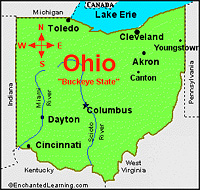
On the multiple-seat reduction side, both Ohio and New York also appear to be neutralizing themselves between the parties. Both sides look to lose one net seat in each state.

But it is among the single-seat gaining and losing states where the GOP has scored well. The Republicans look to be coming out on top in gainers like Georgia (GA-9), South Carolina (SC-7), and Utah (UT-2). Democrats will have a slight edge in Arizona’s new district (AZ-9), and are likely winners in Nevada (NV-4), and Washington (WA-10).

In the states losing congressional representation, while New York and Ohio don’t give either party a clear advantage, Democrats are forced to absorb the loss in Massachusetts (MA-10), New Jersey (NJ-13), Michigan (MI-15), Pennsylvania (PA-4), and Missouri (MO-3). Republicans take the hit in Illinois (IL-19) and Louisiana (LA-7).

The GOP looks to be headed for conversion victories in Arkansas (AR-4, Rep. Mike Ross retiring), Oklahoma (OK-2, Rep. Dan Boren retiring), and likely in Indiana (IN-2, Rep. Joe Donnelly running for Senate). They will also gain three to four seats in North Carolina, but those are neutralized by what appear to be similar gains for Democrats in Illinois. All totaled, before the campaigns hit their stretch drive, it is the GOP that now enjoys a slight post-redistricting advantage and makes a 2012 House majority change even more remote.

Rangel Won – Or Did He?

Rep. Charlie Rangel, (D, NY-13)

As has been projected and reported – and conceded by challenger Adriano Espaillat – 21-term Rep. Charlie Rangel won the Democratic primary for the new 13th Congressional District of New York on primary night, June 26. Now, however, doubts surround the election result.

The New York state Supreme Court held a hearing yesterday to oversee the counting at Espaillat’s request. New vote totals now show the 45-40 percent margin decreasing to 44-42 percent, a spread of just 802 votes. According to state election officials, 2,494 ballots remain to be counted, mostly provisional paper ballots from voters claiming to be registered but who were not on the voting rolls, and 776 absentee ballots. All of the provisional voters must be verified as truly being registered.

Espaillat is too far behind, considering the reported number of ballots remaining, to overtake Rangel. Even if this were a two-way race (there are five total candidates), Espaillat, a sitting New York state senator, would have to tally just over 62.3 percent of the outstanding ballots to make up the 802-vote deficit. Unless there are more ballots to count – and on election night itself when Rangel had been declared the winner, a full 15 percent of the NY-13 precincts were reporting zero votes tabulated – there is no likely mathematical progression that allows such a conclusion from what we now know. But, many things can happen in post-election counting of close results.

In the end, it is probable that Rep. Rangel will be declared the official winner, but such a happening could be weeks away if a full investigation is launched. An official pronouncement of the exact uncounted vote number is expected on Thursday.

Sullivan Loses in Okla.; Other Incumbents Fare Well

The big story of yesterday’s Oklahoma primary voting is the defeat of six-term Rep. John Sullivan (R-OK-1), who fell to military reserve pilot Jim Bridenstine by a substantial 54-46 percent margin. Sullivan becomes the fourth non-paired incumbent to fail in a renomination bid during this election cycle. Reps. Jean Schmidt (R-OH-2), Tim Holden (D-PA-17), and Silvestre Reyes (D-TX-16) are the other three.

In the open 2nd District of Oklahoma, both parties will feature Aug. 28 run-off elections. The Republicans will battle between businessman Markwayne Mullin (42 percent) and state Rep. George Faught (23 percent). Democrats will likely have a close contest between former district attorney Rob Wallace (46 percent) and Tulsa County Farm Bureau President Wayne Herriman (42 percent). Rep. Dan Boren (D) is retiring. This may be the Republican’s best conversion opportunity in the country.

Turning to South Carolina, the general election candidates are now set in the Palmetto State’s new 7th District. Horry County Council chairman Tom Rice was a strong 56-44 percent winner over former lieutenant governor Andre Bauer in the Republican primary. Rice is a prohibitive favorite now in the general election. In the run-off campaign that lasted just four official days after the Horry County court ruled that the Democrats must hold a secondary vote, former Georgia state Rep. Gloria Tinubu easily beat back attorney Preston Brittain, 73-27 percent. The run-off was challenged because votes for a withdrawn candidate were not originally included in the final tally.

In Utah, Sen. Orrin Hatch, as expected, was an easy 67-33 percent winner in his Republican primary battle with former state Sen. Dan Liljenquist. Hatch will now cruise to re-election to a seventh term in November.

Another incumbent turned back a serious primary challenge with ease. Three-term Rep. Doug Lamborn (R-CO-5) repelled self-funding opponent Robert Blaha by a strong 62-38 percent margin despite the challenger spending more than $720,000 of his own money. Lamborn, who has had trouble solidifying what should be a safe Colorado Springs district, appears to be building the kind of strength one would expect to see from a now veteran incumbent.

Finally, in New York, a series of primaries produced no surprises. Embattled Rep. Charlie Rangel (D-NY-13), challenged by four Democrats, again survived the onslaught but with only 45 percent of the vote. State Sen. Adriano Espaillat was his closest challenger with 40 percent; former Clinton Administration official and 2010 congressional candidate Clyde Williams only recorded 10 percent of the vote.

Rep. Nydia Velazquez (D) was a 58-31 percent winner over New York City Councilman Erik Dilan. Velazquez will now represent the new 7th District, which contains 71.2 percent of her current constituency. Neighboring Rep. Yvette Clarke (D-NY-9) was an easy winner in her primary with a huge 88 percent of the vote.

Elsewhere in the state, two individuals won open-seat New York City races that effectively punches their ticket to Congress. State Assemblywoman Grace Meng was an easy Democratic primary winner and will succeed retiring Rep. Gary Ackerman in the new 6th District. In Brooklyn, Democratic state Assemblyman Hakeem Jeffries will replace retiring Rep. Ed Towns in the new 8th District.

New York City attorney Sean Mahoney won the right to challenge freshman Rep. Nan Hayworth (R) in the new 18th District. Mahoney won despite the district being anchored in Westchester County. As expected, Rep. Bill Owens (D) will defend his marginal district against 2010 nominee Matt Doheny (R). And, former Erie County Executive Chris Collins (R) will face Rep. Kathy Hochul (D) in a new district that heavily favors the Republicans.

Finally, in the US Senate race, conservative Wendy Long easily defeated New York City Rep. Bob Turner (R-NY-9), who had no legitimate chance of remaining in the House post-redistricting. Long, also officially carrying the Conservative Party line, will face Sen. Kirsten Gillibrand (D) in a long shot November challenge effort.

Assessing Congressional Decisions Facing S.C., Ill.

SC-7: A Horry County court judge finally ordered the South Carolina Election Commission to conduct a Democratic run-off election in the state’s new 7th Congressional District, just days before the secondary election is to be held. The ruling came down Friday and the run-off election will be held as originally scheduled, tomorrow. Controversy arose on primary election night over whether to count the votes cast for withdrawn candidate Ted Vick, whose name appeared on the ballot because he officially left the race after the ballots were printed.

Relying on past Election Commission procedure, votes, for the purposes of determining whether a candidate obtained majority support from the participating electorate, were not typically counted for withdrawn contestants. Eliminating Vick’s votes in this instance allowed former Georgia state representative Gloria Tinubu to exceed the 50-percent mark and clinch the Democratic congressional nomination. Democratic officials objected to the commission ruling and asked a judge to overturn their decision not to conduct a run-off.

Since the court agreed with the plaintiffs, and Vick’s 2,341 votes now have officially been added to the aggregate total, Tinubu’s final tally drops from 52.5 percent to 48.8 percent. Second-place finisher Preston Brittain’s now scores 36.7 percent.

With a run-off campaign that will last just four official days, it remains to be seen if the Democratic vote will change much in such a short pre-election campaign period. Republicans Andre Bauer, the state’s former lieutenant governor, and Horry County Council Chairman Tom Rice continue to compete for the GOP nomination.

IL-12: Democrats now have a new nominee in Illinois’ 12th District. Local party county chairmen interviewed prospective Democratic candidates on Saturday and chose Illinois National Guard adjutant general and attorney William Enyart as the party standard bearer. He replaces Brad Harriman, the man who won the March 20 primary, but was forced to withdraw from the campaign due to health reasons.

IL-12 is a sleeper campaign on the national scene in that Republicans have an improving chance to win this election. The 12th, in open-seat status because veteran Rep. Jerry Costello (D) is retiring, is the only Democratically held district that did not precipitously improve it’s Obama-McCain 2008 score (new IL-12: 55 percent; current IL-12: 54 percent) under the Illinois congressional redistricting map. The Illinois plan is clearly the one in which Democrats can make their most significant national gains. The district ranks 13th of 18 Illinois seats on the Obama scale and is the weakest of the new Democratic seats. To put the Obama home-state performance in perspective, in only two Land of Lincoln congressional districts did the president fail to secure a majority in his 2008 race.

The new 12th CD begins in East St. Louis, encompassing St. Clair County. It then covers southwestern Illinois, including the area between the St. Louis metropolitan area and the Missouri and Kentucky borders at the southern tip of the state.

Gen. Enyart was the unanimous choice of the fourteen Democratic county chairmen who had authority to choose the replacement candidate. Seven prospective nominees were interviewed, including former representative David Phelps (D-IL-19), who served for two terms before losing a paired incumbent contest to Rep. John Shimkus (R-IL-19) in 2002, and state Rep. John Bradley. Obviously, having to launch a congressional campaign from ground zero three months after your general election opponent officially begins is a major disadvantage and one Enyart must quickly overcome in order to reach parity and ultimate victory.

The GOP features, as its 12th District congressional candidate, 2010 lieutenant governor nominee, Jason Plummer, who together with gubernatorial nominee Bill Brady came within one point of defeating Gov. Pat Quinn (D). The Brady-Plummer ticket carried the new 12th District two years ago. Since the Republicans are clearly on defense in the rest of the state, CD 12 represents one Illinois GOP conversion opportunity that the party can use to blunt what is otherwise a strong Democratic offensive.

Florida Senate Race Changes Shape

Things are heating up in the Florida Senate challenge to incumbent Senator Bill Nelson (D). Former interim Sen. George LeMieux dropped out of the Republican race earlier in the week and, in a statement released early Wednesday, indicated that he believed the national Republican Party had thrown its support behind Rep. Connie Mack IV (R-FL-14).

Former governor Charlie Crist (R-I) appointed LeMieux to the Senate in 2009 to fulfill the unexpired term of Sen. Mel Martinez (R) after his abrupt resignation. Crist went on to run for the seat in 2010 without party affiliation and lost to freshman Sen. Marco Rubio (R).

The developments again reveal the power political establishment backing has over candidates, even those with relatively high familiarity with voters. The other late breaking development here, and the two are related, is the emergence of former Rep. Dave Weldon (R-FL-15), who just recently and surprisingly indicated that he is entering the Senate race. While Mack is still heavily favored over Weldon, the campaign is just now reaching the cusp of the stretch drive for the Aug. 14 primary when many things change. Aside from Weldon, retired Army Col. Mike McCalister is also in the Republican race.

In a poll released yesterday, Quinnipac University found that Sen. Nelson has a slight 43-39 percent edge over Rep. Mack, but the young Republican congressman appears to be the prohibitive favorite for his party nomination. The poll, conducted June 12-18, prior to LeMieux’s departure, surveyed 1,697 registered voters with a margin of error of +/- 2.4 percentage points. Mack polled the strongest among the GOP contenders, with the others trailing Nelson in double digits: 47-32 percent (LeMieux); 45-34 percent (McCalister); and 47-31 percent (Weldon).

Nelson’s slight lead over Mack is a net five point increase for the senator compared to the virtual tie Quinnipiac found in their May 24 poll (Mack leading 42-41 percent).

In the Republican primary, the Q-Poll shows Mack posting 41 percent, LeMieux in second with 8 percent, and McCalister following with 5 percent, while the late arriving Weldon registered only 3 percent among the 698 self-identified Republicans tested.

Though Mack and Nelson are running close in both private and public polling, it is Nelson’s major financial war chest that has most GOP operatives concerned. The senator has compiled an almost $8 million financial edge over his competitors and even with so many hot races taking place in Florida this cycle, he will still have the wherewithal to position himself strongly in the most expensive of television markets. Now with LeMieux out of the primary and Mack now clearly the GOP favorite, some Republican resources that otherwise would have gone towards winning the mid-August election can now be saved for the general.

The senator, who won his 2006 re-election with 60.3 percent of the vote, faces new economic challenges in the Sunshine state and, while he remains as the favorite in the race, the contest will definitely come down to the wire. This is a bona-fide contest with national implications.

The Dispute Continues in SC-7

Reapportionment awarded South Carolina a new 7th District for the ensuing decade, and the seat’s first election is already featuring some unusual occurrences to say the least.

The new 7th CD was placed in the northeast corner of the state anchored by the city of Myrtle Beach within fast-growing Horry County. Freshmen Reps. Tim Scott (R-SC-1), Mick Mulvaney (R-SC-5), and Assistant Minority Leader Jim Clyburn (D-SC-6) currently represent the region. The GOP nominee should have the inside track to winning the general election.

The candidates appear headed to a June 26 run-off election – or are they? It’s clear on the Republican side that former lieutenant governor Andre Bauer (32 percent in the June 12th primary election) and Horry County Council chairman Tom Rice (closely trailing Bauer with 27 percent) will square off a week from tomorrow, but it is the Democratic result that remains unclear. The fact that South Carolina has the tightest run-off schedule in the nation, just two weeks between the primary and secondary vote, makes post-election problem solving all the more difficult.

The Democratic Party troubles began when their establishment-backed candidate, state Rep. Ted Vick, ended up in jail less than a month before the primary election on DUI and gun charges. He immediately dropped out of the congressional race, but not in time for election authorities to remove his name from the ballot. The party establishment then transferred their support to young attorney Preston Brittain.

The development made another individual with an unusual history the party’s leading candidate. Up until the new district lines were finalized earlier this year, Gloria Tinubu was a state representative … in Georgia. Upon seeing the South Carolina map, Tinubu resigned her seat in the Peach State and moved to Myrtle Beach, declaring her congressional candidacy along the way. Obviously, being from another state is a major negative in trying to win an election before a brand new constituency; however, in a rapidly growing area with an influx of new residents, deep community roots sometimes don’t matter.

The dispute centers around the South Carolina Election Board’s decision not to count ballots cast for Vick, which totaled 8 percent of the total Democratic congressional vote. The ruling changes the end result. Without Vick recording any votes, Tinubu exceeds 50 percent and wins the nomination. If Vick’s votes are counted, the total vote cast figure is large enough to deny Tinubu the majority, thus forcing a run-off election.

Understanding that featuring a Democratic nominee who is really from another state is not the strongest of positions from which to launch a competitive general election campaign in a largely Republican district, the second-place candidate, Brittain, and SC Democratic Party chairman Dick Harpootlian challenged the Election Board’s decision not to count Vick’s votes. The Board membership sought legal advice from Attorney General Alan Wilson, son of Rep. Joe Wilson (R-SC-2), in order to make their final ruling, which they did on Friday. Wilson backed the members’ original judgment to not count Vick’s votes, and thus the 7th District Democratic nomination was officially awarded to the former Georgia state representative.

In response, Brittain and Harpootlian filed a legal challenge, and the local Horry County judge will hear the case and make a ruling on Thursday. Even if he overturns Wilson and the Election Board, the ensuing run-off campaign time will last only five days, since the run-off election date will still remain June 26.

Regardless of the how the dispute finally unfolds later in the week, the big winner is the eventual Republican nominee. Whether Bauer or Rice wins the run-off, next Tuesday’s GOP result will likely choose the first congressman from this new 7th District.

A Look at Key June 12 Results

In addition to the Arizona election noted in our previous blog post, several key states hosted primary and run-off elections last night. Two Democratic run-offs were held in Arkansas, and freshman incumbent Rick Crawford (R-AR-1) and open-seat nominee Tom Cotton (R-AR-4) now have official Democratic challengers.

In the 1st District, a seat made even more Democratic in redistricting, District Attorney Scott Ellington slipped past state Rep. Clark Hall 51-49 percent, despite the latter having the financial advantage. This will be an interesting contest since the 1st District is even more Democratic, but Arkansas figures to be one of President Obama’s worst states. The evolution of this campaign will be worth watching.

In retiring Rep. Mike Ross’ 4th District, state Sen. Gene Jeffress romped to an easy 61-39 percent win, despite primary first place finisher Q. Byrum Hurst outspending him. Jeffress will now face Cotton in the general election. Despite the lopsided run-off win last night, this district is a prime GOP conversion opportunity.

In Maine, state Sen. Cynthia Dill (D) scored a strong 45-35-12 percent victory over former secretary of state Matt Dunlap and state Rep. Jon Hinck, respectively. Dill will face the GOP winner, former secretary of state Charlie Summers, and Independent former governor Angus King. In Dill, the Democrats have a candidate who will run a credible campaign, which, ironically, will help Summers. The only way the Republicans have a chance in a Maine statewide race is to win a close three-way race, and the groundwork is now laid for such a contest. King is still the overwhelming favorite, but it is the Dill campaign that will now help determine how this race progresses in November. This campaign has the potential of becoming quite interesting.

The North Dakota Republican electorate chose a congressional nominee different from the party-endorsed candidate. Former at-large congressional nominee Kevin Cramer upended public service commissioner and Republican convention-endorsed candidate Brian Kalk by a 55-45 percent score. Cramer will face former state representative Pam Gulleson who was unopposed for the Democratic nomination. He now becomes the prohibitive favorite to win the open seat in the November election.

In South Carolina’s new 7th District, as expected, former lieutenant governor Andre Bauer and Horry County Commission Chairman Tom Rice advanced from the primary and will decide the Republican nomination in a June 26 run-off election. Bauer placed first with 32 percent of the vote as compared to Rice’s 27 percent, but the former’s margin may not be enough to hold the lead in the secondary campaign. On the Democratic side, former Georgia state representative Gloria Tinubu scored an outright 52 percent win over attorney Preston Brittain and three others. Tinubu resigned her seat in the Georgia legislature earlier in the year to come to South Carolina and run for the state’s new congressional district, an unusual situation to say the least. The Republican nominee will be the heavy favorite to win the seat in November.

Finally, in Virginia, former senator George Allen (R) was renominated with a somewhat disappointing 66 percent of the vote for the right to reclaim the seat he lost six years ago. The ex-senator defeated three minor GOP candidates. Allen will now face former governor Tim Kaine (D) in a general election campaign that promises to go down to the wire.

More California Primary Updates

With almost 1 million mailed and provisional ballots still being counted after the California primary last Tuesday, a bit more is becoming known about the general election congressional pairings.

In the 2nd District, Republican Dan Roberts has opened up a larger lead for the second general election position. He now has a 1,532 vote advantage over liberal author Norman Solomon (D). Roberts finishing second would be good news for Assemblyman Jared Huffman (D), the first-place qualifier, because the new CA-2 is heavily Democratic and will vote that way in November.

In the 8th District, anchored in San Bernardino County and which then travels up the Nevada border, it now appears certain that a double Republican general election will occur. The smattering of new vote returns places Democrat Jackie Conaway in fourth position and propelled businessman Gregg Imus ahead of Assemblyman Paul Cook for first place. Republican businessman Phil Liberatore is now third. Few uncounted votes remain, so it does appear that Imus and Cook will be the two who advance through to November.

With only 5,100+ votes to tally county-wide in San Bernardino, the CA-31 double Republican general election featuring Rep. Gary Miller (R-CA-42) and state Senate Minority Leader Bob Dutton appears to be clinched. Miller placed first with 27 percent of the vote, followed closely by Dutton’s 25 percent. Despite Democrats having a 41-35 percent advantage in voter registration, this seat is now guaranteed to send a Republican to Washington for the next Congress.

In San Diego, the picture as to which Democrat will face Rep. Brian Bilbray (R-CA-50) is becoming somewhat clearer. San Diego Port Commission chair Scott Peters, a former San Diego city councilman, has opened up a 954-vote lead over former state assemblywoman Lori Saldana. The original count separated the two by less than 650 votes. This district will see a competitive general election battle regardless of who becomes Bilbray’s eventual opponent. The Republicans have a 36-32 percent edge in voter registration, but Bilbray failed to break even 42 percent in the June 5 primary.

California Primary Results Still Unfolding

The California primary vote occurred Tuesday, but as many as eight congressional races are still unresolved. Because the California election law allows mail votes, which now normally comprise more than half of the cast ballots, the counting process drags on for days. The Secretary of State estimates that the counties are now sorting, counting, and reporting hundreds of thousands of additional primary votes.

For example, Los Angeles County indicates that it is handling 162,108 mailed, delivered, and provisional ballots. A “delivered” ballot is one where the voter actually returns his mail ballot to the polling place. San Diego County estimates 135,000+ votes remain to be counted. San Bernardino, the site of the two of the eight undeclared elections, has only 13,911 ballots remaining.

The biggest surprise race in the undeclared category is right in San Bernardino County’s 31st Congressional District, the place where Rep. Gary Miller (R-CA-42) is attempting to seek re-election. Under a rudimentary calculation formula based upon only publicly available information, it appears that just 5-10,000 votes remain to be counted. If true, this means Mr. Miller will qualify for the general election because he placed first with 27 percent in the jungle primary. As you will remember, California now has a top-two finisher law, meaning that the top two vote-getters, regardless of political party affiliation, advance to the November general election.

In second place, at 25 percent, is Miller’s fellow Republican Bob Dutton, the state Senate Minority Leader. Posting 23 percent, some 1,500 votes behind Dutton, is Redlands Democratic Mayor Paul Aguilar. If there are less than 10,000 votes remaining, then it would be extremely difficult for Aguilar to make up the difference between he and Dutton. Failing to do so means the Republicans would qualify both candidates for the general election here, guaranteeing the party will win this very marginal seat. Such a result will be a huge boon to the Republicans and certainly Rep. Miller.

Also partially in San Bernardino, the new 8th District that should elect a Republican in the general election, is in a virtual four-way tie, though the later numbers suggest that GOP Assemblyman Paul Cook and businessman Gregg Imus (R) will qualify for the general election. The other very close competitors are Democratic businesswoman Jackie Conaway, and Republican accountant Phil Liberatore. If Cook and Imus qualify for the general election, a second double Republican campaign will evolve.

In northern California’s 2nd District, the seat from which Rep. Lynn Woolsey (D-CA-6) is retiring, state Assemblyman Jared Huffman (D) has secured a general election position. The open question is whether Republican Dan Roberts, currently second, or liberal author Norman Solomon will qualify for November. Huffman becomes the clear general election winner should Roberts hold onto second place because the seat is so heavily Democratic in general elections.

In San Diego, Rep. Brian Bilbray (R-CA-50), who scored an underwhelming 41 percent in the new 52nd CD, has qualified for the general election. He waits to see whether San Diego Port Commission chairman and former city councilman Scott Peters will be his opponent or ex-assemblywoman Lori Saldana. The two are only separated by 645 votes (meaning less than one percentage point), and the order could easily change when the estimated 35,000+ uncounted ballots are added to the total. Whatever the final result, Bilbray will have a highly competitive race on his hands in November.

In the new Central Valley 21st District, anchored in and between the cities of Bakersfield and Fresno, GOP state Assemblyman David Valadao easily captured the first position with 57 percent of the vote and waits to see if former Hispanic Chamber of Commerce president John Hernandez or Fresno City Councilman Blong Xiong will qualify to challenge him later this year. Hernandez leads Xiong by 1,046 votes with an unknown number of ballots remaining to be counted. Against either man, Valadao becomes the prohibitive favorite for the open seat win in November, which would neutralize the Republican loss of retiring Rep. David Dreier’s (R-CA-26) seat in Los Angeles County, from a delegation count perspective.

Though the following elections will not be competitive in the general election because all of the succeeding incumbents will cruise in the November vote, Reps. Doris Matsui (D-CA-6), Judy Chu (D-CA-27), and Linda Sanchez (D-CA-38) all await a determination as to who they will face in the general election.

California House races will be heavily discussed throughout the remaining cycle because of the large number of competitive races that are on tap. Right now, it appears Democrats are secure in 27 of the state’s 53 congressional districts, Republicans’ 13, with five Democratic-held seats and four Republican-held seats headed for strong general election competition.

Four new open seats, including the aforementioned CA-21, are up for grabs. Three of the four (Districts 26, 41, and 47) appear to be headed to the toss-up or “tilt” categories. Republicans Tony Strickland and John Tavaglione appear to have the early advantage in Districts 26 (Ventura) and 41 (Riverside), respectively. State Sen. Alan Lowenthal (D) has a slight edge in new District 47 (Long Beach area), but his primary performance (34 percent) was clearly unimpressive. His GOP opponent is Long Beach City Councilman Gary DeLong who ran stronger than expected, scoring 29 percent, and eliminated former one-term Rep. Steve Kuykendall (R-CA-36).