
Tag Archives: Tea Party

Wicker Dodges McDaniel in Mississippi

By Jim Ellis

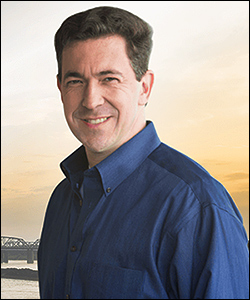
Mississippi state Sen. Chris McDaniel (R-Ellisville)

Mississippi state Sen. Chris McDaniel (R-Ellisville)

March 16, 2018 — Just before the Mississippi candidate deadline approached on March 1, state Sen. Chris McDaniel (R-Ellisville), who came within 1,719 votes of denying Sen. Thad Cochran (R) re-nomination in the 2014 Republican primary, filed to challenge Sen. Roger Wicker (R) in this year’s June primary.

The move appeared dubious since McDaniel was just beginning a campaign in early March and Sen. Wicker, whose campaign committee has well over $4 million in the bank, was well prepared for a serious challenge coming from his Tea Party opponent.

Once again, it appears Sen. Cochran has factored into McDaniel’s political future. With the senator announcing that he will end his 40-year senatorial career next month — the tenth longest Senate tenure in American history — the southeastern Mississippi conservative state legislator announced Wednesday that he will already abandon his challenge against Wicker, and instead enter the special election to replace Sen. Cochran.

Under Mississippi succession law, Gov. Phil Bryant (R) will appoint an interim replacement after Cochran officially leaves office. The interim senator will be eligible to stand for election when the people have a chance to vote in the special election to be held concurrently with the regular election calendar.

Unlike in many states, there will be no nomination cycle for the Mississippi special election. All candidates, presumably including the interim senator, will be placed on the general election ballot. Should no one receive an absolute majority, the top two finishers will advance to a secondary run-off election three weeks after the regular general election. This date, according to the 2018 calendar, would be Nov. 27, or two days before Thanksgiving.

Continue reading

Renacci to Run in Ohio;
Angle in Nevada

By Jim Ellis

March 23, 2017 — The open Republican gubernatorial primary to succeed term-limited Ohio Gov. John Kasich (R) is producing an all-star political lineup. This week, another prominent GOP politico entered the impending contest, making the May 2018 primary a major political event.

Joining Lt. Gov. Mary Taylor and attorney general and former US Sen. Mike DeWine as a gubernatorial candidate is four-term US Rep. Jim Renacci (R-Wadsworth). The congressman officially announced that he will enter the statewide campaign, a move that had been speculated upon for months. It is further expected that Secretary of State Jon Husted will also soon declare his gubernatorial candidacy.

Renacci was first elected to the House in the 2010 Republican wave. He defeated then-freshman Rep. John Boccieri (D) by 11 percentage points. Two years earlier, Boccieri had converted the seat for the Democrats after 36-year veteran Congressman Ralph Regula (R-Canton) retired.

Continue reading

Kansas in Flux

By Jim Ellis

Feb. 2, 2017 — The state of Kansas is heading for a period of major political upheaval both in the state house and within their congressional delegation.

In addition to CIA Director Mike Pompeo’s vacant 4th District being slated for an April 11 special election, Rep. Lynn Jenkins (R-Topeka) has already announced that she will not seek re-election in the 2nd District.

With Jenkins not only leaving Congress but bypassing a chance to enter an open governor’s race – a contest most observers expected her to enter in 2018 – 3rd District Rep. Kevin Yoder (R-Overland Park/Kansas City) is now reported to be seriously considering becoming a gubernatorial candidate. Should he make the jump into the statewide foray, his 3rd District will also be open in the next election.

Turning to the sprawling western 1st District where freshman Rep. Roger Marshall (R-Great Bend/Salina) will stand for his first re-election, the man he unseated in the 2016 Republican primary has already announced that he will return for a re-match. But, former Rep. Tim Huelskamp (R) has also been mentioned as a possible candidate in the Jenkins’ open seat, potentially jumping districts and hoping to stake out a Tea Party base in what promises to be a crowded primary. Kansas has no run-off, so a person with a strong ideological or geographic base can often win a multi-candidate primary election with only a small plurality. Such is how Huelskamp originally won his 1st District nomination back in 2010.

Continue reading

Cheney Results In;
Alaska Primary Decided

By Jim Ellis

Aug. 18, 2016 — Liz Cheney, daughter of former vice president, US defense secretary, and five-term Wyoming congressman, Dick Cheney, successfully captured Wyoming’s open seat Republican congressional nomination Tuesday night. The first-place finish, though nowhere close to garnering a majority of the votes cast, is enough to earn her the primary victory. Becoming the GOP nominee is tantamount to winning the seat in November since Wyoming will undoubtedly vote Republican once again this year.

Cheney scored 40 percent of the vote, far ahead of second-place finisher Leland Christensen’s 22 percent. The latter is a veteran state senator. Placing third was state Rep. Tim Stubson (17 percent), followed closely by attorney Darin Smith (15 percent). Five minor candidates came after Smith with college professor Mike Konsmo, obtaining under two percent of the vote, being the largest vote-getter within the also-ran group.

In 2014, Cheney aborted a challenge to veteran Republican US Sen. Mike Enzi and controversy arose that the candidate, who has lived in Virginia most of her life, was not a true Wyoming resident, nor was she and her family committed to living there. Cheney’s regular presence in the state and actually residing there after the 2014 election cycle put her in strong position to run for the at-large US House seat once incumbent Rep. Cynthia Lummis (R-Cheyenne) decided not to seek a fifth term.

Continue reading

Recruiting Rubio

By Jim Ellis

June 2, 2016 — As usual, a new Florida political campaign projects as a razor-thin general election contest. The Sunshine State electorate may well again determine the nation’s political fate but this time not only for a presidential campaign. Their open US Senate race could decide which party controls the majority for the upcoming 115th Congress.

Republican leaders, particularly Senate Majority Leader Mitch McConnell (R-KY) and Majority Whip John Cornyn (R-TX), are reportedly putting the full court press on incumbent ssfenator and defeated presidential candidate Marco Rubio (R-FL) to change his mind about not seeking re-election.

Apparently the leaders are less than pleased with the open race’s development, seeing little from Lt. Gov. Carlos Lopez-Cantera (R), and finding Rep. David Jolly (R-FL-13) making public pronouncements that he will no longer personally raise money for the campaign. Rep. Ron DeSantis (R-FL-6) had raised over $4 million before the end of March, has the support of important conservative organizations such as the Club for Growth, along with Tea Party grassroots support. But, the leadership feels it may be too easy for the Democrats to paint him as an extremist, thereby lessening his victory chances in the general election.

Continue reading

Today’s Primaries

By Jim Ellis

May 24, 2016 — Voters in several states go to the polls in primary elections today, but only one group will vote for president.

Washington

Washington State Republicans will visit the polling places and cast ballots in the presidential contest even though the delegates were just chosen over the weekend. Though the state convention participants overwhelmingly chose Sen. Ted Cruz supporters as national delegates, they will still be bound to the voters’ choice on the first ballot at the Republican National Convention.

Turnout will likely be low because the nomination of Donald Trump is now a foregone conclusion, and the state primary, featuring the US Senate and House races, will not occur until Aug. 2. Therefore, today’s vote is a stand-alone Republican presidential contest since Democrats have previously voted in caucus.

Washington is a 20 percent threshold state, and there is a reasonable chance that Trump will be the only contender to exceed the minimum percentage. If so, he would be awarded all 11 at-large delegates.

Continue reading

The Backfired Ploy

By Jim Ellis

May 16, 2016
— The Democratic Congressional Campaign Committee took a big chance in the closing days of the Nebraska primary just concluded, and their ploy crashed and burned.

The DCCC, understanding that Tea Party supporting former state senator and county commissioner Chip Maxwell (R) would be an easier opponent for their freshman incumbent, Rep. Brad Ashford, to beat bought over $400,000 worth of ad time to contrast Maxwell and retired Air Force General Don Bacon (R).

Their ad (above) portrays Maxwell as the “Tea Party conservative” in the Republican primary and urges GOP voters to “look up the facts” about the two candidates. In directly appealing to the group of base conservative voters the Dem party leaders hoped to confuse them in order to promote the weaker general election Republican candidate.

Continue reading

Nebraska, West Virginia Primaries

By Jim Ellis

May 11, 2016 — Though the presidential nomination contests are virtually over, voters are still streaming to the polls for nine Republican and 13 Democratic intra-party elections. Now that we are progressing further into the election cycle more states include down ballot races along with the presidential contest. That was the case in Nebraska and West Virginia yesterday. Though Hillary Clinton remains the presumed Democratic nominee, she lost yet another primary. It was expected she would fall in West Virginia after coming out earlier for shutting down the coal industry. True to form, Bernie Sanders beat her 51-36 percent. She did manage to place first in the Nebraska primary, a beauty contest for Democrats since the delegates were apportioned weeks ago.

Nebraska

It was interesting to see how presumptive Republican nominee Donald Trump fared in Nebraska, capturing 60 percent of the vote. Original projections slated this state for Sen. Ted Cruz (R-TX), and with it 36 winner-take-all Cornhusker delegates. Trump now wins, but the percentage is worth noting. The Midwest and Rocky Mountain region has been Cruz’s strongest territory, in addition to his home state of Texas, which is one reason Trump’s Indiana victory last week became so significant. The changing regional political winds in a state originally thought certain to go to Cruz helped end the race.

With many Republican establishment leaders publicly eschewing Trump’s candidacy, it doesn’t appear these actions hurt the future nominee and may actually have helped reinforce his independent, anti-establishment persona.

Continue reading

North Carolina: New Districts, New Candidates

By Jim Ellis

March 30, 2016 — The court-ordered North Carolina redistricting map is final and the new candidate filing period closed at the end of the preceding week.

The statewide and local legislative primaries were previously conducted, in conjunction with the presidential primary on March 15, but the congressional nominations were moved to June 7. Originally, all North Carolina primaries were scheduled for March 15, but the late court action necessitated opening a new filing period for the significantly altered congressional map.

The original 2011 congressional map elected 10 Republicans and three Democrats to the 13 total seats. When the court remanded the map back to the legislature with instructions to change the districts in relation to minority representation, the legislature did just that: a rather radical redraw that will still likely keep the state at 10R-3D, but assures a somewhat different group of people representing many of the changed districts.

The biggest difference will be the elimination of at least one Republican House member, as representatives Renee Ellmers (R-Dunn) and George Holding (R-Raleigh) are squaring off against each other in the new 2nd District that contains all or parts of six counties. The district contains all of Wake County with the exception of the city of Raleigh.

Continue reading

North Carolina Filing

Jan. 4, 2015 — Candidate filing closed in North Carolina before Christmas, and nine of the 14 federal incumbents standing for re-election will face 2016 primary opponents. Two of the challenges appear serious.

Sen. Richard Burr (R) draws a Tea Party challenge from physician Greg Brannon, who placed second (27.5 percent) against now-Sen. Thom Tillis in the 2014 Republican primary. He returns in a four-way contest against the two-term GOP incumbent. Former District Judge Paul Wright and retired advertising executive Larry Holmquist are the other GOP contenders.

North Carolina has 40 percent run-off law. If no candidate exceeds 40 percent, then a secondary election occurs. Sen. Burr is a cinch for the party nomination, and figures to have a strong general election performance against what will be a second-tier Democratic opponent. In 2010, Burr became the first incumbent since 1968 to be re-elected in this particular Senate seat. With Democratic recruitment failing, he is in very strong shape to win a third term.

Representatives Renee Ellmers (R-NC-2), Walter Jones (R-NC-3), Virginia Foxx (R-NC-5), Mark Walker (R-NC-6), David Rouzer (R-NC-7), Robert Pittenger (R-NC-9), Patrick McHenry (R-NC-10), and Alma Adams (D-NC-12) all drew primary challengers. Only the campaigns against Representatives Ellmers and Jones appear serious at the outset. The North Carolina primary will be held concurrently with the presidential nomination event, on March 15.

Continue reading