Monthly Archives: June 2026

Different Primaries, Different Ways of Tallying the Votes

By Jim Ellis — Tuesday, June 9, 2026

Primaries

Four states are holding primary elections today – Maine, Nevada, North Dakota, and South Carolina – and each has different ways of managing its votes.

Maine uses a Ranked Choice Voting system, which recent polling suggests could drastically alter the Democratic gubernatorial primary outcome once second- and third-choice preferences are tabulated. North Dakota relies on a strong party endorsement process that often makes the state primary, including today’s, largely a formality.

Nevada employs a straightforward plurality system in which the top vote getter advances regardless of the percentage received. South Carolina, by contrast, requires a runoff if no candidate reaches the 50 percent threshold.

Therefore, in today’s June 9 primary elections, we see nearly every major type of nominating system in use. The only other method, observed last week in California, is the top-two “jungle” primary, in which all candidates, regardless of party preference, appear on a single ballot and the two highest finishers advance to the general election irrespective of the vote percentage attained.

Lively debate often arises in political circles over which nominating system works best. For those who believe it is essential for a party’s nominee to demonstrate majority support, a secondary runoff election is the preferred approach. States such as Alabama and Georgia, which will hold runoffs next week, and South Carolina, which follows on June 23, use this method to ensure the eventual nominee surpasses the 50 percent threshold.

Other states simply rely on a basic plurality system: whoever receives the most votes wins. The drawback, however, is that in a crowded field a candidate can secure a nomination with less than 30 percent support. North Carolina uses a modified approach – its runoff provision is triggered only if no candidate reaches 30 percent. South Dakota and Iowa also hold a secondary process (SD: a runoff; IA: a state party convention) should no candidate receive 35 percent in the primary election.

In addition to North Dakota, several states – most notably Colorado, Michigan, Minnesota, and Utah, with Virginia also having the option of holding a binding nominating convention – conduct important state party endorsement conventions. These gatherings often play a decisive role in shaping the field. Candidates who fail to secure the party’s backing frequently withdraw afterward, and in many cases are expected to step aside if they do not win the delegate vote.

The one procedure that can significantly alter the outcome from the initial vote count is the Ranked Choice Voting system used in Maine. According to a recent Democratic gubernatorial primary poll, it is possible for a candidate who finishes third in the actual vote count to ultimately secure the nomination once all ranked choice votes are distributed.

The poll, conducted by SurveyUSA for the Bangor Daily News and FairVote, the organization that advocates for Ranked Choice Voting, tested both the initial ballot preferences and the subsequent RCV rounds. SurveyUSA (May 28-June 3; 484 likely Democratic primary voters; 466 likely Republican primary voters; multiple sampling techniques) provided a credible model for how the ranked choice tabulation could unfold after the first round vote.

In the Republican gubernatorial primary, the Ranked Choice Voting model closely mirrored the initial ballot test. Former Assistant Secretary of State Bobby Charles placed first among respondents on the ballot test question. Businessman Jonathan Bush, nephew and cousin to Presidents George H. W. and George W. Bush, placed second, followed by former state Senate Majority Leader Garrett Mason, with the remaining candidates trailing well behind.

After three rounds of Ranked Choice Voting, during which voters’ preferences are redistributed as lower finishing candidates are eliminated, the model shows Charles surpassing the 50 percent threshold. Under the RCV rules, reaching a majority in a tabulation secures the nomination.

The Democratic contest presents a very different dynamic, and it is here that critics highlight what they view as a flaw in Ranked Choice Voting. While supporters argue that the system ensures the candidate with the broadest overall backing ultimately prevails, detractors contend that, in practice, it can amplify the influence of the most ideologically extreme voters participating in the primary. They argue that the ranked preferences may elevate a candidate who was not among the top initial vote getters.

When a candidate is eliminated for lack of support, only the voters who ranked that individual first have their subsequent preferences redistributed into the tally. Critics argue that this dynamic can distort the outcome. Opponents of Ranked Choice Voting contend that giving these later round preferences additional weight can allow a small, highly motivated faction to alter the final result to the detriment of the initial top-tier finishers.

In the Maine Democratic example, former Maine Health Department Director Nirav Shah placed first in the initial ballot test, followed by former state Senate President Troy Jackson, ex-state House Speaker Hannah Pingree, businessman Angus King III, and Secretary of State Shenna Bellows.

With no candidate reaching 50 percent, the last-place finisher, in this poll, Secretary of State Shenna Bellows, would be eliminated. Election officials would then identify the ballots on which she was ranked first and redistribute those voters’ next preferences to the remaining candidates. This process continues through successive RCV rounds until one contender attains an adjusted majority.

In the SurveyUSA poll, the Ranked Choice Voting simulation requires four rounds and ultimately elevates the third-place finisher, former state House Speaker Hannah Pingree, daughter of US Rep. Chellie Pingree (D-North Haven/Portland), to the top position, with Dr. Nirav Shah finishing a close second in the adjusted tally.

This example illustrates how a candidate who does not lead in the initial vote count can nonetheless emerge as the nominee once lower ranking preferences are redistributed.
While this is only a poll and not an actual election, the outlined scenario is structurally possible under Maine’s RCV system. We will see how the real results unfold tonight, and in the days ahead, as election officials complete the multi round tabulation that the Ranked Choice Voting system requires.

Four-State Primary Preview

By Jim Ellis — Monday, June 8, 2026

Voters in a total of four states complete their primary voting tomorrow and several races are still too difficult to project just a day before the election. The June 9 primary states are Maine, Nevada, North Dakota, and South Carolina.

>Maine

The Maine ballot features a highly competitive Governor’s race in both primaries, a highly publicized Senate race that will become one of the top national campaigns in the general election, and a 2nd Congressional District that could prove to be the Republicans’ best conversion opportunity in the country.

For the Democrats, their crowded primary is very likely to produce a first-place finisher who is well below the 50 percent plateau. If so, the Ranked Choice Voting rounds will then begin. Polling throughout the year has favored former Maine Health Director Nirav Shah, but whether he can flourish in the RCV rounds is an unanswered question.

Dr. Shah’s principal opponents are Secretary of State Shenna Bellows, businessman Angus King III, son of Sen. Angus King (I-ME), former state Senate President Troy Jackson, and ex-state House Speaker Hannah Pingree, daughter of Rep. Chellie Pingree (D-North Haven/Portland).

The most recent poll comes from Survey USA (May 28-6-3; 484 likely Maine Democratic primary voters). The ballot test results find Dr. Shah again in first place but with a declining 25 percent. In second place is Jackson (20 percent), who has been the candidate showing the most late momentum, Pingree just a point behind at 19 percent, with King and Bellows trailing with 17 and 11 percent, respectively.

Survey USA also ran a Ranked Choice Voting test. At the end of their projected four rounds, it was Pingree topping Dr. Shah with a 52-48 percent margin. The first candidate eliminated in RCV round two was Bellows, who was the subject of national controversy early in the 2024 election when she denied a ballot position to President Trump. King was then projected to fall in round three, while Jackson was eliminated in round four but by just one point. Therefore, it appears this race is anyone’s game once the Ranked Choice rounds begin.

To refresh, instead of voting for one candidate, individuals rank all candidates in preference order. If no one receives 50 percent, the candidate with the smallest number of actual general election votes, Bellows according to the S-USA poll, is eliminated. Election officials then find the ballots that listed Bellows as the first choice. Then, only those ballots’ second choice selections are added to the aggregate vote. The process continues until one candidate receives majority support.

For the Republicans, the gubernatorial contest appears to be narrowing to a choice between former Assistant Secretary of State Bobby Charles and businessman Jonathan Bush, nephew of former President George H.W. Bush and cousin to former President George W. Bush.

Democratic Senate candidate Graham Platner, an oysterman, has attracted a great deal of national media attention of late and will likely do so throughout the general election campaign. The Susan Collins-Graham Platner contest will be one of the top national contests to determine the next Senate majority.

Tomorrow night, however, even though Gov. Janet Mills’ name remains on the Democratic ballot for the Senate, she suspended her campaign weeks ago when it was apparent that she could not overcome the Platner polling lead. Tomorrow’s primary election is now anti-climactic, but the general election will draw more than its share of national media attention.

The 2nd Congressional District is also of great interest. On the Republican side, two-term Gov. Paul LePage, who has again returned from Florida to run for office in Maine, is unopposed for the GOP nomination.

Democrats have an interesting primary that will likely move to the Ranked Choice rounds. The principal contenders are state Sen. Joe Baldacci (D-Bangor), State Auditor Matt Dunlap, and former congressional aide Jordan Wood. The Democratic outcome is uncertain. Sen. Baldacci should be favored, but he is further to the center than the Democratic base voter, thus potentially giving the more liberal Dunlap a chance to prevail.

For those Maine races forced into Ranked Choice rounds, we can expect a lengthy counting period to last several days and likely well into next week if not beyond.

Nevada

The Governor’s race is virtually locked. Gov. Joe Lombardo (R) will very likely face Attorney General Aaron Ford (D) in what will, again, be a tight statewide general election finish in the Silver State.

In the 2nd Congressional District from which GOP incumbent Mark Amodei (R-Carson City) is retiring, we see 12 candidates vying for the Republican nomination. State Conservation Secretary and ex-state Sen. James Settelmeyer appears to be the favorite. However, in such a large field and with only Settelmeyer and financial advisor David Flippo raising or self-funding significant money, one of those two will potentially win tomorrow night.

Democrats are raising significant funds, and despite the fact that we see a partisan lean of 53.8R – 40.5D (Dave’s Redistricting App), expect the Democrats to put this seat in play once one of their 11 candidates claims the nomination. Nevada has a plurality primary system, so we will see winners clinching tomorrow night.

North Dakota

Rep. Julie Fedorchak (R-Mandan) faces only minor opposition in tomorrow’s primary. For the Democrats, we see 2024 nominee Trygve Hammer returning for a rematch. In 2024, he lost to Fedorchak by a whopping 69-30 percent count. Expect a similar result in the 2026 re-match.

South Carolina

The open Republican battle to succeed term-limited Gov. Henry McMaster (R) is, like the Maine Democratic gubernatorial primary, a multi-candidate affair where the outcome is still undetermined. It is conceivable that any combination of the five candidates could advance to the June 23 runoff election.

The candidates are: Lt. Gov. Pamela Evette, who holds the Trump and McMaster endorsements, Attorney General Alan Wilson, son of veteran Rep. Joe Wilson (R-Springdale), Reps. Nancy Mace (R-Charleston) and Ralph Norman (R-Rock Hill), and businessman Rom Reddy.

Polling has been prevalent and, at one time or another, each has been in runoff position. It is clear that no one will claim the nomination tomorrow night. Rather, who qualifies for the runoff will be the key story of the night. The eventual Republican nominee should cruise in the general election.

Sen. Lindsey Graham (R) faces credible opposition in the person of businessman Mark Lynch and others, but the Senator should easily prevail. He will not join Sens. Bill Cassidy (R-LA) and John Cornyn (R-TX) as Republican incumbents who lose renomination.

In the House, the major open seat battle comes in Rep. Mace’s Charleston and Berkeley counties anchored 1st District where 10 candidates are fighting for the right to replace the three-term US House incumbent. Dr. Sam McCown and state Rep. Mark Smith (R-Daniel Island) appear to be the most likely pair to advance into a Republican runoff. The race outcome, however, is still uncertain.

One open seat where the result is certain comes in Rep. Norman’s 5th District located south of Charlotte, NC. In a safe Republican seat, state Sen. Wes Climer (R-Rock Hill) is unopposed in the GOP primary. He will be the next Congressman from this South Carolina congressional district.

Nervous California Democrats

By Jim Ellis — Friday, June 5, 2026

US House

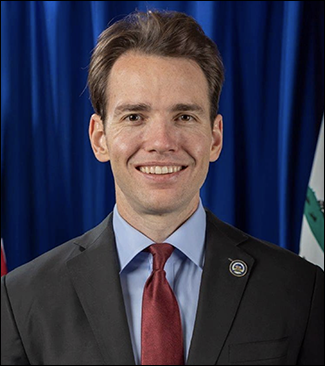
California Rep. Kevin Kiley (NP)

A northern California congressional district designed to elect a Democrat under the state’s new redistricting plan may be going “off script.”

In the new 6th District, which is anchored in the city of Sacramento but stretches into the neighboring counties of Placer and Yolo, Rep. Kevin Kiley, running under the No Party Preference label instead of the Republican designation as he did when he won his first two federal terms, leads the current jungle primary vote count. This is not overly surprising but the race favorite, former state Sen. Richard Pan (D), has dropped to third place, which is unexpected.

At this point, Dr. Pan is 1,108 votes behind second-place candidate Michael Stansfield, the lone contender under the Republican label.

Stansfield, who spent only $17,000-plus on his campaign through the March 31 Federal Election Commission campaign finance disclosure period and has no pre-primary report on file, holds second place because he is obviously getting the loyal Republican Party vote.

What makes Dr. Pan’s position tenuous is the presence of his four fellow Democrats on the ballot who have attracted a sizable aggregate Democratic vote percentage of 29.8 percent, a combined share larger than Pan’s 21.2 percent.

This is where Pan and the Democrats have potential problems. While a large number of votes, potentially equivalent to the size of the current number of counted ballots, remain outstanding under California’s elongated ballot reception, counting, and certification period that could last for another 35 days, the entire remaining Democratic share won’t go exclusively to Pan. In fact, it is more than likely the votes will split similarly to how the counted ballots have previously divided.

Therefore, such a Democratic vote apportionment could conceivably destroy the party’s chances of propelling Dr. Pan into the general election, thus yielding a Kiley-Stansfield runoff. Such a pairing would almost assuredly re-elect Rep. Kiley in a district the Democrats were counting upon to help achieve their goal of expanding their already strong California majority. Doing so would also bring them much closer to achieving the party’s national quest of wresting the US House majority away from the Republicans.

The new 6th District already has a complicated existence. Initially, most believed that Rep. Ami Bera (D-Elk Grove/ Sacramento) would have sought re-election in this district since the new CD contained much of the Congressman’s former 6th District. Instead, Bera jumped into new District 3, the seat that most believed Rep. Kiley would choose to seek his own re-election.

The district swap became complete when Kiley announced that he would run in District 6 after publicly contemplating challenging Rep. Tom McClintock (R-Elk Grove) in District 5, a seat that stretches from Sacramento all the way to the outskirts of Fresno. Had a McClintock-Kiley battle occurred, the political prize would have been one of four seats designed with a Republican registration plurality or majority.

From Tuesday’s jungle primary, there are six California congressional races (4D; 2R) trending toward an intra-party general election from the state’s 52 congressional districts. Still, with so many votes outstanding throughout the state, approximately 45 percent of the total cast ballots, many of the races could change.

The Democratic prognostication was that the party’s candidates would convert five current Republican seats. So far in the initial counting, Democrats appear to be under-performing. In the best position to capture a new Democratic registration plurality seat is veteran GOP Congressman David Valadao in the Fresno-Bakersfield areas.

Next is the San Diego/Riverside counties open seat where local county Supervisor Jim Desmond (R) may have established himself as the frontrunner to keep the 48th District in Republican hands. Of the counted votes from Tuesday’s primary, Desmond has posted a 20-percentage point lead over Democratic San Diego City Councilwoman Marni Von Wilpert.

Should political lightning strike and Kiley and Stansfield ultimately finish 1-2, thus shutting out the Democrats, the net Democratic gain would be only two seats statewide if the Valadao and Desmond totals hold. The large uncounted vote mass will soon tell many tales.

A New Congressman

By Jim Ellis — Thursday, June 4, 2026

US House

California Congressman-Elect James Gallagher (R-Yuba City)

Lost in the shuffle of the nation’s major June 2 primary night was the election of new California Congressman-Elect James Gallagher (R-Yuba City) in the state’s 1st District.

With approximately 60 percent of the district votes tabulated, Gallagher, a member of the state Assembly, was declared the special election winner outright with a current vote total of 62.6 percent. Under the elongated California ballot counting system, the state has seven more days to finish the count and certify the results.

The outright win means Gallagher will immediately be sworn into the House upon certification of his election. He replaces the late Rep. Doug LaMalfa (R) who passed away suddenly in early January.

Gallagher won his seat on Tuesday night under the old 2021 map in northern California’s 1st CD, which stretched from the Oregon border almost to Sacramento and then from the city of Redding east to Nevada, was a safely Republican domain. According to the Dave’s Redistricting App partisan lean calculations, 1st District version yielded a Republican advantage of 60.2R – 37.7D.

Under the new California map, the 1st District was substantially changed. The major difference was adding Sonoma County, a larger Democratic domain in the heart of the California wine country. Sonoma became part of CD-1 under the direction of then-state Senate President Mike McGuire (D), who hails from the county. Its addition and the removal of some smaller Republican leaning counties to the north drastically changes the partisan lean and gives the Democrats the clear advantage, 55.2D – 44.1R.

Therefore, both Assemblyman Gallagher and Sen. McGuire on Tuesday ran in two elections in two different districts, the special and the regular jungle primary. The new map, of course, is for the regular term. In Tuesday’s qualifying primary, with just over 50 percent of the ballots counted, Gallagher is leading this contest, too, 47.2 – 37.4 percent over Sen. McGuire.

While Assemblyman Gallagher is in first place at this juncture, the total Democratic vote exceeds the total Republican vote among the six candidates. The aggregate Democratic total, at this point, is just over 51 percent.

While the district is designed to elect a Democrat, namely Sen. McGuire, we could actually see a high level of competition come November. The new 1st District is comprised of all or parts of nine counties.

At this point, it appears that Gallagher is comfortably ahead in seven of the nine counties; McGuire and Gallagher are close in Mendocino County, and Sen. McGuire is well ahead in Sonoma, the biggest population entity in the new 1st District.

The new 1st CD party registration figures show 40.7 percent of the voters as Democratic Party members and 31.1 percent as Republicans. Members of the conservative American Independent Party account for 5.2 percent with another 1.4 percent as Libertarians. This brings the right-of-center total to 37.7 percent of the 1st District total.

Added to the left-of-center coalition are the Green Party members with 0.7 percent of the registration total and the Peace and Freedom Party members with 0.6 percent. The two additions bring the left-of-center aggregate total to 42 percent of the registered voting universe.

Most of the remainder are in the Declined to State category – or Independents or Non-Affiliated voters – as they are characterized in most other states. Therefore, under the right circumstances in which the center-right becomes more energized than the center-left, the general election. even in a district designed to elect a Democrat, could become highly competitive.

Gallagher’s special election victory brings the current US House total to 218 Republicans with one Independent, California Rep. Kevin Kiley (R-Rocklin/Sacramento), caucusing with the Republicans to bring their total to 219. The Democrats have 212 and four seats are vacant.

The next special election is scheduled for June 16 in California’s East San Francisco Bay 14th District to replace resigned Rep. Eric Swalwell (D). All candidates are placed on one jungle election ballot. If no one receives majority support, a runoff election between the top two finishers is scheduled for Aug. 18.

The other special election is scheduled in Georgia’s 13th District to replace the late Rep. David Scott (D-Atlanta). Like the California election, the GA-13 special will place all candidates on one ballot in a July 28 election. If no one secures a majority, the runoff between the top two finishers is scheduled for Aug. 25.

The other two vacancies – FL-20 (Rep. Sheila Cherfilus-McCormick-D, who resigned) and TX-23 (Rep. Tony Gonzales-R, who also resigned) – remain vacant at the current time with no special election schedule announced.

Yesterday’s Primary Results Roundup

By Jim Ellis — Wednesday, June 3, 2026

Voters in six states, California, Iowa, Montana, New Jersey, New Mexico, and South Dakota, cast their nomination ballots yesterday and what follows are the key results and analysis.

The night was particularly bad for two US House members attempting to run statewide. In Iowa, Rep. Randy Feenstra (R-Hull/Sioux City) fell to investment company executive Zach Lahn in the open Republican gubernatorial primary, and South Dakota at-large Congressman Dusty Johnson (R-Mitchell), after leading in early polling, failed to even qualify for the gubernatorial runoff election in his state.

California

The Governor and Los Angeles Mayor’s contests dominated the pre-election coverage. With only about half the vote counted, Republican Steve Hilton, a former Fox News host, is leading the huge 60-person field. Closely behind is former Health and Human Services Secretary, ex-California Attorney General, and 22-year congressional veteran Xavier Becerra.

When all the votes are counted, which could be weeks from now, it appears that both men will advance into the general election.

Billionaire Tom Steyer (D) is in third place, but it appears his effort to reach the general election will fail. The same for Riverside County Sheriff Chad Bianco (R), who for a time, was in competition for one of the runoff slots. Former Rep. Katie Porter (D) will also be eliminated.

In Los Angeles, Mayor Karen Bass (D) will be forced to a runoff election. It appears she will secure less than 40 percent of the vote when all ballots are counted. Advancing to the November runoff appears to be upstart Republican Spencer Pratt. His vote percentage likely places him far enough ahead of LA City Councilwoman Nithya Raman to secure the second slot.

Though Mayor Bass performed poorly for an incumbent and is clearly unpopular since almost 64 percent of the people chose another candidate, Los Angeles’ strong Democratic voting history suggests that Pratt will have a very difficult time unseating her in the general election. Still, a Republican finishing a credible second in a LA Mayor’s race is notable.

There is a new US House member in the California delegation. Republican Assemblyman James Gallagher won the 1st District special election outright, and he will immediately be sworn into office to finish the late Rep. Doug LaMalfa’s (R) term.

Gallagher, though finishing first in the new 1st District regular primary, which is much different than the seat in which he clinched the special election, will be considered at least a slight underdog in the general against state Sen. Mike McGuire (D-Sonoma County) even though the latter man fell short of expectations in yesterday’s voting.

Because only half the votes are counted, it is difficult to draw conclusions about how the House races unfolded. It does appear, however, that veteran Rep. Doris Matsui (D-Sacramento) will advance to the November general election with another Democrat, Sacramento City Councilwoman Mai Vang. This is a race to watch in November.

Other Democratic members falling below the 50 percent mark in the jungle primary will still do well in the general election because they are drawing Republican opponents and not other Democrats.

For the Republicans, in the southern California pairing between Reps. Ken Calvert (R-Corona) and Young Kim (R-La Habra), both will advance to the general election. Calvert, however, has a large lead heading into the general election campaign.

The other general election contest to watch is in San Diego where County Supervisor Jim Desmond (R) clinched the first runoff position and will face San Diego City Councilwoman Marni Van Wilpert (D), who was a distant second. This open seat race, though designed to elect a Democrat, will be very close in November.

Finally, in the race to replace retiring former House Speaker Nancy Pelosi in her San Francisco congressional district, as expected, state Sen. Scott Wiener (D-San Franciso) and San Francisco County Supervisor Connie Chan (D) will both advance to the general election.

Iowa

As mentioned above, the Republican gubernatorial winner was technology company executive Zach Lahn. He will face State Auditor Rob Sand (D), who was unopposed in the Democratic primary. This will be a very competitive general election pairing.

As expected, US Rep. Ashley Hinson (R-Marion/Cedar Rapids) and state Rep. Josh Turek (D-Council Bluffs) will square off in the US Senate general election. Democrats need to make this a competitive race to have a chance at taking the Senate majority. Rep. Hinson begins the general election campaign as the favorite.

Three of the state’s four congressional races will be competitive. The open 2nd District also went as predicted. Former state Rep. Joe Mitchell easily won the Republican primary as did state Rep. Lindsay James (D-Dubuque) in the Democratic primary.

The 1st District will see the third version of Rep. Mariannette Miller-Meeks (R-Le Claire) and former state Rep. Cynthia Bohannan (D) opposing each other. The Congresswoman performed much better in yesterday’s Republican primary (over 70 percent of the vote) as compared to her 2024 standing.

Montana

As expected, former US Attorney Scott Alme easily won the Republican US Senate primary. He will be favored to succeed retiring Sen. Steve Daines (R).

Rep. Ryan Zinke (R-Whitefish) is retiring and his chosen replacement, radio talk show host Aaron Flint, won the 1st District Republican primary. It will likely be some time before the Democratic nominee is officially elected. The initial vote totals show a tight finish between smokejumper firefighter Sam Forstag and former gubernatorial nominee Ryan Busse.

New Jersey

The key race on the New Jersey ballot is the 7th Congressional District, and the Democratic primary went as expected. The easy winner against a crowded field is businesswoman and Navy veteran Rebecca Bennett. She will now challenge two-term Rep. Tom Kean Jr. (R-Westfield), who has been absent from the House for over two months related to an undisclosed heath situation. This race is a key national Democratic conversion opportunity.

In the open 12th District, where the Democratic primary winner was a lock to replace retiring Rep. Bonnie Watson Coleman (D-Ewing Township/Trenton), physician Adam Hamawy claimed the party nomination. He is now the prohibitive favorite to win the general election.

New Mexico

Former US Interior Secretary and ex-Congresswoman Deb Haaland is the landslide Democratic gubernatorial primary winner here, defeating Bernalillo County District Attorney Sam Bregman to secure the party nomination. She becomes a heavy favorite to win the open November race against new Republican nominee Gregg Hull, the Rio Rancho Mayor.

In the competitive 2nd District, retired police officer Greg Cunningham (R) will challenge two-term Rep. Gabe Vasquez (D-Las Cruces).

South Dakota

The South Dakota Governor’s race was the second to see a businessman defeat established political figures. Businessman Toby Doeden advances to a July 28 Republican runoff likely against Gov. Larry Rhoden, who is on the ballot seeking a full term in his own right after succeeding Kristi Noem when she resigned to accept a position in the Trump Administration. Congressman Dusty Johnson (D-Mitchell) is close behind in third position but will not likely receive enough late votes to overtake the Governor for second position.

In the state’s lone House race, multi-term Attorney General Marty Jackley, as expected, was a landslide Republican primary winner. He will go onto capture the general election in November and enter the new Congress at the beginning of January.

Florida Rep. Wilson to Retire;
Today’s Primary Notes

By Jim Ellis — Tuesday, June 2, 2026

FL-24

Florida Rep. Frederica Wilson

Florida political observers had been anticipating a congressional retirement announcement for several weeks, and yesterday the expectation became reality. Veteran Florida Rep. Frederica Wilson (D-Miami Gardens) announced that she will not seek a ninth term in the House. Rep. Wilson, age 83, has been absent from Congress for several weeks while recovering from eye surgery.

During her absence from the House, Rep. Wilson had continued to say she would seek re-election but now replies she was only being “politically strategic,” according to a report in The Down Ballot political blog. Wilson explained that her earlier statements were intended to avoid giving map drawers any incentive to dismantle her district during the redistricting process.

Rep. Wilson was first elected to Congress in 2010 after serving 12 years in the state legislature. Since winning her initial federal race, she has averaged 81 percent of the vote in her seven South Florida re-election campaigns, including two cycles in which she ran unopposed.

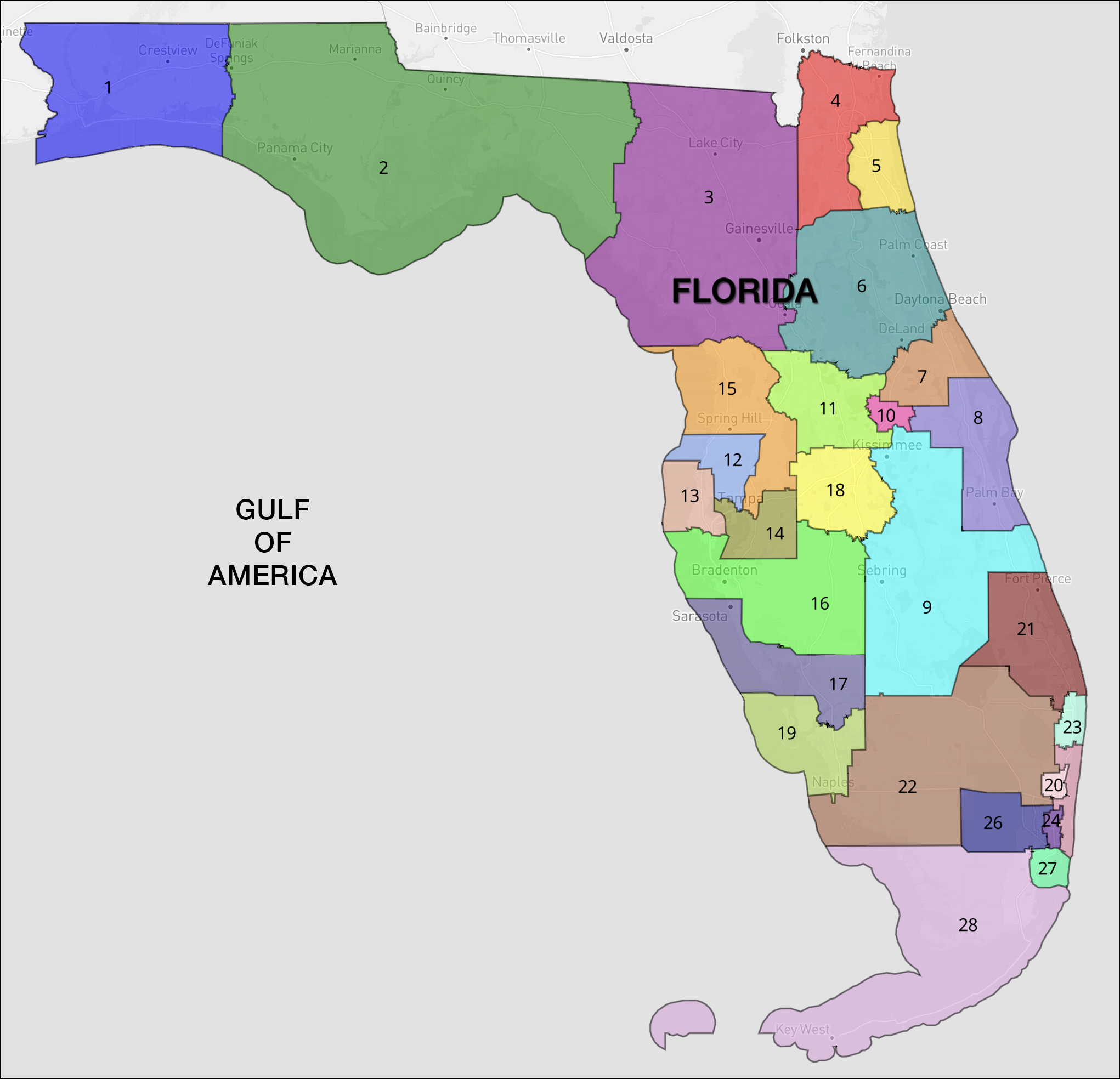
Even under the new Florida Republican redistricting map, the open 24th District will remain safely Democratic. According to Dave’s Redistricting App, FL‑24 has a partisan lean of 73.0D–26.2R.

There are now 67 open US House seats – 38 from the Republican column and 23 from the Democratic side. An additional six seats were created through various new redistricting maps. Of the 67 openings, however, only 29 members are voluntarily retiring from elective politics (16 Republicans and 13 Democrats).

Today’s Primary Notes

Several late‑breaking stories are emerging just ahead of today’s major primary election day.

First, in Iowa, a surprising poll is charting new data waters. In the open Republican gubernatorial primary, JMC Analytics released their latest Iowa survey (May 27-28; 550 likely Iowa Republican primary voters; live interview), which posts investment executive Zach Lahn to a small 27-24 percent lead over Rep. Randy Feenstra (R-Hull/Sioux City); Lahn may be in position to score an upset tonight.

The only other published poll of the GOP primary came in April from Victory Enterprises (April 14–15; 500 likely Iowa Republican primary voters). That survey showed Rep. Feenstra holding a commanding 41-8 percent lead over Lahn.

The Republican primary winner will then face State Auditor Rob Sand, who is unopposed in the Democratic primary. The general election promises to be highly competitive. Incumbent Gov. Kim Reynolds (R) is not seeking a third full term.

In California, several survey research firms have recently tested the gubernatorial jungle primary. Earlier in the cycle, most polling suggested that two Republicans, former Fox News host Steve Hilton and Riverside County Sheriff Chad Bianco, could advance to the general election. Now, however, there is growing uncertainty about whether Hilton might be edged out, potentially allowing two Democrats to qualify instead.

To recap, California places all candidates on a single primary ballot. The top two finishers, regardless of party affiliation or vote percentage, advance to the general election.

Four polls were conducted between May 26 and 28 by four different research firms. While all show the top three candidates – Hilton, former Health and Human Services Secretary and former California Attorney General and Congressman Xavier Becerra, and billionaire Tom Steyer – tightly clustered, there is no clear consensus on which two will advance to the general election. All three consistently fall within each survey’s margin of error.

It is clear the result will be extremely close, and it is possible that weeks could pass before we know definitively which two candidates advance to the general election. California is notoriously slow in counting votes, largely because election officials allow ballots to be received and counted well after Election Day. In fact, the Secretary of State has 36 days to tally and certify all ballots.

Therefore, late‑breaking developments in both Iowa and California suggest that the Governors’ races in these states could produce unpredictable outcomes. The Iowa results will likely be known tonight, but the California counting process is expected to be lengthy.

Primary Preview: NJ, NM, SD

By Jim Ellis — Monday, June 1 2026

Our third preview piece ahead of tomorrow’s primaries examines the contests in New Jersey, New Mexico, and South Dakota. Earlier, we reviewed the full slate of races in California, Iowa, and Montana. A total of 15 primaries will occur this June.

New Jersey

The Garden State features just one top‑tier competitive general‑election contest: the 7th Congressional District, where two‑term Rep. Tom Kean Jr. (R‑Westfield), who has been absent from Congress for two months due to an unexplained health issue, is poised to face a strong Democratic challenger. The district only slightly favors Republicans; analysts at the Dave’s Redistricting App estimate a 50.9R–46.7D partisan lean.

The primary elections include a Republican Senate contest and 10 contested congressional primaries. As noted earlier, however, only one of these nomination battles is expected to become a truly competitive general election race.

Four Republicans are vying for the opportunity of challenging Sen. Cory Booker (D), but the GOP primary is merely a secondary storyline. Sen. Booker enters the general election as a strongly positioned incumbent in a state that has consistently favored Democratic candidates.

The first notable primary is in District 2, where four Democrats are competing for the chance to challenge four‑term Rep. Jeff Van Drew (R‑Dennis Township/Atlantic City). The Congressman is now seeking his third election as a Republican after initially winning the seat as a Democrat. Tomorrow’s Democratic victor will likely attract some initial national consideration to determine if Rep. Van Drew has general election vulnerability.

In the 7th District, four Democrats are competing for the opportunity to challenge Rep. Kean. Businesswoman and Air National Guard officer Rebecca Bennett has led in recent polling and is well‑positioned to secure the nomination. Because New Jersey uses a plurality‑vote primary system, finishing first tomorrow is all that matters.

In the northern New Jersey 8th District, two‑term Rep. Rob Menendez (D‑Jersey City) again faces a Democratic primary challenger, though the opposition is not as formidable as the field he confronted in 2024. Rep. Menendez is widely viewed as the clear favorite over former Jersey City Board of Education president Mussab Ali.

In District 11, special‑election winner Analilia Mejia (D‑Glen Ridge/Morristown) faces only minimal opposition in the regular Democratic primary and is not expected to encounter a competitive general election challenge. The seat became open earlier this year after then‑incumbent Rep. Mikie Sherrill (D) was elected Governor in the November 2025 election.

Rep. Bonnie Watson Coleman (D‑Ewing Township/Trenton) is not seeking a seventh term, creating an open seat and prompting a crowded 13‑candidate Democratic primary. The eventual nominee will win the strongly Democratic district in November.

Only two of the 12th District contenders hold elected office: state Assemblywoman Verlina Reynolds‑Jackson (D‑Trenton) and Somerset County Commissioner Shanel Robinson. With such a large field, the winning candidate will likely secure only a modest share of the vote, but New Jersey’s plurality primary system means that finishing first is all that matters, regardless of the overall percentage.

New Mexico

With Sen. Ben Ray Luján (D) facing only minimal Democratic primary opposition and no Republican challenger, statewide political attention is centered almost entirely on the open Governor’s race.

Because Gov. Michelle Lujan Grisham (D) is ineligible to seek a third term, the open Democratic primary is central to determining her successor. The race has narrowed to a two‑candidate contest between former US Interior Secretary and ex‑ Albuquerque Congresswoman Deb Haaland and Bernalillo County District Attorney Sam Bregman. While Haaland enters the primary with notable advantages, political observers still expect a relatively competitive finish.

Three Republicans are competing for the party’s gubernatorial nomination, with Rio Rancho Mayor Gregg Hull and former New Mexico Human Services Secretary Duke Rodriguez viewed as the leading contenders. Whoever emerges from the primary is expected to face a difficult campaign path in the general election, given the state’s Democratic voting history.

Only one of New Mexico’s congressional races is expected to be competitive in the general election: the southern 2nd District. Here, Rep. Gabe Vasquez (D‑Las Cruces) is seeking a third term in what is shaping up to be a closely watched contest.

Retired police officer Greg Cunningham is unopposed for the Republican nomination, setting up a potentially high‑profile national race. While Vasquez enters the cycle with some clear advantages, the district has a recent history of competitive outcomes, making it a race to watch this fall.

South Dakota

The open Republican gubernatorial campaign is shaping up to be a tight contest. Gov. Larry Rhoden assumed the state’s top office from his post as Lieutenant Governor when then‑Gov. Kristi Noem (R) resigned to accept a federal appointment. At‑large Rep. Dusty Johnson (R-Mitchell) immediately announced a primary challenge to Gov. Rhoden. Businessman Toby Doeden and state House Speaker Jon Hansen (R-Dell Rapids) are also running, and each has a credible base of support.

South Dakota is a runoff state, and there is a real possibility that none of the four candidates will reach the 35 percent threshold needed to clinch the Republican nomination outright. If a runoff is required, it will be held on June 28.

Separate recent polls have individually placed three of the four candidates in first place, leaving tomorrow’s outcome uncertain. The eventual Republican nominee, however, is strongly positioned to win the Governorship in November, given the state’s partisan landscape.

In the open at‑large House race, multi‑term Attorney General Marty Jackley is strongly positioned to win the Republican primary and advance to November as the party’s nominee. Given the state’s voting history, he enters the general election cycle as the prohibitive favorite in the contest for South Dakota’s lone US House seat.