
Monthly Archives: June 2026

Florida Rep. Wilson to Retire;
Today’s Primary Notes

By Jim Ellis — Tuesday, June 2, 2026

FL-24
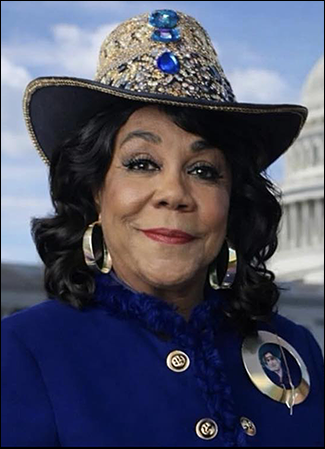
Florida Rep. Frederica Wilson

Florida political observers had been anticipating a congressional retirement announcement for several weeks, and yesterday the expectation became reality. Veteran Florida Rep. Frederica Wilson (D-Miami Gardens) announced that she will not seek a ninth term in the House. Rep. Wilson, age 83, has been absent from Congress for several weeks while recovering from eye surgery.

During her absence from the House, Rep. Wilson had continued to say she would seek re-election but now replies she was only being “politically strategic,” according to a report in The Down Ballot political blog. Wilson explained that her earlier statements were intended to avoid giving map drawers any incentive to dismantle her district during the redistricting process.

Rep. Wilson was first elected to Congress in 2010 after serving 12 years in the state legislature. Since winning her initial federal race, she has averaged 81 percent of the vote in her seven South Florida re-election campaigns, including two cycles in which she ran unopposed.

Even under the new Florida Republican redistricting map, the open 24th District will remain safely Democratic. According to Dave’s Redistricting App, FL‑24 has a partisan lean of 73.0D–26.2R.

There are now 67 open US House seats – 38 from the Republican column and 23 from the Democratic side. An additional six seats were created through various new redistricting maps. Of the 67 openings, however, only 29 members are voluntarily retiring from elective politics (16 Republicans and 13 Democrats).

Today’s Primary Notes

Several late‑breaking stories are emerging just ahead of today’s major primary election day.

First, in Iowa, a surprising poll is charting new data waters. In the open Republican gubernatorial primary, JMC Analytics released their latest Iowa survey (May 27-28; 550 likely Iowa Republican primary voters; live interview), which posts investment executive Zach Lahn to a small 27-24 percent lead over Rep. Randy Feenstra (R-Hull/Sioux City); Lahn may be in position to score an upset tonight.

The only other published poll of the GOP primary came in April from Victory Enterprises (April 14–15; 500 likely Iowa Republican primary voters). That survey showed Rep. Feenstra holding a commanding 41-8 percent lead over Lahn.

The Republican primary winner will then face State Auditor Rob Sand, who is unopposed in the Democratic primary. The general election promises to be highly competitive. Incumbent Gov. Kim Reynolds (R) is not seeking a third full term.

In California, several survey research firms have recently tested the gubernatorial jungle primary. Earlier in the cycle, most polling suggested that two Republicans, former Fox News host Steve Hilton and Riverside County Sheriff Chad Bianco, could advance to the general election. Now, however, there is growing uncertainty about whether Hilton might be edged out, potentially allowing two Democrats to qualify instead.

To recap, California places all candidates on a single primary ballot. The top two finishers, regardless of party affiliation or vote percentage, advance to the general election.

Four polls were conducted between May 26 and 28 by four different research firms. While all show the top three candidates – Hilton, former Health and Human Services Secretary and former California Attorney General and Congressman Xavier Becerra, and billionaire Tom Steyer – tightly clustered, there is no clear consensus on which two will advance to the general election. All three consistently fall within each survey’s margin of error.

It is clear the result will be extremely close, and it is possible that weeks could pass before we know definitively which two candidates advance to the general election. California is notoriously slow in counting votes, largely because election officials allow ballots to be received and counted well after Election Day. In fact, the Secretary of State has 36 days to tally and certify all ballots.

Therefore, late‑breaking developments in both Iowa and California suggest that the Governors’ races in these states could produce unpredictable outcomes. The Iowa results will likely be known tonight, but the California counting process is expected to be lengthy.

Primary Preview: NJ, NM, SD

By Jim Ellis — Monday, June 1 2026

Our third preview piece ahead of tomorrow’s primaries examines the contests in New Jersey, New Mexico, and South Dakota. Earlier, we reviewed the full slate of races in California, Iowa, and Montana. A total of 15 primaries will occur this June.

New Jersey

The Garden State features just one top‑tier competitive general‑election contest: the 7th Congressional District, where two‑term Rep. Tom Kean Jr. (R‑Westfield), who has been absent from Congress for two months due to an unexplained health issue, is poised to face a strong Democratic challenger. The district only slightly favors Republicans; analysts at the Dave’s Redistricting App estimate a 50.9R–46.7D partisan lean.

The primary elections include a Republican Senate contest and 10 contested congressional primaries. As noted earlier, however, only one of these nomination battles is expected to become a truly competitive general election race.

Four Republicans are vying for the opportunity of challenging Sen. Cory Booker (D), but the GOP primary is merely a secondary storyline. Sen. Booker enters the general election as a strongly positioned incumbent in a state that has consistently favored Democratic candidates.

The first notable primary is in District 2, where four Democrats are competing for the chance to challenge four‑term Rep. Jeff Van Drew (R‑Dennis Township/Atlantic City). The Congressman is now seeking his third election as a Republican after initially winning the seat as a Democrat. Tomorrow’s Democratic victor will likely attract some initial national consideration to determine if Rep. Van Drew has general election vulnerability.

In the 7th District, four Democrats are competing for the opportunity to challenge Rep. Kean. Businesswoman and Air National Guard officer Rebecca Bennett has led in recent polling and is well‑positioned to secure the nomination. Because New Jersey uses a plurality‑vote primary system, finishing first tomorrow is all that matters.

In the northern New Jersey 8th District, two‑term Rep. Rob Menendez (D‑Jersey City) again faces a Democratic primary challenger, though the opposition is not as formidable as the field he confronted in 2024. Rep. Menendez is widely viewed as the clear favorite over former Jersey City Board of Education president Mussab Ali.

In District 11, special‑election winner Analilia Mejia (D‑Glen Ridge/Morristown) faces only minimal opposition in the regular Democratic primary and is not expected to encounter a competitive general election challenge. The seat became open earlier this year after then‑incumbent Rep. Mikie Sherrill (D) was elected Governor in the November 2025 election.

Rep. Bonnie Watson Coleman (D‑Ewing Township/Trenton) is not seeking a seventh term, creating an open seat and prompting a crowded 13‑candidate Democratic primary. The eventual nominee will win the strongly Democratic district in November.

Only two of the 12th District contenders hold elected office: state Assemblywoman Verlina Reynolds‑Jackson (D‑Trenton) and Somerset County Commissioner Shanel Robinson. With such a large field, the winning candidate will likely secure only a modest share of the vote, but New Jersey’s plurality primary system means that finishing first is all that matters, regardless of the overall percentage.

New Mexico

With Sen. Ben Ray Luján (D) facing only minimal Democratic primary opposition and no Republican challenger, statewide political attention is centered almost entirely on the open Governor’s race.

Because Gov. Michelle Lujan Grisham (D) is ineligible to seek a third term, the open Democratic primary is central to determining her successor. The race has narrowed to a two‑candidate contest between former US Interior Secretary and ex‑ Albuquerque Congresswoman Deb Haaland and Bernalillo County District Attorney Sam Bregman. While Haaland enters the primary with notable advantages, political observers still expect a relatively competitive finish.

Three Republicans are competing for the party’s gubernatorial nomination, with Rio Rancho Mayor Gregg Hull and former New Mexico Human Services Secretary Duke Rodriguez viewed as the leading contenders. Whoever emerges from the primary is expected to face a difficult campaign path in the general election, given the state’s Democratic voting history.

Only one of New Mexico’s congressional races is expected to be competitive in the general election: the southern 2nd District. Here, Rep. Gabe Vasquez (D‑Las Cruces) is seeking a third term in what is shaping up to be a closely watched contest.

Retired police officer Greg Cunningham is unopposed for the Republican nomination, setting up a potentially high‑profile national race. While Vasquez enters the cycle with some clear advantages, the district has a recent history of competitive outcomes, making it a race to watch this fall.

South Dakota

The open Republican gubernatorial campaign is shaping up to be a tight contest. Gov. Larry Rhoden assumed the state’s top office from his post as Lieutenant Governor when then‑Gov. Kristi Noem (R) resigned to accept a federal appointment. At‑large Rep. Dusty Johnson (R-Mitchell) immediately announced a primary challenge to Gov. Rhoden. Businessman Toby Doeden and state House Speaker Jon Hansen (R-Dell Rapids) are also running, and each has a credible base of support.

South Dakota is a runoff state, and there is a real possibility that none of the four candidates will reach the 35 percent threshold needed to clinch the Republican nomination outright. If a runoff is required, it will be held on June 28.

Separate recent polls have individually placed three of the four candidates in first place, leaving tomorrow’s outcome uncertain. The eventual Republican nominee, however, is strongly positioned to win the Governorship in November, given the state’s partisan landscape.

In the open at‑large House race, multi‑term Attorney General Marty Jackley is strongly positioned to win the Republican primary and advance to November as the party’s nominee. Given the state’s voting history, he enters the general election cycle as the prohibitive favorite in the contest for South Dakota’s lone US House seat.