Tag Archives: Sen. Thom Tillis

The Importance of the Jan. 5
Georgia Runoff Elections

By Jim Ellis

Georgia Sen. David Perdue (R)

Nov. 6, 2020 — With results changing as votes are continually being counted for the close Georgia presidential and senatorial races, it appears that we will see two Jan. 5 US Senate runoff elections in the Peach State, which will ultimately decide the body’s next majority.

At this writing, with an approximate 98 percent of votes counted, Sen. David Perdue (R), who will finish first, is 6,810 votes short of the majority mark. Georgia is one of two states where a candidate must receive 50 percent of the general election vote to win. The presence of Independent Shane Hazel capturing 2.3 percent helps deny Sen. Perdue a majority victory; hence, a second election is necessitated under Georgia election law.

Assuming that Sen. Dan Sullivan (R) wins his Alaska race – he’s ahead 62-32 percent with 50% of the vote reported – and incumbent Thom Tillis is officially re-elected in North Carolina, the Republicans will have 50 guaranteed members.

At this point, according to North Carolina officials, a number between 116-117,000 is the total universe of potential uncounted votes. This is the number of absentee ballots that were sent to voters who requested them but have yet to be returned. The only way they will be counted is if they entered the mail stream by Nov. 3 and are received before close of business on Nov. 12. Additionally, within this universe, Republican voters requested approximately one-third of the ballots.

With Sen. Tillis ahead by 96,688 votes according to the Fox News count, the mathematics suggest the Democrats have almost no chance of overcoming the lead especially when further considering that a significant percentage of those voters won’t even return the ballots.

To underscore the Democrats’ North Carolina dilemma, party nominee Cal Cunningham would have to receive 96,689 votes of this universe of just over 116,500 individuals, or 83 percent of the aggregate if everyone returns their ballots. If only 83 percent of those requesting the ballots have already mailed them to their respective county election center, for example, Cunningham would literally need to receive every vote. Therefore, this Senate race is a virtual lock for Sen. Tillis and the GOP.

Continue reading

“As Goes North Carolina,
So Goes the Senate”

First-term Sen. Thom Tillis’s campaign ad branding opponent Cal Cunningham as not trustworthy.

By Jim Ellis

Oct. 22, 2020 — It looked like North Carolina Democratic US Senate nominee Cal Cunningham was building a strong lead over first-term Sen. Thom Tillis (R) as the two candidates headed into October after what had already been a long campaign. Though the revelations coming forth at that time about extra-marital affairs that Cunningham was having didn’t immediately affect the campaign’s course to a great degree, we are now seeing significant movement in Tillis’ direction.

Since the end of September until last week, 18 polls were conducted of the Tar Heel State Senate race and Cunningham was averaging a lead of just under six percentage points. This included a range of a 13-point spread in one survey (Hart Research Associates; Sept. 24-27; 400 likely North Carolina voters, live interview — Cunningham, 54 percent; Tillis 41 percent) all the way to Tillis’s one-point edge (East Carolina University; Oct. 2-4; 1,232 likely North Carolina voters, interactive voice response system & an online panel — Tillis 47 percent; Cunningham 46 percent).

A new series of four polls, from a quartet of individual survey research entities, find the Cunningham lead being cut by almost two-thirds, down to just over two points. The most recent survey, from Ipsos/Reuters (Oct. 14-20; 660 likely North Carolina voters, online interview) projects that the two candidates are tied at 47 percent apiece.

Much of the reasoning behind the movement back toward Tillis’ direction is associated with the Cunningham affairs and how the two campaigns have handled the scandal. Cunningham has stopped holding virtual events and refuses to answer questions about whether there are more women than the two situations that have been already identified. In the one news availability that he held for reporters since the extra-marital scandal broke, Charlotte television reporters stressed several times that the candidate refused to answer four separate times whether he is involved with more women.

Continue reading

NC: First Post-Sexting Poll

By Jim Ellis

North Carolina Democratic Senate candidate Cal Cunningham’s recent involvement in a sexting scandal has seen polling numbers drop.

Oct. 7, 2020 — On Friday, it came to light, after the announcement that North Carolina Republican Sen. Thom Tillis had been diagnosed with COVID-19, that Democratic nominee Cal Cunningham who has been leading for most of the race is involved in a sexting affair with a married woman. The story was carried heavily in media reports on Friday.

Almost immediately, Public Policy Polling went into the field to assess the damage, and while they find Cunningham still holding the advantage it is half the size of the double-digit margin he enjoyed in the previous two surveys.

The North Carolina Senate race has been heavily studied. Just since Sept. 15, we have seen no less than 13 polls released of this Senate contest with Cunningham leading in all.

The new Public Policy Polling survey (Oct. 4-5; 911 North Carolina voters via interactive voice response system) sees Cunningham holding a 48-42 percent lead over Sen. Tillis. Though the margin is six points, the spread is down significantly from the 13- and 12-point advantages he recorded in the two most recent polls from Hart Research Associates (Sept. 24-27; 400 likely North Carolina voters via live interview) and ALG Research (Sept. 22-28; 822 voters, online), respectively.

The PPP data reveals that Cunningham is taking a hit over the budding scandal. When asked whether “the information about Cal Cunningham having a relationship with a woman who is not his wife make you more or less likely to vote for him, or does it not make a difference,” 37 percent answered they are less likely to support him versus three percent who said they were more inclined. A total of 58 percent said the breaking story would make no difference in how they decide to vote.

Continue reading

SCOTUS: The Effect of Replacing Late Supreme Court Justice Ruth Bader Ginsburg On The 35 Senate Races

By Jim Ellis

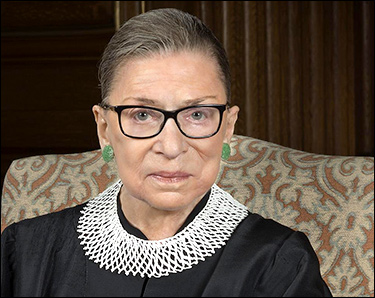
Late Supreme Court Justice Ruth Bader Ginsburg

Sept. 22, 2020 — A secondary question surrounding the replacement process for the late Supreme Court Justice Ruth Bader Ginsburg is how will the confirmation fight over the next judicial nominee resonate in the 35 Senate races?

In the 18 campaigns that appear non-competitive (9D; 8R) – for example, in Illinois (Sen. Dick Durbin-D), Rhode Island (Sen. Jack Reed-D), Arkansas (Sen. Tom Cotton-R), and Idaho (Sen. Jim Risch-R) to name a representative quartet – the Supreme Court battle will have little influence over the Senate outcome since those situations are virtually decided.

If the individual campaigns play the issue correctly, however, the Supreme Court vacancy development could be a boon to most competitive Republican incumbents and candidates in traditionally conservative states that are moving closer to the political center.

Democratic challengers in the more conservative states could have trouble because the issue matrix likely to be discussed through the nomination and confirmation process should activate the more conservative voting base. This is likely the case in the key competitive southern domains (AL, GA, NC), and in the Midwest and Rocky Mountain states, particularly in Iowa, the Kansas open seat, and for the Montana duel, in addition to the far west campaign in Alaska.

Perhaps the senator in the worst confirmation question situation, and one who can ill afford to be embroiled in such a predicament, is Maine Sen. Susan Collins (R). Already trailing in polling to state House Speaker Sara Gideon, Sen. Collins’ immediate call to postpone the process, and what will likely lead to a vote against the motion to proceed, will likely cost her conservative votes that she badly needs.

Her position to postpone has likely angered many who comprise the conservative base and gained her nothing with the Independents and soft Democrats that she desperately needs to close the gap between she and Gideon.

Continue reading

The Senate Barometer

Sen. Cory Gardner Senate campaign attack ads hitting former Colorado Gov. John Hickenlooper hard (see COLORADO writeup below)


By Jim Ellis

June 18, 2020 — Next to discussion of the presidential race, the political contests attracting the most political attention and debate are the 2020 US Senate campaigns.

As we know, Republicans have a 53-47 Senate majority, meaning the Democrats will have to convert a net three GOP seats if Joe Biden wins the presidency, or four if President Trump is re-elected. Many believe that the winning presidential candidate will also sweep in a Senate majority for his party.

Below is an update of the key races:


• ALABAMA: In many ways, this could be the most important race on the board. Republicans must convert this seat back to their column in order to provide a greater cushion toward protecting their chamber majority. Sen. Doug Jones (D), who scored a fluke special election win in 2017, stands for a full six-year term in November.

Republicans are in a runoff election that will be decided on July 14, postponed from the original March 31 date. In the March 3 primary, retired Auburn University head football coach Tommy Tuberville placed first over former attorney general and ex-Alabama senator Jeff Sessions within a field of seven total candidates, 33-32 percent.

Runoff polling, however, gives Tuberville a large lead as the contenders enter the last month of the secondary election campaign. The May 26-27 OnMessage survey gave Tuberville a 49-43 percent edge, down considerably, however, from the 55-32% margin the former coach posted in a Cygnal research group poll conducted over the May 7-10 period.

Tuberville, with President Trump’s endorsement and running an ad saying Sessions’ appointment as AG is the president’s top regret since taking office, clearly has the advantage. In the general election, this race is a must-win for the GOP. If converted, the Republican majority expands to 54, which will be critical for their chances to hold.


• ARIZONA: Things continue to break retired astronaut Mark Kelly’s (D) way in the early going opposite appointed Sen. Martha McSally (R). Being one of the top national fundraisers with $31 million raised and millions more coming into the state in the form in independent expenditures, Kelly is the favorite to convert the seat in November. He has led in the last 11 publicly released polls, the latest coming from the Civiqs organization, polling for the Daily Kos Elections website (June 13-15), which posts Kelly to a 51-42 percent advantage.


• COLORADO: Sen. Cory Gardner (R) seeks a second term, and with the state’s electorate moving decidedly to the left since the incumbent’s original election in 2014, the Colorado race sets up well for Democratic conversion.

There is some weakness developing, however, surrounding Sen. Gardner’s likely Democratic opponent, former governor and presidential candidate John Hickenlooper. Recently, the Colorado Ethics Commission ruled that Hickenlooper, while governor, twice violated the state’s gift ban, which has caused him negative statewide publicity.

Now, the National Republican Senatorial Committee has launched an ad campaign underscoring the commission finding just as the former governor approaches his June 30 primary election against former state house speaker Andrew Romanoff. Sen. Gardner also is on the air in a new ad highlighting Hickenlooper’s statements during the presidential campaign when he was quoted extensively as saying he didn’t want to be a US senator. Taking this into consideration, more people are looking toward the Democratic primary, in which Romanoff is gaining some momentum. This general election is a must-win for the Democrats.
Continue reading

Dueling Polls in North Carolina Show Disparity in Candidate Numbers

By Jim Ellis

April 20, 2020 — Within a 10-day period, two statewide polls producing radically different results were conducted of the North Carolina electorate. Rather unsurprisingly, the Republican polling firm turned in better results for the GOP candidates than did the Democratic company.
As has been the political narrative for this entire election cycle, North Carolina is going to be one of the most competitive states in the nation. The presidential, US Senate, and gubernatorial races will all be pivotal within the national context.

Harper Polling, the Republican firm, went into the field during the April 5-7 period and conducted live interviews of 500 likely general election voters. Public Policy Polling, a Raleigh-based Democratic survey research company, conducted a large sample poll of 1,318 North Carolina registered voters through a combination of interactive voice and text messaging response systems.

In both the presidential and US Senate campaigns we see diverse results, and particularly so for the latter, yet for the governor’s race the two firms yielded almost identical numbers.

Harper finds President Trump leading former vice president Joe Biden, 49-42 percent, well beyond the polling margin of error. This result is obviously good news for the president in what is for him a must-win state. Conversely, PPP projects only a 48-47 percent split among the two candidates, and in Biden’s favor. In actuality, the two pollsters, while a net eight points apart on their respective ballot tests, are close – within two points – on the Trump number. They are not even within the same realm, and in fact beyond any polling margin of error, on the Biden posting.

The president’s standing could actually be a bit better in North Carolina than these results, and particularly the PPP totals, indicate. In the 2016 election, he under-polled in the Tar Heel State. In the final three polls before the vote, from three different survey research firms, Hillary Clinton held an average 1.3 percentage point advantage over then-candidate Trump. The end result, however, was a 3.3 percentage point victory for the Republican nominee.

Continue reading

Super Tuesday State Primaries

By Jim Ellis

Feb. 28, 2020 — While the Democratic presidential primaries have dominated the political media coverage for next Tuesday’s big election, five states are also holding their regular primary elections including four with Senate races.

Voters in Alabama, Arkansas, North Carolina, and Texas will begin choosing their nominees for the Senate and their entire slate of down ballot races. Each is a run-off state, and two of the aforementioned, Alabama and Texas, appear headed for a secondary Senate primary contest later in March and May, respectively. The regular California primary is also scheduled, but there is no Senate election in the Golden State this year. We will, however, see 53 sets of US House general election participants advance to the general election from their top-two jungle primary system.

In Alabama, former US attorney general and senator Jeff Sessions is attempting a political comeback. Retired Auburn University head football coach Tommy Tuberville and US Rep. Bradley Byrne (R-Mobile) are his chief opponents. Former Alabama Supreme Court chief judge Roy Moore is also on the ballot, but polling suggests he will not even break into double digits.

Sessions ad

Sessions launched two new ads in the last couple days, one that promotes himself as a strong supporter of, and the best person to implement the Trump agenda. The second is an attack ad against Tuberville, hitting him with audio of the retired coach saying we need immigrants coming across the border for certain jobs and that Tuberville actually lives and pays taxes in Florida.

Tuberville ad

Earlier, Tuberville was running a statewide ad reminding the electorate that President Trump fired Sessions as attorney general and that choosing him for the post was the president’s top regret during his tenure in office. Rep. Byrne has been simultaneously running a negative spot jointly attacking both of his top opponents.

The most likely pair to advance into the run-off are Sessions and Tuberville. The secondary election is scheduled for March 31.

Arkansas Sen. Tom Cotton (R) is virtually re-elected. Democrats failed to file a candidate against him, meaning Tuesday’s primary is a non-event for the first-term senator. He will advance into the general against only minor party opposition.

Continue reading

Primary Money Count – Senate

By Jim Ellis

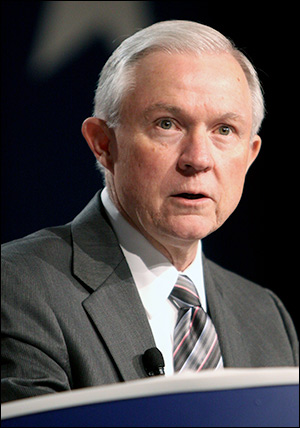
Former Alabama senator, Jeff Sessions (R)

Feb. 7, 2020 — The 4th Quarter campaign disclosure reports are published and today we look at the key early primary Senate states, those that will have an initial vote on Super Tuesday, March 3.

Five states will hold their regular primaries on that day, and four of them have Senate elections. Voters in Alabama, Arkansas, North Carolina, and Texas will take at least the first step in choosing their statewide nominees on Super Tuesday. California, which also holds its regular primary that day does not have a Senate race in this cycle. In Arkansas, Democrats failed to produce a candidate, meaning that Sen. Tom Cotton (R) will head into the general election as a virtually unopposed candidate.

ALABAMA

Alabama hosts a major Republican primary featuring former US attorney general and senator, Jeff Sessions. He is running for the seat he vacated to accept his federal appointment. Sessions is being fiercely challenged, however. Two serious candidates are also vying for the party nomination, US Rep. Bradley Byrne (R-Mobile) and retired Auburn University head football coach Tommy Tuberville. Ex-state Supreme Court chief judge and 2017 Senate special election nominee Roy Moore is back for another attempt, but his previous poor performance and lack of funding has relegated him to lower-tier status.

On the fundraising front, the Federal Election Commission reports find Sessions raising more than $530,000 but has spent more than $812,000. At the end of the year, he held over $2.5 million in cash, but most of those funds were raised during his time as an incumbent Senator.

Coach Tuberville has done an outstanding job of fundraising for a first-time candidate in a crowded field, raising over $1.3 million from individuals and loaning his campaign $1 million. His year-end cash-on-hand (CoH) figure was $1.52 million.

Rep. Byrne has accumulated over $3.3 million for his campaign, including transferring more than $2.2 million from his US House committee. His CoH total is just under $2.1 million.

Continue reading

The North Carolina Filings

All the best for a wonderful holiday season.
Ellis Insight daily updates will return on Jan. 3, 2020.

By Jim Ellis

Dec. 24, 2019 — Candidate filing in the Tar Heel State closed Friday, and the North Carolina political contestants are now set for the March 3 Super Tuesday state primary. In addition to the presidential race, North Carolina voters will choose nominees for governor, US Senate, 13 congressional races, the state constitutional offices, and state legislature.

No surprises came from the presidential filings, though 38 individuals filed to run for the nation’s highest office. Twenty of the 38 are minor party candidates, however. Fifteen Democrats are running, including all of the major contenders. President Trump draws Republican primary opposition from former Massachusetts governor Bill Weld and Illinois ex-congressman Joe Walsh.

Sen. Thom Tillis sees only minor Republican primary opposition and now is a cinch for re-nomination. Businessman Garland Tucker was expected to run a competitive primary race but decided to end his effort prior to the filing deadline. When Rep. Mark Walker (R-Greensboro) was drawn out of a winnable district in the court-mandated redistricting plan, he began considering entering the Senate race. The congressman, however, ultimately decided to wait a cycle and looks to run for Sen. Richard Burr’s (R) open seat in 2022.

Five Democrats filed for the Senate, but the nomination battle is realistically between former state senator Cal Cunningham, who is the party leadership favorite, and state Sen. Erica Smith (D-Gaston). The eventual Democratic nominee will face Sen. Tillis in what promises to be a competitive general election in a state that has defeated more incumbents in the modern political era than any other place.

Continue reading

Deadlines Ahead in Ohio,
North Carolina 2020 Campaigns

By Jim Ellis

Dec. 17, 2019 — Interesting decisions await as candidate filing deadlines are approaching this week in Ohio (Dec. 18) and North Carolina (Dec. 20) for their respective March 17 and March 3 primaries.

The Ohio political situation, originally thought to be relatively mundane without a Senate campaign and little competition within the congressional delegation, may be changing.

In the 1st District, veteran Rep. Steve Chabot (R-Cincinnati), who lost this district in 2008 after first going to Congress in 1995 and then re-claiming the seat in 2010, again faces what will likely be a competitive re-election battle. In 2018, Chabot defeated Hamilton County Clerk of Courts Aftab Pureval by a 51-47 percent count, despite the Democratic nominee spending over $4 million for his campaign. Expected to file for the Democrats this year are healthcare executive Kate Schroder and US Air Force Reserve officer Nikki Foster.

The new potential contest coming onto the political scene emanates from the Youngstown area as Rep. Tim Ryan (D-Warren), who was an early presidential candidate but failed to generate any major attention, appears to be attracting strong opposition for the first time since he won his original congressional election in 2002.

Now reportedly moving toward challenging Rep. Ryan are former Lt. Gov. Mary Taylor, who fared poorly in the 2018 Republican gubernatorial primary, and ex-state Rep. Christina Hagan who scored over 40 percent of the vote against freshman Rep. Anthony Gonzalez (R-Rocky River/Medina) in the last nomination campaign from the neighboring 16th District.

Though both women have the ability to attract people and resources to their political efforts, the 13th CD is reliably Democratic and Congressman Ryan would be tough to dislodge. President Trump fared better than most Republicans here in 2016, but still lost 44-51 percent. President Obama, in both 2008 and 2012, topped 62 percent and Rep. Ryan has averaged 67.8 percent of the vote over his nine-term congressional career.

Still, House members who run for president often have a difficult time in their next re-election effort, so it remains to be seen if a credible challenge against the veteran congressman could develop legs.

Continue reading