Tag Archives: Sen. Bernie Sanders

Turnout 2020: Up, then Down

By Jim Ellis

June 8, 2020 — In most political campaigns, the final electoral result is determined not necessarily from transforming undecided individuals into positive votes, but rather ensuring that the candidate’s committed supporters actually cast their ballot. Therefore, accurately projecting and influencing voter turnout becomes critical for every campaign.

Before the COVID-19 virus struck, many analysts and political prognosticators were predicting a record turnout in the 2020 general election, thus exceeding 2016’s all-time high 136.8 million presidential election ballots. Many stated that breaking 150 million voters was possible, with some even believing that was likely. The post-COVID primary vote participation figures now suggest otherwise, however.

There is a big difference in voter turnout before and after the COVID-19 virus attack. Prior to the March 18 societal shutdown, 25 states had held presidential primary or major caucus elections, meaning up to and including the March 17 election date in Arizona, Florida, and Illinois. North Dakota and Wyoming, because of the small attendance figures in their caucuses and reporting system, are not included in this matrix.

By mid-March, former vice president Joe Biden had broken away from the pack of Democratic candidates, and all of his major opponents had either dropped out of the race or were headed down that path. When voters cast their ballots on March 17, only Sen. Bernie Sanders (I-VT) and Rep. Tulsi Gabbard (D-HI) were advancing to the April 7 primary in Wisconsin.

Through March 17, Democratic primary turnout was up substantially from 2016, and on projected pace to meet the high turnout general election predictions if such a trend continued throughout the remainder of the election year. Republican turnout was down substantially in comparison to 2016, but that is obviously because President Trump had no serious opposition for re-nomination. Therefore, only the Democratic turnout numbers are viable for making statistically relevant calculations and projections.

Through the 25 tested presidential primaries ending March 17, turnout was up 14.8 percent when compared to the open race four years ago in the 17 states that held primary or major caucus elections in both 2016 and 2020. Since the COVID shutdown, however, Democratic voter participation has fallen. In the 11 post-COVID states that held Democratic primary elections in both 2016 and 2020, turnout dropped 21.2 percent when comparing the participation figures from the aforementioned election years.

Continue reading

Is Biden Under-Performing?

By Jim Ellis

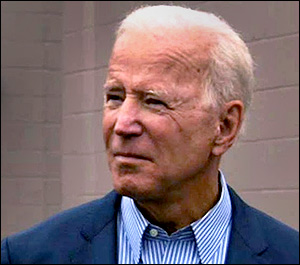
Former vice president and current 2020 presidential candidate, Joe Biden (D)

May 28, 2020 — Currently, former vice president Joe Biden is leading in virtually every battleground state poll that has been released into the public domain; but do the survey numbers tell the whole story? Other available data, that derived from actual votes being cast, suggest there may be cracks forming in his political armor.

In terms of battleground states, a new Arizona poll was released Tuesday, in what could become the most important must-win domain for the Trump campaign. There, the Phoenix-based HighGround Public Affairs consulting firm publicized their latest Arizona statewide poll (May 18-22; 400 likely Arizona general election voters), and the ballot test projects Biden holding a tighter 47.0 – 45.3 percent edge over President Trump.

Though Biden leads, the trend is a clear improvement for Trump since the OH Predictive Insights poll (May 9-11; 600 likely Arizona voters) became public during mid-May and posted the former vice president to a 50-43 percent advantage. Redfield & Wilton Strategies followed with their survey release (May 10-14; 946 likely Arizona voters) that yielded a closer 45-41 percent Biden lead.

Tuesday’s HighGround survey also published some interesting secondary questions. In answering whether the respondents felt President Trump job performance was excellent, very good, or OK, the combined positive calculated to 49.5 percent. Among those believing the president’s job performance is poor or failing, the negative totaled to 49.0 percent.

Accordingly, 29.3 percent of the Arizona respondent sample believes President Trump is to blame for the spread of the coronavirus, while 20.3 percent pin the responsibility on China. All other responses: the people, federal government, Democrats, or other unnamed sources each registered less than 10 percentage points. A total of 25.3 percent say they either don’t know or believe no single source is to blame.

Over the Memorial Day weekend, the state of Hawaii hosted its Democratic presidential primary. The unique format is interesting in that there were two votes the participants cast: the first included choosing among all of the names who originally qualified for the Hawaii presidential nomination ballot. The second isolated only Biden and Sen. Bernie Sanders (I-VT). Just under 35,000 people cast mail votes in the stand-alone presidential primary.

Continue reading

Super June & Oregon Primary Results

By Jim Ellis

May 21, 2020 — With so many early primary states moving their elections to June due to the coronavirus shut down, no less than 24 states will hold their nominating event in the upcoming month, making this the most active primary month during the election cycle.

A dozen of the states are still observing their regular political calendar, but 12 more moved into June from earlier dates. Therefore, the following adjusted calendar has been locked into place:


JUNE 2

Connecticut (presidential only)
Idaho (from May 19; though mail voting began on the original primary day)
Indiana (from May 5)
Iowa
Maryland (from April 28)
Montana
New Mexico
Pennsylvania (from April 28)
Rhode Island (presidential only)
South Dakota
West Virginia (from May 12)


JUNE 9

Georgia (from May 19)
Nevada
North Dakota
South Carolina


JUNE 20

Louisiana (presidential only)


Continue reading

Wisconsin: A Precursor?

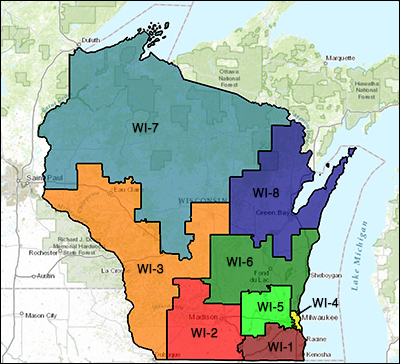
Wisconsin Congressional Districts

By Jim Ellis

April 16, 2020 — The April 7th Badger State primary election results were announced this Monday, and former vice president Joe Biden easily defeated Sen. Bernie Sanders (I-VT), 63-32 percent, but that’s not the real story behind the final statewide totals.

The bigger race was an ostensibly nonpartisan state Supreme Court judicial election between appointed incumbent Daniel Kelly and Dane County Circuit Court judge Jill Karofsky. Though the Republican and Democratic labels did not appear on the ballot, both parties were heavily invested. And, with much money being spent and both sides “all-in”, many believed it to be a precursor to this year’s presidential campaign in a state that could well become the deciding factor nationally.

Wisconsin Republicans needed the seat to maintain their 5-2 majority on the court, and Democrats wanted to narrow the margin to 4-3 in order to position themselves to take the majority in the next election; hence, this contest’s importance.

Controversy surrounded whether to even hold the election. Democratic insiders and activists were lobbying Gov. Tony Evers (D) to petition the legislature to delay the vote because of the Coronavirus situation. Evers delayed taking action, but finally went to the legislature a week before the vote. The Republican legislative leaders turned Evers down, and subsequent court decisions backed the decision to hold the election on schedule, virtually the only state that was moving forward with an in-person voting mode.

The announced results gave Judge Karofsky a big 55-45 percent upset win, and whether or not this is a precursor to the presidential result remains to be seen. Some believe the fact that the Republican leadership was insisting on moving forward with the election – with people believing they wanted the election as scheduled because they felt the quicker vote favored them – resulted in a voter backlash; hence, Karofsky’s large margin in what was projected to be a much closer electoral contest.

Democrats fought hard to postpone the election and increase the mail-in facet – and most believe they wanted such because they perceived it favored them – but clearly won the election even under the voting structure that the Republicans desired.

Continue reading

Sanders Out;
Focus Now on Trump-Biden

By Jim Ellis

Sen. Bernie Sanders

April 9, 2020 — Sen. Bernie Sanders (I-VT) suspended his presidential campaign yesterday, therefore making former vice president Joe Biden the Democratic Party’s unofficial nominee. Biden, still 766-bound delegate votes away from clinching a first-ballot victory is now unencumbered in his bid to become the party standard bearer. It is likely that he will secure the 1,991 bound first-ballot delegate votes once the June 2 primary — now featuring 10 states — is held.

Sen. Sanders conceded that he could not overcome Biden’s strong lead but stopped short of endorsing him, though it is clear that he eventually will, and called for the Democratic Party to pull together in order to defeat President Trump.

How will a Trump-Biden general election campaign unfold? Very likely, the race will come down to what happens in about 10 states. In 2016, President Trump defeated Hillary Clinton with an Electoral College margin of 306-232, giving him a 36-vote cushion against Biden. This is a relatively substantial margin, but when remembering that three critical states containing 46 electoral votes came down to an aggregate vote spread of just over 77,000 votes, such a gap could quickly dissipate.

To win again, President Trump must keep intact five states that he carried as part of his 2016 coalition, three of which are giving signs of moving closer to the political center since the last election, and two that are always in the swing category. Arizona, Texas, and Georgia are must-wins for the Trump campaign, but these states are no longer locks for the Republican nominee. Though they should still remain part of the 2020 Trump coalition, they cannot be taken for granted.

Florida and North Carolina are always swing states, and any Republican presidential nominee must carry them in order to win the national election. The Democrats, because they win most of the other big states, can claim a national victory without Florida and North Carolina but a Republican cannot.

Continue reading

Wisconsin Unable to Report
Yesterday’s Election Results

By Jim Ellis

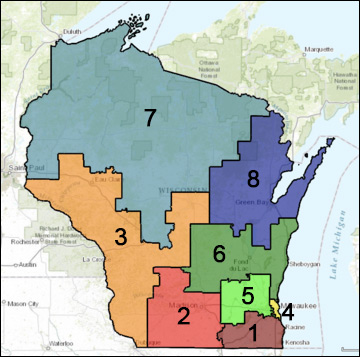
Wisconsin Congressional Districts

April 8, 2020 — Voting throughout the Badger State occurred yesterday as ordered, but the tabulation results can’t be released until April 13 under a previous court ruling. Therefore, even though the election is complete, we won’t know if former vice president Joe Biden or Sen. Bernie Sanders carried the day until next Monday.

Dating back in this COVID-19-spurred election scheduling controversy, Democrats quickly began urging Gov. Tony Evers (D) to initiate action with the legislature to postpone the presidential and statewide primary as a part of the virus precautions.

Gov. Evers failed to act swiftly and did not go to the legislature until late last week when the majority Republican leadership turned down his request to postpone the April 7 vote. Democratic Party leaders then went to court in an attempt to extend the absentee ballot deadline and were successful until the Republicans asked the US Supreme Court to step in and negate the timeline ruling.

The lower court directive that included the prohibition on reporting vote totals was consistent with the ruling to extend the absentee ballot return deadline, otherwise vote totals would be made public before a large number of individuals had cast their ballots.

In the meantime, Gov. Evers declared a state of emergency and attempted to unilaterally move the election to June 9. Republicans argued that a governor has no such power even under an emergency order and petitioned to the Wisconsin State Supreme Court to strike down the Evers move.

On Monday, both the US and Wisconsin Supreme Courts ruled that the election would continue under its present schedule with original deadlines. Interestingly, however, the SCOTUS did not reverse the entire lower court ruling, and the section about directing county clerks not to report the election returns until April 13 remained intact. Thus, a quirk in the high court decision is now causing an unnecessary delay in seeing the outcome of the presidential primary and the state Supreme Court judicial election, that latter of which is actually the centerpiece of this election and at the heart of the scheduling controversy.

Continue reading

Wisconsin Primary Moving Forward

By Jim Ellis

Wisconsin Gov. Tony Evers

April 8, 2020 — Whether or not the Wisconsin primary would be held as scheduled took rulings from two Supreme Courts to decide, but we will see voting today throughout the Wolverine State.

The Democratic presidential primary is interesting since the Wisconsin electorate will be the first to vote post-March 17, and so far, becomes the only group to cast ballots during the COVID-19 lockdown situation. How this affects today’s vote in terms of turnout and candidate loyalty will be interesting to analyze.

Whether or not this election would even happen today has been a point of discussion for the past two weeks. Many Democratic strategists were lobbying Gov. Tony Evers, a fellow Democrat, for several days to move the election, but he was slow to act. Late last week, Gov. Evers decided to ask the legislature to pass a bill changing the election date, but the Republican majority leadership in the two chambers refused. Gov. Evers then made a last-ditch effort to declare a state of emergency and attempted to move the election.

The latter action drew the Republican leadership’s ire, and they immediately petitioned the state Supreme Court arguing that the governor has no power to arbitrarily move an election. They also went to the US Supreme Court attempting to get a lower-court ruling to extend the absentee ballot return deadline past the original election schedule countermanded.

At the heart of the election date becoming a political football was not the presidential race, but rather an important state Supreme Court election. Though the race is ostensibly nonpartisan, it is clear that Democrats believe chances for the candidate they are backing improve in a later election, while Republicans think the appointed incumbent they support fares better in a quicker, and presumably lower turnout contest.

Continue reading