Tag Archives: Sen. Bernie Sanders

Biden Scores, Bloomberg Out;
State Primary Results

Joe Biden captured the lion’s share of the delegates on Super Tuesday.


By Jim Ellis

March 4, 2020
— Former vice president Joe Biden, with a strong close from his South Carolina victory on Saturday, captured the lion’s share of the delegates on Super Tuesday and has re-established himself as the front-runner for the Democratic presidential nomination.

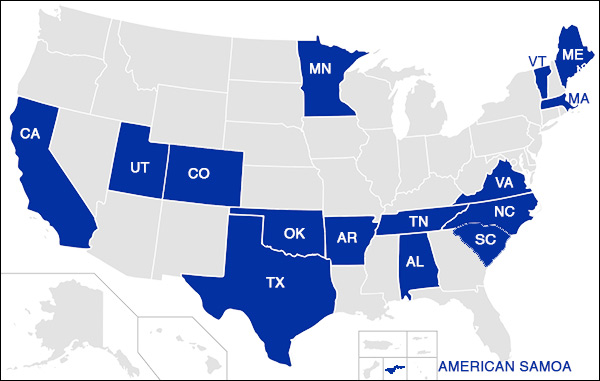
Biden placed first last night in 10 states, and surprisingly topped the field in Massachusetts and Maine, right in the backyard of Sens. Bernie Sanders (I-VT) and Elizabeth Warren (D-MA). He also placed first in Minnesota where home-state Sen. Amy Klobuchar had been leading. Her endorsement of Biden clearly helped propel him to the top position. In 2016 against Hillary Clinton in Minnesota, Sanders notched a 61 percent win. Last night his popular vote percentage was only 29.9 percent.

Though the former vice president carried the day in 10 states, one still must receive a majority of the delegate votes to win the presidential nomination. He exceeded the 50 percent mark in only two of the states, Alabama and Virginia.

Sen. Sanders, disappointingly for him, placed first in only four states, his home base of Vermont, and California, Colorado, and Utah. Former New York City mayor Michael Bloomberg did very poorly after spending reportedly as much as $700 million from his own fortune. He placed first in America Samoa and qualified for delegates in just eight of the 15 Super Tuesday voting entities. This morning, Bloomberg announced his withdrawal from the race and endorsed Biden.

The Green Papers organization ran full delegate extrapolation tables based upon the preliminary results in both the at-large and congressional district votes. Delegates are earned by exceeding 15 percent in both categories from each state. Totaling all 19 entities that have now voted, Biden would lead the national delegate count with an unofficial 667 bound delegate votes as compared to Sen. Sanders’ 581.

Bloomberg earned only an unofficial 141 delegate total and Sen. Warren just 76. The remaining 34 delegates were split among three others including Rep. Tulsi Gabbard (D-HI) who won a vote yesterday in American Samoa. These numbers will adjust as official vote totals are reported. California, where potentially more than 2 million votes remain to be counted, will substantially alter the totals once the state’s laborious counting process ends in the next several weeks.

Clearly, Biden is the big winner on Super Tuesday, and the night proved very disappointing for Sen. Sanders. Where the race goes now remains to be seen, but Biden winning on the first ballot in Milwaukee at the Democratic National Convention now seems to be the most likely unfolding scenario.

Five states held their full primaries last night and nominees were chosen in many places while run-offs will occur in a number of other situations. Here’s a state-by-state breakdown:
Continue reading

Biden Wins South Carolina
Stage Set for Super Tuesday

By Jim Ellis

March 2, 2020 — Former vice president Joe Biden accomplished his goal of reviving his downward trending presidential campaign on Saturday. He won the South Carolina primary with 48.4 percent of the vote, topping Sen. Bernie Sanders’ (I-VT) 19.9 percent. Billionaire Tom Steyer, who spent millions attempting to make a stand in South Carolina and access the delegate board finished third with 11.3 percent. Failing to win bound delegates, Steyer officially exited the race after the results became known.

Former South Bend mayor Pete Buttigieg, a top-tier candidate, citing no viable path to the nomination, also dropped his campaign bid. This move is a bit of a surprise in that he was in position to win some delegates tomorrow in the Super Tuesday primaries; though leading in no states, he might have been able to affect the outcome of a contested convention should such an eventuality actually occur.

On the delegate count, Biden notched 38 bound first-ballot delegate votes, and Sen. Sanders’ added 16 to his national total. Going into Super Tuesday, Sen. Sanders still has a national lead, but it has dropped to 60-54 over Biden. Buttigieg, who scored 8.3 percent in South Carolina and finished fourth, remains at 26 bound delegate votes. Sen. Elizabeth Warren (D-MA) continues to hold eight votes and Minnesota Sen. Amy Klobuchar has seven. Sen. Warren finished fifth in the Palmetto State primary, with 7.1 percent, and Sen. Klobuchar recorded only 3.1 percent support.

Turnout increased substantially in comparison to the 2016 Democratic primary. More than 528,000 individuals look to have voted in Saturday’s primary, up from 370,904 in 2016. It is noteworthy to remember, however, that there was no Republican primary this year, meaning some self-identified Republican voters may have participated in the open voting system. The turnout was slightly below that of 2008, when 532,151 individuals cast ballots in that year’s Democratic primary even though Republicans and new voters, which should be a substantial since the state has rapidly grown during the past twelve years, are present in the current vote.

Now the stage is set for Super Tuesday, with Sanders and Biden in a virtual tie, and former New York City mayor Michael Bloomberg on a primary ballot for the first time. With Sanders and Biden now so close, it appears unlikely that the Super Tuesday result won’t give either one a commanding advantage.

South Carolina, Tomorrow

By Jim Ellis

Former vice president, Joe Biden

Feb. 28, 2020 — Former vice president Joe Biden appears on the cusp of winning tomorrow’s South Carolina Democratic primary. His polling has greatly improved, and momentum looks to be on his side.

For more than a year, Biden has enjoyed strong leads in South Carolina but his poor performance in Iowa and New Hampshire, with a slight rebound in Nevada, had caused his Palmetto State margins to tighten. One poll, from Change Research on Feb. 12-14, forecast Biden and Sen. Bernie Sanders (I-VT) lapsing into a tie.

Four closing polls were released yesterday, giving Biden leads of between 4 and 28 points, but it is the former poll that seems to be the anomaly. Change Research (Feb. 23-27; 543 likely South Carolina Democratic primary voters) projects Biden leading Sen. Sanders and billionaire Tom Steyer, 28-24-16 percent, with Sen. Elizabeth Warren (D-MA) lagging behind with a 12 percent preference factor. Under this poll, the top three finishers would qualify for delegate apportionment.

On the other hand, Emerson College (Feb. 26-27; 425 likely South Carolina Democratic primary voters) and Monmouth University (Feb. 23-25; 454 likely South Carolina Democratic primary voters) come much closer to Starboard Communications’ (Feb. 26; 1,102 likely South Carolina Democratic primary voters; online) 28-point spread line.

Starboard projects Biden leading 40-12-11 percent over Steyer and Sanders. Emerson finds him holding a 17-point lead, while Monmouth posts the former VP to a 20-point advantage. Both Emerson and Starboard find Biden touching the 40 percent mark. Biden’s large leads fail to prevent the Change Research and Monmouth polls from projecting that three of the candidates would earn a share of South Carolina’s 54 first-ballot delegate allotment, however.

To estimate a reasonable delegate count, the Monmouth poll finds a 36-16-15 percent spread for Biden, Sanders, and Steyer. If this poll proved most accurate, the delegate split would approximately be 29-13-12, consecutively, assuming the seven congressional district totals turned in similar ratios.

Continue reading

Within a Week . . .

By Jim Ellis

Feb. 27, 2020 — Now, just two days away from the South Carolina primary and a mere five from Super Tuesday, it’s time to again determine candidate progress for what is arguably the most important primary election day of this presidential nomination cycle.


Currently, now that the Nevada Democratic Party has ostensibly tabulated the remaining caucus preference sheets from last Saturday’s Nevada vote, the aggregate bound delegate count gives Sen. Bernie Sanders (I-VT) the lead with 45, former South Bend mayor Pete Buttigieg is second at 26, former vice president Joe Biden posts 15, Sen. Elizabeth Warren (D-MA) eight, and Minnesota Sen. Amy Klobuchar holds seven. These numbers will change significantly by this time next week. A total of 1,398 delegate votes will be bound on Super Tuesday evening and 18 states and one territory will have completed their voting process.

We’ve had some polling movement in several of the Super Tuesday states that make a tight race even closer. North Carolina, with 110 first ballot delegates, at least according to one polling firm has lapsed into a three-way tie. Spry Strategies (Feb. 21-23; 561 likely North Carolina Democratic primary voters) finds former VP Biden, ex-New York City mayor Michael Bloomberg, and Sen. Sanders locked into a three-way tie, each with 20 percent support. None of the other candidates appear close to the 15 percent delegate allocation threshold in the Tar Heel State.

The new Public Policy Polling North Carolina survey turns in similar numbers (Feb. 23-24; 852 likely North Carolina Democratic primary voters) with Biden leading Sanders and Bloomberg, 23-20-17 percent, respectively. PPP agrees with Spry in projecting that only these three men will qualify for delegates. Such a split, assuming the congressional delegation allocation yields the same ratio, would find each of the three candidates receiving approximately 35-37 first-ballot votes.

The latest YouGov poll (Feb. 6-18; 1,352 likely Texas Democratic primary voters; online) also finds a tie, but this time in the Lone Star State with again three candidates winning bound delegates. The data finds Biden and Sanders tied with 20 percent, and Sen. Warren getting into delegate contention with 17 percent. If the actual Texas votes break similarly to this ratio, it would mean Bloomberg would fail to qualify for at-large delegates, leading to a fight for delegate allocation within each of the 31 state Senate districts. While other states divide by congressional districts, Texas uses state Senate seats.

Continue reading

The Open Primary Effect

Super Tuesday 2020 States and Territories


By Jim Ellis

Feb. 26, 2020 — One factor for the coming March 3 Super Tuesday primary elections that hasn’t received any discussion is whether or not the open voting system will have a major effect upon the final results. Though only 24 states around the country feature open, or semi-open, primaries, all but two of the 15 Super Tuesday states lie in this category.

For purposes of this column, South Carolina, scheduled for this Saturday and the prelude to the mega-state vote, is added to the Super Tuesday roster because of its close proximity. America Samoa, which also holds its nomination election on March 3, is a caucus.

An open primary is one where any voter may choose to participate in the nomination election of his or her choice. In these states, voters typically are not registered by political party and can select either a Democratic or Republican ballot. A semi-closed primary is one where registered party members must stay in their respective party primary, but the unaffiliated, or Independent, voter may choose the primary in which to participate. A closed primary allows only individuals who are registered in a particular political party to vote in their respective nomination election.

Pertaining to Super Tuesday, Alabama, Arkansas, Colorado, Minnesota, South Carolina, Tennessee, Texas, Vermont, and Virginia are the open primary states. The semi-opens are Massachusetts, North Carolina, Oklahoma, and Utah.

The two closed presidential primaries for the big day are California and Maine. Despite California featuring the ultimate open primary system in their regular elections, where everyone receives the same ballot and the top two finishers advance to the general election regardless of political party affiliation and percentage attained, only registered party members may vote in their respective presidential primary. Therefore, in the national nomination contest, where the top-two system is not recognized for delegate allocation, the Golden State reverts to the closed procedure.

Continue reading

Markey-Kennedy Deadlocked …
Or are They?

By Jim Ellis

Feb. 25, 2020 — While the Nevada Caucus counting drags on and tabulations will at some point determine just how many delegates Sen. Bernie Sanders (I-VT), former Vice President Joe Biden, and ex-Mayor Pete Buttigieg receive from the state – currently, it appears that Sanders will win somewhere between 19 and 23 bound delegate votes, while Biden and Buttigieg should both earn bound votes in the high single digits – a new US Senate poll is proving more curious today.

The University of Massachusetts at Lowell has recently become a prolific pollster, releasing several research studies from various Democratic presidential primary states, and now they have tested their own home state electorate.

The survey (Feb. 12-19; 450 likely Massachusetts Democratic primary voters and self-identified Independents who say they will vote in the Democratic primary) sees potentially as many as five presidential candidates receiving delegates – Massachusetts has 91 first-ballot delegate votes – from Sens. Bernie Sanders (I-VT) and Elizabeth Warren (D-MA) drawing 21 and 20 percent support, respectively, with ex-Mayor Pete Buttigieg, former Vice President Joe Biden, and New York’s Michael Bloomberg recording preference factors of 15, 14, and 12 percent. This means all could potentially exceed the 15 percent threshold to qualify for delegates on Super Tuesday.

The more interesting part of their poll, however, covers the US Senate Democratic primary, which features a fierce intra-party battle between Sen. Ed Markey and Rep. Joseph P. Kennedy III (D-Newton). The poll is noteworthy because the ballot test and the underlying questions tell a different story.

The ballot test yields a straight-up tie. According to UMass Lowell, Kennedy would lead the incumbent, 35-34 percent. This split is under the “leaned party ID” category, which means the respondents were pushed to make a decision. On the “unleaned party ID” question, both men scored the same percentage.

The segmentation crosstabs provide some telling information. The gender gap gives Rep. Kennedy a 40-30 percent split among men, while women break 37-32 percent for Sen. Markey. Younger voters (aged 18-44) actually move to the older candidate, Sen. Markey, 37-25 percent. Older voters, perhaps because of the Kennedy family name in Massachusetts, support the young congressman in a 40-33 percent division.

Continue reading

Projecting Delegates

By Jim Ellis

Feb. 24, 2020 — It is becoming clearer that the Democratic presidential contest could result in an open, or “brokered”, convention. This would occur if no candidate secures majority support after the electorates in all the voting entities have cast their ballots and the delegates’ first ballot tallies are locked into place under the individual state laws.

Discounting the Nevada Caucus held over the weekend, only 65 of the 3,979 first-ballot delegate votes have been assigned. By the evening of March 3, however, the aggregate assigned delegate total will soar to 1,398 and we will begin to see sustaining patterns developing.

By March 17, 61 percent of the first-ballot votes will be locked. At that time, it is highly likely we will be able to determine if a candidate can attain majority support or whether multiple ballots will be required to choose a nominee. If this latter scenario occurs, it will be the first time since 1952 that a major party convention is forced to call for more than one ballot to choose a nominee.

Looking past Nevada and onto South Carolina on Saturday, Feb. 29, and then to Super Tuesday just three days later, we can begin to make delegate projections based upon available polling data. Of the 19 total voting entities that will record votes from the time the Iowa Caucuses began to the end of voting on Super Tuesday, relevant polling exists in 14 of those states.

Using the available data and delegate quotas that are noted from each place, rudimentary projections can be calculated regarding which candidates might receive delegate votes from the specific states for purposes of comparing aggregate totals against the 50 percent threshold.

Early in the cycle, it appeared that former Vice President Joe Biden would be in the strongest position post Super Tuesday because of what looked to be his early dominance in the South. The voting schedule appeared to favor him since half the March 3 voting states lie in that region. His trouble in Iowa and New Hampshire, plus his poor debate performances, and Sen. Bernie Sanders’ strength along with the recent emergence of Michael Bloomberg, has apparently already relegated Biden to also-ran status.

Continue reading

Biden’s Good and Bad News

By Jim Ellis

Former Vice President Joe Biden

Feb. 19, 2020 — Despite former Vice President Joe Biden’s poor performance in Iowa and New Hampshire, the latest available data suggests his presidential campaign status is not as dire as some in the media are prognosticating.

There have only been five Nevada Caucus polls released since the first of the year and the most recent one appears potentially unreliable. Point Blank Associates actually finds Tom Steyer leading the poll conducted over the Feb. 13-15 period, in a 19-16-14-13-13 percent count over Sen. Amy Klobuchar, Biden, Sen. Bernie Sanders, and former mayor, Pete Buttigieg. This poll has a sample size of only 256 respondents, thus making the error factor unacceptably high.

On the other hand, WPA Intelligence went into the field over the Feb. 11-13 period with a more reasonable sample size of 413 individuals who are described as likely voters. In contrast with the Point Blank result, WPAi finds Sen. Sanders leading the field, a conclusion more consistent with previously released polls. According to WPA, the split is 25-18-13-11-10-10 percent, with Biden in second place followed consecutively by Warren, Steyer, Buttigieg, and Klobuchar.

Therefore, while Biden is not leading either of these Nevada polls, he looks to be in range for potential delegate allocation. Obtaining delegate votes in Nevada will put him in better position to rebound for Super Tuesday, and particularly so if he can hold on to win in South Carolina.

The new East Carolina University survey still finds Biden leading the field in the Palmetto State as he has in every poll conducted in January, early February, and all of last year. East Carolina (Feb. 12-13; 703 likely South Carolina Democratic primary voters) projects Biden to a 28-20-14 percent lead over Sanders and Steyer, respectively. All others fall below 10 percent support.

Continue reading

New Hampshire Primary Today

By Jim Ellis

Feb. 11, 2020 — At long last, the New Hampshire nomination election has arrived, and voters have already begun casting their ballots in what is often referred to as the “first in the nation primary.” The initial state in a line of 48 primaries (the other nine states and territories have caucuses), just how important is today’s vote in determining who wins the 2020 Democratic presidential nomination?

Considering the split Iowa vote where it appears that five different candidates will be awarded a certain number of first-ballot national convention delegate votes ranging from 14 to one, New Hampshire’s 24 aggregate delegates will not likely alter the current race trajectory; therefore, multiple candidates will still be battling through Nevada and South Carolina before Super Tuesday with no one having a clear early path to majority support.

First-ballot victory at the Democratic National Convention in July can only come when one candidate top 50 percent of delegate support. Therefore, regardless of the importance media analysts attempt to assign this New Hampshire race in terms of a momentum boost, it is the delegate numbers that will still tell the story.

Coming from Iowa, former South Bend mayor, Pete Buttigieg, looks to earn 14 delegates with Sen. Bernie Sanders (I-VT) close behind with 12. Now, Sen. Sanders’ team is requesting a partial recount in Iowa that might earn him an extra delegate or two, but it is doubtful the Iowa Democratic Party, with a party leadership still reeling over the vote counting debacle, will grant their request.

Continuing the projected delegate apportionment, Sen. Elizabeth Warren (D-MA) would earn eight bound delegate votes, former vice president, Joe Biden six, and Minnesota Sen. Amy Klobuchar, one.

Polling suggests that Sen. Sanders will place first tonight, but several candidates look to break the 15 percent threshold to also qualify for bound delegate votes. Polling finds scenarios where Buttigieg, Warren, Biden, and even Klobuchar will surpass the minimum threshold, though it is unlikely that all will do so. In fact, with Biden’s early support evaporating before our eyes, it is possible that he will fall short of 15 percent tonight meaning that he would be shut out of delegate votes. Though Sen. Klobuchar appears to be closing fast, it is also likely that she finishes under 15 percent.

Continue reading

Biden’s Survival Path

By Jim Ellis

2020 Presidential Candidate and former vice president, Joe Biden (D)

Feb. 11, 2020 — Former Vice President Joe Biden said his campaign took a “gut punch” with his fourth-place finish in the Iowa Caucuses and, in the nationally televised debate on Friday night from New Hampshire, lowered future expectations when indicating that finishing close to Sen. Elizabeth Warren (D-MA) in the state’s first-in-the-nation primary would be an acceptable showing.

Recent polls suggest Sen. Warren will do no better than third place, meaning Biden, who can no longer be considered the national front runner, again looks to be lagging behind in fourth place among the Democrat candidates. Does another fourth-place finish doom his national campaign? Would Biden have a path to the nomination even if failing to win yet again in Nevada on Feb. 22?

The answers to the two queries are no and yes, and South Carolina is the key. After a win in the Palmetto State, he would then need to strongly springboard into Super Tuesday just three days hence on March 3. On that day, citizens in 14 states and one territory are scheduled to cast votes, and half of those states are in the South, a region where the former vice president has been dominant in polling.

Sen. Bernie Sanders (I-VT), the likely national leader headed to Super Tuesday, should find some relative strength in the southern states, and billionaires Tom Steyer and Michael Bloomberg will likely also break the 15 percent threshold in some of these places and others to score a limited number of bound delegate votes. If Biden wins most or all of the southern states with approximately 30 percent of the aggregate vote, it would likely give him approximately 200 delegates, a number that certainly could boost his viability within a national context.

From a delegate count perspective, even if he fails to break 15 percent to qualify for convention votes in New Hampshire tonight and doesn’t win Nevada, he is still not going to be unreasonably behind. In Iowa, the projected delegate count suggests that former mayor, Pete Buttigieg, will record 14 first-ballot national convention votes, Sanders’ 12, Warren 8, Biden 6, and Sen. Amy Klobuchar (D-MN), 1.

Continue reading