Tag Archives: Rep. David Valadao

Notable Candidate Filings

By Jim Ellis

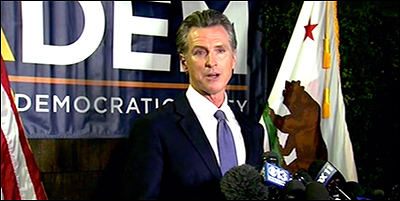
California Gov. Gavin Newsom (D) faces little in the way of strong competition in 2022.

March 15, 2022 — Candidate filing closed in three states on Friday — California, Georgia, and Idaho — and we see some highly competitive primary and general election campaigns occurring in each.

Despite 26 candidates filing against him, appointed California Sen. Alex Padilla (D) has done a good job of securing his Democratic base. As a result, he faces no serious opponent. The only way Sen. Padilla would lose in the state’s jungle primary system is if another strong Democrat surfaced and forced him into a double-Democratic general election. No such individual filed. California Gov. Gavin Newsom (D) also faces little in the way of strong competition even though he has 25 opponents.

The Georgia governor’s race features the most important May 24 primary campaign, a Republican battle between Gov. Brian Kemp and former US Sen. David Perdue. Three minor candidates are also on the ballot, and they could be a factor to force a runoff if the Kemp-Perdue race evolves into an even contest. In that scenario, a secondary election on July 26 would occur should both Kemp and Perdue be stopped short of 50 percent support.

Former Georgia state House Minority Leader and 2018 gubernatorial nominee Stacey Abrams is unopposed for the Democratic nomination. The state’s US Senate contest is already winnowing down to a battle between Sen. Raphael Warnock (D) and retired pro football player Herschel Walker (R).

In Idaho, Gov. Brad Little faces a Republican primary challenge from Lt. Gov. Janice McGeachin, who has former President Donald Trump’s endorsement. Sen. Mike Crapo has four Republican primary opponents but is in strong shape for both re-nomination and re-election to a fifth term.

In the House races, veteran Rep. Mike Simpson (R-Idaho Falls) will face a familiar foe in the Republican primary. Bryan Smith, who challenged the congressman in the 2014 Republican primary and attracted some national attention and support before falling 62-38 percent, returns for a re-match eight years after their original political battle.

Back in California in the US House races, it appears there are seven districts that will host competitive general election campaigns and many more that could send a pair of the same party’s members to the November election from the June 7 jungle primary.

Only one of the projected partisan general election battles comes in an open seat. The 3rd District, which begins in the Sacramento suburbs and stretches down along the Nevada border all the way into southern California, will yield a competitive Republican battle between state Assemblyman Kevin Kiley (R-Granite Bay) and Sacramento County Sheriff Scott Jones for one of the general election finalist positions. The state Democratic Party has endorsed physician Kermit Jones. The new 3rd, where Rep. Tom McClintock (R-Elk Grove) could have run, is rated an R+8 district.

Rep. Josh Harder (D-Turlock) will likely face San Joaquin County Supervisor Tom Patti (R) in the D+8 District 9 that retiring Rep. Jerry McNerney (D-Stockton) currently holds.

Continue reading

DCCC’s Red to Blue Targets

By Jim Ellis

March 14, 2022 — The Democratic Congressional Campaign Committee released their first targets in what they call their Red to Blue program or, in other words, the districts they hope to convert from Republican to Democrat. Curiously, two districts on the list are already blue.

Below is a look at the DCCC’s dozen released targets:


CA-22: Rep. David Valadao (R-Hanford)
2020 Win Percentage: 50.4% in District 21

• FiveThirtyEight: D+10
• Dave’s Redistricting App: 42.3% R / 55.1% D
Endorsed Candidate: State Assemblyman Rudy Salas (D-Bakersfield)

By the numbers, this is one of the Democrats’ best national targets, but Rep. Valadao has consistently won in Democratic seats. He lost in 2018, but won the seat back two years later. Assemblyman Salas is the Democrats’ top recruitment target. Despite the lopsided Democratic numerical advantage, the finish here will again likely be razor-thin.


CA-45: Rep. Michelle Steel (R-Orange County)
2020 Win Percentage: 51.1% in District 48

• FiveThirtyEight: D+5
• Dave’s Redistricting App: 45.8% R / 52.2% D
Endorsed Candidate: Jay Chen – Community College Trustee

Freshman Rep. Steel is another Republican to whom the California Citizens Redistricting Commission members were not kind. Moving into the more inland Orange County district from her coastal seat, Steel has been a well known figure in Orange County politics for many years, particularly with her service time on the Orange County Board of Supervisors before winning the congressional seat.

A D+5 seat is exactly the type the Republicans must win to achieve their goal of re-taking the majority. With national redistricting cutting against them, the GOP must win a sizable number of the 22 seats so far within the Even to D+5 category.


CO-7: Rep. Ed Perlmutter (D-Arvada) – Open Seat
2020 Win Percentage: 59.1%

• FiveThirtyEight: D+6
• Dave’s Redistricting App: 43.8% R / 51.7% D
Endorsed Candidate: State Sen. Brittany Petterson (D-Lakewood)

This district does not really belong on the list since it is already a blue seat. Democrats are favored to hold the seat and Sen. Petterson is clearly their candidate to do so.


IA-1: Rep. Mariannette Miller-Meeks (R-Ottumwa)
2020 Win Percentage: 50.0% (6 votes districtwide) in District 2

• FiveThirtyEight: R+4
• Dave’s Redistricting App: 49.7% R / 46.8% D
Endorsed Candidate: State Rep. Christina Bohannan (D-Iowa City)

Rep. Miller-Meeks won the closest race in the country in 2020, a literal six-vote affair against former state senator and 2018 lieutenant governor nominee Rita Hart (D). This year, the congresswoman will see a different opponent since Hart chose not to return for a re-match. State Rep. Bohannan has two Democratic opponents, but she should have little trouble in winning the party nomination on June 7.

This will be another close eastern Iowa campaign, and this district is actually one point more Democratic than the previous 2nd according to the FiveThirtyEight statistical organization. This is a top Democratic target, but Rep. Milller-Meeks will be favored assuming the political climate remains favorable for Republicans.


IA-2: Rep. Ashley Hinson (R-Marion/Cedar Rapids)
2020 Win Percentage: 50.0% in District 1

• FiveThirtyEight: R+6
• Dave’s Redistricting App: 51.1% R / 45.4% D
Endorsed Candidate: State Sen. Liz Mathis (D-Hiawatha)

In the first redistricting map presented last year, Rep. Hinson would likely have been defeated. With the legislature rejecting that draw, a new one emerged. This gives the congresswoman a more favorable seat but one this is still highly competitive. Democrats have recruited a strong candidate in Sen. Mathis. She has no primary opposition at this time. In a favorable GOP political climate, this seat would become difficult for the Democrats to convert despite its statistical closeness.
Continue reading

Redistricting:
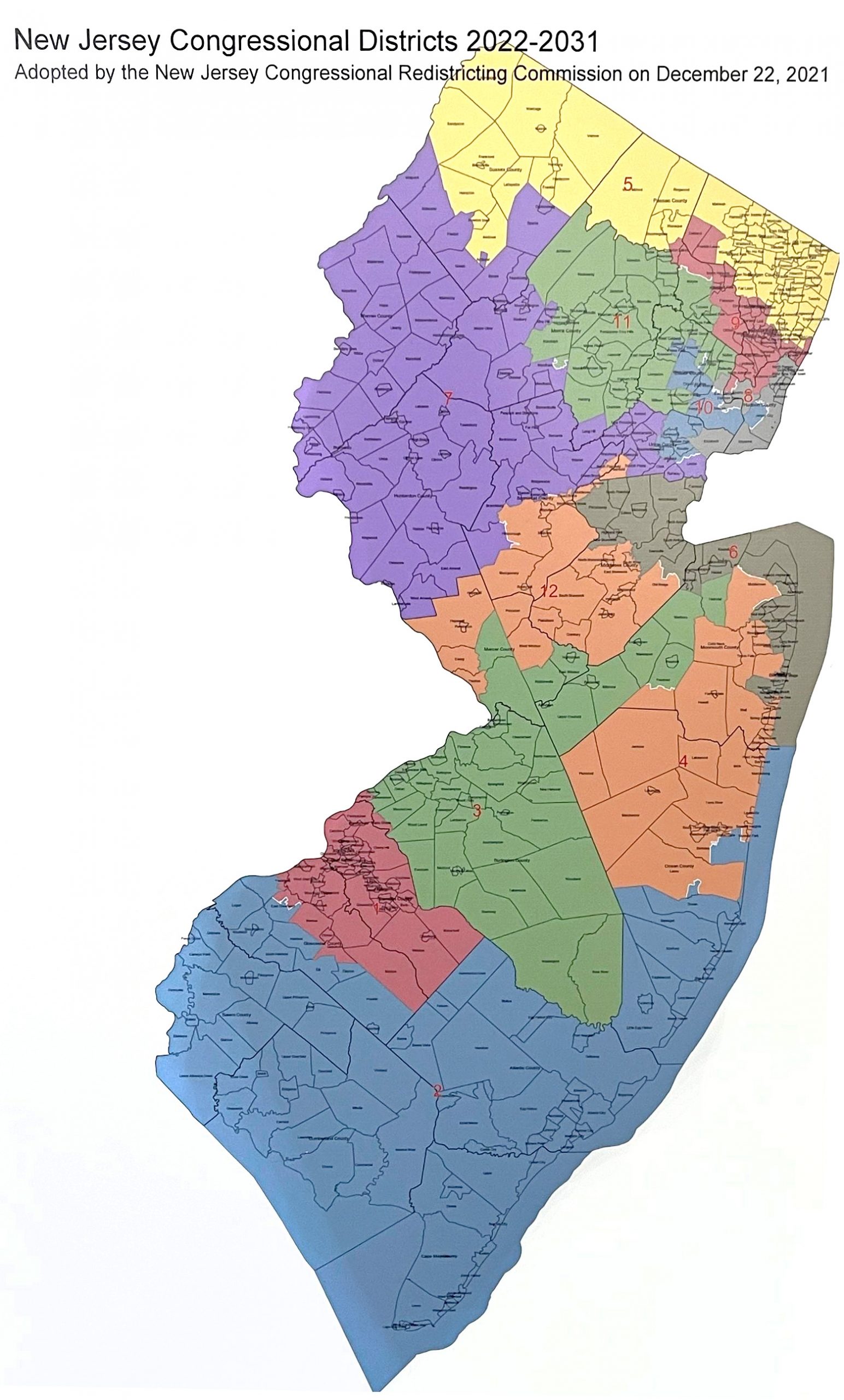
California & New Jersey Maps

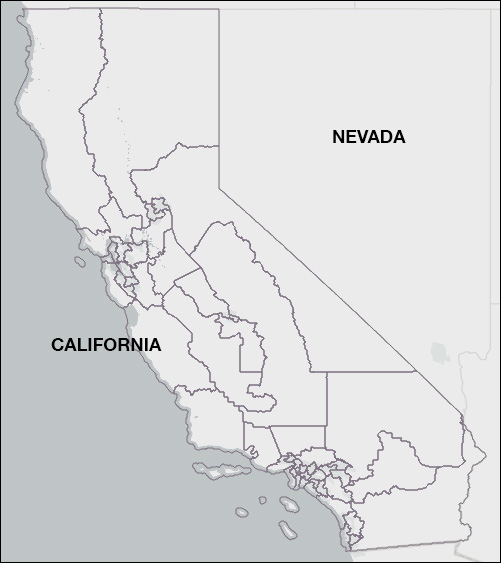
Click on map of California above for detailed view

By Jim Ellis

Jan. 3, 2022 — The California and New Jersey redistricting commissions are completing the last steps of passing what look to be the final congressional plans for each state. The cursory analysis suggests that Democrats may gain a seat in California with Republicans doing likewise in the Garden State.


California

The California Citizens Redistricting Commission members approved and sent toward final adoption a new 52-district congressional map that could give the Democrats even more seats in the delegation, though we will see several more competitive districts come into play. California lost one seat in reapportionment and Democrats are taking the loss of one of their Los Angeles County seats, but look to be replacing it, and then some, in other parts of the Golden State.

The 47th and 40th Districts of retiring members Alan Lowenthal (D-Long Beach) and Lucille Roybal-Allard (D-Downey) were combined to construct a new 42nd CD, which is heavily Democratic. Rep. Karen Bass (D-Los Angeles), who is leaving the House to enter the campaign for mayor of Los Angeles, sees her 37th District, which was on the chopping block in the first draft map, restored almost intact.

Major change is occurring in the Central Valley. Rep. Josh Harder (D-Turlock) sees his 10th District going from an R1 rating according to the FiveThirtyEight statistical analysis organization to R17. Therefore, it is unlikely he will run in his new designated 5th District.

Rep. Jim Costa (D-Fresno) may leave what is a new 13th District at D7 and move to the downtown Fresno seat, now labeled District 21. This seat has much of resigning Rep. Devin Nunes’ (R-Tulare) territory but is rated a D16. Rep. Costa choosing the 21st might allow Rep. Harder to drop down into new District 13, which would be a much more favorable partisan situation but takes him away from his geographical base.

Rep. Mike Garcia (R-Santa Clarita), who won his 2020 election by just a 333-vote margin, sees his designated district, now numbered 27, become at least three points more Democratic. This endangers even further his re-election chances. The 538 organization rated his current 25th CD as a D5. The new 27th becomes a D8.

Several Republicans have proven they can win these D-plus single digit type seats, however. In addition to Rep. Garcia’s two victories in current CD-25, Rep. David Valadao’s (R-Hanford/Bakersfield) 21st district is rated a D9. His new seat, designated District 22, goes to a D10. Another option for him would be to also run in District 13 (D7), which contains some of his current territory. Rep. Young Kim (R-La Habra) won a 39th District that FiveThirtyEight rated as a D6. Her new 45th CD is calculated at D5.

We could possibly see a district swap operation between Reps. Zoe Lofgren (D-San Jose) and Jimmy Panetta (D-Carmel Valley) due to geography, and between Reps. Michelle Steel (R-Orange County) and Katie Porter (D-Irvine) for partisan reasons.

Rep. Steel’s district moves from a R2 to a D6, while Rep. Porter’s adjacent CD shifts in the opposite direction, going from a D6 all the way to a R4. The problem can be solved for both members by them simply switching districts. This would mean Rep. Porter would run in the new coastal 47th with Rep. Steel going to the inland new 40th.

Rep. John Garamendi (D-Walnut Grove) gets a solid Democratic district, but its new positioning is unfavorable to him from a geographic perspective. Garamendi’s new 8th District moves closer to the San Francisco Bay Area making him vulnerable to a challenge from a Bay Area Democratic state or local official. It is likely this new Vallejo-anchored CD would produce a double Democratic general election under the state’s top two jungle primary system.

Several members see their districts downgraded from a partisan perspective. Rep. Tom McClintock (R-Elk Grove/Sacramento) goes from R15 to R8 in a new 3rd District that stretches into southern California along the Nevada border.

Rep. Jerry McNerney’s (D-Stockton) 9th CD goes from D14 to D8, again according to the 538 analysis. Rep. Ken Calvert’s (R-Corona) designated CD, numbered 41, drops from his current R13 to R7. Rep. Mike Levin’s (D-San Juan Capistrano) 49th CD recedes two points from D7 to D5.


New Jersey

Click on map of New Jersey above to see detailed view

It appears that the New Jersey Redistricting Commission comprised of six Democratic elected officials, six similar Republicans, and a state Supreme Court selected tie-breaking member, have also agreed upon a new congressional map. New Jersey’s representation level remained constant with 12 seats, so it was a matter of adjusting the current districts.

It is evident that the rumor suggesting the commission would adopt a map that drastically weakened Rep. Tom Malinowski’s (D-Rocky Hill) seat in order to strengthen three other Democratic districts, those of Reps. Andy Kim (D-Bordentown), Josh Gottheimer (D-Wyckoff), and Mikie Sherrill (D-Montclair/Morristown) proved true.

It further appears that Rep. Albio Sires’ (D-West New York) retirement did not change the commissioners’ outlook as to which district to weaken. Sires’ 8th District returns virtually intact, another indication that Sen. Bob Menendez’s son, Robert J. Menendez (D), will likely be the retiring congressman’s successor. The latter Menendez currently serves on the NY/NJ Port Commission.

While the NJ Democrats are securing three of their more politically marginal districts, Districts 3, 5, and 11, Republicans appeared poised, probably in the person of state Senate Minority Leader Tom Kean Jr. (R-Edison) who held Malinowski to a 51-49 percent win in 2020, to convert the new 7th CD.

More research will be done on the likely-to-be-adopted California and New Jersey congressional maps when detailed district descriptions become available. It looks like several incumbent members will have decisions before them about where to run in California, while the focus of the New Jersey competitive action will center around the District 7 Malinowski-Kean re-match.

Rep. Devin Nunes to Resign

By Jim Ellis

Ten-term US Rep. Devin Nunes (R-CA)

Dec. 8, 2021 — Ten-term US Rep. Devin Nunes (R-CA) will leave Congress at the end of this year according to an announcement made late Monday.

Rep. Nunes, the ranking Republican on the House Intelligence Committee and the man who appeared to have the inside track to become chairman of the House Ways & Means Committee if the Republicans re-gain the chamber majority next year, will become CEO of the Trump Media & Technology Group that former President Donald Trump is launching.

While the congressman, who was first elected in 2002 to his Central Valley California seat, will leave the legislative scene, he certainly will still be very active in politics as he attempts to position a new social media platform that will give right of center individuals a greater voice in the public issues discussion arena.

“The time has come to reopen the Internet and allow for the free flow of ideas and expression without censorship,” Nunes was quoted as reported in the New York Post. “The United States of America made the dream of the Internet a reality and it will be an American company that restores the dream. I’m humbled and honored President Trump has asked me to lead the mission and the world-class team that will deliver on this promise,” Nunes concluded.

Rep. Nunes’ departure creates major change in the Central Valley’s politics. His current 22nd District is one of the just seven California districts that Trump carried in the 2020 presidential election campaign.

One would think that a special election would be called with a year remaining on the term, but in a similarly timed situation in 2020, when then-Rep. Duncan Hunter (R) resigned in January, such was not the case. Gov. Gavin Newsom (D), taking advantage of a quirk in California election law, was able to leave Hunter’s 50th District – like the Nunes seat, a safe Republican domain – vacant for the balance of the entire year.

Considering that the likely special election winner in the Nunes Fresno County-anchored district would be a Republican, and cognizant of the ongoing redistricting process, it is entirely possible that Newsom will again let the seat remain vacant for all of 2022.

Continue reading

Rep. Beutler Trailing in New Poll

Six-term Washington Rep. Jaime Herrera Beutler (R-Battle Ground/Vancouver)

By Jim Ellis

Nov. 9, 2021 — Another of the House Republican Trump impeachment supporters appears to be having trouble back home. A new Trafalgar Group poll (Oct. 30-Nov. 2; 682 likely WA-3 primary voters; combination live interview, interactive voice response system, and text) finds six-term Washington Rep. Jaime Herrera Beutler (R-Battle Ground/Vancouver) placing third in a field of four as a prelude to next year’s jungle primary.

According to Trafalgar, former Green Beret Joe Kent (R), who has former President Trump’s endorsement, leads the candidate field with 35 percent preference. Next is Democrat Brian Hennrich, a movie theatre technician, who records 24 percent. For this poll, Hennrich realistically serves as a placebo candidate to test Democratic support. Rep. Beutler then places third with 23 percent and another Republican, pastor and author Heidi St. John, posts 10 percent support. An additional eight percent said they would vote for “another Democrat.”

Surveys such as this will likely spur the Democrats to recruit a much stronger candidate in what plays as a marginal southwestern Evergreen State congressional district.

Washington is one of three states that employs a top-two jungle primary system. All candidates are placed on the same ballot and the top two finishers, regardless of percentage or party, advance into the general election. Therefore, this poll would suggest that Rep. Beutler, at least today, could be eliminated before the general election cycle even officially begins. Washington has a late primary, Aug. 2, 2022, so plenty of time remains for the congresswoman to right her political ship.

The Washington districts won’t likely change a great deal in redistricting. Washington redistricts by commission, and has since 1991. Because none of the state’s 10 districts need a major population influx, it is probable that most of the seats, and especially District 3 (largely because it must only shed 2,222 individuals) will remain relatively constant.

The 3rd District is nestled into the southwestern corner of the state, bordering Oregon and the Pacific Ocean. The seat needing to gain the most people is Rep. Derek Kilmer’s (D-Gig Harbor) 6th District, but the 33,730 residents it requires is still a relatively small number in comparison to some other states.

Currently, the Beutler district votes as a marginal Republican seat. Former President Trump carried WA-3 in 2020 with a 51-47 percent margin after posting a 50-42 percent showing against Hillary Clinton in 2016. Rep. Beutler, in what was billed as a competitive race at the beginning of the 2020 election cycle, scored a 56-43 percent re-election victory. She has averaged 57.6 percent of the vote in her six successful congressional elections.

Fundraising so far has been significant. The September 30 FEC reports find Rep. Beutler already raising $1.73 million for the cycle with $1.38 million cash-on-hand. Kent has also done well, especially for a challenger, raising $1.09 million with $837,000 in the bank. St. John (R) has also raised a respectable $334,000, and held just over $213,000 in her campaign account at the reporting period’s end.

Continue reading

First California Map Released

The California Citizens Redistricting Commission released its first congressional redistricting map in rudimentary form, not even including district numbers.

By Jim Ellis

Oct. 29, 2021 — The California Citizens Redistricting Commission released its first congressional map, and, while a long way from completion, the first edition gives us an idea as to where the members are headed. Though the map was released for public comment, it is rudimentary in form, not even including district numbers.

Since California loses a seat in reapportionment, the mystery of which area and political party will absorb the seat loss appears to be answered. Using raw numbers, because all 18 congressional districts that are self-contained within or partially occupy Los Angeles County need more residents, the seat loss should come there.

Such is the case with this first commission map, and it is the district that Rep. Karen Bass (D-Los Angeles) is vacating to run for mayor. Most of the current Bass district is collapsed into Rep. Maxine Waters’ (D-Los Angeles) seat under this first plan. If this were the final draw, Democrats would sustain the seat loss.

Dave Wasserman of the Cook Political Report released a partial analysis of the map, and finds that each party would benefit in an equivalent number of seats. Using the Biden-Trump ’20 numbers, the incumbents getting the worst draws appear to be Reps. Darrell Issa (R-San Diego), Devin Nunes (R-Tulare), and Josh Harder (D-Turlock/Modesto).

The Issa seat in San Diego appears to annex the Democratic city of Chula Vista before expanding all the way to Arizona through Imperial and Riverside Counties. It would move from a Trump plus-6 to a Biden plus-3 according to the Wasserman analysis. The Issa district was radically changed even though the current version required only 3,240 more people to meet the state population quota of 760,350 residents per congressional district.

Rep. Nunes’ Central Valley district would move from a Trump plus-5 seat to a Biden plus-3 but still maintain most of the congressman’s political base. Rep. Nunes’ current 22nd District is one of 18 CDs that are over-populated, the sixth highest in fact, having to shed 27,443 individuals. Clearly, most of the exiting individuals are from Republican areas.

Continue reading

Impeachment Republicans’ Trouble

By Jim Ellis

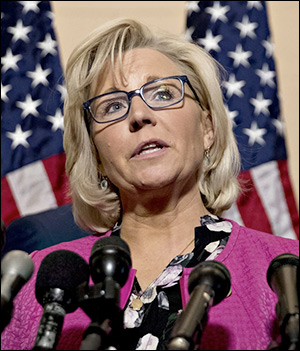
Rep. Liz Cheney (R-WY), one of 10 Republican House members who voted to impeach former President Donald Trump

Oct. 15, 2021 — As we know, 10 House Republicans voted to impeach then-President Donald Trump over the Jan. 6 US Capitol controversy and now it appears that the nine running for re-election are currently facing a bumpy political road.

Reports have surfaced in the political media that identify billionaire Peter Thiel, a Trump supporter, as contributing to the campaigns of the Trump-endorsed candidate opposing at least two of the Impeachment Republicans, Reps. Liz Cheney (R-WY) and Jaime Herrera Beutler (R-WA). The big question is whether Thiel and other like-minded mega donors will fund Super PAC efforts against the House incumbents who supported the impeachment resolution.

Already, Thiel is reportedly committing $10 million to a Super PAC supporting Arizona Senate candidate Blake Masters. He faces a credible field in the GOP primary, including Attorney General Mark Brnovich, solar company owner Jim Lamon, retired Arizona National Guard Adjutant General Mick McGuire, and State Corporation Commission member Justin Olson.

It is unknown whether Thiel will put that type of money behind the Trump endorsed House candidates trying to deny the impeachment Republicans re-nomination, but he has made the maximum campaign contribution to at least two of the contenders, Harriet Hageman, who is opposing Rep. Cheney, and retired Army officer Joe Kent, Rep. Herrera Beutler’s GOP challenger.

Let’s look at how the 10 are currently faring in their re-election efforts:

• CA-21 – Rep. David Valadao: With California’s top-two qualifying system there are effectively no Republican or Democratic primaries. The candidates finishing first and second from the June primary will advance into the general election regardless of party affiliation. There is little chance of denying Rep. Valadao one of the two finalist positions, but he will face a difficult general election campaign irrespective of the Trump-backed efforts.

• IL-16 – Rep. Adam Kinzinger: Reports suggest that the Democratic state legislative leadership is attempting to collapse Rep. Kinzinger’s seat since Illinois loses a seat in reapportionment. He faces a multi-candidate Republican field, but the redistricting lines will be the biggest factor in whether or not Rep. Kinzinger continues his congressional career. The situation won’t be fully known until the redistricting plan is formally introduced and passed into law.

• MI-3 – Rep. Peter Meijer: Freshman Rep. Meijer may have the most favorable situation of all the impeachment Republicans. While he does have primary opposition, none of the candidates appear particularly formidable. Additionally, the preliminary redistricting maps suggest that while Meijer’s district will significantly change, he will still have a Republican seat anchored in Grand Rapids. Adding the city of Kalamazoo would make re-election more competitive, but the overall district would still favor a Republican nominee in most instances.

• MI-6 – Rep. Fred Upton: Multiple Republican candidates have surfaced against Rep. Upton, but his bigger problem may be redistricting. The Michigan Independent Citizens Commission has released four draft maps, and all pair Rep. Upton with another Republican incumbent, either Reps. Bill Huizenga (R-Holland) or John Moolenaar (R-Midland).

Though Trump has endorsed state Rep. Steve Carra (R-Kalamazoo), Upton’s bigger problem would likely be facing another incumbent. It is also possible that Carra finds himself placed in another district.

• NY-24 – Rep. John Katko: Like Rep. Upton, Katko’s biggest re-election problem appears to be redistricting and not the two Republicans who have announced against him. Though the New York preliminary congressional redistricting map has not yet been released, it appears the Democratic leadership is looking to take as many as five of the eight Republican seats away from the GOP.

This very likely means that Rep. Katko would find himself paired with another Republican incumbent, even potentially House Republican Conference Chair Elise Stefanik. Redistricting will likely be the key factor in whether or not Rep. Katko returns to Congress after the next election.

Continue reading

House Vulnerables – Part II

By Jim Ellis

July 13, 2021 — On Monday, we began a two-part series on what are arguably the most vulnerable dozen US House seats based upon the individual district’s political performance over the past two elections.

Below is the priority order update covering the second half of the top 12 most vulnerable CDs. As you will continue to see below, all of the seats except one are Republican held.

To refresh, the first six covered were:

• IA-2 (Rep. Mariannette Miller-Meeks, R-Ottumwa)
• IA-1 (Rep. Ashley Hinson, R-Marion/Cedar Rapids)
• IA-3 (Rep. Cindy Axne, D-Des Moines)
• FL-27 (Rep. Maria Elvira Salazar, R-Miami)
• CA-48 (Rep. Michelle Steel, R-Orange County)
• NY-22 (Rep. Cynthia Tenney, R-New Hartford)

Here’s our look at the next six:

UT-4: Rep. Burgess Owens (R-Salt Lake City) – Ave R vote: 48.8%
• Former NFL football star and businessman Burgess Owens defeated freshman Rep. Ben McAdams (D) by one percentage point in 2020, and we can expect another competitive race here again within this mostly suburban Salt Lake City congressional district located in the metropolitan area’s southern sector.

Republicans, who are in full control of the Utah redistricting process, will attempt to improve the district for Owens, which is possible since the 4th CD is the fastest growing district in the fastest growing state over the past decade. The best estimates suggest that the 4th District must shed approximately 50,000 people to other CDs. This should allow map drawers to subtract a substantial number of Democratic voters from the district, thus yielding Burgess a slightly more favorable political domain.

At this point, McAdams, who was the Salt Lake County mayor prior to his election to Congress, has not indicated whether he will return for a re-match.

MN-1: Rep. Jim Hagedorn (R-Rochester) – Ave R vote: 49.3%
• Two-term Rep. Hagedorn just announced that his cancer has returned, meaning an immediate treatment regimen. How this will affect his re-election campaign is yet to be determined. Hagedorn has won two close elections, as has his Democratic colleague in the adjacent district, Rep. Angie Craig (D-Eagan).

Minnesota is the only state in the nation that sees a split control legislature, meaning each party controls one house. Since the state did not lose a congressional district in apportionment as originally projected, it would not be surprising to see a legislative deal made where Democrats and Republicans are flipped between the two adjoining districts. The changes would result in Hagedorn gaining Republicans and Craig adding Democrats. Redistricting will perhaps be the most critical factor in determining the outcome of both districts come 2022 and beyond.

Continue reading

The Very Real Challenges Of 10 Reps Who Voted to Impeach Trump

By Jim Ellis

Former President Trump

April 20, 2021 — The 10 House Republicans who voted for ex-President Trump’s second impeachment have drawn national media attention, and the newly disclosed first quarter campaign finance numbers give us a sense of which incumbents have a significant challenge ahead of them while others look ahead to clear sailing.

To refresh memories, the 10 GOP impeachment supporters are: Reps. Jaime Herrera Beutler (R-WA), Liz Cheney (R-WY), Anthony Gonzalez (R-OH), John Katko (R-NY), Adam Kinzinger (R-IL), Peter Meijer (R-MI), Dan Newhouse (R-WA), Tom Rice (R-SC), Fred Upton (R-MI), and David Valadao (R-CA). Of these, all have declared opposition with the exception of Rep. Katko.

Based upon fundraising, which is an excellent indication of a candidate’s early support and whether the contender is making the right moves to position him or herself properly against an incumbent, we see two members, and possibly a third, who appear to have capable opponents.

Ohio’s Max Miller, the former Trump White House aide, is the top fundraiser among the nine challenger contests. He reports more than $500,000 in receipts with just over $438,000 remaining in his campaign account for a battle with two-term incumbent Rep. Gonzalez. For his part, the congressman raised well over $600,000 in the first quarter and his cash-on-hand exceeds $1 million.

The other seemingly significant contender is technology executive and Army veteran Joe Kent who is challenging six-term Washington Rep. Beutler. He raised over $269,000 as compared to the congresswoman’s $744,755. On hand, Kent has almost all his money remaining having spent only about a net $20,000 at this early point in time. Washington has a jungle primary, so the chances of qualifying two Republicans for the general election or Rep. Beutler not advancing are scenarios currently difficult to fathom.

The leading incumbent fundraiser of the group is House Republican Conference chair Cheney, who posted campaign receipts of more than $1.5 million, and holding well over $1.4 million in her campaign account. Combined, her top two Republican opponents raised a total of more than $500,000 and would have over $320,000 cash-on-hand if they would coalesce behind just one candidate. A crowded field, especially in light of her strong 1st quarter fundraising performance, puts Rep. Cheney in a favorable position for renomination even though support to replace her is clearly significant.

The Illinois crowded field against Rep. Kinzinger also plays to his advantage. Of his six announced opponents, only community affairs consultant and previous congressional candidate Cynthia Lauf has attracted more than $150,000. With Rep. Kinzinger holding over $2.5 million in his campaign account and no single strong opponent emerging means the congressman remains in advantageous position for renomination.

The only one of the group who may not benefit from having multiple challengers is South Carolina’s Tom Rice (R-Myrtle Beach). Horry County School Board chairman Ken Richardson appears to be the most formidable of the possible opponents, raising over $154,000 with just under $90,000 remaining in the bank.

Continue reading

The Impeachment Ten

By Jim Ellis

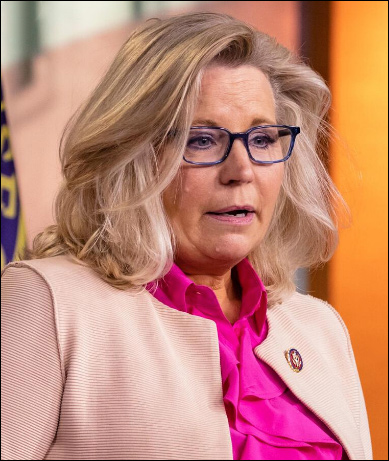
Rep. Liz Cheney, (R-WY)

March 4, 2021 — Another credible opponent for Wyoming at-large Rep. Liz Cheney (R-Wilson/Jackson) came forward earlier this week, which continues the onslaught of political activity against the 10 House Republicans who voted in favor of impeaching then-President Donald Trump for his perceived role in the Jan. 6 Capitol uprising.

Already, Rep. Cheney has four credible opponents. The latest to announce is state Rep. Chuck Gray (R-Casper). He joins state Sen. Anthony Bouchard (R-Laramie), former Pavillion mayor Marissa Joy Selvig, and energy consultant Bryan Miller.

Of the four, Sen. Bouchard and Rep. Gray are the most credible, but the large field assembling against her actually helps Rep. Cheney. Considering that Wyoming is a plurality primary state, a person is nominated by simply obtaining the highest number of votes regardless of percentage attained. Therefore, with Cheney’s opposition split among multiple candidates, the chances of her winning re-nomination with less than a majority becomes a plausible outcome.

The other nine pro-impeachment members are in different situations. From this group, only New York Rep. John Katko (R-Syracuse) has not yet drawn Republican primary opposition.

Three others are from states with primary structures that will help them advance into the general election. Reps. David Valadao (R-CA), Jaime Herrera Beutler (R-WA), and Dan Newhouse (R-WA) will file under a top-two qualifying system.

Rep. Valadao represents a Bakersfield-Fresno district that voted heavily in favor of both President Biden and Hillary Clinton, the latter back in 2016. With all candidates on the same ballot, and not being from a strong Trump district, it is less likely that his vote to impeach the sitting Republican president will greatly affect him.

In the race are former Rep. T.J. Cox (D), the man who lost to Valadao by a percentage point in 2020 after defeating him by an even closer split in 2018, former state Assemblywoman Nicole Parra (D), and ex-Fresno City Councilman and 2020 congressional candidate Chris Mathys (R).

Washington Rep. Beutler, under the same top-two primary system as California’s Valadao, has already drawn three Republican opponents, none of whom have held elective office. We can expect a strong Democrat to emerge here, meaning the eventual preliminary vote division should provide Rep. Beutler with a relatively easy road into the general election.

Continue reading