Tag Archives: Michigan

Michigan Candidate Filing Closes

By Jim Ellis

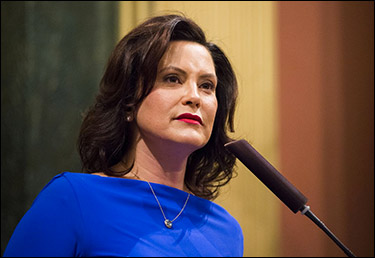
Michigan Gov. Gretchen Whitmer (D)

April 22, 2022 — Major party candidate filing has now closed in the Wolverine State, and we see some highly competitive contests forming for November.

With no senator on the 2022 ballot, the governor’s race tops the ballot. No fewer than 10 Republicans filed in an attempt to oppose Gov. Gretchen Whitmer (D) in the November election. The governor drew no Democratic opposition for the Aug. 2 state primary.

The leading GOP contender appears to be former Detroit Police Chief James Craig, but he must first secure the Republican nomination.

Within the large field, he can expect competition at least from chiropractor and well-known anti-lockdown activist Garrett Soldano, former Berrien County Commissioner and ex-state police captain Mike Brown, and online talk show host Tudor Dixon. The general election yields a race that promises to be one of the top campaigns in the country and polling suggests that the projected Whitmer-Craig contest is already a toss-up.

We will also see serious November competition in most of the state’s 13 congressional districts on a map the Michigan Independent Citizens Redistricting Commission members purposefully drew to feature the maximum number of tight political districts.

In two contests, the major party general election pairings are already set. First District US Rep. Jack Bergman (R-Watersmeet/ Upper Peninsula) must subdue a challenge from Marquette County Medical Director Bob Lorinser (D). In an R+24 district, according to the FiveThirtyEight data organization, where the congressman exceeded 61 percent of the vote in 2020, Rep. Bergman becomes a prohibitive favorite for re-election in November.

What began as an incumbent pairing between Reps. Bill Huizenga (R-Holland) and Fred Upton (R-St. Joseph) because the state lost a seat in national reapportionment, is now a general election that will produce little in the way of political suspense.

With Upton recently announcing his retirement and state Rep. Steve Carra (R-Kalamazoo) deciding to exit the congressional race and seek re-election to his current position, those moves have surprisingly left Rep. Huizenga unopposed for re-nomination in the new 4th CD. His general election opponent will be retail banker Joseph Alfonso (D) in a race that should offer only minimal competition for the six-term incumbent.

Reps. John Moolenaar (R-Midland), Tim Walberg (R-Tipton), Debbie Dingell (D-Dearborn), and Lisa McClain (R-Bruce) face little in the way of competition for both re-nomination and re-election. Rep. Dingell, however, is placed in a new 6th District that contains 44 percent new territory and is without the family’s home base of Dearborn. A member of the Dingell family has represented Dearborn as a part of their district in Congress consecutively since 1933.

Freshman Rep. Peter Meijer (R-Grand Rapids) received one of the tougher draws on the new map. His 3rd District, while still anchored in Grand Rapids, moves from an R+9 rating to D+3. He first must secure re-nomination over former Trump Administration official John Gibbs and attorney Gabi Manolache. Meijer then will again face his 2020 opponent, Democratic attorney Hillary Scholten, who held him to a 53-47 percent victory in the more Republican 3rd District version. The new 3rd contains 50 percent new territory for the congressman, including the Democratic city of Muskegon.

Even though Rep. Elissa Slotkin (D-Holly/Lansing) loses her home base, finds herself in a district with 38 percent new territory, and must compete in an R+7 new 7th District, she actually gains a political point when compared to the current 8th District that she now represents. Still, winning re-election with just a 51-47 percent spread and facing tougher Republican competition from state Sen. Tom Barrett (R-Lansing) means this race will become a top GOP national target.

Continue reading

Redistricting-Forced
Contested Pairings

By Jim Ellis

March 25, 2022 — Redistricting has largely been responsible for six sets of congressional pairings — that is where two incumbents are forced to compete against each other in one new district. Each party sees three intra-party pairings, with the first being decided in West Virginia on May 10.

New polling was released in the Mountain State contest, which features Reps. David McKinley (R-Wheeling) and Alex Mooney (R-Charles Town) battling in a new northern 2nd District. West Virginia lost its third district in national reapportionment, and even though the GOP controls the redistricting pen, the party obviously had to absorb the lost seat since all three current House members are Republicans.

Rep. Mooney, being in the middle district of the original three, always the least advantageous geographical position, had his district split between the northern and southern seat. All but one percent of Rep. McKinley’s current 1st District is contained in new District 2, while just 49 percent of Rep. Mooney’s current 2nd carries over to the new 2nd. All of Rep. Carol Miller’s (R-Huntington) current 3rd District is fully contained within the new 1st as well as 51 percent of Rep. Mooney’s current WV-2.

Two early 2022 surveys, in January from Public Opinion Strategies and February from WPA Intelligence, found similar leads of 45-32 percent and 43-28 percent for Rep. Mooney. This week, however, the West Virginia Chamber of Commerce released their North Star Opinion Research survey (March 13-15; 400 WV-2 likely voters) and their results found Rep. McKinley rebounding to record a 38-33 percent edge. With polling showing a tightening of the race, we can expect a close finish in what should be regarded as a toss-up campaign.

Georgia

The Georgia Democrat pairing between Reps. Carolyn Bourdeaux (D-Suwanee) and Lucy McBath (D-Marietta) in the new Atlanta suburban 7th CD looks to be leaning toward the latter woman even though she sees a very low constituent carryover factor from her current 6th District.

This race will likely be decided on May 24, but since Georgia is a runoff state, there is always the mathematical possibility that the minor candidates could force a secondary election because their combined vote could be enough to keep both major contenders from reaching the 50 percent plateau.

An early January Data for Progress survey found Rep. McBath holding a nine point lead, 40-31 percent, despite the fact that only 12 percent of the new 7th comes from Rep. McBath’s 6th, as compared to 57 percent of the new population base who currently live in Rep. Bourdeaux’s district. On the other hand, McBath is much stronger with the regional Democratic base voter than is Bourdeaux.

Michigan

Two other paired contests are even tighter. Though the Michigan Democratic pairing between Reps. Haley Stevens (D-Rochester Hills) and Andy Levin (D-Bloomfield Township) won’t be decided until the Aug. 2 Democratic primary, two recently released surveys already detect a dead heat.

Lake Research Partners released data from their Feb. 15-20 survey that found the two Democratic members tied with 36 percent support apiece. Earlier in the month, Target Insyght found an almost identical conclusion from their ballot test question, with Reps. Stevens and Levin tied at 41 percent. In January, Impact Research released their study that posted Rep. Stevens to a seven-point advantage, 42-35 percent.

In this situation, Rep. Stevens sees a 45 percent carryover factor from her current 11th District, while Rep. Levin will have only 25 percent of his current 9th District constituency in the new 11th.

In Congressman Levin’s favor, however, is home base status. The Bloomfield Township region, which provided the base vote for his father, Sander Levin, whose career in the House lasted 36 years, and his uncle, the late Sen. Carl Levin who served his own 36 years in Congress, is fully intact within the new 11th. Conversely, Stevens’ home precincts within the Rochester Hills area are not included in the new 11th. This likely gives Levin the advantage of having the more driven supporters, which matters greatly in a lower turnout primary election.

Illinois

Turning to Illinois, in a race that will be settled in the June 28 primary, Reps. Sean Casten (D-Downers Grove) and freshman Marie Newman (D-La Grange) also appear locked in a tight battle for political survival in the western Chicago suburbs. Unlike all the other paired districts that are safe for the winning paired member, the IL-6 CD could become a general election battleground.

In the new 6th, Rep. Newman sees more of her constituents comprising the new district, as just over 41 percent of her current 3rd District voters will be present in the new 6th. This number compares favorably to Rep. Casten’s constituent carryover factor of just 23.5 percent coming from the current 6th. Like in the aforementioned Michigan pairing, one member’s home base is within the district, in this case Casten’s, while the other, Newman’s La Grange region, is not.

Also, as in two of the other pairings, we see an early cycle even split between the two candidates. According to a Victoria Research Feb. 10-15 survey, the two House members were tied at 37 percent apiece.

No polling data is available for the other two pairings — the Illinois Republican battle between Reps. Rodney Davis (R-Taylorville) and Mary Miller (R-Oakland) in the new 15th CD, and Michigan Reps. Bill Huizenga (R-Holland) and Fred Upton (R-St. Joseph) in their state’s new District 4.

Davis has the advantage with the establishment Republicans while Rep. Miller, with former President Trump’s endorsement, is the ideological base vote favorite.

Despite running more than $200,000 in ads for the upcoming primary, Michigan Rep. Upton still says he has not yet committed to running again. He has until the April 19 candidate filing deadline to make a final decision. Upton has the geographical advantage in the new 4th (64 percent carryover to 25 percent), but Huizenga has the Trump endorsement and is stronger with the ideological base.


House redistribution statistics can be found on the Daily Kos Elections website.

Redistricting After-Effects

Click the map above or this link to go to an interactive version: Dave’s Redistricting App

By Jim Ellis

Feb. 24, 2022 — As more states complete their redistricting process and additional data becomes available, we are beginning to catch a glimpse of each party’s path to either keeping or re-claiming the House majority in the coming midterm election.

The FiveThirtyEight statistical organization along with the Dave’s Redistricting App operation are the two data groups that are charting each district as the states complete their decennial task of drawing new congressional district boundaries.

At this point, we have usable projection data from the two organizations in 350 of the nation’s 435 congressional districts, meaning newly completed maps in all but eight states. (FiveThirtyEight has not yet analyzed the new North Carolina map because the court has not yet given final approval, but Dave’s App has calculated based upon the version now before the judicial panel.) As an aside, several of the outstanding states are large, including Florida (28 congressional districts), Ohio (15 CDs: map was complete but rejected before the state Supreme Court), and Pennsylvania (17 CDs).

At this point we can see, after analyzing each of the 350 completed districts, that redistricting in and of itself will return only a narrow advantage to one party or the other. Considering the still incomplete outstanding states, it is unclear which political entity may earn a slight advantage once the entire process is finalized. Currently, newly created maps are complete (or pending court approval) in 42 states, including five of the six at-large domains whose single-state districts are included in the aforementioned aggregate number.

The FiveThirtyEight projections and Dave’s Redistricting App agree on party advantage in 344 of the completed districts even though they used different mathematical formulas and election complexion to arrive at their conclusions. Therefore, the assigned D or R-plus ratings from FiveThirtyEight consistently align with Dave’s numerical projections for Democratic and Republican strength in each of the 344 CDs.

Of the six districts where the two organizations disagree over party advantage, in each of the half-dozen CDs, the FiveThirtyEight data has projected a stronger Republican number. Three of the six lie in the state of Michigan.

The conflicting districts are:

STATE-DIST MEMBER FiveThirtyEight DAVE R DAVE D
CO-8 NEW SEAT            R+3 46.91% 48.24%
MI-7 SLOTKIN, ELISSA            R+4 47.75% 49.18%
MI-8 KILDEE, DAN            R+1 46.05% 50.84%
MI-10 CREATED SEAT            R+6 47.82% 49.44%
TX-15 CREATED SEAT            EVEN 46.73% 51.02%
VA-2 LURIA, ELAINE            R+6 48.35% 49.58%

(Note: a “New Seat” is one drawn in a state that was awarded an extra seat, or two in the case of Texas, through national reapportionment. A “created seat” is a new open district that came as a result of the redistricting process.)

Totaling the 344 districts where FiveThirtyEight and the Dave’s App are in agreement as to party advantage, the Democrats would gain 12 Republican, new, or created districts; while the GOP would gain 10 Democratic, new, or created seats.

Continue reading

House Incumbent Primaries, Part II: Democrats

By Jim Ellis

Feb. 21, 2022 — Part II of our incumbents’ primary challenges report concentrates on the Democratic members who find themselves in serious nomination contests. (Note: Part I — the Republicans — was published Friday. Please scroll down to read.) Nine such situations are covered in this update, with one of them, the Texas race of veteran Rep. Henry Cuellar (D-Laredo) to be decided on March 1.


GA-7: Dem Pairing

Primary: May 24
Runoff: July 26

Rep. Carolyn Bourdeaux (D-Suwanee)
Rep. Lucy McBath (D-Marietta)
• Bourdeaux Cash-on-Hand (Dec. 31, 2021): $2,005,771
• McBath Cash-on-Hand (Dec. 31, 2021): $2,452,731
FiveThirtyEight Statistical Rating: D+16
Dave’s Redistricting App Historical Voting: 58.4% D

Republicans held the redistricting pen in Georgia and after losing two Atlanta metropolitan districts in consecutive elections, it was clear the GOP map drawers were going to take one back. That translated into loading Democrats from the previously Republican 6th District into the transitioning 7th CD.

Along with bringing more Democrats into the 7th, the 6th District incumbent, Rep. McBath, decided to join them. Instead of fighting for re-election in a new Republican 6th District (R+24), she moved south to challenge freshman Democrat Carolyn Bourdeaux in the party primary. As you can see from the cash-on-hand totals above, both incumbents are well-heeled financially, so a major campaign is underway.

Also in the Democratic field is state Rep. Donna McLeod (D-Lawrenceville), who points out that she is the only one of the three that actually lives in the 7th CD. Her campaign has been slow to begin, so it is doubtful that she will be much of a factor, and probably will not draw enough support to force the two congressional incumbents into a runoff. Therefore, it is likely that this pairing will be settled in the May 24 primary.

Among carryover constituents Rep. Bourdeaux has a big advantage in seeing a majority of her current 7th District constituency (57 percent) remaining in the new 7th. McBath, however, sees only 12.1 percent carryover from her 6th District. The larger Democratic influx came from Rep. Hank Johnson’s 4th CD, as 26 percent of his constituency was transferred to the new 7th.

On the other hand, the new 7th is overwhelmingly minority: 29.8 percent black, 21.3 percent Hispanic, and 15.8 percent Asian. Thus, the demographics could help Rep. McBath, who is African American. Her strength within the party’s leftward faction is also a benefit in a primary contest. With each incumbent showing similar strength levels, this will be an interesting race to watch on May 24.


GA-13: Rep. David Scott

Primary: May 24
Runoff: July 26
• Scott Cash-on-Hand (Dec. 31, 2021): $1,107,286
FiveThirtyEight Statistical Rating: D+52
Dave’s Redistricting App Historical Voting: 77.9% D

After only scoring 52.9 percent in the 2020 Democratic primary against three opponents, Rep. David Scott’s (D-Atlanta) 2022 race may be even more serious. Opposing him in this election are two candidates with an election track record, former state senator and 2017 Atlanta mayoral candidate Vincent Fort, and South Fulton City Councilman Mark Baker. The latter man bills himself as the “strongest progressive” in the race, but ex-Sen. Fort was well entrenched with the Bernie Sanders campaign.

Therefore, both opponents are attacking Rep. Scott from the left, which should help him split the opposition vote. Whether such a split will be enough to again allow him to capture majority support in the May 24 primary may be another question. Rep. Scott has long been attacked over not being further to the left on the ideological spectrum, which could again be a problem for him in a district that is overwhelmingly Democratic. Neither Baker nor Fort filed an FEC report at the end of the 2021, meaning they are behind on fundraising.

Rep. Scott must still be rated as the favorite to prevail, but this is another contest that will merit attention on May 24.


IL-6: Dem Pairing

Primary: June 28

Rep. Sean Casten (D-Downers Grove)
Rep. Marie Newman (D-La Grange)
• Casten Cash-on-Hand (Dec. 31, 2021): $1,580,171
• Newman Cash-on-Hand (Dec. 31, 2021): $573,120
FiveThirtyEight Statistical Rating: D+6
Dave’s Redistricting App Historical Voting: 51.4% D

The Illinois race is the second of the three Democratic congressional pairings, and it features sophomore Rep. Casten and freshman Rep. Newman. This particular pairing came about because of complaints that a second Hispanic seat should be drawn in Chicago.

Fearing a loss in court, the Democratic legislative leadership acquiesced and drew a new open 3rd District that is 44 percent Hispanic. As a result, Rep. Newman’s home was placed in Rep. Chuy Garcia’s (D-Chicago) 4th District, but she pivoted to run in the 6th against Rep. Casten. Her move made sense because 43 percent of her constituency was drawn into the new 6th District versus just 24 percent coming from Rep. Casten’s current 6th District.

While Casten has a financial advantage and the support of most of the Chicago Democratic establishment, Rep. Newman is a darling of the far left and will likely attract the more ideological voter that tends to dominate primary voting in both parties.

The aspect of this race that attracts little attention is that the pairing winner is not necessarily home free in the general election. With the Illinois gerrymander drawing 14 Democratic seats of 17 total districts, some of the Dem seats are weak. The 6th, with a D+6 rating from the FiveThirtyEight data entity, is one of those. Therefore, a divisive primary could make the eventual Republican nominee even more viable in the general election.

This draw was not favorable to either Democratic incumbent, and we will see a spirited fight between now and the June 28 primary.
Continue reading

House Incumbent Primaries, Part I: Republicans

By Jim Ellis

Feb. 18, 2022 — As the states complete their individual redistricting processes and candidate filing deadlines appear on the political horizon, some incumbents find themselves facing serious primary challenges. Today, we look at Republican nomination situations in states where redistricting is complete, and Monday next week, we’ll look at the Democrats.


CA-5: Rep. Tom McClintock

Primary: June 7 (Jungle)

• McClintock Cash-on-Hand (Dec. 31, 2021): $372,569
FiveThirtyEight Statistical Rating: R+17
Dave’s Redistricting App Historical Voting: 56.6% R

The California Citizens Redistricting Commission made significant changes to the Golden State congressional map. As a result, veteran northern California Rep. Tom McClintock (R-Elk Grove) had his choice of two districts, one less Republican that contained more of his home area, and the other more strongly favoring the GOP but stretched from the Sacramento suburbs all the way to the Fresno area. McClintock chose the latter.

The congressman’s most serious opponent is Fresno County Supervisor Nathan Magsig (R). California imposes a jungle primary system meaning that the top two finishers in the June qualifying election advance to the general election. Considering the Republican trends in this district, it is wholly possible that both Rep. McClintock and Supervisor Magsig will advance into the general election, especially with three Democratic candidates dividing the liberal base.


IL-15: GOP Pairing

Primary: June 28

Rep. Rodney Davis (R-Taylorville)
Rep. Mary Miller (R-Oakland)
• Davis Cash-on-Hand (Dec. 31, 2021): $1,234,171
• Miller Cash-on-Hand (Dec. 31, 2021): $414,795
FiveThirtyEight Statistical Rating: R+42
Dave’s Redistricting App Historical Voting: 64.6% R

The Illinois Democratic gerrymander created a new uber-safe Republican 15th District that attracted both Reps. Rodney Davis and Mary Miller. Therefore, the new member here will be chosen in the June 28 Republican primary.

The race is shaping up as a clear GOP establishment versus movement conservative contest. Virtually all of the state and national Republican leaders, including House Minority Leader Kevin McCarthy, have endorsed Davis. All of the movement right-of-center groups such as the Club for Growth and Freedom Works, along with former President Donald Trump, have endorsed Rep. Miller.

Davis also has a major fundraising advantage. Miller, on the other hand, sees 31 percent of her constituents carrying over to the new 15th, versus 28 percent for Davis. Rep. Darin LaHood (R-Peoria) has the largest contingent of current constituents in the new IL-15 (36 percent) but he is running for re-election in the new 16th CD.


MI-4: GOP Pairing

Primary: Aug. 2

Rep. Bill Huizenga (R-Holland)
Rep. Fred Upton (R-St. Joseph)
• Huizenga Cash-on-Hand (Dec. 31, 2021): $1,141,056
• Upton Cash-on-Hand (Dec. 31, 2021): $1,467,055
FiveThirtyEight Statistical Rating: R+9
Dave’s Redistricting App Historical Voting: 51.6% R

With Michigan losing a seat in reapportionment, two of the state’s western members were destined to be paired. The new 4th District features a potential contest between Reps. Huizenga and Upton, though the latter man has not yet decided whether to seek re-election. A third candidate, state Rep. Steve Carra (R-Kalamazoo), who carries former President Trump’s endorsement, is also in the race.

Carra is not likely to be a major factor because he represents very little of the new 4th Congressional District constituency in the state legislature. This race will come down to Rep. Upton’s decision whether to seek a 19th term in the House or retire. If he runs, this will be a major summer primary contest. Should he retire, Rep. Huizenga becomes the prohibitive favorite in the primary, with the inside track for the general election, though the new 4th is more competitive than his current 2nd CD.


MS-4: Rep. Steven Palazzo

Primary: June 7 | Runoff: June 28

• Palazzo Cash-on-Hand (Dec. 31, 2021): $ 385,211
FiveThirtyEight Statistical Rating: R+42
Dave’s Redistricting App Historical Voting: 66.5% R

A congressional ethics investigation into Rep. Steven Palazzo’s (R-Biloxi) use of campaign funds is an obvious negative as he strives to win re-nomination for a seventh term.

The investigation prompted state Sen. Brice Wiggins (R-Ocean Springs) and Jackson County Sheriff Mike Ezell to launch a primary challenge against the congressman, in addition to four others. Local business owner Carl Boyanton has thrown $550,000 of his own money into his campaign, making him a factor, too. This field could grow or retract as the March 1 candidate filing deadline looms on the political horizon.

It remains to be seen whether the investigation hinders Rep. Palazzo to the point of forcing him into a runoff — he has survived other tough primary challenges with larger than expected percentages — but the possibility of going to a secondary vote is certainly real. Should Palazzo be forced into a runoff, his re-nomination could be in serious jeopardy.
Continue reading

The Redistricting Scorecard

By Jim Ellis

In the trifecta of political parties controlling the House, Senate and Executive branches in a state, how many will really benefit from that power in the redistricting process?

Feb. 11, 2022 — There has been quite a bit of redistricting news surfacing during the past few weeks, with many analysts now reversing their earlier predictions about which party is the clear beneficiary from the re-draw process.

Most said early that the Republicans would benefit the most from redistricting and that map drawing alone would be enough to allow the party to reclaim the House majority. We, on the other hand, were showing that the cut would more than likely be about equal even though the GOP has a major advantage in trifecta states, that is, those where one party controls all three legs of the legislative stool, meaning the state Senate, state House, and the governor’s office.

Though the Republicans control 25 states outright from a redistricting perspective compared to the Democrats’ 15, the number of states where each can draw maps to expand their party’s congressional delegation really comes down to seven where Republicans control and a commensurate four for the Democrats.

What balances the process this year is that Republicans appear to have have only one state where they can gain multiple seats — North Carolina — while Democrats can run the table, and have, in two big states, New York and Illinois.

Where both parties suffer in their trifecta states is the number of places where they already control the maximum number of seats, or redistricting power has been transferred to a commission. Either one party already has all the seats in a state like the Democrats do in Massachusetts and the Republicans have in Arkansas, for example, or the state has only one at-large member.

In one place, West Virginia, even though the Republicans have a legislative trifecta, they will drop a seat post election. Currently, the West Virginia delegation consists of three Republicans, but the state loses a seat in national reapportionment. Therefore, the GOP majority had no choice but to collapse one of their own districts.

Articles are now appearing that suggest it is the Democrats who could end the redistricting process with a net seat advantage rather than the Republicans. This, as it has been from the beginning, is true.

In looking at the states once all 50 have adopted new congressional lines, it projects today that the Republicans would add approximately 13 seats, while the Democrats, with multiple seat additions in Illinois and New York, would gain 11 new members. Seven states remain undecided because their level of political competition is predicted to be intense.

Continue reading

Michigan House Action Wave

Michigan Congressional Redistricting Map. (Click on image to go to FiveThirtyEight.com to see interactive map.)

By Jim Ellis

Feb. 3, 2022 — Though the Michigan congressional lines are in litigation and filing time is still more than two months away in preparation for the state’s August 2nd primary election, Tuesday was a busy day on the Wolverine State’s US House front.

First, in the paired Republican incumbent 4th District where Rep. Bill Huizenga (R-Holland) is seeking re-election and appears ready to face fellow Rep. Fred Upton (R-St. Joseph), a third candidate announced that he would not abandon his own Republican campaign despite seeing an unfavorable district draw.

State Rep. Steve Carra (R-Portage) said that he intends to remain in the new 4th Congressional District race despite potentially having to face two incumbents and not having any of his current state House District lying in the new 4th. His legislative district will now be fully contained in Rep. Tim Walberg’s (R-Tipton) new 5th CD that stretches the width of Michigan along the state’s southern border. Carra earned former President Trump’s endorsement in his pre-redistricting bid against Rep. Upton.

When queried about the difficulty of the paired nomination race for a non-incumbent such as himself, Carra said, “It doesn’t matter whether there’s one or two status quo Republicans in the race.”

For his part, Rep. Upton is not yet committing to run for a 19th term, saying he wants to further study the new district and see whether the courts disqualify the current map. A group of current and former Democratic state legislators have filed suit against the Michigan Independent Citizens Redistricting Commission claiming the members violated the Voting Rights Act with their draw of the congressional and state legislative districts in Detroit and Wayne County.

The 4th District will be one of the most interesting primary campaigns in the state and possibly the nation if Huizenga and Upton ultimately face each other. With Carra coming to the race with the Trump endorsement and potentially testing just how much the ex-President’s support actually means, he becomes a wild card entry.

Another incumbent who did not fare well in the redistricting process is freshman Rep. Peter Meijer (R-Grand Rapids). His 3rd District moves from an R+9 to a D+3 seat according to the FiveThirtyEight statistical site. Dave’s Redistricting App scores the CD at 50.1 percent Democratic and 46.5 percent Republican. President Biden would have carried the new 3rd, 53-45 percent. Therefore, Rep. Meijer, along with potential primary problems because he, too, voted in favor of the Trump impeachment, has a difficult political road ahead.

Continue reading

Rep. Lawrence to Retire;
Open US House Seats Now Up to 44

By Jim Ellis

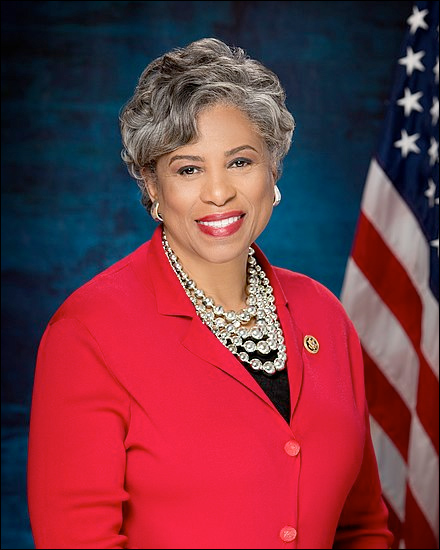
Four-term Michigan US Rep. Brenda Lawrence (D-Southfield)

Jan. 7, 2022 — Four-term Michigan US Rep. Brenda Lawrence (D-Southfield) became the latest Democratic incumbent to announce her retirement. She is the 25th Dem to not seek re-election as compared to 11 Republicans.

Saying, “this is the right time to turn the page and spend more time with my family — my husband, daughter, son and granddaughter — and put them first,” Lawrence made official her decision not to seek a fifth term next year. She is 67 years old. Prior to her election to Congress, Lawrence served as Southfield’s mayor for 14 years. She is the only African American in the Michigan delegation and the lone Wolverine State Democrat to serve on the House Appropriations Committee.

It is speculated upon that the new Michigan map influenced her retirement decision, but Rep. Lawrence said she was confident of being able to be re-elected in the new 12th District. Though her home base of Southfield was included in MI-12, the cities of Dearborn, Westland, and the western part of Wayne County would have, for her, been foreign political turf.

In her closing comments to the Detroit Free Press newspaper, Rep. Lawrence said, “I’m incredibly grateful for the people of Michigan’s 14th Congressional District who have placed their trust in me — in me, a little Black girl from the east side of Detroit.”

The Lawrence decision greatly changes the Detroit area congressional campaigns. Immediately upon Rep. Lawrence announcing her retirement plans, neighboring Rep. Rashida Tlaib (D-Detroit) declared that she will seek re-election in the 12th District, saying that she currently represents more of this CD than the downtown Detroit-anchored MI-13. This leaves the 13th open and will create a major Democratic primary battle. CD-13 is a majority African American district and heavily Democratic, meaning that winning the party primary is tantamount to election in November.

A group of current and former Detroit state legislators announced Wednesday that they are filing a lawsuit against the Michigan Independent Citizens Redistricting Commission, saying the new congressional, state Senate, and state House of Representatives’ boundaries discriminate against black voters, and therefore violate the Voting Rights Act. If the lawsuit successfully overturns the Detroit district draws, new mapping instructions could be forced upon the commission before the 2022 election.

Continue reading

The Open and Collapsed Seats

By Jim Ellis

A look at how things might play out in key states in the redistricting tug of wars

Dec. 2, 2021 — In a redistricting year, tracking the open seats can be a bit confusing. Not only do we record retiring members and those seeking other offices, as we do in every election cycle, but in a redistricting year we also see new seats awarded to states in reapportionment, new districts created through map drawing, and collapsed seats. This, in addition to members being paired and certain incumbents choosing to run in districts other than the one they currently represent.

The open seat numbers have grown significantly during the past month. As a result, we see 24 members leaving their current districts either for retirement or to run for another office. Sixteen are from the majority Democratic conference, with eight coming from their Republican counterparts.

One seat, FL-20, remains in special election cycle and will be filled on Jan. 11. At that point, the House will have its full compliment of 435 members for the first time in this Congress.

Reapportionment changed locations within states for seven congressional seats, and map drawing has added an additional four new seats to date for a total of 11 nationally. The new seats also lead to a commensurate number of incumbent pairings or collapsed districts.

Adding the numbers from all of these categories tells us that 43 House seats have been affected in addition to four members who have declared for seats they don’t currently represent.

The collapsed seats tell their own story. In this category, certain members have nowhere to run, typically in states that lost a seat in reapportionment. In many instances, the member without a place to run is one who had previously indicated that he or she is leaving the House.

In California, the first draft redistricting map shows that Rep. Karen Bass’ (D-Los Angeles) seat would be the one collapsed, because the state is, for the first time in history, losing a district. Bass, however, previously announced that she is running for mayor of Los Angeles, so seeing her seat as the one forfeited was not a surprise.

Illinois Rep. Adam Kinzinger (R-Channahon) was geographically in a difficult position because the map drawers needed the leftward voters in his district to enhance two adjoining Democratic seats. Therefore, he became the odd man out.

Continue reading

Michigan Gov. Whitmer
Falters in New Polls

By Jim Ellis

Michigan Gov. Gretchen Whitmer (D)

Sept. 23, 2021 — We have further evidence that the Michigan governor’s race is going to be a highly competitive political contest next year. A pair of new polls, following one in late August, find Gov. Gretchen Whitmer (D) either in a virtual dead heat with, or trailing, former Detroit Police Chief James Craig (R).

The Trafalgar Group and Strategic National, Inc. were both in the Michigan field during virtually the same time realm to test the impending governor’s race. Trafalgar (Sept. 13-15; 1,097 likely Michigan voters; live interview, interactive voice response system, online, and text) actually finds the governor slipping behind Craig by a 50-44% count. Strategic National (Sept. 18-19; 600 likely Michigan voters) arrived at a much tighter contest with the governor still in the lead. Their result projected a razor thin 46.6 – 46.0 percent margin.

Gov. Whitmer has become controversial even nationally through her draconian COVID shut down measures, and then being caught on several occasions as eschewing the dictates for herself and family. As the Strategic National poll shows, however, the governor’s favorable and unfavorable opinions are equivalent … and almost everyone feels strongly about their preference.

In terms of her personal favorability index, the responses divide 50:48 percent favorable to unfavorable. The strongly held position, however, spins toward the negative category. Of those who comprise Gov. Whitmer’s 50 percent positive rating, 35 percent, or 70 percent of those professing a positive opinion, feel strongly.

The negative segmentation is more intense. From the 48 percent who hold a negative view of Whitmer, 42 percent, or 87 percent of those holding an adversarial opinion, believe so strongly. Her job approval rating responses, though a different question, yields an almost identical pattern.

The polarization factor is, unsurprisingly, extreme when it comes to the respondents’ opinion about how she’s handled the coronavirus. By a margin of 52:47 percent, the sampling universe approves of her measures to combat the disease. And, in this instance, those feeling strongly on both sides break about evenly.

Continue reading