Tag Archives: Hillary Clinton

With Sanders Now a Democratic
Presidential Candidate,
What is His Path to Victory?

By Jim Ellis

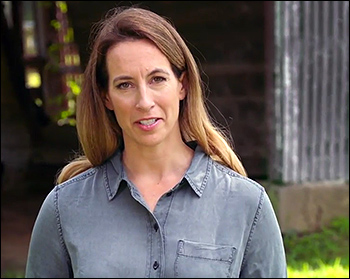
Sen. Bernie Sanders (I-D/VT)

Feb. 21, 2019 — Calling Donald Trump “the most dangerous president in modern American history,” Sen. Bernie Sanders (I-D/VT) announced his 2020 presidential campaign through You Tube and email this week.

His further virulent attack on President Trump was softened by his call to unite America under his presidential campaign, with a goal, he stated, of recruiting more than 1 million volunteers to participate in a grassroots message delivery operation.

The rhetoric notwithstanding, where is Sen. Sanders’ path to the Democratic nomination? This will only be the second time in his long career where he has actually entered Democratic Party primaries. Has his political opportunity window closed as many believe to be the case?

Though the senator is now 77 years of age and would be 79 when sworn into office, should he win the presidency next year, he still has strong support within the youngest segment of the American electorate. He also attempts to appeal to racial minorities, union workers, and climate change activists as the core constituencies of a political base that he believes can expand and carry him to the nomination.

But, unlike 2016, when he battled eventual nominee Hillary Clinton one-on-one through all of the primaries and to the Democratic National Convention only to lose 60-40 percent on the first ballot roll call, he does not have the Democratic left all to himself.

Continue reading

Numbers Continue to Grow in 2020
Democratic Presidential Field

By Jim Ellis

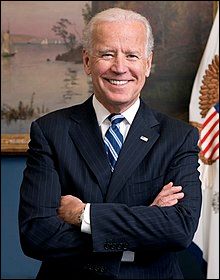
Former vice president and ex-Delaware senator Joe Biden: Will he jump into, or stay out of, the 2020 presidential race?

Feb. 13, 2019 — Major action is beginning to occur within the Democratic presidential field. Sen. Amy Klobuchar’s (D-MN) announcement entering the race on Sunday means that now 11 individuals are official candidates or have working exploratory committees. Expect more to be on the way.

Three more Democrats, men who we have yet to hear much from, confirmed that they in fact are taking serious steps to potentially enter the presidential field just a couple days ago. US Reps. Tim Ryan (D-OH) and Seth Moulton (D-MA) told media sources that they both may become candidates. Ryan is going so far as to travel to Iowa and New Hampshire later this week. New York City Mayor Bill de Blasio is also making a trip to the Granite State, site of the first-in-the-nation primary, but he has, at least until now, been categorized in the “less than likely to enter” group.

Former Vice President Joe Biden continues to hover above the active candidates with a great deal of speculation surrounding his potential candidacy. Many believe he will soon enter the race, but just as many are also predicting that he will ultimately decline to run.

The McClatchy news organization, owner of 31 local newspapers that stretches from California to North and South Carolina, published an analysis article early this week from DC Bureau reporter Kevin Roarty summarizing his interviews of 31 Democratic strategists who largely believe that Biden might actually prove to be a weaker candidate than Hillary Clinton.

Continue reading

House Democrats Release “Frontline Program” Targeting Perceived
Vulnerable GOP CDs

By Jim Ellis

Feb. 12, 2019 — Countering the previously announced National Republican Congressional Committee Patriot Program targeting list, the Democratic Congressional Campaign Committee released their Frontline Program protection listing late last week.

Since the Democrats are now in the House majority, their list is wholly defensive in nature while the Republicans are the minority challengers, a juxtaposition of roles from the past four election cycles. Of the 44 Frontline defense districts, 43 are also GOP Patriot Program targets. The lone exception is Connecticut freshman Jahana Hayes (D-Wolcott), a former national Teacher of the Year award winner who won a 56-44 percent victory in her maiden general election campaign.

The targeting organizational programs are important because both official political party apparatuses help the candidates with fundraising, a campaign element where Democrats overwhelmed Republicans in the 2018 election cycle. Therefore, it is likely that the Patriot Program is more important to the previously identified GOP members than the Frontline operation is to the Democratic incumbents, most of whom raised multi-millions in their own right.

Comparing the lists, the 43 top Democratic protection members who are also found on the Republican register could more realistically be narrowed to 27 campaigns that should reasonably be placed in the highest vulnerability category.

In 19 of the 27, President Trump carried the district over Hillary Clinton, and four years earlier Mitt Romney topped President Obama in 17 of the CDs. The Republicans had won all three post-redistricting congressional elections (2012, ’14, ’16) in 22 of the 27 districts prior to the 2018 vote.

Continue reading

Poll: Trump Behind All, But Skewed?

By Jim Ellis

Jan. 25, 2019 — A new Public Policy Polling company national survey (Jan. 19-21; 750 US registered voters) finds President Trump, who is likely at his lowest ebb in popularity during his two-year stewardship in office, trailing seven prospective Democratic opponents, but the study appears to be nothing short of a push poll.

Initially, the survey sample finds President Trump trailing Hillary Clinton by a net four points more than the actual 2016 national campaign result when the respondents are queried about who they supported in the last presidential election. This alone points to at least a slight sample skew.

The historical presidential vote tabulation is followed by a series of questions, all designed to place President Trump in a negative light.


Verbatim from the PPP study, the questions are:

  • Do you think that Donald Trump is honest, or not? Yes 35%; No 58%
  • Do you think that Donald Trump is a liar, or not? Yes 48%; No 44%
  • Do you think that Donald Trump has made America Great Again, or not? Yes 38%; No 55%
  • Do you think Donald Trump should release his tax returns, or not? Yes 55%; No 38%
  • Do you think that members of Donald Trump’s campaign team worked in association with Russia to help Trump win the election for President, or not? Yes 45%; No 43%
  • Continue reading

Ohio: Contrasting Polls

By Jim Ellis

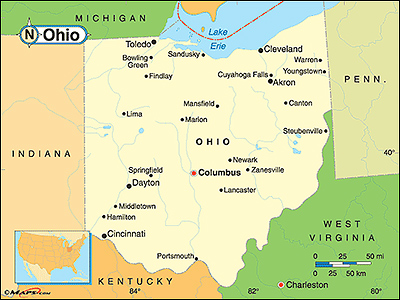
state-of-ohio-mapNov. 1, 2018 — The Buckeye State of Ohio is viewed as one of the country’s quintessential swing states. In 2016, however, the state exceeded polling and even Republican expectations in their presidential vote, as President Trump won a decisive 52-44 percent victory over Hillary Clinton.

Some suggested the Trump vote was an indication that the state could be moving more definitively to the political right, but new surveys suggest the Buckeye electorate is returning to its previous swing vote history.

Still, Ohio proves a reliable national political barometer. In both 2008 and 2012, the electorate here voted for President Obama after twice after backing President George W. Bush in his two elections. The state previously favored President Bill Clinton in his two successful national campaigns. In fact, the last time Ohioans failed to vote for the winning presidential candidate came in 1960 when the state awarded its electoral votes to Republican Richard Nixon in his national losing effort against John F. Kennedy.

Two new polls were released this week that paint different pictures of the Ohio electorate’s current state. Some of the results are curious to the point of questioning the polling reliability or not being able to adequately determine how the governor’s race will end and failing to understand the wide discrepancy in US Senate polling projections.

Continue reading

The Nevada Sway

By Jim Ellis

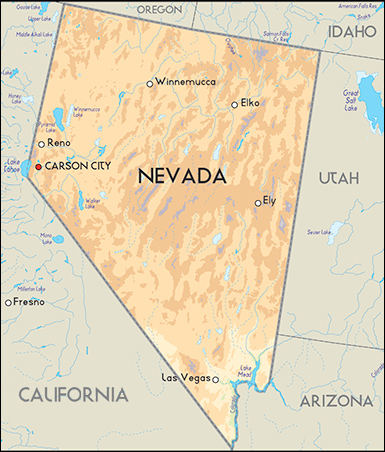
Nevada-mapOct. 17, 2018 — A new Emerson College poll (Oct. 10-12; 625 likely Nevada voters) projects Sen. Dean Heller (R) to a 48-41 percent lead over freshman Rep. Jacky Rosen (D-Henderson), which is the largest lead for either candidate since the June 12th primary.

For most of the election cycle, this race has been rated as a toss-up campaign, but most prognosticators believed it would eventually tilt toward the Democrats yielding a challenger victory.

Viewed as a state trending Democratic because of Hillary Clinton’s 48-45 percent victory in the most recent presidential campaign added to President Obama winning here in both of his elections: 52-46 percent over Mitt Romney, and in a 55-43 percent landslide over John McCain, the 2014 Republican sweep from the governor’s race through the state legislative campaigns has generally been disregarded as an anomaly.

Outgoing Gov. Brian Sandoval (R) has strong approval ratings and would clearly be a re-election favorite if the state did not have a term limit law. The governor is playing an interesting role in this year’s campaign. He is featured prominently in Sen. Heller’s advertising but refuses to endorse Attorney General Adam Laxalt (R) as his successor because the latter man refuses to support the Sandoval tax program, which is becoming the governor’s legacy as Nevada’s chief executive.

Continue reading

New Nevada Data

By Jim Ellis

Nevada-mapOct. 11, 2018 — The new NBC News/Marist College survey (Sept. 30-Oct. 3; 920 NV residents; 780 registered Nevada voters; 574 likely Nevada voters) detects movement toward the Republicans in the two major Nevada statewide races (governor and senator), while keeping both contests in the pure toss-up column.

Marist College is an “A” rated pollster from the 538 statistical analysis organization and has partnered with NBC News since the 2012 election. Already releasing several statewide polls this year, Marist tested the Nevada electorate knowing that Sen. Dean Heller (R) is embroiled in a tough re-election campaign against freshman Rep. Jacky Rosen (D-Henderson), while the open governor’s race, featuring Attorney General Adam Laxalt (R) and Clark County Commissioner Steve Sisolak (D), had begun to turn toward the latter.

According to the NBC/Marist ballot test results, Sen. Heller posts a 46-44 percent edge among likely voters and an almost identical 45-43 percent within the registered voter sample. When the Libertarian Party nominee is added and a question asking whether any of the candidates are satisfactory, Sen. Heller maintains the lead, 44-42 percent, with eight percent going to Libertarian Tim Hagan, and another two percent saying they want “none of these candidates.” Among registered voters, the respondents split 42-41-8-3 percent in Sen. Heller’s slight favor, with Rep. Rosen closely following, and Hagan and “none of the above” trailing respectively.

Continue reading

NJ-11: Rebounding

By Jim Ellis

Navy veteran and attorney, Mikie Sherrill

Navy veteran and attorney, Mikie Sherrill

Sep. 3, 2018 — A new poll suggests that conventional wisdom about how a northern New Jersey district will vote next month might be inaccurate.

For quite some time, the common belief has been that retiring Rep. Rodney Frelinghuysen’s (D-Morristown) seat will convert to the Democrats in the person of attorney and Naval Academy graduate Mikie Sherrill.

An internal National Strategy poll for the Jay Webber (R) campaign (Sept. 24-27; 400 likely New Jersey voters), however, now finds the GOP nominee drawing much closer to Sherrill, to the point where he is within the polling margin of error. According to National, the ballot test finds Sherrill leading, 46-43 percent.

Published polls here have been few and far between. Right after the primary, the money count so favored Sherrill that the prognosticators began making a Democratic victory in this open Republican district a foregone conclusion.

Sherrill had already raised over $4.2 million before the end of June and held just under $3 million in the bank. This compared to Webber having less than $200,000 cash-on-hand. His fundraising was slow to gain momentum, and he had to spend in order to win the party nomination in the June 5 primary, hence his low post-primary financial total. The dollar count led to the principle idea that Sherrill was becoming a lock. Since that time, Webber’s fundraising has moved well into seven digits.

Continue reading

Health Care Politics

By Jim Ellis

Sept. 18, 2018 — In virtually every poll, health care is mentioned in the top three of the most important issues across the country. Therefore, ad themes attacking the problem from both ends of the political spectrum are now regularly appearing in every competitive congressional campaign.

The Democrats are zeroing in on Republican incumbents, in particular, on the pre-existing condition issue claiming that the GOP is trying to eliminate insurance coverage for those having previous health problems. The Dems support this argument by pointing to the Affordable Care Act repeal vote.

(Dr. Kim Shrier ad)

Republicans are now mounting an offensive against the pitch that many Democrats are promoting when they call for expanding Medicare coverage for everyone as the solution to the nation’s health insurance problem.

Both the campaigns themselves and various independent expenditure groups are attacking from both angles, and four ads presented below are typical examples of what we are seeing across the nation.

Washington Democrat Kim Shrier is running for the Seattle area district from which Rep. Dave Reichert (R-Auburn) is retiring. She is a pediatrician, so naturally healthcare is a key theme for her campaign. Dr. Shrier is opposing Republican former state senator and statewide nominee Dino Rossi in what is clearly a toss-up campaign.

Rossi and Dr. Shrier topped a field of 12 candidates in the Washington jungle primary held on Aug. 7. The Republican, by far the most well-known candidate of the group, placed first with 43.1 percent of the vote. Dr. Shrier nipped fellow Democrat Jason Rittereiser, 18.7 – 18.1 percent to advance into the general election. But, in the aggregate, Democrats earned slightly more votes than Republicans in the district-wide primary vote 50.2 – 47.2 percent.

One of Dr. Shrier’s healthcare campaign ads is included above as a good example of how Democrats are attacking Republicans, particularly over the pre-existing condition issue. Kansas Rep. Kevin Yoder (R-Overland Park) goes on the attack against his opponent, former White House fellow (Obama Administration) and professional Mixed Martial Arts boxer Sharice Davids (D), over her promoting “Medicare for all” and claims that such will lead to the elimination of private health insurance.

Continue reading

Super Delegates’ Status Changes

By Jim Ellis

super-delegates-375Aug. 30, 2018 — Just last weekend in Chicago, the Democratic National Committee, on a voice vote, changed the status of the so-called “Super Delegates” for the 2020 presidential nomination process. DNC chairman Tom Perez successfully convinced the executive committee to accept the changes earlier in the year. The full committee then ratified the chairman’s proposal on Saturday.

Simply put, those in the Super Delegate category, which is comprised of elected officials and party leaders, will no longer be able to vote on the first ballot at the presidential nominating convention. Should the voting proceed to multiple ballots, the Super Delegates would again be able to participate.

Controversy came to the national forefront in 2016 when the Super Delegates were perceived as being largely responsible for delivering Hillary Clinton the nomination even though Sen. Bernie Sanders (I/D-VT) had major support among the grassroots.

Ironically, the Democrats could still find themselves in a situation where the Super Delegates make the difference. With as many as 20 or more candidates likely competing for the 2020 nomination, and no winner-take-all states, the total proportional system could well produce a first place finisher who falls short of majority support. If so, at least one more floor vote would be required, and the Super Delegates would return as a major force.