
Tag Archives: Ellis Insight

Q2: The Money Count – House

By Jim Ellis

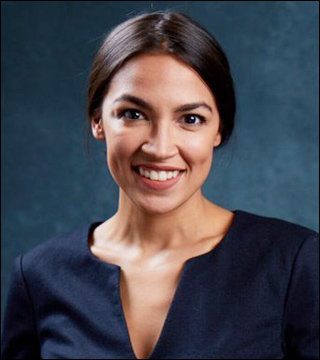
The top Democratic fundraiser in the House for Q2 was New York freshman Rep. Alexandria Ocasio-Cortez (D-Bronx), with $1.22 million raised from April 1 – June 30.

July 23, 2019 — Yesterday we covered the fundraising and cash-on-hand figures for the 2020 Senate campaigns; today we look at the House.

The Daily Kos Elections site surveyed the entire House universe and segmented the large group into a competitive race category. They find 158 House incumbents who will be in a competitive 2020 campaign or have the potential of being in one at this point in time.

Within this incumbent segment, the aggregate amount raised is over $61.4 million for the second quarter period ending June 30. As one would expect, the majority Democratic members had the larger haul, $39.4 million for the 94 Democrats surveyed as compared to $21.9 million for 64 Republicans. The average amount a Democratic member raised was just over $419,000 as compared to $342,000 for Republicans.

As was the case in 2018, when fundraising records were shattered for US House incumbents and candidates, this election cycle appears to be again featuring candidates who are prolific in this campaign element. For the campaign cycle-to-date aggregate figure, meaning the amount of money raised from Nov. 9, 2018, the day after the last general election, to June 30, 2019, these same incumbents have raised over $135 million, meaning an average of just under $855,000 per member.

For the 94 Democratic incumbents isolated for this report, just over $75 million was raised campaign-to-date, for an average of almost $798,000 per member. The 64 Republicans attracted an aggregate $41.4 million, with an average of $646,000 raised CTD.

In terms of current cash-on-hand, the average competitive, or potentially competitive, Democratic House incumbent posted almost $1 million CoH, or $987,000. Their Republican counterparts averaged $657,000. While Democrats have a clear money advantage, is it equally evident that the GOP candidates will also have more than enough to communicate their message. These figures obviously do not include the large amount of money that outside organizations will raise and spend independently to boost their favored candidates of both parties.

Continue reading

Q2: The Money Count – Senate

By Jim Ellis

July 22, 2019 — The second quarter campaign financials are now public, and already candidates in both parties have raised millions of dollars in preparation for hard-hitting 2020 US Senate campaigns. And, the two most prolific fundraising candidates from April through June are actually running against each other.

Arizona Senate candidate and retired astronaut Mark Kelly (D) | Sen. Martha McSally (R)

Topping the campaign receipts category with $4.21 million raised for the quarter is retired astronaut Mark Kelly (D), who is an Arizona Senate candidate. Close behind, with $3.34 million obtained during the same three-month period, is Kelly’s general election opponent, appointed Sen. Martha McSally (R). Obviously, with each candidate already holding between $4.3 million (McSally) and $5.9 million (Kelly) in their political committee accounts, this Arizona campaign will almost assuredly set a statewide campaign spending record in 2020.

Of the 30 Senate incumbents presumed to be actively seeking re-election next year, 21 raised over $1 million in the quarter, and four obtained more than $2 million. Two others topped $3 million in receipts. In addition to Sen. McSally, Senate Majority Leader Mitch McConnell (R-KY) raised just over the $3 million mark.

Another senator, Cory Booker (D-NJ), reports raising no money during the quarter for his Senate campaign because he is running for president.

Overall, the Republican candidates’ aggregate figure was higher than the Democrats in the second quarter ($33.3 to $29.8 million) and for the entire cycle through June 30 ($105.7 to $79.2 million). This is likely because the Republicans have more incumbents on the ballot in the current cycle, 19 to 11, in addition to defending three of the four open seats.

The cash-on-hand category is, of course, highly important. Here, three Republicans lead the category. Texas Sen. John Cornyn, who faces the largest electorate in any 2020 Senate campaign, leads the cash category with just over $9 million in the bank. In no surprise, Senate Majority Leader McConnell has the second most, with $7.9 million. Third is South Carolina GOP Sen. Lindsey Graham with $6.5 million.

The Democrat holding the highest number of dollars is again challenger Mark Kelly in Arizona. Virginia Sen. Mark Warner, who surprisingly had a close call in 2014, is the Democratic incumbent holding the most cash: $5.4 million.

Continue reading

The Budding Five-Way Race

By Jim Ellis

July 16, 2019 — We’ve seen an interesting trio of polls released over the past week that tested the New Hampshire Democratic electorate all within the same relative time span. The cumulative result produced three different leaders and found the top five candidates all within striking range of the top position.

As we reported last week, Change Research simultaneously conducted polls in three of the first four voting states, including New Hampshire, which, as we know, hosts the first primary election on Feb. 11. Though the state is small and has only 24 first ballot delegates to the Democratic National Convention, the primary is an important contest because front runners failing to meet early expectations often find themselves initiating a downward spiral.

Change reported that their June 29-July 4 New Hampshire survey results (420 likely New Hampshire Democratic primary voters) projected Sen. Bernie Sanders (I-VT) to be ahead of the pack, but through a very slim margin. It’s not particularly surprising to see him leading here when we recall that he took 60 percent of the New Hampshire primary vote over Hillary Clinton in 2016.

The top candidates scored 26-24-14-13-13 percent in this first Change Research Granite State poll in the person of Sanders, Sen. Elizabeth Warren (D-MA), South Bend Mayor Pete Buttigieg, ex-Vice President Joe Biden, and Sen. Kamala Harris (D-CA), respectively.

This week, Change is back with an updated New Hampshire survey, and this time uses a much larger polling sample (July 6-9; 1,084 likely New Hampshire Democratic primary voters). Now, the research organization projects Sen. Warren to be the leading candidate, with a commensurately small advantage, 22-20-19-15-13 percent over Sanders, Biden, Harris, and Buttigieg.

Since the margin between Sanders and Warren is equivalent when both are forecast as leaders, the order is largely irrelevant. Basically, the Change data is suggesting that the two are tied with the other three lurking closely behind.

Continue reading

Kobach Announces in Controversy

By Jim Ellis

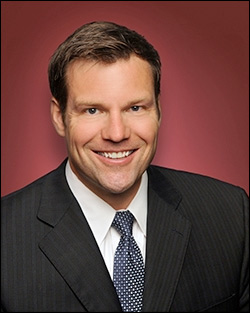
Former Kansas secretary of state and 2018 Republican gubernatorial nominee Kris Kobach

July 10, 2019 — In most runs for public office, the day a candidate announces is one of the best campaign days. For former Kansas secretary of state and 2018 Republican gubernatorial nominee Kris Kobach, his declaration that he would run for Sen. Pat Roberts (R) open seat looks to have turned out differently.

Kobach’s Senate announcement on Monday, though speculated upon for several weeks, was met with a considerable amount of negativity from members of his own party including a spokeswoman for the National Republican Senatorial Committee (NRSC). Through a reported tweet from an interview with the Kansas City Star newspaper she said, “just last year [ex-Sec of State] Kris Kobach ran [as GOP nominee for governor] and lost to a Democrat. Now, he wants to do the same and simultaneously put President Trump’s presidency and [the GOP] Senate majority at risk.”

Kobach, the sitting secretary of state at the time, defeated Gov. Jeff Colyer in the 2018 Republican gubernatorial primary by just 343 votes of over 317,000 ballots cast. Colyer was the state’s lieutenant governor who ascended to the governorship when two-term incumbent Sam Brownback resigned to accept a federal appointment. Post-nomination, the Kobach general election campaign was routinely rated as poor, from a lack of fundraising to deficient campaign strategy and implementation that caused him to lose 48-43 percent to then-state Sen. Laura Kelly (D-Topeka) who attracted a significant amount of Republican support.

Prior to his running for governor, Kobach was tabbed by President Trump to be vice-chairman and lead administrator for the President’s Advisory Committee on Election Integrity under Vice President Mike Pence. But Kobach’s leadership of this organization was also called into question. Asking for voter information from states that even Republican chief election officials routinely refused to turn over, the panel was dissolved after only seven months of existence with no tangible accomplishment.

Continue reading

The Amash Factor

By Jim Ellis

Michigan Rep. Justin Amash

July 9, 2019 — Michigan Rep. Justin Amash (I-Cascade Township) officially left the Republican Party as the 4th of July approached, but what does his decision mean for the 3rd District’s political future?

Rep. Amash has served his whole career as a Republican, being first elected in an open congressional seat back in 2010 after winning a state House district in 2008. Though he left the GOP, he did not affiliate with the Libertarian Party, which many expected. Still, he has the option of running for that party’s presidential nomination even if he does not serve in Congress as a Libertarian.

But Amash’s decision clearly changes the congressional race. If he ultimately decides to seek re-election, his decision to leave the GOP is somewhat curious, at least from an electoral perspective. At this point, already four Republicans have announced, with at least three of them clearly credible. Two are sitting state representatives and one an heir to the Meijer retail store chain that features more than 200 stores predominantly in the Midwest. With no run-off required under Michigan election law, a large competitive field would have played to Rep. Amash’s favor since the contest would have been a base vote nomination election.

Should he decide to seek re-election as an Independent, then all bets might be off. Under the same premise that a crowded field could have helped Amash win a Republican primary, at least a three-way general election candidate field could conceivably allow him to win re-election in similar plurality fashion. But, either major party candidate might have the same advantage making this a wild card race.

Additionally, the three-way set-up could put what is typically a reliable Republican seat in play for the Democrats. Should Amash and the eventual Republican split the right-of-center base, it is conceivable that the Democratic nominee could find him or herself in position to score the plurality victory.

Continue reading

Intra-Party Primary Challenges On Both Sides Emerge This Week

By Jim Ellis

July 3, 2019 — If you thought the 2020 cycle might feature a smaller number of primary challenge campaigns than we’ve seen in recent election years, then Monday might have changed your opinion. No less than six combined intra-party incumbent opposition campaigns were announced, or at least publicly contemplated.

After seeing the results of some key primaries in the past couple of election cycles, such as the now famous Alexandria Ocasio-Cortez 2018 victory over veteran Rep. Joe Crowley in New York, it’s hard to discount any early intra-party candidate at face value. But, it appears, at least today, that all of the potentially challenged incumbents begin their re-nomination campaigns as clear favorites.

In South Dakota, state Rep. Scyller Borglum (R-Rapid City), an engineer and theologian who was just elected to the legislature in November, announced that she will oppose first-term senator and former governor Mike Rounds in next year’s Republican primary. This challenge is particularly curious since no Democrat has yet even come forward to battle Sen. Rounds. The odds of Borglum finding a way to deny her opponent re-nomination look particularly long, but the contest should be watched for indicative early happenings.

Rep. Danny Davis (D) has represented the downtown Chicago and Oak Park areas in Congress since the beginning of 1997. Before that, he served on the Chicago City Council or Cook County Commission for another 18 years. But his long service has not made him immune from enduring a primary challenge. Attorney Kristine Schanbacher announced her opposition to Davis in the March Democratic primary. The congressman is a prohibitive favorite to again win re-nomination. Two other minor Democratic candidates had declared earlier.

Indiana’s 3rd District will feature a “family affair.” Rep. Jim Banks (R-Columbia City/Ft. Wayne) largely won the safe Republican seat in the 2016 GOP primary against former Wisconsin state senator Pam Galloway and four others when he captured over one-third of the vote in a plurality victory scenario.

Continue reading

Poll: Biden Falling

By Jim Ellis

July 2, 2019 — The Morning Consult organization immediately went into the field after the second night of the Democratic presidential forum (June 27-28; 2,407 US self-identified Democratic registered voters) and found that former Vice President Joe Biden’s support slipped, at least as an immediate reaction to what is commonly viewed as his poor debate performance, while Sen. Kamala Harris (D-CA), evaluated as performing quite well, gained.

The MC data still finds Biden in first place, but down five points from their previous survey. On June 23, just three days before the first forum, Biden led Sen. Bernie Sanders (I-VT), 38-19 percent while Sen. Harris lagged at six percent support. Just after the debate, when completing the poll on June 28, Biden dropped to 33 percent, but Sanders remained constant at the 19 percent level. Conversely, Sen. Harris doubled her past support to 12 percent.

MORNING CONSULT POLL RESULTS:

Click on above graphic to go to complete Media Consult poll results story.

In the Morning Consult survey, Sen. Elizabeth Warren (D-MA) also posted 12 percent support, which was virtually on par with her standing in their June 23 poll when she recorded 13 percent preference. South Bend Mayor Pete Buttigieg, who actually scored well on the second debate night, had a similar result to Sen. Warren. While he was polling seven percent on the June 23 poll, he basically remained constant one week later, dropping to six percent on the MC June 28 survey.

Former Texas representative, Beto O’Rourke, who was dogged with poor debate reviews from his first night performance, also dropped in the Morning Consult polling. Before the forum, O’Rourke was only in the four percent range, and after, even lost half that support base, dropping to two percent.

Continue reading

Next for Democrat Candidates

By Jim Ellis

July 1, 2019 — The first Democratic candidate forum is in the books, and the question being posed is how the various performances over the two-night process will affect the candidates’ standing.
On the first night, Sen. Elizabeth Warren (D-MA), really the only top-tier candidate on stage, seemed to dominate the proceedings and clearly scored with her hard left base … a constituency she must wrest away from Sen. Bernie Sanders in order to become a major threat to win the nomination. Some post-debate polling suggests that Rep. Tulsi Gabbard (D-HI) is the lower-tier candidate who significantly improved her standing from the first night group, but she still may not be able to break through to the top.

The general consensus for the candidate performing the worst on the first night, even though he rated his own performance as an “A”, was former Texas congressman, Beto O’Rourke. His attempt at answering questions in Spanish did not seem to be well delivered or received.

The second night, Thursday night, the center stage seemed to go to a pair of candidates, California Sen. Kamala Harris and South Bend, Ind., Mayor Pete Buttigieg. Sen. Harris scored points in bringing the out of control group to order early, and then directly confronted former Vice President Joe Biden on his busing position from decades ago. Even Biden’s explanation of him opposing the Department of Education’s policy was fumbling and incorrect. The votes they were discussing occurred in 1975. The Department of Education didn’t even come into existence until 1979.

Mayor Buttigieg needed a strong performance to solidify his early rise in the polls, and it appears he delivered. He seemed to successfully diffuse the point about the police shooting in his home of South Bend by simply admitting that he failed to do the job. There wasn’t much to say on the topic after that, and none of the other candidates brought it back after Rep. Eric Swalwell (D-CA) made a follow-up point that he should have fired the police chief.

Now, we will see how the candidates fare in post-debate polling, and whether their strategies change.

Continue reading

Debates Begin; Some Polls Tighten

By Jim Ellis

June 28, 2019 — Several polls were released just before the presidential debate series began and we see some inconsistency. Former Vice President Joe Biden leads in the most recent national surveys, but by varying margins.

The closest poll comes from YouGov (June 22-25; 522 likely US Democratic primary voters) and finds Biden’s lead over Sen. Elizabeth Warren to be 24-18 percent. In a close third place is Vermont Sen. Bernie Sanders with 15 percent.

All other candidates are in single digits. Those who have been experiencing a recent downward trend, Sen. Kamala Harris, and ex-Rep. Beto O’Rourke, again posted poor support scores, this time seven and three percent, respectively. South Bend Mayor Pete Buttigieg has been polling inconsistently in recent surveys. Here, we see downward movement, as he registers only five percent support, a polling range that has also been detected in other late June polling.

YouGov also finds two of the lower-tier candidates performing a bit better in this survey. Hawaii Rep. Tulsi Gabbard reaches three percent national support, and Sen. Cory Booker posts two percent support. All others are at one percent or below.

But the Morning Consult data, with a much larger survey sample, tells a much different story. Their poll (June 19-26; 7,150 likely US Democratic primary voters via automated response device) detects a much larger Biden lead. The results find the former vice president at 35 percent support with Sen. Sanders in second place – as he has been in most national polls – with 18 percent, and Sen. Warren in third at 12 percent. Like in the YouGov poll, only the top three finishers posted double-digit support numbers.

The lower tier is very similar to the YouGov results sans Gabbard. They find Sen. Harris (six percent), Mayor Buttigieg (six percent), O’Rourke (four percent), and Sen. Booker (three percent) comprising a second tier. All the rest are at one percent or less.

The HarrisX survey (June 24-26; 892 self-identified Democratic registered voters) brandished a middle-sized sample with commensurate results. HarrisX also finds Biden leading the Democratic race, but his 29 percent support factor falls virtually evenly between what was found in YouGov and Morning Consult.

Continue reading

“Admiral Joe” Is Now 25th Candidate

By Jim Ellis

“Admiral Joe” Sestak

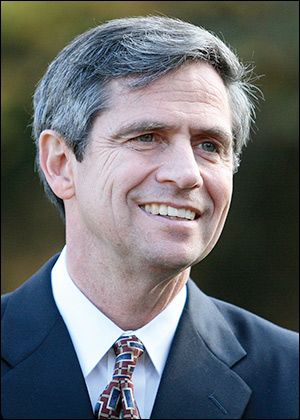
June 26, 2019 — The Democratic presidential field has now grown as large as a professional baseball team, as the 25th candidate came forward this week. Former Pennsylvania representative and defeated US Senate nominee Joe Sestak, who is emphasizing his long military career in rising to the rank of a Navy three-star admiral and serving on President Clinton’s National Security Council, officially entered the national campaign.

Sestak was first elected to the House in 2006 and served two terms from southeastern Pennsylvania’s 7th District. The new presidential candidate unseated 20-year congressional veteran Curt Weldon (R) in his first election and was easily re-elected in 2008. He chose to run for the Senate in 2010, defeating party-switching Sen. Arlen Specter 54-46 percent in the Democratic primary, but then lost to Republican Pat Toomey 51-49 percent in the succeeding general.

Sestak would return in the 2016 Democratic senatorial primary but fell to former gubernatorial chief of staff Katie McGinty after running a rather bizarre campaign that featured the ex-congressman walking the entire state of Pennsylvania but doing very few candidate appearances or media events along the way.

He joins the presidential field long after his new opponents have been campaigning for weeks and months but says he delayed his entry for family reasons. Sestak points out that his daughter has again been fighting brain cancer, which he claims she has beaten for the second time during her life.

Regardless of the reason, Sestak, who is calling himself “Admiral Joe” in this campaign and doesn’t use his congressional title in his new slogan, which reads, “ADM JOE, Accountability to America,” is likely entering too late to become an effective candidate with the ability to challenge for the party nomination.

Continue reading