Tag Archives: Ellis Insight

Projected Democrat Delegate Count

By Jim Ellis

Aug. 12, 2019 — Several polls in key states have been released in early August, so it is a good time to again review the Democratic presidential delegate count estimate based upon the available data.

Projected delegate counts based on polling in nine key states of Democratic candidates jockeying for their party’s nomination for president in 2020.

We see new polls from Iowa, New Hampshire, California, Texas, North Carolina, Washington, and Pennsylvania. Adding the numbers from Nevada and South Carolina — important because this pair is part of the momentum setting First Four — we can gain a decent, though not wholly accurate, picture of where the race would stand if delegate apportionment were based upon these polling totals.

The most current surveys come from North Carolina, Iowa, and Pennsylvania all conducted between July 29 and Aug. 5.

In chronological order, based upon the latest studies, we begin with the Tar Heel State. Survey USA polled the North Carolina Democratic electorate (Aug. 1-5; 534 likely North Carolina Democratic primary voters) and find former Vice President Joe Biden leading his opponents by 21 points. He would post 36 percent as compared to Sens. Bernie Sanders (I-VT) and Elizabeth Warren (D-MA) scoring 15 and 13 percent, respectively. All others fall to single digits.

Accounting for some of the lower-tier candidates eventually dropping out before voting begins, it is likely that the three listed above would exceed the 15 percent threshold to qualify for delegates. If so, Biden would capture approximately 62 delegates, Sen. Sanders would earn 26, and Sen. Warren, 22.

Monmouth University conducted a new Iowa poll (Aug. 1-4; 401 likely Iowa Democratic caucus participants) and found much different results than when we last visited this electorate through the Change Research data in July. Those results projected the top five candidates qualifying for delegate apportionment, but Monmouth sees things quite differently.

According to their latest numbers, it is only Biden and Sen. Warren who would exceed the 15 percent threshold and qualify for delegates, polling at 28 and 19 percent respectively. Therefore, Iowa’s 41 first ballot delegates would split 24 for Biden and 17 for Warren.

Continue reading

Mississippi Governor Primary Results

By Jim Ellis

Mississippi state flag

Aug. 8, 2019 — Voters in the Magnolia State of Mississippi went to the polls to choose open race nominees for the first time in eight years on Tuesday. Incumbent Gov. Phil Bryant (R) is term-limited and ineligible to seek re-election in 2019.

As expected, Attorney General Jim Hood easily dispatched seven Democratic opponents and captured the party nomination outright with a 69 percent statewide win. Hood, often called “the most successful Democratic politician in the South” because of winning four consecutive statewide elections as Mississippi’s AG, scored majority support in all but six of the 80 reporting counties. At this writing, two counties still had not released their vote counts.

The Republican side is headed for an Aug. 27 run-off, as Lt. Gov. Tate Reeves, who earned Gov. Bryant’s backing for this election campaign, looks to be falling just a point short of securing the nomination. Of the estimated outstanding votes, Reeves would have to garner about 81 percent in order to win outright. Since his strongest county, tiny Coahoma, gave him 67.5 percent of the vote but from a total universe of only 120 voters, it indicates that attracting 81 percent of the outstanding ballots is not mathematically feasible.

Therefore, Reeves advances into the secondary election against former state Supreme Court Justice Bill Waller Jr., who placed second with 33 percent of the vote compared to Reeves’ 49 percent. The third candidate in the race, state Rep. Robert Foster (R-Hernando), captured 18 percent and won two counties. Judge Waller finished first in seven counties.

Obviously, Reeves’ dominant showing in carrying 71 counties, which was almost enough for him to claim the nomination, now makes him a heavy favorite for the run-off. It will be interesting to see if Judge Waller comes under pressure not to force the secondary vote and an award the nomination to Reeves in order to unify the party and better prepare for the campaign to oppose Hood.

Turnout proved high in comparison with other races of note, at least for Republicans. The still growing turnout figure of 366,477 Republican voters tops the last open gubernatorial race back in 2011 when just under 290,000 individuals voted in that particular Republican primary. The Democrats’ 276,664 voter turnout figure increases the total participation figure in yesterday’s vote to 643,141 individuals with the two counties still outstanding.

Continue reading

Now, Texas Rep. Marchant Bows Out

By Jim Ellis

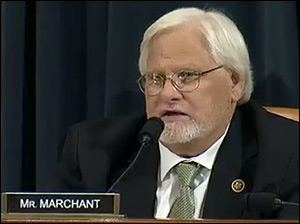
Texas Rep. Kenny Marchant (R-Coppell/DFW area)

Aug. 7 2019 — The string of House retirements continues this week as eight-term Texas Rep. Kenny Marchant (R-Coppell/DFW area) announced that he, too, will leave the House at the end of the current term. Combined with his time in the Texas legislature, Marchant will have served 34 consecutive years in elective office.

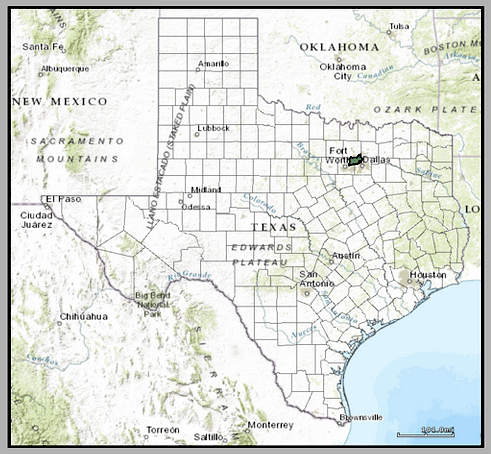
The 24th District has been a focal point of the Texas congressional scene since Democrats position the seat high on their conversion opportunity list because of its close 2018 result. Despite Democratic nominee Jan McDowell spending less than $100,000 on her campaign, she came within a 51-48 percent margin of upsetting the veteran congressman, a difference of approximately 8,100 votes.

The vote drop-off from the 2016 presidential year, as it relates to turnout, was only four percent in 2018 compared to 42 percent when contrasting the 2014 midterm to the 2012 presidential election year, thus partially explaining why the latest results are so different.

Texas Congressional District 24, currently represented in the US House by Kenny Marchant.

The 24th District is the region surrounding DFW Airport, and contains parts of Dallas, Tarrant, and Denton Counties. President Trump carried the seat with a 51-44 percent margin, down from Mitt Romney’s 60-38 percent, and the 58-41 percent margin that John McCain recorded back in 2008. Then-Rep. Beto O’Rourke slipped past Sen. Ted Cruz (R) in the November election by the same margin that Rep. Marchant won re-election, 51-48 percent, however.

Over his eight elections, Marchant averaged 61.8 percent of the vote, but 58.2 percent since the district was drawn in its present fashion from as part of the 2011 redistricting process.

Continue reading

Hickenlooper: Heading Out and In?

Former Colorado Gov. John Hickenlooper – running for Senate after all? (Photo Moritz Hager)

By Jim Ellis

Aug. 6, 2019 — Some politicos are saying that former Colorado Gov. John Hickenlooper is poised to end his failed presidential campaign and return home to challenge Sen. Cory Gardner (R-CO). The speculation is largely coming because new Hickenlooper for Senate campaign domain names were just registered in the past few days. That, and in an interview Sunday on satellite radio, Hickenlooper said he would “be a fool” to continue running for president if he couldn’t see improvement in the polls.

Democratic leaders had long attempted to recruit Hickenlooper into the Senate race, but he steadfastly refused to be swayed from becoming a presidential candidate. He went further than rejecting the idea of running statewide in 2020 when he even expressed some disdain for the Senate as a political body. Hickenlooper seemingly ruled out serving in the Senate saying in February that, “I’m not cut out to be a senator,” and that, “Senators don’t build teams. Senators sit and debate in small groups…”

In his absence, no less than 14 Colorado Democrats have come forward to seek the party nomination to oppose Sen. Gardner, who began the 2020 cycle as arguably the most vulnerable Republican incumbent because his state is moving decidedly leftward. Ten months later, however, Sen. Gardner’s re-election chances appear stronger.

Of the 14 active candidates, six have electoral experience and seven have served in either elective, appointed, or political party positions. Colorado Secretary of State Jena Griswold leads the group, and former state House Speaker and statewide candidate Andrew Romanoff, ex-state House Majority Leader Alice Madden, former state senator and gubernatorial candidate Mike Johnston, state Sen. Angela Williams (D-Denver), ex-US Ambassador Dan Baer, and former Boulder County Democratic chair Ellen Burnes follow.

It is unclear just how many from this group, if any, would step aside for Hickenlooper, who is certainly a weakened political figure considering his national performance and given that he previously has said he doesn’t want the federal office. Therefore, it is conceivable that he will have to face what could be a difficult Democratic primary, and then Sen. Gardner, who is widely regarded as the best campaigner in the Republican candidate stable. According to the latest Federal Election Commission disclosure report, Sen. Gardner’s campaign account possessed just under $5 million at the June 30 deadline.

Though money will be no object for either Sen. Gardner or the eventual Democratic nominee, Colorado voting history is a major factor. The state has been trending much more Democratic since the turn of the century, and President Trump only recorded 43 percent of the vote in his loss here to Hillary Clinton. Prior to that, the last Republican to carry Colorado was George W. Bush in 2004.

Continue reading

Another Open House Seat …

Texas Congressional District 5, currently represented in the US House by John Ratcliffe (R-Heath/Rockwall)


By Jim Ellis

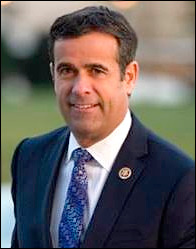
Texas Rep. John Ratcliffe (R-Heath/ Rockwall)

July 31, 2019 — The announcement that Dan Coats is resigning as Director of National Intelligence and Texas Rep. John Ratcliffe (R-Heath/Rockwall) being nominated to replace him creates another open House seat. Now within the space of just one week, the number of open congressional seats for the next election has jumped from 10 to 14.

It is likely that Ratcliffe will go through the confirmation process well into November, meaning Gov. Greg Abbott (R) will call a special election to fill the balance of the current term upon the nominee’s confirmation. Looking ahead, it is likely the special general could fall on March 3, which is the day of the 2020 Texas primary, which means that the candidates would be running to simultaneously fill the current term and for the 2020 party nomination. The confirmation process and calendar, however, will largely dictate if such a schedule will happen.

John Ratcliffe was elected to the House in 2014, after he defeated 34-year congressional veteran Ralph Hall (R-Rockwall) in that year’s Republican primary. He was easily elected in the three subsequent general elections and posted a 76 percent victory last November.

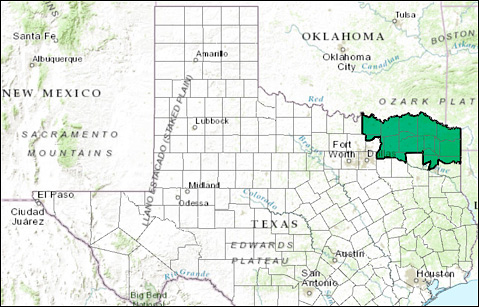
Texas’ 4th District begins at Texarkana on the Texas/Arkansas border, encompasses the counties that touch the northwest Louisiana boundary, and then moves westward and well north of Dallas along the Red River and Oklahoma state line.

Continue reading

Another One Bites the Dust:
Rep. Martha Roby to Retire

By Jim Ellis

Alabama Rep. Martha Roby (R-Montgomery)

July 30, 2019 — In the past week, three Republican House members made public their intention not to seek re-election including one this weekend. The action brings the grand total of open seats to 13, still a low number but one that is beginning to grow exponentially.

Now joining Reps. Paul Mitchell (R-MI) and Pete Olson (R-TX) in the recent retirement category is Alabama Rep. Martha Roby (R-Montgomery). The congresswoman released an electronic message indicating that she will not seek a sixth term and thanked her family and the people of her state’s 2nd District for the opportunity of serving in the US House for what will be a full decade.

Unlike in 2018, Roby looked to have a clear path to re-election. In the last campaign cycle, she drew a significant primary challenge because of negative comments she made about President Trump during the 2016 electoral contest. But the president endorsed her in the ’18 GOP nomination campaign and she scored a solid 68-32 percent win opposite former Democratic Congressman Bobby Bright in the Republican run-off.

Against four primary opponents, however, Rep. Roby only managed 39 percent of the vote, thus forcing the run-off. She rebounded nicely in the secondary election, and then went onto post a 61 percent victory in the general election. So far, no one from either party has come forward to challenge her, thus, Roby announces her retirement devoid of political pressure.

Alabama’s US Congressional Districts

Alabama’s 2nd District occupies the southeastern corner of the state, from the capital city of Montgomery to the Florida border on the south and Georgia to the east. It contains 14 whole counties and almost two-thirds of Montgomery County.

The seat is solidly Republican. President Trump posted a whopping 65-33 percent win here against Hillary Clinton, even topping Mitt Romney’s 63-36 percent margin over President Obama in 2012. In her five congressional general elections, Roby averaged 58.4 percent of the vote, but that figure is a bit misleading. She unseated then-Rep. Bright in 2010 with 51.1 percent and then survived a surprisingly close call in 2016 when she defeated a relatively unknown Democrat with only a 48.8 – 40.5 percent point spread. In her other three generals, she recorded victory percentages of 64, 67, and 61.

While the open seat figure is creeping upward, the majority of what will be incumbent-less campaigns are still non-competitive for next year’s election season. The overwhelming number of the 13 opens are Republican-held (10R-3D), and it appears at this early point in the election cycle that five of the districts will feature seriously contested general election contests, including four currently in GOP hands.

Continue reading

Rep. Pete Olson to Retire

Texas Congressional District 22, currently represented in the US House by Pete Olson (R-Sugar Land), who just announced his retirement.

By Jim Ellis

Texas Rep. Pete Olson (R-Sugar Land)

July 29, 2019 — Six-term Texas Rep. Pete Olson (R-Sugar Land) announced late last week that he will not seek re-election next year, bringing the House open seat total to an even dozen and leaving what appears to be a competitive race in his wake.

Over the years, the 22nd District has had a colorful history. Originally crafted as a swing district in the 70s, Ron Paul first won it in a 1976 special election before losing it in the regular election later that year. He would return to win the district back in 1978 and then hold it for three terms before running unsuccessfully for the Senate.

Succeeding Dr. Paul was then-state Rep. Tom DeLay (R), who would win 11 elections in the congressional district and rise through leadership to become Majority Whip and Majority Leader.

Leaving mid-term in 2006, the Republicans were barred from replacing DeLay on the ballot, which led to then-Houston City Councilwoman Shelley Sekula-Gibbs (R) running as a write-in candidate and losing to a Democrat, former Rep. Nick Lampson. Two years earlier, Lampson had lost his Beaumont-anchored district. Republicans re-claimed the seat two years later in the person of the current incumbent, Pete Olson.

Rep. Olson issued the following statement explaining his decision: “as someone who has long advocated for policies that put our families first, it’s time for me to take my own advice and be a more consistent presence to help our family. To that end, while I will complete my term in the 116th Congress, I will not be seeking reelection.”

Continue reading

Michigan Rep. Paul Mitchell to Retire:
“Rhetoric Overwhelms Policy …”

Michigan Rep. Paul Mitchell (R-Dryden)

By Jim Ellis

July 26, 2019 — Michigan Rep. Paul Mitchell (R-Dryden) who represents the eastern part of the state known as “the thumb of Michigan”, announced Tuesday that he will not seek a third term in the US House.

His reason for departing after what will be only four years in office and spending over $7 million of this own money to win election to Congress over three campaigns is to spend more time with his family because of his special needs son. Rep. Mitchell also expresses displeasure and frustration with Washington because, he says, “rhetoric overwhelms policy, and politics consumes much of the oxygen in this city.”

Rep. Mitchell was originally elected in 2016, replacing Rep. Candice Miller (R) when she retired after 14 years in the House. He won a five-way Republican primary that year with 38 percent support, or more than 8,000 votes beyond he and his closest competitor, state Sen. Phil Pavlov (R-Port Huron). Mitchell won the ’16 general election with a 63-32 percent margin and was re-elected last year, 60-35 percent.

In his first venture into elective politics, Mitchell ran in the vacant 4th District when former Ways & Means Committee chairman Dave Camp (R-Midland) retired in 2014 after his time leading the panel had reached its term limit. In the three-way Republican primary, Mitchell lost 52-36 percent to current Rep. John Moolenaar (R-Midland). After the defeat, he moved across the state to Lapeer County, an area where Mitchell had business interests.

Continue reading

Biden Rebounding Across the Nation

Former vice president, Joe Biden

By Jim Ellis

July 25, 2019 — Former Vice President Joe Biden is re-establishing his pre-debate lead in the Democratic presidential race according to a new Morning Consult political survey.

The poll (July 15-21; 17,285 likely Democratic primary voters from an online pool of 5,000 US registered voters), part of a regular ongoing Morning Consult research series, finds Biden registering 33 percent preference. Following with double-digit support are Sens. Bernie Sanders (I-VT), Elizabeth Warren (D-MA), and Kamala Harris (D-CA) at 18-14-13 percent, respectively. South Bend Mayor Pete Buttigieg, who led all of the Democratic candidates in second quarter fundraising with $24 million obtained during the three-month period, posted only five percent support in placing fifth.

Though we see more support for both Warren and Harris than was present in pre-debate polling, the remainder of the field appears to be reverting to their support levels detected prior to the first Democratic presidential forum held in Miami at the end of June.

Results such as those found in this MC study still suggest the pressure is squarely on the former vice president to deliver an improved performance at his next debate scheduled for July 31 from Detroit. While it was clear his support dipped after the last debate, it will now become imperative for him to command the stage in order to re-establish long-lasting confidence from his political base.

The post-debate slippage indicated that much of Biden’s voter base can be described as vacillating, thus identifying a point of weakness. The upcoming national debate will give him the opportunity of cementing his early lead.

With Biden again pitted against Sen. Harris, and this time with Sens. Kirsten Gillibrand (D-NY) and Cory Booker (D-NJ) joining him as part of the 10 candidates appearing on stage, his key opponents make up a formidable presence who will likely seize more than their allotted share of speaking time. Fighting for time could become problematic for Biden, especially if he becomes a joint target as the evening proceeds.

Continue reading

A Highly Anticipated Challenge:
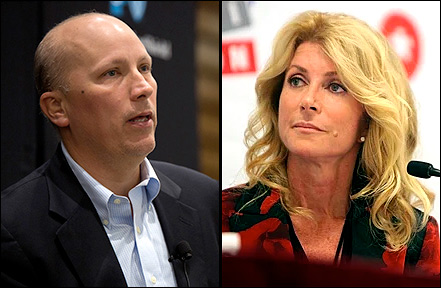
Texas Rep. Chip Roy vs. Wendy Davis

By Jim Ellis

July 24, 2019 — Late last week, the Democratic Congressional Campaign Committee brain trust, members of the House Majority leadership including Speaker Nancy Pelosi (D-CA) and most of the Texas Democratic delegation, announced they are supporting an event to encourage former Lone Star State gubernatorial candidate and ex-state Sen. Wendy Davis to run for Congress.

Texas freshman Rep. Chip Roy (R-Austin) and ex-state Sen. Wendy Davis (D)

Even before the event, held last night, got underway, Davis had confirmed that she would challenge freshman Rep. Chip Roy (R-Austin) who won a close 50-48 percent open seat victory in 2018 from a district that stretches from San Antonio to Austin and through the Texas Hill Country.

Davis was the 2014 Texas Democratic nominee for governor but went down to a crushing 59-39 percent defeat at the hands of then-attorney general Greg Abbott (R). At the time, Davis was a Ft. Worth area state senator who had gained statewide publicity for attempting a 2013 solo filibuster to block a bill that would have outlawed abortion after 20 weeks of pregnancy, in addition to other restrictions.

The publicity jettisoned her into becoming a statewide candidate but ended in a 20-percentage point loss. Now the party leadership is hoping to make her a viable congressional candidate some 200 miles from her legislative district. Davis was elected twice to her Ft. Worth area Texas senate seat, defeating an incumbent Republican in her first election in 2008 and winning re-election in equally close proportion.

Interestingly, the vote totals for and against her hardly changed from 2008 to 2012. In her first election, Davis attracted 147,832 votes. In her successful re-election bid, she received 147,103. Though her Republican opponents were different individuals, including an incumbent in 2008, they too, received almost an identical number of votes: 140,737 (2008) and 140,656 (2012). Texas is one of two states, California being the other, where the state Senate seats are more populous than congressional districts. After losing the gubernatorial race, Sen. Davis chose not to seek re-election in 2016 and moved to the Austin area.

Continue reading