Tag Archives: Ellis Insight

He’s Baaaaaack!

By Jim Ellis

                      Judge Roy Moore

June 24, 2019 — As expected and despite urgings from President Trump not to do so, former Alabama state Supreme Court Chief Justice Roy Moore announced his Senate 2020 candidacy late last week.

We will remember Judge Moore’s ill-fated 2017 special Senate election effort that resulted in Democrat Doug Jones becoming the first member of his party to win an Alabama Senate seat since Howell Heflin was last re-elected in 1990.

Even before the announcement, Moore and Sen. Richard Shelby (R) were again trading barbs. Judge Moore argued that Shelby’s involvement, which culminated in the senior senator saying he was placing “country before party,” led to Jones’ victory, while Shelby retorted that he still thinks “Alabama can do better,” in a reference about electing Judge Moore.

Arguably, Alabama is the most important Senate race on the 2020 election board. If the Republicans take back the seat, which is a must if they want to cement their hold on the majority, the Senate party division would increase to 54 Republicans. Looking at the remaining seats in play for the current election cycle it becomes increasingly difficult for the Democrats to reach majority status if they lose this race.

In 2017, Judge Moore, after defeating appointed incumbent Luther Strange 55-45 percent in a run-off election after placing first with 39 percent in the original special primary, was found to have attempted to date, or did date, between two and nine underage girls when he was a deputy district attorney in Etowah County some 40 years ago. The controversy likely cost Moore the election, a battle that he lost to Jones 50.0 to 48.3 percent.

The 2020 regular primary appears to feature a more difficult field of opponents for Moore than did the special election. Appointed Sen. Strange waded into his own batch of quicksand when allegations surfaced that he allegedly cut a deal with Gov. Robert Bentley (R) when the former man was Alabama’s attorney general and the state chief executive was being scrutinized for spending and utilizing state resources for his personal use.

Continue reading

Florida: Biden Up

Former vice president, Joe Biden (Getty Images)


By Jim Ellis

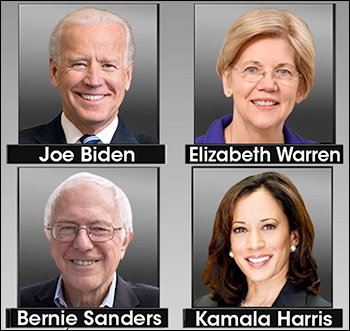
June 20, 2019 — Quinnipiac University surveyed the Florida electorate (June 12-17; 1,279 registered Florida voters, 417 self-identified Democrats) and found former Vice President Joe Biden opening a substantial lead over Sens. Bernie Sanders (I-VT) and Elizabeth Warren (D-MA) there. He also posts a healthy advantage against President Trump in a hypothetical general election pairing in what is always a critical voting domain.

The Q-Poll numbers find Biden scoring a 41-14-12 percent advantage over Sens. Sanders and Warren, respectively, with South Bend Mayor Pete Buttigieg and Sen. Kamala Harris (D-CA) trailing in single-digits with eight and six percent, sequentially.

As Nate Silver, founder of the 538 statistical website, said in an interview this week that looking at general election polling this early is basically a futile exercise. It does, however, provide us a clue into candidates’ strengths and weaknesses. In the general election Q-Poll pairing, Biden records a 50-41 percent advantage over President Trump in Florida. This poll, of course, was taken before Trump’s Florida rally Tuesday night in which he kicked off his 2020 campaign.

Silver’s spoken sentiments are true because, among other reasons, so much time remains between now and the 2020 Nov. 3 election, and so many unknown events will occur that could alter the final outcome. Additionally, the campaign will drastically change when both parties have nominees and voters begin paying serious attention to the race.

Continue reading

Wyoming: Political Picture
Will Take Time to Emerge

By Jim Ellis

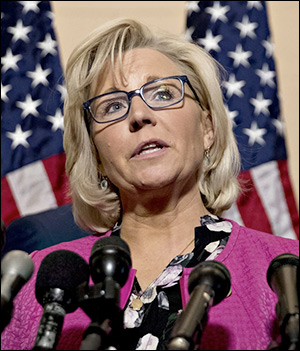
Rep. Liz Cheney

June 19, 2019 — Sen. Mike Enzi’s (R) retirement announcement last month will ignite a political firestorm in the Equality State, but not just yet. Because the state is small and the candidate filing deadline is almost a year away (May 29), the races will take time to develop. Both the Senate campaign and at-large House contest, assuming we see an opening in the latter situation, will become major political battles, at least as far as the Aug. 18, 2020 Republican primary is concerned.

The focal point centers around at-large Rep. Liz Cheney’s (R-Wilson/Jackson) intention. Should she run for the Senate, as most believe she will, her path to the nomination is likely to be encumbered. Her jumping into the Senate contest will also open Wyoming’s lone House seat for the second time in three election cycles.

In addition to Cheney, a former at-large US representative and ex-state treasurer is reported to be testing the waters for the Senate seat. Additionally, a two-term former governor is looming large on the political horizon.

Cynthia Lummis (R) served in the House for four terms after her original election in 2008 and did not seek re-election in 2016. Lummis averaged 64.8 percent in her four elections, and 68.8 percent in three re-elections as the incumbent. She served eight years as state treasurer, in addition to a combined 14 years in the Wyoming House and Senate. The former congresswoman is reportedly making calls to assess her chances and if she decides to enter the open Senate contest, we could see she and Cheney squaring off for the GOP nomination.

Billionaire Foster Friess, who finished a relatively close second in the 2018 Republican gubernatorial primary, is also being mentioned as a potential candidate. While not committing to the race, Friess has also not ruled out running.

Continue reading

California Already Tightening

By Jim Ellis

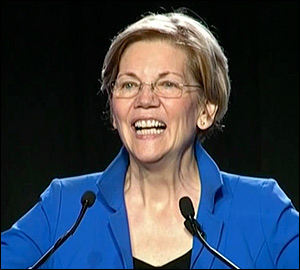
June 17, 2019 — A new large-sample Golden State poll released from the University of California at Berkeley and the Los Angeles Times (June 4-10; 2,131 likely California Democratic primary voters from a pool of 4,435 registered voters) yields some surprising results. The three most unexpected findings first show a tight race among the four top contenders, Sen. Elizabeth Warren (D-MA) surging into second place, and home-state Sen. Kamala Harris only finishing fourth but not substantially behind.
The California primary, scheduled for March 3, possesses the largest number of first-ballot delegates of any state or territory. The state’s 416 first-ballot delegates, 272 of whom are divided among the 53 congressional districts and 144 at-large, will certainly help set the tone over how the Democratic National Convention unfolds.

Sen. Harris, who could well be the indicator candidate as to what scenario will occur at the convention, (i.e., will one candidate be able to coalesce a majority coalition on the first or second ballot or does the nomination battle fall into a multi-ballot contest) must score big in her home state, and this latest survey suggests her path is challenging but doable.

The Berkeley/LA Times study sees former Vice President Joe Biden holding a smaller lead than in past surveys, as he polls 22 percent first-choice responses. Sen. Warren makes a major jump into second place and records 18 percent, one of her best showings in any poll. Sen. Bernie Sanders (I-VT), who has been dipping in polling across the country, places third at 17 percent, and Sen. Harris trails in fourth position, but is still clearly in the game at 13 percent.

Polling from around the country within the last 10 days, and this California study is obviously no exception, has been projecting a tighter Democratic race. Though Biden still leads, his advantage is lessening.

Continue reading

Nevada Surprises

By Jim Ellis

Sen. Elizabeth Warren (D-MA) moving up in Nevada

June 14, 2019 — Monmouth University just released their Nevada survey (June 6-11; 370 likely Nevada Democratic caucus attenders from a pool of 1,333 registered Democratic and unaffiliated voters) and it contained two major surprises.

First, Sen. Elizabeth Warren (D-MA), who is beginning to show signs of upward mobility after being stagnant since her campaign’s inception, moves into the runner-up position in the Silver State and, second, neighboring Sen. Kamala Harris (D-CA) fares poorly in an early voting venue where she needs to succeed.

The Monmouth data projects former Vice President Joe Biden to be leading the pack of candidates, as in almost every current poll, with 36 percent preference and Sen. Warren follows with 19 percent, ahead of Sen. Bernie Sanders (I-VT) who drops to 13 percent. Sen. Harris then places fifth with just six percent support, and one point behind South Bend Mayor Pete Buttigieg.

Monmouth then asked the second-choice question. Within these responses, the candidates are closely bunched. Here, it is Sen. Warren who leads with 15 percent, but the group is so close that a statistical tie among the top four is the best way to categorize the answers. After Sen. Warren, Sen. Sanders posts 14 percent, while Sen. Harris performs better than on the initial ballot test, tying Biden at 13 percent.

The Nevada Caucus, even though it holds only 36 first-ballot delegates, is an important momentum builder. Placed third on the nomination calendar, Nevada follows the Iowa Caucus and New Hampshire primary, respectively. It is scheduled for Saturday, Feb. 22, and exactly a week before the South Carolina primary.

Nevada is important for Sen. Harris because she is unlikely to do particularly well in either Iowa or New Hampshire. She is expected to be one of the top finishers, if not the winner, in South Carolina, so a strong performance in Nevada is critical to give her some needed momentum in order to maximize her chances in the Palmetto State.

Continue reading

Is Michigan Rep. Justin Amash
Seeking a Political Exit Strategy Should He Run for President?

By Jim Ellis

Michigan Rep. Justin Amash (R-Cascade Township/Grand Rapids)

June 13, 2019 — The Michigan Information & Research Service (MIRS) released an independent poll just a couple days ago from the Practical Political Consultants organization (June 5-9; 335 likely MI-3 Republican primary voters) that finds western Michigan Rep. Justin Amash (R-Cascade Township/Grand Rapids) trailing his announced 3rd Congressional District Republican primary opponent, state Rep. James Lower (R-Greenville), by a lopsided 49-33 percent count.

After Rep. Amash became the only Republican to side with the Democrats’ informal impeachment caucus over whether to bring proceedings against President Trump, speculation became more rampant that the five-term Michigan congressman would seek the Libertarian nomination for president. The new poll and his action earlier in the week of resigning from the Freedom Caucus and its leadership fuels more speculation that he will jump into the presidential contest.

Many are arguing that Amash would have an effect upon the national election to the point of potentially costing President Trump victory, or at the very least, the state of Michigan, but such an outcome is far from determined.

The Libertarian presidential nomination has some value in that the party can qualify for the ballot in all 50 states and the District of Columbia. It is the only political entity aside from the Republican and Democratic parties that has such an ability. Jill Stein, the 2016 and 2012 Green Party presidential nominee, appeared on the ballot in 45 and 38 states, respectively.

However, just how much of a factor are the individuals who represent the minor parties on the presidential ballot? Former New Mexico governor Gary Johnson was the Libertarian nominee in both 2016 and 2012. He has already said he will not be a candidate in 2020. In 2012, his national vote total was 1.27 million. Four years later, his aggregate vote number soared to just under 4.5 million. But, was that due to Johnson himself, or is the Libertarian ballot position, regardless of the candidate’s name associated with it, simply the best place for disaffected voters to cast a ballot?

Continue reading

Biden Beginning to Show Cracks

By Jim Ellis

Former vice president and ex-Delaware senator Joe Biden is the Democratic front-runner in the 2020 presidential bid.

June 11, 2019 — Two polls were just released in critical Democratic primary states that find former Vice President Joe Biden’s standing to be weaker than his latest national polling results.

In Texas, the Change Research poll (May 20-June 3; 1,218 likely Texas Democratic primary voters) projects that former Rep. Beto O’Rourke (D-TX) has risen to the top of his home state electorate, leading Biden, 27-24 percent with Sen. Bernie Sanders (I-VT) posting 13 percent support. Sen. Elizabeth Warren (D-MA) is right behind with 12 percent, while California Sen. Kamala Harris records only eight percent backing.

Turning to Iowa, Selzer & Company released another of their Iowa Polls (June 2-5; 600 likely Iowa Caucus attenders; 433 saying they would personally attend their precinct caucus meeting while another 167 said they were interested in participating in the new virtual caucus that will be an Iowa Caucus feature for the first time) and while Biden leads the group of Democratic candidates, the combined numbers from the second, third, and fourth place finishers outpaces the leader by almost a 2:1 ratio.

In the Iowa Poll, conducted for CNN, the Des Moines Register newspaper, and Mediacom, Biden posts only 24 percent support. He is followed by Sen. Sanders at 16 percent, Sen. Warren notching 15 percent, and South Bend Mayor Pete Buttigieg trailing closely with 14 percent. But, Sens. Sanders and Warren together top Biden by seven percentage points and when Buttigieg is added, the trio comes close to denying Biden even the possibility of reaching majority status.

Continue reading

A Surprising Announcement

By Jim Ellis

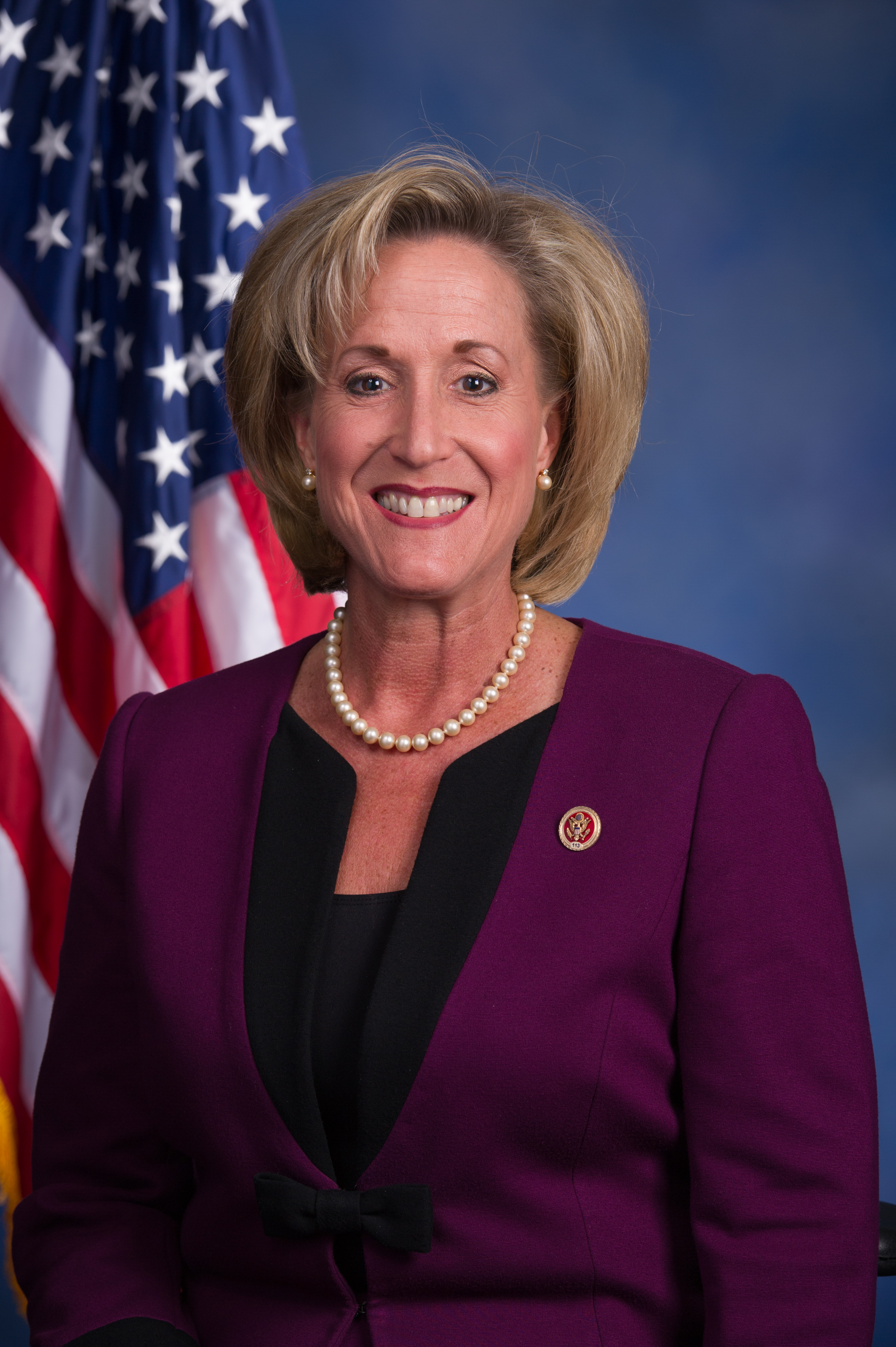
Rep. Ann Wagner (R-St. Louis County)

Rep. Ann Wagner (R-St. Louis County)

July 6, 2017 — A July announcement regarding the coming Missouri US Senate race had been expected for weeks, but the actual content featured a much different declaration than anticipated.

Just before the July 4th holiday, Rep. Ann Wagner (R-St. Louis County), who was thought to be announcing a campaign for the Senate, instead made public her decision not to challenge Democratic incumbent Claire McCaskill. Rep. Wagner will seek a fourth term in the House, however. The congresswoman cited her desire to continue fully representing her home area as the driving force behind her ultimate political decision. In her statement, Wagner said that the 2nd District “ … is my home. It’s where I grew up, went to school, have worked and volunteered, raised my kids, and attend church every week—there is no greater honor than representing a place and people that I love.”

The Wagner turnabout was particularly surprising in that she had been raising money at a very strong clip, more than $800,000 in the first quarter with a projected similar amount for the quarter just ended but not yet publicly reported.

Democrats, of course, are saying that Wagner decided not to run statewide because she and another Republicans fear a bad political year. The Dems uniformly cite President Trump’s low approval ratings and what many perceive as a politically negative healthcare issue, things they believe will cause major electoral problems for GOP candidates.

Continue reading

Q-Poll: Rubio Best Against Democrats

Aug. 24, 2015 — Quinnipiac University simultaneously polled the swing states of Florida (1,093 registered voters), Ohio (1,096 registered voters), and Pennsylvania (1,085 registered voters) during the Aug. 7-18 period and found that neither Donald Trump nor Jeb Bush is the strongest Republican against a trio of potential Democratic nominees. Rather, it is Florida Sen. Marco Rubio who scores the highest in ballot test pairings opposite his Democratic counterparts.

The young senator, however, isn’t quite as strong on the Republican primary ballot test, placing third in all three states including his own. The Q-Poll’s three state combination does show that Rubio would be the Democrats’ most formidable opponent, therefore suggesting he has the potential of likewise creating a surge among Republicans.

The pollsters paired three Democrats: Hillary Clinton, Vermont Sen. Bernie Sanders, and Vice President Joe Biden, with three Republicans: Trump, Bush, and the Florida senator. The data finds that Rubio is the only one of the trio who leads Clinton in each of the three places. In fact, he tops all three Democrats everywhere in the tested region with the exception of trailing VP Biden in Ohio, but by just one percentage point, 42-41 percent.

Continue reading

Edwards Up in Maryland;
More National Data

Aug. 21, 2015 — Rep. Donna Edwards (D-MD-4) released the results of her internal Global Strategies Group poll (Aug. 3-9; 600 likely Maryland Democratic primary voters) and, despite her severe disadvantage in fundraising, the data finds her leading fellow Rep. Chris Van Hollen (D-MD-8) in their quest for the open Maryland Senate seat. Edwards maintains a five-point margin, 42-37 percent.

The released data included the Edwards-Van Hollen ballot test, plus favorability ratings for the two announced contenders and Rep. Elijah Cummings (D-MD-7), who remains a potential Senate candidate.

Interestingly, the index scores for Edwards and Van Hollen are almost identical. The polling respondents rate Edwards at 45:9 percent favorable to unfavorable. Van Hollen registers 45:11 percent. But, Rep. Cummings does even better. He posts a whopping 65:9 percent positive ratio.

Continue reading