
Tag Archives: Arizona

More Election Eve Updates

By Jim Ellis

Nov. 8, 2018 — According to a CBS News report quoting University of Florida professor Michael McDonald, who runs the United States Election Project, more than 113 million people voted in the 2018 midterm election, the first time turnout exceed the 100 million mark.

With voter participation approaching a majority of the eligible voting population for the first time since 1966, we see a continued increase in voter participation. The 2018 midterm is among the three top off-year elections with the highest turnout rate in the past 118 years. This high voting trend has largely been in effect since the 2000 election, though the 2014 midterm proved an exception with very low turnout.

Carrying through from media projections of uncalled races, it appears the Democrats will see a net gain of 31 seats, not counting the California races that still have millions of votes to tabulate. An incumbent race featuring New Jersey Rep. Tom MacArthur (R-Toms River) appears to be flipping back and forth in final counting.

The Golden State features an election system where at least 75 percent of the people vote through the mail and they allow ballots to be postmarked on Election Day. Therefore, it will be a couple of full weeks before we know the final totals in what appears to be five congressional contests that are still undecided, all in current Republican seats. It is probable that the Democrats will win at least two of the five and possibly even all of them.

Continue reading →

The (Mostly) Final Election Results

By Jim Ellis

Nov. 7, 2018
— The long 2018 midterm election cycle drew to a close last night and, as predicted, split government will return to Capitol Hill. Republicans held the Senate and saw their majority grow as Democratic Sens. Heidi Heitkamp (ND), Joe Donnelly (IN), and Claire McCaskill (MO) 2018-mid-term-election-results-graphicfell to Republican challengers. Florida Gov. Rick Scott (R) likely will be forced into a recount to see if his just-under 40,000 vote advantage will be enough to unseat Sen. Bill Nelson (D).

The Montana race is undecided as Sen. Jon Tester (D) is on the precipice of losing but the outstanding vote suggests he could survive by a very small margin. The razor-thin Arizona race is a must-hold for the GOP. Democrat Jacky Rosen defeated Nevada Republican Sen. Dean Heller, and West Virginia’s Joe Manchin (D) fought back a tough challenge from Attorney General Patrick Morrisey (R).

If all of these follow their current trends, Republicans will gain a net of four seats and increase their majority margin to 55-45. If Montana and Arizona go Democratic, the division would slip to 53R-47D. In any event, it appears likely that the Republicans will gain two to four seats.

The new Senate will maintain their new majority split once the Nov. 27 run-off election is held and decided in Mississippi. In that new secondary election, appointed Sen. Cindy Hyde-Smith (R) will face former US Agriculture Secretary and ex-Mississippi congressman, Mike Espy (D). Sen. Hyde-Smith placed first in the Nov. 6 preliminary vote and ended with 41.5 percent of the vote, not close to secure the majority support that would have elected her outright and just ahead of Espy’s 40.6 percent. State Sen. Chris McDaniel (R-Ellisville) was third with 16.4 percent, likely denying Hyde-Smith the opportunity to win in the first round. He is eliminated from further competition.

As predicted, the House did flip to the Democrats and leadership elections will soon be held to determine who will replace retiring House Speaker Paul Ryan (R-WI). It is perceived that California’s Nancy Pelosi will again become the speaker after serving from 2007-11 and losing the post when the Republicans secured the majority in the 2010 election.

Continue reading →

Election Day Is Here

2018-elections-open-seatsBy Jim Ellis,

Nov. 6, 2018 — At long last, the 2018 midterm Election Day has arrived. Democrats appear well positioned to capture the House of Representatives, but the question of how big a majority margin we will see remains. The large number of dead-even campaigns heading into today suggests that a small majority margin is the most likely outcome.

Republicans, largely because Democrats are defending 26 of the 35 Senate races, should hold control but, again, to what degree? Will their 51-49 margin increase? It appears they will successfully unseat North Dakota Sen. Heidi Heitkamp (D), but will Arizona and Nevada both hold for them, allowing more substantial gains? Does Rep. Beto O’Rourke’s (D-El Paso) new-found celebrity status and national fundraising prowess allow him to overcome Texas voting history to unseat first-term senator and former presidential candidate Ted Cruz? These and many other yet-to-be determined answers will be uncovered late tonight.

Several races may not finish tonight. Today is also the first time Louisiana voters will go to the polls during this cycle. Without a formal nomination process, the Bayou State consolidates its primary and general election into one vote. Therefore, if a candidate receives an absolute majority tonight, that individual is elected. If not, the top two finishers will advance to a Dec. 8 run-off. With no governor or Senate election on the ballot and little competition within the state’s six House districts, it appears likely that all congressional incumbents will win tonight. Next up, Gov. John Bel Edwards (D), possibly facing US Sen. John Kennedy (R), will defend his position in the 2019 odd-numbered year election.

Continue reading →

The Final Outlook

2018-elections-open-seatsBy Jim Ellis

Nov. 6, 2018 — Election Day has arrived, but it is likely that a majority of those planning to vote have already done so. Early voting totals are way up in most of the 37 states that employ a pre-election ballot casting procedure in comparison to the 2014 midterm election.

According to the University of Florida’s United States Elections Project, 25 of the 37 states report receiving more early votes than they did four years ago. None, however, is larger than Texas where early voting has already exceeded that grand total votes cast in 2014. The same also has occurred in Nevada, but it’s less surprising since the last midterm aggregate turnout there was unusually low.

In Texas, just under 4.9 million votes already have been received. In 2014, the aggregate early and Election Day vote was 4.72 million. In 2014, 44 percent of the total vote was cast early. If this same pattern occurs, the current election total turnout will exceed the 2016 presidential level participation figure of 8.96 million votes, however it is unlikely that will happen. How the increased turnout will affect the election outcome is undetermined at this point, but the high number of first-time voters suggest that Democrats could improve their typical standing.

Continue reading →

Senate: The Latest Polling Numbers

1200px-Seal_of_the_United_States_Senate.svgBy Jim Ellis

Nov. 5, 2018 — The pollsters are publishing their final pre-election studies, and here’s were the tightest, top Senate races stand:


ARIZONA

Rep. Martha McSally (R) vs. Rep. Kyrsten Sinema (D)
• Fox News (Oct. 27-29; 643 likely Arizona voters)
McSally 46; Sinema 46
• SSRS for CNN (Oct. 24-29; 702 likely Arizona voters)
Sinema 51; McSally 47
• OH Predictive Insights for ABC Channel 15 (Oct. 22-23; 600 likely Arizona voters)
McSally 52; Sinema 45


FLORIDA

Sen. Bill Nelson (D) vs. Gov. Rick Scott (R)
• Cygnal (Oct. 27-29; 495 likely Florida voters)
Nelson 50; Scott 48
• SSRS for CNN (Oct. 24-29; 781 likely Florida voters)
Nelson 49; Scott 47
• St. Pete Polls (Oct. 30-31; 2,470 likely Florida voters, automated)
Nelson 49; Scott 47
• Trafalgar Group (Oct. 29-30; 2,543 likely Florida voters, automated)
Nelson 49; Scott 47


INDIANA

Sen. Joe Donnelly (D) vs. Mike Braun (R)
• Fox News (Oct. 27-30; 722 likely Indiana voters)
Donnelly 45; Braun 38
• NBC News/Marist College (Oct. 24-28; 496 likely Indiana voters)
Donnelly 43; Braun 40
Continue reading →

“Blue Wave” Absent in Arizona Races

By Jim Ellis

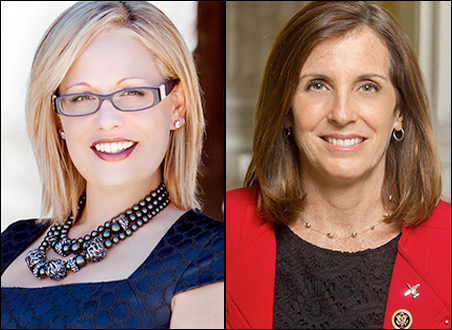
L-R -- Arizona Reps. Kyrsten Sinema (D-Phoenix) and Martha McSally (R-Tucson)

From left to right, Arizona Reps. Kyrsten Sinema (D-Phoenix) and Martha McSally (R-Tucson)

Nov. 2, 2018 — It was always believed that the Grand Canyon State’s open Senate race between Reps. Kyrsten Sinema (D-Phoenix) and Martha McSally (R-Tucson) would be one of the best campaigns in the country, and no one should be disappointed.

As we approach Election Day, differing indicators have presented themselves regarding who might win this toss-up campaign. Five polls have been released covering the period between Oct. 23-29. Three of the five give Rep. Sinema a slight lead, while one projects a tie.

YouGov/CBS News (Oct. 23-26; 972 likely Arizona voters) and Marist College/NBC News (Oct. 23-27; 506 likely Arizona voters) both post the Democratic nominee to identical 47-44 percent leads. CNN/SSRS (Oct. 24-29; 702 likely Arizona voters) finds Sinema’s edge to be 51-47 percent. But HighGround Public Affairs (Oct. 26-28; 400 likely Arizona voters) sees Rep. McSally ahead, 47-45 percent. Fox News (Oct. 27-29; 643 likely Arizona voters) came to a third conclusion, a 46-46 percent tie.

Continue reading →

A Polling Trifecta in 3 Key Races:
Indiana, Florida, Arizona

By Jim Ellis

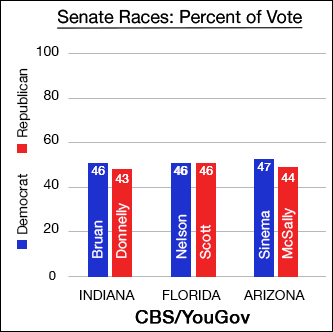
CBS-YouGov-polling-senate-racesOct. 30, 2018 — CBS News/YouGov just published new numbers from three key Senate races, all conducted late last week during the Oct. 23-26 period, that largely confirm recent trends.

The Indiana race has seemingly turned toward Republican challenger Mike Braun in recent days, and the CBS/YouGov poll confirms the new direction. According to their poll (975 likely voters, online), Braun holds a 46-43 percent lead over Sen. Joe Donnelly (D). This is wholly consistent with other polling conducted since Oct. 14.

As we reported last week, Mason Strategies (Oct. 15-20; 600 likely Indiana voters) finds Braun up by an almost identical 47-43 percent margin, while American Viewpoint in polling for the Braun campaign (Oct. 14-17; 800 likely Indiana voters) sees a 44-40 percent spread.

CBS/YouGov then surveyed, as so many others have done recently, the Florida Senate race. After Sen. Bill Nelson (D) went ahead beyond the margin of error over Gov. Rick Scott (R) in a pair of polls, two more studies turned in the latter man’s favor. Then, St. Leo University (Oct. 16-22; 698 likely Florida voters), Strategic Research Associates (Oct. 16-23; 800 likely Florida voters), and Gravis Marketing (Oct. 22-23; 773 likely Florida voters) all saw Sen. Nelson rebounding with an advantage of nine, one, and four points, respectively.

But, CBS/YouGov finds the race returning to parity. Their results, from a pool of 991 randomly selected and weighted online respondents, peg the race as a flat tie, at 46 percent apiece.

The national media/polling partnership also tested the tight Arizona Senate race. Here, CBS/YouGov (972 likely voters) finds US Rep. Kyrsten Sinema (D-Phoenix) re-claiming an edge over Rep. Martha McSally (R-Tucson) by a 47-44 percent clip.

Continue reading →

The Six Swing Senate Seats

By Jim Ellis

1200px-Seal_of_the_United_States_Senate.svgOct. 22, 2018 — As we move close to Election Day, it is becoming clearer that the Republicans will maintain control of the US Senate and likely expand their small majority from one to three, and maybe even four, seats.

At this writing, it appears that Sen. Heidi Heitkamp (D-ND) will lose to at-large Rep. Kevin Cramer (R-Bismarck). If so, the GOP would gain one, assuming they hold their three vulnerable states.

Democrats appear as locks to hold Michigan, Ohio, Pennsylvania, and Wisconsin. Though polling suggests tightening races, Democrats will more than likely hold the Minnesota special election, and the races in Montana, New Jersey, and West Virginia, while Republicans probably win the tight Texas campaign. In the Mississippi special election, it is expected that a Republican and Democratic candidate will advance to a run-off election on Nov. 27.

Assuming the previous analysis is correct, then the six most competitive Senate states will determine the Senate’s balance of power. Furthermore, if the aforementioned is accurate it would mean the Democrats’ only chance to win the majority would be to sweep the following half-dozen campaigns.

The list below provides the October published polling data for each of the toss-up campaigns:


ARIZONA

Change Research (for the David Garcia for Governor campaign), Oct. 9-10; 783 likely voters:
Rep. Martha McSally (R) 48%
Rep. Kyrsten Sinema (D) 48%

CBS News/YouGov (Oct. 2-5; 898 likely voters)
Rep. Kyrsten Sinema (D) 47%
Rep. Martha McSally (R) 44%

OH Predictive Insights (Oct. 1-2; 600 likely voters)
Rep. Martha McSally (R) 47%
Rep. Kyrsten Sinema (D) 41%

Fox News (Sept. 29-Oct. 2; 716 likely voters)
Rep. Kyrsten Sinema (D) 47%
Rep. Martha McSally (R) 45%

Vox Populi (Sept. 29-Oct. 1; 702 likely voters)
Rep. Martha McSally (R) 45%
Rep. Kyrsten Sinema (D) 42%


FLORIDA

St. Pete Polls (Oct. 15-16; 1,974 likely voters via interactive voice response system):
Gov. Rick Scott (R) 49%
Sen. Bill Nelson (D) 47%

Continue reading →

House Campaigns Turning Around

By Jim Ellis

daily-kosOct. 16, 2018 — According to the liberal Daily Kos Elections website, six congressional races that appeared to be headed in one direction look to be reversing themselves.

Four campaigns that Democrats earlier projected as red to blue conversions are now either tilting toward the Republican candidate or coming back into play. An additional campaign that we believed was always miscategorized is now performing as we predicted, while a further Republican incumbent, already projected to be in a close race, has actually dropped behind for the first time in a published poll. Descriptions for each of these contests follow.

Two GOP incumbents who were trailing in several polls — the Siena College/New York Times polls had one lagging 15 points behind and the other by 10, for example — have come back to take the lead or are hovering in virtual tie range.


IOWA

Iowa Rep. Rod Blum (R-Dubuque) has represented the most Democratic seat in Iowa for two terms. He fell significantly behind state Rep. Abby Finkenauer (D-Dubuque) to the point where the Democratic Congressional Campaign Committee (DCCC) even canceled a flight of media advertising because they presumably believed the race was sealed.

Continue reading →

McSally Surges in New Arizona Poll

By Jim Ellis

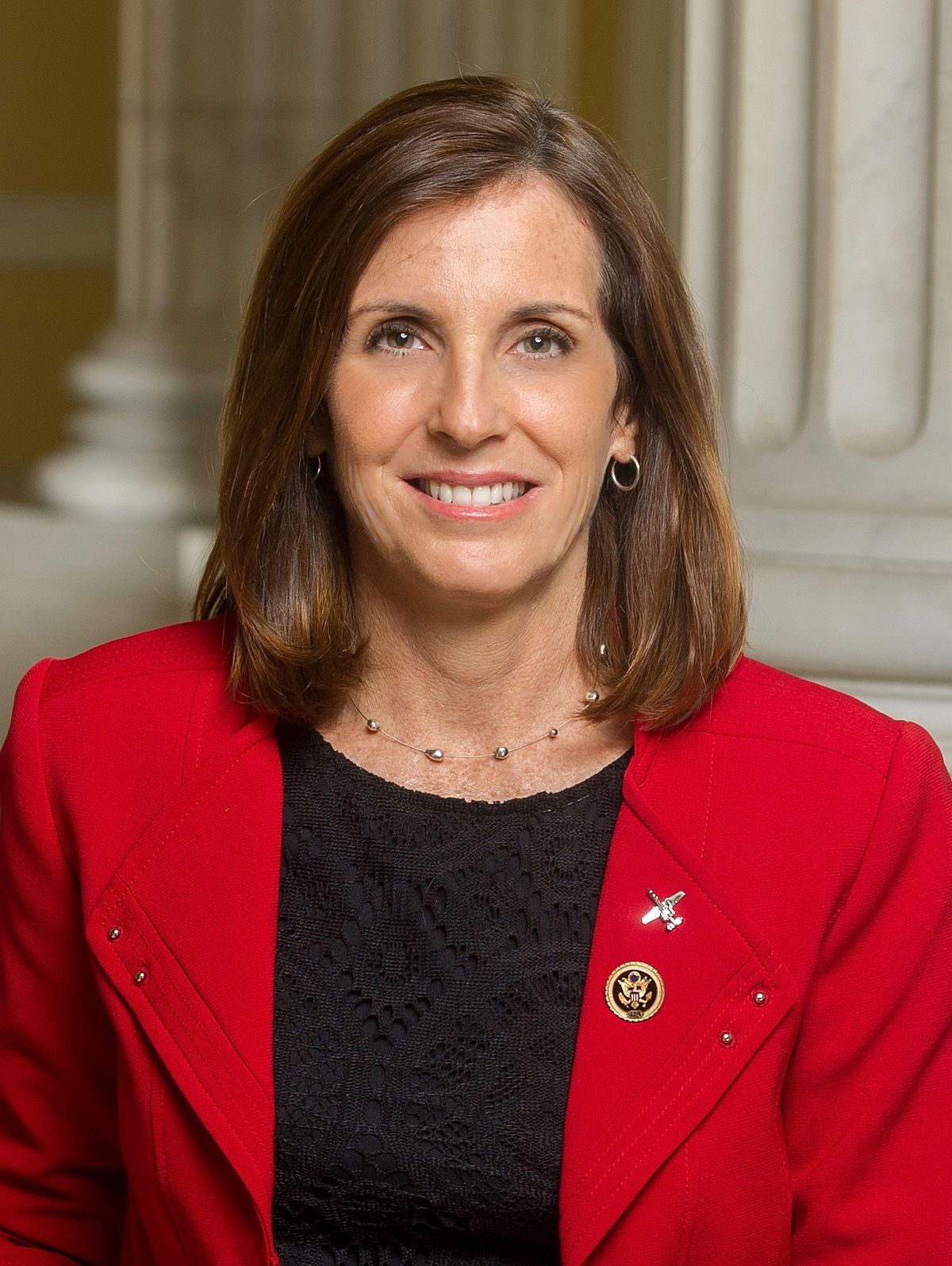
Rep. Martha McSally (R-Tucson)

Rep. Martha McSally (R-Tucson)

Oct. 12, 2018 — A new OH Predictive Insights survey for ABC News 15 in Phoenix (Oct. 1-2; 600 likely Arizona voters) brings new information about the open Arizona Senate race. According to the ballot test results, Rep. Martha McSally (R-Tucson) has overcome Rep. Kyrsten Sinema’s (D-Phoenix) consistent small lead in the battle to replace retiring Sen. Jeff Flake (R) and claims a six-point advantage, 47-41 percent.

Though this is the first time that Rep. McSally has scored a lead beyond the polling margin of error, the new result is plausible.

For several weeks, surveys have projected that Gov. Doug Ducey (R) is expanding his small advantage over Arizona State University professor and Democratic gubernatorial nominee David Garcia into a double-digit lead, but the same polls continued to forecast Rep. Sinema with a tight edge in the Senate race. It seemed only a matter of time before the act of Ducey cementing his margin would begin to help McSally.

Rep. Kyrsten Sinema (D-AZ)

Rep. Kyrsten Sinema (D-AZ)

Secondly, McSally, a retired Air Force colonel and the first woman to fly a combat mission and command a flight squadron, has been hitting Sinema over her role as a war protester prior to the latter woman being elected to the state legislature. The contrast is a compelling one and should play to McSally’s favor. Arizona may be more politically competitive that in past years, but Republicans still maintain a statewide advantage here. Additionally, the death of Arizona Sen. John McCain brings greater attention to those engaged in military careers, thus further helping McSally.

An outside conservative organization then began attacking Sinema over legislation she drafted while in the legislature that made it more difficult to charge individuals in child prostitution cases. Sinema’s argument was that men should not be held totally responsible for engaging in such a crime if the prostitute in question is made to look much older than her true age. This attack appears relatively weak and may miss the mark, but it adds to the multi-pronged strategy to cast Rep. Sinema in a negative light.

Continue reading →