
By Jim Ellis
Oct. 28, 2020 — The Target Smart statistical website has tracked the national early voting process throughout the country and reports segmentation by state.
Nationally, through yesterday’s report, they logged over 55.58 million people already voting, an increase of 108 percent from the same period when compared to the last presidential election in 2016. If national voter turnout projections of more than 150 million people prove correct, then approximately 37 percent of 2020 voters have already cast their ballots.
Though the first couple of days in early voting greatly favored Democrats, the last few have yielded a Republican increase.
In the 15 most competitive Senate states (Georgia has two races) — 12 of which have an early voting process in both 2020 and 2016, while one is added for this year (Kentucky) — we see a greater turnout from Democrats in seven states: Arizona, Colorado, Iowa, Maine, Michigan, Minnesota, North Carolina. More Republicans are voting in six states: Alaska, Georgia, Kansas, Kentucky, Montana, Texas.
Interestingly, in gauging which political entities are gaining the most in early voting percentage today when compared with 2016, the Democrats, Republicans, and Unaffiliateds all break even with an advantage in four states apiece: Democrats (Alaska, Arizona, Kansas, Michigan); Republicans (Colorado, Montana, North Carolina, Texas); Unaffiliateds (Georgia, Iowa, Maine, Minnesota).
It is difficult to say how these numbers will affect the final results. The states possibly producing the most significant early turnout results could be Arizona and Texas. In Arizona, Democrats lead for the first time in early voting aggregate ballots returned, while despite supposition to the contrary, Texas Republicans not only lead in 2020 as they have in the past, but also have gained more in percentage returned when compared to 2016.
Other stats of note: Though behind in 2020 aggregate voting, Democrats have seen an increase in their standing from 2016 in Alaska and Kansas. Republicans, on the other hand, also while trailing on the aggregate count have improved their position more than Democrats when compared to 2016 in Colorado and North Carolina.
For more details, click on the chart below, or go here: Target Early / Target Smart

ALASKA
2020 Total Early Votes: 77,128
2016 Total Early Votes: 19,296
2020 – Democratic: 36.0%
2020 – Republican: 46.1%
2020 – Unaffiliated: 17.9%
2016 – Democratic: 26.3%
2016 – Republican: 57.4%
2016 – Unaffiliated: 16.3%
Current Advantage: Republican
Gaining Most from 2016: Democratic







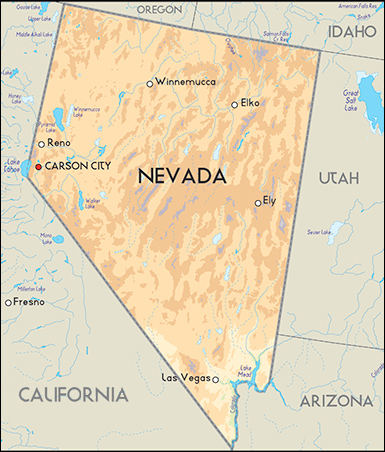 May 8, 2020 — The Silver State of Nevada, with six Electoral College votes, has been regarded as a swing state in most 21st Century presidential elections, but in projecting the 2020 vote, it is routinely considered as a place destined to land in the Democratic column. But, could Nevada ultimately be in play for President Trump?