Tag Archives: Rep. Conor Lamb

Lamb Decision Affects Redistricting

Pennsylvania Congressional Districts


By Jim Ellis

Aug. 2, 2021 — Last week’s news reports indicating that western Pennsylvania US Rep. Conor Lamb (D-Mt. Lebanon/Pittsburgh) will enter the open Senate race on Aug. 6, could mean the congressional district he leaves behind becomes a redistricting victim.

Assuming the reports are accurate, and the congressman does launch a Senate campaign, he will be the only Pennsylvania US House delegation member to create an open seat. All others appear poised to run for re-election. This means the Lamb district will likely become the top option for elimination since reapportionment reduces by one the 18-member Keystone State delegation.

The Census Bureau is now telling the states they will finally begin receiving their redistricting data the during the week of Aug. 16. It appears the total data transmission will come in two waves, so all states should have what they need to begin holding public input hearings in early September, and then drawing districts. This is more than six months behind a typical redistricting calendar.

Based upon the latest available information, the state will have 17 congressional districts with a population number of what appears to be just under 765,000 individuals. Looking at the current 18 districts, all must gain population, hence the reason the state is losing another CD. Since 1930, Pennsylvania has lost more congressional districts than any other state.

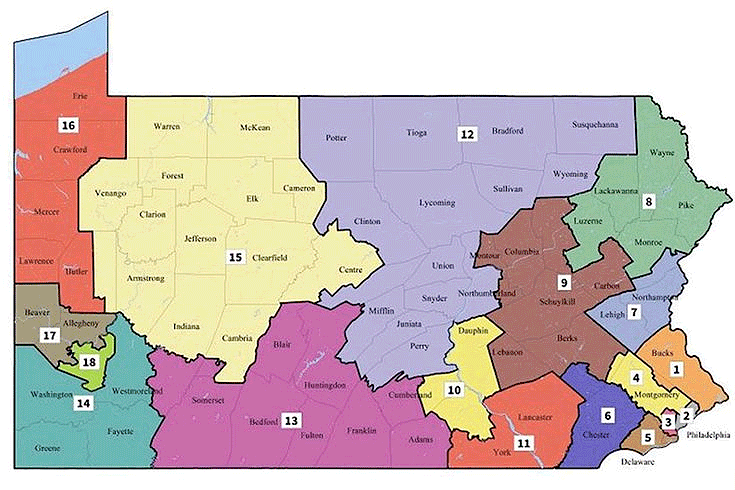
The region requiring the least new population is Pennsylvania’s southeastern sector, in and around the city of Philadelphia. The western segment is the area that needs the most population with the exception of Rep. Scott Perry’s (R-Dillsburg/Harrisburg/York) south-central 10th District that will require the lowest human increase, most likely fewer than 20,000 persons.

The three seats needing the greatest influx are all in west Pennsylvania, surrounding the city of Pittsburgh. Rep. Glenn “GT” Thompson’s (R-Howard) predominantly rural 15th CD looks to be the district most in need of additional residents, likely over 85,000 individuals. Next is Rep. Mike Kelly’s (R-Butler) 16th District that begins north of Pittsburgh and moves all the way to Lake Erie. This seat would need approximately 80,000 more people. Third is the district south of Pittsburgh to the West Virginia border, Rep. Guy Reschenthaler’s (R-Peters Township) 14th CD, that must also gain another 80,000 bodies.

Lamb’s 17th District that encompasses almost half of Allegheny County, all of Beaver County, and a sliver of Butler, needs over 50,000 more people, which pairs well with Rep. Mike Doyle’s (D-Pittsburgh) downtown 18th District that will likely require approximately 65,000 new residents. Therefore, eliminating District 17 with now no incumbent to protect it would allow the downtown seat to be filled and remain solidly Democratic, but also meet the population needs in the districts to the south, southeast, and north of Pittsburgh.

Politically, such a configuration would likely change the 9R-9D delegation to 9R-8D, and that will be a hard sell for the Republican legislature to make to Democratic Gov. Tom Wolf, especially when he knows a partisan Democratic state Supreme Court could well have the final say once the inevitable lawsuits are filed.

Such a configuration involving the elimination of current District 17 works fairly seamlessly, though, particularly if the final map improves for the Democratic incumbents in the politically marginal eastern PA seats of District 7 (Rep. Susan Wild-D; Allentown/ Bethlehem/Easton), and 8 (Rep. Matt Cartwright-D; Scranton/ Wilkes-Barre/Mt. Pocono). This might be enough to sell a map that forces the Democrats to take the one-seat loss in the west.

There are many ways to re-configure congressional maps, and we will soon see many versions coming from Pennsylvania and all other multi-district states. Rep. Lamb’s move to the Senate race, however, if in fact he ultimately makes the statewide jump, will significantly change the course of Pennsylvania congressional redistricting.
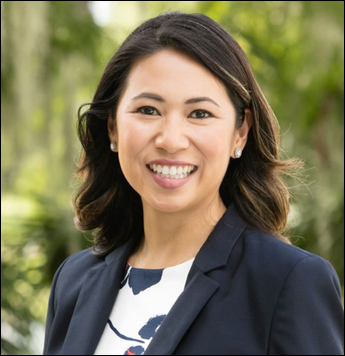
Rep. Murphy to Challenge Sen. Rubio

By Jim Ellis

Florida Rep. Stephanie Murphy (D-Winter Park)

May 14, 2021 — According to the Axios news site, insiders close to Florida Rep. Stephanie Murphy (D-Winter Park) say that she has made the decision to challenge Sen. Marco Rubio (R) next year and will formally announce her campaign next month. The move had been expected for some time.

Rep. Murphy, a native of the country of Vietnam, was first elected to the House in 2016, defeating veteran Republican incumbent John Mica after the state Supreme Court had re-drawn the Florida congressional districts and made the 7th CD more Democratic. She unseated Rep. Mica 51-49 percent, and then scored re-election victories of 58 and 55 percent in 2018 and 2020, respectively.

A strong fundraiser, Rep. Murphy obtained over $3 million for both of her incumbent re-election campaigns. She ended the 1st quarter 2021 with a cash-on-hand figure of $1.43 million. Sen. Rubio posted $3.9 million in his campaign account during the same reporting period.

Assuming Murphy does enter the race next month, Democrats will have a credible challenger to Sen. Rubio, but one who still must be considered a decided underdog. In 2010, Sen. Rubio, then a state representative, defeated then-governor Charlie Crist, who was running as an Independent, and Democratic Congressman Kendrick Meek by a 49-30-20 percent margin. He was re-elected in 2016 with a 52-44 percent vote spread over then-congressman Patrick Murphy (D).

Florida races, as we know, are always competitive and usually very close, though the state has been trending more Republican over the past several elections. A Rubio-Stephanie Murphy race promises to become a national campaign.

With the Democrats apparently attracting a strong candidate in Florida, it is a good time to review the other key races.

In Pennsylvania, both parties are headed for very crowded primaries as each works to nominate a candidate to hopefully succeed retiring Sen. Pat Toomey (R). Afghan War veteran Sean Parnell entered the Republican primary earlier this week, but his only venture into elective politics was recording a two-point loss to Rep. Conor Lamb (D-Pittsburgh) last November in an Allegheny County suburban district.

Rep. Lamb, himself, may join the Democratic Senate campaign, meaning both parties are going to host political dogfights for the party nomination. In any event, however, the Pennsylvania race will be a top-tier national campaign.

Continue reading

The House Convenes

By Jim Ellis

House Speaker Nancy Pelosi (D-CA) barely retained the Speakership in a narrow vote.

Jan. 4, 2021 — The 117th House of Representatives was called to order yesterday in an unusual Sunday commencement session, and even on the first day the House membership is not complete. The elected body includes 433 members. The NY-22 seat is still undecided, and the LA-5 district is now vacant due to the shocking death of Rep.-Elect Luke Letlow (R).

The vote for Speaker in favor of incumbent Nancy Pelosi (D-CA) was 216-209. Two Democrats, Reps. Conor Lamb (D-PA) and Jared Golden (D-ME), did not support Pelosi, voting for Rep. Hakeem Jeffries (D-NY) and Sen. Tammy Duckworth (D-IL), respectively, while three others voted present. Reps. Elissa Slotkin (D-MI), Mikie Sherrill (D-NJ), and Abigail Spanberger (D-VA), all re-elected with closer than expected margins, only acknowledged their presence in the chamber while responding to the vote for Speaker.

Two members were unable to participate in yesterday’s ceremony. Florida Rep. Alcee Hastings (D-Delray Beach), due to cancer treatments, and fellow Sunshine State Rep.-Elect Maria Elvira Salazar (R-Miami), because of a positive COVID test, were absent for the first session.

Three other seats will soon be vacant. Reps. Cedric Richmond (D-LA), Marcia Fudge (D-OH), and Deb Haaland (D-NM) have all been appointed to or nominated for positions in the Biden Administration.

Rep. Richmond will resign on Jan. 20 to run the White House Office of Public Engagement. This position does not require Senate confirmation. Reps. Fudge and Haaland must receive Senate confirmation for their nominations as secretaries of Housing and Urban Development and Interior, respectively. They will resign from the House upon receiving such approval for their new positions.

The NY-22 election is still undecided, now two full months after Election Day, and it may still be some time before the winner is actually determined. As the counties are finally finishing their vote totals after Justice of the Oswego County Supreme Court Scott DelConte ordered seven of the eight local entities to review and properly submit the challenged ballots to the court. Justice DelConte ruled that the seven counties failed to adhere to New York election law in processing and accounting for the challenged ballots.

The totals continue to fluctuate, as Tenney has seen her 12-vote lead swell to 29, before her fortunes changed to trailing by 14 tallies. Perhaps more importantly, DelConte has been ruling in favor of Rep. Anthony Brindisi’s (D-Utica) challenges, which could be a prelude to the final outcome. More than 2,000 ballots were contested by the competing parties.

Continue reading

Candidate Filings Completed in Battleground State of Pennsylvania

Pennsylvania Congressional Districts

By Jim Ellis

Feb. 21, 2020 — While the Democratic presidential debate of a couple nights ago is getting most of the political news coverage, Democrats and Republicans completed their filings to run for office in one of the country’s major political battlegrounds, the Keystone State of Pennsylvania.

While the state will be one of the most important in the presidential race, it also yields a significant political playing field for the House of Representatives. There is no Senate or gubernatorial election in Pennsylvania this year.

From their 18 House districts, we see only three incumbents drawing primary opposition, and only one of the intra-party challengers appears credible. The state primary is April 28.

Rep. Brian Fitzpatrick (R-Levittown) has one primary challenger, investment company executive Andrew Meehan, but he had raised only $35,000 through the end of last year. It is assumed that Meehan has personal wealth, but whether or not he invests in his own long-shot campaign is as yet unknown.

Freshman Rep. Mary Gay Scanlon (D-Swarthmore) draws Democratic opposition from businessman Lou Lanni, but he does not appear politically credible. Raising only $8,000 through the end of last year, Lanni is not running a competitive campaign. With little to fear from Republicans in this district, Rep. Scanlon appears to have an easy run for her first re-election.

The most interesting primary likely lies in Pittsburgh. Veteran Rep. Mike Doyle (D-Pittsburgh) faces two Democratic opponents, one of whom looks credible. While pastor Janis Brooks does not appear to be a competitive primary contender, attorney Gerald Dickinson, on the other hand, had already raised $173,000 at the end of the year, all from individual contributors. It is still very doubtful that Rep. Doyle will be denied re-nomination, but this is the one primary campaign to watch for a developing challenge.

Continue reading

PA Rep. Lamb Draws Challenger

By Jim Ellis

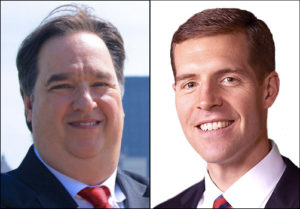
Scott Timko (R) | Rep. Connor Lamb (D)

Aug. 2,7 2019 — Pennsylvania Rep. Conor Lamb (D-Pittsburgh), who came to recent national political prominence when he upset a Republican special election nominee and then defeated an incumbent GOP House member in a newly created Allegheny County-anchored district in the regular cycle, has drawn a 2020 opponent for re-election.

Rep. Lamb, who campaigns as a moderate Democrat, defeated state Rep. Rick Saccone (R) by 755 votes in an early 2018 special election and knocked out then-Rep. Keith Rothfus (R) 56-44 percent last November, could face a novice Republican candidate in his 17th CD where Donald Trump slipped past Hillary Clinton, 49-47 percent.

Former Air Force pilot and local small business owner Scott Timko (R) declared his candidacy on Friday in a campaign that could become interesting. If Timko raises enough money to become competitive, the district voters appear to be much closer to he and Trump ideologically than they are to the national Democratic agenda.

Rep. Lamb keeps his distance from the national Democrats, but Timko is already attempting to push him leftward, pointing out that Lamb supports the national leadership and won’t even accept PAC contributions from private sector corporate employees who voluntarily support their company’s political action committee.

The 17th District was created in the Pennsylvania state Supreme Court’s early 2018 mandated congressional district re-draw. Just about three-quarters of the district’s population resides in Allegheny County, and covers the outer Pittsburgh suburbs from northeast of the city all the way around to the southwest. CD-17 also includes all of Beaver County that stretches to the Ohio border, and a sliver of Butler County.

As mentioned above, President Trump won a close victory within the 17th District confines, hence Lamb’s 2018 victory margin over Rep. Rothfus was more substantial than expected. Under the court’s redistricting plan, the new 17th contained 56 percent of the territory that Rothfus represented for three terms in his original 12th District, while Lamb had only 20 percent carry over from the 18th District to which he was elected shortly before the new map was created.

Continue reading

The Crystal Ball Comparison

By Jim Ellis

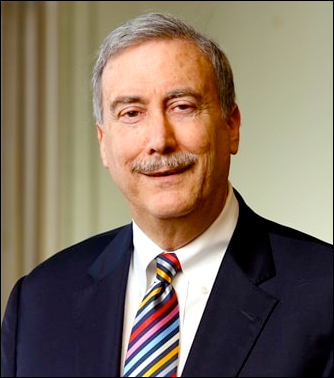
Professor Larry Sabato, University of Virginia

Professor Larry Sabato, University
of Virginia

July 31, 2018 — Last week, University of Virginia professor Larry Sabato released his latest “Crystal Ball” ratings of the current US House races and declared that the Democrats are a “soft favorite” to assume the majority in the coming November elections. There’s more to the story, however.

Dr. Sabato supports his claim for several basic reasons. First, he sites the historic trends that a new president’s party loses seats in the first midterm election, and traces this electoral pattern all the way back to the Civil War era. Second, he turns to the typical polling regularly released that places President Trump’s approval ratings in what he terms “the low 40s”, and includes the generic House ratings, along with the “enthusiasm” analysis. Third, is the Democrats’ record in the current cycle’s federal and state special elections, and fourth is their second quarter fundraising “advantage.”

There are counter arguments that need mentioning for each of these points.

It is questionable to compare electoral trends developed during the 1800s to the elections of today because the world has changed so much. Bringing the analysis to at least the 20th Century and looking just at the post-World War II patterns (from President Harry Truman, inclusive, to today), we find that the average seat loss in the House during a new president’s first midterm is 26 seats. But, this average combines the six Democratic presidents losing 32 seats, and the five Republicans’ dropping 15 districts. Just three elections, 1966 (Johnson; -47 seats), 1994 (Clinton; -54), and 2010 (Obama; -63) have substantially upped the overall average.

Continue reading

AZ-8: Lesko Wins

By Jim Ellis

Arizona Republican candidate Debbie Lesko wins AZ-8

Arizona Republican candidate Debbie Lesko wins AZ-8

April 26, 2018 — Arizona Republican former state Senate President Debbie Lesko defeated physician Hiral Tipirneni (D) last night, 53-47 percent, to win the vacant 8th District seat that former Rep. Trent Franks (R-Peoria) resigned in January.

Lesko held the seat for Republicans with a high turnout of 173,708 voters, but her six-point win is being cast in the media as an under-performance. Dr. Tipirneni, however, ran a significant campaign and will spend a projected financial number in the $1 million range. Therefore, it’s not particularly surprising that a credible candidate spending significant resources would place in the mid-high 40s despite her opponent’s party being dominant in the region. Lesko will likely spend a bit less than Dr. Tipirneni but received stronger outside support, particularly from the national Republican Party apparatus.

Though Rep. Franks averaged 69.2 percent during his three terms with the district in its present configuration, he did so against candidates who spent virtually no money. In 2014, when he drew 75 percent of the vote, he didn’t have a Democratic opponent. When Franks first won in open configuration back in 2002, his initial win percentage was 59 percent against a candidate who spent only $40,000.

The most recent polls correctly forecast the outcome. Emerson College, the pollster conducting the only two publicly released polls during the period immediately preceding the election (April 19-23; 400 likely AZ-8 special election voters: Lesko 49 percent, Tipirneni 43 percent), correctly predicted a Lesko six-point victory. A week earlier the same pollster (Emerson College; April 12-15; 400 likely special election voters) actually found Dr. Tipirneni forging a small one-point lead.

Continue reading

Ryan’s Departure: Ramifications

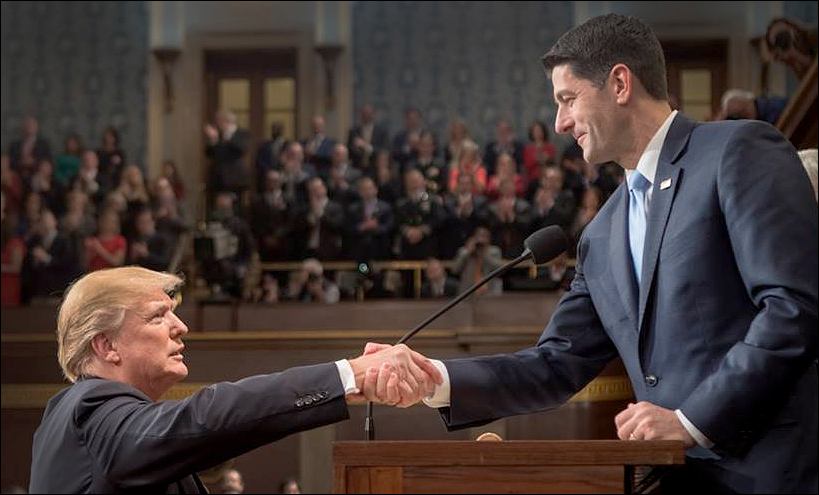
US House of Representatives Speaker Paul Ryan and President Donald Trump shake hands at the 2018 State of the Union speech.

US House of Representatives Speaker Paul Ryan and President Donald Trump shake hands at the 2018 State of the Union speech.

By Jim Ellis

April 12, 2018 — As we know, Speaker Paul Ryan (R-WI) announced his retirement yesterday, and even more change can be presumed coming to Capitol Hill as a result.

In the short term, expect increased analyses predicting an ensuing Democratic majority forming in House races and further predictions over what party strategists refer to as an impending “blue wave.” They will suggest that the Ryan retirement shows the speaker understands the “wave” is becoming a political tsunami, and one not destined to fail in the manner that the predicted presidential “blue wall” crumbled.

Long term in this election cycle, however, things have a chance to play out differently. With a sure change in leadership coming no matter what the general election produces, Republican members and candidates will be freer to re-set the GOP agenda and join the chorus charging that the current Congress has failed to deliver on enough campaign promises.

Ryan has been a huge fundraiser for party candidates, and is credited in some reports with being responsible for some $54 million already being distributed to GOP contenders and party institutions. And, that’s before the latest Federal Election Commission (FEC) quarterly disclosure reports are released after April 15.

Continue reading

Pennsylvania Files – Part II

By Jim Ellis

March 27, 2018 — Today we finish our look at the new Pennsylvania filings from Districts 10 thru 18, but first must mention a new story floating in the Washington Post and throughout the local Philadelphia media.

New Pennsylvania Congressional Map | Source: Pennsylvania State Supreme Court

New Pennsylvania Congressional Map | Source: Pennsylvania State Supreme Court

Rep. Ryan Costello (R-West Chester), after filing for re-election, is already dropping out of the race. In withdrawing, the two-term incumbent virtually hands the seat to Democrat Chrissy Houlahan, a first-time candidate for any office, because the local Republican Party will have no way of replacing him. Attorney Greg McCauley filed in the Republican primary and becomes the party nominee now that Costello has backed away. It is unclear why Costello filed for re-election if he was not serious about running.

District 10: Rep. Scott Perry (R-Dillsburg/York)

Though new District 10, that now includes all of the York and Harrisburg metro areas, is more Democratic than Perry’s previous 4th District, President Trump still posted a nine percentage point win during the 2016 presidential election contest. Rep. Perry is unopposed in the Republican primary and draws five Democratic opponents, including 2016 congressional nominee Christina Hartman who suffered a decided loss to freshman Rep. Lloyd Smucker (R-Lancaster) in an adjoining district. Hartman raised over $1.1 million for her first congressional effort, and was originally seeking a re-match with Rep. Smucker. When the new redistricting plan left him with a solidly Republican district, she moved here even though none of her previous territory transferred to new CD-10.

Continue reading