Tag Archives: President Biden

Hassan Improves; NH Voters Sour

By Jim Ellis

New Hampshire Sen. Maggie Hassan (D)

Jan. 24, 2022 — The New Hampshire Institute of Politics at St. Anselm’s College in Manchester, NH just completed one of their regular statewide political surveys, and while Sen. Maggie Hassan’s (D) standing has improved since their last poll, the sample participants’ underlying attitude numbers are among the most negative in the country.

In what might be the quintessential political swing state since the turn of the century, these early results spell bad news for Democrats less than 11 months from the midterm elections. In a state that Joe Biden carried with a seven-point margin in 2020, the congressional generic number now favors Republicans in a 46-40 percent clip.

St. Anselm’s poll conducted over the Jan. 11-12 period surveyed online 1,215 registered Granite State voters. Led by a Right Track-Wrong Track (direction US is headed) response ratio of a hideous 16:74 percent, only Gov. Chris Sununu (R) finds himself in a favorable realm (53:44 percent), but even his positive index has dropped a net 36 points from his rating a year ago when compared with the Institute’s February 2021 survey.

Sen. Jeanne Shaheen’s (D) job approval of 48:48 percent is the next best of the office holders tested. President Biden records a 41:58 percent positive to negative ratio. Former President Donald Trump, however, is not in much better shape with a personal approval score of 43:55 percent.

Though Sen. Hassan’s job approval has dropped to 45:51 percent, her standing against potential Republican opponents has improved. This is the first published statewide poll conducted since Gov. Sununu announced that he would not challenge her. Therefore, the GOP is left with potential 2022 candidates of much lesser standing. In earlier polling paired against Gov. Sununu, Hassan consistently trailed.

Retired army general and 2020 US Senate candidate Don Bolduc fares best among the tested Republicans, but still trailing Sen. Hassan, 43-36 percent. She tops recent Senate campaign entries Chuck Morse, the Granite State Senate president, 41-27 percent, and former Londonderry Town Manager Kevin Smith, 42-24 percent. On the other hand, the Senator not exceeding 43 percent against candidates largely unfamiliar to the respondent universe – 33 percent have not heard of Bolduc, 47 percent couldn’t identify Morse, and Smith was unknown to 59 percent — still must be considered weak.
Continue reading

New York Rep. John Katko to Retire

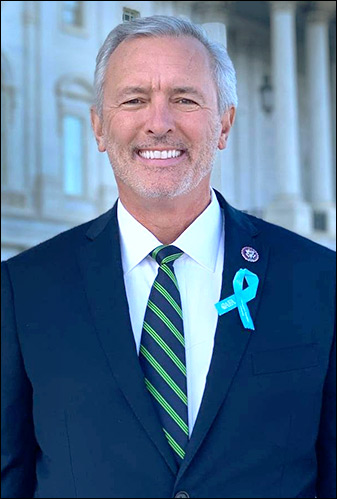
New York Rep. John Katko (R-Syracuse)

By Jim Ellis

Jan. 18, 2021 — New York Rep. John Katko (R-Syracuse) announced Friday that he will not seek a fifth term later this year, creating a 47th open seat for the 2022 US House elections.

Katko, who indicated that he and his wife buried all four of their parents during the past three years, which he said was “gut-wrenching,” says he now desires more time with his family. He leaves a seat where he has averaged 56.5 percent of the vote as one of only eight Republicans from the 27-member Empire State delegation.

Other factors may also have played a role in his retirement decision. Redistricting appeared to be creating some re-election problems for Rep. Katko, as had former President Donald Trump.

New York lost a seat in reapportionment — a district collapse that will come from the Upstate region. Early maps suggested that Katko’s Syracuse-anchored seat would be combined with Rep. Claudia Tenney’s 22nd District, which would result in a paired incumbent situation before the primary winner likely would face another competitive general election campaign.

In the past two election cycles, Rep. Katko’s opponent was college professor Dana Balter (D), and her challenges resulted in expensive and hard fought 53-43 percent (2020) and 52-47 percent (2018) victories. Balter spent $2.7 million and $3.3 million in her two successive races against Rep. Katko, totaling $6 million, which he countered with a combined $6.3 million. Additionally, both candidates received hundreds of thousands of dollars in support from their respective political parties and outside groups.

The NY-24 seat is one of only nine districts where the electorate supported President Biden and elected a Republican to the House. In the current Congress, the 24th is one of just three districts that Hillary Clinton carried while electing a Republican Representative. Katko had repeatedly proven himself as an effective and successful political candidate.

In a paired 2022 situation against Rep. Tenney, however, the retiring congressman would have faced increasing pressure from his political right largely because of his vote to impeach former President Trump. Additionally, the New York Conservative Party leadership said they would not allow Katko to run with their ballot line in the 2022 general election. In New York, a candidate can run with more than one party designation.

Continue reading

Cherfilus-McCormick Easily Wins Special election in Florida’s FL-20 Congressional District

By Jim Ellis

Democrat Sheila Cherfilus-McCormick easily won Tuesday’s special election in Florida’s FL-20 Congressional District.

Jan. 13, 2022 — Democrat Sheila Cherfilus-McCormick, as expected, easily defeated Republican Jason Mariner Tuesday in a district that gave President Biden a 77-22 percent majority in 2020. Cherfilus-McCormick scored a 79-20 percent victory with 55,457 people voting and will now serve the balance of the late Rep. Alcee Hastings’ (D-Delray Beach) final term.

After winning the special Democratic primary over Broward County Commissioner Dale Holness on Nov. 2 by just five votes, Rep-Elect Cherfilus-McCormick can now expect a highly competitive regular election Democratic primary challenge. Holness has already said he will oppose the new incumbent in the 2022 nomination election as he continues to pursue legal action in hopes of overturning the special primary results.

The Florida special congressional election was the nation’s eighth during this legislative session. Like the other seven, the candidate of the party originally holding the seat won the special vote. Five were Democrat seats, and three Republican. A ninth special election, that for resigned Rep. Devin Nunes’ (R) seat in California, has been scheduled for April 5 with a runoff on June 7 if none of the eventual contenders garner majority support in the first vote.

Though predictions of a coming wave Republican election appear to be rampant, the odd-year election pattern reveals no such precursor. As mentioned, 100 percent of the congressional special elections have remained true to the originating party, but that has almost also been true among special elections in state legislatures.

A total of 33 state special elections occurred in 2021. Republicans captured three Democratic seats in Connecticut, Iowa, and Texas, but Democrats turned the tables on Republicans in another three: New Hampshire, Maine, and Massachusetts. Therefore, a net conversion factor of zero resulted.

When the Democrats predicted their “blue wave” coming for the 2018 election, the commensurate election cycle saw much change in the special elections. In the 2017-18 cycle the Democrats flipped a net total of 19 seats that some believe was a prelude to the Democrats’ success in the regular ’18 election.

Continue reading

Michigan’s Anti-Incumbent Map

By Jim Ellis

Jan. 5, 2022 — One of the biggest complaints most commonly aired about redistricting is that it favors incumbents, but such is not the case with the recently completed Wolverine State congressional map. In fact, the members of the Michigan Independent Citizens Redistricting Commission appear to have gone out of their way to upend the state’s sitting federal office holders.

The current 14-seat map features seven Democrats and seven Republicans with two of the seats converting from Republican to Democrat in the 2018 election. Michigan loses a seat in reapportionment, and it became apparent from the start that the Republicans would absorb the loss because a great deal of the population growth deficit was coming from the middle section of the lower peninsula.

That proved to be the case, but the cut was a bit different than expected. Considering the population deficit and Michigan’s geography, i.e., being surrounded by lakes, Canada, and other states, the most logical district for collapse appeared to be Rep. John Moolenaar’s (R-Midland) 4th District because it sat in the middle of the area that the population change clearly affected.

While the Moolenaar district was certainly altered in a significant manner, it was the western district of Rep. Bill Huizenga (R-Holland) that was broken into small pieces.

While true that Moolenaar was technically paired with Rep. Dan Kildee (D-Flushing/Flint) because his home city of Midland was placed in the new 8th District, a new safe Republican 2nd CD that contains much of the current Moolenaar district lies available for him to the west. While Rep. Kildee sees his home Flint/Flushing area remaining intact, he finds himself in a more competitive seat and may be facing a challenge from former congressman, attorney general, state appellate judge, and ex-US Senate and gubernatorial GOP nominee Bill Schuette in a seat that can now conceivably elect a Republican.

Continue reading

Rep. Titus (D) Decries Nevada Dem Map

By Jim Ellis

Nevada Congresswoman Dina Titus (D-Las Vegas)

Dec. 21, 2021 — Nevada Congresswoman Dina Titus (D-Las Vegas) is drawing a great deal of recent media attention largely for the vulgar way in which she described the Democrats’ new Sliver State congressional redistricting map before a meeting of the Nevada AFL-CIO.

She is upset because her once politically rock-solid downtown Las Vegas-anchored district is now in the competitive realm, and she believes the legislators not only did her a disservice, but endangered, from a Democratic partisan context, all of the Clark County districts.

At the labor meeting, Titus described what the state Democrats did by saying, as quoted in the Nevada Current online publication:

“… you read that the Republicans are using gerrymandering to cut out Democratic seats, but they didn’t have to in this state. We did it to ourselves.”

Nevada is one of the 15 Democrat trifecta states — which is where one party controls the governor’s office, the state Senate, and state Assembly — and therefore holds the redistricting pen. The number of places where they can actually gain congressional seats through the re-draw process, however, is only four: Illinois, New Mexico, New York, and Oregon, which is why it is critical for the Nevada Democrats to hold their three Silver State seats. Rep. Mark Amodei’s (R-Carson City) northern 2nd District, for geographic and political reasons, must remain safely Republican.

Rep. Titus, however, believes the final map puts all three of the state’s Democratic districts in jeopardy. Predicting what could be a difficult year for the party in Nevada, Rep. Titus apparently thinks Republicans could sweep the state’s four congressional seats in the 2022 election.

She further stated, again as the Nevada Current reported, that,

“Republicans are going to turn out, and they are excited. Democrats are kind of ‘meh, I have to pay more gas prices. Hispanics aren’t going to want to turn out if we don’t get something for immigration. I mean, why would they?”

Titus remembers the 2014 election cycle when Democratic turnout was so poor in a down year for her party that Republicans swept the ticket from top to bottom.

Continue reading

Two More Maps Advance

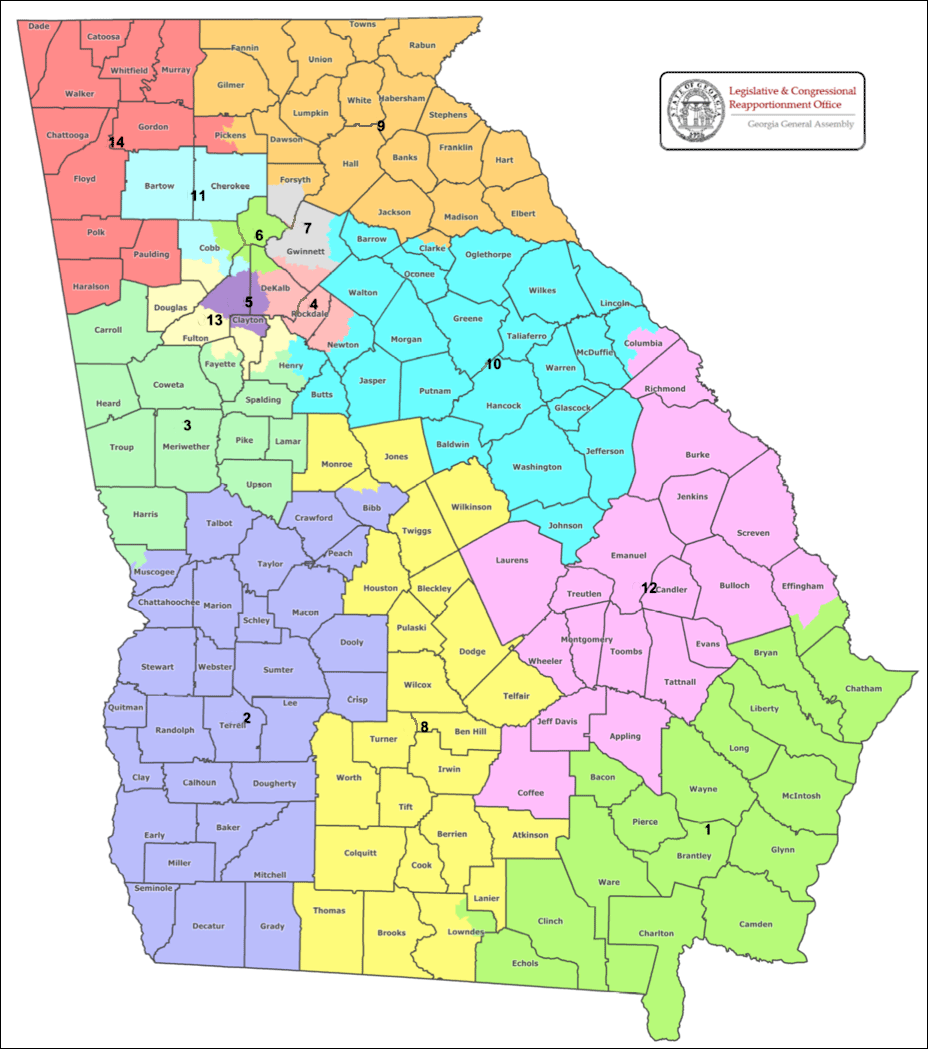
Georgia Congressional redistricting map

By Jim Ellis

Nov. 23, 2021 — The late redistricting season continues to move along at a brisk pace, and two more states are poised to enact new congressional plans this week.

The Georgia state House, after the state Senate passed the proposed congressional map on Friday, was expected to vote on the legislation yesterday and send it to Gov. Brian Kemp (R) for final approval. The Oklahoma legislature, late last week, passed its congressional and state legislative maps in special session and sent them to Gov. Kevin Stitt (R). He is expected to sign the plans into law.

Georgia did not gain a seat in reapportionment despite significant growth in the Atlanta area. In the state’s major metroplex, the congressional districts fully contained within or touching the area counties gained almost 200,000 people dispersed within six districts. The rural CDs, particularly in the southern part of Georgia, however, all needed to gain individuals in order to meet the state population quota of 765,136 individuals per congressional district.

Oklahoma was both a long way from gaining and losing a seat, so the state remains constant with five congressional districts, now three of which come into Oklahoma County, the entity housing the state’s largest metropolis, Oklahoma City.

Continue reading

North Carolina Rep. G.K. Butterfield’s Retirement Leaves a Competitive 2nd

North Carolina Rep. G.K. Butterfield (D-Wilson)

By Jim Ellis

Nov. 22, 2021 — As was suggested earlier in the week, 10-term North Carolina Rep. G.K. Butterfield (D-Wilson) announced late last week that he will not seek re-election next year. He leaves a new 2nd District – his seat had been numbered NC-1 throughout his career – that will be more competitive in 2022.

Rep. Butterfield attacked the Republican-passed redistricting plan as a gerrymander on his way out and says the draw hurts African Americans in his district. He says that largely because an African American section of Pitt County was removed from the district, along with a small conservative county, and replaced with three larger and decidedly more Republican localities along the Virginia border.

North Carolina gained a seat in reapportionment, but the Butterfield seat was the only current Tar Heel State CD that needed to gain residents. The current 1st District was 58,205 individuals short of the state’s new population quota of 745,671 individuals per CD, so the map drawers had no choice but to add people. Virtually all of the surrounding counties are Republican.

The new 2nd District is certainly more competitive. While President Biden carried the current 1st District with a 54-45 percent margin, on par with Hillary Clinton’s 55-44 percent spread in 2016, the new 2nd District would have given Biden only a 51-48 percent vote split.

Though the new 2nd will be more competitive, the current 1st District was beginning to show signs of political change. This somewhat dispels Rep. Butterfield’s gerrymandering argument. While the previous eight elections delivered an average vote of 72.6 percent for Butterfield, his 2020 victory margin dropped to 54-46 percent opposite accountant and political activist Sandy Smith (R).

Though the state Supreme Court changed the North Carolina map for the 2020 election and basically awarded the Democrats two of the Republicans’ seats, the 1st was left largely unchanged. This suggests that the electorate could be transforming naturally, thus alternative reasons exist for the district becoming more conservative than simply altering the district lines.

We can expect to see competitive primaries in both parties, and things will quickly unfold now that the seat is open. Prior to the retirement announcement, Henderson City Councilman Jason Spriggs had announced a Democratic primary challenge to Rep. Butterfield but he was not rated as a serious challenge to the congressman.

Continue reading

California Rep. Jackie Speier to Retire

California Rep. Jackie Speier (D-Hillsborough/San Mateo)

By Jim Ellis

Nov. 18, 2021 — The second congressional retirement of the week was announced Tuesday as veteran California Rep. Jackie Speier (D-Hillsborough/San Mateo), following Vermont Sen. Patrick Leahy’s similar statement Monday, said in a video to her constituents that she will not seek an eighth full term in the House next year.

Speier has a long career in politics that began well before her first election to the San Mateo County Board of Supervisors in 1980. Two years prior, Speier, as a staff member for then-US Rep. Leo Ryan (D-CA), was shot five times on a remote airport runway in Guyana exactly 43 years ago today during the infamous Jim Jones mass murder-suicides of his so-called religious followers. (See this brief article as Speier recounted that day at a National Archives lecture.)

A total of 918 people died during the mass killing, including Rep. Ryan who was on a mission to investigate reports of criminal activity in the commune. Jones had run what was described as a church in the congressman’s district and most of his followers were from the northern California region. Speier, left for dead after being attacked and shot, lay for a reported 22 hours before being rescued and treated.

She obviously recovered from her wounds and was successful in her first run for public office. Six years later, she won a state Assembly seat, and then captured the area state Senate seat before winning a special election to the US House in 2008 after then-Rep. Tom Lantos (D-CA) passed away.

The 14th District contains over 85 percent of San Mateo County, and a portion of south San Francisco, adjacent to Speaker Nancy Pelosi’s 12th District. The seat is safely Democratic, voting in a 78-21 percent clip for President Biden in 2020, and a similar 77-18 percent spread for Hillary Clinton in 2016.

Continue reading

Contrasting Poll Stories

By Jim Ellis

Oct. 21, 2021 — A pair of Schoen Cooperman Research surveys of the New Jersey and Virginia governors’ races are telling somewhat conflicting internal stories.

First, the Schoen New Jersey poll (Oct. 9-12; 500 certain and likely New Jersey gubernatorial election voters) finds incumbent Gov. Phil Murphy (D) leading challenger Jack Ciattarelli (R), a former state assemblyman and business owner, 50-41 percent. Moving through the poll, however, we see the “always vote in gubernatorial elections” cell segment tell a different story.

Among the “absolutely certain” 2021 voters, the race tightens to a 48-46 percent Murphy lead, and among those who say they “always” vote in gubernatorial elections, the Murphy position slightly improves to 49-45 percent.

Schoen also simultaneously conducted a similar poll of the Virginia governor’s race (Oct. 9-12; 500 certain and likely New Jersey gubernatorial election voters), and the segmented results offer an even more stark contrast when compared with the overall sample.

On the ballot test, former Virginia Gov. Terry McAuliffe (D) leads ex-hedge fund CEO Glenn Youngkin (R) by a 47-43 percent count, numbers and a spread we have seen consistently throughout the Old Dominion polling cycle.

Among the “absolutely certain” voters, however, the two are tied at 47 percent, and within the “always vote in gubernatorial elections” segment, Youngkin actually takes a 49-45 percent lead.

This pattern of the most likely voters performing better for the Republican candidates than the sample as a whole is not particularly unusual for what we have previously seen in these two governors’ races, and especially so for Virginia.

In the Commonwealth, Democratic primary turnout was 34,000 people less in 2021 than in the 2017 initial election, a trend contrary to what we’ve seen throughout the nation in the most recent elections. Furthermore, other polls have suggested that the Republican enthusiasm factor for this upcoming vote is definitively greater than among Democratic voters.

Continue reading

Illinois Redistricting Map Released

By Jim Ellis

The new Illinois redistricting plan, featuring 17 new districts that twist, turn, and meander throughout the state.

Oct. 19, 2021 — It had been speculated that the Illinois Democrats were attempting to draw a new congressional map to reduce the state’s Republican contingent from five members to three. The new plan, featuring 17 new districts that twist, turn, and meander throughout the state, appears to accomplish their goal.

Democratic leaders from the House and Senate Redistricting committees defend their actions, saying the plan is “designed to comply with federal law and ensure the broad diversity of the state is reflected in the elected officials sent to represent Illinois in Washington, D.C.” The map must still clear both houses of the Illinois legislature and obtain Gov. J.B. Pritzker’s (D) signature before becoming law but with Democrats holding big partisan majorities, enactment seems certain.

Republicans and even some analytical observers say the map is a blatant partisan gerrymander designed to net the Democrats three seats nationally. Under this plan, 14 at least “lean Democratic” districts are created opposite three Republicans. The current map stands at 13D-5R, but Illinois loses a congressional seat in reapportionment.

Therefore, if the map performs as designed, the Republicans will be down a net three seats nationally because the Democrats would convert two GOP districts while the latter party absorbs the loss of the 18th seat that went to another state.

A potential legal problem, in addition to a political gerrymandering lawsuit, is the lack of drawing a second Hispanic seat in Chicago, and the Mexican American Legal Defense Foundation (MALDEF) is reportedly poised to file suit. As was the case in the last decade, the demographic numbers appear high enough for Hispanics to have two seats within Chicago. Such a second seat was not drawn in 2011, and it is again not created on this map, but the black majority seats are reinforced.

One of the re-draw’s top targets is Rep. Adam Kinzinger (R-Channahon). His current 16th District is divided into several parts in an effort to sustain the marginal Democratic district that Rep. Cheri Bustos (D-Moline) is relinquishing in western Illinois, and help strengthen Rep. Lauren Underwood’s (D-Naperville) district in the Chicago metro area. Under the current map, Underwood won a second term with just a 51-49 percent margin.

Continue reading