Tag Archives: New Jersey

Pennsylvania Recount Controversy Intensifies; House Recount Status in Iowa, Ohio; Rep. Sherrill Announces for Governor in New Jersey

By Jim Ellis — Wednesday, Nov. 20, 2024

Senate

David McCormick (R)

Pennsylvania: Recount Controversy Intensifies — The Pennsylvania Senate race continues to generate controversy. Democratic officials in Bucks, Center, Delaware, and Philadelphia counties are openly defying a state Supreme Court order to not count ballots that fail to have proper documentation. Republicans have already filed 12 lawsuits in localities to stop the practice of adding what the state Supreme Court has already reaffirmed are illegal ballots. The recount is getting underway and different news outlets are reporting different vote spreads. The range for Republican David McCormick over Democrat Sen. Bob Casey Jr. stretches from an approximate 29,000-plus to 17,000-plus votes.

In the end, the Senate itself will be the final arbiter over seating new senators. Sen. Mike Lee (R-UT), citing the aforementioned allowance of the already defined illegal ballots, is calling upon the senators to reject seating Casey should the recount push him to the forefront. Expect the controversy to drag on at least until the Thanksgiving holiday.

House

IA-1: Another Pending Recount — Eastern Iowa election officials are dealing with congressional candidate Christina Bohannan’s (D) request for a recount of the Iowa 1st District results that find Rep. Mariannette Miller-Meeks (R-LeClaire) projected as an 801-vote winner. It is unlikely that a recount will drastically change such a margin, but the congresswoman is no stranger to close elections resulting in recounts. She first won the seat in 2020 with a six-vote margin. The Iowa election certification deadline is Dec. 2, so we will likely see final numbers at that time.

OH-9: Recount Possible — Election officials in the eight counties that comprise Ohio’s 9th Congressional District anchored in the city of Toledo continue to determine which provisional and remaining absentee ballots will be added to the aggregate count. The county officials are supposed to present final numbers by today, Wednesday, Nov. 20. If the official candidate totals are within a half-percent, Ohio’s secretary of state will conduct a recount.

The unofficial totals find Rep. Marcy Kaptur (D-Toledo) leading state Rep. Derek Merrin (R-Monclova Township) by 1,193 votes from a total of 366,062 ballots cast. The current margin is just 0.3 percent, which would be within the range of a mandated recount. Rep. Kaptur has already declared victory.

Governor

New Jersey: Rep. Sherrill Announces 2025 Candidacy — As she promised she would do after the 2024 general election, Garden State Rep. Mikie Sherrill (D-Montclair) officially announced her gubernatorial candidacy in the New Jersey open 2025 campaign.

Already in the Democratic primary are Rep. Josh Gottheimer (D-Wycoff), Newark Mayor Ras Baraka, Jersey City Mayor Stephen Fulop, Montclair Mayor Stephen Spiller, and former state Senate President Steve Sweeney. Since the New Jersey elections are held in the odd-numbered years, neither House member will have to risk his or her seat to run for governor.

For the Republicans, 2021 nominee Jack Ciattarelli, who held Gov. Phil Murphy (D) to a close 51-48 percent victory is running again as is state Sen. John Bramnick (R-Plainfield), ex-state Sen. Ed Durr, and radio talk show host Bill Spadea.

Senate Recap – Part II

By Jim Ellis — Thursday, Oct. 3, 2024

Senate

In our second of a three-part series, we examine another set of seven US Senate races that are either competitive, at least to a degree, or where a new senator will succeed an incumbent not seeking re-election. Today, we provide a quick analysis of the campaigns from Minnesota through New Mexico. Tomorrow, we end with the competitive races from Ohio to Wisconsin.

Minnesota Sen. Amy Klobuchar (D) / Photo by Gage Skidmore

Minnesota — Though the Minnesota Senate race is not particularly competitive, recent polling has suggested that Sen. Amy Klobuchar’s (D) re-election campaign is a bit closer than one would expect in a state that reliably supports its Democratic incumbents. Four polls of the Minnesota Senate contest were released in September, and Sen. Klobuchar’s average advantage is nine percentage points over former professional basketball player Royce White (R). The margin is moderately strong, but not where one would have expected a virtually uncontested senator in the most loyal Democratic state in presidential election years.

The polls also track Vice President Kamala Harris as under-performing in her VP nominee Tim Walz’s (D) home state. The five September polls and two tracking surveys yield Harris an average six-point lead, well below what one would expect in what is perceived as a non-competitive state. Sen. Klobuchar will win re-election, but possibly not in the landslide proportion that most believed would occur.

Missouri — The Show Me State of Missouri has been voting solidly Republican during the Trump years, and Sen. Josh Hawley (R) should easily win another term. There have, however, been two Democrat polls that project the senator’s lead over attorney and military veteran Lucas Kunce (D) to be just four and five points. The Hawley September average through four public polls is nine percentage points, thus reflecting two other surveys yielding the senator 12- and 15-point advantages.

This polling pattern is not much different than what we saw for Sen. Eric Schmitt (R) when he was running in the open seat two years ago. The average of the closing polls posted Schmitt with a lead right around 11 percentage points. In the actual election, he won with a 13-point margin. Expect a similar result this year for Sen. Hawley.

Montana — If the Republicans are to capture the Senate majority, unseating Sen. Jon Tester (D) in Montana becomes a must win. At this point, it appears GOP candidate Tim Sheehy (R), a retired Navy SEAL and aerospace business CEO, is well positioned to convert Big Sky Country to the Republican Senate column. If he does, Montana will become the 51st state in the GOP Conference after West Virginia Gov. Jim Justice’s (R) virtually assured win to even the partisan division at 50-50.

Surprisingly, there have been relatively few polls conducted of the Montana Senate race. One reason could be the pollsters have already seen enough to concede the race to Sheehy. From Aug. 20 to the present, we find just four poll results. Sheehy leads in all, and his polling average is seven-plus points over the three-term incumbent. Though Sen. Tester has a major resource advantage, in a small state campaign spending is typically less important than in major population states. Such appears to be the case in Montana.

Continue reading

Postal Service Taking Ballot Delivery Hit; McIver Wins Special in NJ-10

By Jim Ellis — Monday, Sept. 23, 2024

USPS

Postal Service — The members of two major election officials’ organizations, the National Association of Secretaries of State and the National Association of State Election Directors, sent a joint letter to US Postmaster General Louis DeJoy in an early attempt to frame what could be another controversial ballot counting dilemma as a Postal Service failure.

The former president of the Secretaries of State organization, Kansas Secretary of State Scott Schwab (R), was already making negative comments toward the Postal Service just after the Aug. 6 primary when approximately 1,000 ballots couldn’t be counted because they arrived so late and without the necessary information indicating whether or not the parcel was mailed on or before Election Day. According to a quote in Schwab’s tweet as quoted in a PBS News article about the subject, he said, “the Pony Express is more efficient at this point.”

There is a good chance that we will again see political overtime in the November election because the national contest looks to be close, and several states, particularly in the west, take weeks to produce final results.

The latter instance will particularly affect determining the House majority. Currently, the Republicans have a five-vote majority, but the next Congress could feature an even smaller division between the two sides. If so, then the 12-14 competitive House races in Alaska, Arizona, California, Colorado, Oregon, and Washington could well determine which party will win control of the House chamber.

With the time change in comparison to the east coast and the exhaustive signature verification process that commences in California and now Arizona, and with Alaska and Washington waiting more than a week for all of the post-election ballots to be received, it is more than likely that the majority will not be determined on election night. This means it could be a number of weeks before many tight races are ultimately decided.

At the center of the Postal Service controversy is the length of time taken to transport mail from the sender to the recipient, in this case from the mailbox to the election offices. The Secretaries of State and Election Directors’ letter points out that often ballots are delivered beyond the allotted time, three to five days, that the Postal Service allows itself to deliver first class mail.

The other issue is the postmarks. Many state laws allow mail ballots to be received after the election, but only if the envelope is postmarked on or before election day. Now, however, most mail, and often ballots, come in envelopes with a bar code. While the electronic scanner can determine when the ballot was received, it can’t track when it was actually sent.

Another problem for election officials in some states, all-important Pennsylvania being one, is the elimination of what was commonly referred to as “Zuckerbucks.” In 2020, Facebook founder Mark Zuckerberg donated an aggregate of $400 million to various states and counties to help with the registration and counting process. Since many states then outlawed private citizens from contributing to the government, Zuckerburg is no longer making such contributions.

In Pennsylvania, for example, the lack of this extra funding has eliminated most of the controversial ballot drop boxes. In 2020, Zuckerbucks were used in many instances to pay for ballot drop box monitors, positions that are dictated under Pennsylvania law. Since the current election administration budgets apparently do not have monitors covered, most of the counties will no longer have ballot drop boxes because they don’t have the funds to pay for the individuals to control each site.

All of this suggests that we may have another chaotic political overtime period, so the Secretaries of State and Election Directors association members are already laying the groundwork to push the Postal Service front and center. This will force the mail officials to shoulder the blame for the expected post-election ballot counting controversies.

NJ-10

Special Election — Last week, voters in the Newark metropolitan area went to the polls to replace the late Rep. Donald Payne, Jr. (D-Newark), who passed away in late April.

The winner of last night’s special election is, as expected, Newark City Council President LaMonica McIver (D). She captured 81 percent of the vote from a turnout that will barely reach 30,000 voters. Upon certification of the results, McIver will immediately be sworn into the House to complete the balance of the current term. She is then the prohibitive favorite to win a full term in the November general election.

With McIver’s election, the House party division count is now 220R – 212D with three vacancies (2D and 1R). The other seats, in New Jersey, Texas, and Wisconsin, will all be filled concurrently with the November 5th general election.

West Fails to Qualify for Florida Ballot; Close Florida Senate Poll; Luna Trailing in FL-13 Survey;
NJ-9 Nominee Clinched

By Jim Ellis — Friday, August 30, 2024

President

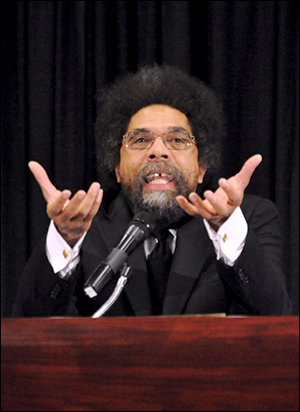
Presidential candidate Dr. Cornel West

Cornel West: Fails to Qualify for Florida Ballot — As ballots become finalized around the country, election officials in the state of Florida announced earlier this week that Independent presidential candidate Dr. Cornel West has failed to meet the state’s requirements for ballot access. Therefore, his name will not appear before the Florida electorate. Dr. West has qualified for the ballot in Alaska, Colorado, Michigan, Nebraska, North Carolina, Oregon, South Carolina, Utah, Vermont, Washington, and Wisconsin.

He could draw a percentage point or so of support from Vice President Kamala Harris in the key battleground states of Michigan, North Carolina, and Wisconsin, which could prove definitive. Dr. West might also be part of a matrix that could force the Alaska race into the Ranked Choice Voting round by helping deny former President Donald Trump majority support.

Senate

Florida: Another Close Poll — We’ve recently seen several polls that project Sen. Rick Scott (R) as being in a close race against former Rep. Debbie Mucarsel-Powell (D), Public Policy Polling (for the Clean and Prosperous America PAC; Aug. 21-22; 837 registered Florida voters; bilingual option available; live interview and text) publicized their late August findings that posted Sen. Scott to only a 48-45 percent lead over Mucarsel-Powell, this just one month after the Florida primary election. Earlier in the month, Florida Atlantic University tested the state’s electorate (Aug. 10-11; 1,040 likely Florida voters; Interactive Voice Response system with bilingual option and online) and drew a similar conclusion. Their ballot test response yielded a Scott edge of 47-43 percent.

Recent electoral and polling history tells us, however, that seeing Democrats performing well in Florida races during August is not unusual, while Republican strength then shows itself as the calendar officially moves into autumn. Additionally, the polling has typically inaccurately depicted Republican strength in the most recent campaigns. Therefore, it is likely Sen. Scott stands in better position than these surveys suggest.

House

FL-13: Rep. Luna Trailing in Post-Primary Poll — As is the case with Sen. Scott as explained above, we see potentially the same polling situation developing in the Tampa Bay area.

A new St. Pete Polls survey finds 13th District freshman Rep. Anna Paulina Luna (R-St. Petersburg) trailing her new Democratic general election opponent. The St. Pete Polls’ 13th District survey (Aug. 27; 843 registered FL-13 voters; automated phone calls and text) found new Democratic nominee Whitney Fox leading Rep. Luna, 48-44 percent, in the first publicly released poll since May. In that month’s GQR survey for the Fox campaign, Rep. Luna led 51-46 percent.

A similar pattern, though which much less data, was also present in Luna’s 2022 congressional race. The one published pre-election poll, also from St. Pete Polls and conducted over the Oct. 26-27 period, found Luna leading her ’22 opponent, Democrat Eric Lynn, by only one point, 46-45 percent, yet she carried the district by 8.1 percentage points in the actual vote. Again, we see another Florida Republican whose strength was not correctly projected, in this case, by an under-count of just over seven percentage points.

NJ-9: Nominee Clinched — It appears the nomination process to choose a successor to the late New Jersey Rep. Bill Pascrell (D-Paterson) has ended even before the official Democratic Party meeting to select a candidate has even begun.

After state Sen. Nellie Pou (D-Paterson) received a big bounce by obtaining endorsements from the local county party chairmen and other key local leaders, all of the other major candidates removed themselves from further consideration. Therefore, it appears that Sen. Pou will be the new nominee and will become a prohibitive favorite to defeat 2022 Republican nominee Billy Prempeh to keep New Jersey’s 9th District in Democratic hands.

Helmy to Serve Balance of NJ Sen. Menendez’s Term; Clear Favorite in NH-2; CA-45, PA-10 Races Tight

By Jim Ellis — Friday, August 23, 2024

Senate

George Helmy (D) has been appointed by New Jersey Gov. Phil Murphy to serve the balance of Sen. Bob Menendez’s current term.

New Jersey: Menendez Drops Campaign — Sen. Bob Menendez (D), who is resigning from the Senate today due to his conviction on federal bribery charges, is also ending his Independent candidacy for re-election. Though he had little chance of winning the November election from the Independent ballot line, he was able to pay legal fees because he was an official candidate. Beginning today, he will no longer be a senator, nor a Senate candidate.

Rep. Andy Kim (D-Moorestown) is favored to win the general election and succeed Menendez in the Senate. During the interim, Gov. Phil Murphy (D) is appointing his former chief of staff, George Helmy (D), to serve the balance of the current term.

House

AZ-3: Finally, A Result — In another of the 2024 close primary races in which the counting has dragged on for weeks, former Phoenix City Councilwoman Yassamin Ansari Tuesday was declared the official winner of the open 3rd Congressional District Democratic primary by a 39-vote margin over former state Senate Minority Leader Raquel Teran. Ansari had led since the first count on July 30, but what originally appeared to be a substantial lead dwindled in every subsequent count until the leakage finally stopped with 39 votes to spare. The total turnout was a low 38,135 votes.

AZ-3 is a safe Democratic seat – the FiveThirtyEight data organization rates it a D+44 – so winning the Democratic primary has virtually clinched the general election for Ansari. She will replace Rep. Ruben Gallego (D-Phoenix) who is running for the Senate.

NH-2: Open Democratic District Polling Shows Clear Favorite — St. Anselm’s College’s latest statewide poll (Aug. 13-14; 1,327 registered New Hampshire voters; 320 NH-2 Democratic primary voters; online) finds ex-Biden Administration official Maggie Goodlander leading Executive Councilor and 2016 gubernatorial nominee Colin Van Ostern by a full 10-point margin, 41-31 percent, in the open battle to succeed retiring Rep. Annie Kuster (D-Hopkinton). Though the general election could be close, the new Democratic nominee will at least have the initial advantage. The late New Hampshire primary is scheduled for Sept. 10.

CA-45: Rep. Steel in Deadlocked Poll — One of the keys to determining the next US House majority is how well the Republicans do in retaining the four Democratic seats their members hold in the Golden State. One of those is the Orange County district of two-term Rep. Michelle Steel. The FiveThirtyEight data organization rates the 45th as D+5, but Rep. Steel was able to secure a 52-48 percent post-redistricting re-election victory in 2022.

While initially favored to claim a third term, a just-released late July Normington Petts survey (for the Democratic Congressional Campaign Committee; July 29-31; 500 likely CA-45 voters; live interview & text) finds Rep. Steel and Democrat Derek Tran tied at 47 percent apiece. In a heavily Asian district (41.4 percent of the Voting Age Population), Tran has a strong advantage within the large Vietnamese population (62-30 percent) over the Korean-born Republican incumbent. We can expect another close finish in a highly competitive Orange County congressional district.

PA-10: Moving Into Toss-Up Realm — Another battleground US House contest is unfolding in the Harrisburg-York area of Pennsylvania. Though the FiveThirtyEight data organization rates the seat as R+9, a new poll suggests the race between six-term Rep. Scott Perry (R-Dillsburg) and former television news anchor Janelle Stelson is already a toss-up.

An Upswing Research survey (polling for the Democratic Congressional Campaign Committee; July 30-Aug. 2; 600 likely PA-10 voters; live interview & text) finds the challenger leading Rep. Perry with a slight 48-47 percent margin. Typically, this district has polled better for Democrats than it has actually voted, but there is little doubt that the race in this central Pennsylvania CD will be one to watch.

New Chairman for Trump Campaign; Surprising Arizona Senate Poll; Menedez’s Replacement; OH-13 Race Within Margin of Error; The Late Jackson Lee’s Daughter May Step In

By Jim Ellis — Monday, August 19, 2024

President

Corey Lewandowski

Donald Trump: Lewandowski Returns — Amid rumors of a campaign staff shake up swirling around the Trump campaign, it now is confirmed that 2016 campaign manager Corey Lewandowski has returned to former President Donald Trump’s fold. On Friday, Lewandowski was appointed to be chairman of the campaign.

It is clear the Trump effort has been jolted off course with the emergence of Vice President Kamala Harris as the new party nominee, and it is becoming clear that the Republican campaign must return to a more cohesive issue based message in order to rally the GOP base and attract the narrow band of swing voters. It will be interesting to see if reinstalling Lewandowski will provide the needed answer.

Senate

Arizona: Surprising New Poll — Peak Insights, polling for the National Republican Senatorial Committee (NRSC), released the results of their new survey of the Grand Canyon State electorate (July 31-Aug. 5; 800 likely Arizona general election voters) that surprisingly finds GOP former gubernatorial nominee and ex-news anchor Kari Lake now in a dead heat, at 46-46 percent, with US Rep. Ruben Gallego (D-Phoenix).

The last three polls, from The Cook Political Report, Redfield & Wilton Research, and the High Ground group all showed Rep. Gallego posting substantial leads of 11, 6, and 9 percentage points, respectively. It remains to be seen if the NRSC poll is an anomaly or the beginning of a new trend.

New Jersey: Replacement Senator — Sen. Bob Menendez (D) is scheduled to resign his seat on Tuesday, and Gov. Phil Murphy (D) announced that he will appoint his former gubernatorial chief of staff, George Helmy (D), to serve the balance of the current term. Rep. Andy Kim (D-Moorestown) is the heavy favorite to win the general election and begin his six-year term in January. Sen. Menendez was convicted of multiple bribery counts and awaits sentencing. He vows to appeal the conviction.

House

OH-13: Within the Margin of Error — In a race that has drawn little in the way of national political attention, a recently released late July poll finds freshman Ohio US Rep. Emilia Sykes (D-Akron) already locked in a tight race with GOP former state Sen. Kevin Coughlin (R). Coughlin spent 14 years in the state House and Senate and is returning to elective politics this year after a 14-year respite.

The Cygnal research organization poll for the National Republican Congressional Committee (July 28-30; 400 likely OH-13 voters; live interview & text) finds Rep. Sykes leading Coughlin, 44-40 percent, with the congressional generic question breaking as a dead even tie, 46-46 percent.

The OH-13 contest is an under-the-radar campaign that will be attracting more attention as we move closer to the election. The FiveThirtyEight data organization rates the district as R+2, but Dave’s Redistricting App calculates a 50.7D – 47.0R partisan lean. The Daily Kos Elections statisticians rank the seat as the 13th-most vulnerable district in the House Democratic Conference.

TX-18: Turner Won’t Run in Special — Former Houston Mayor Sylvester Turner, who the Harris County Democratic Party members installed as the general election replacement for the late Rep. Sheila Jackson Lee (D-Houston), said yesterday that he will not enter the special election to fill the final two months of the current term. Erica Lee Carter (D), Jackson Lee’s daughter, has expressed interest in running for the interim position and it appears she will not have serious opposition.

This means Lee Carter will serve the final two months of her mother’s term when she wins the concurrent Nov. 5 special election. The late congresswoman’s daughter was not a candidate to replace her mother in the regular election. Turner is a sure bet to win the regular election and take the seat in the new Congress beginning Jan. 3, 2025.

Primaries in Four States Today; Conflicting Polls in Michigan;
Casey Up Double Digits;
New Jersey’s Governor’s Race

By Jim Ellis — Tuesday, August 13, 2024

Primaries

Rep. Ilhan Omar (D-Minneapolis) is expected to record a substantial primary victory today. / Photo by Gage Skidmore

Voting Today: Four States and One CD — Voters in Connecticut, Minnesota, Vermont, and Wisconsin will vote today while the Harris County, Texas Democratic Party members are choosing a general election nominee to replace the late Rep. Sheila Jackson Lee (D-Houston).

The primaries will be quiet affairs in Connecticut and Vermont as all incumbents are running either unopposed or against minor opposition. Minnesota US Reps. Ilhan Omar (D-Minneapolis) and Michelle Fishbach (R-Regal) face primary opposition that looked interesting for a time, but now both incumbents are expected to record substantial victories.

The WI-8 open seat Republican primary will attract the most attention in the Badger State. There former state Senate President Roger Roth, state Sen Andre Jacque (R-Green Bay), and businessman Tony Wied are vying for the party nomination. The winner will very likely succeed resigned Rep. Mike Gallagher (R).

The Democrats have a contested primary in the state’s western 3rd District where state Rep. Katrina Shankland (D-Stevens Point) and business owner Rebecca Cooke are vying for the opportunity to challenge freshman Rep. Derrick Van Orden (R-Prairie du Chien).

Former Houston Mayor Sylvester Turner appears to be the favorite to come through the party nomination convention as the congressional nominee, though several state Representatives and Houston City council members are also vying for support from the 88 voting members.

Senate

Michigan: Conflicting Polls — Two surveys were released in the past three days, and while both find Rep. Elissa Slotkin (D-Lansing) leading former Rep. Mike Rogers (R), the margin between the two studies is highly inconsistent. The New York Times/Siena College (Aug. 5-8; 619 likely Michigan voters) found Rep. Slotkin leading 46-43 percent, which is in line with most other polls conducted of the race.

The Bullfinch Group, however, also tested the Michigan electorate in early August (polling for the Independent Center; part of a three swing state polling series; Aug. 8-11; 500 registered Michigan voters; online) and sees Rep. Slotkin posting a much larger 48-38 percent lead. The error factor in the latter poll, with a small online sample size, is much greater than the NYT/Siena College study, so it is likely that this survey is an anomaly.

Pennsylvania: Casey Up Double Digits in Two Surveys — A pair of research studies were also released in the Keystone State and produced similar results, the best so far for Sen. Bob Casey Jr. (D). As in Michigan, the two were from the New York Times/Siena College (Aug. 6-8; 693 likely Pennsylvania voters) and the Bullfinch Group (polling for the Independent Center; part of a three swing state polling series; Aug. 8-11; 500 registered Michigan voters; online).

The NYT/Siena ballot test projected Sen. Casey’s lead to be a whopping 51-37 percent over former hedge fund CEO David McCormick (R). Bullfinch found an almost identical result, recording the senator’s advantage at 51-39 percent over challenger McCormick. This was always going to be a tough race for Republicans, and now the McCormick campaign must make a serious move to tighten the race to ensure the candidate is positioned to potentially score an upset victory. Currently, Sen. Casey appears to be in the driver’s seat as he strives to clinch a fourth term.

Governor

New Jersey: Rep. Sherrill Preparing Statewide Run — As has long been anticipated, Rep. Mikie Sherrill (D-Montclair) yesterday signaled that she will launch a 2025 campaign for governor soon after the November 2024 general election. Also expected to run is US Rep. Josh Gottheimer (D-Wycoff). Already announced are Democratic mayors Ras Baraka (Newark), Steve Fulop (Jersey City), and Sean Spiller (Montclair), in addition to former state Senate President Steve Sweeney.

The Republicans will feature 2021 GOP nominee Jack Ciattarelli, state Sen. Jon Bramnick (R-Westfield), former state Senator Ed Durr, and radio talk show host Bill Spadea. Gov. Phil Murphy (D) is ineligible to seek a third term, hence the large forming candidate field especially on the Democratic side. This will be an intense gubernatorial contest.

Trump Campaign Files FEC Complaint Against Harris; Gallego Expands Lead in Arizona; Senate Race Tightens in Nevada; Menendez Says He’s Out

By Jim Ellis — Wednesday, July 24, 2024

President

Trump Campaign: Files FEC Complaint Against Harris — Former President Donald Trump’s campaign has filed a complaint with the Federal Election Commission arguing that Vice President Kamala Harris’s new campaign committee is not entitled to a direct transfer of the some $95-plus million that President Joe Biden held in his campaign account. Many believe that because she was on the presidential ticket her campaign committee would have access to the funds.

The Trump lawyers point out, however, that the official name of the presidential committee is simply, “Joe Biden for President.” The committee name has been changed to “Harris for President,” which the Trump operation claims is premature and an infraction of campaign finance law. Should the complaint before the commission end in a three to three tie, with the three Republicans voting to affirm the complaint and the three Democrats against, the Trump campaign could then take the measure to court.

Senate

Arizona: Gallego Expands Lead — Countering the last three July polls that found the Arizona Senate race tightening to within the polling margin of error, Public Policy Polling released new data (for the Clean and Prosperous America PAC; July 19-20; 736 registered Arizona voters; live interview & text) that posts US Rep. Ruben Gallego (D-Phoenix) to a seven-point advantage, 49-42 percent, over former news anchor and 2022 Republican gubernatorial nominee Kari Lake.

In the presidential race, former President Trump leads Vice President Harris, 46-40 percent, again finding the familiar pattern of the Republican Senate nominee dropping behind the GOP ticket leader. In terms of approval rating, Trump scored a 47:49 percent favorability index. This compares well opposite Harris’ poor 38:55 percent positive to negative ratio.

Nevada: Race Tightens — British pollster Redfield & Wilton Strategies (polling for The Telegraph publication; July 16-18; 412 likely Nevada voters; part of a 5,005 sampling universe covering Nevada and seven other states) tested the Nevada Senate race and sees a tighter result than most recent polls. The ballot test found Sen. Jacky Rosen (D) leading Afghan War veteran Sam Brown (R), 41-37 percent. Recently, after a barrage of Rosen advertising, the senator had been posting leads as high as eight and 12 points.

New Jersey: Sen. Menendez to Officially Resign — After indicating that he would resign from the Senate after being found guilty of bribery but not providing any specifics, Sen. Bob Menendez (D) announced yesterday that he will leave the Senate on Aug. 20. Gov. Phil Murphy (D) immediately indicated that he will appoint a replacement for the outgoing senator to serve the balance of the term. It is unlikely that he will appoint Rep. Andy Kim (D-Moorestown), who won the Democratic nomination after Menendez decided not to seek renomination and Gov. Murphy’s wife, Tammy Murphy, withdrew from the Senate race.

Sen. Menendez then filed as an Independent for the Senate, but that was a move largely to qualify to legally spend his campaign money on legal fees. As a non-candidate, he could not have used the funds for such an expenditure. It is now likely he will also withdraw his Independent candidacy. Rep. Kim is favored to defeat Republican businessman Curtis Bashaw in the November general election.

Harris: A Tough Road Ahead

Vice President Kamala Harris: a tough path to winning in November. (Photo by Gage Skidmore)

By Jim Ellis — Tuesday, July 23, 2024

President

While Vice President Kamala Harris is well positioned to replace President Joe Biden as the 2024 Democratic presidential nominee, her task of winning the general election is anything but easy. New polls in the key swing states start her in an underdog position in virtually every key place that will determine the final outcome.

As we know, there are six states considered prime swing states: Arizona, Georgia, Michigan, Nevada, Pennsylvania, and Wisconsin. Before Biden announced his exit, another half-dozen surprising domains were showing competitive signs: Maine, Minnesota, New Hampshire, New Jersey, New Mexico, and Virginia. This means that former President Donald Trump was either leading in the most recent state survey or within a point or two of moving ahead. It remains to be seen if any of these second-tier swing states truly become competitive in a Trump-Harris race.

July polling in eight of these states illustrates the Harris difficulty factor in overcoming Trump’s current advantage. None of the states are out of play, since the Trump leads are all in single digits, but the fact that she would have to simultaneously hold nine of 12 domains increases the difficulty factor.

Vice President Harris’ biggest problem is that three of the states, Arizona, Georgia, and Nevada, appear locked for Trump. We have seen 26 publicly released polls from Arizona since January 1, and Trump leads in all. The Public Policy Polling organization conducted a Grand Canyon State survey during the July 19-20 period (736 registered Arizona voters), and Trump holds a six-point, 46-40 percent, advantage against Harris.

In Georgia, 24 Trump-Biden polls were conducted in 2024, and as in Arizona, Trump leads all. Two Trump-Harris polls have been conducted in July. The University of Georgia for the Atlanta Journal-Constitution newspaper (July 9-18; 1,000 likely Georgia voters) finds Trump holding a five-point edge over VP Harris. Insider Advantage (July 15-16; 800 likely Georgia voters) projects an even larger 10-point lead.

Nevada is turning in similar numbers. In 2024, a total of 22 Trump-Biden polls have been released, and Trump led in 21 with one tie. Insider Advantage conducted the most recent Trump-Harris poll (July 15-16; 800 likely Nevada voters) and Trump holds a 10-point, 50-40 percent, margin over the vice president.

These three states are significant because the data suggests that they are solid for Trump. Should he carry through and win them all, the former president would add 33 electoral votes to his 2020 national total, meaning he would be literally just one state away from winning the national election.

This is what makes Harris’s path difficult. Her margin of error if conceding Arizona, Georgia, and Nevada is just one state.

Therefore, looking at the remaining top-tier swings of Michigan, Pennsylvania, and Wisconsin, Harris would have to sweep them.

Today, she trails Trump in Michigan by five percentage points according to Democratic pollster Public Policy Polling (July 17-18; 650 registered Michigan voters)

The latest Pennsylvania numbers tell a similar tale. SoCal Research (July 20-21; 500 likely Pennsylvania voters) yields Trump a 50-46 percent edge over Harris.

In Wisconsin, Harris fares a bit better, but still could easily lose. The Civiqs research organization, polling for Daily Kos Elections (July 13-16; 514 registered Wisconsin voters), sees Trump and Harris deadlocked at 48 percent apiece.

There is some current data appearing from the second tier, though no July polling has been released for Maine, Minnesota, New Jersey, and New Mexico.

In New Hampshire, a state the former president twice lost to Hillary Clinton and President Biden, a group called Praecones Analytica just tested the electorate (July 19-21; 601 registered New Hampshire voters) and shows Trump holding a one-point, 40-39 percent, edge over VP Harris.

Finally, Florida Atlantic University tested the Virginia electorate with a released small sample survey (July 14-15; 301 registered Virginia voters) and projects Trump with a 41-40 percent lead over Harris.

As you can see, the point deficit in any of the nine first- and second-tier swing and potentially competitive states is not insurmountable in any instance. The vice president’s problem is that she must win all of these swing states, assuming Arizona, Georgia, and Nevada continue their year-long trend of favoring former President Trump. Therefore, of the remaining targets, Vice President Harris must run the table if she is to claim the White House since her margin of error is virtually depleted.

New Hampshire & New Mexico

Could New Hampshire & New Mexico be in play for Republicans?

By Jim Ellis — Friday, July 19, 2024

President

Even before the Trump assassination attempt and the Republican National Convention commenced, polling was beginning to suggest that some unusual states were venturing into the competitive realm.

At this point in the election cycle, it appears that the top conversion targets for the Trump campaign are Arizona, Georgia, and Nevada. Together, these states would deliver 33 of the 35 conversion electoral votes (from those states that voted for President Biden in 2020 but are strong potential Trump states in 2024) the former president would need to win the national election.

In the trio of these states since the beginning of this year, Trump has not trailed in any of the cumulative 62 polls from 15 different pollsters conducted in the three entities. If these states vote Trump in 2024, then the electoral map significantly changes.

Obviously, beyond Arizona, Georgia, and Nevada, the three commonly discussed Great Lakes states are clear battleground regions: Michigan, Pennsylvania, and Wisconsin.

Now, however, cumulative polling suggests other places could be potential Trump conversion opportunities. It is important, however, to determine which might legitimate prospects to flip as compared to those where the newly crowned Republican nominee could do well but might only come close to President Biden’s vote percentage.

The states in question are Maine, Minnesota, New Hampshire, New Jersey, New Mexico, and Virginia. One victory in any of the aforementioned, or converting the 2nd Congressional District of Nebraska (via an Electoral College tie), would award the election to former President Trump, assuming all 25 states that he twice carried return to his column.

While a Trump plurality victory is certainly within the realm of possibility in Maine since polling suggests his lead in the northern ME-2 district is at or near 20 percentage points, his chances of losing the 1st District by less than such a spread are good. Therefore, Trump could reasonably place first in Maine. His problem is the state’s Ranked Choice Voting system. Because it is doubtful he could secure majority support in the state — more than 50 percent — Trump would likely lose to President Biden in the RCV rounds.

Minnesota is the most loyal Democratic state in modern presidential campaign history. The last time the Land of 10,000 Lakes voted for a Republican in the national election came in 1972 when the state chose then-President Richard Nixon over then-Sen. George McGovern (D). Every other state has voted for a Republican at least one time since that election. In 2016, Mr. Trump came within 1.5 points of Hillary Clinton in Minnesota, which is probably the best he could do in 2024.

New Jersey is a state where Republicans poll better than they run, unlike some of the southern states where the opposite is true. The latest publicly released survey (co/efficient; June 26-27; 810 likely New Jersey general election voters; live interview & text) found Trump actually posting a slight 41-40 percent lead over President Biden in the Garden State. Such a margin is unlikely to occur when actual votes are cast, making New Jersey a “fool’s gold” state for Republicans.

Virginia also is unlikely to flip. The Washington, DC metro area in its entirety, meaning the city itself as well as the Northern Virginia and Maryland suburbs, is historically Trump’s worst-performing area in the country. Therefore, looking at the increased population in northern Virginia and Trump’s unpopularity in the region suggests that his three-point deficit spread found in the July 12-15 Florida Atlantic University survey of 918 likely Virginia voters is the closest that Trump will come to victory in the state.

The New Hampshire and New Mexico situations, however, look different. Both states are small, campaigning is relatively cheap, and though they have Democratic voting histories certainly since 2016, both could be seriously in play come November.

New Hampshire has elected a Republican governor in four straight elections and though outgoing Gov. Chris Sununu (R) is no fan of Trump’s, he pledged to vote for him and if the state is in a position to make a national difference, the governor will put the campaign levers in place to help push Trump over the top.

New Hampshire, however, has not been kind to the Republican presidential candidates. Since the 2012 presidential election, national Republican nominees have averaged only 46.1 percent of the vote as compared to the Democratic contenders 50.5 percent. Yet, the Granite State still has swing characteristics.

The New Mexico numbers are slightly worse than those in New Hampshire. The cumulative average in presidential races since 2012, inclusive, finds the Democratic nominee attracting a mean average of 51.8 percent compared to the Republicans’ 42.1 percent. Yet, with a plurality Hispanic Voting Age Population figure (44.3 percent Hispanic; 40.5 percent Anglo), and more Hispanic voters professing openness toward Republicans, the state may well be closer in 2024 than what previous statistics show.

If the Trump campaign is to overcome their electoral vote deficit, they must first expand the playing field, which they appear to be doing, continue to concentrate on Michigan, Pennsylvania, and Wisconsin, and then invest in some longer-shot states in the hope that one comes through. Two such candidates for long-shot victory are clearly New Hampshire and New Mexico.