
Tag Archives: Census Bureau

Census Patterns

By Jim Ellis

April 30, 2021 — Monday’s Census Bureau’s congressional apportionment and state population report continues to be digested, and its many surprises will potentially lead to legal action from unanticipated sources.

First, the ongoing Alabama lawsuit against the census counting methodology, among other issues, will likely be drastically altered since the Yellowhammer State did not lose its seventh district. An in-person hearing has been scheduled for Monday, May 3, in the state capital of Montgomery.

Second, New York Gov. Andrew Cuomo (D) is already making noises that his state will sue over the apportionment formula that eliminated one of his state’s congressional districts by just 89 individuals. Others are questioning how the state, where projections forecast a loss of potentially two congressional districts, landed exactly on the national growth average and came within just a few people of not even losing one seat.

The 50-state population segmentation is interesting in that it again provides us clear growth and mobility patterns. Regionally, the immense area starting in the center of the country and moving west to the Pacific Ocean is the big population gainer. The Midwest and Northeast is the major loser, with the South and Southeast producing mixed data.

In the 17 states beginning at the eastern border of North Dakota and moving down all the way to Texas’ eastern border and then back through the entire west but not including Alaska and Hawaii, the regional population growth rate was 10.6 percent, or 3.2 points above the national growth rate of 7.4 percent.

If, however, the five states within this sector that fell below the national growth rate are removed, California (6.1 percent growth rate), Oklahoma (5.5 percent), Kansas (3.0 percent), New Mexico (2.8 percent), and Wyoming (2.3 percent), the regional average for the 12 states that exceeded the national growth rate becomes 13.4 percent, or a full six points above the US benchmark.

Therefore, the fact that this western region gained five of the seven new congressional seats is consistent with the recorded sector growth data.

The South/Southeast segment, which includes 11 states, produced inconsistent regional data. Area-wide, the average growth rate was 6.7 percent, or 0.7 percent below the national average. This is a surprising number considering the region gained two congressional seats in reapportionment.
Continue reading

LA-2 Special Election Tightening

By Jim Ellis

April 1, 2021 — The Louisiana special congressional election between two New Orleans Democratic state senators appears to be tightening after the perceived underdog just scored an important endorsement that could help produce a closer than anticipated finish on April 24.

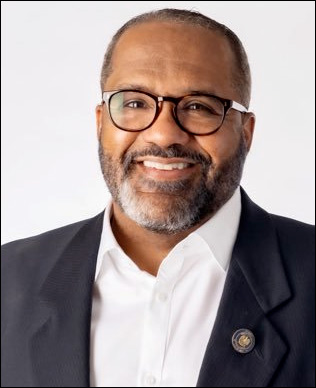
Louisiana state Sen. Troy Carter (D-New Orleans)

Sen. Troy Carter (D-New Orleans) placed first in the March 20 jungle primary with 36 percent of the vote. Sen. Karen Carter Peterson (D-New Orleans) was second with 23 percent, just ahead of Baton Rouge community activist Gary Chambers Jr. who posted 21 percent. Because no one reached the majority threshold, the top two finishers, Sens. Carter and Peterson, advanced to the special runoff election scheduled for late April.

Chambers, the third-place finisher, announced Wednesday that he is endorsing Sen. Peterson. With his 23 percent of the vote, Chambers can be a major influence in the runoff election. This is particularly true within the East Baton Rouge and Orleans parishes, where he performed well.

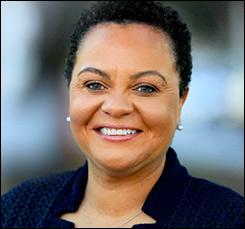
Louisiana state Sen. Karen Carter Peterson (D-New Orleans)

In the Baton Rouge area, for example, meaning both the East and West Baton Rouge parishes (though the West Baton Rouge entity only produced a total of 1,414 votes in the March 20 jungle primary election), Chambers and Sen. Peterson combined to record 65 percent of the original vote as compared to Sen. Carter’s 25 percent.

Also, the Congressional Progressive Caucus organization began running television advertising Wednesday that thanked Sen. Peterson for voting to expand the number of those eligible for Medicaid health benefits.

The outside CPC assistance supports the Peterson campaign strategy. One of her main goals is to identify herself as the more progressive of the two candidates. In this same vein, for example, she draws the distinction between her position and that of Sen. Carter regarding the Green New Deal. His public statements for the program have not been as strongly favorable as Sen. Peterson’s.

Continue reading

More Redistricting Delays – Part I

By Jim Ellis

Feb. 17, 2021 — The Census Bureau announced just before the Presidents’ Day holiday break that there will be yet another long delay in transmitting the census data to the states. Without the new numbers, redistricting becomes unachievable.

The new target date is Sept. 30, postponed from their first postponement date of July 30. At this point, the postponed apportionment release date remains April 30, long after the statutory deadline of Jan. 1. Apportionment is the first critical step in the redistricting process since this informs the states how many congressional seats they will be awarded for the current decade.

The late September target (and there’s no guarantee even this date will be met) will make it difficult for many states to finish their redistricting on time, and could force the process into the courts if state legislatures are unable to convene or meet a legislative calendar in terms of allowing public input. Even now, at least several states will have to enact emergency legislation to change deadlines to avoid violating pre-existing legal redistricting deadlines.

The delays have already changed the political situation in New Jersey and Virginia. With both states having odd-numbered year state legislative elections, the two are always the first to receive their new census data. In both states, legislative elections will now proceed under the 2011 maps with previously enacted amendments. When the lines are eventually completed, it is possible that new elections, possibly for 2022, will be ordered in Virginia. New Jersey voters passed a referendum in November that allows redistricting to occur before the 2023 state legislative elections.

Another problem could be lawsuits filed against the eventual apportionment. Apparently, the principal problem for the delays is exactly which people to count and where they are placed. College students, for example, are typically counted at the university campus on which they reside. Now, however, so many are not attending in-person classes. Therefore, arguments are ongoing as to where this group should be counted, either at school or back at their primary residence.

Additionally, one of President Biden’s new executive orders reversed Trump Administration policies about whether or not to count non-citizens. This change of direction has also created further delays.

Based upon these controversies, and others, it is probable that at least one potential losing state – apparently Alabama is on the cusp of losing a seat but may not depending upon the counting criteria – could sue over the apportionment conclusion meaning even further delays as various potential lawsuits wind their way through the judicial process toward final determination. All of this could conceivably mean redistricting is postponed until the 2024 election cycle.

Continue reading

CO-3: Rep. Boebert Challenge Looming

By Jim Ellis

2nd Amendment activist, local restaurant owner and now US Rep. Loren Boebert represents Colorado’s 3rd CD.

Feb. 8, 2021 — Colorado freshman Rep. Lauren Boebert (R-Silt), who first upset then-Rep. Scott Tipton in the 2020 Republican primary and later overcame more than $6 million in combined spending from her general election opponent and outside organizations, can count on seeing another tough campaign in 2022.

Already, candidates are lining up, and the most prominent one in the early going announced late last week. State Senate President Pro Tempore Kerry Donovan (D-Gunnison) released a video announcing that she will forego re-election to the state legislature in order to challenge Rep. Boebert in the next congressional campaign. Rancher Gregg Smith and former state House candidate Colin Wilhelm had previously declared their intentions to compete for the Democratic nomination.

Lauren Boebert is a Florida native who moved with her family to the Denver area when she was 12 years old. She then re-located to the Western Slope region in 2003 and, with her husband, opened their restaurant, Shooters Grill, in 2013.

Congresswoman Boebert has attracted much national attention so far with her insistence of carrying a firearm on the House floor. Such is nothing new since she has always holstered a side arm in her restaurant establishment and made defending the 2nd Amendment the cornerstone of her congressional campaign effort.

Despite being heavily outspent, Boebert carried the general election against former state representative and 2018 congressional nominee Diane Mitsch Bush (D) by a 51-45 percent margin, meaning a spread of 26,512 votes. Former President Trump, who recorded only 42 percent of the statewide vote, also carried the 3rd District in a similar 52-46 percent margin.

Continue reading

More Redistricting Delays

By Jim Ellis

Jan. 29, 2021 — The Census Bureau announced at mid-week yet another postponement in releasing the national apportionment figures, this time until April 30. Reapportionment should have been completed by Dec. 31, but the Bureau previously announced that March 6 would be the new release date due to COVID-related problems. Now, we see further delays.

Reapportionment is the process of creating a new census data algorithm in order to project the number of congressional seats each state will be awarded for the coming decade. It appears that 10-12 seats could change states, with the northeast and Midwest typically losing districts to southern and western states. This time, however, California, for the first time in history, is reversing their trend and appears headed for the losing list.

Once the apportionment numbers are known and the individual data dispersed, the states can begin the redistricting process. The Census Bureau further stated that individual states won’t be receiving their particular data necessary for redistricting until at least July 30. This will clearly set the redistricting cycle back significantly, which could cause major problems for the coming election cycle.

In the past, the Census Bureau has prioritized the states with early primaries to be first to receive their data. This meant that New Jersey and Virginia initially received their new population numbers ahead of the others because they have odd-numbered year state legislative elections. Texas and Illinois were next to receive since they traditionally schedule their regular primaries in March of the election year.

Knowing that the numbers would not be available for them in 2021, New Jersey and Virginia took preparatory action. Garden State officials placed a referendum on the November ballot asking voters for approval to postpone legislative redistricting until 2023. The measure passed.

The Old Dominion leaders decided they would run their 2021 state Delegate elections on the amended 2011 map but could conceivably call elections again for next year once they receive their updated data and can draw district boundaries. Virginia state senators do not stand for election until 2023, so it is unlikely the redistricting delay will affect those campaigns.

The data distribution and processing delay could place most legislatures in a conundrum. Most will be adjourned when the data is received, so special sessions will have to be called in most cases to complete the process prior to the 2022 candidate filing deadlines. This suggests that the states having redistricting commissions might prove to be in better position to complete the task because they won’t have to deal with legislative politics, priorities, or calendars, all of which result in a lengthy process.

Additionally, since almost every map is challenged in court, we could well see a plethora of lawsuits being filed late in the year that keep the redistricting process tied in figurative knots for months.

The states in the most difficult situations will be those gaining and losing congressional representation. Because the number of districts these particular states will have differ from their current allotments, they do not have the option of reverting to the current map once 2021 apportionment becomes final.

In the case of gainers and losers not having completed maps, we may see at-large races for the House. This would be particularly difficult for the losing states because we may see all members in the affected places having to run at-large for seats in their House delegations.

Unofficially, the gaining states appear to be Texas (3 seats), Florida (2), Arizona, Colorado, Montana, North Carolina, and Oregon. The losers may be New York (possibly 2 seats), Alabama, California, Illinois, Michigan, Minnesota, Ohio, Pennsylvania, Rhode Island, and West Virginia. Reports suggest that the closest developing situation concerns whether Alabama loses a seat or New York drops two.

President Biden’s executive order that mandates non-citizens be counted in the census will certainly affect the final data projections and may be another reason for this latest delay.

The only certainty about 2021 reapportionment and redistricting is the many moving parts in these various states will likely produce surprising political results.

COVID & Redistricting

By Jim Ellis

April 29, 2020 — The deadline for the Census Bureau to release the new population data is March 31, 2021, but with the entire process being delayed due to COVID-19 precautions, the ability to meet the requirement is becoming more difficult by the day. Already, the Bureau has been delayed in dispatching their door-to-door teams necessary in obtaining the responses from people who did not return their mail tabulation form.

The Trump Administration is reportedly suggesting that the March 31 deadline be postponed to sometime in the summer of 2021. If this happens, we will see a series of redistricting problems ignited in the states. First, the political leaders in New Jersey and Virginia, places that have 2021 elections and need their new state legislative lines in place well before that date, would find themselves in a difficult position.

Initially, the two states would certainly have to postpone their primary elections because both nominate their general election candidates in June. Beyond that, it is possible they would have to even postpone their general elections into 2020 or run in the obsolete boundaries that were drawn back in 2011. In either case, we could expect lawsuits being launched from whichever party loses a particular electoral contest.

Other states would be affected, too. Many have legal deadlines in place mandating that the new redistricting maps for state legislature and the US House delegation be adopted before the legislative sessions ends. Most states recess before mid-summer, which would mean special sessions being called if the legislature is to act.

The problem intensifies in the states that are either gaining or losing congressional districts in reapportionment. Currently, it appears that seven states will add seats to their delegations (the best projections suggest that Texas will gain three, Florida two, and Arizona, Colorado, Montana, North Carolina, and Oregon one apiece), while 10 will lose single districts (Alabama, California [for the first time in history], Illinois, Michigan, Minnesota, New York, Ohio, Pennsylvania, Rhode Island, and West Virginia).

The aforementioned apportionment is based upon calculations released publicly and not, of course, using the actual numbers. Therefore, we could see some differences between these projections and what the formulas actually produce when the Census Bureau finally can produce the updated real figures.

Continue reading

New House Census Projections

By Jim Ellis

Jan. 3, 2020 — The Census Bureau just released its new population growth estimates for the 12-month period between July 1, 2018 and July 1, 2019. Their data allows us to assess just which states will likely gain and lose congressional districts in 2020 reapportionment, both in terms of the real numbers just presented and for projecting the final count once the decade’s final-year patterns are calculated and the census is actually conducted.

The national population growth rate was analyzed to be 0.5 percent, down from the peak period of the decade, the July 1, 2014 through July 1, 2015 time segment, when the growth factor reached 0.73 percent. The population patterns of movement to the south and west continue, with the northeast actually seeing a population decrease during the aforementioned reported 12-month period that ended on July 1. The Midwest is not keeping up with the national rate of growth, either, but not losing overall population.

Ten states actually lost population during the reported period, led by West Virginia’s 0.7 percent drop. Alaska declined by 0.5 percent, with New York and Illinois each losing 0.4 percent. Hawaii dropped by 0.3 percent, Connecticut, Louisiana and Mississippi 0.2 percent, and Vermont (0.1 percent). New Jersey is the tenth population reduction state, but it lost only 3,835 people from a population of more than 8.9 million individuals for a 0.0004 percent decrease.

The fastest growing states at this point in the decade are Idaho (2.1 percent since July 1, 2010), Nevada, Arizona, and Utah (all at 1.7 percent increase during the same period), Texas and South Carolina (1.3 percent), Washington and Colorado (1.2 percent), Florida (1.1 percent), and North Carolina (1.0 percent).

Continue reading

Apportionment Projections:
Who is Gaining, Who is Losing

By Jim Ellis

Jan. 3, 2019 — Late last year, we covered the new Census Bureau report for the states gaining and losing population during the past 12-month period. Now, we see the agency’s latest just-released numbers for the decade through this past July. Armed with the new data, outside mathematicians have made apportionment projections to provide a more defined picture as to which states will be gaining or losing US House seats in the 2020 post-census reapportionment.

With two years remaining in the present decade, trends can still change and we must remember that the reapportionment formula is complex, but the new projections give us a strong idea as to just how many seats, give or take a small variance, will transfer. At this point, according to the Washington, DC-based Election Data Services, it appears that as many as 22 seats could change location affecting 17 states.

Texas, having gained 3.55 million people since the 2010 census, looks to be adding as many as three seats for the 2022 elections and beyond. This will give the Lone Star State 39 seats during the next decade, and 41 electoral votes in the succeeding presidential elections.

Florida was the second largest gainer with just under 2.5 million new residents, meaning the Sunshine State will likely gain two seats, going from 27 to 29. In terms of raw numbers, California gained more than 2.3 million people, but it actually dropped a tenth of a point below the national growth average of 6.3 percent for the past eight years. This means the Golden State is currently on the hook to actually lose a district for the first time in history.

Continue reading

Projecting Apportionment

By Jim Ellis

Dec. 7, 2018 — New population growth numbers are now available from the Census Bureau, allowing us to gain more clues about how the coming 2020 post-census apportionment might look for the nation’s congressional districts.

Every 10 years, states gain and lose CDs based upon their total population and percentage growth figures. The current US population of 327,774,453 represents a growth rate of 5.96 percent when compared to 2010.

Currently, Idaho is the fastest growing state for 2018, with a gain of 2.15 percent for the current year, the only state to break the two percent barrier for the period. Nevada (1.96 percent), Utah (1.85 percent), Washington (1.69 percent), and Florida (1.56 percent) round out the top five.

The group constituting the bottom half of the top 10 in 2018 growth contains Arizona (1.53 percent), Texas (1.41 percent), Colorado (1.37 percent), Oregon (1.37 percent), and South Carolina (1.28 percent).

On the other hand, eight states, led by Wyoming (-0.97 percent), actually lost population during the year. The others are West Virginia, Illinois, Alaska, Hawaii, Mississippi, Louisiana, and North Dakota.

Continue reading

First Alabama Poll

By Jim Ellis

Oct. 4, 2017 — The Opinion Savvy research firm went into the field to test the Alabama electorate immediately after last week’s special Republican run-off election, and found the winner of that special primary election, former state Supreme Court Chief Justice Roy Moore, holding only a tenuous lead over his Democrat opponent, ex-US Attorney Doug Jones.

Left: Former state Supreme Court Chief Justice Roy Moore (R) Left: Ex-US Attorney Doug Jones (D)

Left: Former state Supreme Court Chief Justice Roy Moore (R)
Right: Ex-US Attorney Doug Jones (D)

The survey results, which other pollsters will probably soon confirm, should lead to the Democratic leadership launching a major offensive campaign here with the long shot goal of stealing the Republican stronghold seat. They have the resources but are hamstrung in this cycle because few offensive Senate opportunities exist; hence, they must make a serious play for this seat that would not normally be in play.

The Opinion Savvy poll (Sept. 27-28; 590 registered Alabama voters; 514 “definite” Dec. 12 special general election voters; 76 “considering” whether they will vote) finds Judge Moore leading Jones, 50-45 percent. Among the definite voters, Moore’s margin expands slightly to 51-44 percent. Within the lesser-motivated voting group, the Republican’s edge slides to just one point, 46-45 percent.

As we saw during the Republican run-off, a huge split – with diametrically opposite totals – exists between self-described evangelicals and non-evangelicals. Considering that the Census Bureau classifies 49 percent of the entire state population as evangelical, and 55.6 percent of this polling universe, this demographic segment was obviously a crucial block in determining the outcome of the Republican run-off and will have an equally large say in the upcoming special general.

Continue reading