Tag Archives: Alaska

Brooks Continues Momentum in Alabama; An Unusual Alaska Endorsement; Redistricting News

By Jim Ellis
May 23, 2022

Senate
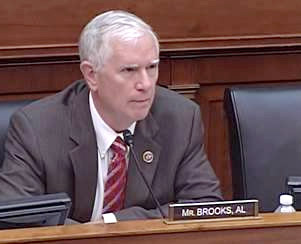
Alabama Rep. Mo Brooks (R-Huntsville)

Alabama: Brooks With Momentum — US Rep. Mo Brooks (R-Huntsville) continues to make strong strides to capture one of the two runoff positions in Tuesday’s primary election. All polling suggests that none of the three top candidates will reach the 50 percent plateau to claim the nomination outright. The latest survey, from the Cygnal research group for the Alabama Daily News and Gray Television (May 15-16; 634 likely Alabama Republican primary voters), sees Rep. Brooks moving past retired “Black Hawk Down” pilot Mike Durant, while knocking on race leader Katie Britt’s door.

The ballot test breaks 31-29-24 percent (Britt, Brooks, Durant) meaning that all three candidates still have the potential of qualifying for the two-person runoff. Tuesday’s vote will undoubtedly be close. The eventual Republican nominee is a lock to succeed retiring Sen. Richard Shelby (R) in November. The runoff election is scheduled for June 21.

House

AK-AL: Cross-Endorsing — Previously, the Alaska Republican Party endorsed businessman Nick Begich III in the special election to replace the late US Rep. Don Young (R-Ft. Yukon) over former governor and 2008 vice presidential nominee Sarah Palin (R). Now, we see another unusual endorsement. Begich is the grandson of the late US Rep. Nick Begich (D), who died in a plane crash in 1972. This led to Young winning the special election in 1973. While Nick Begich III is following in his family’s footsteps in running for public office, he is doing so as a Republican. This move now leads his uncle, former US Sen. Mark Begich (D), to endorse Anchorage Assemblyman Chris Constant (D) in the large field of 48 candidates instead of his nephew.

Under the new Alaska electoral system, four of the 48 candidates on the June 11 jungle primary ballot, regardless of party affiliation, will advance to the Aug. 16 special general election.

NY-17: Internal Dem Chaos — Assuming the presiding judge adopts the special master’s redistricting map, it appears that Democratic Congressional Campaign Committee chairman Sean Patrick Maloney (D-NY) has created a political hornet’s nest with his declaration that he would challenge freshman Rep. Mondaire Jones (D-Westchester County), who happens to be African American, in the new 17th District rather than compete for the seat directly to the north, the new 18th District. Rep. Maloney said he is running in the 17th because that is where the map placed his home, but a substantial part of his current constituency also lies in the new 18th.

Rep. Alexandria Ocasio-Cortez (D-Bronx) criticized Maloney saying, “I don’t think he should be DCCC chair if he’s going to challenge another member. It’s completely inappropriate.” Neighboring Rep. Jamaal Bowman (D-Yonkers) was more critical. He said Rep. Maloney is trying “to dismantle and tear down Black power in Congress” and should run in his own district (meaning District 18).

Redistricting

Missouri: Map Adopted — Gov. Mike Parson (R) signed the legislation enacting the new Missouri congressional districts. With that, now New Hampshire remains the only state that has not completed the re-mapping process. The Missouri map is largely an extension of the current eight-district plan and will likely continue to send six Republicans and two Democrats to Washington. Rep. Ann Wagner’s (R-Ballwin) 2nd District becomes more Republican, thus stabilizing her seat. Interestingly, the legislature did not change the candidate filing deadline of March 29, so no new individuals can enter the congressional races even though the district lines are somewhat different.

Governor

Alabama: Gov. Ivey Back Over 50 percent — A new Emerson College survey (May 15-16; 706 likely Alabama Republican primary voters; live interview; interactive voice response system; and text) tested the governor’s Republican primary. In another poll, Gov. Kay Ivey (R) had dropped below the 50 percent threshold, but Emerson finds her rebounding in this study. Here, she captures 53 percent support, while developer Tim James, son of former Gov. Fob James, posts 21 percent preference and ex-ambassador to Slovenia, Lindy Blanchard, records 13 percent. All other candidates fall into single digits.

Alaska’s Palin in Trouble?
Florida Redistricting Map Tossed

By Jim Ellis
May 13, 2022

House

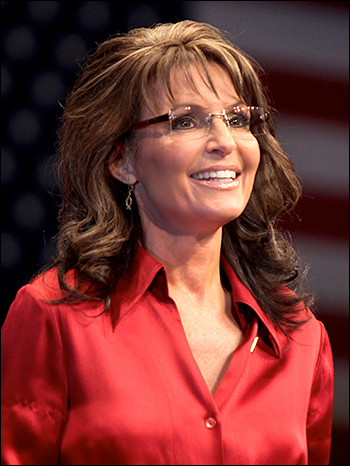
Sarah Palin, former Alaska governor and vice presidential candidate, now running for US House Representative

AK-AL: Palin Begins Special with Slight Lead, but May Not Prevail — The Alaska Survey Research firm, headed by longtime local pollster Ivan Moore, released their new special election US House study featuring 48 candidates. The survey (May 6-9; 605 AK-AL likely special election voters; online) finds former governor and 2008 vice presidential Republican nominee Sarah Palin leading the huge field with 19 percent, followed closely by officially endorsed Republican Party candidate Nick Begich III at 16 percent, with Independent and former 2020 Democratic US Senate nominee Al Gross and North Pole City Councilman Santa Claus (the former Thomas O’Connor) capturing the third and fourth qualifying positions with 13 and six percent, respectively.

Under the new Alaska election law, the top four finishers from the jungle primary, in this case scheduled for June 11, will advance to the Aug. 16 special general election. If no one receives majority support among the finishing four in the succeeding vote, the Ranked Choice Voting System takes effect. It is here where Palin may find trouble. Under this configuration, ASR projects that Claus would be first eliminated, then Palin in the next round. A Begich-Gross final round would favor Begich at 53-47 percent.

Nick Begich III is the grandson of former US Rep. Nick Begich (D), who died in a plane crash before the 1972 election. His uncle is former US Sen. Mark Begich (D). Nick Begich, III, however, is a Republican. ASR tested four different iterations with four separate fourth-place contenders, and in each scenario Begich ultimately wins the seat.

NE-2: Dem Group Poll Shows Rep. Bacon Trailing — Democratic pollster Change Research, polling for the left of center 314 Action group (May 6-10; 564 NE-2 general election voters of whom 94 percent say are definite or probable voters; online) finds Omaha Democratic state Sen. Tony Vargas leading US Rep. Don Bacon (R-Papillion/Omaha), 42-39 percent, in a survey conducted just before the Nebraska primary.

The poll skews slightly left, meaning that the race is likely no worse then being tied from Rep. Bacon’s perspective. Approximately 25,000 more people voted in the NE-2 Republican primary than Democratic suggesting the enthusiasm level favors the GOP. The seat became three points more Republican in redistricting. Despite this particular poll result, Rep. Bacon is still favored for re-election.

Redistricting

Florida: Congressional Map Tossed — A Florida state judge, whom Gov. Ron DeSantis (R) appointed, disqualified the new Florida congressional map, ruling that the elimination of Rep. Al Lawson’s (D-Tallahassee) majority minority District 5 violates Florida’s Fair Districts Act. The state will clearly appeal, but the map’s fate, the Republicans’ best in the country, now is suspended in political limbo.

Governor

Alabama: Gov. Ivey Below 50 Percent — A Cygnal group poll for the Alabama Daily News and Gray Television (May 6-7; 600 likely Alabama Republican primary voters) two days ago covered the Alabama Senate race confirming that Rep. Mo Brooks (R-Huntsville) is gaining on his two GOP opponents. Wednesday, Cygnal released its data on the state’s gubernatorial campaign. While Gov. Kay Ivey (R) still holds a comfortable lead according to the poll, the survey shows that she has dropped to 40 percent support.

Real Estate developer Tim James, son of former Gov. Fob James, is second with 18 percent, and former US ambassador to Slovenia, Lindy Blanchard, is a close third with 15 percent. Three more candidates divide 14 percent of the vote, while the remainder is recorded as undecided/won’t say. There is little doubt that Gov. Ivey will finish first, but the question remains whether she can attain the 50 percent threshold to avoid being forced into a secondary runoff election. The Alabama primary is May 24. If a runoff becomes necessary, that election would occur on June 21.

Palin Gets Endorsement; Hawaiian Announces for Congress; More

By Jim Ellis

April 29, 2022:

House

HI-2: Another Announces for Congress — Confident that freshman Rep. Kai Kahele (D-Hilo) will soon declare his intention to run for governor, former state Sen. Jill Tokuda (D) formally exited the lieutenant governor’s race and announced that she will enter the 1st Congressional District contest.

Though Rep. Kahele is still technically a congressional candidate, Tokuda follows the
lead of state Sen. Jarrett Keohokalole (D-Kailua), state Rep. Angus McKelvey (D-Lahaina),
and Honolulu City Council chairman Tommy Waters (D) who have all entered what they
believe will be an open congressional race. The Hawaii candidate filing deadline is June 7
for the Aug. 13 statewide primary, so Rep. Kahele will soon have to make known his
2022 political plans.


Governor

Sarah Palin, former Alaska governor and vice presidential candidate

Alaska: GOP Co-Endorses — After the Alaska Republican Party, which has also endorsed businessman Nick Begich, III over former governor and 2008 vice presidential nominee, Sarah Palin, in the US House special election, had already officially endorsed the party’s incumbent Gov. Mike Dunleavy (R), the political entity has now expanded its official support list. In addition to the governor, the Alaska GOP voted to also endorse Kenai Peninsula Borough Mayor Charlie Pierce, who is the governor’s Republican primary challenger.

Connecticut: New General Election Poll — Fairfield, Connecticut’s Sacred Heart University released a new poll of the governor’s campaign, which is expected to become competitive once we enter the post-primary period. The survey (March 24-April 11; 1,000 Connecticut residents; online) finds Gov. Ned Lamont (D) opening with a substantial lead over businessman and 2018 gubernatorial nominee Bob Stefanowski (R). The ballot test finds the governor holding a 48-30% advantage.

The poll, however, has a questionable methodology. The sampling period of 18 days is very long, and the respondent universe did not segment for likely or even registered voters. Therefore, the result likely places Gov. Lamont in a better position than he might be before a better segmented poll.

Nebraska: Gov Primary Tight — State Sen. Brett Lindstrom (R-Omaha) released a new internal poll of the upcoming May 10 Republican primary that features a very tight contest among himself, businessman Charles Herbster, and former University of Nebraska Regent Jim Pillen. The Data Targeting/Neilan Strategy Group poll (April 19-20; 858 likely Nebraska Republican primary voters; interactive voice response system) finds Sen. Lindstrom claiming a small lead at 28-26-24 percent edge over Herbster and Pillen, who both have significant support.

The results are a marked improvement for Herbster, who former President Trump endorses, after multiple women accused him of sexual harassment. A previous poll showed him losing support. The eventual Republican nominee becomes a prohibitive favorite to win the general election and succeed term-limited Gov. Pete Ricketts (R).

Ohio: DeWine Leading Gov Primary but Below 50 percent — Fox News released the results of their new Ohio poll (April 20-24; 906 likely Ohio Republican primary voters; live interview) that finds Gov. Mike DeWine leading his Republican primary opponents, former US Rep. Jim Renacci and farmer Joe Blystone by a 43-24-19 percent margin. This represents a downward trend for the governor of a net 11 points from March’s Fox Poll. Combined, the opponents equal DeWine’s support, but with the anti-incumbent vote split, it is likely that the governor wins a plurality nomination race next Tuesday.

Senate Snippets

By Jim Ellis

April 19, 2022 — We have seen recent changes in many key 2022 in-cycle Senate races. Below is a competitive state-by-state recap:

Alabama: Polling now consistently shows that the GOP nomination battle, which will determine who will replace retiring Sen. Richard Shelby (R), is turning into a two-way race. Early leader Mo Brooks, the northern Alabama congressman who former President Trump originally endorsed only to see him recently rescind his support, has now dropped well back. It appears clear that “Black Hawk Down” pilot Mike Durant and former Business Council of Alabama President & CEO Katie Britt will advance to a runoff election. The Alabama primary is May 24 with the succeeding runoff scheduled for June 21.

Alaska: State Sen. Elvi Gray-Jackson (D-Anchorage) withdrew from the race to seek re-election to the legislature, and 2020 Senate nominee Al Gross filed to run for the at-large US House special election; thus the Democrats have no announced candidate. Candidate filing is June 1 for the Aug. 16 primary. The new election system will send four candidates to the general election, so whoever comes forth as a Democratic contender will likely advance to November. Sen. Lisa Murkowski (R) is seeking re-election.

Arizona: Recent polling continues to show a tight GOP contest among Attorney General Tim Brnovich, and businessmen Blake Masters and Jim Lamon. Candidate filing is closed, so the field is set for the Aug. 2 primary. The eventual Republican nominee will challenge freshman Sen. Mark Kelly (D).

Arkansas: Sen. John Boozman continues to campaign hard in a Republican primary battle against former University of Arkansas football player and Iraq War veteran Jake Bequette. The senator is still a heavy favorite for re-nomination and re-election.

California: Appointed Sen. Alex Padilla (D) is a cinch for election to a full term in the autumn.

Colorado: Only state Rep. Ron Hanks (R-Fremont) and construction company owner Joe O’Dea qualified for the Republican primary either through the state nominating assembly or petitioning onto the ballot. Early leaders Deborah Flora, a talk show host, and former Olympian Eli Bremer failed to qualify. Sen. Michael Bennet (D) is favored for re-election.

Connecticut: Seven Republicans have announced their candidacies against Sen. Richard Blumenthal (D). The two most credible candidates appear to be former Republican National Committeewoman Leora Levy, who has almost $1 million cash-on-hand, and state Senate Minority Leader Themis Klarides. This race may draw a bit of attention, but it’s still a very long shot for any Republican to beat Sen. Blumenthal.

Florida: Both Sen. Marco Rubio (R) and Rep. Val Demings (D-Orlando) have now each raised more than $30 million for the 2022 race, and both have over $13 million cash-on-hand. Sen. Rubio remains favored in a state that is moving closer to the GOP, but Rep. Demings has now actually raised a bit more money than the incumbent. A close finish here is virtually guaranteed.

Georgia: Polling suggests that former University of Georgia and NFL football star Herschel Walker will win the Republican nomination outright on May 24, thus setting the stage for the general election between he and freshman Sen. Raphael Warnock (D).

Continue reading

Alaska Special Election Set

By Jim Ellis

Alaska’s At-Large Congressman, the late Don Young (R-Ft. Yukon)

March 24, 2022 — Decisions have been made about the special election calendar to replace the late at-large Alaska Congressman Don Young (R-Ft. Yukon).

Gov. Mike Dunleavy (R) has set June 11 as the special primary election day, and the vote will be conducted through the mail. Alaska’s new top-four jungle primary system will be in play, meaning that four competitors will advance into the special general election, regardless of party affiliation.

The special general will be run concurrently with the Aug. 16 regular primary election, meaning candidates will be placed separately on the ballot for both the special election and the regular full term.

If no candidate receives majority support in the Aug. 16 special election, the Ranked Choice Voting System will take effect. Voters would rank their choices from first to four just for the special general. Since no one would have received 50 percent, the last-place finisher is eliminated and the ballots that ranked the last place finisher as their first choice are located, and only their second choices are then added to the total. This process continues until one of the candidates reaches 50 percent.

This means that voters will rank the four finalists for the special general and then vote for one of the regular primary candidates for the Nov. 8 election during the same voting process on Aug. 16, or the date on which they choose to vote early.

Since Alaska’s at-large House seat has not been open since the 1973 special election when Rep. Young was originally elected, a large special election field will form. Already, Nick Begich III, grandson of Rep. Young’s first Democratic opponent back in 1972, then-Congressman Nick Begich (D) who perished in a plane crash shortly before the regular general election, is in the field but as a Republican. He had announced against Young in the Republican primary before the congressman’s death.

Also saying he will run both in the special and regular elections, as did Begich, is Anchorage City Assemblyman Chris Constant (D).

The Democratic/Independent 2020 US Senate nominee who raised and spent over $19.5 million to unsuccessfully challenge GOP Sen. Dan Sullivan, surgeon Al Gross, publicly said that he, too, plans to enter the open seat campaign. Dr. Gross begins the race with a reported $200,000 (approximate) in remaining campaign funds, obviously a big advantage.

Continue reading

Alaska Rep. Young’s Passing Yields Chaotic Special Election Process

By Jim Ellis

Alaska’s At-Large Congressman, the late Don Young (R-Ft. Yukon)

March 22, 2022 — On Friday, the Dean of the House of Representatives, Alaska’s At-Large Congressman Don Young (R-Ft. Yukon), passed away in an airplane flying back to his home state. The congressman, who was first elected in a 1973 special election, served in the House for 49 consecutive years, or just 14 years less than the time Alaska has been a state.

The congressman’s full and colorful national political career even began in an unusual way. As a sitting state legislator, he ran for Congress in 1972, opposite at-large Rep. Nick Begich (D). Less than a month before the election, however, Rep. Begich and then House Majority Leader Hale Boggs (D-LA) went down in a plane crash on a tour through the Last Frontier. With Boggs legally declared as missing, though it was imminently clear that all perished in the crash, he still defeated Young in the 1972 regular election.

Upon certification of Rep. Begich’s death, Don Young then won the succeeding special election in early 1973. He would never lose again. Coming full circle, Rep. Young’s 2022 opponent would likely have been Nick Begich III (D), the late congressman’s grandson.

While best wishes and remembrances for and about the congressional icon are coming from throughout the country, a potentially chaotic replacement process lies before the state’s governor to direct, and then for those who choose to become candidates.

Under Alaska law, a special election must be conducted to fill an electoral vacancy no less than 60 and no more than 90 days after the position is officially vacated. In this case, Young passed away on March 18. Therefore, at least the initial election must occur during the period between May 17 and June 16.

Because the state is changing its election procedure, much is unclear. An Alaska Department of Law spokesperson stated in an interview with the Anchorage Daily News that the agency personnel will review the applying statutes and prepare an advisory report for Gov. Mike Dunleavy (R).

In 2020, Alaska voters passed an initiative to change the state’s primary system. Thus, the state will now use a jungle primary format. Three other states, California, Louisiana, and Washington have jungle primaries, but in all of those places the top two finishers advance into the general election or post-election runoff. Louisiana holds its jungle primary concurrently with the regular general election so that a leading candidate with a percentage greater than 50 is elected outright.

Continue reading

The “Fail Up” Senate Candidates

By Jim Ellis

Nov. 16, 2021 — There is an interesting phenomenon developing in the 2022 US Senate races, and that is the number of currently leading primary nomination candidates who have lost their last race. No less than five current US Senate contenders, all topping the latest polling, were defeated the last time they were on the ballot, some even in political campaigns for offices with less prominence.

In recent election years, we’ve seen a number of candidates lose a race and then attempt to “fail up” in the next campaign year. Most of the time, the same result occurs. The seemingly lone exception to the rule is Georgia Sen. Jon Ossoff (D), who lost a special election for the US House in 2017 only to run for the Senate in 2020 and be elected.

Turning to 2022 and the unusually high number of such “fail up” candidates allows us to see if this pattern can reverse itself, or if the vast majority of these contenders will again find themselves on the short end of the vote totals when their election cycle ends either in the nomination contest or general election.

The 2022 “fail up” Senate candidates are Abby Finkenauer (D) in Iowa, Adam Laxalt (R) from Nevada, Pat McCrory (R) and Cheri Beasley (D) in North Carolina, and Pennsylvania’s Sean Parnell (R). Dr. Al Gross, who lost the 2020 Senate race in Alaska is a possibility to enter the 2022 race in the Last Frontier, but so far has not announced his candidacy.

Finkenauer, a Democrat, is a former state representative and congresswoman from Dubuque, Iowa. She was elected to the House in 2018, only to lose her seat after one term, 50-47 percent, to current US Rep. Ashley Hinson (R-Marion/Cedar Rapids).

Finkenauer is leading in early polling for the Senate Democratic nomination as she and retired Navy admiral and defeated 2020 US Senate candidate Mike Franken battle to challenge venerable Sen. Chuck Grassley (R) who has won seven US Senate elections. Early polling finds Finkenauer trailing by close to 20 points.

Laxalt was elected Nevada’s attorney general in 2014, but with only 46 percent of the vote in a place where his party swept all of the statewide offices in that election year with his being the lowest victory percentage. Laxalt then entered the open 2018 governor’s race but lost to current incumbent Steve Sisolak (D), 49-45 percent. The latest polling (September) finds him trailing Sen. Catherine Cortez Masto (D) by five points in a Mellman Group survey but holding a two-point lead in a study from WPA Intelligence.

North Carolina actually features candidates in both parties leading in nomination polling after losing their last race. McCrory is the former governor who lost his 2016 re-election campaign, even while Donald Trump and seven other Republicans were winning their statewide elections.

Continue reading