Category Archives: Retirement

NJ Rep. Coleman to Retire; Rogers Up in Michigan; Allred Down in Texas

By Jim Ellis — Tuesday, Nov. 11, 2025

A congressional retirement announcement from New Jersey, ex-US Rep. Mike Rogers (R) taking the lead in a new Michigan Senate general election poll, and a Texas Senate survey that finds 2024 US Senate nominee and ex-Congressman Colin Allred again trailing in the Democratic primary, are outlined in this round up. These are the top political stories coming from the early part of the Veterans Day weekend. Also, overnight, Republican House Budget Committee Chairman Jodey Arrington (TX-19) announced that he will not seek re-election in 2026. Arrington has served for nearly a decade in the US House. More on his retirement in an upcoming post.

NJ-12

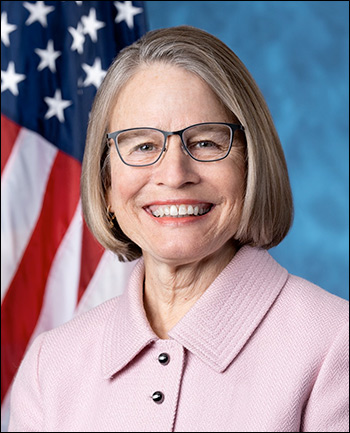
New Jersey Rep. Rep. Bonnie Watson Coleman (NJ-12)

Yesterday, saying “it’s time to pass the torch,” six-term Rep. Bonnie Watson Coleman (D-Ewing Township/Trenton), 80, announced that she will not seek re-election next year.

Prior to her election to the US House in 2014, she served 17 years in the New Jersey General Assembly, four years as Majority Leader. From 2002-06, Watson Coleman chaired the New Jersey Democratic Party.

The Garden State’s 12th District, which includes the capital city of Trenton, Princeton University; and North, East, and South Brunswick; is reliably Democratic. The Dave’s Redistricting App statisticians calculate a 56.5D – 43.5R partisan lean.

The central New Jersey district was at one time a Republican domain but redistricting and a change in voting patterns have yielded Democratic representation since the beginning of 1999. Therefore, Rep. Watson Coleman’s successor will almost assuredly come from winning what promises to be a hotly contested Democratic primary.

The Watson Coleman retirement means 39 seats will be open in 2026, not counting the CDs headed to special elections in Tennessee and Texas, along with New Jersey’s 11th District seat when Gov-Elect Mikie Sherrill (D) resigns from the House.

From the group of 2026 open seat members, Rep. Watson Coleman becomes the 15th Democrat not to seek re-election and the 11th to retire from politics. The other 28 are seeking a different office or moving to a congressional district other than the one they currently represent.

Michigan Senate

The Rosetta Stone polling organization released the results of an independent poll that finds Republican former Rep. Mike Rogers polling ahead of all three Democratic US Senate contenders.

Rogers, who served seven terms in the House before retiring, returned to enter elective politics with his run for the Senate in 2024. In an open-seat battle with then-Rep. Elissa Slotkin (D), Rogers came within 19,006 votes from just under 5.6 million votes cast of winning the race, a percentage margin of 48.6 – 48.3.

The Rosetta Stone poll, released over the weekend, (Oct. 23-25; 637 likely Michigan general election voters) finds Rogers, who is virtually unopposed for the Republican nomination, ahead beyond the polling margin of error individually against each of the Democrats: Rep. Haley Stevens (D-Birmingham), state Sen. Mallory McMorrow (D-Royal Oak), and former Wayne County Health Director Abdul El-Sayed.

Opposite Rep. Stevens, Rogers leads 47-40 percent. If Sen. McMorrow was his opponent, the Rogers edge would be a similar 46-39 percent. The Rogers’ advantage grows if El-Sayed becomes his general election opponent. Under this scenario, the former Congressman posts a 45-31 percent margin.

Other polls have shown this race much closer, but this is the first publicly released statewide poll since June.

Rosetta Stone tested the Democratic Senate primary, but the sample size of only 287 likely Democratic primary voters indicates the results should be considered statistically insignificant in a state the size of Michigan.

Texas Senate

New polling in the Texas Senate Democratic primary again shows trouble for 2024 Senate nominee Colin Allred.

The Impact Research survey conducted for the James Talarico Senate campaign (Oct. 23-29; 836 likely Texas Democratic primary voters; live interview & text) finds state Rep. Talarico taking a 48-42 percent lead over Allred.

In a late September survey from the University of Houston and Texas Southern University, the academic pollsters found Allred lagging in last place if the Democratic field consisted of he, Rep. Jasmine Crockett (D-Dallas), former El Paso Rep. and statewide candidate Beto O’Rourke, and state Rep. Talarico. For her part, Rep. Crockett says she is considering the Senate race. Crockett has led several Democratic statewide polls.

It has been known for some time that the Republican Senate primary would be a hard-fought contest between four-term incumbent Sen. John Cornyn, Attorney General Ken Paxton, and recently entered Rep. Wesley Hunt (R-Houston). Now, however, analyzing the available polling data leads to the conclusion that the Democratic primary appears just as competitive as the Republican contest.

Rep. Nancy Pelosi to Retire

Nancy Pelosi announced yesterday that she will not seek re-election to Congress. Watch the video on X here: Nancy Pelosi announces retirement. (Or click on the image above to see the video posted to her X account. Her announcement comes at 4:45 in the video.)

By Jim Ellis — Friday, Nov. 7, 2025

House

Former House Speaker Nancy Pelosi’s announcement yesterday morning that she will retire when the current Congress ends has taken center stage, politically.

Nancy Pelosi was first elected to Congress back in 1987 when she won a special election to replace the late Rep. Sala Burton (D-San Francisco). Burton ran for and was elected to the seat in 1983 when her husband, then-Rep. Phil Burton (D) suddenly passed away.

Before coming to Congress, Pelosi had been the California Democratic Party chair. She grew up, however, in Baltimore, where her father, Thomas D’Alesandro, was the city’s Mayor. Therefore, her introduction to elective politics came at a young age.

At the end of next year, Rep. Pelosi will have served 39 years in the House, and eight of those as Speaker. She became the first, and only, woman to hold that post when the Democrats regained the House majority in 2007 after a 12-year hiatus from power.

Rep. Pelosi would then take a step back to Minority Leader in 2011 when Democrats lost control of the House. She returned to the body’s top post in 2019 and held the Speakership until the Democrats again lost the majority in 2023. At that point, she retired from the House leadership but remained as a regular member.

This year, Rep. Pelosi’s political outlook back home became more challenging. While she’s had opponents in every election none had been substantial, meaning she was able to record landslide wins every two years.

When Sakat Chakrabarti, who quarterbacked Alexandria Ocasio-Cortez’s (D-NY) upset win in 2018, announced his intention to challenge the former Speaker in the 2026 Democratic primary most believed he was not a substantial threat to defeat Pelosi. His personal wealth and track record with AOC’s upset campaign, however, gave him a modicum of credibility that no other Pelosi opponent had commanded.

The political situation became even more intriguing last month when three-term state Sen. Scott Weiner (D-San Francisco) announced that he would also enter the race, presumably to challenge Pelosi. The move was a surprise since it was assumed that Sen. Weiner, who represents even more of San Francisco than does Pelosi because California state Senate seats are bigger than congressional districts, would wait until she retired to run for Congress.

Some believed the Weiner move was a ploy to encourage the Congresswoman to retire. Most believed he would have backed off of the challenge should she have decided to run again. Had Weiner moved forward, and with Chakrabarti also in the race with the goal of building himself a local political base, the campaign would have become significant.

A race against this pair, even though her chances of achieving victory were high, promised to be a difficult political run that would have taken a toll.

Because there is little disagreement regarding the issues among Pelosi and her two opponents, much of the campaign would have concentrated on her age (86 at the time of the next election), and that San Francisco needed a new Representative who could build seniority for the long term.

Whether he was forcing the retirement issue or would have truly challenged her, the end result spun in Sen. Weiner’s favor, and he is now the heir apparent for the seat.

All things considered, the time appeared right for Pelosi to exit the political stage and begin her retirement after a very long career in the public eye.

With Rep. Pelosi leaving the 11th District, it means that there will be 38 open US House seats for the 2026 election to date, after the two special elections in Tennessee and Texas are filled. Like almost all other opens from both parties, CA-11, which changes little under the new California map, will be another safe seat for the incumbent party.

Considering that California employs the jungle primary system where the top two finishers advance to the general election irrespective of political party or percentage attained, we could easily see two Democrats advancing from the state’s June 2nd open primary.
Rep. Michael McCaul to Retire

By Jim Ellis — Wednesday, Sept. 17, 2025

House

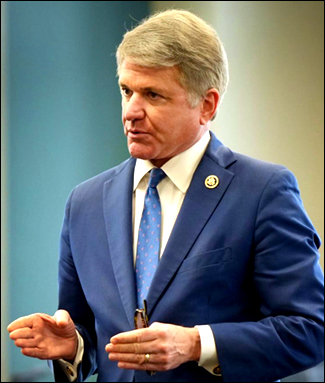
Congressman Michael McCaul (R-Austin)

The House retirement list continues to grow. Late last week we saw Texas US Rep. Morgan Luttrell (R-Magnolia) announce that he would not seek a third term, and now a veteran Lone Star State Congressman, Michael McCaul (R-Austin), will also retire once this Congress adjourns.

Over the weekend during a television interview, Rep. McCaul announced that he would not seek a 12th term in the House. He was originally elected in 2004 and rose to chair two full committees, the Committee on Homeland Security and House Foreign Affairs.

McCaul served his full term-limited allotment of six years heading the Homeland Security Committee. Though he chaired the Foreign Affairs panel for only two years, he was the Ranking Minority Member for the previous four. Under Republican House Conference rules, the combined position of Chairman and Ranking Member cannot exceed six years.

Congressman McCaul had been thought of as a potential Texas statewide candidate over the years but never launched such a campaign. He now plans to pursue interests outside of elective politics when his current congressional term ends at the beginning of 2027.

The combined retirement announcements of Reps. Luttrell and McCaul mean that at least seven of Texas’ 38 congressional seats will be open for the 2026 election. Rep. Lloyd Doggett (D-Austin) is retiring, assuming the new Texas map survives legal challenges, and Rep. Chip Roy (R-Austin) is running for state Attorney General. The Houston-anchored 18th District is vacant due to the death of Rep. Sylvester Turner (D). The new redistricting map created three new open seats, Districts 32 and 33 centered in Dallas County and District 35, anchored in San Antonio.

Overall, the McCaul retirement announcement moves the national open House seat count to 32, including 18 Republican held seats, 11 Democratic, and the three new Texas map districts. Though the open list is expanding, the general election competition within these districts remains light. Still, only two opens, MI-10 (Rep. John James-R) and NE-2 (Rep. Don Bacon-R), can be ranked in the toss-up category. Competitive primaries, however, will occur in all congressional openings.

The open-seat list will soon recede to 29 once special elections are held in Arizona (7th District; Sept. 23), Tennessee (7th District; Oct. 7 special primary; Dec. 2 special general election), and Texas (18th District; Nov. 4 jungle primary; runoff to be scheduled after it becomes clear that no one receives majority support in the initial vote).

The new TX-10 District begins in western Travis County, where McCaul resides, and then moves through a strip in northern Travis where it connects to the rest of the district. Moving east, the new 10th annexes 10 whole counties and part of Warren County all located east of Waco and north of the Houston metro area. Included within this group is Brazos County, which houses Texas A&M University.

We can expect a crowded 10th District Republican primary with the winner claiming the seat in November of 2026. The new 10th is rated safely Republican. President Trump carried the region over Kamala Harris with a 60-38 percent margin according to calculations from The Down Ballot political blog statisticians.

The Texas candidate filing deadline is Dec. 8 for the March 3, 2026, Lone Star State primary. Should no candidate secure a majority in the initial election, which is likely for all of the state’s seven open congressional seats, a runoff contest between the top two finishers is scheduled for May 26, 2026.

Rep. Morgan Luttrell to Retire

By Jim Ellis — Monday, Sept. 15, 2025

House

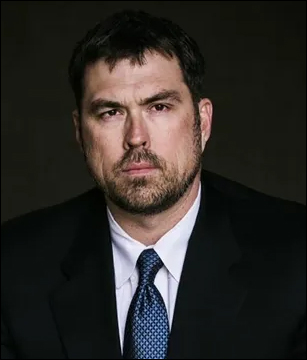
Two-term US Rep. Morgan Luttrell (R-Magnolia, Texas)

Just after a vacant seat is filled with newly elected Virginia Rep. James Walkinshaw (D-Fairfax) was sworn into office, another US House member has announced his retirement.

Two-term Texas Rep. Morgan Luttrell (R-Magnolia) announced his desire to return to the Lone Star State full-time and therefore will not seek a third term next year. In his retirement statement, Rep. Luttrell said, “I’m not walking away from service, and I’m certainly not walking away from the fight. I’m choosing a different path – one that allows me to stay rooted in Texas and focus on the people and places that matter most.”

The Luttrell surprise adds yet another open seat to the Texas 2026 election ballot, in a state that already has a great deal of political uncertainty. Both parties now are looking at a competitive US Senate primary, the new delegation redistricting map faces legal challenges, and several congressional incumbents, particularly on the Democratic side, are unsure of where, or even if, they will seek re-election.

In the Senate race, four-term incumbent John Cornyn faces a serious primary challenge from three-term Attorney General Ken Paxton in a race that is closing. Before, Sen. Cornyn was trailing badly. While it appeared that former Congressman and 2024 US Senate nominee Colin Allred would have an unencumbered path for the ’26 Democratic nomination, he must now face a serious primary challenge from Austin state Rep. James Talarico who is considered a major rising political star within the party.

On the congressional map, the delegation now sees six open seats from a total of 38 districts. Joining Rep. Luttrell in not seeking re-election is Rep. Chip Roy (R-Austin) who is running for state Attorney General. Their moves create open 8th and 21st District races next year.

Democratic Rep. Sylvester Turner passed away earlier in the year, and a special election will be held to replace him in November. Even this situation is not without confusion since the eventual special election winner will have to turn around and face veteran Rep. Al Green (D-Houston) in a Democratic primary election just weeks after winning his or her own seat in a new 18th CD where Mr. Green already represents two-thirds of the constituency.

Additionally, the new congressional map creates three new districts, in the Dallas area, Houston, and the San Antonio region. This leads to the potential pairing of several incumbents in each place.

In all, we are likely to see competition in either the primary or general election in at least 11 of the state’s congressional districts, the US Senate primary and general election, in addition to several open statewide races and Gov. Greg Abbott (R) seeking re-election to a fourth term.

In Rep. Luttrell’s 8th CD, we can expect to see a very crowded and competitive Republican primary. The 8th had typically been anchored in Montgomery County, a populous municipal entity located just north of Houston’s Harris County. Under the current map, less than half of Montgomery County is in the 8th with over half of the constituency in western Harris County.

Under the new map, the new 8th maintains about two-thirds of the current constituency but moves deeper into Harris County and adds some further rural regions. In both cases, the 8th will be a safely Republican seat and Rep. Luttrell’s successor will be determined in the succeeding Republican primary election.

Morgan Luttrell was first elected to Congress in 2022, which was his first run for public office. The Luttrell name became famous due to Rep. Luttrell’s brother, Marcus Luttrell and his military heroics. The book and movie, Lone Survivor, is Marcus Luttrell’s personal story as the sole survivor of Operation Redwing and the desperate battle in the mountains that led, at the time, to the largest loss of life in Navy SEAL history. Rep. Morgan Luttrell, Marcus’s twin brother, also served as a Navy SEAL for seven years until being medically retired in 2014 for a severe traumatic brain injury and spinal cord injury he sustained in a helicopter crash in 2009.

Will Iowa Sen. Joni Ernst Run in 2026?

By Jim Ellis — Friday, July 18, 2025

Senate

Iowa Sen. Joni Ernst (R)

There has been much public speculation as to whether two-term Iowa Sen. Joni Ernst (R) will seek re-election next year, and such talk has heightened because of circumspect actions emanating from the incumbent.

On a local radio show this week, however, Sen. Ernst appeared to tamp down the rumors, indicating that such talk is “titter tatter.” The Senator further said an announcement is “coming in the fall,” but stopped short of saying she would make a declaration of candidacy. For the record, she has hired a campaign manager for the ’26 election cycle.

Sen. Ernst was first elected in 2014 with a 52-44 percent win over then-Rep. Bruce Braley (D). Ernst, then a state Senator, began that race as an underdog but built a strong campaign, took advantage of a favorable Republican election cycle, and won going away.

Six years later, she was a Democratic target and faced Des Moines real estate business executive Theresa Greenfield, who had more in the way of campaign resources and led the Senator in polling throughout most of the race. In the end, Sen. Ernst again finished strong and pulled away to record a victory exceeding six percentage points.

Early this year when questions abounded whether she would support then-Defense Secretary designate Pete Hegseth, rumors were flying that President Trump’s Iowa leaders were attempting to convince Attorney General Brenna Bird to challenge Sen. Ernst in the Republican primary.

After Ernst announced for Hegseth, which seemed to be the key proclamation that tipped the confirmation process in his favor, such primary challenge talk died down. Sen. Ernst, as did most Republicans, then supported every other Trump Administration nominee.

As a result, and at least for now, it does not appear that Sen. Ernst is threatened with a serious primary challenge, though she does face several opponents considered as minor candidates.

Preparing for the 2026 general election, this year appears differently. While there is talk that her re-election could become competitive, she is nowhere near the top of the Democratic conversion opportunity list, nor do the Democrats have a candidate who should be considered top-tier at this time.

State Sen. Zach Wahls (D-Des Moines), state Rep. J.D. Scholten (D-Sioux City), and Chamber of Commerce executive Nathan Sage have announced for the Senate. Of the three, Sen. Wahls is viewed as the strongest (Scholten has previously lost two congressional campaigns) but the eventual party nominee will have to win a competitive June Democratic primary before being in position to develop a credible bid against Sen. Ernst.

A viable challenge may unfold, but the type of general election campaign that can seriously threaten a multi-term incumbent in a state where the most recent voting trends are in the incumbent party’s favor, such as in Iowa, appears improbable.

Some, though, are pointing to Sen. Ernst’s 2nd quarter fundraising. While she raised just over $720,000 according to a report in The Down Ballot political blog, that dollar figure is only about 65 percent of the amount she garnered in the 2020 race during the commensurate time frame. Her cash-on-hand, however, appears strong — over $3.4 million for a race in a state without an expensive media market.

The fundraising data can also be explained not as a clue toward incumbent retirement, but rather illustrating that in 2020 Sen. Ernst was running her first re-election campaign and was considered a top-tier Democratic target. Neither of those points are true today.

Should the Senator reverse what now appears to be a course toward re-election, the Republicans have an ace in the proverbial bullpen. Three-term Rep. Ashley Hinson (R-Marion/Cedar Rapids), a former local news anchor, has secured what had been a marginal political district featuring one of Iowa’s most Democratic metro areas. With more than $2.8 million in her own campaign account and not facing serious re-election pressure, Rep. Hinson is in position to quickly step in and fill the Senate void should Sen. Ernst ultimately retire.

In terms of the Hinson House seat, Republicans have a backup for this incumbent, too. Cedar Rapids Mayor Tiffany O’Donnell won her current position in the Democratic heart of Hinson’s 2nd Congressional District.

While speculation about Sen. Ernst’s future will continue until she makes a definitive re-election declaration, Republicans are in a very favorable position to hold the Iowa Senate seat regardless of the current incumbent’s eventual career decision.

Pennsylvania’s Rep. Evans to Retire; Rep. Johnson Enters Governor’s Race

By Jim Ellis — Thursday, July 3, 2025

After a long period of stability regarding House open seats, three new member announcements occurred just this week.

We covered Rep. Don Bacon’s (R-NE) retirement decision yesterday, and now we see Rep. Dwight Evans (D-PA) also headed for retirement and South Dakota at-large Rep. Dusty Johnson (R) declaring his candidacy for Governor.

PA-3

five-term Rep. Dwight Evans (D-Philadelphia)

Five-term Rep. Dwight Evans (D-Philadelphia)

After battling the after-effects from a stroke in 2024 that kept him from participating in congressional action for better than half a year, five-term Rep. Dwight Evans (D-Philadelphia) announced that he will retire at the end of the current Congress. Evans was first elected to his federal post in 2016 after serving 36 years in the Pennsylvania House of Representatives.

Pennsylvania’s 3rd District is fully contained in Philadelphia County and splits Philadelphia city with Rep. Brendan Boyle’s (D) 2nd District. PA-3 is heavily Democratic, so Rep. Evans’ successor will be decided in the 2026 Democratic primary.

According to the Dave’s Redistricting App statisticians, the district’s partisan lean is 90.3D – 8.3R, obviously making it the safest Democratic district in the state. Not surprisingly, President Trump ran poorly here, losing to Kamala Harris in 2024 with an 88-11 percentage spread. In 2020, the gap was even larger as President Biden carried the district with a 90-9 percent margin.

The district is 51 percent Black, making it the only voting age population majority minority congressional seat in Pennsylvania. With a 3rd District voter registration of 77.8% Democratic and 10.0 percent Republican, a crowded Dem primary is expected and will decide which individual succeeds Rep. Evans. Next year’s Keystone State primary is scheduled for May 19.

SD-AL

On Monday, four-term at-large South Dakota Rep. Dusty Johnson (R-Mitchell) announced that he will enter the 2026 Governor’s race next year, a move that had been expected. In fact, Johnson’s move was so widely telegraphed that state Attorney General Marty Jackley (R) declared he would run to succeed the Congressman even before the official gubernatorial campaign announcement occurred.

The South Dakota Republican primary will be interesting in that Rep. Johnson is likely headed for a match against the now-sitting Republican Governor, Larry Rhoden. Once then-Gov. Kristi Noem resigned to become US Homeland Security Secretary, Rhoden, then the state’s Lieutenant Governor, ascended into the state’s chief executive position.

While he has not yet formally announced if he will run for Governor, it is expected that Rhoden will soon declare his official candidacy. Also in the race is state House Speaker Jon Hansen (R-Dell Rapids) and wealthy conservative businessman Toby Doeden.

The South Dakota Republican primary, scheduled for June 2 next year, will very likely decide the state’s next Governor. The last time Democrats claimed the Mt. Rushmore State Governorship was in the 1974 election.

Additionally, South Dakota is a runoff state. If no primary candidate receives at least 35 percent of the vote, a secondary election will be held. Next year, the runoff date, if necessary, will be July 28.

Johnson was first elected to the House in 2018 after serving as former Gov. Dennis Daugaard’s chief of staff. His first elected office, attained at age 28, was for a seat on the South Dakota Public Utilities Commission.

Considering the latest developments, the House open seat count now moves to 19, with 10 Democratic and 9 Republican seats in the category.

Three of the opens, because of Reps. Raul Grijalva (D-AZ), Sylvester Turner (D-TX), and Gerry Connolly (D-VA) passing away, will be filled in special elections later this year. Replacements for the remaining 16 seats will be decided during the regular election cycle.

Tennessee Rep. Mark Green (R-Clarksville) says he will resign from the House once the “One Big Beautiful Bill” is enacted. When he leaves Congress, the open seat count will rise to 20.

In those 16 regular election open seats, only three are coming because the incumbent is retiring from elective politics. Seven members are running for US Senate and six, like Rep. Johnson, are competing in their state’s respective gubernatorial election.

Minnesota Sen. Tina Smith to Retire

By Jim Ellis — Friday, Feb. 14, 2025

Senate

Minnesota Sen. Tina Smith (D)

Yesterday, Minnesota Sen. Tina Smith (D) surprisingly announced that she will retire when the current term expires and not seek re-election in 2026.

Sen. Smith, in an open letter stated that ” … as much as I love my work, I’m fortunate enough to be able to say that my work is only part of what makes up my life. And after two decades of hard, rewarding work in public service, I’m ready to prioritize other things — starting with my family.”

Sen. Smith is the second Senate incumbent, and second Democrat, to forgo re-election in 2026. Michigan Sen. Gary Peters (D) last week announced that he would not stand for a third term. Tina Smith, then Minnesota’s Lieutenant Governor, was appointed to the Senate in 2018 after then-Sen. Al Franken (D) resigned under a scandal cloud. She was elected in her own right in 2020, defeating former Congressman Jason Lewis (R) with a closer than expected 49-44 percent victory margin.

Most likely, the early attention about who might run to succeed Sen. Smith will center around Gov. Tim Walz, the 2024 Democratic Vice Presidential nominee. Minnesota has no statewide term limits, and there has already been much discussion as to whether Walz would seek a third term. To date, the Governor has not made public his 2026 political intentions. Now, expect the political conjecture to revolve around whether Gov. Walz will run for the Senate.

Speculation about other potential Democratic contenders will likely include Rep. Angie Craig (D-Prior Lake) and even possibly former Sen. Franken, among others. It is probable that the Democratic political community will be frozen, however, until Gov. Walz makes a decision regarding his own political future.

The Republican side has less obvious candidates since the party holds no statewide positions in the Land of 10,000 Lakes. In fact, the last Republican Senate victory here occurred in 2002 when Norm Coleman defeated former Vice President Walter Mondale after the death of Democratic Sen. Paul Wellstone less than a month before the November election.

Earlier in the week, Jim Schutz, who lost the 2022 Attorney General race by less than a percentage point, indicated that he would consider a potential gubernatorial bid. With a Senate seat now open, Schultz would have to be considered a possible federal office contender.

Speculation will undoubtedly include the state’s four Republican US Representatives: Brad Finstad (R-New Ulm), House Majority Whip Tom Emmer (R-Delano), Michelle Fishbach (R-Regal), and Pete Stauber (R-Hermantown/Duluth). It is probable all will remain in their current positions since a statewide run is a well under 50/50 victory proposition for any Republican candidate.

Another GOP name that may surface is that of former Gov. Tim Pawlenty, who served from 2003-2011. Still only 64 years old, Pawlenty may be in position for a political comeback.

At the end of the day, the Democrats will be favored to hold the Senate seat, but their statewide victory margins are thinning.

Even with Gov. Walz on the national Democratic ticket, the party’s 2024 Minnesota victory margin dropped to 4.2 percentage points in comparison with the result from the previous four years. In 2020, President Joe Biden carried the state with a 7.1 point spread. The state was closer in 2016. Hillary Clinton defeated Donald Trump here with only a 1.5 percent margin. In the immediate previous election cycles the Democratic victory result was much larger. President Barack Obama won Minnesota with 7.6 (2012) and 10.3 (2008) percent point spreads.

The Smith retirement now means we can add Minnesota to the list of highly combative 2026 political battleground states.