Category Archives: Primary

Primary Season Begins Today

By Jim Ellis

texas-primary-election-2018March 6, 2018 — The 2018 primaries begin today, as Texans will complete their voting process for the first-in-the-nation midterm primary.

The Lone Star State political card features the US Senate race, a full compliment of statewide races, including Gov. Greg Abbott (R) beginning his campaign for re-election, along with voters choosing nominees in the 36 US House seats. The delegation’s eight open seats will attract the most attention. Should candidates not receive majority support, run-off elections between the top two finishers in each party will subsequently be held on May 22.

Both Sen. Ted Cruz (R) and Rep. Beto O’Rourke (D-El Paso) are expected to easily win their respective nominations. This will officially begin the nation’s first US Senate general election cycle. Rep. O’Rourke will have the benefit of commanding strong financial resources — he had just under $5 million in the bank at the end of the pre-primary reporting period — because so many national liberal donors are contributing against Sen. Cruz.

The Democratic gubernatorial primary features Dallas County Sheriff Lupe Valdez opposing businessman Andrew White, son of the late former Gov. Mark White (D). Neither have major resources, and the winner draws Gov. Abbott who could top $100 million in spending. The governor is viewed as a safe bet for re-election.

In the 36 House races, 28 incumbents are seeking re-election; 15 of them (a dozen Republicans and three Democrats) have primary opposition, but all are expected to easily win re-nomination.

Continue reading

McDaniel Joins Mississippi Senate Race

By Jim Ellis

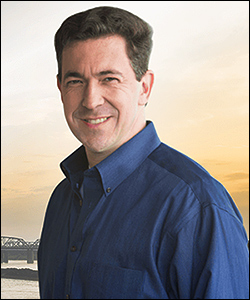
Mississippi state Sen. Chris McDaniel (R-Ellisville)

Mississippi state Sen. Chris McDaniel (R-Ellisville)

March 2, 2018 — Mississippi state Sen. Chris McDaniel (R-Ellisville) announced at a rally this week that he will challenge Sen. Roger Wicker (R) in the June 5 Republican primary. McDaniel’s declaration, which had been speculated upon for months, came just before the state’s candidate filing deadline, which was yesterday.

In 2014, McDaniel came within an eyelash of denying Sen. Thad Cochran (R) re-nomination, as the incumbent was saved ironically through a reported deal made with African American leaders to deliver black votes for the senator in the Republican run-off.

In his original primary against Sen. Cochran, McDaniel actually placed first, but was denied winning the party nomination because he finished 1,719 votes away from attracting majority support. This forced the secondary run-off election. The presence of a third candidate in that primary race, the little-known Thomas Carey, who received 4,854 votes, created the dynamic for the run-off. Had Carey not been a candidate, McDaniel would have successfully won the GOP nomination, and would very likely be serving in the Senate today.

But a race against Sen. Wicker will be much different. Though McDaniel did very well in his challenge to Sen. Cochran, he still failed to win. Therefore, some of the luster his grassroots supporters had for him as a candidate may have faded at least to a degree.

Continue reading

Democrats Maneuver in San Diego

By Jim Ellis

Feb. 27, 2018 — Two noteworthy Democrat events happened in San Diego over the past few days.

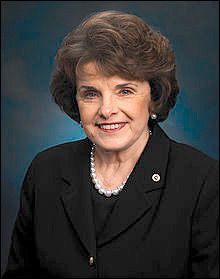
California Sen. Dianne Feinstein (D)

California Sen. Dianne Feinstein (D)

First, the California Democratic Party state convention, meeting in San Diego over the weekend, actually denied veteran Sen. Dianne Feinstein (D) the party endorsement. Though the delegates came close to endorsing state Senate President Kevin de Leon (D-Los Angeles), he also fell short.

In the vote to award the party endorsement for the 2018 US Senate race, it was state Sen. de Leon capturing 54 percent of the delegate votes as compared to only 37 percent for incumbent Sen. Feinstein. A total of 60 percent was needed for endorsement. This is not the first time that the liberal grassroots delegates have turned away from Feinstein. According to an NPR account of the convention proceedings, the party delegates chose then-Attorney General John Van de Kamp over Feinstein in the 1990 governor’s race.

The lack of an endorsement will not hurt the senator’s campaign, however. A January Public Policy Institute of California poll (Jan. 21-30; 1,705 California adults) favored Sen. Feinstein over Mr. de Leon, 46-17 percent, when tested in the jungle primary format. She has an even more commanding lead in campaign resources. The year-end Federal Election Commission disclosure report finds her holding just under $10 million in her campaign account as compared to an embarrassingly low $359,000 for de Leon.
Continue reading

Setting the Stage: The Texas Primary

By Jim Ellis

Feb. 23, 2018 — We’re now inside two weeks before the first-in-the-nation regular midterm primary election, as the Texas early voting process is now well underway in preparation for the March 6 regular primary vote.

texas-primary-election-2018Seventy-six candidates are running for major statewide office — races for governor, US senator, lieutenant governor, attorney general, comptroller, agriculture commissioner, land commissioner, and one slot on the state railroad commission. A record total of 304 Democrats, Republicans, Independent and minor party candidates are vying for their respective party nominations in the state’s 36 US House districts.

Texas is a run-off state, meaning if no candidate in the various primaries receives majority support, the top two finishers will advance to a run-off election on May 22. Since a vast number of races have multiple candidates, including 28 individual candidates alone fighting to succeed retiring Rep. Lamar Smith (R-San Antonio) in his open central Texas CD, the secondary election calendar promises to also have a large slate of late May voting contests.

Two Democrats off to late starts are vying to face Gov. Greg Abbott (R), and though nine candidates are on the Democratic gubernatorial ballot, there remains some possibility that either Dallas County Sheriff Lupe Valdez or businessman Andrew White, the son of the late former Gov. Mark White (D), will emerge as the party’s nominee on March 6.

Continue reading

Alabama Stats;
Minnesota’s New Senator

By Jim Ellis

Dec. 15, 2017 — Predictably, Democrats and media commentators are promoting the premise that Doug Jones’ victory in Tuesday’s Alabama special Senate election is another sign that a Democratic wave is building to transform the minority party into one that wins control of at least one congressional chamber next year. But the actual numbers do not provide evidence for such an analysis.

In actuality, Sen. Ron Johnson (R-WI) may have succinctly and correctly described what happened in the Alabama election, which caused Republicans to lose one of their safest seats in the nation. During an interview with NBC News, Sen. Johnson simply said, “Alabamians didn’t want somebody who dated 14-year-old girls.”

Looking at the actual figures, there is more supporting data for the supposition that Jones’ win is more likely due to Republican defections from former state Supreme Court Chief Justice Roy Moore, rather than a massive increase in Democratic turnout. While the Alabama special did feature a higher turnout than the last midterm election (2014), we also saw this phenomenon occur in two earlier special elections: the Montana at-large and GA-6 congressional contests. Republicans won both of those votes, proving that the GOP base was sufficiently energized in those two places to withstand increased Democratic turnout. But, Alabama doesn’t fit that same model either in the mode of Republican loyalty or an energized Democratic base.

Continue reading

Alabama’s Game Within the Game

By Jim Ellis

Aug. 18, 2017 — Tuesday’s special Alabama Senate Republican primary sent former state Supreme Court Chief Justice Roy Moore and appointed Sen. Luther Strange to the September 26th run-off election, but what can we expect from the next round of voting? Will Judge Moore’s momentum continue to thrust him forward despite being badly out-spent, or will the Alabama and national Republican establishment’s strong support for Sen. Strange allow him to overcome his primary election deficit?

On Tuesday, Judge Moore placed first, capturing 39 percent of the Republican primary vote. Just over 423,000 people voted in the election, which will likely be similar to the Sept. 26 projected participation rate. Most of the time fewer people vote in a run-off than a primary, but recent special elections have yielded a slightly different turnout pattern. Sen. Strange garnered 33 percent in the primary and showed strength in the Birmingham area, though he lost substantially in Alabama’s southern region including the metropolitan areas of Montgomery, Mobile, and Dothan.

The run-off wild card may well be Rep. Mo Brooks’ (R-Huntsville) voters. The primary’s third place finisher tallied 20 percent, translating into more than 83,000 individual supporters. Since he placed first in his congressional district (41 percent), and carried his home county of Madison with majority support, northern Alabama will become critical in determining how the run-off concludes. And, considering that Judge Moore received almost the same number of votes as those who cast ballots in the Democratic primary, it is reasonable to presume that the Republican run-off victor will become a heavy favorite to win the Dec. 12 special general election.

Continue reading

AL Run-off; Curtis Wins

By Jim Ellis

Aug. 17, 2017 — The pre-election polling proved accurate Tuesday, as Alabama former state Supreme Court Chief Justice Roy Moore placed first in the special Senate Republican primary, as predicted, and will advance to a Sept. 26 run-off election.

The Trafalgar Group released the last poll for the special primary cycle. The survey (Aug. 12-13; 870 likely GOP primary voters) found Judge Moore holding 38 percent support, followed by appointed Sen. Luther Strange with 24 percent, and Rep. Mo Brooks (R-Huntsville) dropping back to 17.5 percent. The results were almost precise for Moore, understated Sen. Strange’s support, and slightly missed Brooks’ finish.

With just over 417,000 individuals voting in the Republican primary Judge Moore captured 39 percent of the statewide Republican vote, enough to claim the first run-off position but a long way from securing a majority.

Sen. Strange easily took the second run-off slot with 33 percent finishing well ahead of the third place finisher, Congressman Brooks (20 percent).

Continue reading

Strange vs. Brooks

By Jim Ellis

July 26, 2017 — Though nine Republicans are on the ballot for the Aug. 15 Alabama special Senate GOP primary, the ad war would suggest it’s a contest only between appointed Sen. Luther Strange and US Rep. Mo Brooks (R-Huntsville).

Brooks is advertising heavily and going hard right, a reasonable strategy for an Alabama Republican primary, and his latest ad (above) features his role in helping the shooting victims during the June 14 morning congressional baseball practice at an Alexandria, Virginia park. After Brooks risked his life to help those who had been wounded, a reporter attempted to bring the gun control debate into focus. Brooks’ answer to his question is the ad’s focal point, as well as identifying the shooter as a “Bernie Sanders supporter.”

Sen. Strange, on the other hand, is exclusively targeting Rep. Brooks with hard-hitting negative ads, attacking him for not supporting President Trump during the 2016 national campaign. (See below)

Strange’s tactics tell us that the few published polls suggesting the senator and Rep. Brooks are fighting for the second run-off position are most likely accurate. It also supports the idea that Strange’s own internal polling numbers are giving him similar reports, or he wouldn’t be focusing on just one opponent.

Continue reading

Gillespie Digging Out

By Jim Ellis

June 19, 2017 — As has been discussed since the Virginia gubernatorial primary votes were counted last Tuesday, the election’s end result was much different for both parties than expected even though the favored candidates won. For Republican nominee Ed Gillespie, the primary vote distribution could have only been worse if he had lost.

At week’s end, GOP second-place finisher Corey Stewart announced that he would not challenge the vote totals –- it is unlikely that a recount would have produced enough to overcome his 4,320 statewide vote deficit -– but he stopped short of formally endorsing the new party nominee; though Stewart did indicate that he would vote for Gillespie.

The breadth of his former opponent’s comments indicates that Gillespie has quite a gap to fill in order to attract the Stewart vote base for the general election. These are people Gillespie must have if he is to seriously compete with Lt. Gov. Ralph Northam, who won the Democratic gubernatorial nomination in surprisingly easy fashion.

“The real question is, will [Gillespie] support my supporters? Unless he stands up and takes clear positions on defending our heritage and our history, supporting the president, cracking down on illegal immigration, those who supported me are not going to go with him. This isn’t old-style politics anymore. I just can’t tell 155,000 folks to go ahead and vote for Ed despite the fact that he’s not a fighter,” Stewart said in a post-election Washington Post interview.

https://youtu.be/PPTL9m33SpA

Gillespie had hoped to be in the opposite position that he now faces. Forecasts suggested he would easily win the party nomination, while it appeared that the Democrats were in the closer contest. Possibly the best case Gillespie scenario was seeing a close Northam win after strongly securing his own nomination. Since the lieutenant governor moved far to the left to counter the Bernie Sanders/Elizabeth Warren-supported Tom Perriello, Gillespie wanted maneuvering room to move closer to the center while Northam was trapped on the far left perch of his party.

Continue reading

The Final Results

By Jim Ellis

Sept. 16, 2016 — After two very close New Hampshire Republican primaries were left with remaining votes to count, both received closure.

In the 1st Congressional District, Rep. Frank Guinta (R-Manchester) barely survived his re-nomination challenge. He recorded a 46-45 percent, 649-vote victory over businessman Rich Ashooh. Since the latter man conceded the race, there will be no re-count and Guinta advances to the general election to again face former Rep. Carol Shea-Porter (D-East Rochester) and three independent and minor party candidates.

This will be the fourth consecutive campaign between the two political principals. Guinta defeated Shea-Porter in 2010 and 2014, while she won in 2012. NH-1 has defeated more incumbents during the last 10 years than any congressional district in the country. The 2016 version promises to again be a difficult general election campaign, albeit a shortened one considering the lateness of the New Hampshire primary. Guinta’s 46 percent showing within his own party is clearly a sign of major political weakness, which does not bode well for him in the general election.

Continue reading