Category Archives: Polling

NM-1 Special Election Tuesday

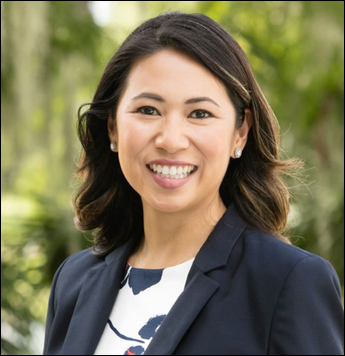
New Mexico state Rep. Melanie Stansbury (D)

By Jim Ellis

June 2, 2021 — The latest in the series of special elections to fill US House vacancies was held yesterday, and the race has an obvious favorite.

On the ballot: state Rep. Melanie Stansbury (D-Albuquerque); state Sen. Mark Moores (R-Albuquerque); ex-Land Commissioner Aubrey Dunn, a former Republican who is running as an Independent; and Libertarian Party nominee Chris Manning.

The major parties nominated their candidates in special convention soon after incumbent Rep. Deb Haaland (D-Albuquerque) resigned to accept her appointment as Interior Secretary in President Biden’s cabinet.

Rep. Stansbury prevailed in a close multi-candidate Democratic convention, ultimately defeating state Sen. Antoinette Sedillo Lopez (D-Albuquerque) in a final round of delegate voting. Many believed winning the Democratic convention was tantamount to claiming the special election. Sen. Moores was an easy winner on the Republican side.

All indications pointed to a Stansbury victory, which is what played out last evening. The only recent publicly released poll before yesterday’s election, one that RRH Elections conducted (May 18-21; 555 likely NM-1 voters, interactive voice response system), found the Democratic nominee holding a 49-33 percent lead over Moores.

Secondly, the district has moved sharply to the left over the past decade, as the 2016 and 2020 presidential elections suggest. In the ’16 campaign, Hillary Clinton defeated Donald Trump here, 52-35 percent. This past November, the Biden margin over ex-President Trump soared to 60-37 percent. The last Republican to represent the 1st District was former Rep. Heather Wilson (R-Albuquerque) who left the House in 2008 to run unsuccessfully for US Senate.
Continue reading

Latest Senate News – Part II

By Jim Ellis

May 28, 2021 — Today, we complete our two-part series pertaining to the latest Senate happenings, covering the latter half of the alphabet from New Hampshire through Wisconsin.

• New Hampshire: If Gov. Chris Sununu (R) decides to challenge Sen. Maggie Hassan (D), then the Granite State will likely become the Republicans’ best national conversion opportunity. In the only two publicly released polls this year testing such a pairing, Gov. Sununu leads in both.

Though New Hampshire has trended more Democratic at the top of the ticket in the past few elections and President Biden scored a better than expected 53-45 percent win here in November, Gov. Sununu has claimed three consecutive elections, including a 65 percent victory last year. The governor indicated he will make a decision about a Senate challenge during the summer. Should Sununu not make the race, Sen. Hassan becomes a clear favorite to win a second term.

• North Carolina: In another key Republican open seat, the North Carolina race appears to feature tough primaries in both parties. For the Republicans, whose eventual nominee will attempt to hold retiring Sen. Richard Burr’s (R) seat, former Gov. Pat McCrory, Rep. Ted Budd (R-Advance), and ex-Rep. Mark Walker reside in the top tier, with the former state chief executive enjoying big leads in early polling.

For the Democrats, the primary appears to be winnowing down to a contest between former state Supreme Court Chief Justice Cheri Beasley, who lost her seat in November by just 401 votes statewide, and state Sen. Jeff Jackson (D-Charlotte).

This will be another toss-up, top-tier Senate race regardless of who emerges from each of the competitive nomination contests.

• Ohio: The Buckeye State’s open US Senate race is beginning to crystallize. The Democratic side is headed for consensus around US Rep. Tim Ryan’s (D-Warren/ Youngstown) candidacy.

The Republicans look to have at least four strong candidates, former Ohio Republican Party chair Jane Timken, ex-state Treasurer and 2012 US Senate nominee Josh Mandel, author J.D. Vance, and possibly state senator and Cleveland Indians baseball club co-owner Matt Dolan (R-Chagrin Falls).

Businessmen Michael Gibbons and Bernie Moreno are also announced candidates, but they appear as second-tier contenders at this time. US Rep. Mike Turner (R-Dayton) remains a potential candidate. It appears that former US representative and 2018 US Senate nominee Jim Renacci is moving toward a Republican primary challenge against Gov. Mike DeWine in lieu of again running for the Senate.

Continue reading

A Special Election Look-In

By Jim Ellis

May 26, 2021 — The Albuquerque, New Mexico vacant US House seat will be filled on June 1, and a new RRH Elections survey finds the Democratic nominee holding a strong advantage. In Texas, There is no mystery as to which party will win the July 27 special runoff election in North Texas to replace the late Rep. Ron Wright (R-Arlington), but which Republican claims the vacant seat is certainly getting more interesting. We take a look at both races.

NM-1

The RRH Elections poll (May 18-21; 555 NM-1 special election voters and those intending to vote, interactive voice response system and online), finds state Rep. Melanie Stansbury (D-Albuquerque) leading state Sen. Mark Moores (R-Albuquerque), 49-33 percent.

The numbers make sense when overlaying the 1st District voting history. Former Rep. Deb Haaland (D-Albuquerque) naturally resigned the seat after being nominated and confirmed as US Interior Secretary in the Biden Administration weeks after winning re-election to a second term. Her victory percentage was 58, after claiming her first term in 2018 with a 59-36 percent margin.

At one time during the century, the 1st was politically competitive – former Rep. Heather Wilson (R-Albuquerque) held the seat for five terms, ending when she ran unsuccessfully for the US Senate in 2008, for example – but a weakened New Mexico Republican Party and a stronger Democratic composition from redistricting has taken the seat off the board.

President Biden carried the district over former President Trump, 60-37 percent, after Hillary Clinton won here in 2016 with a lower but still comparatively strong 52-35 percent spread. Testing President Biden’s current job approval rating, RRH finds him recording a 57:39 percent favorable to unfavorable ratio, which is similar to his 2020 vote performance. This consistency gives the RHH polling data further credibility.

In terms of finances, Stansbury had raised $1.2 million through the May 12 pre-primary reporting period, with $525,000 cash-on-hand as of that date. Sen. Moores, by contrast, had obtained $595,000 with $125,000 in the bank. His receipts total includes a $200,000 personal loan.

Continue reading

Conflicting Electorate Clues

By Jim Ellis

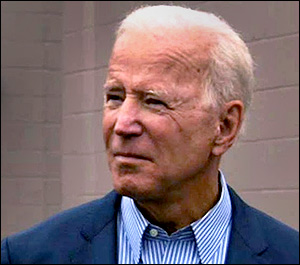
President Joe Biden lingers at the bottom of presidential rankings after his first 100 days.

May 24, 2021 — Data points are routinely being published covering the electorate’s status, leading to various conflicting conclusions. This allows both Democrats and Republicans to promote favorable prediction trends for the 2022 elections.

Presidential job approval is often used as a key prediction benchmark. The Gallup Research organization pioneered presidential job approval tracking, beginning in the 1950s with President Dwight D. Eisenhower, and the tradition continues today.

During that approximate 70-year period, the average performance for a newly elected president in his first 100 days in office is 61 percent favorable. Only those presidents who were elected are included in the Gallup survey. This means that presidents Lyndon B. Johnson, who ascended to the office when John F. Kennedy was assassinated, and Gerald R. Ford, who became president when Richard M. Nixon resigned, are not included.

If you remove, however, the highest rated national leader, President Kennedy (81 percent approval) and the lowest, President Donald J. Trump (41 percent), the adjusted average climbs to 63 percent.

In his first 100 days, Gallup rates President Biden with a 57 percent approval figure, thereby placing him as only the 9th most popular of the 11 newly elected modern era chief executives.

The top three rated presidents in their first 100 days are Kennedy (81 percent), Eisenhower (74 percent), and Ronald Reagan (67 percent). The three lowest are presidents Trump (41 percent), Bill Clinton (55 percent), and Biden (57 percent).

Other surveys rate Biden’s performance somewhat lower, however. In the month of May, eight additional pollsters have tested the president’s job performance and found his favorable score in a tight range, from 51-54 percent with his disapproval percentage spanning from 35 to 48.

The generic polling question is one where a survey respondent is asked whether they would vote for the Republican or Democratic House of Representatives candidate. Right now, we’re seeing the generic numbers span the ideological spectrum, which tells us the great partisan divide is still very much alive. The left-leaning pollsters are seeing big leads for Democrats, while the more conservative-oriented pollsters find the responses very tight.

Continue reading

Another Close Michigan Race

By Jim Ellis

Detroit Police Chief James Craig

May 18, 2021 — As it is becoming clear that retiring Detroit Police Chief James Craig (R) is preparing to challenge Michigan Gov. Gretchen Whitmer (D) next year, Target Insyght, polling for the Michigan Information & Research Service (MIRS), tested the potential general election pairing in a recent study. The results portend another tight Wolverine State campaign.

The TI poll (May 9-11; 800 registered Michigan voters, live interview) finds Gov. Whitmer leading Chief Craig by a six-point, 48-42 percent, spread. More importantly, the survey identified key areas of weakness for the governor, ones that could potentially allow a GOP contender to construct a reasonable path to victory. Chief Craig has not yet announced his candidacy but is expected to do so once he officially retires from the police force on June 1.

Where Chief Craig may have a significant advantage in such a race is his potential ability to draw more votes from the African American community particularly in heavily Democratic Detroit.

While President Biden averaged 79.1 percent of the vote in Congressional Districts 13 and 14 that encompass the city, the Target Insyght poll finds Gov. Whitmer pulling only 64 percent among black voters, while the outgoing police chief attracts 36 percent. In Detroit, 78.3 percent of the population is African American according to the latest publicly available Census Bureau estimates (July 2019).

Gov. Whitmer’s bigger weakness, however, lies in the area of jobs and rebuilding the state’s economy. According to this issue segmentation, voters would favor Chief Craig over Gov. Whitmer by a whopping 63-30 percent margin.

John James, the African American Republican who has run highly competitive campaigns in the last two consecutive Michigan Senate races, was also tested but he doesn’t perform as well as Chief Craig in a general election pairing. While the governor tops Chief Craig by six points, as mentioned above, James trails by 10 percentage points, 49-39 percent.

In the Republican primary, however, it is James who would have a clear advantage. If he and Chief Craig oppose each other for the 2022 GOP gubernatorial nomination, the former man would begin the race with a 36-21 percent advantage in the primary according to this particular survey.

Continue reading

Arizona Sen. Kelly’s Latest Polling

By Jim Ellis

Sen. Mark Kelly (D) won the special election in November to fill the balance of the late Sen. John McCain’s (R) final term in office. He again comes before the voters in this election cycle to stand for a full six-year term.

May 17, 2021 — Arizona pollster OH Predictive Insights went into the field to test the Grand Canyon State’s early electorate as it relates to freshman Sen. Mark Kelly (D). As we remember, Kelly won the 2020 special election to fill the unexpired portion of the late Sen. John McCain’s (R) final term, and next year he stands for a full six-year term.

OHPI surveyed the sampling universe of 935 Arizona registered voters as part of an online opt-in panel during the May 3-5 period. The sample was weighted to properly reflect the partisan division within the state along with gender, age, education, region, and ethnicity segmentation.

The questionnaire first tested the job approval ratings of Arizona’s two Democratic senators, Kelly, and Kyrsten Sinema. Then, seven potential prominent Republicans were individually paired with Sen. Kelly to test his strength against each, one of whom is likely to be his 2022 general election opponent.

Regarding the approval ratings, Sen. Sinema scored a 44:36 percent positive to negative ratio with 10 percent landing in the very favorable category and 15 percent in the very unfavorable classification. Sen. Kelly posted a similar, but slightly worse, 45:38 percent ratio. Like Sen. Sinema, more respondents rated him very unfavorable (23 percent) than very favorable (18 percent). The upside-down extreme ratio suggests an underlying weakness since the very unfavorable outweighs the very favorable for both individuals.

Here’s how potential opponents matched up against Sen. Kelly:

CANDIDATE PERCENT
Sen. Mark Kelly (D) 45%
Kimberly Yee (R) 35%
CANDIDATE PERCENT
Sen. Mark Kelly (D) 43%
Jack McCain (R) 29%
CANDIDATE PERCENT
Sen. Mark Kelly (D) 46%
Karl Lake (R) 35%
CANDIDATE PERCENT
Sen. Mark Kelly (D) 47%
Kelli Ward (R) 36%
CANDIDATE PERCENT
Sen. Mark Kelly (D) 47%
Andy Biggs (R) 36%
CANDIDATE PERCENT
Sen. Mark Kelly (D) 44%
Michael McGuire (R) 35%
CANDIDATE PERCENT
Sen. Mark Kelly (D) 46%
Mark Brnovich (R) 36%

Yee is Arizona’s state treasurer. McCain is the son of the late Sen. McCain. Karl Lake is a former news anchor for one of the major network Phoenix television stations. Ward is the Arizona Republican Party chair who has previously served in the state legislature and run for the US Senate. Andy Biggs is the US congressman from the Maricopa County-anchored 5th District. Michael McGuire is a retired major general who headed the Arizona National Guard. Brnovich is the state’s attorney general.

Continue reading

Rep. Murphy to Challenge Sen. Rubio

By Jim Ellis

Florida Rep. Stephanie Murphy (D-Winter Park)

May 14, 2021 — According to the Axios news site, insiders close to Florida Rep. Stephanie Murphy (D-Winter Park) say that she has made the decision to challenge Sen. Marco Rubio (R) next year and will formally announce her campaign next month. The move had been expected for some time.

Rep. Murphy, a native of the country of Vietnam, was first elected to the House in 2016, defeating veteran Republican incumbent John Mica after the state Supreme Court had re-drawn the Florida congressional districts and made the 7th CD more Democratic. She unseated Rep. Mica 51-49 percent, and then scored re-election victories of 58 and 55 percent in 2018 and 2020, respectively.

A strong fundraiser, Rep. Murphy obtained over $3 million for both of her incumbent re-election campaigns. She ended the 1st quarter 2021 with a cash-on-hand figure of $1.43 million. Sen. Rubio posted $3.9 million in his campaign account during the same reporting period.

Assuming Murphy does enter the race next month, Democrats will have a credible challenger to Sen. Rubio, but one who still must be considered a decided underdog. In 2010, Sen. Rubio, then a state representative, defeated then-governor Charlie Crist, who was running as an Independent, and Democratic Congressman Kendrick Meek by a 49-30-20 percent margin. He was re-elected in 2016 with a 52-44 percent vote spread over then-congressman Patrick Murphy (D).

Florida races, as we know, are always competitive and usually very close, though the state has been trending more Republican over the past several elections. A Rubio-Stephanie Murphy race promises to become a national campaign.

With the Democrats apparently attracting a strong candidate in Florida, it is a good time to review the other key races.

In Pennsylvania, both parties are headed for very crowded primaries as each works to nominate a candidate to hopefully succeed retiring Sen. Pat Toomey (R). Afghan War veteran Sean Parnell entered the Republican primary earlier this week, but his only venture into elective politics was recording a two-point loss to Rep. Conor Lamb (D-Pittsburgh) last November in an Allegheny County suburban district.

Rep. Lamb, himself, may join the Democratic Senate campaign, meaning both parties are going to host political dogfights for the party nomination. In any event, however, the Pennsylvania race will be a top-tier national campaign.

Continue reading