
Monthly Archives: January 2025

DeSantis Appoints Ashley Moody

By Jim Ellis — Friday, Jan. 17, 2025

Senate
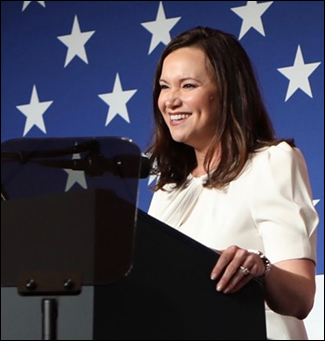
Florida Attorney General Ashley Moody

With Sen. Marco Rubio’s (R) confirmation as US Secretary of State virtually assured, Florida Gov. Ron DeSantis made his announcement yesterday as to who will succeed the Senator when he officially resigns.

As expected, based upon recent predictions, Gov. DeSantis selected state Attorney General Ashley Moody (R) to assume the Senate seat once the position officially becomes vacant. President-Elect Donald Trump will nominate his cabinet choices once he is sworn into office; when certain confirmation hearings are completed, we can expect the Senate to take swift action regarding key confirmation votes.

Sen. Rubio is expected to sail through the process, since he is a well known figure to all Senators. Once he is officially confirmed, the new Secretary of State will resign the Senate seat and Moody will likely be on hand to take the oath of office for her new position. This would mean no lapse in Florida Senate representation.

The same cannot be said for the similar situation in Ohio. Vice President-Elect J.D. Vance resigned from the Senate on Jan. 10, but Gov. Mike DeWine has yet to name a replacement.

It’s possible that the Governor is having trouble filling the seat. Lt. Gov. Jon Husted appears to be his first choice, but stories continue to surface indicating that Husted wants to remain in Ohio to fight in a tough open 2026 Republican gubernatorial primary.

A story appeared midweek that former presidential candidate Vivek Ramaswamy met with the Governor last weekend to discuss the Senate position. This is a surprising development, since Ramaswamy, citing his position as co-director of President-Elect Trump’s Department of Government Efficiency (DOGE), withdrew his name from Senate consideration weeks ago.

Though the chosen individual will literally be handed a Senate seat, the long-term path is not without challenges. Former Sen. Sherrod Brown (D), who new Sen. Bernie Moreno (R) unseated in November, says he is not done with public service and is viewed as a possible 2026 contender vying for the right to serve the balance of the current term.

Brown raised a whopping $103 million for his losing 2024 effort. Considering his long record in Ohio politics, any appointed Senator would be forced to conduct an expensive major campaign versus a very formidable opponent.

Even if successful in 2026, the new Senator would again face the voters in 2028 when this particular seat next comes in-cycle. Therefore, whomever is chosen can expect to be in full campaign mode for a four-year period.

Attorney General Moody is close to Gov. DeSantis and has twice proven she can win a Florida statewide election. In 2018, Moody, a former circuit judge, was elected Attorney General with 52.1 percent of the general election vote. In 2022, she increased her vote share to 60.6 percent. As was explained regarding the eventual new Ohio Senator, Moody will run to fill the balance of her new term in 2026, and then have the opportunity of campaigning for a full six-year term in 2028.

Additionally, Moody will apparently face significant opposition in the next Republican primary. Rep. Cory Mills (R-New Smyrna Beach) said earlier in the week that he will enter the Senate primary regardless of whomever Gov. DeSantis appoints.

The current spate of Florida political musical chairs is allowing Gov. DeSantis, who cannot seek a third term in 2026, to continue shaping a large segment of his state’s future government. Not only did he pick Moody for the Senate, but he will now be able to choose a replacement Attorney General.

Furthermore, with former Rep. Matt Gaetz (R) leaving his 1st District seat, current Florida CFO Jimmy Petronis (R) entered the special election field and is widely viewed as the favorite. Under Florida state law, any officeholder running for a different position must resign his current post.

Since the 1st District special election is scheduled for April 1, Petronis announced that he will leave his current position on March 31. Regardless if Petronis wins or loses the congressional seat, the statewide CFO position will be open at the beginning of April, and Gov. DeSantis will then have the opportunity of filling that position, as well.

Looking ahead, the state of Florida will experience a period of significant political change over the course of the next two years, and Gov. DeSantis will have the power to choose his allies to lead the state long after he leaves office.

Mills Looking to Enter Senate Race

By Jim Ellis — Thursday, Jan. 16, 2025

Senate

Cory Mills (R-New Smyrna Beach) / Photo by Gage Skidmore

Once Sen. Marco Rubio (R-FL) is confirmed as our next Secretary of State he will resign his current position, which potentially launches a wave of Florida political musical chairs.

Gov. Ron DeSantis (R) will choose a replacement Senator once Rubio is officially confirmed. It is expected that the Senator will be one of the first Trump cabinet nominees to complete the Senate confirmation process. He will then immediately resign from his current position upon receiving his vote. At that point, Gov. DeSantis will announce his replacement appointment.

According to a declaration this week, the whoever Desantis appoints as Senator will likely have Republican primary opposition in the next election. Rep. Cory Mills (R-New Smyrna Beach) has said he will enter the Senate primary regardless of whom Gov. DeSantis appoints.

Mills knows he will not receive the appointment. He confirms that the Governor has not interviewed him for the position, as has been the case with other GOP members of the Florida US House delegation. DeSantis, a former Congressman himself, is concerned about the slim Republican majority in the body and will not reduce the margin even further by choosing a House member.

President-Elect Donald Trump has already picked two Florida Representatives for appointments. Former Rep. Matt Gaetz was selected as Attorney General, but his nomination was met with strong opposition in the Senate, and it became obvious that he would not be confirmed. Thus, Gaetz removed himself from consideration for the cabinet position, but after he resigned from the House.

Rep. Mike Waltz (R-St. Augustine Beach) has been chosen as President-Elect Trump’s National Security Advisor and indicated that he will officially resign from Congress on Inauguration Day, Jan. 20. His position does not require Senate confirmation so he can assume his new position immediately upon Trump being officially sworn into office.

Gov. DeSantis has scheduled the two Florida US House special elections concurrently, with the primary election coming already on Jan. 28. The special general for both the Gaetz and Waltz districts will be held April 1. When Rep. Elise Stefanik (R-NY) is confirmed as the US Ambassador to the United Nations, she will also resign from the House. This will take the partisan division down to 217R – 215D, hence the reason that Gov. DeSantis will not consider taking another House member for his Senate appointment.

The slim US House majority, however, is apparently not stopping Rep. Mills from running for the Senate in 2026. The second-term Congressman has already said that he will challenge whoever is appointed in the statewide Republican primary, and fight to win the seat. Doing so will open another Florida US House seat in the regular general election.

The special elections have already caused another opening. Florida CFO Jimmy Petronis (R) is a candidate for the Gaetz seat in the special congressional election and expected to win. Under Florida’s resign-to-run rule, Petronis has relinquished his position, thus giving Gov. DeSantis another position to fill.

Turning to the soon-to-be open Senate seat, betting odds suggest that state Attorney General Ashley Moody (R) will be DeSantis’ choice. She is close to the Governor and has twice proven she can win a Florida statewide election. In 2018, Moody, a former circuit judge, was elected Attorney General with 52.1 percent of the general election vote. In 2022, she increased her vote share to 60.6 percent. If appointed, Moody would run to fill the balance of the term in 2026, and then have the opportunity of campaigning for a full six-year term in 2028.

Now, it appears that she, or another if DeSantis chooses a different individual, will not only have to run in ’26 and ’28, but a 2026 primary challenge will also be added to the succeeding individual’s political card. Therefore, the person chosen will be forced to compete in several statewide election campaigns over a relatively short period thus adding major fundraising pressure to the individual’s substantial legislative responsibilities.

To further complicate the political musical chairs situation, should Gov. DeSantis select Moody, he will then have another appointment to make, i.e., filling her vacated position as state Attorney General. If the Governor chooses a member of the state legislature to fill either the CFO or Attorney General’s position, he will then have to schedule further special elections to replace those individuals.

While 2025 is an off-year for elections, the world of filling political positions either through election or appointment won’t see any down time. With Ohio Gov. Mike DeWine (R) in a similar position regarding choosing a replacement for Vice President-Elect J.D. Vance now that he has resigned from the Senate, the early 2025 political environment is anything but quiet.

New Hampshire May Follow Maine & Nebraska’s Electoral Vote Model

By Jim Ellis — Wednesday, Jan. 14, 2025

States

New Hampshire Congressional Districts

Republican legislative leaders in New Hampshire are floating a bill that would change the Granite State’s electoral vote apportionment formula to one modeled after the systems in Maine and Nebraska.

There, instead of a winner-take-all system to award all of the state’s electoral votes to the winning statewide popular vote general election presidential candidate, the Maine and Nebraska process awards two electoral votes for the statewide victor and one each to the candidate carrying each of the state’s congressional districts. Maine has two CDs, and Nebraska three.

During the Trump era, we have seen splits in both states routinely occur. Trump carried Maine’s 2nd Congressional District in all three of his presidential runs, thus capturing one electoral vote from the state’s total of four even though his opponents claimed the statewide tally. In Nebraska during the past two elections, Democratic nominees Joe Biden and Kamala Harris each clinched the state’s 2nd CD, thus awarding them one electoral vote of the domain’s five.

Because of the system, much greater attention has been paid to those two states, and the effect of a wayward congressional district throwing the national election into a tie during a close national contest has certainly become an enhanced scenario.

The added attention has certainly brought more advertising dollars and campaign expenditures to both Maine and Nebraska. Without the congressional district apportionment system, little attention would have been paid to Nebraska since it is a reliable Republican state, and a great deal less would have been spent in Maine because the state has a consistent Democratic voting history.

New Hampshire is different. Already regarded as a state in play during the most recent presidential elections, going to the congressional district apportionment system would likely enhance its importance.

Since the turn of the century, New Hampshire has voted for the Democratic nominee in six of the seven presidential contests, but the average spread between the two major party candidates in the respective years has been only 4.4 percentage points. In Trump’s three elections, he lost New Hampshire by an average of 3.4 percent.

In the particular elections from 2008 through 2020, the Democratic winner carried both of New Hampshire’s congressional districts with the exception of 2016 when Trump topped Hillary Clinton in the state’s eastern 1st CD. Therefore, in most of the 21st Century elections, the apportionment system would not have changed the national electoral vote matrix. The margins, however, in each of the districts have been close.

The 2024 presidential election totals for New Hampshire’s districts have not yet been published, but it is likely that Harris carried both CDs. She defeated Trump by a 50.7 – 47.9 percent statewide margin, and while the spread is close it is likely enough to see her prevail in both the 1st and 2nd CDs. Further evidence of such is revealed through the Democratic congressional candidates carrying both districts.

Republicans have large majorities in both New Hampshire legislative chambers, 221-177-1 with one vacancy in the House and 16-8 in the state Senate. Sen. Bill Gannon (R-Sandown) is sponsoring the electoral vote apportionment bill. As chair of the Senate Judiciary Committee, the bill has a strong chance of moving out of his committee to the floor with a positive recommendation. Considering the Republicans strong majorities in both houses and with leadership support, the bill has a good chance of becoming law.

Should the proposal become law, it would take effect in the 2028 presidential election. Since the recent presidential elections have all been close, New Hampshire changing to a congressional district apportionment system could well have an interesting impact upon many future national campaigns.

Cooper’s Challenge; Texas Senate Battle; Democrat’s Election Battle; PA-8, WA-4 House News; Governor Races Maneuvering

By Jim Ellis — Tuesday, Jan. 14, 2025

Senate

Former North Carolina Gov. Roy Cooper (R)

North Carolina — Former North Carolina Gov. Roy Cooper (D), who would be the national Democrats’ first choice to challenge Sen. Thom Tillis (R), said this week that he will make a decision about running “in the next few months.” Cooper is also apparently testing the waters for a presidential run in the open 2028 election. Former Congressman Wiley Nickel (D), who did not seek re-election to a second term in 2024 because of an adverse redistricting map, has already declared his intention to challenge Sen. Tillis.

Texas — A new Victory Insights poll of the Texas Republican electorate (Jan. 4-6; number of respondents not released; interactive voice response system and text) finds Sen. John Cornyn (R) trailing state Attorney General Ken Paxton (R) in an early 2026 Republican primary pairing. It has long been rumored that Paxton is going to launch a primary challenge to Sen. Cornyn, a move that Paxton does not deny.

According to the ballot test, Paxton would lead the Senator 42-34 percent, which is a very low support performance for any long-time incumbent. AG Paxton does best with the conservative base, leading Cornyn 55-23 percent among the self-described MAGA segment, and 50-24 percent from the group that describes themselves as constitutional conservatives. Sen. Cornyn rebounds to a 50-15 percent spread among traditional Republicans, and 59-18 percent within the self-described moderate Republican segment. Clearly, this early data suggests the 2026 Texas Republican primary will attract a great deal of coming national political attention.

DSCC — New York Sen. Kirsten Gillibrand has officially been chosen to head the Democratic Senatorial Campaign Committee for the 2026 election cycle. She replaces Sen. Gary Peters (D-MI) who cannot succeed himself since he is in-cycle for the coming campaign. Sen. Gillibrand will be tasked with quarterbacking the Democrats’ efforts to reclaim the majority they lost in 2024.

While the map forces the Republicans to risk what will be 22 seats in the 35 Senate races, which includes two special elections, the odds of Democrats re-electing all 13 of their in-cycle Senators and converting four GOP seats to reach a 51-seat Democratic majority appear long.

House

PA-8 — Former Pennsylvania Rep. Matt Cartwright (D), who just lost his Scranton-anchored congressional seat to freshman Rep. Rob Bresnahan (R-Dallas Township), indicated that he is considering returning in 2026 to seek a re-match. Bresnahan unseated then-Rep. Cartwright with a 50.8 – 49.2 percent majority, a margin of 4,062 votes of 403,314 cast ballots. Cartwright said he will make a decision about running in the next few months.

The FiveThirtyEight data organization rates PA-8 as R+8, so the Bresnahan victory was not a huge upset considering the region’s voter history and that Cartwright’s last two election victories in 2020 and 2022 were close.

WA-4 — Ex-congressional candidate Jerrod Sessler (R) says he will return to challenge Rep. Dan Newhouse (R-Sunnyside) for a third time in 2026. Despite placing first in the 2024 jungle primary, Sessler lost to the Congressman by a 52-46 percent margin even with President-Elect Donald Trump’s endorsement. Rep. Newhouse is one of two remaining House Republicans who voted for the second Trump impeachment.

In 2022, Sessler failed to qualify for the general election, placing fourth in a field of eight candidates with 12.3 percent of the vote. Beginning an early 2026 campaign, Congressman Newhouse will again be favored to win re-election.

Governor

New Jersey — In a 2025 gubernatorial campaign that is already featuring a very competitive Democratic primary to succeed term-limited Gov. Phil Murphy (D), a new election date has been scheduled. Due to a conflict with a Jewish holiday, Gov. Murphy announced he was moving the state primary from June 3, 2025, to June 10.

Already in the Democratic race are two current Representatives, Josh Gottheimer (D-Wycoff) and Mikie Sherrill (D-Montclair), and three Mayors, Sean Spiller (Montclair), Ras Baraka (Newark), and Steve Fulop (Jersey City), along with former state Senate President Steve Sweeney. For the Republicans, 2021 gubernatorial nominee and ex-state Assemblyman Jack Ciattarelli, state Sen. Jon Bramnick (D-Plainfield), and radio talk show host Bill Spadea are the major candidates.

Ohio — This week, Dr. Amy Acton (D), who became a regular media figure in 2020 as Ohio’s Covid chief, announced that she will run to succeed term-limited Gov. Mike DeWine (R). Competitive primaries are expected in both parties with the eventual GOP nominee becoming the favorite for the general election considering Ohio’s recent voting history.

Gov. DeWine’s choice to replace Sen. J.D. Vance (R) when he resigns to become Vice President could affect the Republican gubernatorial lineup. Expect a great deal of action in the Governor’s race once the Senate pick is announced.

Ohio Gov. DeWine Soon to Announce New Senator to Replace J.D. Vance

By Jim Ellis — Monday, Jan. 13, 2025

Senate

Ohio Gov. Mike DeWine (R)

At a news conference at the end of last week, Ohio Gov. Mike DeWine (R) indicated that he will “probably” name a replacement for resigned Sen. J.D. Vance (R) this week. Vance, elected Vice President, resigned on Jan. 10 to prepare for his Inauguration.

There has been much speculation around who Gov. DeWine will choose, and he and his staff members have been tight-lipped throughout the process. Local media reports suggest that Lt. Gov. Jon Husted (R) is the favorite for the appointment, but he has, heretofore, indicated an unwillingness to accept, saying rather that he wants to stay in Ohio to compete in the open 2026 Governor’s race. DeWine is ineligible to seek a third term under the state’s term limits law.

Late last week, however, Lt. Gov. Husted seemed more open to a Senate appointment, saying “we’re considering all of the options,” when asked if he was interested in replacing Sen. Vance.

Whoever the Governor appoints will have to run in a special election to serve the balance of the term in 2026, and then again in 2028 for a full six-year stint when the seat again comes in-cycle. One Democrat waiting in the wings to possibly run again is former three-term Sen. Sherrod Brown, who lost his seat in November to Sen. Bernie Moreno (R). Brown has broadly hinted that his career in electoral politics has not yet come to a close.

Other names have been bandied about. According to a report from Cleveland’s NewsChannel5.com, the other potential options if Husted decides he wants to remain in the Governor’s race include former Ohio Republican Party chair and ex-US Senate candidate Jane Timken, State Treasurer Robert Sprague, former state Rep. Jay Edwards (R) who was chairman of the House Finance Committee, Secretary of State Frank LaRose, and ex-state Sen. Matt Dolan (R). The latter two men were unsuccessful 2024 Senate candidates.

Several Ohio US House members would be considered as potential appointees in a typical year, but not in 2025. With the Republicans having only a current 218-215 majority because of a resignation and a presidential appointment, and another coming when Rep. Elise Stefanik (R-NY) is confirmed as US Ambassador to the United Nations, the scant Republican majority is too small for DeWine and Florida Gov. Ron DeSantis (R) to appoint Representatives to fill their respective Senate vacancies.

Gov. DeSantis will appoint a replacement for Secretary of State-designate Marco Rubio (R-FL) when he resigns from the Senate after his confirmation is secured.

Husted will likely get the appointment if he so desires. Back in 2018 when then-Attorney General DeWine was first running for Governor, Husted, then Secretary of State, and then-Lt. Gov. Mary Taylor were his major Republican primary opponents. When it appeared that DeWine and Husted would split the moderate/centrist Republican vote, possibly meaning that neither would win the primary, Husted offered DeWine a deal.

In his suggested approach, Husted said he would drop down to the Lieutenant Governor’s race and endorse DeWine if Dewine would support him for the secondary position with the two then effectively running as a team. DeWine agreed, and the plan worked.

Though Husted could likely claim the Senate appointment as a political payback if he so chose, the campaign road is not altogether easy. Even with being granted a seat in the Senate, Husted would still have to defend in 2026, and possibly against Sherrod Brown who raised $103-plus million in his losing 2024 effort, and then run again for the full term two years later as mentioned above. This means Husted (and any other appointee) would have to be in constant fundraising and campaign mode realistically over four consecutive years.

Considering President-Elect Donald Trump’s three consecutive victories in Ohio, including his 11-point win in November, DeWine winning in 2018 by five percentage points when polling suggested he would lose by that amount, and Vice President-Elect Vance and Sen. Moreno topping the vote in 2022 and 2024, Ohio has turned consistently red.

Therefore, it is most probable that the newly appointed Senator will be rated as the favorite to win in ’26, and most likely in 2028. Yet, constantly being in campaign mode for a long period of time before a big state electorate will not be easy. Of course, competing in a tough open Governor’s primary and general election is not a sure-fire draw either.

Ohio will again become a significant political state in the coming elections, with the marathon Senate campaign cycles effectively beginning for real as early as this week when Gov. DeWine is expected to reveal who earns his appointment.

Sen. Cornyn Trails in Early Poll

By Jim Ellis — Friday, Jan. 10, 2025

Senate

Texas Sen. John Cornyn (R)

A Republican primary battle between Texas Sen. John Cornyn (R) and Attorney General Ken Paxton (R) has been brewing for months if not years. A new political survey suggests the long-anticipated challenge is about to begin.

A 2025 Victory Insights poll of the Texas Republican electorate (Jan. 4-6, 2025; number of respondents not released; interactive voice response system and text) finds Sen. Cornyn trailing AG Paxton in an early 2026 Republican primary pairing. Sen. Cornyn has repeatedly confirmed that he will run for a fifth term, and Paxton, while not yet publicly committing to challenging the Senator, also does not deny he will make such a move.

According to the Victory Insights ballot test of Texas Republican voters, Paxton would lead the Senator, 42-34 percent, which is a low support number for any long-time incumbent. AG Paxton does best with the conservative base, leading Cornyn 55-23 percent among the self-described MAGA segment, and 50-24 percent from the group that describes themselves as constitutional conservatives. Sen. Cornyn rebounds to a 50-15 percent spread among traditional Republicans, and 59-18 percent within the self-described moderate Republican segment.

Paxton was first elected Attorney General in 2014 and has been the center point of much controversy ever since, yet he continues to politically survive.

He was indicted for SEC violations in his private practice not related to his public service. The federal government held the indictment for years before finally settling the case in 2024. He also faced a mass staff resignation with certain individuals accusing the Attorney General of taking bribes. Paxton’s extramarital affair became public knowledge, and while being impeached in the state House of Representatives last year, he survived a removal from office vote in the state Senate.

Despite his various travails, Paxton has continued to win re-election. He has averaged 54.3 percent of the vote in his three statewide general elections, and 62.4 percent in his three Republican primary campaigns. For his third term in 2022, Paxton was forced into a runoff election to win the party nomination, but easily defeated Texas Land Commissioner George P. Bush by a 66.5 – 33.5 percent whopping majority.

Sen. Cornyn has proved stronger than Paxton in GOP primaries, however. Over his four Senate campaigns, the Senator has averaged 73.5 percent in Republican nomination elections. Cornyn was also elected as Attorney General and to the Texas Supreme Court over his long career. In his four Senate general election campaigns, Cornyn has averaged 56.3 percent of the vote.

Expect this primary challenge to soon launch and last the better part of a year. Texas features early primaries, so the next statewide nomination campaign will culminate on March 3, 2026.

Considering Paxton’s personal history, upsetting Cornyn for the Republican nomination would put the Senate seat in danger for the GOP in the general election.

As we saw in November, a Texas general election can become competitive even though the last time a Democrat won a major statewide race in the state was 30-plus years ago in 1994. Then-Rep. Colin Allred (D-Dallas) raised a huge $94.6 million for his 2024 race against Sen. Ted Cruz (R), and while polling continued to show toss-up results the Democrat still lost by more than eight percentage points.

While Allred proved himself a strong fundraiser and a credible candidate, it wasn’t the year for a Democrat to win a Texas statewide race. The Biden energy policies were harmful to the state’s economy and the southern border situation had a more adverse effect upon this domain than any other. With President-Elect Donald Trump racking up a 13-plus point win in the state, his strongest Texas performance of his three national runs, Allred had little chance of overcoming the continuous political wind blowing in his face.

Against Paxton in a midterm election, however, the situation may change. Should Allred run again, and an intense Republican primary battle could encourage him to try again among other factors, we would see a legitimately competitive general election with an uncertain outcome since the issue matrix is likely to be much different in 2026.

Clearly, this early data and political chatter suggests the 2026 Texas Republican primary will attract a great deal of national political attention, as will the general election. This one early Victory Insights poll notwithstanding Sen. Cornyn must still be rated the favorite to prevail in what promises to be a raucous coming intraparty battle.

Sen. Gillibrand’s Uphill Task

By Jim Ellis — Thursday, Jan. 9, 2025

Senate

New York Sen. Kirsten Gillibrand (D) / Photo by Gage Skidmore

Did the Republicans win enough Senate seats in the 2024 election to develop a sustaining majority? It is a question that New York Sen. Kirsten Gillibrand (D) will now be charged with answering.

This week Sen. Gillibrand was officially appointed as chair of the Democratic Senatorial Campaign Committee (DSCC) and now has the responsibility of engineering her party’s comeback strategy and plan. Though the 2026 map looks to favor the Democrats because they see 22 Republican in-cycle seats versus only 13 Democrats that require protection, the early odds still favor the GOP.

Two more Senate seats are being added to this cycle once Vice President-Elect J.D. Vance (R-OH) and Secretary of State-Designate Marco Rubio (R-FL) resign their Senate seats in the coming days. GOP Governors Mike DeWine (R-OH) and Ron DeSantis (R-FL) will quickly make appointments to fill the seats, but each new Senator will have to run to fill the balance of their respective terms in 2026, and then again in 2028 for a full six-year stint.

With the Republicans winning the Presidency, the Democrats will now be forced to obtain 51 seats to claim majority status since a 50-50 split will keep the Republicans in control because Vice President Vance will have the power to break ties and tip the balance of power. This means the Democrats will have to retain all 13 of their in-cycle seats in the next election before converting four Republican posts.

While such a task appears daunting at the outset of this election cycle, Senate maps in the early going almost always look to heavily favor the party in power. Retirements could change the picture and create some competitive open seats that don’t appear vulnerable at the present time. Looking at the roster, it doesn’t appear that there are many obvious retirement candidates in either party, but personal situations can dictate a change in such status.

Most expect former Majority Leader Mitch McConnell to retire, leaving the Kentucky seat open. Should Gov. Andy Beshear (D) run in an open situation, Democrats would certainly have a strong candidate with which to compete. For the Democrats, New Hampshire Sen. Jeanne Shaheen says she will decide in the coming weeks whether to seek a fourth term. Her 2020 opponent, former Massachusetts Sen. Scott Brown (R) who Sen. Shaheen defeated 57-41 percent, is already talking about mounting another challenge.

Perhaps Gillibrand’s most difficult incumbent defense is first-term Georgia Sen. Jon Ossoff, who is already building a re-election campaign apparatus. Should term-limited Gov. Brian Kemp (R) challenge Ossoff, this will become the Republicans’ best conversion opportunity and prove a key election in determining the next majority.

In terms of vulnerable Republicans, Louisiana Sen. Bill Cassidy may top the list. With the state changing back to a partisan primary system, Cassidy has already drawn a credible GOP challenger in state Treasurer and former Congressman John Fleming. More individuals may enter the Republican primary, thus forcing the possibility of a runoff that could doom the incumbent. Should former Democratic Gov. John Bel Edwards decide to run for the Senate, Sen. Cassidy would then face a tough general election even if he survives the primary challenge.

North Carolina Sen. Thom Tillis (R) says he will run for a third term and another close campaign can be expected. This will certainly be true if former Gov. Roy Cooper (D) decides to run. He will be a top recruitment target for Sen. Gillibrand. This week Cooper confirmed he is considering the Senate race and will decide “in the coming months.” Former Rep. Wiley Nickel (D), who didn’t seek a second term in the House because of an adverse new redistricting map, is already an announced candidate.

Maine Sen. Susan Collins has already said she will run for a fifth term. In 2020, the Democrats spent record sums of money against Collins, even to the point of their candidate, then-state House Speaker Sara Gideon, holding over $9 million in her campaign account simply because there was nothing left to buy. Sen. Collins survived the financial onslaught with a nine-point win.

With Collins back on the ballot and their best available candidate, Rep. Jared Golden (D-Lewiston), unlikely to challenge an incumbent for whom he used to work, especially with an open Governor’s race on the ballot, the Democrats’ task of converting Maine becomes more difficult.

Understanding that Alaska’s Ranked Choice Voting system survived a repeal ballot proposition by just 737 votes, Sen. Dan Sullivan (R) has a potentially more challenging re-election battle. The Democrats’ best potential candidate is just-defeated Rep. Mary Peltola, but an open Governor’s race will likely be more attractive to her since she would capture the party nomination with little opposition. Unless Gillibrand can convince Peltola to run for the Senate, the Democrats face long odds of beating Sen. Sullivan.

Democrats do look like they have a credible potential candidate to challenge Iowa Sen. Joni Ernst (R). State Auditor Rob Sand (D) has won two close statewide elections and is apparently open to running for the Senate. Iowa has turned more Republican during the Trump era, so Sen. Ernst will be difficult to unseat but expect the Democrats to make a major effort here.

The 2026 Senate cycle will be competitive, but with the GOP getting to 53 seats in the 2024 election, and the Democrats now needing 51 to reclaim their lost majority, Republicans begin what should be a difficult election cycle in much better position.

Upcoming Reapportionment A Harbinger of Potential Major Political Shift

By Jim Ellis — Wednesday, Jan. 8, 2025

President

President-Elect Donald Trump / Photo by Gage Skidmore

The current mid-decade population calculations for the coming 2030 census and national reapportionment not only mean a potential major political shift in congressional district locations, but significant change may also come to the next decade’s presidential elections.

Yesterday, we covered the Brennan Center for Justice’s recently released 2030 census reapportionment projection that showed what could become a major partisan flip in the Republicans’ favor. The changes would also alter the presidential campaign strategies for the national elections coming in the ‘30s.

The big changes would include affecting in a major way the electoral vote counts within the Democrats’ two largest voting states of California and New York. The Brennan Center calculations, and those from the American Redistricting Project which released similar but not identical projections in October, see the Democrats losing six electoral votes from the two entities (four down in California; minus two in New York).

Looking at the estimated congressional district gains in the two large Republican strongholds of Texas and Florida (each state would gain four seats according to the BC calculations) adds an even more significant electoral vote increase presumably for a Republican presidential nominee as soon as the 2032 national election.

If the Brennan Center calculations were in effect for the 2024 election, for example, President-Elect Donald Trump’s 312-226 electoral vote victory would have been even larger.

Adding the changes in California, Florida, New York, and Texas along with other states that are projected to gain or lose single seats, the Trump EV victory total would have ballooned to a 322-216 margin. This means the net swing would have been a huge 20 electoral votes just from the population shifts projected for the next census and reapportionment.

To put in perspective just how large a margin is seen in this projected swing, the 2020 census saw only seven congressional districts change states. The result added a net three electoral votes to the Republican total, boosting a starting base of what became a Trump nomination to 235 from his actual 2020 total of 232 EVs.

Looking at the projected 2030 list of 14 states that will gain or lose representation from one to four seats apiece helps illustrate the evolving trends. Among Arizona, California, Florida, Idaho, Illinois, Minnesota, New York, North Carolina, Oregon, Pennsylvania, Rhode Island, Texas, Utah, and Wisconsin, only two of the places, Pennsylvania and Wisconsin (both losing one seat), adversely affects the Republican vote count when overlayed with the 2024 Trump election.

At this point, we can mention that the American Redistricting Project found a slightly different calculation.

This organization projected both Georgia and Tennessee, the electorates from each of which voted for Trump, gaining one congressional seat apiece, while Wisconsin holds firm with an eight-district delegation. ARP then finds New York losing three seats and Florida gaining three. The Brennan Center found New York losing two and Florida gaining four. ARP also projected Illinois losing two seats as compared to the BC calculation suggesting that the Land of Lincoln would lose one.

Obviously, much will change in terms of population shift in the latter part of the current decade to alter the final outcome of the coming 2030 census reapportionment, so the differences between the BC and ARP calculations at this point are negligible.

The core population patterns, however, of great swings shifting away from the Northeast, Midwest, and Pacific Coast to the South and interior West look to significantly favor Republicans, and that trend is unlikely to change.

Taking the ultimate geographical shifts into account, we will see heightened political activity designed to enhance political persuasion in the affected states. Therefore, partisan messaging in the 2026 and ’28 election cycles will become another significant factor in determining whether the 2024 election, as some political observers believe, has launched a national political realignment that may culminate in the next census reapportionment.

Reapportionment Projection Shows Significant State Gains & Losses

California Congressional Districts

By Jim Ellis — Tuesday, Jan. 7, 2025

Reapportionment

Back in October, the American Redistricting Project released a national reapportionment estimate for the upcoming 2030 census, predicting which states would gain and lose congressional seats based upon unfolding population patterns. This week, the Brennan Center released their own reapportionment data, revealing some differentiation with the ARP conclusions.

Obviously, with half a decade to go before a new Census is conducted, no projection can be considered completely accurate because the population growth patterns will undoubtedly change at least to a degree over the next five years. Still, both the similarities and differences between the two projections are interesting to observe.

The similarities are much greater in number. Both organizations see California losing a whopping four seats, dropping the delegation size from 52 seats to 48. If these projections prove true, it will be only the second time in history that the Golden State will have lost representation. The first downgrade occurred in the 2020 census with a reduction of one district.

On the plus side, both data projections suggest that Texas will gain another four seats on top of the two they added in 2020 for a grand total of 42.

The other states that both organizations agree will gain one new seat are Arizona, Idaho, North Carolina, and Utah. Each agrees that the following states will lose one seat: Minnesota, Oregon, Pennsylvania, and Rhode Island.

The Oregon situation is interesting, because it suggests the Beaver State is on a path to relinquish the new seat they gained in the 2020 census. It is virtually unheard of to see a small population state gain in one census cycle but lose in the next.

Under the national reapportionment formula, the small states must show extreme population gains in order to add new seats, but also must experience extreme inhabitant lag in order to lose any of their congressional districts when compared to what happens in the larger states. Thus, Oregon, with a base of five districts and showing such diametrically opposite growth patterns in consecutive census cycles is a situation that has not before occurred in the modern era.

There are several differences between the projections. Both organizations find Florida in position to be another big gainer, however, the ARP sees the Sunshine State adding three new districts, while the Brennan Center believes the number will be four. If the latter calculation holds, Florida will increase its US House delegation size from 28 seats to 32.

While ARP projects Georgia and Tennessee to gain one seat apiece, the Brennan Center sees both holding their current House delegation quantity. In terms of seat losses, ARP sees New York losing three seats, while the Brennan Center projects a net loss of two. ARP also finds Illinois losing two seats, but BC calculates the Land of Lincoln loss count at only one.

The other difference is the Brennan Center projecting a one-seat loss for Wisconsin while ARP believes the Badger State count will remain at the current eight district level.

The Brennan organization also tracked the population shifts by region beginning in the decade of the 1960s to show how much the country’s migration patterns have changed over the course of what would be 70 years if their 2030 figures prove correct.

In the 60s, three geographic regions dominated the nation’s share of inhabitants. The Midwest and Plains states housed 125 congressional districts, the South 124, and the Northeast 117. Following was the West with 52, while the Rocky Mountain State region held only 17.

The 2030 projection shows big gains for the mountains and South. The Rocky Mountain region is expected to more than double its number of congressional districts from their level in the 1960s, growing from 17 to 36 seats. The South would expand by a third to 164 congressional districts, thus becoming the most populous region in the country. The West would increase to 66 from the 52 districts it held in the 60s.

The Midwest would have the largest reduction, going from 125 seats to 88, while the Northeast would see a similar decline, arriving at 81 seats from the 117 CDs they held in the 1960s.

While the 2030 projections will certainly change before the next Census is conducted, the regional patterns will probably be close to the mark. Therefore, we will see the South and West continue to grow with the colder climates in the Midwest and Northeast again attracting fewer inhabitants.

Gubernatorial Campaigns Projected to Affect US House Balance of Power

By Jim Ellis — Monday, Jan. 6, 2024

Governor

Term-limited Alabama Gov. Kay Ivey (R)

As the new Congress begins, election observers are already contemplating how the many open 2026 Governors’ campaigns might affect the razor-thin US House majority.

Looking toward next year’s election, a total of 36 states will host gubernatorial campaigns. In the 19 places where term limits are in effect, we will see open statewide contests. In many of these developing races, US House members are potential candidates. Therefore, protecting the small GOP majority with a large number of open seats becomes an even more difficult task.

Representatives who could run for an open Governor’s position are already rumored or announced in 10 states: Alabama, Colorado, Florida, Kansas, Maine, Michigan, Minnesota, New Jersey, South Carolina, and Tennessee.

Alabama Sen. Tommy Tuberville (R) opting to seek re-election instead of running for Governor opens the field to replace term-limited Gov. Kay Ivey (R).

It is unlikely that Rep. Mike Rogers (R-Weaver/Gadsen) will risk his role as chairman of the House Armed Services Committee to run for Governor, but he is considered a possible candidate. Rep. Gary Palmer (R-Hoover), chairman of the House Policy Committee, is also a potential gubernatorial contender.

Already, polling is suggesting that Rep. Joe Neguse (D-Lafayette/Boulder) is the leading potential candidate to succeed term-limited Colorado Gov. Jared Polis (D). Yet we can expect a lively Democratic primary possibly between Reps. Neguse and Jason Crow (D-Aurora). It is doubtful that any Centennial State Republican House member, largely comprised of freshmen, will jump into the open Governor’s campaign.

Florida Gov. Ron DeSantis (R), being ineligible to seek a third term, leaves a wide-open succession field. The person DeSantis appoints as the new Senator when incumbent Marco Rubio is confirmed as the US Secretary of State may influence who runs for Governor. Rep. Byron Donalds (R-Naples) is the congressional member most often mentioned as having an interest in running for the office. The eventual GOP nominee will have the inside track of winning the next Sunshine State gubernatorial general election.

In Maine, all eyes are on whether Rep. Jared Golden (D-Lewiston) will attempt to replace term-limited Gov. Janet Mills (D). So far, Golden has not provided any hints about his future political plans.

The odd-year New Jersey open Governor race has already attracted two Democratic House members into the 2025 campaign, Reps. Mikie Sherrill (D-Montclair), who leads in early polling, and Josh Gottheimer (D-Wycoff) who enjoys a big edge in fundraising.

At the end of this term, Henry McMaster (R) will be the longest-serving Governor in South Carolina history but cannot run again to succeed himself. South Carolina has a two-term limit, but McMaster ascended to the office from his post as Lieutenant Governor when then-Gov. Nikki Haley resigned to become US Ambassador to the United Nations and did so during a time frame that still allowed him to run for two full terms.

A crowded open Republican primary field will form and could feature two US House members. Both Reps. Nancy Mace (R-Charleston) and Ralph Norman (R-Rock Hill) have indicated they are considering gubernatorial bids. Mace has also not quelled speculation that she could challenge Sen. Lindsey Graham (R) as he seeks renomination for a fifth term.

In Tennessee, several Republican House members are considering a bid for Governor but could be effectively blocked should just re-elected Sen. Marsha Blackburn (R) continue to make moves suggesting that she will run.

Reps. Tim Burchett (R-Knoxville), Andy Ogles (R-Columbia), John Rose (R-Cookeville), and Mark Green (R-Clarksville) have all either indicated they are considering running for Governor or speculation has surrounded them regarding launching such a campaign. Incumbent Republican Bill Lee is ineligible to run for a third term.

While a midterm election cycle typically attracts lower voter interest, 2026 will feature a large number of competitive statewide campaigns. Expect the many open Governors’ races to also ignite a round of political musical chairs in several US House delegations.