
Tag Archives: North Carolina

Primary Money Count – Senate

By Jim Ellis

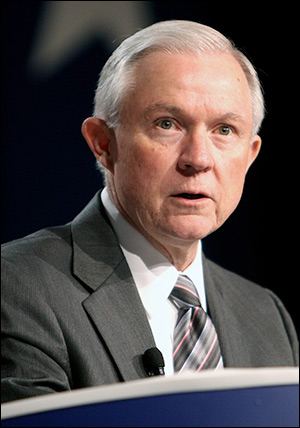
Former Alabama senator, Jeff Sessions (R)

Feb. 7, 2020 — The 4th Quarter campaign disclosure reports are published and today we look at the key early primary Senate states, those that will have an initial vote on Super Tuesday, March 3.

Five states will hold their regular primaries on that day, and four of them have Senate elections. Voters in Alabama, Arkansas, North Carolina, and Texas will take at least the first step in choosing their statewide nominees on Super Tuesday. California, which also holds its regular primary that day does not have a Senate race in this cycle. In Arkansas, Democrats failed to produce a candidate, meaning that Sen. Tom Cotton (R) will head into the general election as a virtually unopposed candidate.

ALABAMA

Alabama hosts a major Republican primary featuring former US attorney general and senator, Jeff Sessions. He is running for the seat he vacated to accept his federal appointment. Sessions is being fiercely challenged, however. Two serious candidates are also vying for the party nomination, US Rep. Bradley Byrne (R-Mobile) and retired Auburn University head football coach Tommy Tuberville. Ex-state Supreme Court chief judge and 2017 Senate special election nominee Roy Moore is back for another attempt, but his previous poor performance and lack of funding has relegated him to lower-tier status.

On the fundraising front, the Federal Election Commission reports find Sessions raising more than $530,000 but has spent more than $812,000. At the end of the year, he held over $2.5 million in cash, but most of those funds were raised during his time as an incumbent Senator.

Coach Tuberville has done an outstanding job of fundraising for a first-time candidate in a crowded field, raising over $1.3 million from individuals and loaning his campaign $1 million. His year-end cash-on-hand (CoH) figure was $1.52 million.

Rep. Byrne has accumulated over $3.3 million for his campaign, including transferring more than $2.2 million from his US House committee. His CoH total is just under $2.1 million.

Continue reading →

Early Senate Primaries – Part I

By Jim Ellis

Jan. 23, 2020 — A total of 35 US Senate races will adorn the various state ballots this year, and the nomination process will begin in five states on Super Tuesday. Voters in Alabama, Arkansas, North Carolina, and Texas will make Senate candidate choices on March 3 since their domains have linked the statewide primary concurrently with the presidential primaries. The remaining Super Tuesday statewide primary state, California, does not host a Senate race in this election cycle.

After Super Tuesday, Mississippi and Illinois will hold Senate primaries later in March. Then, a respite comes until May when six more states’ electorates will choose their candidate slates.

MARCH 3

Alabama: The premier March Senate primary comes in Alabama where former US Attorney General and ex-Senator Jeff Sessions attempts to re-claim the seat from which he resigned to accept his federal appointment. In the subsequent special election to replace Sessions, Democrat Doug Jones was able to win the seat and now stands for a full six-year term.
Sessions, however, faces credible Republican opposition and the top two primary finishers heading to an April 14 run-off election appears probable. Sessions looks to be leading the race and is likely either to face former Auburn University head football coach Tommy Tuberville or US Rep. Bradley Byrne (R-Mobile).
Former state Supreme Court Chief Judge Roy Moore, who lost the special election to Sen. Jones, lags well behind most of the GOP field. Assuming Moore does not rebound to win the nomination, the eventual Republican nominee should become the favorite against Sen. Jones in a state where President Trump will record one of his strongest victory percentages.

Continue reading →

Impeachment Data: Many Polls
Show Georgia Numbers Improving

By Jim Ellis

Jan. 9, 2020 — The Mason-Dixon Polling & Strategy company surveyed the Georgia electorate to test President Donald Trump’s approval rating after being impeached in the House and, as in several other places, his Peach State standing appears slightly better today than it was in the previous year.

Georgia is a critical part of the Trump coalition and one of five base states that must support him if he is to have the necessary vote footing to again win an Electoral College majority. Arizona, Texas, Florida, and North Carolina are the other four entities that voted for the president in close margins back in 2016, are clearly politically competitive today, and must go his way again in 2020.

The Mason-Dixon poll (Dec. 19-23; 625 registered Georgia voters; live interviews) finds the president’s approval ratio within the Georgia respondent group to be 50:46 percent favorable to unfavorable despite being his impeachment. The last time M-D conducted a similar poll, in February of 2018, Trump’s approval index stood at 50:50 percent.

To put his Georgia numbers in perspective, the president’s job approval rating nationally is habitually upside-down. Such is the case today, as the latest daily job approval scores post the president at 40:55 percent (Morning Consult; Jan. 6-7; 2,038 US adults), 48:50 percent (Rasmussen Reports; Jan. 2-6; 1,500 likely US voters), and 44:54 percent (YouGov; Jan. 4-6; 731 registered US voters) positive to negative.

The encouraging Georgia statistical news for Trump is even more significant when considering that the state’s African-American population has outpaced the national black growth rate. It is well known that the African-American segment is the Democratic bedrock vote with near unanimous levels of support for the party’s candidates. The fact that Trump has improved in the face of impeachment and a growing black population means that his standing in Georgia is about as strong as could reasonably be expected considering the tall obstacles before him.

Continue reading →

Tennessee Rep. Phil Roe to Retire

By Jim Ellis

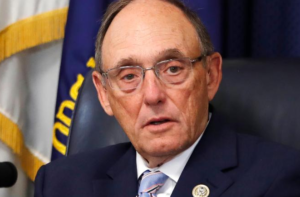
Tennessee Rep. Phil Roe (R-Johnson City/Kingsport)

Jan. 7, 2020 — The House open seat total reached 40 over the weekend as veteran Tennessee Rep. Phil Roe (R-Johnson City/Kingsport) announced that he will not seek a seventh term later this year. Rep. Roe is the former mayor of Johnson City, Tenn., and ostensibly entered federal office when he defeated first-term Congressman David Davis in the 2008 Republican primary.

Roe initially pledged to serve only five terms. He changed his mind and successfully sought re-election in 2018 saying that he had unfinished business as chairman of the House Veterans Affairs Committee. As we know, the Democrats would go onto win the majority that year, thus relegating Roe to the committee’s ranking minority member position. Losing the chairmanship virtually eliminated the foremost reason for him remaining in Congress.

The 1st District is one of the safest Republican seats in the country. The last time a Democrat was elected to the House from easternmost Tennessee dates all the way back to 1878. The longest-serving representative from the region is former Rep. Jamie Quillen (R) who held the seat for 34 years after his original election in 1962.

The 1st District occupies the eastern tail of the Volunteer State. It contains 11 counties and part of Jefferson, a domain it shares with the 2nd District that is anchored in Knoxville. The largest 1st District population centers surround the cities of Johnson City and Kingsport. Sevier County, with a population figure of just under 90,000, is the third largest segment. It contains the cities of Sevierville and the tourist centers of Gatlinburg and Pigeon Forge in the district’s southern sector.

The TN-1 electorate votes heavily Republican. President Trump carried the seat 77-20 percent in 2016. Mitt Romney defeated President Obama here, 73-26 percent, and John McCain recorded a 70-29 percent victory margin in 2008. In his six victorious congressional elections, Rep. Roe averaged 77.8 percent of the vote in what were always lightly contested general election campaigns.

Continue reading →

New House Census Projections

By Jim Ellis

Jan. 3, 2020 — The Census Bureau just released its new population growth estimates for the 12-month period between July 1, 2018 and July 1, 2019. Their data allows us to assess just which states will likely gain and lose congressional districts in 2020 reapportionment, both in terms of the real numbers just presented and for projecting the final count once the decade’s final-year patterns are calculated and the census is actually conducted.

The national population growth rate was analyzed to be 0.5 percent, down from the peak period of the decade, the July 1, 2014 through July 1, 2015 time segment, when the growth factor reached 0.73 percent. The population patterns of movement to the south and west continue, with the northeast actually seeing a population decrease during the aforementioned reported 12-month period that ended on July 1. The Midwest is not keeping up with the national rate of growth, either, but not losing overall population.

Ten states actually lost population during the reported period, led by West Virginia’s 0.7 percent drop. Alaska declined by 0.5 percent, with New York and Illinois each losing 0.4 percent. Hawaii dropped by 0.3 percent, Connecticut, Louisiana and Mississippi 0.2 percent, and Vermont (0.1 percent). New Jersey is the tenth population reduction state, but it lost only 3,835 people from a population of more than 8.9 million individuals for a 0.0004 percent decrease.

The fastest growing states at this point in the decade are Idaho (2.1 percent since July 1, 2010), Nevada, Arizona, and Utah (all at 1.7 percent increase during the same period), Texas and South Carolina (1.3 percent), Washington and Colorado (1.2 percent), Florida (1.1 percent), and North Carolina (1.0 percent).

Continue reading →

The North Carolina Filings

All the best for a wonderful holiday season.
Ellis Insight daily updates will return on Jan. 3, 2020.

By Jim Ellis

Dec. 24, 2019 — Candidate filing in the Tar Heel State closed Friday, and the North Carolina political contestants are now set for the March 3 Super Tuesday state primary. In addition to the presidential race, North Carolina voters will choose nominees for governor, US Senate, 13 congressional races, the state constitutional offices, and state legislature.

No surprises came from the presidential filings, though 38 individuals filed to run for the nation’s highest office. Twenty of the 38 are minor party candidates, however. Fifteen Democrats are running, including all of the major contenders. President Trump draws Republican primary opposition from former Massachusetts governor Bill Weld and Illinois ex-congressman Joe Walsh.

Sen. Thom Tillis sees only minor Republican primary opposition and now is a cinch for re-nomination. Businessman Garland Tucker was expected to run a competitive primary race but decided to end his effort prior to the filing deadline. When Rep. Mark Walker (R-Greensboro) was drawn out of a winnable district in the court-mandated redistricting plan, he began considering entering the Senate race. The congressman, however, ultimately decided to wait a cycle and looks to run for Sen. Richard Burr’s (R) open seat in 2022.

Five Democrats filed for the Senate, but the nomination battle is realistically between former state senator Cal Cunningham, who is the party leadership favorite, and state Sen. Erica Smith (D-Gaston). The eventual Democratic nominee will face Sen. Tillis in what promises to be a competitive general election in a state that has defeated more incumbents in the modern political era than any other place.

Continue reading →

Rep. Mark Meadows to Retire

By Jim Ellis

North Carolina Rep. Mark Meadows (R-Skyland/ Asheville)

Dec. 23, 2019 — Four-term North Carolina Rep. Mark Meadows (R-Skyland/ Asheville), the former chairman of the House Freedom Caucus, surprisingly announced that he would not file for re-election this past Friday, and immediately rumors began circulating that he will soon accept a position in the Trump Administration.

Prospective candidates had less than two full days to decide if they wanted to enter the now open congressional race since he sent his announcement tweet on Wednesday night and candidate filing closed at noon Friday, Dec. 20. Six Democrats had already announced their candidacies, so the onus is on Republican potential contenders to make a quick decision and complete the filing process.

Stronger potential Democratic candidates only had that same small time window to make a decision, as well. Of those six already running no one has yet reported even raising $40,000.

The new redistricting plan changed North Carolina’s 11th District to the degree where just under a quarter of the constituency is new but no more Democratic even though the entire city of Asheville was placed back into the CD.

The 11th District sits in the far western tail of North Carolina, nestled among the bordering states of Virginia, Tennessee, Georgia, and South Carolina. The new 11th District encompasses 16 whole counties along with a part of Rutherford County. The changes included adding all of Buncombe (Asheville) and Avery Counties, while annexing about half of Rutherford County. In exchange, Burke and Caldwell Counties are transferred to Rep. Virginia Foxx’s (R-Banner Elk) new 5th District.

Continue reading →

Impeachment Politics

By Jim Ellis

Dec. 20, 2019 — As the most recent polling from national research sources and in key states shows President Trump gaining political strength, the US House last night, on a virtual party line vote, approved the resolution to send the Articles of Impeachment to the US Senate for trial.


The vote was 229-198, with three Democrats voting against the articles and one Republican-turned-Independent, Michigan’s Justin Amash, supporting the measures. Presidential candidate Tulsi Gabbard, who represents the 2nd District of Hawaii, voted “Present”. Three members, two Republicans and one Democrat, were absent. Rep. Duncan Hunter (R-CA) will soon resign his seat due to pleading guilty to a federal campaign finance charge. Retiring Reps. Jose Serrano (D-NY) and John Shimkus (R-IL) were the others who did not vote. All present and voting Republicans opposed the impeachment measures.

Two of the three opposition Democrats were expected to vote no, Reps. Collin Peterson (D-MN) who represents the strongest Trump district in the country to elect a Democrat to the House, and New Jersey’s Jeff Van Drew who is about to leave his party to join the Republicans. The third no vote came from freshman Rep. Jared Golden (D-ME), who represents the northern district in Maine that delivered its electoral vote to Trump in 2016 even though the state voted for Hillary Clinton. Maine and Nebraska are the only two states that choose to divide their electoral votes.

Two pollsters who had been showing national political support for the impeachment are now projecting a swing toward the opposite conclusion.

The CNN poll, conducted by their usual research partner, the SSRS firm, surveyed 1,005 adult respondents over the Dec. 12-15 period. A total of 45 percent of the respondents favored impeaching the president, while 47 percent said, “they don’t feel that way.” In contrast, their Nov. 21-24 survey found 50 percent favoring impeachment while 43 percent said they didn’t agree with the move. Previously, the CNN polls had reported positions consistently favoring impeachment since late September.

Continue reading →

What The Van Drew Switch Means

By Jim Ellis

NJ-2 Freshman Rep. Jeff Van Drew

Dec. 18, 2019 — We can expect an official announcement coming this week that freshman New Jersey Rep. Jeff Van Drew (D-Dennis Township) will become a Republican. Seeing most of his staff resign over this past weekend is the clearest indication that the speculation surrounding the congressman’s impending political move will in fact occur.

What does Van Drew’s switch mean for the House outlook in 2020? After the 2018 cycle House were finally tabulated, including the 2019 special elections to fill vacancies, the Republicans were tasked with converting a net 18 seats to obtain a bare one-vote majority.

Such a calculation has changed, however. The North Carolina court-mandated redistricting plan, the state’s third in this decade, will cost the Republicans at least two seats, meaning the GOP majority conversion number increases to 20. The Van Drew switch now reduces that number to 19, assuming each party holds their two vacant seats that will be decided in special elections prior to the regular 2020 general election.

Van Drew decided to switch parties due to his opposition to the Trump impeachment plans, but the underlying related reason points to some of his key county Democratic chairmen indicating they would support an intra-party challenge against him. New Jersey political parties are strong, and a Democratic chairman opposing one of his own incumbents would be taken seriously. The party endorsements in this state carry tangible benefits, including a particular advantageous ballot placement. An incumbent not receiving the party endorsement goes a long way to seeing such an office holder replaced.

The Republican move doesn’t solve all of Rep. Van Drew’s political problems, however. Upon hearing the party switching speculation, venture capitalist David Richter stated that not only is he remaining in the Republican primary to face Van Drew, but he is prepared to spend $1 million of his own money to win the nomination. On the Democratic side, college professor Brigid Callahan Harrison announced that she will run for the party nomination, and others are expected to soon follow her lead. It is clear that Rep. Van Drew will face both a competitive Republican primary and general election to secure a second term.

Continue reading →

Deadlines Ahead in Ohio,
North Carolina 2020 Campaigns

By Jim Ellis

Dec. 17, 2019 — Interesting decisions await as candidate filing deadlines are approaching this week in Ohio (Dec. 18) and North Carolina (Dec. 20) for their respective March 17 and March 3 primaries.

The Ohio political situation, originally thought to be relatively mundane without a Senate campaign and little competition within the congressional delegation, may be changing.

In the 1st District, veteran Rep. Steve Chabot (R-Cincinnati), who lost this district in 2008 after first going to Congress in 1995 and then re-claiming the seat in 2010, again faces what will likely be a competitive re-election battle. In 2018, Chabot defeated Hamilton County Clerk of Courts Aftab Pureval by a 51-47 percent count, despite the Democratic nominee spending over $4 million for his campaign. Expected to file for the Democrats this year are healthcare executive Kate Schroder and US Air Force Reserve officer Nikki Foster.

The new potential contest coming onto the political scene emanates from the Youngstown area as Rep. Tim Ryan (D-Warren), who was an early presidential candidate but failed to generate any major attention, appears to be attracting strong opposition for the first time since he won his original congressional election in 2002.

Now reportedly moving toward challenging Rep. Ryan are former Lt. Gov. Mary Taylor, who fared poorly in the 2018 Republican gubernatorial primary, and ex-state Rep. Christina Hagan who scored over 40 percent of the vote against freshman Rep. Anthony Gonzalez (R-Rocky River/Medina) in the last nomination campaign from the neighboring 16th District.

Though both women have the ability to attract people and resources to their political efforts, the 13th CD is reliably Democratic and Congressman Ryan would be tough to dislodge. President Trump fared better than most Republicans here in 2016, but still lost 44-51 percent. President Obama, in both 2008 and 2012, topped 62 percent and Rep. Ryan has averaged 67.8 percent of the vote over his nine-term congressional career.

Still, House members who run for president often have a difficult time in their next re-election effort, so it remains to be seen if a credible challenge against the veteran congressman could develop legs.

Continue reading →