Tag Archives: DSCC

Montana Senate:
The Democrats Stiff Their Nominee

By Jim Ellis — Tuesday, July 28, 2026

Senate

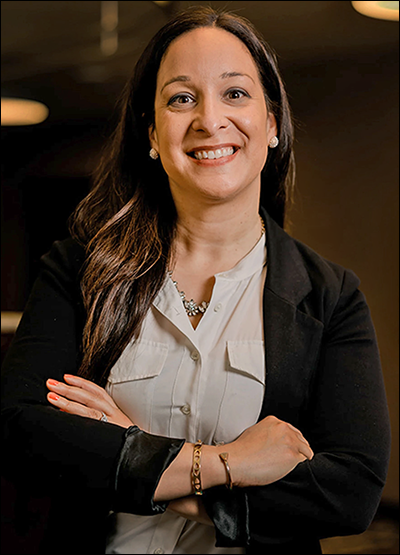
Montana Senate Democratic nominee Alani Bankhead

The Democratic Senatorial Campaign Committee (DSCC) announced yesterday that it will not fund Montana Senate Democratic nominee Alani Bankhead, who won the primary on June 2 with just under 44 percent of the vote against four opponents.

DSCC executive director Devan Barber said in an interview with the Semafor organization that “the DSCC partners with viable campaigns who have a path to victory, which Ms. Bankhead does not.”

Part of the reason for the party apparatus’ funding decision is because Bankhead publicly attacked the party structure for not previously supporting her campaign. Obviously, Bankhead’s strategy of publicly complaining about lacking support did not gain her favor with the party leaders.

The Democrats’ Montana dilemma extends beyond having an obstinate nominee, however. Former University of Montana President Seth Bodnar is running as an Independent and performs significantly better against Republican nominee Kurt Alme, a former US Attorney, than does Bankhead. With both Bankhead and Bodnar on the ballot, Alme holds a clear advantage.

A new poll from Tavern Research illustrates the situation. The Tavern survey (July 23-27; 517 likely Montana general election voters; online) finds Alme leading both Bodnar and Bankhead on an isolated ballot test, 49-27-24 percent.

In a hypothetical one‑on‑one race between Alme and Bodnar, the Republican leads only 51-49 percent (the absence of undecideds suggests respondents were pushed to choose). When Bankhead is tested head‑to‑head with Alme, the Republican’s advantage expands to 59-41 percent.

The problem for Bodnar and the Democrats is that Bankhead, as the party nominee, will remain on the ballot regardless of whether she receives institutional party support. Complicating matters further, Libertarian pharmacist Kyle Austin is also a qualified candidate.

In a full ballot test including Alme, Bodnar, Bankhead, and Austin, the Republican leads 49-25-24-2 percent, respectively. With all four candidates appearing on the ballot in November, the placement structure clearly favors Alme.

This situation mirrors developments in Nebraska, where Democratic leaders prefer to support an Independent rather than their own nominee. In Nebraska, the national Democratic leaders have a compliant Senate nominee and a Democratic state party that is willing to step aside for Independent Dan Osborn.

Cornhusker State Democratic Senate nominee Cindy Burbank last week withdrew from the race before the final ballot placement deadline so her name will not appear on the November ballot.

With both Osborn and Bodnar, these “Independents” would caucus with the Democrats as do Independent US Sens. Bernie Sanders (I-VT) and Angus King (I-ME), thus explaining the party’s interest in backing the Nebraska and Montana Independents.

In Montana, however, Democratic leadership failed to clear the field for Bodnar. As a result, even though Alme is not yet polling as strongly as Republican strategists would prefer, the inability to consolidate support behind an Independent/Democratic fusion candidate effectively guarantees Alme the six‑year Senate term – even if he falls short of majority support.

Alme’s standing is likely to strengthen as the general‑election campaign intensifies and voters become more familiar with him.

It is worth recalling that as the filing deadline approached in March, Sen. Steve Daines (R), who had already filed for re‑election, reversed course and withdrew his candidacy. Standing beside him at the Secretary of State’s office was Alme, who filed for the seat within minutes of the deadline.

The maneuver frustrated many GOP and conservative activists who felt deprived of an open Republican primary. Therefore, the Republican nominee must continue to mend intra-party political fences.

Mississippi’s Sen. Hyde-Smith Favored for Re-Election; DSSC & Primaries; Fine Likely to Replace Waltz in Fla.; A GA-9 Challenge; Conn., NM Governor News

By Jim Ellis — Monday, Feb. 3, 2025

Senate

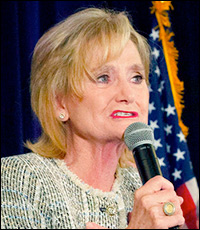
Mississippi Sen. Cindy Hyde-Smith (R)

Mississippi — Ty Pinkins, the 2024 Senate nominee against Sen. Roger Wicker (R) who received 37.2 percent of the vote, says he will challenge Sen. Cindy Hyde-Smith (R) in 2026. Sen. Hyde-Smith was appointed to the chamber when Sen. Thad Cochran (R) resigned due to health issues. She then defeated former US Agriculture Secretary and ex-Congressman Mike Espy (D) in the 2018 special election, and won a full term, again against Espy, in 2020 with a 54-44 percent vote spread. The Senator has announced for a second full term next year and will be the favorite to win re-election.

DSCC — At a fundraising event late this week, new Democratic Senatorial Campaign Committee chair Kirsten Gillibrand (D-NY) broadly hinted that the organization would not back away from getting involved in primaries. She made specific references to targeted contests in Maine, Michigan, and North Carolina. Democrats expect to mount strong challenges against Sens. Susan Collins (R-ME) and Thom Tillis (R-NC), in addition to campaigning to hold their newly open Michigan seat.

House

Florida State Sen. Randy Fine (R-Melbourne)

FL-6 — Though not residing in Florida’s vacant 6th District, state Sen. Randy Fine (R-Melbourne) topped two GOP opponents with 83 percent support to win the special Republican primary to replace resigned Rep. Mike Waltz (R-St. Augustine Beach). Waltz left the House to become President Trump’s National Security Advisor.

Sen. Fine, like Jimmy Patronis in the open 1st District, had the support of President Trump and Sen. Rick Scott. The FiveThirtyEight data organization rates the 6th District as R+28, so Sen. Fine becomes a definitive favorite to claim the seat in the April 1 special general election.

CO-8 — Freshman Rep. Gabe Evans (R-Ft. Lupton/Westminster) has already drawn a Democratic opponent in what will be another very competitive congressional race in northern Colorado’s 8th District. The Colorado Independent Redistricting Commission members drew this CD to be contested in every election, and so far it has performed as designed. Democrat Yadira Caraveo represented the seat in its initial term, only to fall to Evans in the 2024 election.

State Rep. Manny Rutinel (D-Commerce City) announced this week that he will enter the 2026 congressional race thus attempting to limit Rep. Evans to a one-term career. This contest will be a top target 2026 campaign.

GA-9 — Three-term US Rep. Andrew Clyde (R-Athens) has drawn a significant primary challenger. Gainesville Mayor Sam Couvillion announced that he will challenge Rep. Clyde in the 2026 Republican primary.

Clyde, a Freedom Caucus member and one of the more conservative Representatives, has fared well in nomination contests. In his first run back in 2020, Clyde won a GOP runoff with 56 percent of the vote. He defeated four Republicans in 2022 with just over 74 percent and was unopposed for renomination in 2024. The Congressman will remain a heavy favorite for renomination in 2026.

Governor

Connecticut — New Britain Mayor Erin Stewart (R) has filed a 2026 gubernatorial campaign committee. She promises to make a formal announcement by the end of this month, but it is a virtual certainty that she will run. Gov. Ned Lamont (D), who is eligible to run for a third term, says he will make a decision about 2026 after the legislative session ends in June.

New Mexico — Sen. Martin Heinrich (D), just re-elected in November, says he will not run for Governor in 2026. The Heinrich decision makes former Interior Secretary and ex-Rep. Deb Haaland the undisputed front-runner for the Democratic gubernatorial nomination. Haaland is making moves toward entering the race but has not yet officially announced her candidacy.

Virginia: The co/efficient data group released their latest Virginia poll (Jan. 18-20; 867 likely 2025 Virginia general election voters; live interview & text) and again finds a toss-up open 2025 gubernatorial race between Democratic former Congresswoman Abigail Spanberger and Republican Lt. Gov. Winsome Earle-Sears. Both appear to be presumptive nominees of their party at this early point in the election cycle. According to the co/efficient data, Spanberger and Earle-Sears would each command 40 percent support.

DSCC Chair Patty Murray’s Favorites

Democratic Senatorial Campaign Committee (DSCC) chair Patty Murray (D-WA) made some statements that clearly indicates who she believes are her party’s strongest candidates in three key campaigns when she spoke during an informal session with reporters.

The senator stopped short of committing the DSCC to officially support and help any particular candidate in the Democratic primaries, but did offer her personal endorsement to a pair of open-seat contenders and spoke glowingly of a third.

Murray said that Connecticut Rep. Chris Murphy (D-CT-5) and Hawaii Rep. Mazie Hirono (D-HI-2) are the best Democratic candidates for their states, that she personally supports both, and expects each to win their own general elections.

Not surprisingly, Murphy and Hirono’s opponents shot back when hearing the news. Former Connecticut Secretary of State Susan Bysiewicz responded to Murray’s statements by saying that, “My opponent is the favorite of K Street, and my supporters are on Main Street.”

Former Hawaii Rep. Ed Case (D-HI-2) responded in a similar way about the senator’s comments praising Hirono. He claims that his top opponent is “selling her candidacy to the DC insiders.”

Murray also praised Rep. Martin Heinrich (D-NM-1) as being the superior candidate in the New Mexico open-seat contest. She stopped short of personally endorsing him, however, and again did not commit any DSCC resources to Heinrich or any of the aforementioned candidates.

The New Mexico congressman is running against state Auditor Hector Balderas, who will likely draw well in the state’s substantial Hispanic community. Since these votes are critically important to the Democrats in the general election, both Murray and Heinrich are treading very carefully with respect to how they draw a contrast with Balderas.

The frankness of Murray’s comments is a bit unusual for a major party committee chair, particularly this early in the election cycle. Normally, the official response is to remain publicly neutral even if they help particular contenders behind the scenes. Often times public endorsements from Washington political committees do more harm than good for the people the party establishment wants to help, so they usually keep as silent as possible.

There is no question that Murphy, Hirono, and Heinrich are the early favorites in their respective states. If the election were today, each would almost assuredly win the nomination, so it makes sense that, from a general election “winability” perspective, Murray would want to further their candidacies. The fact that she is at least personally on board is a clear signal to outside liberal groups and labor union financial communities that they should be backing each campaign.

Much time remains in each of the three situations, so it is curious that Sen. Murray would be publicly picking favorites this early. The New Mexico primary is scheduled for June 5th. Hawaii and Connecticut do not choose nominees until Aug. 11 and 14, respectively.

In the Land of Enchantment, Heinrich and Balderas are fighting for the right to succeed retiring five-term Sen. Jeff Bingaman (D-NM). Former Rep. Heather Wilson (R-NM-1) and Lt. Gov. John Sanchez are dueling for the Republican nomination. The Democrats begin the campaign as early favorites, but this race could become a toss-up before people go to the polls next November.

The Democrats also appear strong in Connecticut, though ex-Rep. Chris Shays (R-CT-4) does match-up well with Bysiewicz in early ballot test polling. Independent Sen. Joe Lieberman is retiring.

The Hawaii situation may be different. With former Gov. Linda Lingle in the race and already the consensus Republican candidate in a late primary state, it is important that the Democrats avoid a divisive nomination fight. With Case having been on the ballot so many times before in the state (he’s previously had runs for governor, US senator, and three times as a representative for the US House), he has the potential of causing Hirono problems; so Murray attempting to give Rep. Hirono a boost should help the party’s general election standing. Four-term Sen. Daniel Akaka (D) is retiring.