Tag Archives: Jim Ellis

Looking at the Governors’ Races

2018-gubernatorial-elections

By Jim Ellis

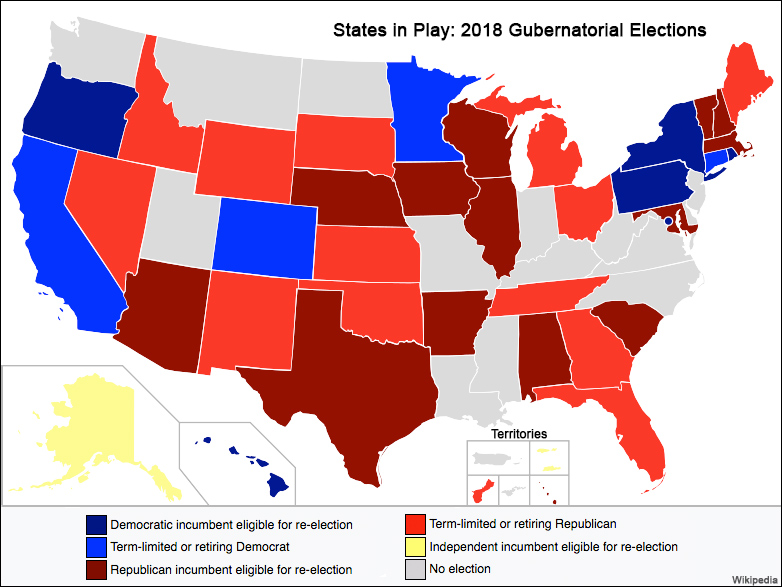
Jan. 25, 2018 — Earlier this month, we set the stage for the Senate and House campaigns. Today, we look at another important election platform, that of the nation’s governors. Though these races will elect people who will obviously determine future individual state policy, most of the 2018 gubernatorial winners will carry redistricting veto power in 2021. Therefore, these elections also carry national implications.

Of the 36 governors’ campaigns, 17 will be open races mostly due to state term limit laws. While the Democrats must protect the preponderance of US Senate seats this year, the opposite situation exists in the governors’ races. Here, Republicans must defend 26 state houses, 13 of which are open seats.

Of the 13 GOP incumbents seeking re-election, three are actually running for governor for the first time. Govs. Kay Ivey (R-Alabama), Kim Reynolds (R-Iowa), and Henry McMaster (R-South Carolina) were all lieutenant governors who ascended to their current position because the person elected in 2014 is no longer in office.

Alabama’s Gov. Robert Bentley (R) was forced to resign as part of a plea bargain arrangement over campaign finance violations. The other two state chief executives, Terry Branstad (IA) and Nikki Haley (SC), accepted positions in the Trump Administration. At this point in the election cycle, all three unelected governors are favored to win a full term.

Continue reading

The Pre-Redistricting Wars

redistricting-2018By Jim Ellis

Jan. 23, 2018 — Though we are in the fourth election cycle of the decade, the 2011 redistricting fights are still continuing. The US Supreme Court has been dealing with redistricting cases from five states, but it all could come to a head soon.

The lawsuits first break down into the familiar racial gerrymandering claims, which have been in the courts in some fashion or another since the Voting Rights Act was created in 1965. Currently, the topic of political gerrymandering is hot as both parties are pursuing live complaints against their opponents for drawing congressional and state legislative boundaries to maximize the political standing of one party to the unfair detriment of the other.

The major political gerrymandering case comes from Wisconsin and will likely set the tone for other such suits in Michigan, North Carolina, Texas, and possibly Maryland. Democrats are bringing the action in the first four states, while Republicans are challenging Maryland’s 6th Congressional District.

Obviously, the high court is getting involved to craft a new set of rulings relating to both racial and political gerrymandering before the entire country goes into a 50-state redistricting round upon completion of the 2020 census. Therefore, election results in 2018 and 2020 to establish incumbency both in the House of Representatives and the state legislatures become critically important.

Last week, the US Supreme Court stayed the most recent North Carolina lower court redistricting ruling. The three-judge panel invalidated the maps, determining that majority Republicans engaged in political gerrymandering. In the last election cycle the Tar Heel State boundaries were also re-drawn to remedy what the panel cited as racial gerrymandering reasons, but the Democrats were unable to make a dent in the Republicans’ 10R-3D delegation advantage.

Continue reading

Minnesota Becoming a Battleground

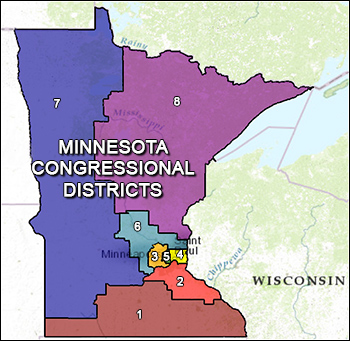
minnesota-congressional-districtsBy Jim Ellis

Jan. 22, 2018 — A new political poll is providing more evidence that Minnesota is very much in play for the coming election. Analysts were surprised in 2016 when President Trump came within one percentage point of topping Hillary Clinton in the state, but that pattern seems to be holding, at least according to this latest data.

The last time Minnesota voted Republican in a presidential race was to re-elect President Richard Nixon in 1972, thus making this state the most consistently Democratic domain in terms of presidential election victories. Since the days when Hubert Humphrey and Eugene McCarthy represented Minnesota in the Senate, Republicans have only elected four senators during that stretch of 70 years. Their record of electing governors is a bit better, with seven individuals becoming the state chief executive during the same seven-decade time span.

Building upon President Trump’s strong showing and two Democratic House members, Reps. Tim Walz (D-Mankato) and Rick Nolan (D-Crosby/Duluth), winning re-election with 50.3 and 50.2 percent, respectively, the new Minneapolis Star Tribune’s Minnesota Poll (released Jan. 17; 800 registered Minnesota voters) suggests that we could again see similarly close results later this year.

While five different pollsters have released national generic vote congressional data since the first of the year giving Democrats an advantage from five to 17 points, the Star Tribune is producing much different numbers for the Minnesota electorate. (Quinnipiac University appears to be the outlier here with polls showing Dem advantages of 11 and 17 points, the only pollster to see a double-digit margin; they were thought to be the outlier in the Virginia governor’s race, too, but ended up being closest to the final result.)

Continue reading

Looking at the Opens

2018-us-house-open-seatsBy Jim Ellis

Jan. 19, 2018 — Considering the large number of House retirements that came swiftly late last year and just as 2018 began, it is a good time to review the 49 seats that will have no incumbent running in the next election.

Three of the current vacancies are in special elections that do not run concurrently with the regular election calendar, and will operate under the following schedules:

• AZ-8: (Rep. Trent Franks-R) – Primary: February 27 | General: April 24
• PA-18: (Rep. Tim Murphy-R) – One election: March 13
• OH-12: (Rep. Pat Tiberi-R) – Primary: May 8 (concurrent with state primary) | General: August 7

Republicans are expected to hold all three seats.

While the GOP is risking 34 of the 49 open seats, most should easily remain in the Republican column. Eighteen of the 34 are considered safely Republican, while another six reside in the “Likely Republican” category. An additional five are in the “lean Republican” category The remaining five are clear political battlegrounds and are “Toss Ups,” several of which are ripe for Democratic conversion.

But seeing that only five of 34 open Republican seats rest in the highly competitive category, it will not be enough for Democrats to create the wave election that they are already expecting. Therefore, they will have to build serious and expensive campaigns in the five “Lean R” seats, and further expand their resources into the Likely Republican category in order to score long-shot upsets.

Continue reading

Senate Candidates 2018 – Part II

By Jim Ellis

Jan. 18, 2018 — We continue with our two-part series reviewing the announced candidate status in each state. Yesterday, Minnesota former Gov. Tim Pawlenty (R) announced that he would not enter the special election against appointed Sen. Tina Smith (D). Therefore, the second Minnesota seat will be re-stated:

Minnesota: Appointed Sen. Tina Smith (D) – seeking election
Candidate Filing Deadline: June 5, 2018
State Primary: Aug. 14, 2018
• Karin Housley (R) – State Senator; Attorney
• Tom Emmer (R) – US Representative; 6th District; 2010 Governor nominee – possible candidate
• Michele Bachmann (R) – Former congresswoman; former presidential candidate – possible candidate

New Jersey: Sen. Bob Menendez (D) – seeking re-election
Candidate Filing Deadline: April 2, 2018
State Primary: June 5, 2018
• Bob Hugin (R) – Pharmaceutical company CEO – possible candidate
2 Minor Democratic candidates
2 Minor Republican candidates
1 Independent candidate

New Mexico: Sen. Martin Heinrich (D) – seeking re-election
Candidate Filing Deadline: Feb. 6, 2018
State Primary: June 5, 2018
• Mick Rich (R) – State Labor Commissioner

New York: Sen. Kirsten Gillibrand (D) – seeking re-election
Candidate Filing Process Ends: April 19, 2018
State Primary: June 26, 2018
1 Minor Democratic candidates
3 Minor Republican candidates

North Dakota: Sen. Heidi Heitkamp (D) – seeking re-election
Candidate Filing Deadline: April 9, 2018
State Primary: June 12, 2018
• Tom Campbell (R) – State Senator; agri-business owner
• Rick Berg (R) – Former at-large US Representative
• Gary Emineth (R) – Former ND Republican Party chairman

Ohio: Sen. Sherrod Brown (D) – seeking re-election
Candidate Filing Deadline: Feb. 7, 2018
State Primary: May 8, 2018
Michael Gibbons (R) – Venture capitalist
• Jim Renacci (R) – US Representative; 16th District
• Jim Tressel (R) – Youngstown State U President; former football coach, Ohio State University – possible candidate
• J.D. Vance (R) – Venture capitalist; author – possible candidate

Pennsylvania: Sen. Bob Casey Jr. (D) – seeking re-election
Candidate Filing Deadline: March 6, 2018
State Primary: May 15, 2018
• Paul Addis (R) – Energy company executive
• Cynthia Ayers (R) – Former National Security Agency staff member
• Lou Barletta (R) – US Representative; 11th District
• Jim Christiana (R) – State Representative
3 Minor Democratic candidates
3 Minor Republican candidates
1 Independent candidate

Rhode Island: Sen. Sheldon Whitehouse (D) – seeking re-election
Candidate Filing Deadline: June 27, 2018
State Primary: Sept. 12, 2018
• Bob Flanders (R) – Former state Supreme Court justice
• Bobby Nardolillo (R) – State representative
1 Independent candidate

Tennessee: Sen. Bob Corker (R) – Retiring – Open Seat
Candidate Filing Deadline: April 5, 2018
State Primary: Aug. 2, 2018
• Marsha Blackburn (R) – US Representative; 7th District
• Stephen Fincher (R) – Former US Representative; 8th District
• Phil Bredesen (D) – Former governor; former Nashville mayor
4 Minor Republican candidates
1 Minor Democratic candidate

Texas: Sen. Ted Cruz (R) – seeking re-election
Candidate Filing Deadline: Completed December 11, 2018
State Primary: March 6, 2018
Run-off Election: May 22, 2018
• Beto O’Rourke (D) – US Representative; 16th District
• Bruce Jacobson (R) – Evangelical Cable TV executive
2 Minor Democratic candidates
3 Minor Republican candidates
5 Libertarian candidates

Utah: Sen. Orrin Hatch (R) – Retiring – Open Seat
Candidate Filing Deadline: March 15, 2018
State Primary: June 26, 2018
• Dan McCay (R) – State representative – possible candidate
• Evan McMullin (R) – Former Independent presidential candidate – possible candidate
• Mitt Romney (R) – Former GOP presidential nominee; ex-MA governor – possible candidate
• Chris Stewart (R) – US Representative; 2nd District – possible candidate
• Jenny Wilson (D) – Salt Lake County councilwoman
1 Minor Republican candidate
2 Minor Democratic candidates
1 Libertarian candidate

Virginia: Sen. Tim Kaine (D) – seeking re-election
Candidate Filing Deadline: March 29, 2018
State Primary: June 12, 2018
• Nick Freitas (D) – State Delegate
• E.W. Jackson Sr. (R) – Minister; former lieutenant governor nominee
• Corey Stewart (R) – Pince William Co Bd Chairman; 2017 Governor candidate
• Jim Gilmore (R) – Former governor; ex-Senate & presidential candidate – possible candidate
1 Minor Republican candidate

Vermont: Sen. Bernie Sanders (I/D) – seeking re-election
Candidate Filing Deadline: May 31, 2018
State Primary: Aug. 14, 2018
1 Minor Democratic Candidate
1 Independent Candidate

Washington: Sen. Maria Cantwell (D) – seeking re-election
Candidate Filing Deadline: May 18, 2018
State Primary: Aug. 7, 2018
1 Minor Democratic candidate
1 Libertarian candidate
3 Independent candidates

West Virginia: Sen. Joe Manchin (D) – seeking re-election
Candidate Filing Deadline: Jan. 27, 2018
State Primary: May 8, 2018
• Don Blankenship (R) – Former coal company CEO; convicted felon
• Evan Jenkins (R) – US Representative; 3rd District
• Patrick Morrisey (R) – Attorney General
• Paula Jean Swearingen (D) – Environmental activist
6 Minor Republican candidates
2 Minor Democratic candidates

Wisconsin: Sen. Tammy Baldwin (D) – seeking election
Candidate Filing Deadline: June 1, 2018
State Primary: Aug. 14, 2018
• Kevin Nicholson (R) – Businessman
• Leah Vukmir (R) – State Senator
• Eric Hovde (R) – Venture capitalist; 2012 Senate candidate – possible candidate
4 Minor Republican candidates
1 Constitution Party candidate
1 Veterans Party candidate
1 Independent candidate

Wyoming: Sen. John Barrasso (R) – seeking re-election
Candidate Filing Deadline: June 1, 2018
State Primary: Aug. 21, 2018
• Gary Trauner (D) – Former Teton County School Board Chair; ex-congressional nominee (2006; ’08)
• Foster Freiss (R) – Mutual Fund founder; GOP donor – possible candidate
• Erik Prince (R) – Security firm founder – possible candidate


Major Sources:
• Politics1.com political blog
• Ballotpedia.com website
• State Elections offices

Senate Candidates 2018 – Part I

By Jim Ellis

Jan. 17, 2018 — As we continue setting the stage for the 2018 midterms now that we are in the actual election year, in a two-part series, we review the announced candidate status in each state, since much has changed in the past few weeks.

Arizona: Sen. Jeff Flake (R) – Retiring – Open Seat
Candidate Filing Deadline: May 30, 2018
State Primary: Aug. 28, 2018
• Joe Arpaio (R) – former Sheriff, Maricopa County
• Martha McSally (R) – US Representative; 2nd District
• Kelli Ward (R) – former state Senator; 2016 US Senate candidate
• Kyrsten Sinema (D) – US Representative; 9th District
3 Minor Republican candidates
5 Minor Democratic candidates
1 Libertarian candidate
1 Green candidate

California: Sen. Dianne Feinstein (D) – seeking re-election
Candidate Filing Deadline: March 9, 2018
State Primary: June 5, 2018
Jungle Primary: Top two candidates advance to general election
• Kevin de Leon (D) – State Senate President
• Erin Cruz (R) – Radio Talk Show host
5 Minor Democratic candidates
6 Minor Republican candidates
6 Independent candidates

Connecticut: Sen. Christopher Murphy (D) – seeking re-election
Candidate Filing Deadline: June 8, 2018
State Primary: Aug. 14, 2018
• Ann-Marie Adams (D) – Journalist
• Tony Hwang (R) – State Senator – possible candidate
2 Minor Republican candidates

Continue reading

The Ohio Ins and Outs

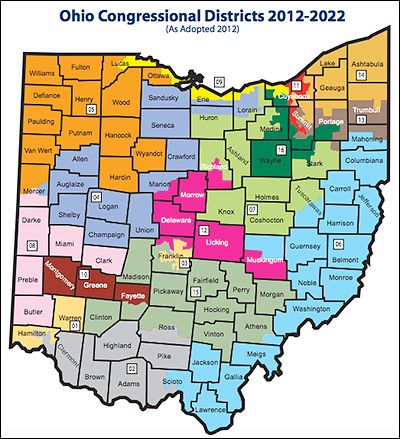
Ohio-congressional-districtsBy Jim Ellis

Jan. 15, 2018 — Since the turn of the century, the state of Ohio has become crucial in deciding national elections, and its status for 2018 is no exception. This week, several key moves were made that began to define the general election ballot even before candidate filing closes and the May 8 primary is conducted.

The Senate race was shaken last week when state treasurer Josh Mandel (R), the 2012 Senate nominee who had the inside track to again win the Republican primary in order to force a re-match with Sen. Sherrod Brown (D), unexpectedly announced he was dropping out of the race due to a newly diagnosed health condition for his wife. Though investment banker Michael Gibbons was still in the race, a Republican void existed in a campaign that has all the underpinnings of becoming highly competitive. Even with President Obama leading the Democratic ticket and carrying Ohio six years ago, Mandel managed to hold Sen. Brown to only a 51-45 percent re-election victory.

Rep. Jim Renacci (R-Wadsworth), who had been competing in the governor’s race, announced late last week that he would switch to the Senate campaign. The Republican gubernatorial primary underwent significant change in November, and both Renacci and Lt. Gov. Mary Taylor found themselves on the outside looking in. Because attorney general and former US senator, Mike DeWine, and Secretary of State Jon Husted, the candidates who were running 1-2 in early polling, decided to join forces and form a ticket, the odds of either Taylor or Renacci upsetting the race leader, DeWine, grew to long-shot proportions.

While Taylor remains in the governor’s race, Renacci has now bolted for the Senate campaign to hopefully compete against Sen. Brown. The incumbent is clearly taking his re-election campaign very seriously, as the coming financial disclosure report will show his cash-on-hand figure to be already approaching $10 million. With Renacci’s ability to self-fund a statewide campaign and Republicans looking fondly on President Trump’s eight-point victory in Ohio, the eventual GOP nominee – whether it’s Rep. Renacci, Gibbons, or another late-entry candidate – will command the resources necessary to match whatever Brown and his Democratic allies spend.

Continue reading

The Daily Retirement Briefing

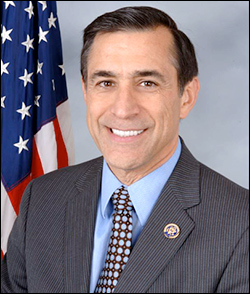
California Rep. Darrell Issa

California Rep. Darrell Issa

By Jim Ellis

Jan. 12, 2018 — California Rep. Darrell Issa’s (R-Vista) latest re-election, a 1,621-vote victory over retired Marine Corps Colonel Doug Applegate (D) in CA-49, proved to be the closest US House result in the nation during 2016, but there will not be a re-match this year.

Rep. Issa announced Wednesday that he will not seek re-election to a 10th term, becoming the 48th House member to take this action in the current election cycle. With Arizona Rep. Martha McSally (R-Tucson) reportedly primed to declare her Senate candidacy today, the number will quickly grow to 49. Issa’s action directly follows that of fellow California Rep. Ed Royce (R-Yorba Linda/ Fullerton), who announced on Monday that he won’t run for a 14th term.

Both men faced difficult re-election battles, as do five other California Republicans that Democrats are targeting. Because President Trump fared so poorly in California, the Democratic strategists believe the same pattern will carry over into the midterm cycle. But, such a result remains to be seen.

Though Republicans are clearly in worse position without Rep. Royce running again, that might not be the case concerning Issa’s. With his negatives growing and a close call in the previous election, the party might actually fare better with a fresh face, particularly when the Democrats do not have a clear alternative. Though Applegate is running again, he is facing a stiff challenge from at least two other Democrats, wealthy attorney Mike Levin, and former US State Department and United Nations official Sara Jacobs. Real estate investor Paul Kerr rounds out the current Democratic field.

Continue reading

Monday’s Retirement

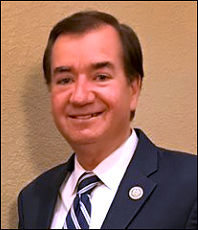
California Rep. Ed Royce (R-Yorba Linda/Fullerton) | Facebook

California Rep. Ed Royce (R-Yorba Linda/Fullerton) | Facebook

By Jim Ellis

Jan. 10, 2018 — It’s getting to the point where literally every day we witness a new retirement announcement from Congress, and Monday was no exception.

In another surprise political decision, veteran California Rep. Ed Royce (R-Yorba Linda/Fullerton), the chairman of the House Foreign Affairs Committee, disclosed that he will not seek a 14th term this year, preferring to dedicate his last year in Congress to finishing his committee agenda.

The move was unexpected in that Royce appeared to be preparing his political operation for a major battle. Reportedly through the year-end financial disclosure period, he already amassed a treasury exceeding $3.5 million. Until this week, his actions suggested that he was well equipped to run a strong re-election campaign.

Unlike most of the other 31 Republican seats that are being vacated for the next election, Royce’s California district has strong Democratic conversion potential. The constituency voted 51-43 percent for Hillary Clinton, but backed Mitt Romney 51-47 percent in 2012, and gave John McCain a 49-47 percent margin four years earlier. The Romney and McCain votes are more consistent with the district electorate’s long-term political performance history, but this area of the state, like many regions in the nation’s most populous domain, is turning more Democratic as significant demographic change continues.

Continue reading

An Ohio Curve Ball

Ohio Senate Candidate Josh Mandel

Ohio State treasurer and presumed Senate candidate Josh Mandel

By Jim Ellis

Jan. 9, 2018 — Most people believed the 2018 Ohio Senate general election would be a re-match of the 2012 contest, but now big changes are afoot. On Friday, presumed Republican nominee Josh Mandel, the Ohio State treasurer, announced that he will not file for the Senate race when the deadline expires on Feb. 7. Unfortunately, Mandel says that his wife’s undisclosed health situation, apparently just recently diagnosed, has forced him to the political sideline. He did not indicate whether or not he would seek re-election to his current position.

Mandel was quoted as saying, “[I] recently learned that my wife has a health issue that will require my time, attention and presence,” and that it “has become clear to us that it’s no longer possible for me to be away from home and on the campaign trail for the time needed to run a US Senate race,” as reported on the Daily Kos Elections website.

This means there will not be a repeat performance between Mandel and Sen. Sherrod Brown (D). The two ran against each other six years ago, with the Democratic incumbent winning 51-45 percent. At the time, Mandel, a first-term state treasurer elected only two years before, raised an impressive $18.9 million for the race, losing by only six points while Sen. Brown had the advantage of President Obama topping the Democratic ticket and carrying the Buckeye State. In comparison, Sen. Brown expended just under $21.5 million to secure his first re-election.

Continue reading