
Category Archives: Senate

Senate Recap – Part III

By Jim Ellis — Friday, Oct. 4, 2024

Senate

Our final segment of the three-part US Senate recap series covers the campaigns from Ohio through Wisconsin. At this point, the Republicans appear in favorable position to convert West Virginia and Montana while protecting Florida and Texas. Doing so would give the GOP a small Senate majority, but the question remains as to whether they can expand such a contingent beyond 51 senators.

Ohio Sen. Sherrod Brown (D)

Ohio — One of the races where movement is detected is in the Buckeye State of Ohio where three-term Sen. Sherrod Brown (D) is defending his seat against GOP businessman Bernie Moreno. For months, this race stood with Sen. Brown holding a five-point edge even though former President Donald Trump was posting leads close to 10 points within the same polling samples. Within the past two weeks, however, the race has shown tightening tendencies as detected in publicly released polling.

Sen. Brown has been concentrating his campaign and major resource advantage on driving home the image that he delivers for Ohio and that the state is his top priority. He never mentions the national ticket, Washington, or anything related to the Democratic Party. While Sen. Brown had raised just under a huge $53 million through the end of June, we now see several outside Super PACs coming into the state to help Moreno and attack Brown. Whether this race flips to Moreno in the end still remains to be seen.

Pennsylvania — Sen. Bob Casey Jr. (D) and his late father, Gov. Bob Casey Sr. (D), have together won seven statewide races in Pennsylvania, and the family is a legacy within the state. Lately, the Keystone State race has been the most polled Senate contest in the country and Casey’s once strong lead over Republican former hedge fund CEO David McCormick (R) has narrowed.

This is another key race going down to the wire, but the Casey name is still very formidable in Pennsylvania even though Sen. Casey is far to the left of his more conservative late father. While Trump may well be in position to win here again, as he did in 2016, toppling Sen. Casey will prove to be much more difficult. This remains a race to watch, but Sen. Casey should still be regarded as the favorite.

Texas — We are hearing a familiar refrain from the Lone Star State Democrats as they attempt to sell their argument that Rep. Colin Allred (D-Dallas) can upset Sen. Ted Cruz (R). While Cruz’s favorability numbers are not particularly high, and polling repeatedly shows a close race, such has been the case in many previous Texas races. Yet, in the end, Republicans prevailed with comfortable margins.

The state is changing politically. While Democrat candidates are doing well in the big cities, such as Houston, Dallas, Austin, and San Antonio, the rural areas are strongly Republican and the Hispanic voting patterns are showing further signs of moving closer to the GOP.

Expect the turnout model to favor the Republicans when voters actually cast their ballots. Because President Joe Biden’s energy policies have not been favorable to Texas’ mega oil and gas industry, and the southern border issue dominates the Lone Star issue matrix, it is likely that Rep. Allred, while an attractive candidate, picked the wrong year to attempt to reverse a statewide political trend that hasn’t seen a Democrat win a major office here since 1994.

Utah — Sen. Mitt Romney (R) is retiring after one term, and 3rd District Rep. John Curtis (R-Provo), due to his strong plurality win in a crowded GOP primary – recording 49 percent of the primary vote over three Republican opponents – is poised to easily capture the seat in November. As was the case when Curtis won his House seat in a 2017 special election, he fared poorly in this year’s Republican nominating convention but then rebounded to record a solid primary victory.

Environmental activist Caroline Gleich is the Democrat’s nominee but has little chance of winning the general election during a presidential year in solidly Republican Utah.

Virginia — Sen. Tim Kaine (D), the Democratic vice presidential nominee in 2016, seeks a third term in the Senate and should have little trouble winning in a state that has been definitively trending Democrat over the past decade with the 2021 statewide election being the lone exception. Prior to serving as a senator, Kaine had been elected governor of the state and mayor of Richmond, while being appointed as chairman of the Democratic National Committee.

The senator’s Republican opponent is retired Navy captain and ex-congressional candidate Hung Cao. While Cao over-performed in his congressional race even while losing, his Senate fundraising does not place him in the competitive realm with an accomplished incumbent such as Sen. Kaine. As was the case in his 2018 re-election campaign, expect Sen. Kaine to win re-election with a percentage in the high 50s.

West Virginia — Without Sen. Joe Manchin, now an Independent, on the November ballot, this race is a lock for GOP Gov. Jim Justice, who is ineligible to seek a third term in his current office. Running over 60 percent in the few polls taken of this contest, and seeing his Democratic opponent, Wheeling Mayor Glenn Elliott, failing to raise even $300,000 through the end of June, means the general election is a lock for the GOP and Gov. Justice, and with such a victory comes a 50-50 electoral tie in the Senate chamber.

Wisconsin — Sen. Tammy Baldwin (D) is on the statewide ballot for the third time, after serving seven terms in the US House and six years in the Wisconsin state Assembly. Her opponent is businessman Eric Hovde; potentially stronger Republican candidates such as Rep. Bryan Steil (R-Janesville), decided not to run. Hovde did bring resources to the table when dropping at least $13 million of his own money into the race.

Sen. Baldwin has been polling ahead all year but, as in Pennsylvania and Ohio, we’ve seen a recent tightening of the campaign. Wisconsin races are always close, and the state will figure prominently in the presidential election outcome. Therefore, a late Republican surge here, should it develop, would make the Senate race interesting. Barring such a vote disposition, expect Sen. Baldwin to win re-election with a percentage figure in the low 50s.

Senate Recap – Part II

By Jim Ellis — Thursday, Oct. 3, 2024

Senate

In our second of a three-part series, we examine another set of seven US Senate races that are either competitive, at least to a degree, or where a new senator will succeed an incumbent not seeking re-election. Today, we provide a quick analysis of the campaigns from Minnesota through New Mexico. Tomorrow, we end with the competitive races from Ohio to Wisconsin.

Minnesota Sen. Amy Klobuchar (D) / Photo by Gage Skidmore

Minnesota — Though the Minnesota Senate race is not particularly competitive, recent polling has suggested that Sen. Amy Klobuchar’s (D) re-election campaign is a bit closer than one would expect in a state that reliably supports its Democratic incumbents. Four polls of the Minnesota Senate contest were released in September, and Sen. Klobuchar’s average advantage is nine percentage points over former professional basketball player Royce White (R). The margin is moderately strong, but not where one would have expected a virtually uncontested senator in the most loyal Democratic state in presidential election years.

The polls also track Vice President Kamala Harris as under-performing in her VP nominee Tim Walz’s (D) home state. The five September polls and two tracking surveys yield Harris an average six-point lead, well below what one would expect in what is perceived as a non-competitive state. Sen. Klobuchar will win re-election, but possibly not in the landslide proportion that most believed would occur.

Missouri — The Show Me State of Missouri has been voting solidly Republican during the Trump years, and Sen. Josh Hawley (R) should easily win another term. There have, however, been two Democrat polls that project the senator’s lead over attorney and military veteran Lucas Kunce (D) to be just four and five points. The Hawley September average through four public polls is nine percentage points, thus reflecting two other surveys yielding the senator 12- and 15-point advantages.

This polling pattern is not much different than what we saw for Sen. Eric Schmitt (R) when he was running in the open seat two years ago. The average of the closing polls posted Schmitt with a lead right around 11 percentage points. In the actual election, he won with a 13-point margin. Expect a similar result this year for Sen. Hawley.

Montana — If the Republicans are to capture the Senate majority, unseating Sen. Jon Tester (D) in Montana becomes a must win. At this point, it appears GOP candidate Tim Sheehy (R), a retired Navy SEAL and aerospace business CEO, is well positioned to convert Big Sky Country to the Republican Senate column. If he does, Montana will become the 51st state in the GOP Conference after West Virginia Gov. Jim Justice’s (R) virtually assured win to even the partisan division at 50-50.

Surprisingly, there have been relatively few polls conducted of the Montana Senate race. One reason could be the pollsters have already seen enough to concede the race to Sheehy. From Aug. 20 to the present, we find just four poll results. Sheehy leads in all, and his polling average is seven-plus points over the three-term incumbent. Though Sen. Tester has a major resource advantage, in a small state campaign spending is typically less important than in major population states. Such appears to be the case in Montana.

Continue reading →

Senate Recap – Part I

By Jim Ellis — Wednesday, Oct. 2, 2024

Senate

In a three-part series, we examine the latest in the 21 US Senate races that are either competitive or where a new senator will succeed an incumbent not seeking re-election. In alphabetical order, we begin today with Arizona and move through Michigan. Tomorrow, we look at Minnesota through New Mexico, and on Friday, end with the competitive races from Ohio to Wisconsin.

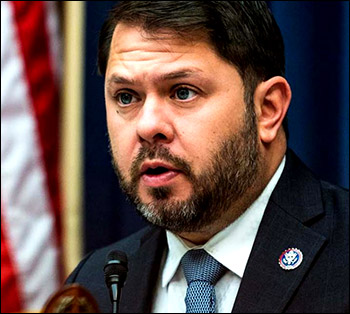
Arizona Rep. Ruben Gallego (D)

Arizona — Sen. Kyrsten Sinema (I) is retiring after one term, and it appears that Rep. Ruben Gallego (D-Phoenix) will be her successor in January. Rep. Gallego has successfully created a more moderate image than his record in the House might depict. His campaign is emphasizing his military record and addresses the border issue, which has greater effect in Arizona than most states.

Republicans, nominating former news anchor and 2022 gubernatorial nominee Kari Lake, have also yielded the inside track to Rep. Gallego. Lake’s continued accusations that voter fraud cost her the 2022 election has soured most swing voters. Rep. Gallego leads in all polls, and with an average position of 7-plus points in nine September polls and two tracks. Expect Rep. Gallego to officially claim the seat in November.

California — While former baseball great Steve Garvey (R) performed well in California’s crowded jungle primary election back in June, and even placed first in the special election to permanently replace the late Sen. Dianne Feinstein (D), he is no match for Rep. Adam Schiff (D-Burbank) in a two-way match.

Schiff’s advertising about Garvey being too conservative during the primary helped elevate the Garvey candidacy with Republicans, thus the congressman got the general election opponent he desired. A GOP candidate has virtually no chance today in a California statewide race. Schiff will win in a landslide.

Delaware — Sen. Tom Carper (D) is retiring and leaves the seat to at-large Rep. Lisa Blunt Rochester (D-Wilmington). This open race is nothing more than an easy re-election bid for the congresswoman who already represents the entire state.

Florida — Sen. Rick Scott (R) is on the ballot for a second term, after winning his initial federal election by just over 10,000 votes from more than eight million ballots cast. In that election, Scott, then the state’s governor, unseated veteran Sen. Bill Nelson (D). This time, Sen. Scott faces former Congresswoman Debbie Mucarsel-Powell (D), who held a south Florida seat for one term before current Rep. Carlos Gimenez (R-Miami) unseated her in 2020.

While polling again shows a close race – Sen. Scott leads by just over three percentage points in seven September polls and two tracks – the Florida electorate’s political composition has drastically changed from six years ago.

In 2018, when Sen. Scott was first elected, Democrats outnumbered Republicans by over 257,000 registrants. Today, Republicans hold a 956,000-plus advantage over Democrats, meaning the state has changed in the GOP’s favor by more than 1.2 million individuals. This is the main reason that pollsters underestimated the 2022 Florida statewide Republican strength by an average of seven points.

Expect Sen. Scott to win by a bigger margin than the polling currently indicates.

Indiana — With first-term Sen. Mike Braun (R) eschewing a second term to launch what appears to be a successful run for governor, Rep. Jim Banks (R-Columbia City) finds himself with one of the easiest open Senate runs in decades. Banks was unopposed in the Republican primary and is pitted against a weak Democratic contender in the general election. Rep. Banks will easily win the Senate seat in November and protect the open seat for the GOP.

Maryland — Sen. Ben Cardin (D) is retiring after a remarkable 58 years in elective office, counting his time in the state legislature, the US House, and of course the Senate. In his wake we have seen two rather astonishing campaigns, the first in the Democratic primary where US Rep. David Trone (D-Potomac) spent $62 million of his own money only to lose to Prince George’s County Executive Angela Alsobrooks by just over 10 percentage points in the May election.

The second surprise is the closeness of the general election in what has performed as one of the Democratic Party’s strongest states. Former two-term Gov. Larry Hogan (R), still a popular figure in Maryland, is clearly the best candidate the Republicans could field, and he is making the race close.

Whether he can overtake Alsobrooks now that Vice President Kamala Harris is the party nominee and has activated the base voter to a greater degree than President Joe Biden, is very much in doubt. It seems what is a potential 30-point Harris victory in Maryland might be too high an obstacle for even Gov. Hogan to scale.

While this is an expensive race and one that is clearly in play, Alsobrooks must remain as at least a nominal favorite to succeed Sen. Cardin.

Michigan — Four-term incumbent Debbie Stabenow (D) was the first 2024 in-cycle senator to announce that she would not seek re-election. She yields to what has become a highly competitive race between Rep. Elissa Slotkin (D-Lansing) and former Rep. Mike Rogers (R).

While Michigan trends Democratic, the polling has been quite close both in this race and for the presidential campaign. Unlike most of the other states where former President Donald Trump is running either ahead or in a dead heat with Harris, the Michigan Republican Senate candidate has not lagged. In the other Senate states, and particularly those with an incumbent Democrat seeking re-election, the GOP contender is running well behind Trump’s standing.

In the Wolverine State, we see 14 polls and two tracks being conducted during the month of September. Slotkin leads in all but one, with an average percentage point edge of just over five even though she has an almost 5:1 edge in campaign resources. Outside spending has been heavy, but here Republicans have more than a three million dollar edge among the $45-plus million already expended.

While Rep. Slotkin has a small but clear advantage in this statewide campaign, a stronger than expected performance from Trump at the top of the GOP ticket could give Rogers the extra push he needs to score the upset victory.

Moreno Records First Lead in Ohio Senate Race; A Dead Heat in VA-7; In Governors’ Races, Indiana Stays Close, Stein Pulling Away in NC

By Jim Ellis — Monday, Sept. 30, 2024

Senate

Ohio businessman Bernie Moreno (R)

Ohio: Moreno Records First Lead — RMG Research went into the Ohio field with a flash poll (Sept. 18-20; 781 likely Ohio voters; online) and for the first time found Republican challenger Bernie Moreno (R) leading Sen. Sherrod Brown (D). The ballot test posted Moreno to a 47-45 percent edge, and 48-46 percent when respondents who said they are leaning to one candidate or the other were added to the decided total.

Though RMG has produced some questionable recent data, the current Ohio Senate race progression suggests that the overall trend is moving in Moreno’s direction. The three September polls prior to the RMG data release found Sen. Brown’s margin to be 1, 3, and 2 points; therefore, this race is moving toward pure toss-up range.

House

VA-7: Another Dead-Heat Poll — Despite a huge 7:1 advantage in fundraising through the latest published Federal Election Commission campaign finance report (June 30), retired Army Col. Eugene Vindman (D) has not pulled away from Republican Iraq/Afghan War veteran Derrick Anderson (R) in their battle for Virginia’s 7th Congressional District. The new Ragnar Research Partners survey for the Anderson campaign (Sept. 14-17; 400 likely VA-7 voters; live interview) finds the two candidates locked in a dead-heat 43-43 percent tie. In August, the Ragnar data found the two contenders separated by only a 42-41 percent spread in Vindman’s favor.

The 7th District is one of the few competitive open seats in the country. The FiveThirtyEight data organization rates the seat as D+2. The Down Ballot research organization ranks the seat as the 17th most vulnerable seat in the Democratic Conference. Incumbent Rep. Abigail Spanberger (D-Glen Allen) chose not to seek re-election in order to concentrate on a 2025 open race for governor.

Governor

Indiana: Closer Than Expected — The Republicans strength in the Hoosier State suggested that this year’s open governor’s race would not be particularly close. It still may end that way, but a new GBAO survey, conducted for the Democratic Governors Association (Sept. 19-22; 600 likely Indiana voters; live interview & text) currently finds a close ballot test result.

Despite former President Donald Trump leading the presidential race by 10 percentage points according to this Indiana poll, Sen. Mike Braun (R) maintains only a tepid advantage over former Superintendent of Public Instruction Jennifer McCormick (D), 44-41 percent. The poll suggests that Sen. Braun is weak among Republicans, garnering only 80 percent support within his own party. McCormick, according to this data, also has the advantage with Independents by a 42-32 percent clip.

The previously released survey, from Emerson College (Sept. 12-13; 1,000 likely Indiana voters; multiple sampling techniques) found Sen. Braun holding a much more substantial 11-point lead, 45-34 percent.

North Carolina: Stein Pulling Away — Republican gubernatorial nominee Mark Robinson’s recent highly publicized controversy pertaining to past comments and actions is taking its toll. Attorney General Josh Stein (D) is now pulling away from Lt. Gov. Mark Robinson in what was once a close race.

A series of four polls from Emerson College, Victory Insights, the New York Times/Siena College, and Marist College, all conducted between Sept. 15-24, with sample sizes ranging from 600 to 1,348, projects Stein as leading the governor’s race by 8, 5, 10, and 11 points, consecutively. As Robinson’s problems continue to mount, the race moves toward Stein clinching victory. Expect the Democrats to retain control of the Tar Heel State governor’s mansion. Two-term Gov. Roy Cooper (D) is ineligible to seek a third term.

VP Harris Holds Slight Edge in Nevada; Balance of Senate Tested; Senate Money in Maryland; Examining California’s Key Districts

By Jim Ellis — Friday, Sept. 27, 2024

President

Vice President Kamala Harris / Photo by Gage Skidmore

Nevada: New Polling Data Tracking with 2020 Result — Noble Predictive Insights tested the Nevada electorate in reference to the presidential campaign and finds Vice President Kamala Harris leading former President Donald Trump by only a percentage point, 48-47 percent.

Looking at the geographic division in the Noble poll and comparing it to Gov. Joe Lombardo’s (R) victorious 2022 votes received from Clark County (Las Vegas), Washoe County (Reno), and the rural Nevada areas, the Trump figures are equivalent to Lombardo’s performance in Clark and Washoe. It is the rural areas where Trump will need to slightly improve if he is to carry the state.

While he will outpace Harris by better than 2:1 in this region, Trump’s 2020 performance in the rural areas was a point behind Lombardo’s 2022 total. Considering Trump lost to then candidate Joe Biden by 2.3 percentage points here in 2020, the former president will need to improve slightly upon Lombardo’s numbers in all regions, but especially in the rural areas, if he is to compensate for his previous deficit.

Senate

FiveThirtyEight: Releases New Senate Mean Average Data — The FiveThirtyEight data organization released new mean averages for all the competitive Senate races and, for the most part, the numbers are consistent with averages publicized on other platforms.

While Democrats have relatively small but consistent leads in most of the competitive states, the Republican average is stronger (+3) in Montana, where a Tim Sheehy (R) victory over Sen. Jon Tester (D) would likely clinch an outright GOP Senate majority. The race that appears to be getting closer is in Ohio, where Sen. Sherrod Brown’s (D) average advantage has dropped to three percentage points. The candidate with the strongest average is Nevada Sen. Jacky Rosen (D) at +9.

Maryland: Big Media Buy for Hogan Allies — Reports from the Free State are indicating that the Maryland’s Future Super PAC organization, which supports former Gov. Larry Hogan (R), has been reserving $18.2 million of advertising time for between now and the election. This is twice the amount that Democratic nominee Angela Alsobrooks is spending. Expect to see a large amount of Super PAC money to come to Alsobrooks’ rescue. The Democratic leadership and her outside allies will ensure the spending gap is at least equalized.

House

California: USC Releases Polls for Key Districts — The University of Southern California and the Center for Urban Politics and Policy at Cal State University Long Beach partnered to test eight California congressional districts. Two were Democrat vs. Democrat campaigns, and another found the sample size dropping significantly below an adequate level, so the numbers in CA-22 — Rep. David Valadao (R) vs. Rudy Salas (D) — should not be considered as viable. In the two Democratic seats, Bay Area Rapid Transit (BART) board member Lateefah Simon leads in Rep. Barbara Lee’s (D-Oakland) open 12th District and former San Jose Mayor Sam Liccardo posts a sizable advantage in Rep. Anna Eshoo’s (D-Atherton) open 16th CD.

Interestingly, in only one of two races where the Republican candidate held a lead, the USC poll features a GOP challenger. Former state Assemblyman Scott Baugh (R) held a three-point lead over state Sen. Dave Min (D-Irvine) in an open contest where the latter man’s most prevalent negative is his highly publicized drunk driving conviction. The other leader is Rep. Ken Calvert (R-Corona) who posted only a one-point edge over former federal prosecutor and 2022 general election finalist Will Rollins (D).

The Democrats who were leading Republican incumbents were Adam Gray over Rep. John Duarte (one point difference), George Whitesides topping Rep. Mike Garcia (+2), and Derek Tran leading Rep. Michelle Steel (+2).
The pollsters interviewed 2,395 likely voters in the five congressional districts during the Sept. 14-21 period. Interestingly, the undecided voters, when pushed, leaned toward Reps. Duarte and Calvert, and for the Democratic candidate in the other three contests.

In terms of the presidential vote, Kamala Harris led in all tested districts against Donald Trump but ran an average of three percentage points behind Joe Biden’s 2020 tallies. All of these races are very much in play, and the turnout model will likely be the deciding factor.

Harris to Skip Traditional Event; Trump Declines Debate; Tracking Poll Trends; MT-1 Remains Close

By Jim Ellis — Tuesday, Sept. 24, 2024

President

Vice President Kamala Harris / Photo by Gage Skidmore

VP Kamala Harris: Skipping Catholic Al Smith Event — The attacks on Vice President Kamala Harris failing to participate in public events or news conferences intensified over the past weekend when her campaign confirmed that she will not attend the annual Al Smith Catholic fundraising dinner in New York on Oct. 17.

It has become a tradition that the presidential candidates attend this function together, but the Harris campaign is deciding to buck a trend that has been in effect for 40 years. We can expect a Trump campaign attempt to use her decision to drive a wedge between Harris and Catholic voters.

Donald Trump: Rejects Oct. 23 Debate — It appears the first debate between Harris and former President Donald Trump will be the last. While Harris declined to participate in a Fox News debate that Trump accepted, now the Republican nominee has declined CNN’s invitation to debate Harris on Oct. 23. Trump says that date is too late for a forum since so many people will have already cast a ballot through early voting.

Senate

Tracking Polls: Ohio and Texas Flip Leaders — Tracking polls are conducted not so much to capture where a race stands, but rather to detect which candidate the race trend favors over a sustained period. Therefore, we see two major long term tracking polls suggesting that the underdog candidate in each important Senate contest is currently moving upward.

In Texas, the Morning Consult survey research firm is conducting a nationwide series of Senate and presidential race tracks in the key states. In Texas, the MC data (Sept. 9-18; 2,716 likely Texas voters; online) finds Rep. Colin Allred (D-Dallas) pulling one point ahead of incumbent Sen. Ted Cruz (R), 45-44 percent. The Activote firm conducted a five-week track of the Ohio Senate race (Aug. 16-9/22; 400 likely Ohio voters) and sees GOP challenger Bernie Moreno moving ahead of Sen. Sherrod Brown (D) by two percentage points, 51-49 percent.

In neither case do these tracking results necessarily mean that the incumbent is now trailing, only that their opponents’ campaigns are on an upswing.

House

MT-1: Remains Close — The western 1st Congressional District of Montana was newly created after the 2020 census due to population growth, and its first election delivered a closer than expected final tally. In that contest, then-former US Interior Secretary and ex-Congressman Ryan Zinke (R) under-performed with his 50-46 percent win over former US Olympian Monica Tranel (D). The latest 2024 poll again featuring the two contenders shows another similarly close result.

The Noble Predictive Insights survey (Sept. 11-14; 432 likely MT-1 voters) finds Zinke leading Tranel by only a 47-43 percent margin with the Libertarian candidate taking three percentage points. While the Montana Democratic Party failed in their lawsuit to disqualify the Libertarian Party from the statewide ballot, in this race the presence of a minor party candidate might be helping their contender. While Rep. Zinke is still favored, it appears we are headed for another tight finish.

Alsobrooks Continues to Lead in Maryland Senate Race; Missouri Shock Poll Released; Democrats Staked to Large Leads in NH; 2026 Rumors Already Abound in Ohio

By Jim Ellis — Thursday, Sept. 19, 2024

Senate

Angela Alsobrooks (D)

Maryland: Alsobrooks Continues to Lead — Emerson College and The Hill newspaper released the results of their latest Maryland US Senate survey (Sept. 12-13; 890 likely Maryland voters; multiple sampling techniques). According to the polling results, Prince George’s County Executive Angela Alsobrooks (D) again tops former Gov. Larry Hogan (R) by a spread beyond the polling margin of error. The ballot test finds Alsobrooks’ advantage at 49-42 percent.

Hogan, while still enjoying very strong personal favorability ratings, even among Democrats, must overcome what will be one of the largest landslide victories for Vice President Kamala Harris of any state. Thus, seeing potentially a 30-point Democratic win at the top of the Maryland ballot makes it extremely difficult for any Republican to overcome such a wave in their down ballot elections.

Missouri: Shock Poll Released — While the Missouri Senate race had been largely ignored for most of the year, we now see three polls released almost simultaneously. The other day, we covered a GQR survey for the Lucas Kunce (D) campaign (Sept. 6-12; 645 likely Missouri voters) which produced a surprisingly close 50-46 percent margin in Sen. Hawley’s favor. (See: Missouri Shock Poll)

Two more surveys followed, each with very different results. Change Research (Sept. 11-13; 1,237 registered Missouri voters; online) sees the Hawley lead at 46-41 percent. Emerson College, polling for The Hill Newspaper (Sept. 12-13; 850 likely Missouri voters; multiple sampling techniques) produced a much different result. This ballot test posts Sen. Hawley to a 12-point lead over Kunce, 52-40 percent.

Based on Missouri’s voting history within the past 12 years, Sen. Hawley still should be favored, but it is clear this race will be drawing increasing attention as Democrats attempt to expand the Senate map.

House

New Hampshire: Democrats Staked to Large Leads — After the late Sept. 10 primary election, St. Anselm’s College went into the field to test both New Hampshire US House seats, the Eastern 1st District featuring incumbent Rep. Chris Pappas (D-Manchester), and the open 2nd District, the seat from which Rep. Annie Kuster (D-Hopkinton) is retiring.

The St. Anselm’s polls (Sept. 11-12; 1,111 likely NH-1 voters; 1,130 likely nh-2 voters; online) find Rep. Pappas leading former executive councilor and ex-state Sen. Russell Prescott (R) by 12 percentage points, 50-38 percent. In the 2nd District, former Biden Administration official Maggie Goodlander, who was an easy Democratic primary winner, led Republican Lily Tang Williams by a similar 49-38 percent margin. At this point, Democrats appear primed to retain both of New Hampshire’s congressional seats.

Governor

Ohio: 2026 Rumors Already Abound — Ohio Gov. Mike DeWine (R) is ineligible to seek a third term in 2026, and already political observers are pointing to meetings and movements from potential candidates. Involving themselves in the Springfield, Ohio Haitian migrant controversy, both former presidential candidate Vivek Ramaswamy (R) and ex-representative and 2018 US Senate candidate Jim Renacci (R) are scheduling meetings to encourage positive dialog within the community. Both are considered potential Republican gubernatorial candidates.

Other potential candidates are Lt. Gov. John Husted (R) and Attorney General Dave Yost (R), along with Democratic state Supreme Court Justice Jennifer Brunner, Columbus Mayor Andy Ginther, and Cincinnati Mayor Aftab Pureval.

Michigan Senate Polls Show Tightening Race; Missouri Shock Poll; Ohio Super PACs Level Financial Field; Nebraska Abortion Initiatives

By Jim Ellis — Wednesday, Sept. 18, 2024

Senate

Michigan Rep. Elissa Slotkin (D-Lansing)

Michigan: Wide Ranging Poll — Since the beginning of September, we’ve seen the release of four non-tracking public polls testing the open Senate race between Rep. Elissa Slotkin (D-Lansing) and former Congressman Mike Rogers (R) who served in the House for 14 years.

The Cygnal, YouGov, co/efficient, and Redfield and Wilton Strategies research firms were in the Michigan field from Aug. 28 – Sept. 9 with sample sizes ranging from 400 to 1,077 Michigan registered and likely voters.

While Rep. Slotkin held significant leads through the month of August, the September polls show a different support level. Slotkin leads in all of the polls, but her margins range from a high of seven points to a low of just a one-point spread that two of the pollsters detected. The four-poll average showed a Slotkin lead at just over three percentage points.

Missouri: Shock Poll Released — The Missouri Senate race has been quiet all year, but a new survey finds the contest closing to within four percentage points. Conversely, two August polls — from YouGov and the Remington Research Group — saw Sen. Josh Hawley (R) leading attorney and Iraq and Afghan War veteran Lucas Kunce (D) with margins of 11 and 15 points. A new GQR survey for the Kunce campaign, however (Sept. 6-12; 645 MO likely voters), finds the margin at 50-46 percent in Sen. Hawley’s favor.

The chances are strong that this latter survey is an optimistic outlier, but the release of such data suggests that the Missouri Senate race is likely to attract greater attention as the election grows closer.

Ohio: Super PACs Equalizing Campaign Spending — According to the latest available Federal Election Commission reports that will soon be updated (filing deadline is Oct. 15), Sen. Sherrod Brown (D) has enjoyed a huge fundraising and spending advantage over Republican businessman Bernie Moreno. Though June 30, Sen. Brown had raised $52.8 million compared to Moreno’s $15.8 million with a spending advantage of $43.4 million to $11.2 million.

Super PACs, however, lessened the resource deficit for Moreno, but now one entity is set to make a further expenditure to help the challenger. According to the OpenSecrets.com organization, the money spent to support Republicans and oppose Democrats in this Buckeye State Senate race was $65 million versus $23 million to support Democrats and oppose Republicans. Now, the crypto currency aligned Super PAC, Defend American Jobs, has upped its spending to a reported $27 million to aid Moreno. Originally, the group announced, according to The Down Ballot campaign analysis website, that it would spend $12 million.

With the Ohio race getting closer, expect much more money to find its way into this race. The most recent poll (Morning Consult tracking survey; Aug. 30-Sept. 8; 1,558 likely Ohio voters; online) finds Mr. Moreno closing to within three percentage points of Sen. Brown, 46-43 percent.

States

Nebraska: Competing Abortion Initiatives — The Nebraska state Supreme Court ruled at the end of last week that two competing abortion-related initiatives could both remain on the ballot. Lawsuits had been filed stating that the two initiatives, one that would allow abortion until fetal viability and under other circumstances, and another that would enshrine Nebraska’s current law that disallows abortions after the first trimester, violated the state’s single-subject initiative law.

The Justices ruled that the initiatives both meet all legal definitions. Addressing the matter as to what happens if both competing measures pass, the ruling is the initiative receiving the most votes would supersede the other.

50-State Presidential Map; Fischer on Offense in Nebraska; Ohio Data Shows Tightening Race; A Casey Rebound in Pennsylvania

Morning Consult 2024 Election – State Polls (click on image to go to Morning Consult)

By Jim Ellis — Thursday, Sept. 12, 2024

President

Morning Consult: Releases 50-State Presidential Map — The Morning Consult survey research organization conducts ongoing tracking surveys on a continuous basis and published a national map regarding presidential race polling. The results produced only two surprises.

In rating all of the states toward either Vice President Kamala Harris or former President Donald Trump, all of the traditional swing states, Arizona, Georgia, Michigan, Nevada, North Carolina, Pennsylvania, and Wisconsin, are rated as toss-ups as one would expect. The two surprises lying in the Morning Consult toss-up category, however, are Maine and New Hampshire. Adding these two states to the undecided, if confirmed, could change the election outlook.

Senate

Nebraska: Sen. Fischer on Offense — Within the last week, polling has been released confirming earlier surveys that Nebraska Sen. Deb Fischer (R) is in a surprisingly tight race with Independent candidate Dan Osborn. The senator is taking action. Her campaign has launched an attack ad against Osborn, questioning his independent credentials, tying him to Sen. Bernie Sanders (I), attacking him on abortion and the Green New Deal, and calling him a “Trojan Horse.”

The Fischer offensive move suggests that the campaign’s internal polling confirms what the public polls have reported: that a surprising close race is unfolding.

Ohio: More Data Suggesting a Closer Race — We now see a new release from Morning Consult (Aug. 30-Sept. 8; 1,558 likely Ohio voters; online panel) that also finds the Ohio Senate race getting closer. The MC ballot test results confirm in almost identical fashion the most recently released survey that finds Sen. Sherrod Brown’s (D) lead dwindling. Morning Consult posted a 46-43 percent result.

The previous Emerson College survey (Sept. 3-5; 945 likely Ohio voters; multiple sampling techniques) released late last week produced a 46-44 percent split between Sen. Brown and Republican nominee Bernie Moreno. Previously, 10 consecutive polls found Brown’s edge to be on or around five percentage points, but he only secured majority support in two of the studies.

Since research shows that Sen. Brown over-polled in his previous race (2018) – his polling lead was 13 points headed into the election, but his victory margin was six – the current campaign is likely to get even tighter as we continue to move toward election month.

Pennsylvania: A Casey Rebound — At the end of August, four Pennsylvania Senate race polls found the contest between Sen. Bob Casey Jr. (D) and Republican businessman David McCormick falling into the toss-up realm with a ballot test range of 0-4 percentage points. It appeared a new race trend could be developing.

Now, however, we see Sen. Casey rebounding in an even newer series of studies. From the period of Sept. 3-9, four polls were released (CBS News; co/efficient; Morning Consult; and Redfield and Wilton Strategies) that produced data revealing Casey leads of 7, 9, 9, and 8 percentage points, yet the senator never reached 50 percent in any. The Pennsylvania Senate race should continue to be rated as Lean Democratic.

Poll Confirms Tight Pennsylvania Senate Race; A GOP Lead in Swing Congressional District; Tight Race in Montana; Final Primary Results

By Jim Ellis — Wednesday, Sept. 11, 2024

Senate

Sen. Bob Casey Jr. / Photo: FoxNews.com

Pennsylvania: Confirming Poll — Last week, we reported on a CNN poll (part of a six-state polling series; Aug. 23-29; 789 likely Pennsylvania voters; live interview & online) that found Sen. Bob Casey Jr. (D) and businessman David McCormick (R) tied (46-46 percent) for the first time in this year’s Keystone State Senate race. Since July 4, Sen. Casey averaged a seven-point spread over the course of 14 publicly released surveys.

In a survey report released on Saturday, The Trafalgar Group (Aug. 28-30; 1,082 likely Pennsylvania voters; multiple sampling techniques) basically verified CNN’s tight projection. According to the Trafalgar numbers, Casey tops McCormick by only one point, 46-45 percent, which is almost identical to the previous polling result.

Another survey conducted in a similar time frame, from Emerson College (Aug. 25-28; 950 likely Pennsylvania voters; multiple sampling techniques) projected the senator’s lead to be a bit stronger at four points, 48-44 percent, but still within the same realm as the others. Despite Sen. Casey’s strong 2:1 spending advantage, it appears this race is becoming highly competitive as we move deeper into political prime time.

House

MI-7: Poll Shows GOP Lead in Swing CD: — With Michigan Rep. Elissa Slotkin (D-Lansing) now running for the Senate, it leaves a politically marginal 7th Congressional District in the toss-up open seat category. The FiveThirtyEight data organization rates the seat as R+4, but the Dave’s Redistricting App statisticians see a much closer and reversed partisan lean, 49.3D – 47.9R.

The Cygnal research organization released an MI-7 survey (Aug. 27-29; 420 likely MI-7 voters; live interview & text) that finds Republican former state senator and 2022 congressional nominee Tom Barrett leading Democratic former state senator and ex-gubernatorial chief of staff Curtis Hertel by a 48-43 percent count. Hertel, however, had a 3:1 cash-on-hand advantage at the end of June, so he apparently has the wherewithal to neutralize the polling difference.

MT-1: New Poll Shows Even Tighter Race — Democratic congressional candidate Monica Tranel has responded to last week’s release of the Fabrizio Ward (R)/David Binder Research (D) poll for AARP (Aug. 25-29; 310 likely MI-1 voters; live interview & text). The Fabrizio/Binder data found Rep. Ryan Zinke (R-Whitefish) leading Tranel 49-43 percent, but the challenger’s own internal poll arrives at a different result.

The Tranel campaign’s Impact Research survey was in the field during the same time as the AARP poll (Aug. 26-29; 500 likely MI-1 voters; multiple sampling techniques) but finds a slightly closer ballot test result, 46-44 percent, in the congressman’s favor. Both polls are in the same realm, which suggests the race is closer than it should be for a Montana Republican incumbent. According to Impact Research, Rep. Zinke’s favorability index is an upside-down 41:51 percent positive to negative.

Rep. Zinke defeated Tranel 50-46 percent in 2022. In 2020, then-President Donald Trump scored a 52-45 percent victory in the precincts that currently comprise the 1st District. While Rep. Zinke must be viewed as the favorite in this district during a presidential election year, the signs are again clear that he is headed for another under-performing election.

Primary Results

Delaware: Mayer Wins Gov Primary — New Castle County Executive Mike Meyer easily defeated Lt. Gov. Bethany Hall-Long by just over 10 percentage points in last night’s Delaware Democratic gubernatorial primary. Hall-Long was saddled with campaign finance issues after failing to report funds paid directly to her husband. Mayer will now become the prohibitive favorite to defeat the new Republican nominee, state House Minority Leader Mike Ramone (R-Newark) who claimed the GOP nomination with 72 percent of the vote.

In the Senate race, Rep. Lisa Blunt Rochester (D-Wilmington) and businessman Eric Hansen (R) advance to the general election. Rep. Blunt Rochester is the prohibitive favorite to win in November.

In the open House race, state Sen. Sarah McBride (D-Wilmington) convincingly won the Democratic primary with 80 percent of the vote, and becomes the heavy favorite to win the at-large seat in November against the new Republican nominee, retired businessman John Whalen.

New Hampshire: Primary Launches Competitive General Election Campaigns — The open governor’s race ended as expected, and former Sen. Kelly Ayotte (R) and ex-Manchester Mayor Joyce Craig (D) will battle in November to replace retiring Gov. Chris Sununu (R). This will be a highly competitive general election.

In the 1st Congressional District, former Executive Councilor and ex-state Sen. Russell Prescott defeated businessman Hollie Noveletsky and Manchester City Alderman Joseph Levasseur in a close vote. Prescott now advances to challenge three-term Rep. Chris Pappas (D-Manchester) who was a big winner on the Democratic side. The 1st District has a penchant for defeating incumbents but has stabilized since Pappas was originally elected in 2018.

In the open 2nd District with Rep. Annie Kuster (D-Hopkinton) retiring, competitive primaries in both parties yielded former Biden Administration official Maggie Goodlander defeating previous Executive Councilor and 2016 gubernatorial nominee Colin Van Ostern to win the Democratic nomination after a nasty campaign.

On the Republican side, with 13 candidates, former Libertarian Party state chair Lily Tang Williams won the party nomination and advances to the general election. The 2nd District has proven competitive in the past, but it is already clear that Goodlander will have the inside track toward claiming the seat in November.

Rhode Island: No Opposition — No real opposition was present in this primary. Sen. Sheldon Whitehouse (D) and Reps. Gabe Amo (D-Providence) and Seth Magaziner (D-Cranston) all are headed toward easy re-election victories in November.