Category Archives: Primary

Texas Senate Race: Not So Fast

By Jim Ellis — Thursday, May 21, 2026

Senate

The Texas Senate Republican runoff is Tuesday, and President Trump’s endorsement this week of Attorney General Ken Paxton over Sen. John Cornyn has certainly drawn even more attention to this race. But is it the clinching blow? Several points suggest otherwise.

To recap, Sen. Cornyn placed first in the March 3 primary with a 41-40 percent edge over AG Paxton. The incumbent performed well in the state’s major population centers while Paxton handily carried most of the Texas rural regions with the notable exceptions of the Panhandle and South Texas.

As we have seen recently with the defeats of Louisiana Sen. Bill Cassidy and Kentucky Rep. Thomas Massie, the President has been on a strong political run in helping his endorsed candidates secure victories.

There are several reasons why the Texas situation differs from the previously mentioned campaigns. In both the Cassidy and Massie races, President Trump’s involvement centered on Republican officeholders who had openly opposed him. Trump sought to defeat Sen. Cassidy because of his vote to convict during the 2021 impeachment proceedings.

Rep. Massie, meanwhile, had long been a member who frequently broke with the President’s proposals and was widely viewed as the least loyal House Republican in terms of supporting Trump’s policy agenda.

The Texas situation is different. First, the President is not attacking Cornyn as an enemy; in fact, for a time he appeared inclined to endorse the Senator. This, even though Paxton has been a loyal Trump supporter since the very beginning of the President’s political rise in 2016.

Secondly, both four‑term Sen. Cornyn, previously elected as state Attorney General and to the Texas Supreme Court, and AG Paxton, who has won three statewide general elections and two competitive primaries, are already very well known to Texas Republican primary voters. As a result, the extent to which a last‑minute presidential endorsement can sway or energize voters on Paxton’s behalf is open to question.

Third, it’s possible the President is influenced with the latest polls because the most recent May research studies have produced results suggesting the closing trends were moving away from the incumbent.

Peak Insights (May 2-5; 800 likely Texas Republican runoff voters) found Cornyn and Paxton virtually tied with a 47-46 percent split in the Senator’s favor. The Remington Research Group and the Global Strategy Group, the latter a Democratic pollster, detected a much different result slightly later in the month. The RRG data (May 3-5; 1,810 likely Texas Republican runoff voters) reported Paxton leading 47-36 percent, while GSG (May 6-11; 600 likely Texas Republican runoff voters) saw an even wider 52-40 percent Paxton advantage.

If polls factored into the President’s endorsement, the decision may have been hasty. In the primary, the six surveys conducted closest to Election Day showed Paxton leading by an average of seven percentage points. Yet Cornyn ultimately prevailed by a single point, indicating an eight‑point average polling miss.

Additionally, polling for a runoff is even more challenging than polling for a primary. Turnout in a Texas secondary election is typically one‑third to one‑half lower than in the primary, making accurate measurement even more difficult and the results less certain.

Furthermore, turnout tends to be higher in metro areas than in rural communities, a dynamic that could help Cornyn since he did well in the cities on March 3.

While the state does not have a mass vote‑by‑mail program, it does allow in‑person early voting for roughly a month before Election Day in regular elections and over a five‑day period for runoffs. According to the Target Early Target Smart organization, which tracks early voting, three‑quarters of the 2024 Texas general‑election vote was cast before Election Day.

With early voting ending on Friday, the Trump endorsement may have less impact because a substantial share of ballots are already cast.

The Texas Senate race remains one of the more compelling contests of the 2026 election cycle and will continue to draw significant attention through the general election, regardless of Tuesday’s Republican runoff result.

While the Trump endorsement has proven golden for many Republicans seeking a party nomination, the factors outlined above suggest the outcome on May 26 could be different. Once again, significant political attention will soon be focused on the Lone Star State.

Massie Loses; Major Primary Results

By Jim Ellis — Wednesday, May 20, 2026

Massie Loses; Major Primary Results

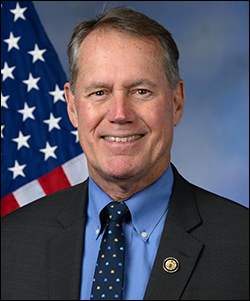
Kentucky Congressman Thomas Massie (R)

Rep. Thomas Massie (R-KY), probably the President’s top Republican US House nemesis, lost his primary to Trump-endorsed retired Navy SEAL Ed Gallrein. The vote split was 55-45 percent in Gallrein’s favor and capped a victory week for the President.

Trump’s endorsed candidates defeated two of his Republican targets in Sen. Bill Cassidy (R-LA) and Massie, and the Republicans recorded several redistricting legislative and judicial victories that improves the party’s position of holding their small US House majority.

Alabama

As expected, Sen. Tommy Tuberville (R) and ex-Sen. Doug Jones (D) both easily won their respective gubernatorial primaries last night. The result precludes a rematch of the 2020 US Senate campaign in which Tuberville recorded a 60-40 percent victory.

In the Senate race, also as expected, Rep. Barry Moore (R‑Enterprise) secured the first runoff position while Attorney General Steve Marshall and anti-human trafficking advocate Jared Hudson are locked in a tight battle for the second Republican runoff slot. It may take several days to determine the second place finisher.

For the Democrats, attorney Everett Wess and businessman Dakarai Larriett will advance to the second round. The Alabama Senate runoff elections are scheduled for June 16.

All US House incumbents were easily renominated and will become prohibitive favorites in the general election.

Georgia

With Gov. Brian Kemp term‑limited, both parties held open contests to choose their 2026 gubernatorial nominees. In the Republican primary, Lt. Gov. Burt Jones and businessman Rick Jackson secured the two runoff positions and will advance to the June 16 second round.

On the Democratic side, former Atlanta Mayor Keisha Lance Bottoms won the party nomination outright, attracting 56 percent against six opponents. She now advances directly into the general election.

In the Senate race, first‑term incumbent Jon Ossoff (D) has raised more money than any other US candidate and was unopposed in the Democratic primary.

On the Republican side, Rep. Mike Collins (R‑Jackson) and former University of Tennessee head football coach Derek Dooley qualified for the runoff. Dooley edged Rep. Buddy Carter (R-Pooler/Savannah) in a surprise finish. The two Republicans will now battle in the June 16 runoff election for the right to oppose Sen. Ossoff in November.

Turning to the Georgia House races, Jim Kingston, son of former Rep. Jack Kingston (R), claimed the open 1st District Republican nomination outright with a 52 percent victory over five candidates. The primary victory virtually assures Kingston of election in November.

In open District 10, state Rep. Houston Gaines (R-Athens) was an easy Republican primary winner, capturing 67 percent against two opponents. He is now a lock to succeed Rep. Collins in November.

The race to replace retiring 11th District Rep. Barry Loudermilk (R-Cassville) will go to a runoff. Surgeon and former congressional candidate John Cowan and Loudermilk chief of staff Rob Adkerson will advance to the second round. Finishing third in an upset result is Public Service Commissioner Tricia Pridemore who was favored as a runoff participant. The June 16 Republican runoff winner will claim the seat in November.

In solidly Democratic District 13, state Rep. Jasmine Clark (D‑Lilburn) won her party nomination outright with a 56 percent of the vote against five opponents. She is not a candidate in the special election to directly replace the late Rep. David Scott (D-Atlanta) but will take the seat in the next Congress with a general election victory. The special election is scheduled for July 28. The winner will serve only to the end of the current Congress before yielding to Clark.

Idaho

Sen. Jim Risch (R) recorded a 64 percent victory over three Republican primary opponents on his way to winning a fourth term. Realtor David Roth won the Democratic primary but will be a definitive underdog to Sen. Risch in November.

Reps. Russ Fulcher (R-Meridian) and Mike Simpson (R-Idaho Falls) were easy winners in their respective Republican primaries.

Gov. Brad Little (R), seeking a third term, topped eight minor Republican challengers with 60 percent of the vote and is not expected to encounter significant resistance heading into the November election against Terri Pickens, the 2022 Democratic Lieutenant Governor nominee.

Kentucky

In addition to the Massie defeat, Rep. Andy Barr (R‑Lexington) easily secured the Republican Senate nomination with a solid 60 percent victory over former Attorney General and 2023 gubernatorial nominee Daniel Cameron and nine others.

For the Democrats, former Louisville state Rep. Charles Booker defeated 2020 Senate nominee Amy McGrath with a 47-36 percent victory margin despite being outspent. Rep. Barr appears as a prohibitive favorite to win the general election and succeed retiring Sen. Mitch McConnell (R).

In Rep. Barr’s open 6th District, former state Senator and 2019 Lieutenant Governor nominee Ralph Alverado, who left the state to become Tennessee’s State Health Commissioner before returning, won the Republican nomination with 56 percent over four opponents. He will face Democratic winner Zach Dembo, an attorney and Navy veteran. This general election campaign could turn competitive, though Alvarado begins the campaign as the November favorite.

The four other congressional incumbents seeking renomination all won easily.

Oregon

All Beaver State incumbents seeking renomination were easy winners last night. The Governor’s race will be a rematch from 2022 because state Sen. Christine Drazan (R-Canby) decisively won her GOP primary opposite state Rep. Ed Diehl (R‑Stayton) and 2010 gubernatorial nominee and retired professional basketball player Chris Dudley. Drazan will again square off with Gov. Tina Kotek (D) in the general election.

Pennsylvania

In the Governor’s race, both incumbent Josh Shapiro (D) and state Treasurer Stacy Garrity (R) were unopposed for their party’s nomination. The Governor is favored to win a second term.

The electorates in three competitive Republican House districts chose their Democratic nominees last night, and all three races could prove pivotal in determining control of the chamber in the general election. All Pennsylvania Republican House members were unopposed for renomination.

In the Allentown/Bethlehem‑anchored 7th District, freshman Rep. Ryan MacKenzie (R‑Lower Macungie) is headed for a hard‑fought general election campaign in this politically competitive district. State Firefighters Union president Bob Brooks overcame former federal prosecutor Ryan Crosswell and Northampton County Executive Lamont McClure to secure the Democratic nomination last night. The 7th District general election is expected to draw national attention.

To the north in the Scranton area, freshman Rep. Rob Bresnahan (R‑Dallas Township) is set to face Scranton Mayor Paige Cognetti (D) in the general election. Both candidates were unopposed in their respective primaries. This race is expected to be another highly competitive general‑election contest.

In the Harrisburg‑anchored 10th District, Rep. Scott Perry (R‑Dillsburg) will again defend his politically marginal seat. Janelle Stelson, a former news anchor who held Rep. Perry to a 51-49 percent victory two years ago scored a 67 percent victory over Dauphin County Commissioner Justin Douglas meaning the November rematch is set.

Turning to the southeastern sector, as expected, Bucks County Commissioner Bob Harvie won the Democratic primary and will now challenge five-term Rep. Brian Fitzpatrick (D-Levittown) in one of just three districts nationally that voted for Kamala Harris and sent a Republican to the US House.

In the 3rd District, state Rep. Chris Rabb (D-Philadelphia) defeated state Sen. Shariff Street (D-Philadelphia) and surgeon Ala Stanford with 44 percent of the vote. Rabb will succeed retiring Rep. Dwight Evans (D-Philadelphia) in the general election.

Six States Voting Today

By Jim Ellis — Tuesday, May 16, 2026

A half‑dozen states are holding their nominating elections today, and several major races will be decided. Runoffs in the top contests are likely in Alabama and Georgia. Nominations will be settled tonight in Idaho, Kentucky, Oregon, and Pennsylvania.

Below, we highlight the notable races in each state.

Alabama

Sen. Tommy Tuberville is well positioned to secure the Republican gubernatorial nomination tonight, while Rep. Barry Moore (R‑Enterprise) and Attorney General Steve Marshall appear most likely to advance to a Republican Senatorial runoff.

Because of redistricting, only Congressional Districts 3 (Rep. Mike Rogers-R), 4 (Rep. Robert Aderholt-R), and 5 (Rep. Dale Srong-R) hold their primaries today.

The primaries for Disricts 1, Open Seat; 2, Rep. Shomari Figures (D); 6, Rep. Gary Palmer (R); and 7, Rep. Terri Sewell (D); have been postponed to Aug. 11. Districts 3, 4, and 5 saw no boundary changes in the new 2026 map, so there was no reason to delay the primary in those particular domains.

Georgia

Two statewide races will dominate Georgia’s political landscape tonight. With Gov. Brian Kemp term‑limited, both parties are holding open contests to choose their nominees. In the Republican primary, businessman Rick Jackson and Lt. Gov. Burt Jones have consistently placed first and second in most polling.

Should the results track those trends, Secretary of State Brad Raffensperger and Attorney General Chris Carr would be sidelined from advancing. On the Democratic side, the key question is whether former Atlanta Mayor Keisha Lance Bottoms can reach the 50 percent threshold needed to secure the nomination outright.

In the Senate race, first‑term incumbent Jon Ossoff (D) has raised more money than any other U.S. candidate. In the Republican primary, it appears likely that Reps. Mike Collins (R‑Jackson) and Buddy Carter (R‑Pooler/Savannah) will advance ahead of former University of Tennessee head football coach Derek Dooley.

Four open seats in Districts 1, 10, 11, and 13 will likely see party runoffs form in each campaign. Among the notable candidates expected to advance are Jim Kingston (R), son of former longtime Congressman Jack Kingston (R), in District 1; and Public Service Commissioner Tricia Pridemore in District 11.

In District 13, the primary results will determine the general‑election matchups ahead of the July 28 special election to replace the late Rep. David Scott (D‑Atlanta). Two leading contenders, state Sen. Emanuel Jones (D‑Decatur) and state Rep. Jasmine Clark (D‑Lilburn), are opting not to run in the special election.

Idaho

Expect a quiet primary night in Idaho as incumbent Sen. Jim Risch (R) and Reps. Russ Fulcher (R-Meridian) and Mike Simpson (R-Idaho Falls) all appear set for strong general election runs.

Gov. Brad Little (R), seeking a third term, faces eight minor Republican challengers and is not expected to encounter significant resistance heading into November.

Kentucky

The two major Kentucky contests are the open US Senate race and the Republican primary challenge to seven‑term Rep. Thomas Massie (R‑Garrison), a frequent critic of President Trump.

On the Republican side, Rep. Andy Barr (R‑Lexington) appears to have made all the right moves in the closing stretch of the campaign to secure the party’s nomination. If such holds true tonight, he would have the inside track to succeed retiring Sen. Mitch McConnell (R).

For Democrats, the contest is between former state Rep. Charles Booker and 2020 US Senate nominee Amy McGrath. Booker leads in most polling, while McGrath holds the financial advantage.

As President Trump successfully targeted the Indiana state Senators who opposed his redistricting push, as well as Sen. Bill Cassidy (R‑LA), who lost his primary on Saturday, Rep. Massie now becomes his most recent potential political target.

The Congressman’s Republican primary challenger is retired Navy SEAL Ed Gallrein, who holds the President’s endorsement. Polling has been competitive, but Gallrein posted a 51–44 percent advantage, outside the survey’s margin of error, in the most recently released poll (Grayhouse; May 16–17; 435 likely KY‑4 Republican primary voters).

Republican officeholders who have opposed President Trump have generally fared poorly in subsequent elections, so tonight will show whether that pattern continues in Rep. Massie’s case.

Oregon

There is little suspense in today’s Oregon primary. Incumbents seeking re-election appear secure in their respective contests. The most notable race is the Republican gubernatorial primary, where 2022 nominee Christine Drazan is viewed as the favorite over state Rep. Ed Diehl (R‑Stayton) and 2010 nominee and retired professional basketball player Chris Dudley.

Whoever wins the GOP nomination will enter the general election as a clear underdog against Gov. Tina Kotek (D), who is seeking a second term.

Pennsylvania

The electorates in three U.S. House races will select Democratic nominees tonight, and all three could prove pivotal in determining control of the chamber in the general election.

In the Allentown/Bethlehem‑anchored 7th District, freshman Rep. Ryan MacKenzie (R‑Lower Macungie) is headed for a hard‑fought general‑election campaign in this politically competitive district.

Democrats have three strong contenders vying for the nomination tonight: State Firefighters Union president Bob Brooks, former federal prosecutor Ryan Crosswell, and Northampton County Executive Lamont McClure. The 7th District general election is expected to draw national attention.

To the north in the Scranton area, freshman Rep. Rob Bresnahan (R‑Dallas Township) is set to face Scranton Mayor Paige Cognetti (D) in the general election. Both candidates are unopposed in their respective primaries tonight. This race is expected to be another highly competitive general‑election contest.

In the Harrisburg‑anchored 10th District, Rep. Scott Perry (R‑Dillsburg) will again defend his politically marginal seat. His likely opponent is 2024 nominee Janelle Stelson, a former news anchor who held him to a 51–49 percent victory two years ago. Dauphin County Commissioner Justin Douglas is challenging her in the Democratic primary, but Stelson is favored.

Louisiana Sen. Cassidy Loses

By Jim Ellis — Monday, May 18, 2026

Senate

Sen. Bill Cassidy (R-LA) loses challenge to hold US Senate seat.

Louisiana Sen. Bill Cassidy suffered a decisive defeat in Saturday’s Republican primary, even failing to qualify for the runoff election.

Rep. Julia Letlow (R-Start), with President Trump’s public support, finished first with a strong 44.8 percent of the vote against three opponents, falling just over five percentage points short of an outright victory. She will advance to the June 27 runoff against State Treasurer, physician, and former Congressman John Fleming, who outpaced Sen. Cassidy to secure second place. Dr. Fleming finished 3.5 percentage points ahead of the two‑term incumbent, a margin of nearly 14,000 votes.

Letlow carried 53 of Louisiana’s 64 parishes — and potentially 54 once all ballots are tallied. She trails Dr. Fleming by a single vote in Grant Parish. Including Grant, Dr. Fleming won eight parishes, all located within the 4th Congressional District that he represented for eight years. Sen. Cassidy managed to prevail in only three parishes, two in the New Orleans metro area and one in Baton Rouge.

The result marked another impressive primary victory for President Trump. He endorsed Rep. Letlow even before she became a Senate candidate. Sen. Cassidy had been Trump’s top Republican intra‑party target, as he is one of only two GOP Senators on the ballot this year — the other being Susan Collins from Maine — who voted for the 2021 impeachment just days before Trump left office after losing the 2020 election.

Clearly, Sen. Cassidy did not anticipate Trump’s return to the Presidency, which proved a grave political miscalculation. Of course, the Senator will remain in office to serve the final seven months of the current term.

Cassidy was first elected in 2014 and re‑elected in 2020, both under Louisiana’s jungle primary system, in which all candidates appear on the same ballot regardless of party affiliation. He defeated three‑term Sen. Mary Landrieu (D) in the 2014 runoff by a 56-44 percent margin. In 2020, he won re‑election outright in the jungle primary, earning 59.3 percent of the vote against 14 opponents, only one of whom was a Republican.

Many Louisiana political observers believe that unseating Sen. Cassidy was one factor motivating the legislature and Gov. Jeff Landry (R) to change the state’s nomination structure. Analysts have suggested that Cassidy would likely have performed better under the previous jungle primary system, where Democrats and Independents could also participate.

Instead of holding a November jungle primary concurrently with the general election followed by December runoffs for any race in which no candidate reached the 50 percent threshold, the legislature and Governor replaced the system with early closed partisan primaries for federal offices and select Louisiana state contests.

Ironically, because of the ongoing redistricting process, primaries for the US House races were not held on Saturday. Once a new 2026 congressional map is finalized, those campaigns will return to the traditional November/December schedule. As before, any candidate who secures a majority in the November vote will be elected outright.

For the Democrats, Saturday’s overwhelming first‑place finisher was farmer Jamie Davis, who captured 47.4 percent of the vote and topped his two opponents in all 64 parishes. It remains unclear whom he will face in the runoff, as the current second‑place candidate, businessman and Navy veteran Gary Crockett, leads non-profit organization executive Nicolas Albares by only 284 votes with several thousand ballots still uncounted.

In both parties, the first‑place finishers came close enough to the 50 percent mark that Rep. Letlow and Davis enter their respective June 27 runoff elections as virtual prohibitive favorites. Given Louisiana’s strong Republican lean, Rep. Letlow would then become the clear general‑election favorite once the runoffs conclude.

The Cassidy defeat brings the number of open US Senate races in the 2026 cycle to 11 – seven from the Republican side and four from the Democratic column. The next major Senate contest arrives on May 26 in Texas, where Sen. John Cornyn and Attorney General Ken Paxton are competing for the Republican nomination in what is expected to be a very close finish.

Nebraska & WV Primary Results

By Jim Ellis — Wednesday, May 13, 2026

Nebraska

The big story emerging from the Nebraska primary is whether Cindy Burbank, who last night overwhelmingly won the Democratic primary with 90 percent of the vote over Pastor Bill Forbes, will now withdraw from the race, thereby giving Independent Dan Osborn a clear path to challenge Sen. Pete Ricketts (R) in the general election.

Controversy arose over pre-primary comments she made about endorsing Osborn if she were to become the Democratic nominee before exiting the race. Those remarks prompted the Secretary of State to disqualify her candidacy, arguing that she had violated Nebraska’s candidate oath, which requires individuals seeking office to pledge that they will serve if nominated and elected.

Burbank sued to retain her place on the ballot and prevailed in court. At the time of her reinstatement, she again pledged to remain in the race and serve if elected. Whether she ultimately keeps that promise remains to be seen.

It is clear that Burbank, who raised less than $5,000 for her statewide primary campaign, is unlikely to mount a significant challenge against Sen. Ricketts. Osborn, by contrast, has already raised more than $4 million for his campaign and is clearly emerging as Sen. Ricketts’ principal opponent.

In the House races, the 2nd District Democratic primary is ending in a close contest between political consultant Denise Powell and state Sen. John Cavanaugh (D-Omaha). It appears Powell will upset Sen. Cavanaugh who was considered the favorite for the nomination.

With about 6,300 votes remaining to be counted, Powell led 38.9 – 36.8 percent. The eventual winner, presumably Powell, will advance to the general election to face Omaha City Councilman Brinker Harding, who was unopposed in the Republican primary.

The 2nd District represents a prime Democratic conversion opportunity from an electorate that twice opposed President Trump and where Republican incumbent Don Bacon is retiring after what will be 10 years of service in the US House.

In the 1st Congressional District, former Deputy Assistant Secretary of State Chris Backemeyer won the Democratic primary and will now challenge incumbent Rep. Mike Flood (R-Norfolk) in the general election.

In the 3rd CD, which stretches across the width of the state from the Wyoming and Colorado borders to Iowa and Missouri, veteran Rep. Adrian Smith (R-Gering) will face agribusiness associate Becky Stille in the general election. Nebraska’s 3rd District is one of the safest Republican seats in the country. Rep. Mike Flood is also considered a prohibitive favorite for re-election.

In the Governor’s race, incumbent Jim Pillen won renomination in the Republican primary with more than 75 percent of the vote. His general election opponent will be former state Sen. Lynne Walz (D), a cousin of Minnesota Gov. Tim Walz, the former Democratic Vice Presidential nominee.

West Virginia

Sen. Shelley Moore Capito won an easy Republican primary victory last night in the Mountain State, scoring a 66 percent win over state Sen. Tom Willis (R-Berkeley) and four minor intra-party opponents.

In the general election, she will face former Morgantown City Councilwoman Rachel Fetty-Anderson who secured a 33-27 percent victory over former state Senate President Jeff Kessler and three lesser-known Democratic candidates. Sen. Capito now becomes a prohibitive favorite in the general election.

In the congressional races, 1st District Rep. Carol Miller (R-Huntington) will square off against retired public policy analyst Vince George, who won the Democratic primary.

In northern District 2, the new Democratic nominee is political organizer Ace Parsi, who scored a close 40-38 percent victory over educator Stephanie Spears Tomana. Parsi will now face freshman Rep. Riley Moore (R-Harpers Ferry), who was unopposed for renomination.

Along with Sen. Capito, both Reps. Miller and Moore are strong favorites in the general election.

Nebraska & WV Primaries Today

By Jim Ellis — Tuesday, May 12, 2026

Two more states are holding their regular primary elections today: the Cornhusker State of Nebraska and the Mountain State of West Virginia. We have entered a primary election cycle where various states hold primaries every week from now through June 30. In May, primaries will be held today, the 12th, and on the 16th, 19th and 26th. In June, 17 more primaries will be held on every Tuesday of the month — on the 2nd, 9th, 18th, 23rd, and 30th.

Nebraska

Several Nebraska races are of note today, but none more unique than the US Senate Democratic primary.

As we saw in 2024, Independent Dan Osborn emerged as the de facto Democratic challenger to Sen. Deb Fischer (R) with the party’s official support. This year, he returns to challenge Sen. Pete Ricketts (R), who is on the ballot seeking his first full six-year term.

Ricketts, the state’s former Governor, was appointed in 2023 to replace resigned Sen. Ben Sasse (R). He was then elected in 2024 with 62 percent of the vote to serve the remaining two years of the current term.

The Democratic primary is the race to watch tonight. Two candidates are on the ballot, and the eventual nominee could ultimately withdraw from the race.

Democratic activist Cindy Burbank previously stated that she supports Dan Osborn and would withdraw from the race and endorse him if she became the Democratic nominee. The Secretary of State subsequently disqualified her candidacy, citing a Nebraska law requiring candidates to sign an oath affirming that they will assume office if elected. Burbank challenged the decision in court, and a judge later reinstated her candidacy.

The other Democratic candidate is pastor Bill Forbes, who says he supports Sen. Ricketts. So, it is likely that he would remain on the ballot should he win the party nomination in order to draw some Democratic votes away from Mr. Osborn.

Neither Democratic primary candidate has raised significant funds. According to the March 31 Federal Election Commission financial disclosure reports, Burbank had raised just $4,296 for her campaign, while Pastor Forbes reported only $1,000.

All of this points toward a general election featuring Sen. Pete Ricketts and Independent Dan Osborn. The race is expected to become expensive, but the Senator remains the clear favorite to win comfortably, regardless of what early polling may suggest.

Gov. Jim Pillen is seeking a second term and faces only minor opposition in the Republican primary. Democrats, meanwhile, are holding a two-way primary, with former state Sen. Lynne Walz, a cousin of Minnesota Gov. Tim Walz (D), expected to win the party’s nomination tonight. Gov. Pillen is favored for re-election.

Two of the state’s three congressional incumbents are seeking re-election. Rep. Mike Flood (R-Norfolk) is unopposed for renomination and will likely face former Deputy Assistant Secretary of State Chris Backemeyer, who is expected to emerge from tonight’s Democratic primary. With a partisan lean of 56.7R – 40.4D, according to Dave’s Redistricting App, Rep. Flood should face little difficulty in the general election.

Third District veteran Rep. Adrian Smith (R-Gering) sees only minor opposition in tonight’s Republican primary. He represents Nebraska’s safest Republican congressional district, with a partisan lean of 75.2 – 22.8D according to Dave’s Redistricting App. NE-3 is a sprawling district that stretches across the state from the Wyoming and Colorado borders to the Iowa and Missouri lines.

The state’s key general election battle will take place in the Omaha anchored 2nd Congressional District, where five-term Rep. Don Bacon (R-Papillion) is retiring. The district’s electorate has twice voted against President Trump, supporting Kamala Harris 52-47 percent in 2024 and Joe Biden with a 52-46 percent margin in 2020.

The 2nd District is considered one of Democrats’ top conversion opportunities in the country. Republicans will formally nominate Omaha City Councilman Brinker Harding tonight, as he runs unopposed for the party’s nomination.

The Democratic field is crowded, with six candidates competing for the nomination. The contest is largely centered on state Sen. John Cavanaugh (D-Omaha), whose father served in the US House in the 1970s, political consultant and Democratic activist Denise Powell, and former US Department of Veterans Affairs Deputy Assistant Secretary Kishla Askins.

West Virginia

A quiet primary night is expected in the Mountain State. Sen. Shelley Moore Capito (R) is seeking a third term and, although she faces five Republican challengers, the most notable being state Sen. Tom Willis (R-Berkeley), she is widely expected to secure renomination with ease. Sen. Capito is also a prohibitive favorite in the general election.

In the House, Rep. Carol Miller (R-Huntington) faces only a minor opponent in tonight’s primary. In the 2nd District, freshman Rep. Riley Moore (R-Harpers Ferry) is unopposed for renomination. Both incumbents are considered strong favorites for re-election in November.

Indiana & Ohio Primary Results

By Jim Ellis — Wednesday, May 6, 2026

Voting started up again yesterday in two Midwestern states, ending a primary lull since March. The month of May will host nine more primaries and a series of 16 Texas federal runoff elections (One US Senate; 15 US House).

Voters in Indiana and Ohio chose their nominees yesterday, and the Hoosier state Senate races stole the show. There are just two contested statewide elections in Indiana this year (Secretary of State; Comptroller) and no US Senate race.

Ohio will feature an open Governor’s campaign along with a hotly contested US Senate race between appointed Sen. Jon Husted (R) and former US Sen. Sherrod Brown (D) in addition to at least two major US House contests.

Indiana

The Indiana Senate refused to pass a redistricting map that would have enhanced the Republican standing in the US House, and President Trump threatened to target and defeat the seven GOP incumbents who foiled the redraw. The President followed through on his threat and proved successful as five of the seven targeted Senators fell to crushing defeats last night.

Possibly as a side effect of the Indiana redistricting issue, it is arguable that all Hoosier State Republican congressional incumbents who drew opposition under-performed even when winning renomination.

Freshman Rep. Jefferson Shreve (R-Indianapolis), despite having literally a 100:1 advantage in campaign resources ($2.3 million to $22,000) over his opponent was renominated with just 53 percent of the vote.

Three-term Rep. Victoria Spartz (R-Noblesville) won with a 60-40 percent margin against a Republican opponent who literally spent no money on her campaign. Similarly, incumbent Marlin Stutzman (R-Howe/Ft. Wayne) recorded a 67 percent victory percentage against an opponent who had less than $100,000 in resources.

An incumbent who faced a legitimate challenger was 4th District Rep. Jim Baird (R-Greencastle). He defeated his opponent, state Rep. Craig Haggard (R-Mooresville), by a 61-30 percent margin. This was not an expensive primary, and Rep. Baird at 80 years of age had been laid up from injuries suffered in an auto accident. Therefore, his 61 percent victory figure is certainly acceptable.

The only Democratic incumbent who faced a challenge was Rep. Andre Carson (D-Indianapolis). Against three opponents, he won renomination with 62 percent of the vote.

Irrespective of all challenged Indiana US House members recording below average victory percentages for incumbents seeking renomination, the entire nine-member delegation should easily win their respective general election campaigns.

Ohio

Several of the Ohio general election campaigns will be of national importance.

Businessman and former presidential candidate Vivek Ramaswamy won the Ohio Republican gubernatorial nomination last night with a landslide 82 percent of the vote. He now faces former Ohio Health Director Amy Acton who was unopposed in the Democratic primary.

Appointed Sen. Jon Husted had no Republican opposition in his special election primary. For the Democrats, as expected, former Sen. Sherrod Brown was renominated with 89 percent of the vote. The two will square off in November for the right to serve the final two years of the current term.

When J.D. Vance resigned his Senate seat to become Vice President, a special election became necessary to fill the balance of the term after Husted, then the state’s Lieutenant Governor, was appointed. In order for the 2026 winner to secure a full six-year term, the individual will be tasked with running again in 2028.

No surprises occurred in the Ohio House races. Two races of note will be featured as national campaigns in the general election, those from Cincinnati and Toledo.

In the 1st District, former CIA case officer Eric Conroy easily won the Republican nomination and now will challenge two-term Rep. Greg Landsman (D-Cincinnati) in a district that the Ohio redraw transformed from a lean Democratic seat to one that tilts Republican.

In the 9th CD, where then-state Rep. Derek Merrin (R) came within less than a percentage point of upsetting veteran Rep. Marcy Kaptur in 2024, we will see a re-match. Merrin defeated a crowded Republican field last night in order to earn a second chance of wresting the House seat away from Kaptur, who was first elected in 1982.

Redistricting made the 9th District even more Republican than it was in 2024, so this challenge race now becomes one of the best GOP conversion opportunities in the nation.

Kentucky Race Taking Shape

By Jim Ellis — Friday, April 10, 2026

Senate

For months, Rep. Andy Barr (R-Lexington) enjoyed a commanding lead in campaign resources over his principal opponent, former Attorney General and 2023 gubernatorial nominee Daniel Cameron, but not a polling advantage. The situation has now changed.

While Rep. Barr undoubtedly still has more money in his campaign account than does Cameron, he now is forging ahead in polling, too. According to the latest Emerson College survey, conducted for Nexstar and WDKY-TV in Lexington (March 29-31; 400 likely Kentucky Republican primary voters; multiple sampling techniques), Rep. Barr now leads Cameron and businessman Nate Morris by a 28-21-15 percent margin.

While Rep. Barr had placed first in two previous surveys after routinely trailing, both spreads were well within the polling margin of error meaning he was virtually tied with Cameron. The new Emerson College survey is the first publicly released poll to find Rep. Barr inconclusively leading the open Blue Grass State US Senate Republican primary.

According to the Federal Election Commission year-end 2025 filing, Rep. Barr had raised over $6.5 million as compared to Cameron’s $1.6 million. A total of $1.44 million of Barr’s funding came as a transfer from his US House campaign committee. As filing closed at the end of December, Barr reported almost $6.5 million cash-on-hand, while Cameron declared only $630,016 remaining in his campaign account, meaning a 10:1 Barr advantage.

Though no candidate has yet to announce how much their campaigns have raised in the 1st Quarter 2026 (the filing deadline is April 15), it is presumed that the Barr financial lead will have grown larger even though he has been spending a portion of his financial advantage to become better known to Republican primary voters beyond his 6th Congressional District constituency.

The wild card in the race is Morris. A wealthy business owner, Morris has been advertising for months. He is running against the Republican establishment, and repeatedly trashes retiring Sen. Mitch McConnell. Others, even in Republican primaries, have similarly attacked McConnell, but none were running in Kentucky.

The Morris angle of going after McConnell and tying his opponents to the former Senate Majority Leader is a questionable one when campaigning before a Republican electorate that has routinely strongly supported the seven-term incumbent since he first ran for the Senate in 1984.

Morris has already put $5 million of his own money into his statewide campaign, and Elon Musk is reportedly donating $10 million to a Super PAC supporting Morris’ effort. Therefore, he is a serious third candidate but one who still lags considerably behind the two front runners.

While we are still weeks away from the May 19 primary election, the seeds are set for a Barr victory in the plurality Republican primary, meaning beginning the general election cycle with a clear advantage.

Emerson also tested the Democratic side as part of their March 29-31 statewide poll, surveying 549 likely Democratic primary voters. Here we see former Louisville state Rep. Charles Booker topping former US Senate and ex-congressional nominee Amy McGrath, a retired Marine Corps officer, by a 2:1 clip, translating into a 36-18 percent advantage.

McGrath, a proven strong fundraiser, opposed both Sen. McConnell and Rep. Barr in previous elections and fared poorly despite being at parity with her stronger Republican opponents in campaign resources. Regardless of who comes through the Democratic primary, the general election will prove a major obstacle for the individual irrespective of funding, the political climate’s status at the time of the general election, and trends that might be developing in other states.

At this point, it appears Rep. Barr is now in the best position to win the open GOP Senate nomination and carry that momentum through toward winning the general election.

Kentucky Senate: A GOP Toss-Up

By Jim Ellis — Friday, March 20, 2026

Senate

A newly released Public Opinion Strategies survey confirms that Kentucky Rep. Andy Barr (R-Lexington) and former Attorney General and 2023 gubernatorial nominee Daniel Cameron are evolving into a toss-up Republican primary battle, which is the first step toward succeeding retiring Sen. Mitch McConnell (R).

Businessman Nate Morris is the third significant GOP Senatorial candidate, though nine additional Republicans will be on the ballot. Morris has injected more than $5 million of his own money into his Senate campaign and is positioned to benefit from a $10 million Super PAC that Elon Musk supported. Still, he significantly trails Cameron and Barr.

The POS survey finds the former Attorney General retaking the lead at 31-29 percent over Rep. Barr, meaning a virtual tie, while Morris, who has advertised heavily, trails with a 13 percent support figure.

Two polls from last month found Rep. Barr, who has a huge resource advantage over Cameron, claiming the first position.

A Feb. 4 online Quantus Insights study of 870 likely Republican primary voters saw a virtual tie at the top – Barr leading 28-27 percent – with Morris pulling 17 percent. The Emerson College Kentucky Senate poll (Jan. 31-Feb. 2; 523 likely Kentucky Republican primary voters; multiple sampling techniques) likewise found a similar result, 24-21-14 percent, with Barr leading Cameron and Morris in said order.

Therefore, at this point, two months before the May 19 primary election, we see an evolving close finish with Barr having a slight edge.

One place where the Congressman has a clear advantage relates to fundraising and campaign resources. New reports will be made public in a month, but the year-end 2025 totals found Mr. Barr holding at that time $6.5 million in his campaign account versus just $630,000+ for Mr. Cameron.

Mr. Morris has also raised or self-funded more than $6 million, but he had spent three-quarters of his resources before the end of 2025. He reported $1.4 million in the bank at that time, so he too is considerably behind Rep. Barr in terms of reserved campaign dollars. Morris could loan further money to the race, but the question remains as to how far he will tap his personal assets to compete in this Senate campaign.

Since only 25 percent of the Morris campaign assets come from others, it is likely that he will have to further rely upon himself to promote his campaign effort. He will be receiving major support from the substantial unconnected Super PAC that Musk supports, but obviously the Morris campaign cannot control or influence the entity’s messaging strategy.

The Democrats are clearly in the underdog position in this race, and have been since Gov. Andy Beshear, who could have put the open Senate race in play, opted to prepare a run for President.

Four of the seven filed Democratic candidates are competitive for the nomination. Former US Senate and congressional nominee Amy McGrath, a retired Marine Corps officer, is a strong fundraiser, but she fared poorly in a 2018 congressional campaign against Rep. Barr and in a challenge opposite Sen. McConnell two years later.

State House Minority Leader Pamela Stevenson (D-Louisville), former state Representative and 2020 and 2022 US Senate candidate Charles Booker, and thoroughbred horse trainer Dale Romans also have a chance to claim the party nomination.

Post-primary, the eventual Republican nominee will be rated as the favorite to win the general election and succeed Sen. McConnell, the former Majority Leader, who will leave the body next year after serving what will have been 42 years in office.

Stratton, Bean Win; Jackson, Jr. Loses

By Jim Ellis — Wednesday, March 18, 2026

Illinois Primary

The important Illinois primary produced the 2026 election cycle’s first full slate of partisan nominees last night. The Land of Lincoln hosted the nation’s fifth regular primary election, but the first allowing plurality finishes.

In the four previous March primaries, from Arkansas, Mississippi, North Carolina, and Texas, only candidates who secured majority support were nominated. In the campaigns where all finishers were under the majority threshold, the top two vote getters advanced into runoff elections.

Senate

Lt. Gov. Juliana Stratton, with strong support from Gov. J.B. Pritzker’s political machine, defeated two sitting members of the House, Reps. Raja Krishnamoorthi (D-Schaumburg) and Robin Kelly (D-Matteson/Chicago) in last night’s Illinois open Senate Democratic primary.

Throughout the great preponderance of the primary campaign cycle, Rep. Krishnamoorthi had developed what appeared to be dominating polling and fundraising leads. In the Past two weeks, however, momentum clearly shifted to Stratton and this closing effort propelled her to a 39.7 – 33.3 percent victory over Krishnamoorthi.

Rep. Kelly, who was never a serious factor, pulled 18.4 percent of the vote. She did better in Cook County, garnering 23 percent, and won her home county of Kankakee, but otherwise, Kelly failed to make her mark throughout the rest of the state.

Stratton carried Cook County, which was expected, with just over 40 percent of the vote. The surprise was her strength downstate, basically running at parity with Krishnamoorthi outside of Cook County.

This race’s final publicly released poll, from FM3 Research (March 10-12; 678 likely Illinois Democratic primary voters), proved spot on. Its survey result from a week ago found Stratton leading Rep. Krishnamoorthi 38-33 percent.

On the Republican side, former state party chairman Don Tracy won his party’s nomination with 40 percent of the vote. He will be a decided underdog to Stratton in November. The winner will replace retiring Sen. Dick Durbin (D).

Governor

Incumbent J.B. Pritzker was unopposed in the Democratic primary as he seeks a third consecutive term as the state’s chief executive.

On the Republican side, former state Senator and 2022 gubernatorial nominee Darren Bailey won renomination setting up a re-match in November. Four years ago, Gov. Pritzker defeated Bailey by a 55-42 percent count. We can expect a similar result later this year.

House

All of the significant House primary action was on the Democratic side because the party is risking five seats through incumbent retirements and with Reps. Kelly and Krishnamoorthi running for the Senate. While the four hotly contested open seat primaries had large candidate fields, three of the four came down to two principal contenders.

The fifth open seat, that of retiring Rep. Jesus “Chuy” Garcia (D-Chicago), featured only one candidate, the Congressman’s chief of staff, Patty Garcia (no relation to the Congressman). We expect to see several prominent Democrats qualify as Independents to force a competitive general election, however.

In the Chicago-anchored 2nd District where former Congressman Jesse Jackson Jr. was attempting a comeback, Cook County Commissioner Donna Miller instead defeated the former 10-term incumbent, 40-29 percent. Jackson, son of the late civil rights leader, Jesse Jackson, was forced to leave office in 2012 after being convicted of bribery and misusing government and campaign funds. Miller is now a lock to win the general election.

The second comeback attempt, from former Congresswoman Melissa Bean, was successful. She defeated businessman Junaid Ahmed 32-27 percent. Bean was originally elected in 2004 but defeated in 2010. She now returns to succeed Rep. Krishnamoorthi in the state’s Chicago suburban 8th District. This version of the 8th, unlike the seat to which Bean was originally elected, is safely Democratic.

Turning to the 7th CD, the seat that retiring veteran Chicago Congressman Danny Davis represents, state Rep. LaShawn Ford (D-Chicago) defeated Chicago City Treasurer Melissa Conyears-Ervin 24-20 percent. He will now advance into Congress with what is predicted to be an easy general election win. This is a good example of why some states employ a runoff, because the final winning percentage in this situation is likely to be under 25 percent.

Ninth District Rep. Jan Schkowsky (D-Evanston) is retiring after serving what will be 36 years in the House at the end of this Congress. Her successor will be Evanston Mayor Daniel Biss, who won the Democratic primary with a close 29-26-20 percent win over free Palestine activist Kat Abughazaleh and state Sen. Laura Fine (D-Glenview). All other House incumbents from both parties who faced primary opposition won easily.

Next, we will see the special congressional election runoff in Georgia on April 7, followed by New Jersey’s 11th District special general election on April 16. The next regular primaries are not until May 5 in Indiana and Ohio. The month of May will feature 11 regular primaries and the Texas runoff election.