
Category Archives: Presidential campaign

Biden Still in Driver’s Seat, But Down in New York; Maloy Still Struggles in Utah; Filing Closes in Delaware

By Jim Ellis — Friday, July 12, 2024

President

President Joe Biden / Photo by Gage Skidmore

President Biden: Still in the Driver’s Seat — While pressure continues to mount on President Joe Biden to withdraw from his re-election candidacy, some still believe there is a way to change the rules at the Democratic National Convention to allow a free vote of the delegates. Doing so will be highly unlikely, however, because Biden’s total delegate vote includes 1,581 individuals not bound by party rules but rather state law. Therefore, those delegates will not be free.

To win the party nomination, a candidate must have 1,968 votes. This means from the remaining delegates, the president would need only keep 387 of the “freed” 2,368 delegates who are already pledged to vote for him. This factors into just 16.3 percent of the non-state law bound delegates.

The party would also have the option of changing the convention rules to allow the Super Delegates to vote on the first ballot, something they cannot currently do. The Super Delegates are officially called PLEO (Party Leader Elected Official) votes. There are 747 of these individuals. To add them, however, the non-PLEO delegates would have to vote to dilute their own power. It is unlikely a majority of the non-PLEO delegates will vote in such a manner even if this unlikely choice is presented.

House

New York: Biden’s Poll Deficit — The political situation continues to deteriorate for President Biden. As reported on X from journalist Jacqueline Sweet, Democratic polls that won’t be published apparently report that the president is trailing in two potential Democratic conversion districts by double-digit margins, seats that he carried in 2020.

The two are NY-17 and NY-19 that freshmen Reps. Mike Lawler (R-Pearl River) and Marc Molinaro (R-Red Hook) currently represent and won with close margins. As a point of reference, Biden carried the 17th with a 54-44 percent margin in 2020, and a 51-47 percent split in NY-19.

UT-2: Canvass Period Begins; Recount to Follow — Utah US Rep. Celeste Maloy (R-Cedar City) is not out of the woods yet from her close Republican primary race against businessman Colby Jenkins, conducted on June 25. The Utah election officials finally finished the end count, and what was a 309-vote margin for Maloy has dropped to 214 votes.

The process is not yet finished. The election staff must conduct a canvass to certify a final vote. Since the current margin is now within the range where a recount can be requested, Jenkins says he will do so after the canvass. This means the counting and recounting process could drag on until the end of July.

States

Delaware: Candidate Filing Closes — Candidate filing has now closed for the late Delaware primary scheduled for Sept. 10. Though the state features an open Senate and at-large House seat, little in the way of competition will be seen either in the Democratic primary or general election.

US Rep. Lisa Blunt Rochester (D-Wilmington) is a lock for the party nomination and the November election and will replace retiring Sen. Tom Carper (D) in the next Congress. State Sen. Sarah McBride (D-Wilmington) is the prohibitive favorite to win the party primary and the November election to replace Rep. Blunt Rochester. Upon election, she will become the first transgender individual elected to Congress.

The only competition appears to occur in the open governor’s race as incumbent John Carney (D) is ineligible to seek a third term. Lt. Gov. Bethany Hall-Long, New Castle County Executive Matt Mayer, and National Wildlife Federation CEO Collin O’Mara are all competing for the Democratic nomination. The eventual primary winner will then punch his or her ticket to the governor’s mansion.
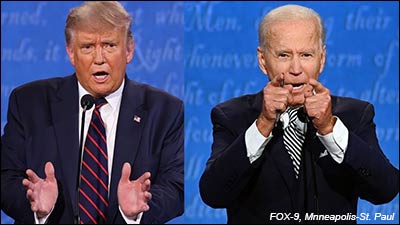
Polls Say Biden Better Than Others vs. Trump, But Biden Losing in Solid Dem California District; Split Poll in Wisconsin; Dead Heat in AZ-1

By Jim Ellis — Thursday, July 11, 2024

President

Trump vs. Biden – how the candidates match up.

National Polls: Biden, Better Than Others — Emerson College, after releasing their swing state results two days ago, publicized their latest national data (July 7-8; 1,370 registered US voters; multiple sampling techniques) that tested former President Donald Trump against President Joe Biden, and then individually opposite other supposed potential replacement presidential nominees.

Paired with President Biden in the head-to-head ballot test, Trump posts a 46-43 percent advantage. If Vice President Kamala Harris were the party nominee, Trump would lead by a much larger 49-43 percent. Opposite California Gov. Gavin Newsom, the Trump advantage is 48-40 percent, and it extends to 48-38 percent if Gov. Gretchen Whitmer (D-MI) were his opponent.

Once again, we see further evidence that despite the negative talk surrounding President Biden since the CNN presidential debate, he still appears to be the Democrats’ strongest option.

Rep. Mark Takano: Biden Losing in His District — Reports are circulating that California Rep. Mark Takano (D-Riverside) is quoting from a poll of his CA-39 district that apparently shows President Biden losing among the congressman’s constituents. Assuming the accuracy of the poll, this would be a significant data point. President Biden carried the district 62.0 – 35.8 percent in 2020, and Rep. Takano won re-election here in 2022 with 57.7 percent of the vote in the post-redistricting 39th District.

CA-39 sits wholly within Riverside County and contains the city of Riverside. It is a largely minority district. The Voting Age Population figure for Hispanics is 58.5 percent as compared to 22.4 percent for non-Hispanic Whites. The FiveThirtyEight data organization rates the seat as D+23. The Dave’s Redistricting App statisticians calculate a 61.6D – 36.4R partisan lean based upon vote history. The Daily Kos Elections statisticians rank CA-39 as the 111th-safest seat in the country. Though national polling doesn’t suggest that the president is in dire political straights, a poll such as this in a safe Democratic congressional district may.

Senate

Wisconsin: Another Split Poll — Again, we see the familiar pattern from a survey where former President Trump is leading in a state as is the Democratic Senate candidate. A Republican polling firm and a Democratic survey research operation again combined efforts to conduct a Wisconsin poll for the AARP organization (Fabrizio Ward & Impact Research; June 28-July 2; 1,052 likely Wisconsin voters; live interview & text). They found former President Trump leading President Biden by a 44-38 percent margin. (The CNN presidential debate was June 27.) When moving to the Senate race, however, it is the Democratic candidate, incumbent Sen. Tammy Baldwin, who leads by a similar margin, 50-45 percent.

This pattern of Trump running well ahead of the Republican Senate candidate is present in several other states. This could be due to the voters being more familiar with the incumbent Democrat, or potentially the participants deliberately splitting their ticket so as not to give Trump too much power.

It will be interesting to watch what the Republican strategists do to break this syndrome, and whether their approach will work. For the GOP to maximize their opportunities on a favorable national Senate map, they must secure multiple conversion seats in order to protect themselves against favorable Democratic maps in the 2026 and 2028 election cycles.

House

AZ-1: Dead Heat Dem Primary — Arizona’s 1st Congressional District will feature a very tight contest between Rep. David Schweikert (R-Fountain Hills) and whomever the Democrats nominate from their crowded Aug. 6 primary election. The FiveThirtyEight data organization rates the 1st CD as R+7, but the Daily Kos Elections statisticians project the seat as the 18th most vulnerable in the Republican Conference. President Biden won here in 2020 by a narrow 50.1 – 48.6 percent margin.

A recent Noble Predictive Insights survey of the 1st District likely Democratic primary voters (June 25-27; 420 respondents; text) see ballot test results that place almost all of the candidates in position to win the upcoming party primary. The eventual winner will move into a toss-up general election campaign against Rep. Schweikert who won re-election two years ago with only a 50.4 – 49.6 percent margin against businessman Jevin Hodge. Hodge chose not to seek a rematch despite his strong showing in the 2022 campaign.

Former Arizona Democratic Party chairman Andrei Cherni and ex-state representative and physician Amish Shah are tied for first place with just 16 percent of the vote apiece according to the Noble poll. Following closely with 14 percent is former news anchor Marlene Galan Woods, the widow of late Attorney General Grant Woods (D). Investment banker Conor O’Callaghan then trails with eight percent support. A full 35 percent say they are undecided. Therefore, this primary will become a political shootout in the closing weeks.

RFK Jr. Off Colorado Ballot;
Cruz’s Lead Dwindles in Texas; Baldwin Up in Wisconsin; Mondaire Jones Fails to Win Nomination

By Jim Ellis — Wednesday, July 10, 2024

President

2024 Libertarian Party nominee, Chase Oliver.

Colorado: National Libertarians Rebuff State — The Colorado Libertarian Party’s plan to replace the Libertarian national nominee, Chase Oliver, with Robert F. Kennedy Jr. on their state ballot has been thwarted. The national office has already sent the official nomination papers to the Colorado Secretary of State designating Oliver as the party’s nominee. Colorado authorities have declared the form, signed by the national Libertarian Party Secretary, as legal and valid. Therefore, it will be Oliver, and not Kennedy, who will appear on the Colorado ballot in November.

Senate

Texas: Cruz’s Lead Dwindles in New Poll — The Manhattan Institute conducted a poll of likely Texas voters (June 25-27; 600 likely Texas general election voters; live interview & text) asking electoral questions and probing the respondents on their positions involving transgender issues.

While the respondents self-identified as conservative by a 44-21 percent division over liberal, Sen. Ted Cruz (R) could only muster a 46-43 percent lead over Rep. Colin Allred (D-Dallas). This, while former President Donald Trump was leading President Joe Biden within the same polling universe, 45-36 percent.

Most of the disparity came from Sen. Cruz’s upside-down favorability index, which found a nine-point deficit when comparing those who have a favorable opinion of the two-term senator to those who do not (42:51 percent). While Rep. Allred has a positive favorability index, 33:21 percent, almost half of the respondents (45 percent) stated they are unfamiliar with the congressman.

Wisconsin: Sen. Baldwin Expands Advantage — SoCal Research, polling for the On Point Politics blog (June 30-July 2; 490 registered Wisconsin voters) finds Sen. Tammy Baldwin (D) expanding her previously smaller lead to a double digit margin, 50-38 percent, over businessman Eric Hovde (R).

The poll, however, seems flawed. First, only 490 registered voters were sampled, a small number for a state with eight congressional districts. Second, the survey’s respondent universe was comprised of 37 percent self-identified Republicans and only 32 percent who aligned themselves with the Democratic Party. A total of 30 percent consider themselves Independents. While Wisconsin does not register voters by political party, this split appears too favorably Republican when compared with the electorate’s voting history, one that consistently delivers razor thin general election margins.

Surprisingly, such a sample gives Democrat Baldwin her best numbers since mid-May. For a Republican-favorable sample, this ballot test appears inconsistent. Comparing to the presidential contest, which is consistent with other polling, former President Trump records a one-point, 44-43 percent, edge over President Biden.

House

NY-17: Jones Loses Working Families Ballot Line — After a recount of the New York Working Families Party 17th Congressional District primary, candidate Anthony Frascone, as formally announced Monday, has officially won the party nomination and will appear on the November ballot.

Former New York Democratic Congressman Mondaire Jones was expected to win the nomination but failed to do so. In New York, the minor parties can award their ballot line to a major party candidate.

The fact that Jones will not have votes coming from the Working Families Party line will likely benefit freshman Rep. Mike Lawler (R-Pearl River), who is fighting to win re-election in a Hudson Valley-anchored district that the FiveThirtyEight data organization rates as D+7 and carries a 56.6D – 41.3R partisan lean according to the Dave’s Redistricting App statisticians. In 2022, Lawler upset then-Rep. Sean Patrick Maloney (D) with a slight 49.3 – 48.6 percent victory margin.

MO-1: Rep. Bush Gaining Dem Leader Support — Over the July 4th holiday, St. Louis Mayor Tishaura Jones (D) endorsed Rep. Cori Bush’s (D-St. Louis) bid for renomination on Aug. 6. She faces a strong challenge from former St. Louis County prosecutor Wesley Bell. Rep. Bush is viewed as highly vulnerable in the Democratic primary. Unlike when Rep. Jamaal Bowman (D-NY) was denied renomination on June 25, the House Democratic leadership is coming to Rep. Bush’s aide in united fashion. House Minority Leader Hakeem Jeffries (D-NY), Minority Whip Katherine Clark (D-MA), and House Democratic Conference Chairman Pete Aguilar (D-CA), all signed a group endorsement statement for the congresswoman.

While Rep. Bowman’s defeat appeared evident for several weeks, the St. Louis Democratic battle looks to be a much tighter contest. Heavy outside spending is again present in this race, but not to the degree that we saw at a commensurate point against Rep. Bowman. This is still a battle to watch early next month. Rep. Bush, while vulnerable, is in a stronger political position than her fallen “Squad” colleague.

Surprising Swing State Polling

SWING STATES: Arizona, Georgia, Michigan, Nevada, North Carolina, Pennsylvania, Wisconsin

By Jim Ellis — Tuesday, July 9, 2024

Polling

Bloomberg News, partnering with the Morning Consult public affairs organization, released post-debate polling data in the seven key swing states during the July 4th holiday break. The survey results raised eyebrows in several ways.

Morning Consult conducted the studies in Arizona, Georgia, Michigan, Nevada, North Carolina, Pennsylvania, and Wisconsin. They surveyed voters from July 1-4 in Georgia, Nevada, North Carolina, and Pennsylvania. In Arizona, Michigan, and Wisconsin, the sampling period was extended to a fifth day, expanding the interview time to July 1-5.

The sampling universe in each state spanned from a low of 452 registered voters (Nevada) to a high of 794 registered voters (Pennsylvania). In each case, the respondent universe was selected through a stratified sampling process and the individuals answered the survey questions online.

In each state, the pollsters tested President Joe Biden and former President Donald Trump with Independents Robert F. Kennedy Jr., and usually a combination of the other independent or minor party candidates, Jill Stein (Green Party), Dr. Cornel West (Independent), and Chase Oliver (Libertarian Party). The pollsters also asked a follow-up question that isolated Biden and Trump in a one-on-one pairing.

The Bloomberg/Morning Consult analysis indicated that the debate, contrary to the opinion of many television news pundits and several Democratic officials who are calling for President Biden to withdraw from the race, has changed little in terms of the political horse race among the states that will largely determine the November outcome.

This may or may not be the case, and further research is needed to better determine where the national election stands. Though President Biden was detected as leading in two states, Michigan and Wisconsin, over 55 percent from the aggregate seven-state sample stated their belief that he should withdraw from the campaign. This number includes 58 percent responding in such a manner from the Independent segment and 29 percent who self-identify as Democratic participants.

Conversely, former President Trump hit an all-time high in a Pennsylvania survey, as Bloomberg/Morning Consult detected a seven-point advantage when the two presumptive nominees were tested in a head-to-head question. Staying with the Pennsylvania head-to-head, the Trump support number reached 51 percent, which is the only such result for either candidate within the whole seven-state survey series. In two other states, Arizona and Nevada, Trump reached the 48 percent plateau on the head-to-head question. President Biden reached as high as 48 percent in only one state, Michigan, again in response to the head-to-head question.

In Arizona, Trump led Biden by seven percentage points when the independent and minor party candidates were included. His lead dropped to three points in the head-to-head question. The seven points represented an improvement here for Trump, though he has led in all 20 Arizona polls conducted since Jan. 1.

The Georgia numbers still favored Trump but appeared to be down a bit from other recent surveys. As in Arizona, Trump has led in every poll conducted here (17) since the first of this year.

Michigan has been back and forth all year, usually by a point or two. This Bloomberg/ Morning Consult poll, however, stakes Biden to one of his better showings, leading Trump by six points within the multiple candidate field and five in the head-to-head pairing.

Nevada is the third state where Trump has led or been tied in all 2024 surveys (17). In the Bloomberg/MC poll, his numbers are still strong. Within the multiple candidate field, Trump holds a six-point lead as compared to a plus-3 margin in the head-to-head.

North Carolina is another state where Trump continues to poll well. In the Bloomberg/MC study, he leads the multiple candidate field by two points, and three over Biden in the head-to-head. This from a state where he led in only 25 percent of the 2020 polls yet carried the final total by just over a percentage point.

As previously mentioned, Trump scores his best head-to-head number of the cycle (plus-7) in the Bloomberg/MC Pennsylvania poll. From the multiple candidate field, his lead is three percentage points.

Wisconsin is the other state where Biden forges a current lead according to the Bloomberg/MC data. Here, the president has a two-point edge within the multiple candidate field and three over Trump in the head-to-head.

As we have seen, several of the data segments produced unusual patterns, meaning more information is needed to obtain a better post-debate picture of how the electorate is responding. Even though this polling series generally shows Biden rebounding from the debate, it appears that former President Trump would convert four states (Arizona, Georgia, Nevada, Pennsylvania) and keep North Carolina, which would allow him to exceed the 270 electoral vote threshold (287 EVs) and claim the presidency.

More States in Play

By Jim Ellis — Wednesday, July 3, 2024

President

MORE SWING STATES IN PLAY: Arizona, Georgia, Michigan, Minnesota, Nevada, North Carolina, Pennsylvania, Virginia, Wisconsin (and possibly Maine, New Hampshire, New Jersey, and New Mexico)

Recent polling data suggests that several surprising states are becoming competitive. In addition to Minnesota and Virginia, the former of which has been close for weeks and the latter showing dead heat signs within the last 14 days, four more states are now returning tight polling numbers.

As has been the case since the beginning of the year, Arizona, Georgia, and Nevada have been reporting strong numbers for former President Donald Trump. In fact, the 19 polls conducted in Arizona since Jan. 1 finds Trump leading in each. The Georgia data projects a similar pattern. There, 16 surveys have been conducted in 2024, again with Trump leading in all. The Nevada numbers report the same pattern as Georgia.

It’s also been common political knowledge that the three key Great Lakes states, Michigan, Pennsylvania, and Wisconsin, have been in the toss-up category throughout the current year. Recently, the three have all leaned towards Trump, and likely will report an exaggerated trend at least for the short-term post-debate period.

If the Arizona, Georgia, and Nevada trends hold through the election, and Trump converts all three, he would only need one more state of any size to win the national election. Now, it appears several others are coming into the observance realm.

New polling finds the race coming into dead heat territory in Maine, New Hampshire, New Jersey, and New Mexico, all of which have been Democratic strongholds for years.

The last time Maine and New Jersey went for a Republican presidential candidate occurred in 1988, when the states’ electorates supported George H.W. Bush over Michael Dukakis. New Hampshire last voted Republican in 2000 for George W. Bush against Al Gore, while New Mexico supported the latter Bush in 2004 opposite John Kerry. The previously mentioned Minnesota hasn’t voted for a Republican presidential candidate since 1972, while Virginia, like New Mexico, also favored then-President Bush over Kerry 20 years ago.

St. Anselm College on Monday released their latest New Hampshire poll (June 28-29; 1,700 registered New Hampshire voters; online) and sees Trump taking a 44-42-4 percent lead over President Joe Biden and Independent Robert F. Kennedy Jr.

The co/efficient firm tested the New Jersey electorate (June 26-27; 810 likely New Jersey voters; live interview & text) and these results also show Trump ahead in an unlikely state, 41-40-7 percent.

The New Mexico data still finds President Biden leading, but barely. The 1892 polling organization (June 19-24; 600 likely New Mexico voters) posts Biden to only a one-point lead, 43-42-8 percent over Trump and Kennedy.

In Minnesota, a place where the two presidential candidates have consistently battled in polls to within three-point margins for most of the year, Emerson College (June 13-18; 1,000 registered Minnesota voters; multiple sampling techniques) recently projected Trump to a one-point edge.

The Critical Insights firm tested the Maine electorate (June 12; 609 registered Maine voters; live interview and online) and found Trump recording a one-point advantage in this state as well, 41-40 percent, with 19 percent going to other candidates. Maine features a Ranked Choice Voting system, so even if Trump manages to secure plurality support in the regular election, he would likely lose in the Ranked Choice rounds.

Fox News conducted the most recent Virginia poll (June 1-3; 1,107 registered Virginia voters; live interview) and this solidly Democratic state, too, turned in a ballot test within dead-heat range. According to the Fox results, Biden would hold a very slim 42-41-9 percent edge.

Typically, a Democratic presidential nominee would not have to exert much effort to hold these aforementioned states in the party column. The fact that they are currently in toss-up range, and all the studies but the New Hampshire poll were conducted before Thursday’s CNN presidential debate, suggests that the electoral map is legitimately becoming more expansive.

At least for the short term, it appears evident that the campaign will expand beyond the traditional seven swing states that have been the deciding factors in the last two elections.

Surprising Wisconsin Presidential Poll, Yet Sen. Baldwin Maintains Lead & Close WI House Race; Sheehy Leading in Latest Montana Survey; Good’s Virginia Recount Timetable

By Jim Ellis — Tuesday, July 2, 2024

President

Wisconsin: Marquette Poll Yields Surprising Responses — Marquette University Law School released their quarterly Wisconsin electorate poll (June 12-20; 871 registered Wisconsin voters; live interview) and found some seemingly inconsistent answers particularly relating to former President Donald Trump’s New York conviction.

Marquette poll yields surprising results. (Click here or on image above to see: Marquette University Law School’s released quarterly Wisconsin electorate poll)

On the presidential ballot test question, the registered voter sample broke 50-50 percent between President Joe Biden and former President Donald Trump when undecideds were pushed, and 44-44 percent on the initial question. Among those respondents considering themselves definite or likely voters, Biden held a 51-49 percent edge when respondents were pushed. When the independent and minor party candidates were added to the questionnaire, Trump went ahead 43-40 percent.

Perhaps most noteworthy, in responding to the question regarding Trump’s conviction, by a 54-28 percent margin, independents believe the former president is guilty of the charges. Yet, on the ballot test question, independents still broke for Trump 57-41 percent. This means that many of the Wisconsin respondents who believe Trump was guilty are still willing to vote for him in the general election.

Senate

Montana: Sheehy Leading in Latest Survey — Largely confirming the previously published Emerson College poll, a new survey again shows former President Trump with a huge Montana lead and GOP US Senate candidate Tim Sheehy far behind the top of the ticket but still within a position to win. The Fabrizio Lee & Associates survey (June 3-5; 500 likely Montana general election voters; live interview & text) finds Sheehy pulling ahead of Sen. Jon Tester (D) with a 46-43-4 percent lead. The ballot test included Libertarian candidate Sid Daoud, but not Green Party nominee Robert Barb. Both are expected to be on the general election ballot.

In a straight Tester-Sheehy head-to-head result, the two men are tied at 48 percent apiece, but 41 of Sheehy’s 48 percent say they are definitely voting for him versus only 35 percent of Sen. Tester’s contingent who say likewise.

Former President Trump leads President Biden by a whopping 54-36 percent. The generic question, i.e., “would you be most likely to vote for the Republican candidate or Democratic candidate for senator,” breaks 52-40 percent in favor of the Republican.

Wisconsin: Sen. Baldwin Maintains Lead in Regular Poll — As stated in the presidential section above, the Marquette Law School released their regular quarterly poll of the Wisconsin electorate (June 12-20; 871 registered Wisconsin voters; live interview) and in the Senate race again finds Sen. Tammy Baldwin (D) leading Republican Eric Hovde by a 52-47 percent count when the undecided respondents were prompted to make a choice. On the initial question, Sen. Baldwin led 45-38 percent with 17 percent indicating they are undecided.

House

WI-3: Looming Close Race — The GQR survey research firm went into the field over the June 10-16 period (400 likely WI-3 general election voters; live interview) and finds western Wisconsin Rep. Derrick Van Orden (R-Prairie du Chien) holding only a small lead over small business owner Rebecca Cooke (D). The ballot test favors the freshman congressman by just a 50-46 percent margin. Van Orden’s favorability index, however, is barely positive at 41:40 percent.

Wisconsin’s 3rd District is anchored in the city of La Crosse and spans through all or part of 19 western counties. The FiveThirtyEight data organization rates the seat as R+9, but the Dave’s Redistricting App statisticians calculate a virtually even partisan lean. Former President Trump carried the seat in 2020 with a 51.5 – 46.8 percent victory margin despite losing the statewide count. Prior to Van Orden converting this seat to the Republican column in 2022, Democrat Ron Kind represented the district for 26 years.

VA-5: Rep. Good’s Recount Timetable — Local news reports are confirming that Virginia US Rep. Bob Good (R-Lynchburg) will request and pay for a recount of the June 18 primary results that find him trailing state Sen. John McGuire (R-Manakin Sabot) by 374 votes according to the Virginia Board of Elections official count. The certification deadline is July 2 — today. After certification, a candidate can request a recount.

Though a 374-vote difference is not large — it translates into six tenths of a percentage point from a turnout of 62,792 votes — it is unlikely that a recount will change the final totals by such an amount. Rep. Good is also challenging the handling of ballots in the city of Lynchburg, a locality where the congressman won. Lynchburg election officials say the Good challenge would affect less than 10 ballots, even if his argument is proven correct.

Replacing Biden? Guess Again

By Jim Ellis — Monday, July 1, 2024

President

Since last Thursday’s debate, speculation in the media has been rampant that Democratic leaders are going to find a way to convince President Joe Biden to end his re-election effort and allow another to become the party nominee.

President Joe Biden at Thursday night’s CNN debate.

It is important to remember that because Biden is the presumptive Democratic nominee, meaning he has enough bound delegate votes to win the nomination on the first convention ballot, any change in this status would require the affected candidate’s consent.

According to an opinion piece and follow up interview from and with Federal Election Commissioner Trey Trainor, making such a move would be difficult even if the president were to voluntarily step down and the national convention delegates chose a replacement nominee.

The chances of the Democrats replacing Biden are very slim, and the procedural logistics, of which most who are publicly calling for a new candidate are not even considering, could cause major problems.

In Commissioner Trainor’s piece (Replacing Joe Biden Wouldn’t Be So Easy) the first stated point is that a new nominee would have to traverse 50 different state ballot processes and comply with all requirements in a short amount of time.

Other conditions might be impossible to overcome. Remember, the delegates are compelled, in most cases by state law (versus party rule) to support, at least on the first ballot, the candidate who the electorate chose through the primary vote. The common view is that President Biden, should he agree to leave the campaign, would free his delegates, but a candidate might not have such power over every state delegation.

As a result, some states wouldn’t allow a new candidate to assume the delegate votes that the Democratic primary voters pledged to Biden. Or, for those places that would allow the swap, we could see lawsuits arising on behalf of the voters to block a particular state’s delegates from casting a nomination floor vote for a candidate who their electorate did not support.

It also wouldn’t be surprising to see some of these lawsuits originating from conservative-oriented groups attempting to keep Biden on the ballot. While most of the lawsuits would probably not succeed, the new nominee’s campaign could be tied up with court procedures in multiple states, which would consume valuable time and money.

Trainor also underscores that if the Democratic National Convention closes on Aug. 22 as currently scheduled, a new nominee would have to quickly qualify in each state prior to the mail deadline for military and overseas ballots. In 2024, the date to mail such ballots is Sept. 21, which would give any new campaign committee scarce time in which to comply since states will be well underway with printing ballots considerably before the mail date.

Another point not covered in the article, but gleaned in a subsequent interview with Trainor, is the issue of the Biden campaign having a joint fundraising agreement with the Democratic National Committee.

According to the latest available FEC finance information, Biden’s campaign has approximately $92 million in his campaign accounts. It is presumed that if the president were to not continue his campaign, he could simply transfer the remaining financial balance to the DNC. Such a move would be complicated, Trainor says.

He further explained that the Michael Bloomberg presidential campaign of 2020 made a similar move upon the candidate exiting the race. The difference, however, between the Bloomberg 2020 and Biden 2024 campaigns is the existence of Biden’s joint fundraising agreement. The Bloomberg campaign had no such agreement with the DNC; therefore, it was able to transfer all funds to the national party entity.

With the existence of such an agreement for Biden’s campaign, transferring large sums becomes much more complicated because of how it could affect the coordinated expenditures that a political party can execute for a candidate. Trainor indicated that the candidate committee and the DNC would likely need to request an Advisory Opinion from the FEC regarding how to receive and spend the money, which would take some time. There is virtually no precedent on this described move, so many legal questions would have to be answered.

Because of the legal coordinated expenditure requirements and considering where some of the money was raised or from where it was sent, a new Democratic campaign could find itself having to spend a specific minimum dollar amount in states where they normally would not actively compete, meaning voting localities that are either strongly for or against the new candidate.

Now with key Democratic leaders such as former presidents Bill Clinton and Barack Obama, along with prominent Democratic members of Congress such as Rep. Jim Clyburn (D-SC) strongly voicing support for President Biden, and the cumbersome logistics even to launch a new campaign at this point in the cycle, is one other clue that the party leadership will not attempt to remove the president from the re-election campaign.

Therefore, the banter about “switching Biden out” for a stronger general election candidate will soon quell. In the end, President Biden will approach unanimous support to win his party’s nomination either at the convention as scheduled or from a virtual roll call sometime later this month.

RFK Jr. Out for Debate / Nevada Ballot? New Mexico at Play in Presidential / Senate Contests? Senate Polls Series Released

By Jim Ellis — Monday, June 24, 2024

President

Robert F. Kennedy Jr. (I) / Photo by Gage Skidmore

Debate Decisions: Kennedy Out; Stein Files Complaint — CNN, the host of the June 27 presidential debate, announced that Independent candidate Robert F. Kennedy Jr. and Green Party nominee Jill Stein have not qualified for the national forum. The main criteria of reaching 15 percent support in a series of major polls was not met by either candidate. Kennedy believes he still should be included and will attempt to qualify for the second debate to be scheduled for later in the year.

For her part, Stein is filing a complaint against CNN with the Federal Election Commission, following Kennedy’s own complaint, disputing the debate criteria as a violation of her rights as a candidate for federal office.

Robert F. Kennedy Jr.: Nevada Ballot Status in Jeopardy — The Nevada Democratic Party is reportedly preparing to file a lawsuit in Nevada state court arguing that Robert F. Kennedy Jr. (I) should be removed from the state’s general election ballot. Their argument is that Kennedy does not qualify under Nevada law as an Independent because he remains a registered Democrat. It remains to be seen if this lawsuit will gain legs.

Senate

New Mexico: Sen. Heinrich Leads by 7 in New Poll — Public Policy Polling went into the field to test the New Mexico electorate (June 13-14; 555 registered New Mexico voters; live interview & text) and projects two-term Sen. Martin Heinrich (D) to hold a seven-point lead over Republican Nella Domenici, 47-40 percent.

Signs are increasing that New Mexico could become more competitive both in the presidential and senatorial contests. With the state’s plurality Hispanic population and the GOP performing better within that demographic, it appears possible for Republicans to record improved numbers in New Mexico’s general election. While it would not now be particularly surprising to see closer election results in November, Republicans are still a long way from winning either at the presidential or senatorial level in the Land of Enchantment.

Emerson College: Releases Series of Senate Polls — The Emerson College polling unit, in conjunction with The Hill newspaper, conducted a series of polls in six Democratic Senate states and released the data late last week. The six domains are Arizona, Michigan, Minnesota, Nevada, Pennsylvania, and Wisconsin. In each place, the pollsters surveyed 1,000 registered voters during the June 13-18 period.

While testing the Senate races in the five most competitive states, excluding Minnesota, Emerson also asked the presidential ballot test question. In all five situations, within the same polling samples that produced Democratic leaders in each Senate campaign, former President Donald Trump simultaneously posted an advantage. Thus, we are already seeing the seeds of an unusually large degree of ticket splitting beginning to develop.

According to the Emerson numbers, Arizona Rep. Ruben Gallego (D-Phoenix) leads 2022 gubernatorial nominee Kari Lake (R), 45-41 percent. Looking at their Michigan results, Rep. Elissa Slotkin (D-Lansing) tops former Congressman Mike Rogers (R), 43-39 percent. In Nevada, Sen. Jackie Rosen (D) enjoys the largest lead of any key swing state; she tops Afghan War veteran Sam Brown, 50-38 percent. Moving east, the Emerson numbers show Pennsylvania Sen. Bob Casey, Jr. (D) a 47-41 percent edge; and, Sen. Tammy Balwin (D-WI), while still leading, sees her margin over Republican Eric Hovde drop to just 46-44 percent.

In addition to Republicans converting the open West Virginia seat, they would have to turnaround one of the aforementioned races, or score a victory in three tight race states that Emerson College didn’t survey, Maryland, Montana, or Ohio, in order to secure an outright majority.

Primary Results; Biden Upside-Down in All But Five States; Surprising Poll for Endangered NY-4 Incumbent

By Jim Ellis — Wednesday, June 19, 2024

Primary Results

Former Trump White House aide Brian Jack

Georgia — In the Peach State congressional runoffs, former Trump White House aide Brian Jack, as expected, cruised to a secondary election victory over state Sen. Mike Dugan (R-Carrollton). Jack recorded just under 63 percent of the vote in the preliminary count, thus virtually assuring him of winning the general election in November. He will replace retiring Congressman Drew Ferguson (R-The Rock/Carrollton) in a district the FiveThirtyEight data organization rates as R+38.

In the 2nd District, businessman and former congressional and senatorial candidate Wayne Johnson easily defeated his Republican opponent and will now advance to the general election against 16-term veteran Rep. Sanford Bishop (D-Albany). The Democrats now have a nominee against Rep. Marjorie Taylor Greene (R-Rome) in District 14. Retired Army Gen. Shawn Harris easily won his runoff election with 69 percent of the vote to claim the party nomination.

OK-4 — The Sooner State’s big race featured an expensive challenge to veteran Rep. Tom Cole (R-Moore/Norman) in the state’s southern 4th Congressional District. Cole, now chairman of the House Appropriations Committee, easily overcame more than $5 million of self-funding expenditure from his Republican primary opponent, businessman Paul Bondar, in capturing just under 65 percent of the vote.

Virginia — The top race of the evening came in Virginia’s 5th Congressional District where state Sen. John McGuire (R-Manakin Sabot) may have defeated Rep. Bob Good (R-Lynchburg) with a razor thin vote margin. It will likely be several days before we see final totals here because the post-election ballots, i.e., those coming in from overseas could make a difference in the outcome.

At this writing, McGuire holds a 315-vote lead over Rep. Good with approximately 96 percent of the vote recorded. There could be as many as 1,800 votes outstanding in addition to the 62,425 votes that the Secretary of State reports as being counted. Both men carried 12 of the district’s 24 counties. One, Appomattox County, appears to be decided in Rep. Good’s favor by just three votes.

Elsewhere in the Old Dominion, retired Navy captain and former congressional candidate Hung Cao was an easy Republican primary winner. He recorded 62 percent of the vote against four Republican opponents. Cao now advances to the general election where he will face an extreme uphill battle against veteran senator and former vice presidential nominee Tim Kaine (D).

In House District 2, businesswoman and Navy veteran Missy Cotter Smasal scored a landslide victory in the Democratic primary. Smasal will now face freshman Rep. Jen Kiggans (R-Virginia Beach) in a district that only slightly favors the Republicans. In the competitive open District 7, voters in both parties confirmed their expected nominees, retired Army Lt. Col. Eugene Vindman for the Democrats and attorney and Iraq and Afghan War veteran Derrick Anderson on the GOP side.

District 10 also featured a crowded, competitive Democratic primary, with the winner having the inside track to replace retiring Rep. Jennifer Wexton (D-Leesburg) who is leaving Congress due to a serious health issue. Her endorsed candidate, state Delegate Suhas Subramanyam (D-Loudoun County), scored a 30-27 percent victory over state Delegate Dan Helmer (D-Fairfax) and 10 others to capture the party nomination.

President

Approval Ratings: Biden Upside-Down in All But Five States — The Morning Consult organization test President Joe Biden’s job approval rating in all 50 states and sees just five where his positive reviews exceed the negative. California is the president’s strongest state where his job approval is plus-8. In the four others, his positive ratings exceed his negative in Maryland (four), New York (two), and Massachusetts and Washington (both one). In the other 45 states, the president’s job performance is under water. His most negative ratings, -63, -50, and -47, come in Wyoming, West Virginia, and North Dakota, respectively.

House

NY-4: Surprising Poll for Endangered Incumbent — McLaughlin & Associates released a poll conducted in late May (May 21-23; 400 likely NY-4 voters; live interview) that finds New York freshman Rep. Anthony D’Esposito (R-Island Park) leading the woman he defeated two years ago, former Hempstead Town Supervisor Laura Guillen, (D) by a 45-38 percent margin. The Empire State’s 4th District is the most Democratic seat a Republican holds in the nation (538: D+10), so this race is a major conversion target in 2024. It becomes one of the key seats in the nation that will determine which party controls the House majority in the next Congress.

Consistent Inconsistency

By Jim Ellis — Monday, June 17, 2024

Senate

Arizona senate candidate Kari Lake (R) struggles in race despite Trump’s lead in polls. / Photo by Gage Skidmore

While news stories are prevalent discussing former President Donald Trump’s polling status, which, despite being convicted in his New York trial, shows him leading in most of the swing states, the same cannot be said for most of the Republican senatorial candidates.

Last week, Senate surveys were released in Arizona, Ohio, and Pennsylvania, three key swing states. Marist College conducted the Ohio and Pennsylvania studies, while a Republican/Democratic polling combination, Fabrizio Ward (R) and Impact Research (D), executed the Arizona project.

The Fabrizio/IR Arizona survey, conducted for AARP (May 28-June 4; 600 likely Arizona voters; live interview & text), projects former President Trump to be holding a 45-37-11-3 percent advantage over President Joe Biden, Independent candidate Robert F. Kennedy Jr., and Green Party nominee Jill Stein. Yet, the open Senate ballot test before the same sampling universe favors Democratic Rep. Ruben Gallego (D-Phoenix) over former news anchor and 2022 Republican gubernatorial nominee Kari Lake, 48-45 percent, a net 11-point swing from Trump’s lead to Lake’s deficit.

We see a similar pattern in the latest Ohio data. Marist College conducted the Buckeye State poll during the June 3-6 period and communicated with 1,137 registered Ohio voters either through telephone interview or online questionnaire. Here, we see Trump topping President Biden, Kennedy, Stein, and Dr. Cornel West, 48-41-5-1-1 percent. Yet, in the Senate race, Sen. Sherrod Brown (D) posts a five point, 50-45 percent edge over Republican nominee Bernie Moreno, or a net 12 points behind Trump’s standing (Trump up 7; Moreno down 5).

Marist’s Pennsylvania findings also follow this similar pattern. The college’s polling administrators conducted the Keystone State survey during the same June 3-6 period as the Ohio study and interviewed either through phone or online contact 1,181 registered Pennsylvania voters. The results found Trump holding a two-point lead over President Biden, 47-45 percent, while Kennedy posted only three percent support, and Stein and Dr. West, one percent apiece. On the Senate question, however, Sen. Bob Casey, Jr. (D) tops businessman David McCormick (R), by six percentage points, 52-46 percent, or a net eight points below Trump’s position.

Though we did not see new general election data released in Nevada and Wisconsin during the week, the Trump leading (or close to tied in Wisconsin)/Republican Senate candidate trailing pattern is also consistently present in these two places.

In two other highly competitive races, Michigan and Montana, the Senate races are much closer. The numbers between Trump and the leading Michigan Republican, former Rep. Mike Rogers, are pretty close, with each clearly falling into a toss-up realm. In Montana, while Trump is consistently running well ahead of President Biden, the Senate race between incumbent Sen. Jon Tester (D) and challenger Tim Sheehy (R) is a virtual tie.

Some of the presidential to Senate discrepancy can be explained through incumbency. In Nevada, Ohio, Pennsylvania, and Wisconsin the Republican candidates are challenging incumbent Democratic senators, Jacky Rosen (D-NV), Sens. Brown, Casey and Tammy Baldwin (D-WI). But, that’s not the case in Arizona where the similar pattern exists even in an open seat race.

The other state with a competitive Senate race, Maryland, is in a different category. Trump is far from leading in the Free State polling, nor will he at any time before the election. Maryland is going to be one of President Biden’s strongest states, and GOP nominee and former Gov. Larry Hogan has a different set of obstacles to overcome if he is to be successful.

With the current Senate map decidedly favoring the Republicans because they must defend only 11 seats as opposed to 23 for the Democrats, the GOP must maximize their win-to-loss ratio in the 2024 elections. Though they are effectively at a 50D-50R break from an electoral standpoint because of what appears as a virtual conversion lock in West Virginia, the Republican leadership must make a concerted effort to assist several of the challengers in defeating their incumbent Democratic opponents.

Getting to 53 or 54 Republican senators is the GOP goal for this election year. They must have such a cushion when they head into the 2026 and ’28 election years when the Senate election maps favor the Democrats.

Therefore, unless the Republican strategists can find a way to break the pattern we’re seeing in most of the competitive race states where their candidates trail while Trump leads, they will fall short of their goal. Monitoring their developing offensive strategy in the coming weeks merits significant attention.