Category Archives: Polling

The Roy Moore Polling

By Jim Ellis

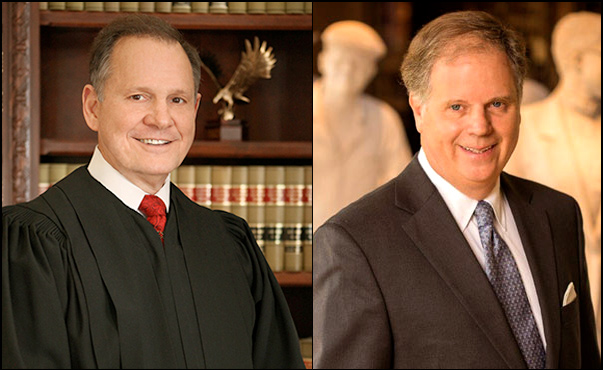
Left: Former state Supreme Court Chief Justice Roy Moore (R) | Right: Ex-US Attorney Doug Jones (D)

Left: Former state Supreme Court Chief Justice Roy Moore (R) | Right: Ex-US Attorney Doug Jones (D)

Nov. 16, 2017 — Last evening’s political news featured heavy coverage of a new National Republican Senatorial Committee poll that produced bad news for Alabama GOP special Senate nominee Roy Moore, but not enough information was released to determine the reliability aspect. In fact, the NRSC didn’t even release the name of the polling company with which they contracted to conduct the survey.

This is significant because their finding that Democrat Doug Jones is leading Judge Moore, 51-39 percent, is clearly out of line with every other poll taken in the corresponding time frame. It is also interesting that they would even release such a poll considering the Republican candidate is doing so badly. It does, however, justify their previous position of cutting the Moore Campaign from additional funding because of the sexual impropriety allegations against the candidate that has dominated recent news coverage.

Below are the post-scandal publicly reported surveys as complied by the Ballotpedia website:

• National Republican Senatorial Committee (Nov. 12-13)
No pollster credited
Jones 51%; Moore 39%
500 Sample

• Fox10 (Mobile) (Nov. 13)
News Strategy Research
Moore 49%; Jones 43%
3,000 Sample (Automated)

• Emerson College Polling Society (Nov. 9-11)
Moore 55%; Jones 45%
600 Polling Sample

• JMC Analytics & Polling (Nov. 9-11)
Jones 46%; Moore 42%
575 Sample

• Decision Desk HQ (Nov. 9)
Moore 46%; Jones 46%
515 Sample

As we can see, the NRSC poll returns the most inconsistent results in comparison to the other available data during the same time frame; the period just after the Moore sexual scandal broke.

Additionally, because the NRSC did not release the name of their pollster or the survey methodology, not enough information exists to determine if their data are skewed in any particular manner.

The lack of available information does not necessarily mean that the Senatorial Committee’s results are inaccurate. It is curious, however, that the other results — and, all have larger sample sizes than the reported NRSC calling universe — finds much different ballot test margins.

Interestingly, the Fox10 poll from a local Mobile television affiliate, which is the latest released survey prior to the NRSC study, and the Emerson College Polling Society find the complete opposite result and their methodologies utilize much larger sample sizes within the studied polling grouping. The Fox10 3,000-person sampling universe clearly suggests that the questionnaire responses were obtained through an automated device, but such does not necessarily mean this poll is less accurate than the live operator polls.

The Alabama race continues to deteriorate, and it is becoming more evident that Jones is now in a strong position to win. But, despite all the negative news coverage, this phantom NRSC poll is the only one that shows him trailing badly.

The other survey to find him dropping behind, from JMC Analytics, featured a sampling universe where 56 percent of the respondents are female, a potential skew in Jones’ favor since this subset broke his way, 46-40 percent. In comparison, men favored the Democrat only 46-45 percent in the JMC crosstabs. Therefore, with a sample where the Democratic-leaning female sector was over-sampled by approximately five percentage points, correcting this skew likely brings the Jones’ 46-42 percent ballot test result back into a tied range.

The NRSC results and partial poll release is intriguing to say the least. Hopefully, we will see more substantiation of their data later today.
The Alabama Debacle

By Jim Ellis

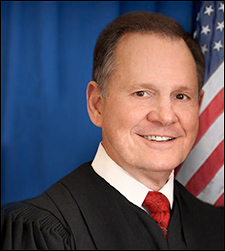
Judge Roy Moore, the Republican nominee in a special Senate election in Alabama.

Judge Roy Moore, the Republican nominee in a special Senate election in Alabama.

Nov. 14, 2017 — Senate Republicans have a major advantage in the current election cycle, but may be on the precipice of giving it away.

Looking at the 2018 Senate map, Republicans have only to defend eight of the 33 in-cycle seats. Considering that six of the eight are the safe Republican states of Mississippi, Nebraska, Tennessee, Texas, Utah, and Wyoming and the Democrats need a net gain of three conversion seats to claim the majority, it appears unattainable even if the latter party converts legitimate targets in politically marginal Nevada and now open Arizona.

But the mathematics change if Democrats score an unlikely upset in the Alabama special election on Dec. 12, and the latest unfolding events there suggest that such an outcome is far more likely to happen.

As we know, Republican Senate nominee Roy Moore, the twice removed former state Supreme Court Chief Justice, has been accused of sexual impropriety with at least one teenage girl when he was 32 years old in 1979. Washington, DC Republicans, who appear to be taking the Washington Post story and the woman’s allegations at face value, are urging Moore to remove himself from the race. Alabama Republicans are still standing firm for Moore, refusing to accept the story without proof. For his part, Judge Moore denies the incident happened.

Three polls have already surfaced telling us that Moore has suffered a major hit. Earlier surveys found him leading in low double-digits, but Opinion Savvy, Gravis Marketing, and JMC Analytics & Polling immediately went into the field to test the Alabama electorate’s reaction.

Opinion Savvy (Nov. 10; 515 likely Alabama special election voters) conducted their survey just hours after the Moore story broke. Their results find that Moore’s lead has evaporated into a 46-46 percent tie with Democratic nominee Doug Jones, a former US Attorney.

Gravis Marketing launched their poll just as quickly (Nov. 10; 478 likely Alabama voters) and finds a similar ballot test tally: 48-46 percent in Moore’s favor.

JMC Analytics (Nov. 9-11; 575 registered Alabama voters) sees Jones pulling into a 46-42 percent lead (48-44 percent when leaners to both candidates are added), but an over-sampling of female voters could account for the Democratic advantage. Fifty-six percent of the survey respondents were female and they break for Jones, 46-40 percent. Men favor the Democrat 46-45 percent.

Considering these polls were taken immediately as the story was breaking and the questionnaires included an explanation of what was being said about him, the results for Moore are not devastating. For the most part, Republican voters are taking Moore’s side while Democrats believe the accuser. The fact that the division is roughly even suggests that Moore has a chance to rebound if he can effectively tell his story.

While Republican leaders may be calling upon Judge Moore to remove himself from the ticket, realistically and legally, he cannot. Under Alabama election law, the ballot cannot be changed within 76 days of the election. That period began Sept. 28. Now comes talk that Gov. Kay Ivey (R) could be approached to postpone the election, or call a special session of the legislature to pass a new emergency election statute. The governor says she is not inclined to even think about such an option.

Additionally, some absentee packets containing Moore’s name have already mailed, thus making it logistically difficult, if not illegal, to inject a new ballot into the campaign. Therefore, the outlook is virtually certain that the election will proceed as scheduled on Dec. 12.

Another idea suggests that the Senate refuse to seat Moore if he wins the election. Should all Democrats vote against Moore, only three Republicans would need to break ranks to keep the seat in abeyance. Presumably, the state could then call a new election, but there would be nothing preventing Moore from running again. Should that be the case, Gov. Ivey then could appoint another interim senator or even keep Sen. Luther Strange (R) in the position. Also, a new election would allow him to run again, too.

For their part, Democrats are remaining publicly quiet. They are likely doing so for two reasons. First, they are adopting the old axiom, “if one’s political opponents are in process of destroying themselves don’t stop them.” Second, they may soon be faced with another vote to eject a senator. Should New Jersey Democratic Sen. Bob Menendez be found guilty in his corruption trial, there will likely be a move to expel him. Democrats would find themselves in a bind if they make a public spectacle of denying entry to Moore, and then quickly pivot to do the opposite in order to save Menendez.

The Roy Moore saga is far from over but at the outset, the situation appears perilous for Republicans. Since losing this seat would endanger their majority standing in 2018, the stakes for how the majority leadership chooses to handle the Alabama situation becomes even more challenging.

Election Day: Before vs. After

By Jim Ellis

Nov. 10, 2017 — Voters went to the polls in three places Tuesday to elect two governors, state legislators, and a new member of Congress. Multiple local elections, including mayoral contests in 59 of the nation’s largest cities, with New York, Minneapolis, Seattle, and Charlotte among them, also were on the various ballots.

Much was written and discussed about the Virginia gubernatorial election leading into Election Day, clearly the most important contest from a political perspective. It appeared clear that the campaign between Lt. Gov. Ralph Northam (D) and former Republican National Committee chairman Ed Gillespie was a tight one. That proved not to be the case with Northam’s nine-point win.

Polling suggested that either candidate could win. Most surveys showed either a dead heat or Northam maintaining a small lead. Research for the last Virginia gubernatorial race, that in 2013 when Gov. Terry McAuliffe (D) was elected, badly under-estimated Republican strength. Therefore, should the same methodologies be present in this latest data, Gillespie’s chances of victory may be better than the raw numbers indicate. That line of thinking was dashed by the results.

Continue reading

Dems Score Big; Curtis Wins in Utah;
VA House: 12 Votes to a Win

By Jim Ellis

Lt. Gov. Ralph Northam (D) is also a pediatric neurosurgeon

Virginia governor-elect Ralph Northam (D) is also a pediatric neurosurgeon

Nov. 8, 2017 — Democrats came roaring back, particularly in the Virginia elections last night, as Lt. Gov. Ralph Northam (D) easily outpaced former Republican National Committee chairman Ed Gillespie to win the open Virginia governorship, keeping the position in the Democratic column. Northam scored a 54-45 percent win over Gillespie in a race that most pollsters projected to be much closer.

It appeared that Gillespie had momentum at the end of the past week, but last day polling again found Northam beginning to pull away. Those surveys correctly detected the final trend, as did the Quinnipiac University polls and Christopher Newport University’s final study, all considered outliers because the big margins extrapolated for Northam were outside the polling realm for the other dozen-plus polls released during the closing two-week period. In the end, the actual victory margin was nearer to the previously rejected polls.

Curiously, Gillespie ran behind the two other Republicans on the statewide ticket. All in a losing effort, lieutenant governor candidate Jill Vogel (R) pulled almost 50,000 more votes than the gubernatorial nominee, while attorney general nominee John Adams attracted just under 38,000 more. This could possibly be attributed to left over bad feelings generated from the close Republican primary election that saw Gillespie barely defeat Prince William County Board chairman and immigration policy activist Corey Stewart. Many Stewart voters stated that they would not support Gillespie in the general election, and it may well be that many of them followed through on their “promise.”

‘Many [Corey] Stewart voters stated that they would not support Gillespie in the general election, and it may well be that many of them followed through on their “promise.” ‘

Turning to New Jersey, the pollsters, who uniformly produced consistent data on this race throughout the general election cycle, proved correct. Former US Ambassador to Germany and Wall Street executive Phil Murphy (D), as expected, recorded a 55-43 percent win over Lt. Gov. Kim Guadagno (R). Murphy converts the governor’s mansion for the Democrats after eight years of having Republican Chris Christie.

Continue reading

A Virtual Tie in Virginia


Lt. Gov. Ralph Northam (D) — latest campaign ad


https://youtu.be/Fg3Gac44cl4
Ed Gillespie (R) – latest campaign ad


By Jim Ellis

Nov. 7, 2017 — On the dawn of today’s Virginia governor’s race, significant movement is apparent in the final pre-election polls.

At the end of last week, we previously reported that Lt. Gov. Ralph Northam (D) had a lead of 3.7 percentage points when mean averaging seven realm polls conducted between Oct. 15-28. The latest six studies, all commissioned during the Oct. 29-Nov. 2 period, show Republican Ed Gillespie closing the gap even further, reducing Northam’s lead to a miniscule 1.0 percent.

At least one of the latest half-dozen comes from a pollster with a poor reliability record. Here, Roanoke University (Oct. 29-Nov. 2; 781 likely Virginia voters) finds the two candidates tied at 47 percent, which actually appears in line with the other published polls. Usually, the Roanoke data proves to be an outlier.

The survey giving Northam his best showing comes from Gravis Marketing (Oct. 30-Nov. 3; 1,143 registered Virginia voters via Interactive Voice Response system) where the lieutenant governor posts a 48-43 percent edge, consistent with results from data released last week. Gravis, not screening for likely voters, however, could explain why their results show a bigger spread than the others. The newest poll, from the New York Times/Siena University (Oct. 29-Nov. 2; 785 likely Virginia voters), finds Northam carrying a three-point edge, 43-40 percent, but with a larger undecided factor than the other studies.

Continue reading

High-Stakes Voting

By Jim Ellis

Nov. 3, 2017 — Three important campaigns will be decided Tuesday, and the stakes are actually quite high for both major political parties. The favored entity losing an upset contest in any of the venues would immediately darken the particular party’s 2018 outlook. New Jersey and Virginia voters will elect new governors in regular cycle campaigns, and the Utah special congressional election will also be settled.

New Jersey

Former US ambassador to Germany and Wall Street executive Phil Murphy (D)

Former US ambassador to Germany and Wall Street executive Phil Murphy (D)

The race between Lt. Gov. Kim Guadagno (R) and former US ambassador to Germany and Wall Street executive Phil Murphy (D) already seems decided. Polls for months have varied only slightly. The latest published polling numbers, those from Monmouth University (Oct. 27-31; 529 likely New Jersey voters), find Murphy holding steady with a 53-39 percent advantage. Virtually every poll has projected a margin of this size.

This campaign has seemed over since the beginning. Gov. Chris Christie (R) has historically poor approval ratings – still more than 70 percent negative – and research shows the voters do link Guadagno to the current governor despite the two of them having a frosty relationship.

Continue reading

Heller Down Again, But Not Out

By Jim Ellis

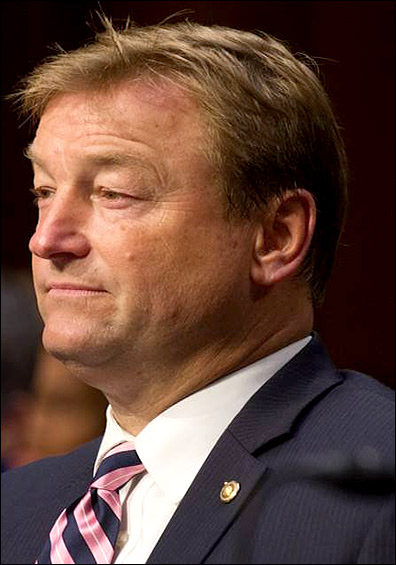
Sen. Dean Heller (R-NV)

Sen. Dean Heller (R-NV)

Oct. 31, 2017 — You may remember that JMC Analytics and Polling released an August survey that found Republican Danny Tarkanian, before he entered the Senate race, to be leading Nevada Sen. Dean Heller, 39-31 percent. On Friday, JMC released new polling results.

Immediately after the August poll was published, the Heller campaign circulated a Tarrance Group survey of its own that showed a completely different tally. This study projected the Senator ahead 55-33 percent among their universe of likely Republican primary voters. Now, Heller’s political operatives may need to counter again.

The latest JMC survey (Oct. 24-26; 500 likely Nevada primary voters answering an automated questionnaire) finds Tarkanian again leading the senator, but this time the margin is 44-38 percent, a slightly closer tally and with many more voters forming a decided opinion.

Continue reading