Category Archives: House

Walkinshaw Wins in Virginia;
A Redistricting Check-Up

By Jim Ellis — Wednesday, Sept. 10, 2025

VA-11

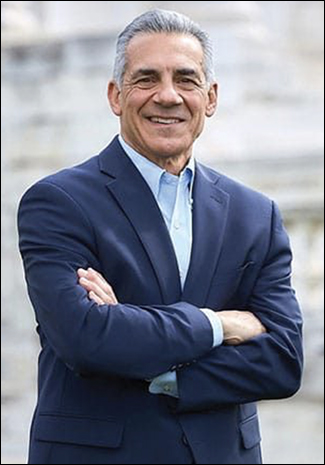
Fairfax County Supervisor James Walkinshaw (D)

Last night, Fairfax County Supervisor James Walkinshaw (D) easily defeated Republican former FBI agent Stewart Whitson, 75-25 percent, in the safely Democratic seat to win the special congressional election. Walkinshaw will replace the late Rep. Gerry Connolly (D), who passed away in May. The Congressman-Elect will serve the balance of the current term and be favored to win again in the 2026 regular election.

Upon being sworn into the House, the partisan division will move to 219R-213D, with three vacancies. The next special election will be held on Sept. 23 in Arizona’s 7th CD where former Pima County Supervisor Adelita Grijalva (D) is favored to win the seat of her late father, Raul Grijalva (D-Tucson), who passed away in March.

Redistricting

It is getting to the point of not being able to keep track of the various congressional redistricting efforts ‘without a scorecard.’ Below, are the latest developments in states where redistricting is actively occurring or being discussed:

• Alabama: It is possible that the Alabama map could be redrawn depending upon the US Supreme Court’s ruling on the Louisiana case, since the two states have virtually identical pending litigation. If the high court upholds the lower court ruling for Louisiana, then it is possible Alabama could follow suit and redraw its map. A second Louisiana round of oral arguments is scheduled for Oct. 15. A redraw would likely add one seat to the Republican column.

• California: A referendum to replace the California Citizens Redistricting Commission map is on the statewide special election ballot for Nov. 4. If voters approve, a new congressional map will be in place for the 2026 election that is projected to give Democrats five more seats and take the state’s partisan division to 48D-4R.

• Colorado: An activist group will attempt to file a constitutional amendment initiative for the 2026 ballot to redraw Colorado’s congressional map. Under the state’s election laws, constitutional amendments must pass with a minimum 55 percent voter approval. The amendment would give the political leaders the power to replace the Colorado Independent Congressional Redistricting Commission map.

The proposed plan projects to a two seat gain for Democrats. If the activists are successful with the ballot approach, the earliest election a new map could take effect would be 2028.

Florida: It appears likely that the Florida legislature will consider a new congressional map when the new session begins in January. An interim legislative committee was constructed to draw the plan. Projections suggest Republicans would gain two seats in the delegation if a new map is enacted. Doing so would push the partisan division to 22R-6D.

Illinois: While Gov. J.B. Pritzker (D) was talking about a redraw of the Illinois map, doing so would not be practical. The Illinois map is already the most gerrymandered in the country with a partisan division of 14D-3R, and it is likely not conceivable for Democrats to do better. Chances are good that a redraw will not happen, especially with a fast approaching 2026 candidate filing deadline of Nov. 3.

Indiana: The White House continues to push for a Hoosier State redraw, but it is unclear whether the legislature will address the issue in their new session. The most extreme map would eliminate the state’s two Democratic seats and result in a 9R-0D plan. This situation has not yet solidified.

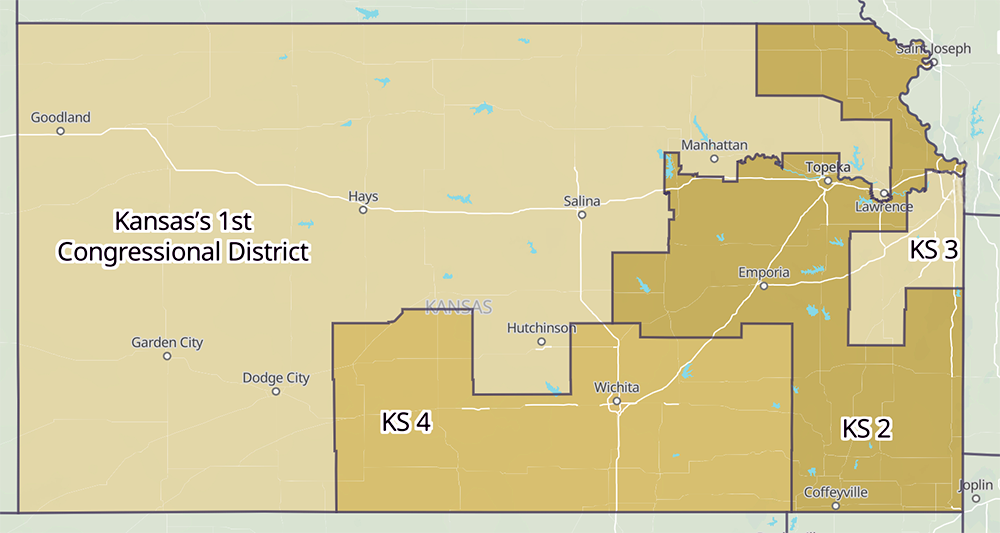
Kansas: Redistricting discussions are underway in Kansas, and there is talk that the legislature could move toward a special session. Since it is clear that Gov. Laura Kelly (D) will not call the legislature back, two-thirds of members from both houses must support the move for a special session.

Should a session be called and a 4R-0D map introduced, Republicans would realistically need two-thirds support for the legislation in both houses because Gov. Kelly is sure to veto what the legislature produces. Seeing a new Kansas plan being enacted is a long shot.

Louisiana: As discussed in the Alabama section above, the Louisiana racial gerrymandering case currently before the US Supreme Court has the potential of being a landmark case. We won’t see a ruling until later in the year, but this case could set the tone for the entire mid-decade redistricting cycle. In addition to Alabama, the decision could affect the new Texas map.

Maryland: Democratic legislators have introduced a bill that would allow the legislature to address changing their congressional map if other states successfully alter their boundaries. Any new map would target the state’s lone Republican House member, Rep. Andy Harris (R-Cambridge) and result in an 8D-0R delegation.

Missouri: The state House of Representatives just passed a map that changes Rep. Emanuel Cleaver’s (D) Kansas City-anchored 5th District into a Republican seat by stretching it into the rural areas. The state Senate is expected to follow suit, and Gov. Mike Kehoe (R) will reportedly sign the new map into law. Therefore, chances of Republicans gaining one seat in Missouri are high.

Ohio: Legislators are soon going to draw a new congressional map and must do so under state law. Because the 2021 congressional plan did not receive three-fifths vote in each legislative house, the map could only stand for two elections, those in 2022 and 2024. Therefore, the legislators must draw a new plan for 2026 and beyond.

Republicans hope to gain two seats in the re-map, those of Reps. Marcy Kaptur (D-Toledo) and Emilia Sykes (D-Akron). It remains to be seen exactly how the map will be configured, but creating a new congressional plan is a certainty.

Texas: The new Texas plan has been enacted, and the expected voting rights legal challenge has been filed in an El Paso federal court. Assuming the map stands, Republicans could gain as many as five seats but only if the Trump numbers among South Texas Hispanics translate to a Republican congressional candidate. Obviously, Texas will become one of the key states that determines the next US House majority.

Utah: A Utah court has struck down the current congressional map, saying the legislature did not have the authority to bypass voter approved redistricting guidelines. Therefore, the legislature is moving forward to draw a new plan. The decision could lead to a new Democratic urban seat in Salt Lake City. Thus, the current 4R-0D delegation could allow Democrats to gain one seat.

Wisconsin: Earlier in the year, the state Supreme Court rebuffed a move to redraw the congressional map. Activists have re-started the legal process, but reaching the state Supreme Court for reconsideration will be a lengthy process and likely won’t happen to affect the 2026 election.

Special Election Season Begins

By Jim Ellis — Monday, Sept. 8, 2025

Special Elections

As we know, the House has four vacant seats and the first in a series of rapid special elections will occur tomorrow.

In Virginia’s 11th District, the battle to replace late Rep. Gerry Connolly (D-Fairfax) will largely be anticlimactic. The VA-11 seat is heavily Democratic (Dave’s Redistricting App partisan lean: 67.2D – 30.7R; Harris ’24: 65.7 – 31.4 percent), so an easy win for Fairfax County Supervisor and former Connolly chief of staff James Walkinshaw (D) is a prediction that all political prognosticators share.

The district is fully contained within Fairfax County and includes Fairfax City. A 2:1 Walkinshaw victory is expected over former FBI agent Stewart Whitson (R).

Two weeks after tomorrow’s Virginia special election, on Sept. 23, voters in the Tucson, Arizona area will participate in an election to replace the late Rep. Raul Grijalva (D), who died in March. The clear favorite to succeed Grijalva is the special election’s Democratic nominee, Adelita Grijalva, the Congressman’s daughter who is a former Pima County Supervisor. Ms. Grijalva won the special Democratic primary in July with 61.5% of the vote over four intra-party opponents.

As in VA-11, Arizona’s 7th Congressional District is strongly Democratic. The DRA partisan lean is 65.5D – 32.3R. Kamala Harris carried this district, 60.5 – 38.4 percent, in a place where she lost the statewide vote. Just like VA-11, this district’s Democratic nominee is expected to win in a proportion consistent with the partisan lean calculation.

Once Walkinshaw and Ms. Grijalva are sworn into office, the partisan division will feature 219 Republicans, 214 Democrats with two remaining vacancies (1D; 1R).

On Oct. 7 in western Tennessee, we will see perhaps the most interesting special primary election to date, as multiple candidates from both parties are seriously vying for their party’s nomination. On the favored Republican side, 11 contenders are competing including three state Representatives and a Montgomery County Commissioner. For the Democrats, three Nashville area state Representatives and a businessman have qualified for the ballot.

Though the voter history suggests a comfortable Republican win will result in TN-7 (Dave’s Redistricting App partisan lean: 55.1R – 42.1D; President Trump: 60.4 – 38.1 percent), Democrats believe they have a chance to pull an upset. They cite increased Democratic performances around the country in special elections as the basis for their political optimism.

Tennessee features partisan special primaries, so no inter-party upset will occur on Oct. 7. The state does not include a runoff for party nominations, so it is likely we will see a pair of nominees coming forward who do not earn majority support within their own partisan electorate. The special general election is scheduled for Dec. 2.

The Volunteer State’s 7th District contains nine counties and parts of three others west of Nashville and stretches from Kentucky to Alabama on a north to south plane. The CD includes part of Nashville city in Davidson County along with the Clarksville, Parsons, and Waynesboro municipalities.

Incumbent Rep. Mark Green (R-Clarksville) resigned the office earlier in the year to accept a position in the private sector. Before Green, Sen. Marsha Blackburn (R), now a gubernatorial candidate, represented the 7th CD for 16 years.

The final special election, scheduled for Nov. 4 in Houston, features 35 candidates (22 Democrats, 7 Republicans, and 6 minor party or Independent contenders). The candidate filing deadline was Sept. 3, so it remains to be seen how many of the 35 officially qualify for the ballot.

The TX-18 contest to replace the late Representative and former Houston Mayor Sylvester Turner (D) is certainly the most unique among the special elections.

Assuming a runoff will be required from the large field since no one is likely to secure majority support in the initial vote, Gov. Greg Abbott will then schedule the secondary election between the top two finishers when it becomes a mathematical certainty that no one received a majority. This means the runoff may not be held until early January.

While the new Texas map has been adopted into law, it must still pass the legal tests. If so, the eventual special election winner, and it will almost certainly be a Democratic candidate from the party’s safest Texas seat (DRA partisan lean: 73.6D – 24.4R), will immediately most likely be forced to face veteran Rep. Al Green (D-Houston) to compete in the regular election Democratic primary for a full term.

The regular election Democratic primary will occur in a newly configured 18th District on March 3rd that only contains 26 percent of the current 18th and 65 percent of Rep. Green’s 9th CD.

The new redistricting plan has certainly made life difficult for whoever wins the 18th District special election. The eventual winner having a short tenure in Congress appears likely and will prove a side effect of the 2025 Texas redistricting effort.

Iowa Rep. Hinson Declares
Her Candidacy for Senate

By Jim Ellis — Thursday, Sept. 4, 2025

Senate

Rep. Ashley Hinson (R-Marion/Cedar Rapids) / Facebook photo

On the heels of Sen. Joni Ernst (R-IA) announcing her retirement earlier this week, three-term US Rep. Ashley Hinson (R-Marion/Cedar Rapids) quickly declared her candidacy for the now open Iowa Senate seat.

Rep. Hinson will be a strong statewide candidate. In the House since 2021, a state Representative for two terms, and a Cedar Rapids ABC affiliate news anchor before running for office, Congresswoman Hinson has both the political and media experience necessary to be a strong candidate. Though the Republicans are losing an incumbent on the 2026 statewide ballot, Rep. Hinson will give the party everything they need to hold the open Senate seat.

The Democratic field is expected to remain constant. It features state Sen. Zach Wahls (D-Des Moines), state Rep. Josh Turek (D-Council Bluffs), Des Moines School Board chair Jackie Norris, and local Chamber of Commerce executive Nathan Sage. The open Governor’s race has attracted the state’s lone statewide Democratic officeholder, State Auditor Rob Sand.

Although Rep. Hinson’s 2nd Congressional District being in an open situation leaves competitive potential. Dave’s Redistricting App calculates a 51.4R – 45.3D partisan lean. President Trump carried the IA-2 district with a 54-44 percent victory margin over Kamala Harris. In 2020, Hinson defeated one-term Rep. Abby Finkenauer (D) who had unseated then-Rep. Rod Blum (R) in 2018.

Iowa is one of 31 states that register voters with partisan affiliation. In the 2nd District, 450,332 individuals are actively registered to vote. A total of 36.1 percent affiliate as Republican, 33.4 percent as No Party, 29.8 percent Democratic, and 0.7 percent as “Other.”

Therefore, the statistics suggest that this northeastern Iowa district leans Republican but, as in 2018 when Finkenauer won, the seat has flip potential in a strong Democratic year.

Expect to see political musical chairs begin among state legislators who represent districts that fall within the 2nd CD boundaries. It is likely we will see several current or former lawmakers come forward. One person already reportedly making fundraising calls and informing potential supporters that he is going to run is Trump Administration HUD official Joe Mitchell, a former state Senator.

Turning to the Democratic side, four individuals are already active candidates including state Rep. Lindsay James (D-Dubuque). The other candidates are ex-nursing college dean and retired Army Lt. Col. Kathy Dolter, 2020 local office nominee Don Primus, and pastor and non-profit organization founder Clint Twedt-Ball. It is probable we will soon see other Democrats also come to the forefront.

The 2nd District lies in Iowa’s northeast sector under the state’s quadrant congressional redistricting plan. It borders the Mississippi River and Illinois on the east and Minnesota to the north.

Under the rather unique plan, incumbents’ residences are not considered when drawing maps, and all counties are kept whole within each individual CD. Thus, the 2nd District houses 13 complete counties with four significant population centers. In order of size from large to small, the inhabitant clusters are the cities of Cedar Rapids, Waterloo, Dubuque, and Mason City.

Counting IA-2, a total of 31 seats are now in the open category (15R, 12D, with three new as a result of Texas redistricting), and Rep. Hinson becomes the tenth House member to run for the Senate in the current election cycle. Once the four special elections to fill vacant seats conclude beginning next week and running through early next year, the open seat will at least temporarily drop to 27.

Rep. Jerrold Nadler to Retire

By Jim Ellis — Wednesday, Sept. 3, 2025

House

Rep. Jerry Nadler (D-New York City) | Facebook photo

The open seat count in the US House rose to 30 yesterday, at least temporarily, as 17-term Empire State Congressman Jerrold Nadler (D-New York City) announced that he will not seek re-election next year.

The decision ends a long New York political career that featured Nadler holding an elected office consecutively since the beginning of 1977 when adding his combined time in Congress and the New York State Assembly.

In an interview with the New York Times, Rep. Nadler indicated that the generation gap was an issue in making his retirement decision. He said, “[w]atching the Biden thing really said something about the necessity for generational change in the party, and I think I want to respect that…” Nadler will be 79 years old when the 2026 election is held.

Rep. Nadler’s 12th Congressional District lies fully within the Borough of Manhattan and contains most of Central Park. It stretches from the island’s western border at the Hudson River across Manhattan to the East River. NY-12 is the smallest area district in the country.

The Nadler departure is likely to leave a very crowded Democratic primary in his wake. With a partisan lean of 83.9D – 13.7R (Dave’s Redistricting App), the Nadler successor will be the eventual Democratic nominee.

Kamala Harris defeated President Trump in the 12th District, 81-17 percent, which was down from President Biden’s 85-14 percent win in 2020. We can expect several state legislators and New York City Councilmembers to enter the race.

Another possible candidate is former NYC Comptroller Scott Stringer, a previous Manhattan Borough President and ex-state Assemblyman. Stringer finished fifth in the 2025 mayoral primary, and while he has had success in winning past New York City elections, his poor electoral showing in the most recent contest isn’t likely to frighten other prospective candidates.

Within the national open seat count, 15 are Republican-held districts as opposed to 12 from the Democratic side. The remaining three are new seats created through the Texas redistricting process. Nadler is the only New York member currently not seeking re-election. Among the 30 opens, only two — MI-10 (Rep. John James-R) and NE-2 (Rep. Don Bacon-R) — can legitimately be considered as toss-up campaigns heading into the 2026 elections.

Four of the opens will be filled in upcoming special elections. Pertaining to the vacating House members, nine are running for the Senate, eight for Governor of their respective state, and one, Texas Rep. Chip Roy (R-Austin), entered the race for state Attorney General. Rep. Nadler becomes the fifth member opting to retire from elective politics.

The open-seat list will recede next Tuesday when the VA-11 special election is held to replace the late Rep. Gerry Connolly (D). Fairfax County Supervisor James Walkinshaw, a former Connolly chief of staff, is the prohibitive favorite to defeat Republican Stewart Whitson, a former FBI agent.

Two weeks later, on Sept. 23, the AZ-7 special election will be conducted to replace the late Rep. Raul Grijalva (D). Former Pima County Supervisor Adelita Grijalva (D), the deceased Congressman’s daughter, is the big favorite to win the vacated seat.

Shortly thereafter on Oct. 7, both Republicans and Democrats will choose special election nominees from crowded fields in western Tennessee’s 7th Congressional District. The eventual party nominees will advance to a Dec. 2 special general election. The winner will replace resigned Rep. Mark Green (R), who left the House to accept a position in the private sector.

The final special election is scheduled concurrently with the municipal election day, Nov. 4, and will occur in Houston’s 18th Congressional District. A large field is competing for the safely Democratic seat, but the eventual winner will immediately find him or herself in a paired incumbent battle with Rep. Al Green (D-Houston), under the newly enacted Texas redistricting map, in an early March 3 primary election.

Utah Joins Redistricting Wars

By Jim Ellis — Friday, Aug. 29, 2025

Redistricting

Utah Congressional Districts (click on image to go to interactive map)

A new court decision has thrust another state to the forefront of the mid-decade redistricting battle that may be developing in as many as 11 states.

A Utah judge early this week issued a ruling that strikes down the state’s 4R-0D congressional map, saying the legislature did not have the right to usurp the citizens’ redistricting commission that voters approved via ballot proposition in 2018. The commission members crafted a congressional map in 2021 that the state legislature rejected and replaced with the current plan.

The ruling is curious in that the judge stated the Utah Constitution makes a vote of the people equal to that of a legislative action. Therefore, District Court Judge Dianna Gibson ruled that the legislature did not have the authority to change the Commission map but did not explain why the people’s vote then trumps legislative power if both are equal. Republicans will appeal to the State Supreme Court, though the high court previously allowed the original lawsuit to continue that resulted in Judge Gibson’s ruling.

The Commission map would likely cost the Republicans one seat since it created a Salt Lake City-anchored district that would presumably elect a Democrat. Like many redistricting battles, this one, too, has the potential of making its way to the US Supreme Court for a final decision.

Currently before the federal high court remains the Louisiana racial redistricting case. A ruling was expected before the end of June, but the justices instead postponed their decision and ordered additional oral arguments, now scheduled for Oct. 15. The court’s ultimate ruling could mean a Louisiana redraw before the 2026 election. If so, Alabama could also see a redraw since their redistricting situation is virtually identical to that of Louisiana.

The just-enacted Texas map already faces a racial gerrymandering lawsuit, this in an El Paso federal court. The Louisiana ruling could affect the new Texas map since the lawsuit grounds involve an alleged violation of the Voting Rights Act.

When the Ohio legislature returns to session in September after the summer break, a new congressional map will be drawn. Since the current plan, adopted in 2021, failed to pass the legislature with at least a three-fifths vote in each chamber, the map could only stand for two elections. Therefore, state law demands a new plan be crafted for the 2026 election and beyond.

Published reports indicate that redistricting is also being considered in Florida, Indiana, Maryland, Missouri, and New York. The referendum in California to usurp the citizens’ commission map and replace it with a published alternative will go to the voters in a Nov. 4 special election.

The Florida House Speaker has assembled a new redistricting committee, and Gov. Ron DeSantis indicates he favors attempting to draw a new map. Some believe the already strong Republican Florida map could yield two more seats.

Talks are underway in Indiana about undertaking redistricting. The GOP target here would be the state’s 1st District that Rep. Frank Mrvan (D-Highland/Gary) represents. In the past two elections, the Congressman recorded a pair of 53 percent victories.

Talk surfaced in Maryland, largely stemming from Gov. Wes Moore (D), that this state could attempt to eliminate the lone Republican district, but nothing concrete toward that end has yet happened.

Republicans are also making progress toward gaining the Kansas City-area district of Rep. Emanuel Cleaver (D); moving forward in this situation appears likely.

Finally, New York Gov. Kathy Hochul (D) also made public statements about redistricting retribution. Here too, however, a citizens’ commission is involved in the process. In 2021, even a Democratic court rejected the Democratic legislature’s map after the members found a way to usurp the commission plan. In the legislature’s map, the Republicans would have been relegated to four of 26 seats, which the court rejected.

While the Democrats could gain further seats in New York, the process of changing the current map may be too complicated to do so before the 2026 election.

As one can see, redistricting is a complex issue, and predicting what may happen next in any state’s process is always a difficult proposition.

Decision Time in Texas

(Click on map above to see full-size detail.)

By Jim Ellis — Wednesday, Aug. 27, 2025

Redistricting

Now that the new Texas redistricting map has been signed into law displaced Democratic incumbents and potential candidates are deciding where they will run.

In the Dallas area, a game of political musical chairs must be played. All three Texas Democrats who currently represent part of Dallas County no longer live in the district for which they will likely run.

It is probable that Rep. Jasmine Crockett (D-Dallas), whose home is now in Rep. Marc Veasey’s (D-Ft. Worth) 33rd District, will still run in District 30, where almost 69 percent of her current constituency resides. By the same token, Rep. Veasey’s best opportunity is in District 33, but he loses all of his Ft. Worth and Tarrant County base. Only 33 percent of his current constituency lies in the new District 33.

The Dallas Democrat with the least favorable choices is freshman Rep. Julie Johnson (D-Farmers Branch/Dallas). While 41 percent of her current constituency will reside in new District 32, that district now stretches into East Texas and becomes a Republican seat.

Almost one-third of her constituents move to District 33, but Rep. Johnson says she is looking at potentially challenging Republican Rep. Beth Van Duyne (R-Irving) in new District 24. Rep. Johnson sees only three percent of her current constituents landing in TX-24 but says a large portion of her former state House district is included. President Trump carried new CD-24 with a 57-41 percent margin, so Rep. Van Duyne, who finds 87 percent of her current district comprising the new 24th, remains in the driver’s seat for re-election.

Moving to Houston, veteran Rep. Al Green (D-Houston) says he is surveying the new 18th District as a place to run. He would be paired with the winner of the current special election to replace the late Rep. Sylvester Turner (D), but the latter individual will only have two months to organize a primary campaign against Green after winning the special election.

Rep. Green’s 9th CD transforms into an eastern Harris County Republican seat, while none of his district will move to CD-18. Much of the current Green constituency, almost 44 percent, goes to Rep. Sylvia Garcia’s (D-Houston) 29th District, of which Garcia would represent only 37 percent of the new CD. Still, Green would be well known in the 18th, and not having to face another entrenched incumbent should be a favorable setup for the 77-year-old House member who was first elected in 2004.

Looking at Austin, Rep. Lloyd Doggett (D-Austin) says he will not seek re-election rather than squaring off with fellow Democratic Rep. Greg Casar (D-Austin) in the new 37th CD. Mr. Doggett says he would seek re-election if the court restores the previous map.

In South Texas, Rep. Henry Cuellar (D-Laredo) sees a much different district, but one that he should like. Gone is the San Antonio portion of the current TX-28 seat where Cuellar experienced trouble in two close Democratic primary challenges. He is still under federal indictment with several charges for bribery, obviously a significant hurdle to overcome, while rumors still abound that he may switch parties. If he doesn’t, his likely opponent will be Webb County Judge (Executive) Tino Tijerina, who also hails from Cuellar’s home domain.

A major development affecting the South Texas seats occurred the other day when former Rep. Mayra Flores (R) indicated that she will move back to TX-34 to again challenge Rep. Vicente Gonzalez (D-McAllen) in a re-match of the 2024 campaign that saw Gonzalez prevailing 51-49 percent. Earlier in the year, Flores said she would challenge Rep. Cuellar in District 28.

In a new 34th that now contains almost 40 percent new territory for Gonzalez and all coming from Rep. Michael Cloud’s (R-Victoria) Republican 27th District, the partisan lean of the newly configured TX-34 will favor a strong GOP candidate.

A lawsuit challenging the new map as a racial gerrymander will quickly be filed in an attempt to void the new districts. This will likely put further pressure upon the Supreme Court to finally rule on the Louisiana racial gerrymandering case, which has now been scheduled for a second oral argument session on Oct. 15.

If the high court upholds the previous federal three judge panel ruling, then the Texas map will also likely stand and we would see re-draws forced in Louisiana and likely Alabama, which is in an identical situation to that of the Bayou State. In a related ruling, the 5th Circuit Court of Appeals upheld the Galveston County case that affected the Texas minority districts and was the reason Gov. Greg Abbott (R-TX) added redistricting to the legislative special session.

With the Lone Star State candidate filing deadline set for Dec. 9 in conjunction with the March 3, 2026, primary election, much will happen in the political and legal arenas during the next few weeks.

The Iowa Political Hotbed

By Jim Ellis — Monday, Aug. 25, 2025

Iowa

The Hawkeye State of Iowa will be among the nation’s hottest political domains in the next year, featuring competitive races from the top of the ballot to the bottom. In the past week, we have seen new action occurring in several of the races.

Iowa Sen. Joni Ernst (R)

Sen. Joni Ernst (R) has not yet formally announced for re-election, and rumors that she would retire and yield to Rep. Ashley Hinson (R-Marion/Cedar Rapids) as the consensus Republican candidate, have dissipated. Sen. Ernst says she will declare her intentions in the fall.

The fact that she has raised $6.7 million during her current term and maintains $3.4 million cash-on-hand is a good indication that she is running.

One person who won’t be in the Senatorial field is state Rep. J.D. Scholten (D-Sioux City). Previously declaring for the Senate, Scholten this week announced that he is dropping his statewide bid and endorsed state Rep. Josh Turek’s (D-Council Bluffs) US Senate effort. Also in the Democratic primary race are state Sen. Zach Wahls (D-Des Moines), Des Moines School Board chair Jackie Norris, and local Chamber of Commerce executive Nathan Sage.

Sen. Ernst will be a strong favorite for re-election, but it is obvious the Democrats are going to make this race a national target.

With Gov. Kim Reynolds (R) retiring, the 2026 Iowa Governor’s race will be an open contest. Five Republicans have announced their intention to run including three-term Rep. Randy Feenstra (R-Hull/Sioux City). In addition, two sitting state legislators, one former state Representative, and ex-State Administrative Services Director Adam Steen have all formally entered the Republican primary.

The Democrats are fielding four candidates, but all political eyes are on Iowa’s lone Democratic statewide elected official, State Auditor Rob Sand. A likely Feenstra-Sand general election will lead the ballot and promises to become a competitive race. Rep. Feenstra, however, begins the campaign as the favorite.

We will also see competitive action in all four of Iowa’s congressional districts.

Rep. Mariannette Miller-Meeks (R-Le Claire) will face challenges in the Republican primary and general election. Her 56 percent showing in the 2024 GOP primary against an opponent who literally spent no money and winning the general election with just a 799-vote cushion leaves her in vulnerable position. Her 2024 primary opponent, advertising executive David Pautsch, is returning for a re-match and promises to raise and spend money in the coming race.

The 2022 and ’24 Democratic nominee, former state Rep. Christina Bohannan, returns for a third run. She faces credible Democratic opposition, however, in the person of former state Rep. Bob Krause and attorney Taylor Wettach.

Rep. Hinson just drew a formidable Democratic opponent this week. State Rep. Lindsay James (D-Dubuque) formally announced her candidacy and will launch a spirited general election campaign. She faces three announced Democrats in the party primary, none of whom have ever been elected to any office.

After flirting with running for Governor and even moving to the open 4th District, which is a much safer Republican CD than his own, Rep. Zach Nunn (R-Bondurant) will seek re-election in his Des Moines anchored 3rd District. IA-3 is politically marginal (Dave’s Redistricting App partisan lean: 49.8R – 47.0D), which guarantees a close finish.

Two strong Democrats, state Sen. Sarah Trone Garriott (D-Des Moines) and former state House Minority Leader Jennifer Konfrst, are the major contenders. This district’s electorate has unseated two incumbents, one from each party, since 2018.

With Rep. Feenstra leaving the House to run for Governor, the open western 4th District will largely be decided in the Republican primary (Dave’s Redistricting App partisan lean: 61.9R – 34.9D). State House Majority Leader Matt Windchitl (R-Harrison County) and Siouxland Chamber of Commerce president Chris McGowan appear to be the leading GOP candidates.

The Iowa primary is scheduled for June 2. The state has a post-nomination election process for races that end with no candidate receiving 35% of the vote. A special party convention is then called for the affected district or state, with delegates choosing the eventual party nominee.

As we can see, all of the state’s most important races will offer a high degree of competition throughout next year. Expect Iowa to draw major national political attention in the coming months.

New Texas Map Passes;
Rep. Chip Roy Running for AG

(Click on map above to see full-size detail.)

By Jim Ellis — Friday, Aug. 22, 2025

Texas

REDISTRICTING — The Texas state House of Representatives, with the Democrats returning to create a quorum, passed the new redistricting map on a party line vote. The bill then moved to the state Senate where passage became pro forma since the body passed the plan in the previous legislative special session. Gov. Greg Abbott (R) is expected to sign the new map into law as early as today.

While Republicans believe they can gain five seats in the Texas delegation, the number is largely predicated on winning Hispanic voters in numbers that President Trump similarly attained. Whether the new Trump Hispanic voter returns in a midterm election to vote the Republican line becomes a point of conjecture.

The new Texas map creates three open seats, two of which, one in Houston and the other in the San Antonio area, have large Hispanic populations. To reach their goal of converting five districts, the Republican candidates will have to carry the three open seats:

  • District 9 (Houston)
  • District 32 (Dallas area)
  • District 35 (San Antonio area)

Also, Republicans must defeat Reps. Henry Cuellar (D-Laredo) and Vicente Gonzalez (D-McAllen) in South Texas Districts 28 and 34, respectively.

Former Congresswoman Mayra Flores (R), who lost to Rep. Gonzalez 51-49 percent in November while President Trump was carrying the 34th District in the present configuration (51.8 – 47.4 percent), announced earlier in the year that she would move to District 28 to oppose Rep. Cuellar. Since District 34, now moving northward toward Corpus Christi and losing the McAllen portion of the current CD, becomes more Republican it is unclear if she will go through with the plan to run in CD-28 or return for a second re-match with Rep. Gonzalez in new CD-34.

The new map pairs several Democratic members: Reps. Lloyd Doggett (D-Austin) and Greg Casar (D-Austin), although Rep. Doggett is saying he will retire if this map stands; likely, Reps. Julie Johnson (D-Farmers Branch/Dallas) and Marc Veasey (D-Ft. Worth) in a Dallas County 33rd District that would contain neither of their home bases; and Rep. Al Green (D-Houston) with the winner of the TX-18 special election to be held later this year.

Rep. Chip Roy (R-Austin) — Rep. Roy, who had been publicly contemplating entering the open Texas Attorney General’s race, yesterday announced his candidacy for that position, thus opening his Central Texas 21st Congressional District for the 2026 election cycle.

Counting the Roy open seat along with the Texas trio of new open CDs, the national US House open seat count would rise to 29 (15R-11D-3 New).

Once the four special elections are filled beginning on Sept. 9 in Virginia with the VA-11 district and concluding with TX-18, which could stretch into January (under Texas election law, the Governor calls a special runoff once it becomes certain that the top finisher will not reach the majority support level in the initial election), the national open-seat count will revert to 25.

In the GOP Attorney General’s primary, Congressman Roy will face state Sen. Mayes Middleton (R-Galveston), state Sen. Joan Huffman (R-Houston), former Assistant US Attorney General Aaron Reitz, and possibly others. For the Democrats, state Sen. Nathan Johnson (D-Dallas) and former Galveston Mayor and ex-AG candidate Joe Jaworski are the announced contenders.

The new 21st District will be similar but not identical to the seat that Rep. Roy is vacating. The new TX-21 will contain northern Bexar County (San Antonio), move north to capture Comal and part of Hays County which borders Austin, and then travels west into the Texas Hill Country to include the flood-ravaged area around Kerrville when the Guadalupe River overflowed on the 4th of July.

The current CD-21 partisan lean is 61.0R – 36.7D. The new 21st would lose about 30 percent of the territory to other districts but gain a commensurate amount. The new partisan lean, again through the work of the Dave’s Redistricting App statisticians, would calculate as a similar 60.3R – 38.4D. Therefore, it is highly likely that Rep. Roy’s successor will be the winner of the next Republican nomination campaign.

Arizona Governor:
Rep. Schweikert Considers Bid

By Jim Ellis — Thursday, Aug. 21, 2025

Governor

eight-term Arizona Rep. David Schweikert (R-Fountain Hills/ Scottsdale)

In a surprising development, eight-term Arizona Rep. David Schweikert (R-Fountain Hills/ Scottsdale) is confirming reports that he is considering entering the 2026 Arizona Governor’s race. Congressman Schweikert says he will make a final decision about becoming a gubernatorial candidate by the end of this month.

The fact that such a story has arisen firmly suggests he is headed toward running. In the statewide Republican primary contest are Rep. Andy Biggs (R-Gilbert), who is leading in early polling, and Karrin Taylor Robson who ran for Governor in 2022 but failed to overtake Kari Lake for the GOP nomination.

Earlier in the year, President Trump issued a dual endorsement for Rep. Biggs and Robson, but her support was recently withdrawn because the President said she was not using his backing to its fullest benefit.

With Robson likely stagnating, Rep. Schweikert may see the opportunity of overtaking
Biggs in a GOP primary race that won’t be decided until Aug. 4 of next year. The eventual Republican nominee will be highly competitive against Gov. Katie Hobbs (D) who defeated Lake by a scant 50.3 – 49.6 percent count in 2022.

The bigger national story, should Rep. Schweikert become a gubernatorial candidate, would be the battle for his open 1st Congressional District.

The 2021 Arizona Independent Redistricting Commission members didn’t do Rep. Schweikert any favors because they transformed his once safely Republican 6th District into a highly competitive 1st CD. Schweikert being convicted of 11 House ethics violations for misuse of his congressional office funds and the Federal Election Commission issuing a $175,000 fine for multiple campaign finance violations certainly didn’t help him win re-election, either.

In the last two elections, Rep. Schweikert, battling negative publicity relating to the ethics abuses and fines, recorded winning percentages of 50.4 and 51.9 percent in 2022 and 2024, respectively. The Dave’s Redistricting App statisticians calculate a 50.9R – 47.5D district partisan lean. The Down Ballot political blog prognosticators rank AZ-1 as the 18th most vulnerable seat in the House Republican Conference.

In the 2024 presidential race, Trump defeated then-Vice President Kamala Harris here 51.9 – 48.0 percent. In 2020, however, President Biden carried the seat over Trump, 50.1 – 48.6 percent. The 1st District margin was one of the reasons the national Democrat carried Arizona, which became a major cog in the Biden victory over then-President Trump.

The Grand Canyon State’s 1st CD is fully contained within Maricopa County and anchored in the city of Scottsdale. The seat also includes Rep. Schweikert’s hometown of Fountain Hills and the cities of Paradise Valley and Carefree. The voting age population is 74 percent white, 14 percent Hispanic, 5.5 percent Asian, and 4 percent black.

The most recent district voter registration totals (July 1, 2025) reveal 207,076 Republicans (38.4 percent), 179,128 (33.2 percent) non-affiliated voters, 144,592 Democrats (26.8 percent), and 8,608 (1.6 percent) minor party members for a total of 539,404 registrants. The election statistics revealing much closer results than the voter registration figures seem to project indicates that the non-affiliated group votes predominantly Democratic. Therefore, the GOP’s registration advantage is less than one observes at first glance.

Should Rep. Schweikert opt for the Governor’s race, we can expect a crowded Republican congressional primary to develop.

The Democrats are already seeing spirited competition in their primary as 11 party members have announced their candidacies, including former state Representative, physician, and 2024 congressional nominee Amish Shah, 2024 congressional candidate and former news anchor Marlene Galan-Woods, Administrative Law Judge Brian Del Vecchio, Tempe School Board member Andres Barraza, and Democratic National Committee member Mark Robert Gordon.

The AZ-1 campaign was already promising to be one of the most competitive US House races in the 2026 cycle and a major factor in deciding which party will control the chamber in the 2027-28 congressional session. As an open seat contest, this district will attract even more national political attention once the race intensifies.

Texas Redistricting:
Doggett/Casar Paired in New TX-37

To see this and more detailed maps and District breakdowns go to data.capitol.texas.gov.

By Jim Ellis — Monday, Aug. 18, 2025

House

With the Texas House Democrats likely returning to Austin this week for a new legislative special session, the Republican redistricting map appears set to become law.

The new plan is drawn in response to the US Justice Department informing the state leadership that a recent en banc 5th Circuit Court of Appeals decision pertaining to minority district composition made certain Texas congressional districts illegal.

For political reasons, Republicans are making the most of the redrawing opportunity to craft more favorable districts for their incumbents and candidates. With the Hispanic vote particularly in South Texas turning more GOP favorable, a new map has the potential of producing significant Republican gains.

A byproduct of the redraw is the pairing of several Democratic US House members in newly constructed districts. The one attracting the most attention occurs in Travis County, where Austin-based House members Lloyd Doggett and Greg Casar are preparing for a head-on battle to represent the new 37th CD, which is fully contained within the county and will be heavily Democratic.

Earlier this week, Rep. Doggett released an open letter to his key supporters informing them of his intention to run in new District 37 and suggesting Rep. Casar run in the new 35th District. The 35th contains none of Travis County and is anchored in San Antonio, but a district in which Casar currently sees an approximate 10 percent overlay between the population of his current CD and that part of the new TX-35.

Part of the new CD 35 configuration is similar to Rep. Casar’s current Austin-anchored district, but the addition of Republican voting counties east of San Antonio help create a significantly Hispanic seat that President Trump carried by approximately 10 percentage points.

Casar, who is currently the chairman of the House Progressive Caucus and served for seven years on the Austin City Council, quickly rejected Rep. Doggett’s suggestion. Therefore, we can expect both men to compete for new District 37.

The new 37th, however, is comprised mostly of Rep. Doggett’s territory from his current 37th CD. In the new configuration, 68 percent of the new TX-37’s populace is currently in Rep. Doggett’s domain versus just 32 percent who reside in Rep. Casar’s current district, according to The Down Ballot political blog researchers.

The Federal Election Commission 2nd Quarter disclosure reports also reveal another major Doggett edge. For the ’26 election cycle, Rep. Doggett has raised only a little over $130,000 but sits on a war chest of more than $6.2 million. Rep. Casar posted in excess of $264,000 raised for the current year and holds slightly over $450,000 in his campaign account, less than 10 percent of the money that Rep. Doggett commands.

The looming Doggett-Casar contest is another example of some Democratic primaries popping up around the country that pit an older incumbent against a young rising star. In this case, Rep. Doggett is 78 years old and will be 80 by the time of the next election. He has been a House member since 1995.

Prior to winning a congressional seat, Doggett served as a Justice of the Texas Supreme Court after initially winning election to the state Senate in a 1973 special election. He also ran unsuccessfully for the US Senate in 1984, losing to Republican Phil Gramm.

Casar, 36, was elected to the House in 2022 after taking his seat on the Austin City Council in 2014. An advantage he may have in the new 37th is the large Travis County Hispanic population. The new district configuration yields a Hispanic base of close to 38 percent, but the proportion will certainly be higher among likely Democratic primary voters. The remainder of the populace is comprised of approximately 44 percent Anglo residents, 10 percent who are Black, and eight percent Asian.

The Texas map also pairs Democratic members in two other districts. It is likely that Rep. Marc Veasey (D-Ft. Worth) would lose his Tarrant County power base and run in a new 33rd CD that is fully contained within Dallas County. It is possible that freshman Rep. Julie Johnson (D-Farmers Branch/Dallas), who faces only poor options for re-election, could run against Rep. Veasey.

In Houston, the winner of the November (and possibly early January election should the first vote lead to a runoff, which is likely) special election will have to immediately turn around and face veteran Rep. Al Green (D-Houston) in a new 18th CD that will contain a large portion of the Congressman’s current 9th District.

Once the map becomes law, incumbents and candidates will then make definitive decisions regarding the districts in which they will run.